

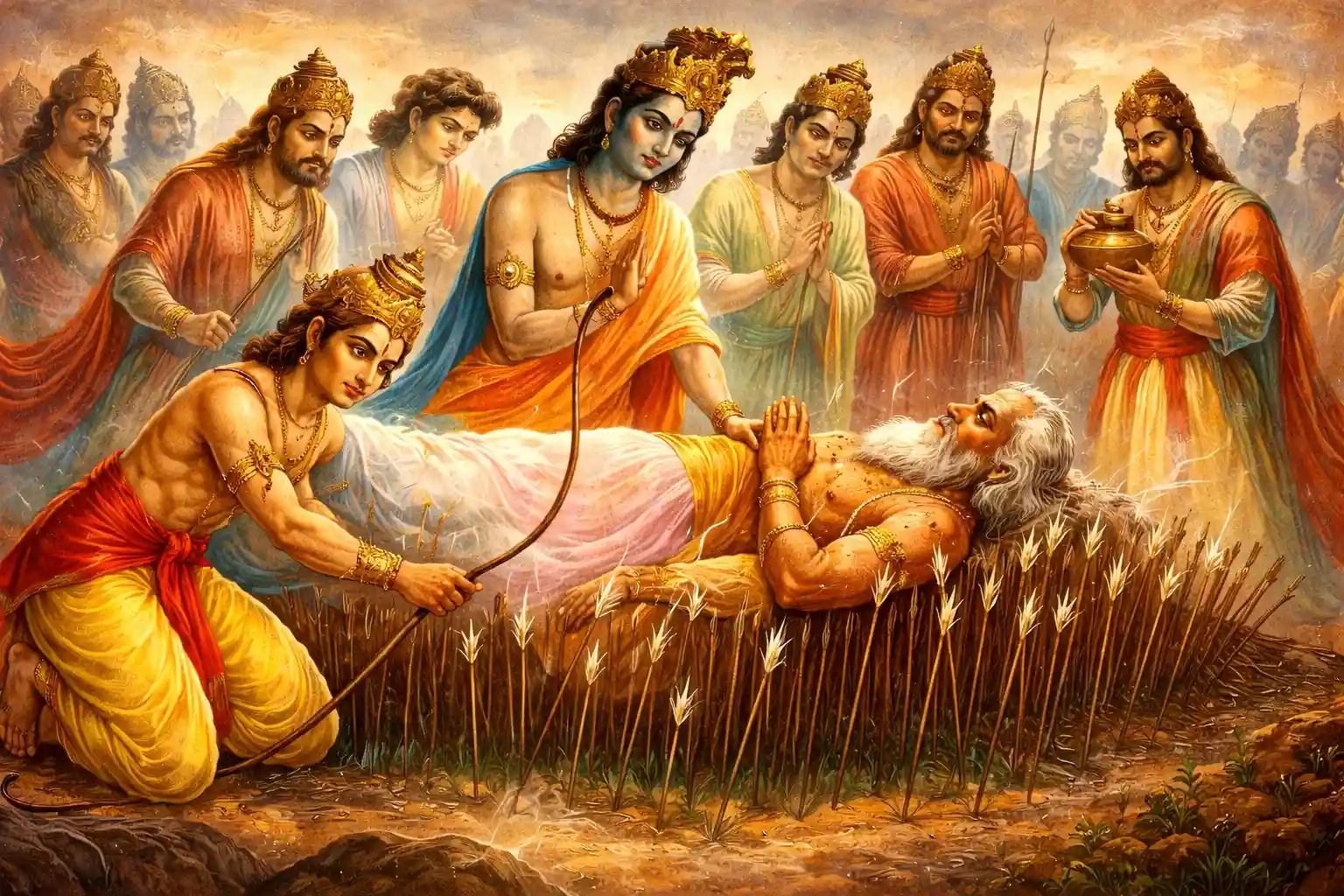
Bhisma Ashtami 2026 is a sacred observance that commemorates the divine departure of Bhishma Pitamaha, the revered grandsire of the Kuru dynasty. Celebrated on the Ashtami tithi of the Shukla Paksha in the month of Magha, this day invites spiritual seekers to reflect on devotion, duty, self mastery, and the mystery of conscious death. The story of why Bhishma waited for Uttarayan to leave his body is one of the most profound teachings of the Mahabharata, blending philosophy, astronomy, dharma, and devotion. In 2026, as Bhisma Ashtami arrives during an era of renewed interest in spiritual wisdom, devotees across the world seek to understand not just the historical event but its inner meaning and relevance to modern life.
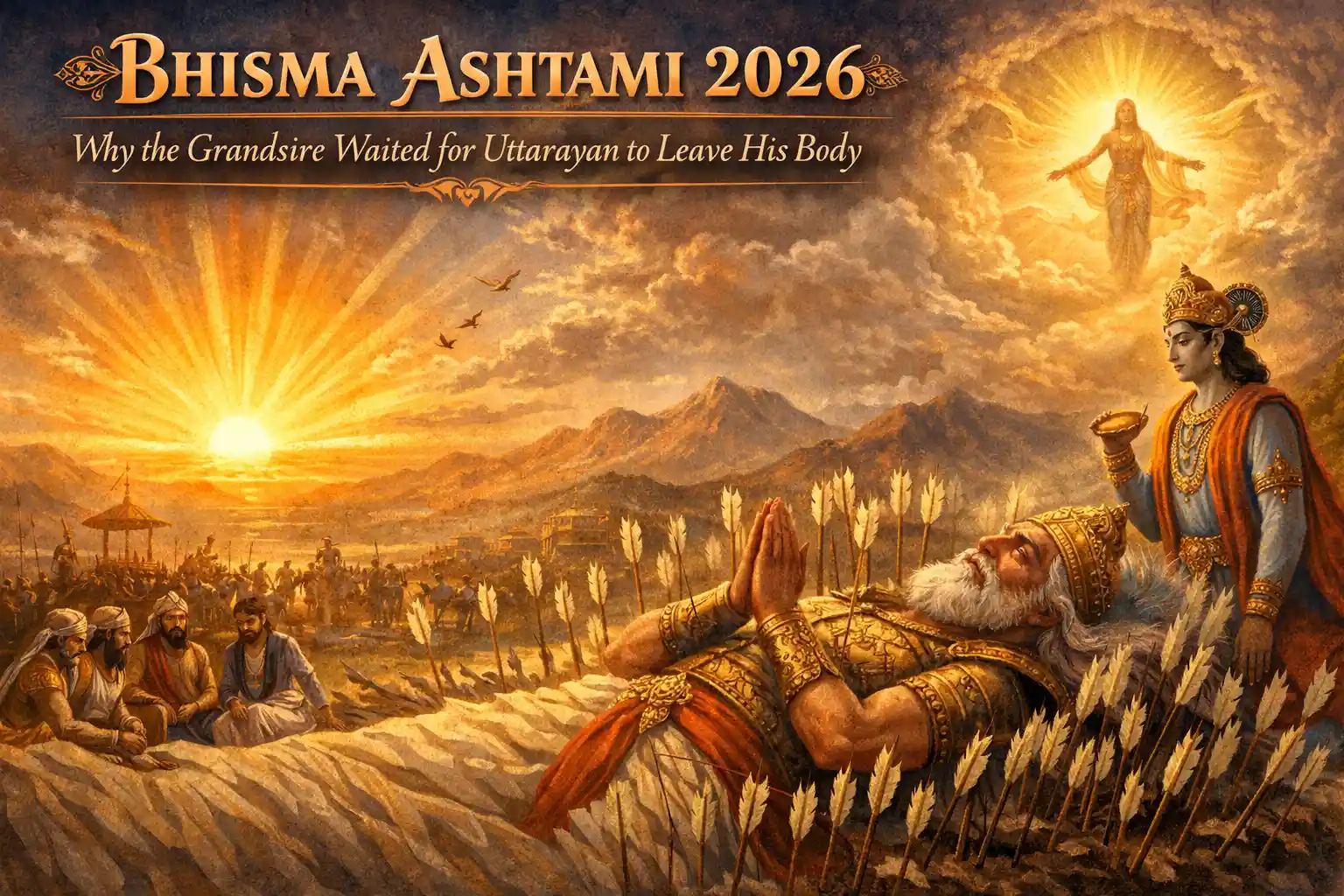
This blog explores the spiritual, scriptural, and philosophical dimensions of Bhisma Ashtami, with special insights from Swami Mukundananda, who beautifully explains how Bhishma’s choice reflects mastery over the mind, alignment with cosmic rhythms, and unwavering surrender to God. By understanding why the Grandsire waited for Uttarayan, we uncover timeless lessons on how to live and how to leave this world consciously.
Who Was Bhishma Pitamaha
Bhishma Pitamaha stands as one of the most extraordinary figures in the epic Mahabharata. Born as Devavrata, the son of King Shantanu and Goddess Ganga, Bhishma took a fearsome vow of lifelong celibacy and renunciation of the throne to ensure his father’s happiness. This vow earned him the name Bhishma, meaning one who takes a terrible or formidable oath.
Bhishma was not merely a warrior. He was a master of scriptures, a teacher of kings, and a living embodiment of dharma. His life was dedicated to the welfare of the Kuru dynasty, even when its leaders strayed from righteousness. Despite knowing the eventual destruction that would come from the Kurukshetra war, Bhishma chose to fight on the side of Hastinapura, bound by duty rather than personal preference.
One of the greatest boons Bhishma received was Ichchha Mrityu, the power to choose the moment of his death. This divine blessing would later become central to the observance of Bhisma Ashtami.
The Significance of Bhisma Ashtami
Here is a clean, table that presents the significance of Bhisma Ashtami clearly and beautifully
|
Aspect |
Meaning & Significance |
| Sacred Event | Marks the day Bhishma Pitamaha consciously left his body after lying on a bed of arrows following the Kurukshetra war, demonstrating yogic mastery over death. |
| Spiritual Nature of Death | Symbolizes a yogic and deliberate departure chosen at an auspicious time, emphasizing awareness and divine alignment at life’s final moment. |
| Devotional Observances | Devotees perform prayers, fasting, charity, and recitation of sacred texts to honor Bhishma’s life and teachings. |
| Ancestral Remembrance | Special offerings and prayers are made for ancestors, believing that acts performed on this day help elevate ancestral souls. |
| Philosophical Teaching | Reinforces the belief that death is a transition rather than an end, and that one’s state of consciousness determines the soul’s future journey. |
| Moral Inspiration | Encourages reflection on dharma, devotion, self-control, and conscious living, inspired by Bhishma’s life and final moments. |
Bhisma Ashtami marks the day when Bhishma Pitamaha finally gave up his body after lying on a bed of arrows for several weeks following the Kurukshetra war. This was not an ordinary death. It was a yogic departure, consciously chosen at the most spiritually auspicious time.
In Hindu tradition, remembering the passing of great souls is not an act of mourning but one of inspiration. Bhisma Ashtami is observed with prayers, fasting, charity, and recitation of sacred texts. Devotees especially honor ancestors on this day, believing that prayers offered on Bhisma Ashtami help elevate ancestral souls.
Spiritually, the festival reminds us that death is not an end but a transition, and that the state of consciousness at the time of leaving the body determines one’s future journey.
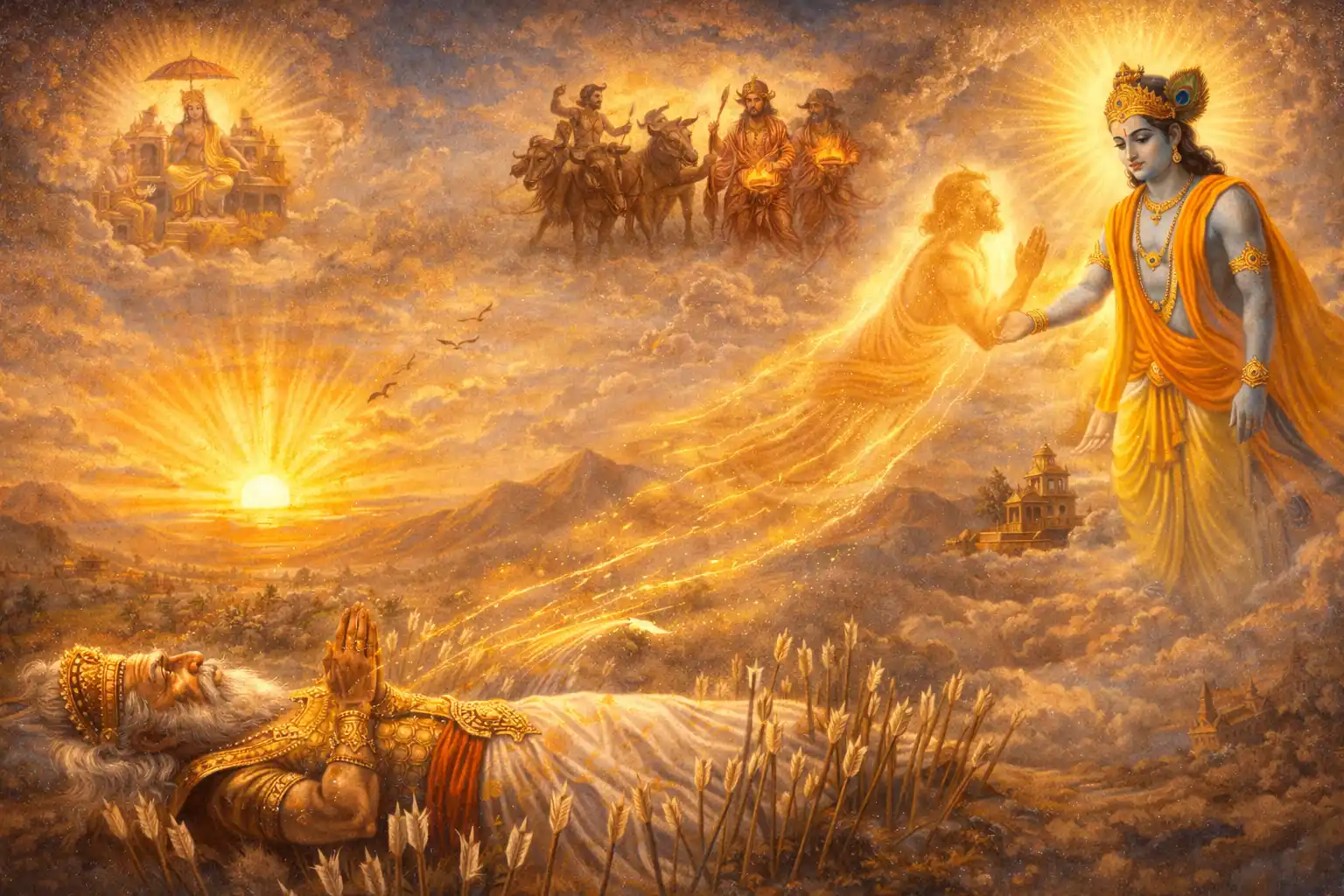
The Battle of Kurukshetra and Bhishma’s Fall
During the Kurukshetra war, Bhishma was an invincible force. No warrior could defeat him, as he fought with divine skill and unwavering resolve. However, Krishna, who orchestrated the unfolding of dharma, revealed that Bhishma could be felled only if he chose not to fight his opponent.
On the tenth day of battle, Arjuna placed Shikhandi, whom Bhishma considered female due to a past life vow, at the front. Bound by his principles, Bhishma lowered his weapons. Arjuna then released a torrent of arrows, piercing Bhishma’s body and creating the famed bed of arrows upon which he fell.
Though mortally wounded, Bhishma did not die. Exercising his boon of Ichchha Mrityu, he chose to wait.
What Is Uttarayan and Why It Matters
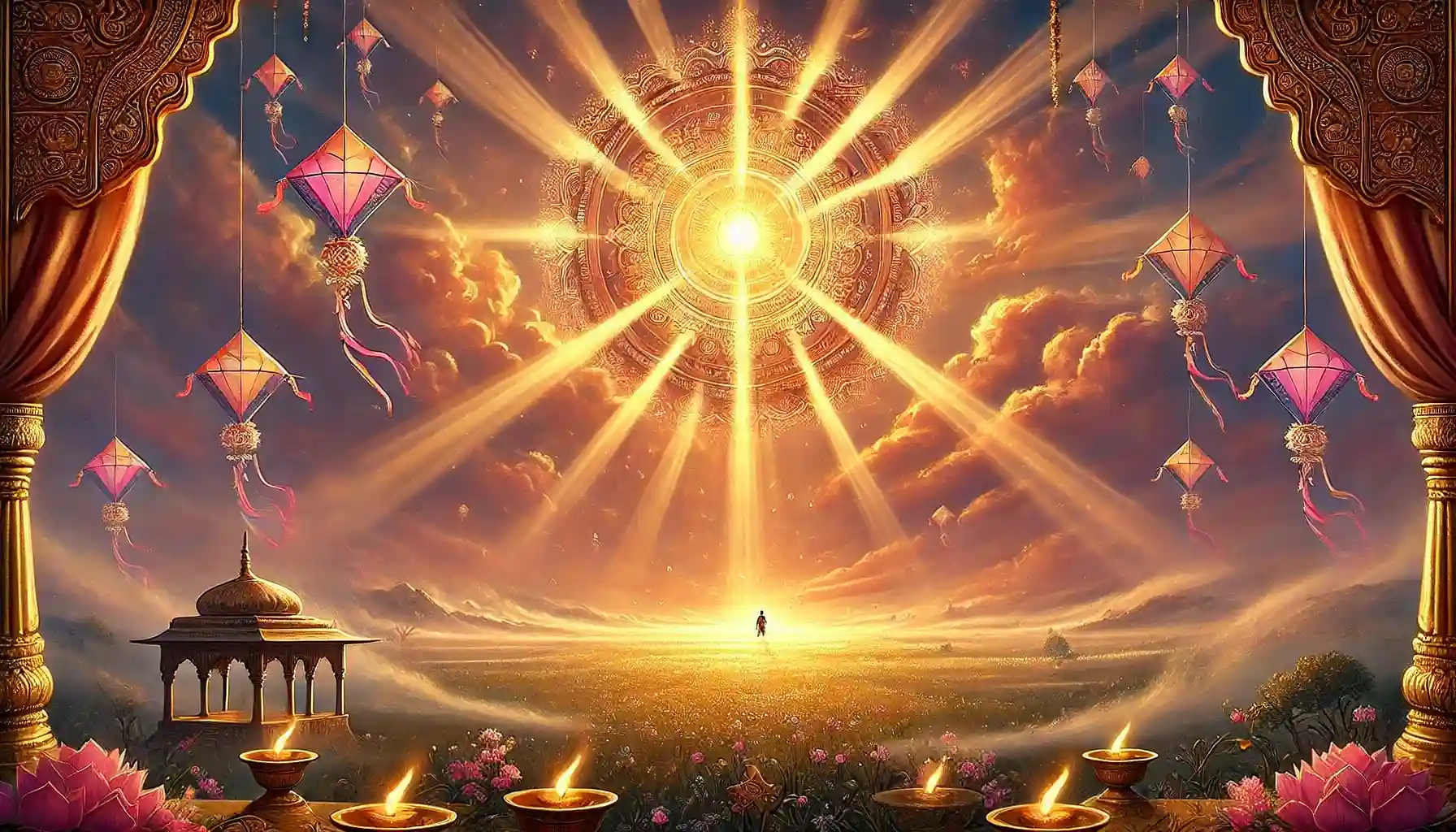
Uttarayan refers to the six month period when the sun begins its northward journey, traditionally starting with Makar Sankranti. Spiritually, Uttarayan is considered a highly auspicious phase, associated with light, clarity, and liberation.
Scriptures explain that souls departing during Uttarayan attain higher realms or even liberation, depending on their spiritual realization. This belief is referenced in the Bhagavad Gita, where Krishna speaks of the paths of light and darkness that souls follow after death.
Bhishma, fully aware of these cosmic principles, chose to wait for Uttarayan before leaving his body. His decision was not driven by fear of death but by deep alignment with cosmic law.
Why Bhishma Waited for Uttarayan
Bhishma’s waiting was an act of supreme spiritual intelligence. Lying on a bed of arrows, exposed to the elements, enduring immense physical pain, he remained serene, conscious, and absorbed in devotion.
There are several reasons behind his decision:
| Aspect | Meaning & Spiritual Significance |
| State of Being | Despite lying on a bed of arrows and enduring immense physical pain, Bhishma remained serene, fully conscious, and absorbed in devotion, reflecting supreme spiritual intelligence. |
| Yogic Control | By choosing the moment of his death, Bhishma demonstrated mastery over the body and mind, exemplifying the power of yogic discipline. |
| Auspicious Timing | His decision highlighted the importance of leaving the body at a spiritually favorable time, emphasizing elevated consciousness at the final moment. |
| Divine Contemplation | Bhishma desired to depart while meditating on the Supreme Lord, ensuring that his onward journey would be guided by divine awareness. |
| Timeless Lesson | This conscious departure transformed his death into a spiritual teaching for all generations, illustrating how awareness and devotion can transcend physical suffering. |
Swami Mukundananda’s Insights on Bhishma’s Departure
According to Swami Mukundananda, Bhishma Pitamaha’s waiting for Uttarayan was not merely about astrology or external timing. It was about inner readiness and complete surrender to God.
Swami Mukundananda explains that Bhishma’s consciousness was fully anchored in the Divine. Even while lying in agony, his mind was not disturbed. This reflects the pinnacle of spiritual practice, where the body may suffer but the soul remains untouched.
He emphasizes that Bhishma represents the ideal yogi, one who lives in discipline and leaves the body in remembrance of God. His waiting period was a demonstration of how spiritual knowledge, when practiced deeply, grants one freedom even in the face of death.
Swami Mukundananda also highlights that Bhishma’s life teaches us balance. Bhishma was a warrior, a statesman, and a devotee. His spirituality was not escapist but fully integrated into worldly duty.
The Teachings Bhishma Shared Before Leaving His Body
While waiting for Uttarayan, Bhishma imparted profound teachings to Yudhishthira and the Pandavas. These teachings form a significant portion of the Mahabharata, covering governance, ethics, charity, social responsibility, and devotion.
| Teaching Aspect | Meaning & Spiritual Insight |
| Raj Dharma | Bhishma taught the duties of kings, emphasizing compassion, justice, humility, and responsibility in leadership and governance. |
| Moksha Dharma | He guided spiritual seekers toward liberation through devotion, knowledge, self-control, and inner discipline. |
| Teaching at the Moment of Death | By choosing to teach even in his final moments, Bhishma revealed that true greatness lies in selfless service and the upliftment of others. |
| Legacy of the Highest Souls | Demonstrates that enlightened beings live for the benefit of humanity until their final breath, turning even death into an act of compassion. |
That Bhishma chose to teach at the moment of death reveals a powerful truth. The highest souls live for the upliftment of others until their final breath.
Spiritual Symbolism of the Bed of Arrows
| Symbolic Element | Meaning & Spiritual Insight |
| Bed of Arrows | Represents the inevitable pain and challenges of life that arise from karma and duty, symbolizing the hardships every soul must face. |
| Bhishma’s Calm Presence | Shows that when the mind is absorbed in God, suffering loses its power to disturb inner peace and spiritual stability. |
| Swami Mukundananda’s Interpretation | Emphasizes that spiritual realization does not remove pain, but transforms our relationship with it, turning hardship into a path for inner growth. |
| Acceptance of Divine Will | Bhishma’s refusal to curse fate or seek escape reflects complete surrender, trust in God’s plan, and the essence of true devotion. |
| Hallmark of True Devotion | Teaches that genuine devotion is revealed through patience, humility, and serenity even in moments of great suffering. |
The bed of arrows on which Bhishma lay is rich in symbolism. It represents the inevitable pain of life caused by karma and duty. Yet Bhishma’s calm presence upon it shows that suffering loses its power when the mind is absorbed in God.
Swami Mukundananda interprets this scene as a reminder that spiritual realization does not remove pain but transforms our relationship with it. Bhishma did not curse his fate or seek escape. He accepted it as divine will.
This acceptance is a hallmark of true devotion.
How Bhisma Ashtami Is Observed
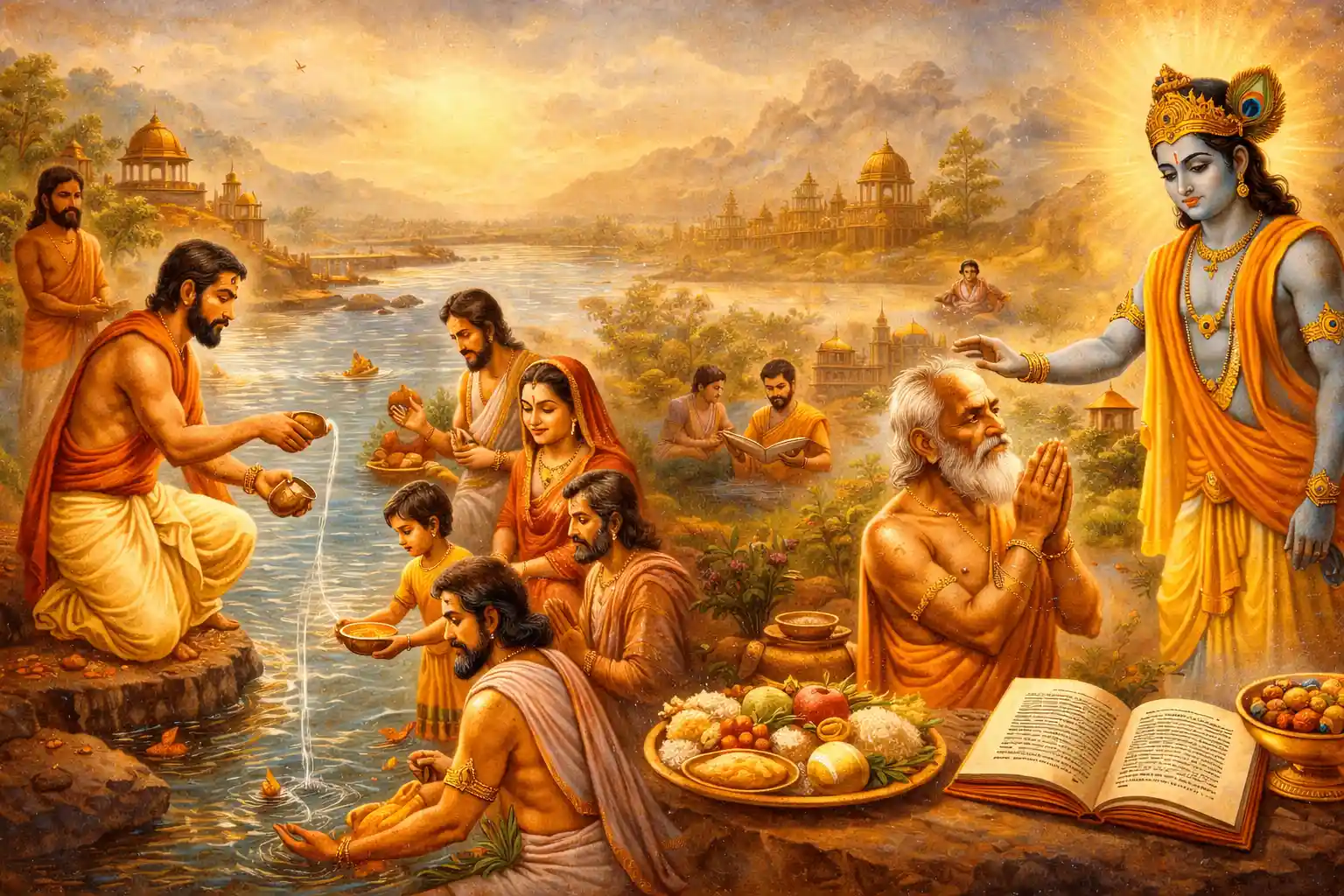
On Bhisma Ashtami, devotees perform Tarpan, offering water and prayers to ancestors. Fasting or consuming simple sattvic food is common. Many people read sections of the Mahabharata or listen to discourses on Bhishma’s life.
Charity is highly recommended on this day, especially donations of food, clothes, or knowledge. Acts of service performed with remembrance of Bhishma are believed to yield great spiritual merit.
The day is also considered auspicious for seeking blessings for longevity, wisdom, and strength of character.
Relevance of Bhisma Ashtami in Modern Life
In today’s fast paced world, Bhishma’s life offers rare clarity. His unwavering commitment to vows teaches integrity. His acceptance of suffering teaches resilience. His conscious departure teaches mindfulness even in death.
| Life Lesson | Modern-Day Meaning & Reflection |
| Integrity Through Vows | Bhishma’s unwavering commitment to his vows teaches the value of honesty, consistency, and staying true to one’s principles even when it is difficult. |
| Resilience in Suffering | His acceptance of hardship shows how inner strength and spiritual grounding help transform challenges into opportunities for growth. |
| Mindfulness in Death | Bhishma’s conscious departure highlights the importance of awareness and presence, reminding us to cultivate mindfulness throughout life. |
| Inner Anchoring (Swami Mukundananda’s Insight) | Modern stress arises from lack of inner stability. Bhishma’s life shows that alignment with a higher purpose brings peace even in life’s final moments. |
| Living with Dharma | Bhisma Ashtami invites reflection on whether our daily actions are guided by moral values and spiritual purpose rather than mere convenience. |
| Preparing for a Meaningful Exit | Encourages not just chasing success, but cultivating a life that leads to a peaceful, conscious, and purposeful transition from this world. |
Bhishma’s example shows that when life is aligned with higher purpose, even death becomes peaceful.
Bhisma Ashtami invites us to reflect on how we live daily. Are our actions guided by dharma or convenience. Are we preparing not just for success but for a meaningful exit from this world.
Bhishma, Devotion, and Krishna
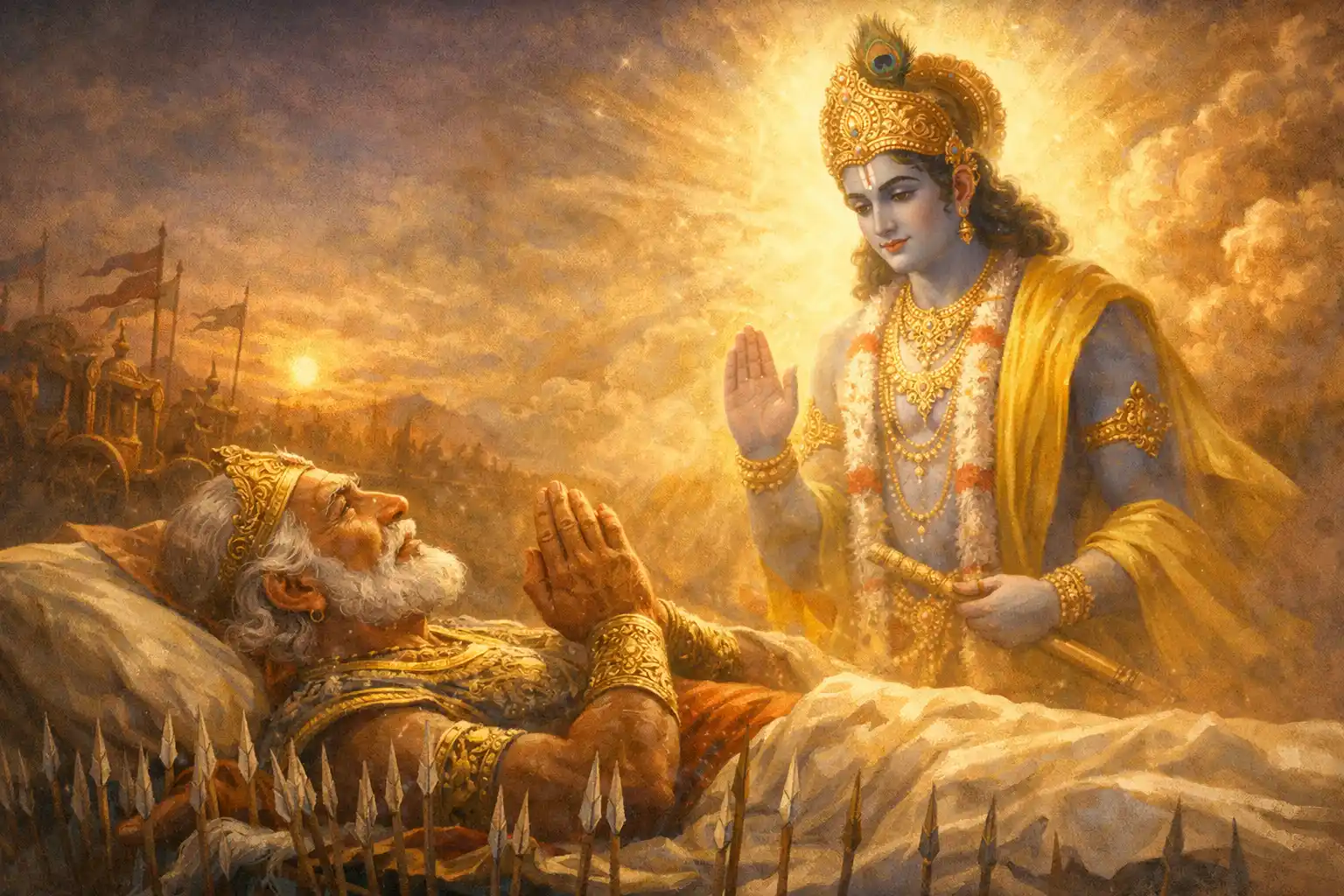
One of the most touching moments of Bhishma’s life occurs at the time of his departure. Lord Krishna stands before him, radiating compassion. Bhishma fixes his gaze upon Krishna and meditates upon His divine form.
Swami Mukundananda explains that this final vision reveals Bhishma’s ultimate devotion. Though Bhishma fought against Krishna’s devotees, his heart always belonged to Krishna.
This teaches that God sees the sincerity of the heart beyond external roles.
The Deeper Meaning of Uttarayan

Beyond astronomy, Uttarayan symbolizes the soul’s upward journey toward light and truth. Bhishma’s choice reminds seekers that liberation is not accidental. It is prepared for through a lifetime of discipline, service, and devotion.
Swami Mukundananda often explains that while not everyone has Ichchha Mrityu, everyone has the ability to shape their consciousness. If one remembers God daily, the final moment naturally follows the same direction.
Thus, Bhishma’s waiting is a call to spiritual practice here and now.
Lessons from Bhishma for Spiritual Aspirants
Bhishma teaches us that vows must be taken wisely but honored fully. He shows that duty may be painful yet purifying. He demonstrates that devotion can coexist with worldly responsibility.
Most importantly, he shows that the art of dying well is inseparable from the art of living well.
Swami Mukundananda summarizes Bhishma’s legacy as the triumph of consciousness over circumstance.
Conclusion: Bhisma Ashtami 2026 as a Day of Inner Awakening
Bhisma Ashtami 2026 is not just a remembrance of an ancient hero. It is an invitation to awaken spiritually. Bhishma Pitamaha’s decision to wait for Uttarayan reveals the power of awareness, discipline, and surrender.
Through the insights of Swami Mukundananda, we understand that Bhishma’s life and death were acts of teaching humanity how to align with divine will. As we observe Bhisma Ashtami, may we reflect on our own lives, strengthen our values, and move steadily toward inner light.
In honoring Bhishma, we honor the timeless path of dharma that leads from duty to devotion and from mortality to eternity.
Call To Action
🌼✨ Immerse Yourself in the Sacred Spirit of Bhisma Ashtami ✨🌼
Discover the timeless wisdom of Bhishma Pitamaha and the deeper meaning of conscious living and conscious leaving.
This Bhisma Ashtami, reflect on why the Grandsire waited for the sacred phase of Uttarayan and how his life exemplifies unwavering dharma, devotion, and inner strength.
🌸 Be inspired by the profound teachings of Swami Mukundananda, who beautifully explains Bhishma’s yogic departure, surrender to God, and mastery over the mind even in moments of great suffering.
📌 Swami Mukundananda’s Official Channel (for more related talks)
https://www.youtube.com/c/swamimukundananda
🌞 Read. Reflect. Rise.
Explore how these ancient truths from the Mahabharata remain deeply relevant today, guiding us toward clarity, resilience, and spiritual elevation.
👉 Dive deeper into Bhisma Ashtami, share this wisdom with loved ones, and walk the path of dharma illuminated by divine insight.
✦✦✦ Frequently Asked Questions on Bhisma Ashtami 2026 ✦✦✦
✨ Spiritual Insights, Traditions, and Timeless Teachings ✨
What is the relevance of Bhisma Ashtami in modern life
In modern times, Bhisma Ashtami reminds us of integrity, commitment to values, resilience in suffering, and conscious living. Bhishma’s life teaches that inner strength and spiritual anchoring are essential for facing life’s challenges with grace.
What is Ichchha Mrityu and how did Bhishma attain it
Ichchha Mrityu means the boon of choosing the time of one’s death. Bhishma received this divine blessing from his father, King Shantanu, as a reward for his extraordinary vow and selflessne
. What does Bhishma’s final vision of Krishna signify
Bhishma’s final vision of Lord Krishna signifies pure devotion and divine grace. Despite external roles and circumstances, his heart was always surrendered to God. This moment teaches that sincere devotion transcends all worldly complexities.
. What is the core message of Bhisma Ashtami 2026
The core message of Bhisma Ashtami 2026 is conscious living and conscious leaving. It inspires devotees to live a life rooted in dharma, devotion, and self mastery, so that the final moment becomes a natural ascent toward divine light.
Can ordinary people benefit spiritually from Bhishma’s example
Yes. While Ichchha Mrityu is rare, everyone can learn from Bhishma’s discipline, devotion, and remembrance of God. By practicing spiritual awareness daily, one naturally prepares for a peaceful and meaningful end of life.
✨ May the observance of Bhisma Ashtami inspire wisdom, devotion, and inner strength in all seekers. ✨
Refrences
🧘 Contemporary Spiritual Commentary
- Discourses and writings of Swami Mukundananda
- Interpretations on Bhishma Pitamaha’s life, yogic death, devotion, and surrender
- Teachings on conscious living, remembrance of God, and spiritual preparation for death
These insights are drawn from Swami Mukundananda’s lectures, commentaries, and philosophical explanations on the Mahabharata and Bhakti Yoga.
Here are some YouTube videos featuring Swami Mukundananda that relate to Bhishma Pitamah, his life lessons from the Mahabharata, and spiritual interpretations that are relevant to Bhisma Ashtami. These will deepen your understanding.