

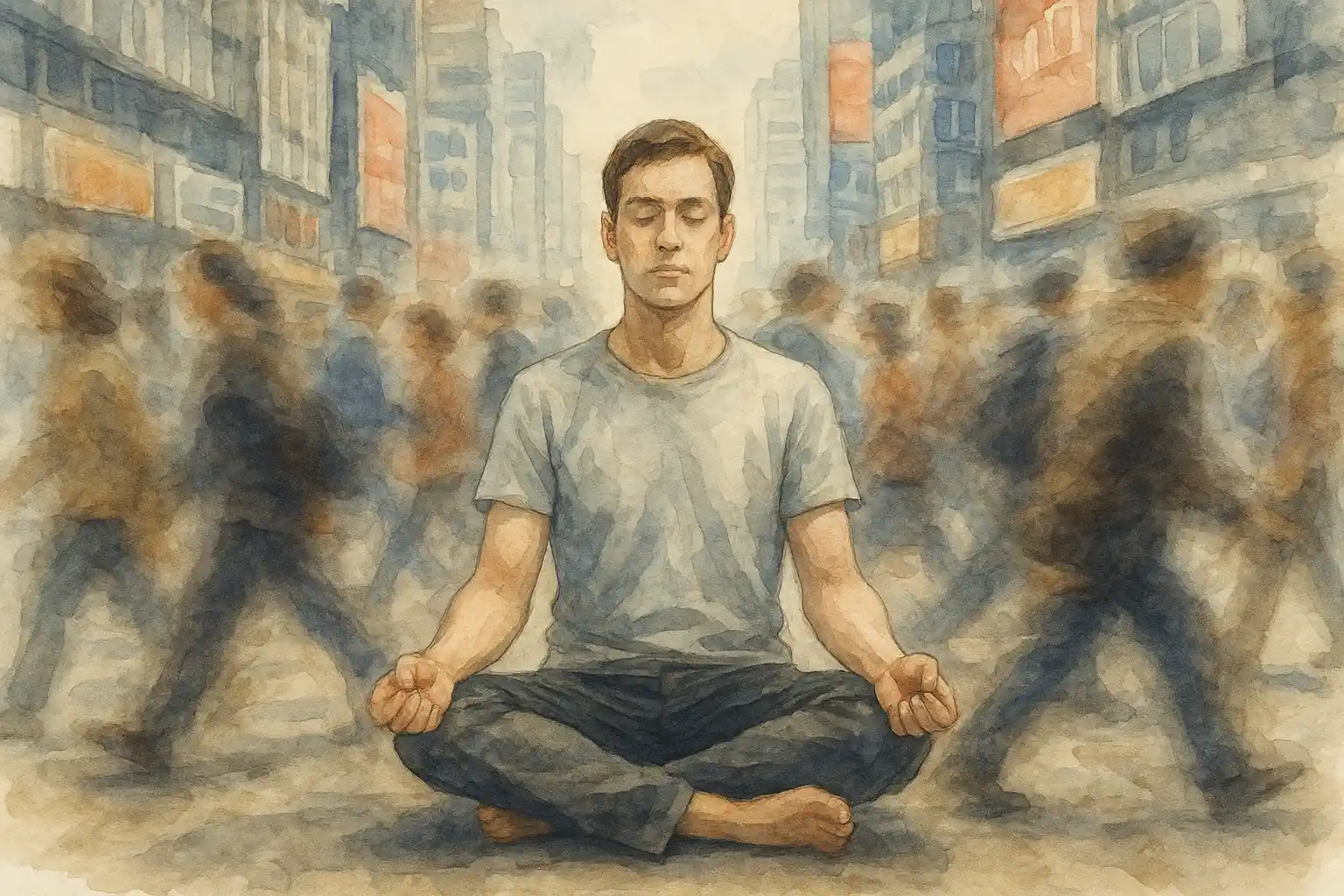
The greatest battle of human life is not fought on fields of war but within the chambers of the mind. As the Bhagavad Gita teaches in its sixth chapter, Dhyān Yog (the Yoga of Meditation), mastery of the mind is the key to true freedom, joy, and union with the Divine. The mind can be our best friend, guiding us toward peace, discipline, and devotion, or it can be our worst enemy, dragging us into confusion, restlessness, and despair.
In this blog, we will explore how Lord Krishna’s timeless wisdom offers us a roadmap to manage the mind, overcome its turbulence, and harness its vast potential for spiritual growth and inner happiness.
The Nature of True Renunciation

Shree Krishna gets straight to the point when he declares in BG 6.1: "Those who perform prescribed duties without desiring the results of their actions are actual sanyāsīs (renunciates) and yogis, not those who have merely ceased performing sacrifices such as Agnihotra yajna or abandoned bodily activities."
The ritualistic activities described in the Vedas include fire sacrifices, such as Agnihotra yajna. The rules for those who enter the renounced order of sanyās state that they should not perform the ritualistic karm kāṇḍ activities; in fact they should not touch fire at all, not even for the purpose of cooking. And they should subsist on alms instead. However, Shree Krishna states in this verse that merely giving up the sacrificial fire does not make one a sanyāsī (renunciant).
When we think of renunciation (sanyas), many imagine a life of seclusion in caves or forests. But Shree Krishna redefines renunciation in this chapter. He says the true renunciate is not the one who abandons all action, but the one who gives up selfish desires and attachments while continuing to fulfil responsibilities.
To withdraw physically from the world is easier than to withdraw mentally from cravings, pride, and ego. The real renunciate lives in the world but remains inwardly detached, offering every action as service to the Divine. This is the foundation of mind management: transforming the quality of thoughts rather than merely altering external circumstances.
Nowadays Yoga has become the buzz word in the western world. Numerous Yoga studios have sprung up in every town of every country of the world. Statistics reveal that one out of every ten persons in America is practicing Yoga. But this word “Yoga” does not exist in the Sanskrit scriptures. The actual word is “Yog,” which means “union.” It refers to the union of the individual consciousness with the divine consciousness. In other words, a yogi is one whose mind is fully absorbed in God. It also follows that such a yogi’s mind is naturally detached from the world. Hence, the true yogi is also the true sanyāsī.
Persons who perform karm yog do all activities in the spirit of humble service to God without any desire whatsoever for rewards. Even though they may be gṛihasthas (living with a family), such persons are true yogis and the real renunciants.
The Friend and Enemy Within

One of the most profound teachings in this chapter comes when Shree Krishna declares in BG 6.6: "For those who have conquered the mind, it is their friend. For those who have failed to do so, the mind works like an enemy."
This single truth explains much of human happiness and suffering. The external world is not as powerful in determining our state of being as the inner workings of our mind. A calm, disciplined mind brings serenity even amidst chaos, while a restless, undisciplined mind creates torment even in favorable conditions.
We dissipate a large portion of our thought power and energy in combating people whom we perceive as enemies and potentially harmful to us. The Vedic scriptures say the biggest enemies—lust, anger, greed, envy, illusion, etc.—reside in our own mind. These internal enemies are even more pernicious than the outer ones. The external demons may injure us for some time, but the demons sitting within our own mind have the ability to make us live in constant wretchedness. We all know people who had everything favorable in the world, but lived miserable lives because their own mind tormented them incessantly through depression, hatred, tension, anxiety, and stress.
The Vedic philosophy lays great emphasis on the ramification of thoughts. Illness is not only caused by viruses and bacteria, but also by the negativities we harbor in the mind. If someone accidentally throws a stone at you, it may hurt for a few minutes, but by the next day, you will probably have forgotten about it. However, if someone says something unpleasant, it may continue to agitate your mind for years. This is the immense power of thoughts.
Thus, the key question is not what is happening outside, but what is happening inside.
The Object of Meditation
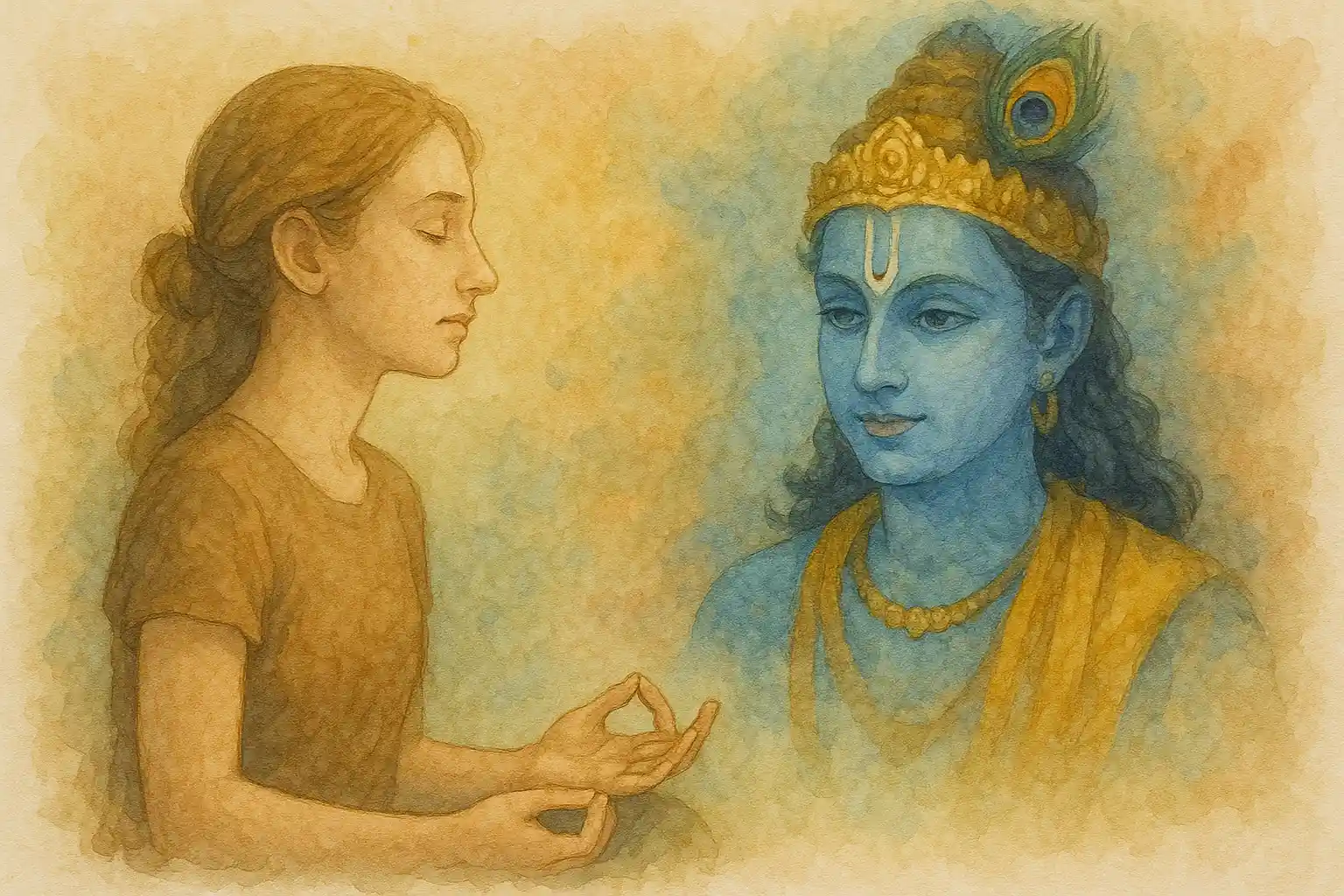
Shree Krishna leaves no doubt when he tells Arjun in BG 6.14-6.15: "Thus, with a serene, fearless, and unwavering mind, and staunch in the vow of celibacy, the vigilant yogi should meditate on Me, having Me alone as the supreme goal. Thus, constantly keeping the mind absorbed in Me, the yogi of disciplined mind attains nirvāṇ, and abides in Me in supreme peace."
Varieties of techniques for meditation exist in the world. There are Zen techniques, Buddhist techniques, Tantric techniques, Taoist techniques, Vedic techniques, and so on. Each of these has many sub-branches. Amongst the followers of Hinduism itself, there are innumerable techniques being practiced. Which of these should we adopt for our personal practice? Shree Krishna makes this riddle easy to solve. He states that the object of meditation should be God himself and God alone.
The aim of meditation is not merely to enhance concentration and focus, but also to purify the mind. Meditating on the breath, chakras, void, flame, etc. is helpful in developing focus. However, the purification of the mind is only possible when we fix it upon an all-pure object, which is God himself. Hence, verse 14.26 states that God is beyond the three modes of material nature, and when one fixes the mind upon him, it too rises above the three modes. Thus, meditating upon the prāṇas may be called transcendental by its practitioners, but true transcendental meditation is upon God alone.
What is the way of fixing the mind upon God? We can make all of God’s divine attributes—names, forms, virtues, pastimes, abodes, associates—the objects of meditation. They are all non-different from God and replete with all his energies. Hence, devotees may meditate upon any of these and get the true benefit of meditating upon God. In the various bhakti traditions in India, the name of God is made the basis of contemplation.
However, for most sādhaks the name by itself is not sufficiently attractive for enchanting the mind. Due to sanskārs of endless lifetimes, the mind is naturally drawn to forms. Using the form of God as the basis, meditation becomes natural and easy. This is called rūp dhyān meditation.
Once the mind is focused upon the form of God, we can then further enhance it by contemplating upon the virtues of God—his compassion, his beauty, his knowledge, his love, his benevolence, his grace, and so on. One can then advance in meditation by serving God in the mind. We can visualize ourselves offering foodstuffs to him, worshipping him, singing to him, massaging him, fanning him, bathing him, cooking for him, etc. This is called mānasī sevā (serving God in the mind). In this way, we can meditate upon the names, forms, virtues, pastimes, etc. of God. All these become powerful means of fulfilling Shree Krishna’s instruction to Arjun, in this verse, to keep the mind absorbed in him.
Balance in Daily Living
Shree Krishna also highlights a practical truth: discipline does not mean extremes. A yogi should neither indulge in excessive pleasures nor practice harsh austerities. Balance is essential. Eating, sleeping, working, and recreation—all should be regulated.
He states in 6:16-6.17: "O Arjun, those who eat too much or too little, sleep too much or too little, cannot attain success in Yog. But those who are temperate in eating and recreation, balanced in work, and regulated in sleep, can mitigate all sorrows by practicing Yog."
Why is this so important? Because the body and mind are interconnected. Overindulgence leads to laziness, while harsh deprivation leads to weakness. Both disturb the mind. A balanced lifestyle provides stability, allowing the aspirant to focus inward and maintain clarity.
This principle applies even today. Whether one is a student, professional, or spiritual seeker, learning to live in balance creates a strong foundation for managing the mind.
The Challenge of the Restless Mind
In BG 6.34, Arjun expresses the difficulty we all face: "The mind is very restless, turbulent, strong and obstinate, O Krishna. It appears to me that it is more difficult to control than the wind."
Shree Krishna does not belittle Arjun's concerns, but agrees and assures him that with abhyās (constant practice) and vairāgya (detachment), the mind can indeed be tamed. This is a message of hope. Even if the mind feels wild and unmanageable, steady effort and gradual discipline will bear fruit.
The Supreme Divine Personality, Shree Krishna, then gives the link between the control of the mind and success in Yog. He says that those who have not learnt to bridle the mind through abhyās and vairāgya find great difficulty in the practice of Yog. But those who have brought the mind under their control through persistent effort can achieve success by adopting the proper means. The perfect process has already been described by him from verses 6.10 to 6.32. It includes subduing the senses, giving up all desires, focusing the mind upon God alone, thinking of him with an unwavering mind, and seeing everyone with equal vision.
Abhyās, or disciplined practice, means repeatedly bringing the mind back to the chosen point of focus—whether it is meditation, prayer, or remembrance of God. Each time the mind wanders, gently bringing it back builds strength, much like exercising a muscle.
Vairāgya, or detachment, means letting go of cravings and aversions. The more we chase fleeting pleasures, the more the mind is agitated. By reducing dependency on external objects, the mind becomes calm, steady, and inwardly focused.
Together, practice and detachment create the conditions for true mastery.
There is no loss on the Spiritual Path
In BG 6.37, Arjun asks an important question: "What is the fate of the unsuccessful yogi who begins the path with faith, but who does not endeavor sufficiently due to an unsteady mind and is unable to reach the goal of Yog in this life?"
Shree Krishna responds reassuringly in BG 6.40: "O Parth, one who engages on the spiritual path does not meet with destruction either in this world or the world to come. My dear friend, one who strives for God-realization is never overcome by evil."
God, who is seated within the heart of every living being, is perfectly just. Whatever spiritual assets we had accumulated in the past life—detachment, wisdom, devotion, faith, tolerance, determination, etc.—are known to him. So, at the appropriate time, he gives us the fruits of our past efforts and enhances our spirituality from within, in accordance with our previous attainments. This explains why some people harboring materialistic views suddenly become deeply spiritual. When their spiritual sanskārs awaken, they get the benefit of their sādhanā of previous lives.
A traveler may break journey to rest the night in a hotel on the wayside. But when he wakes up, he does not need to again tread the distance already covered. He simply moves ahead to cover the remaining distance. Likewise, by God’s grace, the yogi of past lives receives the previous spiritual assets accumulated, to be able to continue the journey where he had left off, like someone who has woken up from sleep. That is why such a yogi never gets lost.
The Supreme Yog: Bhakti
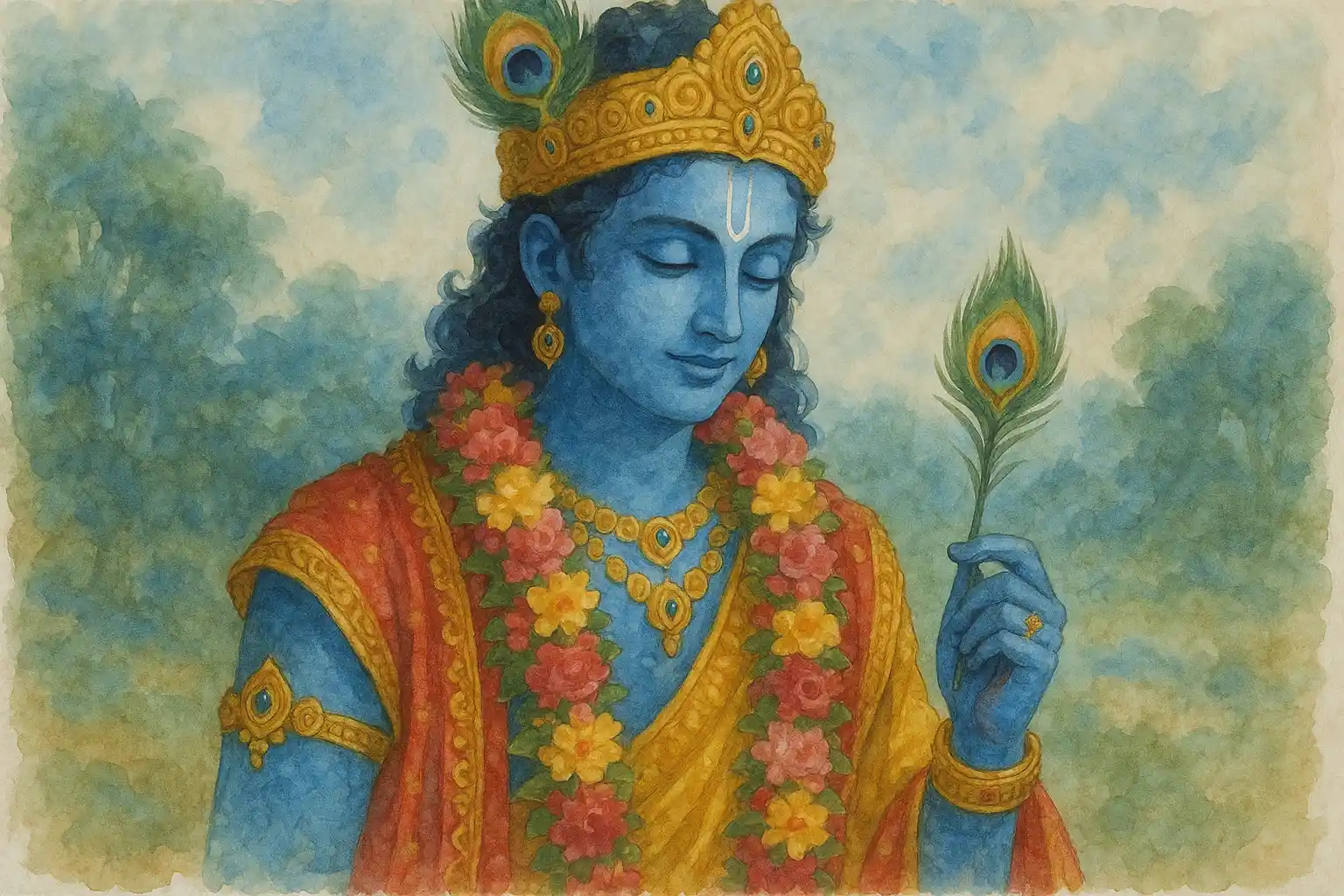
At the end of Chapter 6, Shree Krishna ensures that there is no doubt left in Arjun's mind. While He praises meditation and discipline, he concludes the chapter by declaring that among all yogis, the greatest is the one who offers devotion (bhakti). Such a yogi keeps the mind absorbed in God, not just during meditation, but throughout daily life.
In BG 6.46-6.47, Shree Krishna states: "A yogi is superior to the tapasvī (ascetic), superior to the jñānī (a person of learning), and even superior to the karmī (ritualistic performer). Therefore, O Arjun, strive to be a yogi. Of all yogis, those whose minds are always absorbed in Me, and who engage in devotion to Me with great faith, them I consider to be the highest of all."
Even amongst yogis, there are karm yogis, bhakti yogis, jñāna yogis, aṣhṭāṅg yogis, etc. This verse puts to rest the debate about which form of Yog is the highest. Shree Krishna declares the bhakti yogi to be the highest, superior to even the best aṣhṭāṅg yogi and haṭha yogi. That is because bhakti , or devotion, is the highest power of God. It is such a power that binds God and makes him a slave of his devotee.
When the heart is filled with love for the Divine, the mind naturally finds focus and peace. Bhakti transforms discipline into joy, making the path of mind management not a burden, but a blissful journey of loving remembrance.
Practical Takeaways for Managing the Mind
From this chapter, we learn:
- True renunciation means inner detachment, not withdrawal from duty.
- The mind is our greatest friend or enemy, depending on its discipline.
- Meditation purifies and steadies the restless mind.
- Balanced living supports inner clarity.
- Practice and detachment are essential tools.
- Devotion to God makes mind management natural and joyful.
Conclusion
The journey of managing the mind is the journey of life itself. Every struggle, every restlessness, and every challenge is an opportunity to strengthen inner discipline and move closer to the Divine.
Lord Krishna’s words remind us that the restless mind, though powerful, can be conquered through practice, balance, and devotion. And in conquering it, we unlock the highest treasure—everlasting peace, unshakable joy, and the bliss of selfless devotion to God.
Call to Action
Subscribe at https://www.youtube.com/@swamimukundananda, where you can find Swami Mukundananda's discourses on meditation in addition to guided meditations.
Read the Bhagavad Gita with Swami Mukundananda's commentary: https://www.holy-bhagavad-gita.org/
FAQsat
1. What does the Bhagavad Gita say about managing the mind?
The Gita teaches that the mind can be our best friend or worst enemy. By discipline, practice, and detachment, we can master it and live peacefully.
2. Why is meditation important for mind control?
Meditation calms the restless mind, allowing clarity, self-awareness, and spiritual connection to flourish.
3. How can one balance spiritual practice with daily duties?
Shree Krishna advises inner detachment while fulfilling responsibilities. True renunciation lies in the attitude, not external withdrawal.
4. What is the role of bhakti in mind management?
Devotion to God absorbs the mind in higher love, making discipline natural and joyful.
5. Can anyone manage the mind, or is it only for yogis?
Mind mastery is for everyone. With practice and patience, every individual can gradually discipline the mind and experience inner peace.