



Faith in God does not usually appear in the heart by accident. It often begins quietly, when life makes us pause and ask: What is truly real? What will remain with me when everything else changes? Why do I keep searching for happiness, yet never feel complete?
Faith in God does not begin with blind belief. It begins with true knowledge: knowledge of God’s greatness, the soul’s relationship with Him, and the temporary nature of the material world.
This is the foundation of bhakti. When we understand who God is, who we are, and why the world can never fully satisfy the soul, faith naturally begins to awaken.
According to the wisdom shared by Swami Mukundananda, faith begins when the soul receives true knowledge: the understanding that the world is temporary, God alone is the eternal reality, and our deepest relationship is with Him. Swami ji emphasize this central sequence again and again: knowledge gives rise to faith, faith matures into love, and love becomes bhakti, or devotion.
This is the exact emphasis found in Narad Bhakti Sutra 28:
तस्या ज्ञानमेव साधनमित्येके ॥ २८ ॥
tasyā jñānameva sādhanamityeke
Some acharyaas are of the view that jnana is the sole means to bhakti
Narad Ji explains that many acharyas regard knowledge as the foundation of devotion. This does not mean dry intellectual learning or pride in scriptural scholarship. It means true spiritual understanding: knowing who God is, who we are, what our relationship with God is, and why the material world can never fully satisfy the soul.
When this knowledge enters the heart, faith naturally begins to awaken. Just as we cannot deeply love something whose value we do not understand, we cannot develop genuine devotion to God without first understanding His greatness, compassion, beauty, and intimate relationship with us.
Therefore, Narad Bhakti Sutra 28 emphasizes that faith in God begins with jñāna, or divine knowledge. Knowledge removes ignorance, strengthens conviction, and prepares the heart for bhakti. Without knowledge, devotion can become mechanical or sentimental. With knowledge, devotion becomes deep, steady, and filled with love. When understanding deepens, conviction becomes natural.
Faith Is Not Blind Belief
Many people think faith means believing without reason. But true faith in God is not blind. It is not superstition, social conditioning, or fear. It is born from deep understanding.
When we understand the value of something, love for it naturally awakens. Swami Mukundananda explains this through a simple example. Suppose someone gives you a birthday gift in an ugly, torn bag. At first, you may dismiss it. But when you open it and find a priceless diamond ring inside, your attitude changes instantly. The gift has not changed; your knowledge of its value has changed. With that knowledge, appreciation and love arise.

This is how faith in God begins. God is always supremely valuable, supremely loving, and supremely ours. But until we understand His greatness, His compassion, and our eternal relationship with Him, the heart does not naturally run toward Him. When the intellect accepts God’s greatness, the heart begins to trust Him.
When Knowledge Changes the Heart: The Officer and Maharaj Ji
Another beautiful example of this principle is seen in a story from the life of Jagadguru Shree Kripalu Ji Maharaj. Once, while traveling by train from Ratlam to Indore, Maharaj Ji shared a compartment with a senior government officer. During the journey, Maharaj Ji casually asked the officer whether he had any interest in spiritual discourses and satsang.
The officer immediately began praising the teachings of Kripalu Ji Maharaj, not realizing that he was speaking directly to the very saint he admired. To test the depth of the officer’s conviction, Maharaj Ji began criticizing “Kripalu Ji Maharaj.” Hearing this, the officer became deeply annoyed. He strongly defended the saint and eventually refused to continue the conversation for the rest of the journey.

But when the train reached Indore, the officer saw a large reception party waiting to welcome Kripalu Ji Maharaj. In that moment, he realized that the person sitting with him in the compartment was none other than Maharaj Ji himself. His entire attitude changed instantly. The irritation he had felt moments earlier was replaced by deep reverence, humility, and love.
What changed? Maharaj Ji had not changed. The officer’s knowledge had changed. The moment he understood the true identity of the person before him, his heart transformed. This shows that love does not arise merely from physical closeness; it arises from correct understanding. When knowledge reveals the true greatness of a person, faith and love naturally follow.
This is why the poet-saint Tulsidas Ji beautifully said:
जाने बिनु न होई परतीति, बिनु परतीति होई नहीं प्रीति
“Without knowledge, there cannot be faith; without faith, love cannot arise.”
This one line captures the entire spiritual sequence. The basis of love is faith, and the basis of faith is knowledge. In the same way, when we understand God’s greatness, His compassion, His beauty, and our eternal relationship with Him, faith in God begins to awaken naturally.
Bhagavad Gita 7.19: Knowledge Culminates in Surrender
Shree Krishna reveals this truth beautifully in the Bhagavad Gita 7.19:
बहूनां जन्मनामन्ते ज्ञानवान्मां प्रपद्यते |
वासुदेव: सर्वमिति स महात्मा सुदुर्लभ: || 19||
bahūnāṁ janmanām ante jñānavān māṁ prapadyate
vāsudevaḥ sarvam iti sa mahātmā su-durlabhaḥ
BG 7.19: After many births of spiritual practice, one who is endowed with knowledge surrenders unto Me, knowing Me to be all that is. Such a great soul is indeed very rare.
Swami Mukundananda explains that this verse shows the natural culmination of true knowledge. When knowledge matures, it does not make the soul proud or merely intellectual. Instead, it brings humility, devotion, and surrender. The truly wise person realizes, “Vasudevaḥ sarvam iti”, God is everything. He is the source of all that exists, the support of all life, and the final goal of the soul.
True knowledge does not remain intellectual. It softens into surrender. When the soul understands God’s supreme position and its eternal relationship with Him, devotion awakens naturally. This is why faith in God begins with knowledge, but reaches perfection in loving surrender.
Why Ritual Alone Does Not Create Faith

A person may chant, pray, visit temples, attend satsang, or read scriptures, but if the mind is not engaged, transformation does not occur. Swami Mukundananda’s teachings says that many people perform rituals, attend discourses, and visit sacred places, yet remain untouched within because the body participates but the mind remains absent.
This is one of the biggest challenges in spiritual life. We may perform devotion externally while the mind wanders elsewhere. We may chant God’s name while thinking of business, family conflicts, social media, or future worries. Then we wonder, “Why am I not feeling connected to God?”
The answer is simple: faith begins when knowledge enters the intellect and then engages the mind. Devotion is not merely physical activity. It is the loving absorption of the heart.
Swami ji give the example of the chant “Ram Naam Satya Hai”—“The name of Ram is truth.” In many places, people chant it during funeral processions. But because they have not reflected on its true meaning, they associate it only with death.
But the statement itself is the highest truth: God’s name alone is eternal. The world changes; the body dies; possessions vanish; relationships shift. But God and His name remain. When this knowledge becomes firm ,the same chant that once seemed inauspicious becomes beautiful, sacred, and life-giving.
A powerful example of this difference between mechanical ritual and enlightened devotion is seen in the way society treats “Ram Naam Satya Hai” compared with how Lord Shiva reveres the name of Ram.
Society’s Ignorance vs. Lord Shiva’s Knowledge of Ram Naam

In North Indian society, it is common to chant “Ram Naam Satya Hai”, “The name of Ram is truth,” during funeral processions. Yet, for many people, this sacred declaration has become associated only with death. Instead of recognizing it as the highest spiritual truth, people often treat it as an inauspicious phrase. If someone were to chant it during a wedding procession, at a joyous gathering, or even outside someone’s home in the morning, people might become frightened or angry. They may think that hearing this phrase will bring death or misfortune.
In his Bhakti Shatak, Maharaj Ji exposes this spiritual inconsistency with great clarity. He observes that people declare “Ram Naam Satya Hai”, “the name of Ram is the truth,” only while carrying a dead body to the cremation ground. For that brief moment, they acknowledge that God alone is real and that everything in the world is temporary.
But as soon as they return home, the lesson is forgotten. The same people again begin to treat the material world as the ultimate reality. Their attachment, pride, desires, and worldly anxieties return as before. Maharaj Ji points out that this shallow cycle repeats again and again: whenever someone dies, God is accepted as the truth up to the cremation ground; the moment people come back, the world once again becomes their truth.
This reveals the difference between temporary emotion and genuine faith. Without true knowledge, even the greatest spiritual truth becomes a passing formality. People may chant God’s name with their lips, but their inner conviction remains unchanged. Their words say, “The name of Ram is truth,” but their life says, “The world is truth.” Real faith begins only when we deeply understand and live by the truth that God alone is eternal, while the material world is fleeting.
Lord Shiva’s attitude is completely different. Shankar ji possesses true spiritual knowledge of the power, beauty, and auspiciousness of Ram Naam. He does not see the name of Ram as a symbol of death. He sees it as the highest source of life, grace, purification, and divine benefit. Out of the vast ocean of the Ramcharitmanas, Lord Shiva extracted the essence: Ram Naam. He understood that the name of Ram is not ordinary sound; it contains divine power and spiritual blessing.
This contrast teaches us an important lesson. To the ignorant, even God’s name can appear frightening. To the wise, God’s name is the greatest treasure. Society’s lack of knowledge turns the supreme truth into a feared funeral chant, while Lord Shiva’s perfect knowledge allows him to revere Ram Naam as the most beneficial spiritual reality.
This is exactly why knowledge is the beginning of faith. When we do not understand the greatness of God and His name, our practices remain mechanical. But when true knowledge awakens, the same name that once seemed ordinary becomes divine, beautiful, and full of grace. Then faith is no longer forced; it flows naturally from understanding.
This is why spiritual knowledge is not optional. It changes the meaning of our practices, purifies our understanding, and prepares the heart for genuine faith in God.
The World Teaches Detachment
Faith often begins when life exposes the limitations of the material world. We chase pleasure, recognition, wealth, comfort, and control, but none of these remain permanently satisfying. Every worldly joy comes with fear: fear of losing it, fear of not getting enough of it, fear of someone else having more of it.
Spiritual knowledge teaches us that this restlessness is not a mistake; it is a signal. The soul is eternal, so it cannot be satisfied by temporary objects. The soul belongs to God, so it cannot find full contentment away from Him.
This is where vairāgya, or detachment, begins. Detachment does not mean hatred for the world. It means understanding the world’s place. The world is useful for service, learning, and spiritual growth, but it is not the final shelter of the soul.
When we understand this, faith begins to shift. Earlier, we had faith in money, people, achievements, appearance, and status. Gradually, we realize these cannot be the ultimate foundation of life. The heart then begins searching for something higher.
That higher shelter is God.
God Becomes Real Through Understanding
Many people say, “I want faith, but I do not feel it.” This is natural. Faith cannot be forced artificially. It must be cultivated.
How? Through satsang, scripture, reflection, remembrance, and practice.
Swami ji explains that faith grows through satsang, reflection, and sincere practice, gradually deepening into unwavering belief. This is not instant. Bhagavad Gita 7.19 says that after many births of spiritual practice, the wise soul finally surrenders to God, recognizing Him as everything.
This verse is powerful because it shows that surrender is not weakness. Surrender is the fruit of wisdom. A truly knowledgeable person does not become arrogant; he becomes humble. He realizes, “Everything I have comes from God. My body, mind, abilities, opportunities, relationships, and even my spiritual longing are gifts of grace.”
When knowledge ripens, surrender becomes natural.
The Rare Soul Who Sees God Everywhere
Shree Krishna says such a soul is su-durlabhaḥ—very rare. Why rare? Because most people know God only theoretically. They may say, “God is everywhere,” but their emotions still depend entirely on worldly success. They may say, “God is the truth,” but their daily life shows that they treat the world as the final reality.
The rare soul is different. Such a person sees God as the source of everything, the owner of everything, and the beloved of the soul. This knowledge changes how they live.
They no longer ask only, “What do I want?” They ask, “What will please God?”
They no longer see prayer as a duty. They see it as a meeting with the Divine.
They no longer see scripture as information. They see it as guidance from God.
They no longer see suffering as meaningless. They see it as an opportunity for purification and surrender.
This is real faith.
If knowledge is the beginning of faith, then the next question naturally arises: how do we receive true spiritual knowledge? Scripture, satsang, and reflection all help, but the guidance of a true Guru is especially important. A Guru does not merely give information; he gives the vision to understand God, the soul, and the world correctly.
The Role of the Guru
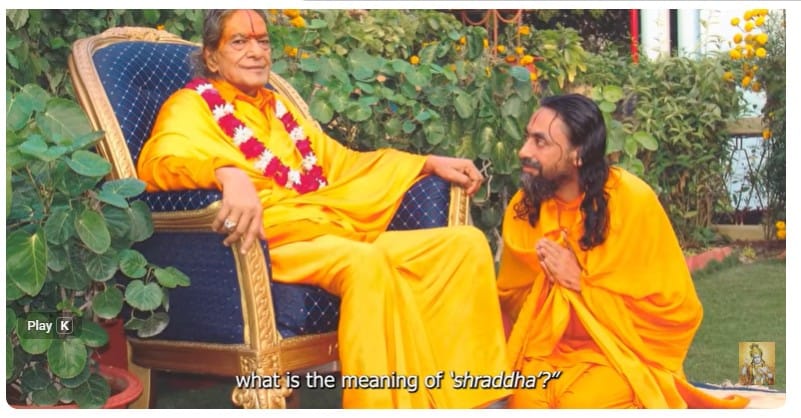
This is where the Guru’s guidance becomes essential. The Guru helps us receive the right kind of knowledge and apply it correctly in our spiritual life. Without such guidance, two problems can arise.
First, devotion may become emotional but not steady. A person may feel inspired for some time, but without proper understanding, that devotion can become sentimental, mechanical, or dependent on changing moods.
Second, knowledge may become intellectual but not loving. A person may study scriptures, discuss philosophy, and understand spiritual concepts, but without devotion, the heart may remain dry, proud, or disconnected from God.
A true Guru brings balance. He teaches knowledge in a way that deepens devotion, and he teaches devotion in a way that is guided by knowledge. Under the Guru’s guidance, spiritual practice becomes steady, sincere, and transformative. Knowledge gives direction to devotion, and devotion gives life to knowledge. Together, they lead the soul toward divine love.
Saint Kabir expresses the glory of the Guru in his famous verse:
guru govind doū khaḍe, kāke lāgūn pāy
balihārī guru āpane, govind diyo milāy
“God and Guru are both standing before me; to whom should I offer obeisance? I bow before my Gurudev first, by whose grace I could meet God.”
This verse does not diminish God’s greatness. Rather, it reveals the indispensable role of the Guru. God is the supreme goal, but the Guru is the one who opens our eyes and leads us to Him. By the Guru’s grace, divine knowledge becomes clear, faith becomes steady, and devotion begins to blossom.
Swami Mukundananda,, emphasizes that devotion must be practiced with understanding. A true Guru helps the seeker avoid two extremes: devotion without knowledge, which can become sentimental, and knowledge without devotion, which can become dry and intellectual. Under the Guru’s guidance, knowledge gives direction to devotion, and devotion gives life to knowledge.
Once we understand that true faith begins with knowledge, the next step is to apply that knowledge in practice. For devotion to transform the heart, the mind must not remain passive or distracted; it must be actively engaged in remembering, reflecting on, and loving God.
Why the Mind Must Be Engaged
Faith does not live only in the lips. It must enter the mind.
The Swamiji explains a common problem: during worldly work, the mind stays focused because we give it a task; during prayer, the body may be active but the mind is left idle, so it wanders. This is why Swami Mukundananda recommends engaging the mind in devotion, especially through meditation on the form of God, known as Roop Dhyan.
When the mind visualizes God, remembers His qualities, reflects on His grace, and offers emotions to Him, devotion becomes alive. The heart begins to taste spiritual sweetness, or rasa. Then faith is no longer borrowed from others; it becomes personally experienced.
This is important. In the beginning, we may depend on others’ faith. We hear saints, scriptures, and devotees say, “God is real. God is loving. God is the goal.” But as we practice sincerely, our own heart begins to confirm it. We feel peace in remembrance. We feel emptiness in forgetfulness. We feel strength in surrender.
Then faith becomes our own.
From Fear-Based Religion to Love-Based Bhakti
Many people begin religious life out of fear: fear of suffering, fear of death, fear of bad karma, fear of social judgment, or fear of divine punishment. This may be a starting point, but it is not mature faith.
True faith is love-based. It says, “God is mine, and I am His.” It does not approach God merely as a problem-solver, but as the beloved Lord of the soul.
Narad Bhakti Sutra defines bhakti as supreme love for God. Swamiji article highlights this teaching: bhakti is not ritual; it is pure, selfless, continuous love.
That love begins with knowledge. We cannot love someone deeply unless we know them. The more we understand God’s beauty, mercy, sweetness, protection, and intimate relationship with us, the more the heart becomes attracted.
This is why hearing God’s glories is so powerful. When we hear about Shree Krishna’s compassion, Lord Ram’s righteousness, Radha Rani’s grace, or the saints’ surrender, the intellect receives knowledge and the heart receives inspiration. Slowly, faith awakens.
The Danger of Mechanical Spirituality
Mechanical spirituality is one of the greatest obstacles to faith. It makes us think we are progressing simply because we are performing actions. But external practice without inner absorption can continue for years without changing the heart.
Swami Mukundananda’s teachings warn against this. Swami ji states that true spirituality changes behavior and true devotion transforms character. If our prayer does not make us humbler, kinder, more truthful, more detached, and more God-centered, then we need to examine whether our mind is truly connected.
The purpose of spiritual practice is not to impress others. It is to purify the heart.
Faith begins when we become honest with ourselves. Do I really believe God is my shelter? Do I remember Him in difficulty? Do I offer my success to Him? Do I trust His plan when life does not follow my plan? Do I seek Him for His sake, or only for worldly favors?
These questions deepen faith.
Knowledge Must Become Realization
There is a difference between knowing and realizing. A person may know that the body is temporary, but still live only for bodily pleasures. A person may know that God is supreme, but still prioritize ego. A person may know that the world is fleeting, but still cling to it desperately.
Realization means knowledge has entered the heart.
Bhagavad Gita 7.19 speaks of the jñānavān, the one endowed with knowledge, who finally surrenders to God. This is not theoretical knowledge. It is lived knowledge. It has been tested through experience, reflection, and practice.
Such knowledge produces humility. It produces surrender. It produces love.
When we truly know that God is everything, we stop running after fragments. We stop demanding permanent happiness from temporary sources. We stop making the world responsible for giving us what only God can give.
Then faith begins to shine.
Where Faith Begins in Daily Life
Faith begins when we pause before reacting and remember, “God is watching over me.”
Faith begins when we open scripture not as literature, but as divine guidance.
Faith begins when we chant God’s name with attention, not merely habit.
Faith begins when we thank God in success and trust Him in difficulty.
Faith begins when we see worldly disappointments as reminders to turn inward.
Faith begins when we value satsang more than gossip, remembrance more than distraction, and surrender more than ego.
Most importantly, faith begins when knowledge becomes personal.
It is not enough to say, “God is the truth.” We must ask, “Am I living as if God is the truth?”
It is not enough to say, “The world is temporary.” We must ask, “Am I reducing my attachment to temporary things?”
It is not enough to say, “I love God.” We must ask, “Is my mind going toward Him during the day?”
These reflections turn knowledge into faith.
The Beginning Is Also Grace
Even the desire to know God is grace. Many people pass through life without asking ultimate questions. If the thought arises in your heart—“How can I develop faith in God?”—that itself is a blessing.
The journey begins with knowledge, but knowledge itself comes by grace: through saints, scriptures, satsang, and life experiences arranged by God. When we respond sincerely, grace increases.
That is why the seeker should not feel discouraged. Faith may begin small. It may begin as curiosity, doubt, longing, or pain. But when nourished with knowledge and practice, it becomes firm.
A small flame can become a lamp. A lamp can become a fire. A fire can illuminate the whole heart.
Conclusion
In conclusion, true devotion is not a blind leap of faith. It is a profound love grounded in deep spiritual understanding. As Tulsidas Ji beautifully explains, the path to divine love unfolds step by step: knowledge gives rise to firm faith, and faith eventually blossoms into genuine love.
Without this foundation of knowledge, our spiritual practices can become empty, mechanical, or fear-driven. This is seen in the way society often chants “Ram Naam Satya Hai” only during funeral processions, while failing to live by its deeper meaning. People may declare that the name of Ram is the truth on the way to the cremation ground, but upon returning home, they again begin to treat the material world as the ultimate reality.
However, when we sincerely seek to understand God’s nature, His greatness, and our eternal relationship with Him, our perspective begins to change completely. Just as discovering a priceless diamond hidden in a torn bag instantly awakens appreciation for the gift, spiritual knowledge awakens love and reverence for God within the heart.
This knowledge lifts us from the ignorance of seeing the material world as absolute truth. Instead, like Lord Shiva, we begin to recognize the supreme, auspicious, and divine beauty of Ram Naam. We no longer see God’s name as a ritual associated with death, but as the highest source of grace, purification, and spiritual benefit.
Ultimately, seeking spiritual knowledge, or Gyan, is not merely an intellectual exercise. It is the essential first step toward awakening lasting and unwavering devotion, or Bhakti, within the heart. Faith is knowledge that has entered the heart.
Key Takeaways
- Faith in God begins with knowledge. True faith is not blind belief, superstition, or fear. It begins when we understand God’s greatness, our relationship with Him, and the temporary nature of the material world.
- Narad Bhakti Sutra 28 emphasizes knowledge as a foundation for bhakti. Divine knowledge removes ignorance, strengthens conviction, and prepares the heart for genuine devotion.
- Knowledge awakens appreciation and love. Just as discovering a priceless diamond inside a torn bag changes our attitude toward the gift, understanding God’s true value awakens faith and love for Him.
- Faith grows through correct understanding. The story of the officer and Jagadguru Shree Kripalu Ji Maharaj shows that when knowledge changes, the heart changes. Reverence arises when we recognize true greatness.
- Tulsidas Ji gives the spiritual sequence clearly: without knowledge, there is no faith; without faith, there is no love. Knowledge leads to faith, and faith blossoms into divine love.
- Bhagavad Gita 7.19 shows the culmination of knowledge. When knowledge matures, the soul realizes “Vasudevaḥ sarvam iti,” God is everything, and naturally surrenders to Him.
- Ritual without understanding becomes mechanical. The chanting of “Ram Naam Satya Hai” during funeral processions shows how sacred truth can become a mere formality when it is not supported by true knowledge.
- Lord Shiva’s reverence for Ram Naam shows the power of true knowledge. While society may associate Ram Naam with death, Lord Shiva recognizes it as supremely auspicious and spiritually beneficial.
- True knowledge transforms spiritual practice. It changes chanting, prayer, satsang, and devotion from empty routine into heartfelt connection with God.
- Faith is knowledge that has entered the heart. When divine knowledge becomes personal conviction, it awakens trust, surrender, and lasting bhakti.
🌟 Final Call to Action
👉 For more life-changing teachings, subscribe to the official YouTube channels:
👉 Watch the complete Narad Bhakti Sutra series on the Bhagavad Gita Krishna Bhakti Channel:
Buy the "Narad Bhakti Sutras" by Swami Mukundananda
Now that we’ve explored the divine wisdom of the Narad Bhakti Sutras, it’s time to take the next step on your spiritual journey. To deepen your understanding of the Narad Bhakti Sutras, we highly recommend Swami Mukundananda’s commentary, which beautifully unpacks each mantra providing a clear and practical guide for modern seekers.
Order the Book: Swami Mukundananda’s Commentary
Unlock the deeper wisdom of the Narad Bhakti Sutras with this insightful commentary by Swami Mukundananda. Perfect for modern seekers who wish to explore the divine teachings in greater depth.

Order the Book Now (India)Order the Book Now (USA)
FAQs
1. Where does faith in God begin?
Faith in God begins with true spiritual knowledge. When we understand God’s greatness, our relationship with Him, and the temporary nature of the material world, faith naturally starts to awaken in the heart.
2. Does faith mean believing blindly?
No. True faith is not blind belief, superstition, or fear. It is conviction born from understanding. When the intellect recognizes the truth about God, the heart begins to trust Him.
3. What does Narad Bhakti Sutra 28 teach about faith and devotion?
Narad Bhakti Sutra 28 teaches that knowledge is considered by many acharyas to be the means to attain bhakti. This means that divine knowledge prepares the heart for devotion by removing ignorance and strengthening faith.
4. How does Bhagavad Gita 7.19 connect knowledge with surrender?
In Bhagavad Gita 7.19, Shree Krishna says that after many births, the truly wise soul surrenders to Him, realizing, “Vasudevaḥ sarvam iti,” God is everything. This shows that mature knowledge naturally leads to surrender and devotion.
5. Why can rituals become empty without knowledge?
Rituals become empty when they are performed mechanically, without understanding their deeper meaning. For example, chanting “Ram Naam Satya Hai” only during funerals, while forgetting that God’s name is eternally auspicious, shows how sacred practices can lose their power when separated from true knowledge.
Resources for further Reading
 RKT Blog Team
 JKYog Team
 JKYog Team