

From the Editor’s Desk
In our search for happiness, we often look outward – to circumstances, achievements, or possessions – only to find that joy quickly fades. True and lasting inner joy, however, is born from within. It flows naturally when our intentions are pure, our thoughts are aligned with the Divine, and we recognize ourselves as humble servants of God/Guru.
Drawing from the Vedic knowledge (i.e., tattva jnana) taught by Shree Swami Mukundananda ji, this issue of JKYog’s E-Journal, Samarpan, explores the sources of inner joy, the barriers that hinder it, and the practical steps we can take daily to rediscover this divine gift.
Vedic Wisdom & Application
Theme of the Month
Discovering Inner Joy: A Spiritual Perspective: Practical Steps for Inner Growth
Reflection Questions
- What is Inner Joy?
- What are the Sources of Inner Joy?
- What are the Barriers to Inner Joy in Modern Life?
- Can Joy Be Practiced? How?

In a world that values speed and spectacle, happiness often appears and vanishes as external circumstances change. Inner joy is different. It is a silent yearning that persists in the human heart. Despite external success, many feel a void within. Saints and spiritual masters speak about it as joy untouched by the world and unaffected by success or failure.
What is Inner Joy?
Inner joy is the outward expression of one's fundamental spiritual essence – steady, conscious, and radiant. Inner joy, or anand, differs fundamentally from what we commonly call pleasure or even superficial happiness. Material pleasures and happiness depend on favorable conditions — a good meal, a kind word, a beautiful sunset, or a promotion. It is transient and fluctuating, whereas inner joy is a state of being – a deep contentment independent of external triggers. For example, even when Saint Tukaram lost all his worldly possessions, he sang with ecstasy, “My wealth is in the name of Lord Vitthala.”
According to Vedic philosophy, anand, or divine bliss, is a defining attribute of the soul, along with sat (i.e., eternity) and chit (i.e., knowledge). It is the unchanging bliss of pure God-consciousness. Inner joy is not something to acquire but to realize. Swamiji says, “Joy is the nature of the soul. Just as fire cannot exist without heat, the soul cannot exist without bliss. But to experience this joy, we must remove the layers of ignorance, desire, and ego.” When these material layers subside, joy shines, illuminating the qualities of humility, resilience, and quiet acceptance.
In the material realm, the closest one can come to experiencing inner joy is when engaged in an activity where the mind is single-pointed, free from distraction, and absorbed in the present (i.e., flow). For example, in alignment with our spiritual nature, when the mind is completely engrossed in kirtan, seva, scriptural study, meditation, or a state of samadhi, this absorption becomes sacred. Contemplating the magnificent and beautiful pastimes (leelas) of Shree Krishna’s childhood produces a blissful inner state that makes the mind completely absorbed in the storyteller's message.

When the mind unites with that of God, the bliss is beyond the scope of the material senses. That is why such absorption is filled with peace and joy. As Shree Krishna explained to Arjun (Bhagavad Gita 6.21):
सुखमात्यन्तिकं यत्तद्बुद्धिग्राह्यमतीन्द्रियम् |
वेत्ति यत्र न चैवायं स्थितश्चलति तत्त्वत: || 21||
sukham atyantikam yat tad buddhi-grahyam atindriyam
vetti yatra na chaivayam sthitash chalati tattvatah
In that joyous state of Yog, called samadhi, one experiences supreme boundless divine bliss, and thus situated, one never deviates from the Eternal Truth (Bhagavad Gita 6.21).
It is such inner joy for which many well-known kings in Indian history renounced their kingdoms and went to the forest to practice intense sadhana. As Swamiji beautifully explains in His lectures, “Ultimately, joy is a practice that involves recognizing the abundance in our lives and choosing to focus on the positive aspects, allowing us to experience a deeper, more lasting happiness that transcends external circumstances.”
What are the Sources of Inner Joy?
Inner joy stems from various sources that intertwine our spiritual and material experiences. Here are some key sources:
- Connection with the Divine: Recognizing our true and eternal relationship with God or any element of the divine realm is fundamental for establishing a basis for devotion. Bhakti personalizes the Infinite; we can relate to God as a servant, friend, parent, or beloved. This connection enriches our spirit and brings us closer to God/Guru – the source of bliss. Cultivating a relationship with God/Guru cleanses the heart of negative emotions, inspires a deep sense of gratitude for everything in life, builds trust and encourages surrender, allows one to let go of anxiety and fear, and shifts one's focus from lack to abundance. Such a connection increases inner bliss by providing a deep sense of purpose, peace, and unconditional love that transcends external circumstances.

- Understanding True Happiness: Distinguishing between fleeting pleasures and lasting joy is crucial. Vedic scriptures emphasize that pleasure from external objects is temporary and dependent. When we experience happiness after getting something, it is not the object that gives joy; it is the quieting of desire. However, true happiness is characterized by its permanence, infinity, and freshness, which can be accessed through inner reflection and self-improvement.
- Detachment from Worldly Pleasures: In His interpretation of Mantra 14 of the Ishavasya Upanishad, Swamiji says that a seeker can purify their inner self by simultaneously detaching from the material world and cultivating a deep attachment to God. Swamiji's discourse uses the concepts of asambhūti and vināśhaṁ to illustrate the temporary nature of all creation, including possessions, relationships, and the physical body. This understanding highlights the illogic of becoming attached to temporary things. Instead, the mind should be directed toward God, the only eternal reality, to find true inner joy. This philosophy offers a practical way to live – use the world to support the body, which is a tool for developing a loving relationship with God. With the awareness of God as the omnipresent Witness, every activity becomes an act of worship offered for His pleasure.
- Selfless Service: Engaging in acts of kindness and service to others fosters a sense of fulfillment and joy that transcends personal gain. Beyond this is the selfless service to God/Guru. Selfless service expands the heart by transforming the self-seeking into the art of giving. It cleanses the heart. The intellect and heart shift the focus from individual to universal consciousness, which brings deep contentment. Seva could be anything that propagates the Guru’s mission – offering one’s wealth (i.e., dhan), body (i.e., tana), mind (i.e., mana), and soul (i.e., atma). When we engage our material possessions and the body in seva, the mind naturally connects with the spiritual realm. The highest charity is giving with the mind and soul. This means to surrender our intellect and mind to God/Guru. When the mind is elevated and wishes to give happiness to God/Guru in a service attitude, that is considered surrender of the soul. Inner joy blossoms when we stop asking, “What can I get?” and begin practicing the mindset, “What can I give?”
- Purity of Intention: Cultivating pure intentions and a positive mindset helps us align with our true nature, which is divine and joyful. Inner joy springs from pure intention and the awareness that we are servants of God/Guru. Swamiji teaches us that when intention aligns with divine will, the soul immediately communicates fulfillment; when intention is impure, we feel disconnected from the purpose of life. To live for God in every action refines our motives, softens our interactions, and attracts grace. For example, Meera Bai’s exclusive love and devotion for Shree Krishna reflect the purity of intention that transformed her trials and tribulations into songs of bliss.

- Life Experiences: Meaningful experiences often provide more lasting happiness than material possessions. For example, when engaged in a spiritual organization like JKYog, the experiences increase inner bliss by providing a sense of purpose, reinforcing personal values, and deepening our connections with others. These experiences are intrinsically valuable and create a deeper, more enduring sense of fulfillment than fleeting pleasures. We feel that our life has significance beyond daily routines and personal desires. This sense of purpose is a direct source of inner bliss. Additionally, a connection with fellow devotees creates memories and social ties that contribute significantly to our inner joy.
- Attitude of Gratitude: Gratitude shifts perception from scarcity to abundance. How?
- Gratitude trains our minds to notice the positive, even in challenging circumstances. Inner joy does not come from having a perfect life, but from recognizing the value in what we already have.
- Gratitude increases happiness and reduces depression and anxiety. It enhances emotional resilience, helping us handle adversity with more grace.
- Gratitude brings us into the moment. It reminds us that joy is not found in some distant future, but right now – in simple things like a kind word, a good meal, or a breath of fresh air.
- Gratitude quiets the inner critic and reduces the tendency to compare oneself with others. We cannot be grateful and bitter at the same time.
- Expressing gratitude deepens social bonds. When we acknowledge others’ kindness or support, it fosters trust and mutual appreciation, leading to more joy in relationships.
- Inner joy thrives not in constant striving or wanting more, but in contentment.
What are the Barriers to Inner Joy in Modern Life?
- Consumerism. When happiness is tied to the acquisition of objects, fame, and people, then inner joy dries up. But the pursuit of the Eternal instead of the ephemeral will reverse the state.
- Ego and Identity Overload. Our job, accomplishments, and strongly held beliefs can become a facade that hides our true selves. When we drop the false “I,” we rediscover the divine “I am the servant of God/Guru,” the soul whose purpose is to serve and attain God. This acceptance brings humility, which in turn restores or surfaces true inner joy.
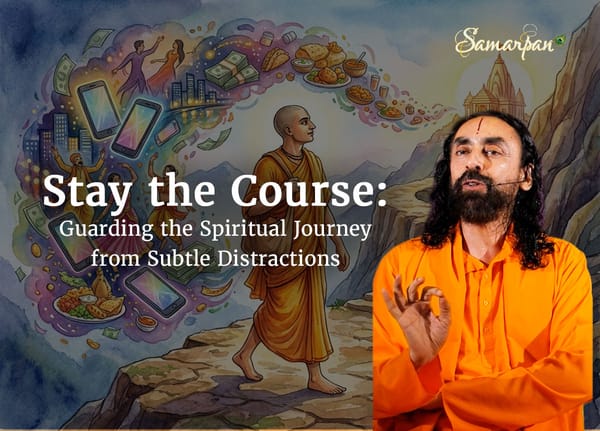
- Information Overload and Spiritual Amnesia. In this age of technology, we consume massive amounts of information – social media feeds, news updates, endless scrolling. This constant inflow overloads the mind, leaving little space for reflection. As a result, we forget our true spiritual identity and get lost in superficial concerns. However, by practicing devotion, we can reconnect our minds with God/guru to anchor it in its eternal identity.
Can Joy Be Practiced? How?
Yes, joy can indeed be practiced! Happiness is not merely a fleeting emotion; it is something we can cultivate within ourselves. Swamiji says that we all have the power to control our thoughts, behaviors, and attitudes, which directly influence our experience of joy. By mastering the art of finding happiness in our daily activities, we can create a more fulfilling life. While we all desire happiness, it is interesting to note that we were not explicitly taught how to pursue it. This indicates that joy can be a conscious pursuit, requiring intention and awareness. How can we enhance our capacity for joy?
- Roop Dhyan Meditation. Roop Dhyan meditation is a profound spiritual practice that stills the mind and opens the heart. Its transformative power in nurturing devotion cannot be underplayed. Through meditation, we learn to attach our minds and hearts to God/Guru to establish a closer relationship. In addition, when practiced regularly, meditation reduces distractions and brings clarity to our spiritual goals. As we meditate, we become more attuned to the presence of God/Guru in our lives, increasing our desire for selfless service. As Swamiji explains about meditating on God, “The mind by nature desires attractive forms, activities, sounds, and more. In devotion, the all-blissful Forms of God are a captivating subject matter for the mind to meditate upon. Most importantly, God is all-pure, and when we fix our mind upon Him, it too becomes pure” (Spiritual Secrets from Hinduism: Essence of the Vedic Scriptures, p. 172). Such meditation fills the heart with joy.

- Scriptural Study. Selfless seva is that a person engages in for the love of God/Guru, with no expectation for anything in return. True knowledge of the scriptures is the bedrock of spiritual practice. It provides the mind with a higher vision to guide thought and action. Without this anchor, our sadhana is at risk for becoming mechanical or misguided. By regularly immersing in divine knowledge, we refine our values, strengthen discrimination between transient and eternal, and protect the mind from confusion. This clarity not only deepens spiritual practice but also fosters the stability and inner joy that arise from walking a purposeful path.
- Selfless Seva. Offer small acts of seva for God/Guru daily, whether they are assigned sevas, helping others quietly without roof-top announcements, waiting for grace with patience and resilience, and practicing sadhana or following the Guru’s instruction. Service that aligns pure intention with love is an expression of devotion.
- Gratitude in Practice. In your gratitude journal, each evening, note three things for which you thank God. Let gratitude consecrate the ordinary, so joy can find you where you are in life or stage of spiritual practice.
- Satsang and Tech-Fasts. Dedicate with discipline, at least one day a week, to a structured satsang and daily sadhana involving time for contemplation or silent reflection. Step back from all technological devices to step inward toward God and find the inner joy that satiates the heart.
All the above practices could be incorporated into a single Inner Joy Journal to bring all these strands together (see Tools for Your Personal Growth below). One could note graces received, a moment of sacred awareness, and one act of seva that will be offered the next day. Over time, this practice will train the mind to dwell where joy lives.

Tools for Your Personal Growth
Would you like to use your own Joy Journal? We have one just for you. It integrates all the above techniques for practicing devotion that brings inner joy. A downloadable tracking sheet is available for you to use.
If you need to speak with anyone about this topic or your practice, please feel free to contact us at [email protected]. Please also give us some time to respond. Thank you.

Gems of Wisdom from Swamiji
Here are a few YouTube video titles with related links and books where Swamiji has described the meaning of inner joy or permanent happiness.
- Shree Krishna REVEALS the ONLY Happiness that NEVER ENDS #Janmastami2025
- 3 Kinds of Happiness your Soul Needs - Lord Krishna Reveals
- Mukundananda, S. (2025). Ishavasya Upanishad. Rupa Publications Pvt Ltd: New Delhi, India.
- Mukundananda, S. (2024). Nourish Your Soul: Inspirations from and Lives of Great Saints. Rupa Publications Pvt Ltd: New Delhi, India.
- Mukundananda, S. (2024). Spiritual Secrets from Hinduism: Essence of the Vedic Scriptures. Rupa Publications Pvt Ltd: New Delhi, India.
- Mukundananda, S. (2023). The Art & Science of Happiness, Penguin Random House India: GuruGram, India.
- Mukundananda, S. (2022). Bhagavad Gita – The Song of God, Westland Publications: Chennai, India.
- Mukundananda, S. (2019). 7 Mindsets for Success Happiness and Fulfillment, Westland: New Delhi, India.

Hold Your Breath! Check out Upcoming Events
We are very excited to share information about an amazing event with you, besides the ongoing Life Transformation Program (LTP) with Swamiji!
In September 2025, Swamiji will conduct the LTP in two cities (free program):
- Charlotte, NC: September 8-12, focusing on the Power of Thoughts. Check the details and register to participate.
- Chicago, IL: September 13-19, focusing on the 7 Divine Laws. Check the details and register to participate.
- San Jose, CA: September 23-29, focusing on Inspiring Stories from Saints. Check the details and register to participate.
Take advantage of this opportunity and choose to transform your life!
JKYog’s East Coast Retreat
Step away from the routine and immerse yourself in a weekend of peace, joy, and spiritual upliftment with Swamiji. This is the penultimate retreat of Swamiji’s US Tour.
Swamiji will continue his powerful and inspiring discourses on Narad Bhakti Darshan until the end, making it a truly special opportunity to soak in the divine knowledge and wisdom.
This retreat also provides us with the opportunity to practice devotion through heart-melting kirtans, festival celebrations, parikrama/picnic, and interactive Q&A sessions. Designed to rejuvenate your body, mind, and soul, the retreat blends profound spiritual experiences with uplifting celebrations in the company of fellow seekers. Do not miss this unforgettable chance to celebrate devotion and elevate your inner journey! Here are the details:
- Dates: October 3 to 5, 2025
- Location: Hilton Washington Dulles Airport, 13869 Park Center Rd, Herndon, VA 20171
- Registration: https://www.jkyog.org/retreat/East-Coast-Retreat
- Contact: 860-280-5393 or 484-620-4345

JKYog Transforming Communities
Here, we share evidence of amazing activities and news about the programs and initiatives of JKYog and its various US centers. This month, we provide some evidence of the impact of JKYog’s programs on the community of participants.
JKYog's programs have impacted numerous individuals, as evidenced by testimonials and shared experiences. While specific names might not always be publicly disclosed due to privacy concerns, we often share stories that illustrate the kind of transformations people experience. Here are a few examples of testimonies on JKYog’s website, or that of its Headquarters or Centers:
JKYog’s Finding Inner Peace and Happiness
- Overcoming negativity: One individual described moving from pessimism and a short temper to optimism, happiness, and peace after attending JKYog online classes and contemplating the teachings, according to JKYog.org.
- A fulfilled search: Many attendees of the Life Transformation Programs report feeling happier, more relaxed, and hopeful, with a sense that their life has meaning. One participant shared, "My search for so many years has now been fulfilled!"
- Developing a close relationship with God: Individuals have reported developing a closer relationship with God and feeling His presence in their lives, leading to a sense of fearlessness and dependence on the Divine for support and shelter.
- Finding a higher purpose: The teachings inspire individuals to find a higher purpose beyond material pursuits, dedicating their lives to meaningful goals and contributing to society.
- Healed and empowered: One person expressed deep gratitude for JKYog and Swamiji's guidance, sharing how they learned to forgive the past and embraced each day as an adventure, finding assurances that God and Guru have saved the best for last.
JKYog’s Improved Well-Being and Life Management
- Better stress management: A significant number of participants in the Life Transformation Programs reported being better able to manage stress and anxiety.
- Enhanced performance: Some individuals have reported becoming better performers in both their personal and professional lives after attending JKYog programs, potentially due to improved focus and emotional intelligence fostered by the teachings.
- Healthy habits: JKYog's holistic approach to well-being encourages practices like yoga, pranayama, and meditation, leading to improved physical and mental health. This includes better sleep and feeling more energetic.
- Developing self-discipline: The teachings emphasize self-discipline and mind management, which, when practiced consistently, can lead to increased emotional resilience, according to JKYog.org.
JKYog’s Deepening Spiritual Understanding
- Clear understanding of Vedic wisdom: Individuals have found answers to their doubts about Hinduism and spiritual concepts, gaining in-depth clarity from Swamiji's discourses.
- Stronger faith and devotion: JKYog online classes, with their focus on scriptures and discussions, help strengthen faith in God and facilitate spiritual progress, according to one participant.
- Practical application of knowledge: Participants have learned to apply Vedic wisdom and spiritual knowledge to their day-to-day lives, finding relevance in modern times.
- Connecting with a Guru and community: Many individuals express gratitude for the opportunity to connect with Swamiji and find a supportive community, fostering their spiritual growth.
These examples showcase the diverse and profound ways JKYog programs impact individuals, leading to positive changes in their mindset, well-being, and spiritual journey.