

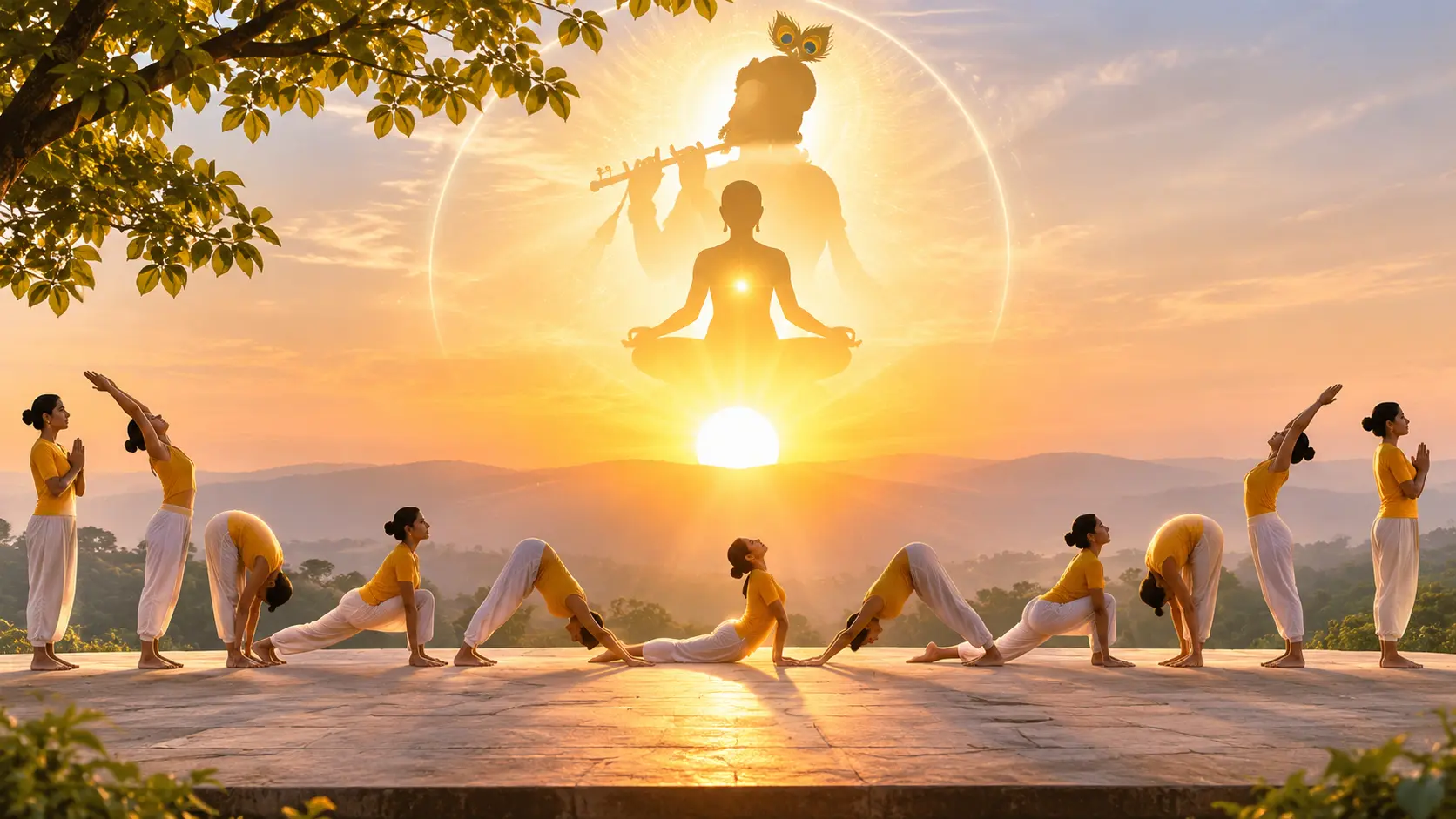
Discover the deeper meaning of Surya Namaskar through the teachings of Swami Mukundananda and JKYog: where yoga extends beyond physical postures to the ultimate goal of connecting with God.
What is the true purpose of yoga?
When we think of yoga, the first image that often comes to mind is someone sitting cross-legged, stretching, balancing, or flowing gracefully through a series of postures. Across the world, yoga has become synonymous with flexibility, physical fitness, stress relief, and wellness. While these are valuable benefits, the ancient wisdom of yoga offers a much deeper understanding of what this practice is truly meant to accomplish.
According to the teachings of Swami Mukundananda and JKYog, the ultimate purpose of yoga is not simply to improve the body or calm the mind. It is to elevate the consciousness, purify the mind, deepen the relationship with God, and ultimately unite the soul with the Divine through loving devotion.
The Sanskrit word yog comes from the root yuj, meaning to unite or join. In the spiritual context, true Yog is the union of the individual soul with God. Physical yoga can help prepare the body and mind for this journey, but the deeper destination is spiritual awakening and God-realisation.
This understanding gives Surya Namaskar, or Sun Salutation, a much richer significance. What may initially appear to be a sequence of physical movements can become an opportunity to cultivate discipline, gratitude, mindfulness, humility, and devotion. When practiced with the right consciousness, the movements of the body can become an expression of reverence for the Divine.
Surya Namaskar: A beautiful way to begin the journey
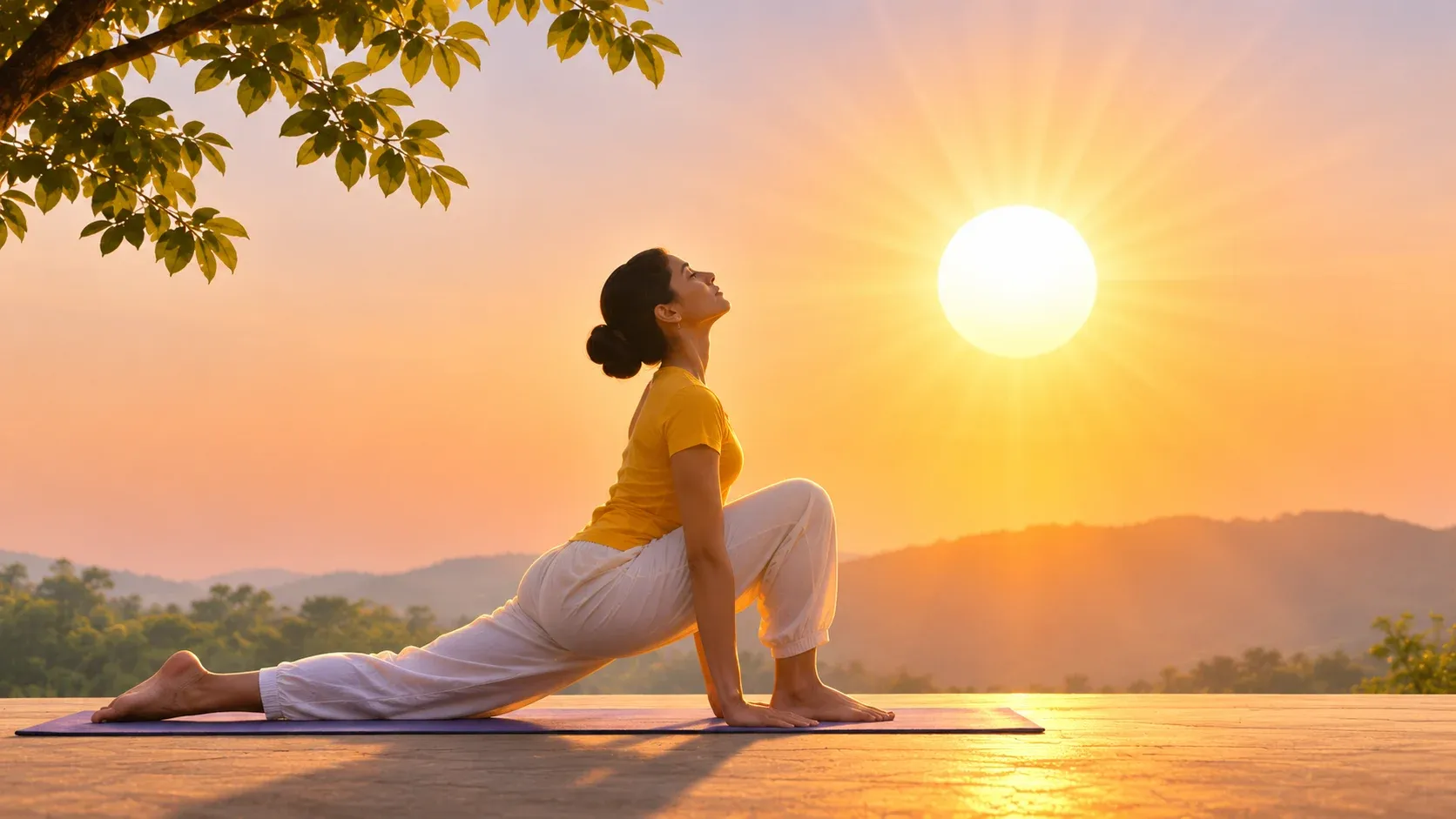
Surya Namaskar is a flowing sequence of yoga postures performed in coordination with breathing. The word Surya means sun, and Namaskar means salutation or offering of respect. Traditionally associated with reverence for the sun as the source of light, warmth, vitality, and life, this practice brings together movement, breath, and awareness.
The sun has always held a special place in Indian spiritual traditions. It symbolises illumination, the dispelling of darkness, knowledge, and the energy that sustains life. In the Vedic tradition, Surya is revered as a divine manifestation, and hymns such as the Aditya Hridayam glorify the Sun God.
The familiar sequence of Sun Salutation, however, has its own evolving history. The Raja of Aundh, Bhawanrao Shriniwasrao Pant Pratinidhi, played an influential role in popularising a systematic form of Surya Namaskar during the early twentieth century. He helped make the practice accessible as a physical routine that could be incorporated into everyday life. Influential yoga teachers subsequently helped spread different forms of the sequence around the world.
Today, Surya Namaskar is practiced by people with very different goals. Some use it to improve flexibility and strength, some to increase stamina, and others as a mindful morning ritual. Yet there is an opportunity to go beyond the physical benefits and approach the practice as part of a larger spiritual journey.
Rather than viewing the sun merely as a celestial object, we can use the practice to reflect on the divine energy that sustains all life, express gratitude for the gift of another day, and turn our attention towards God.
Yoga is much more than stretching the body
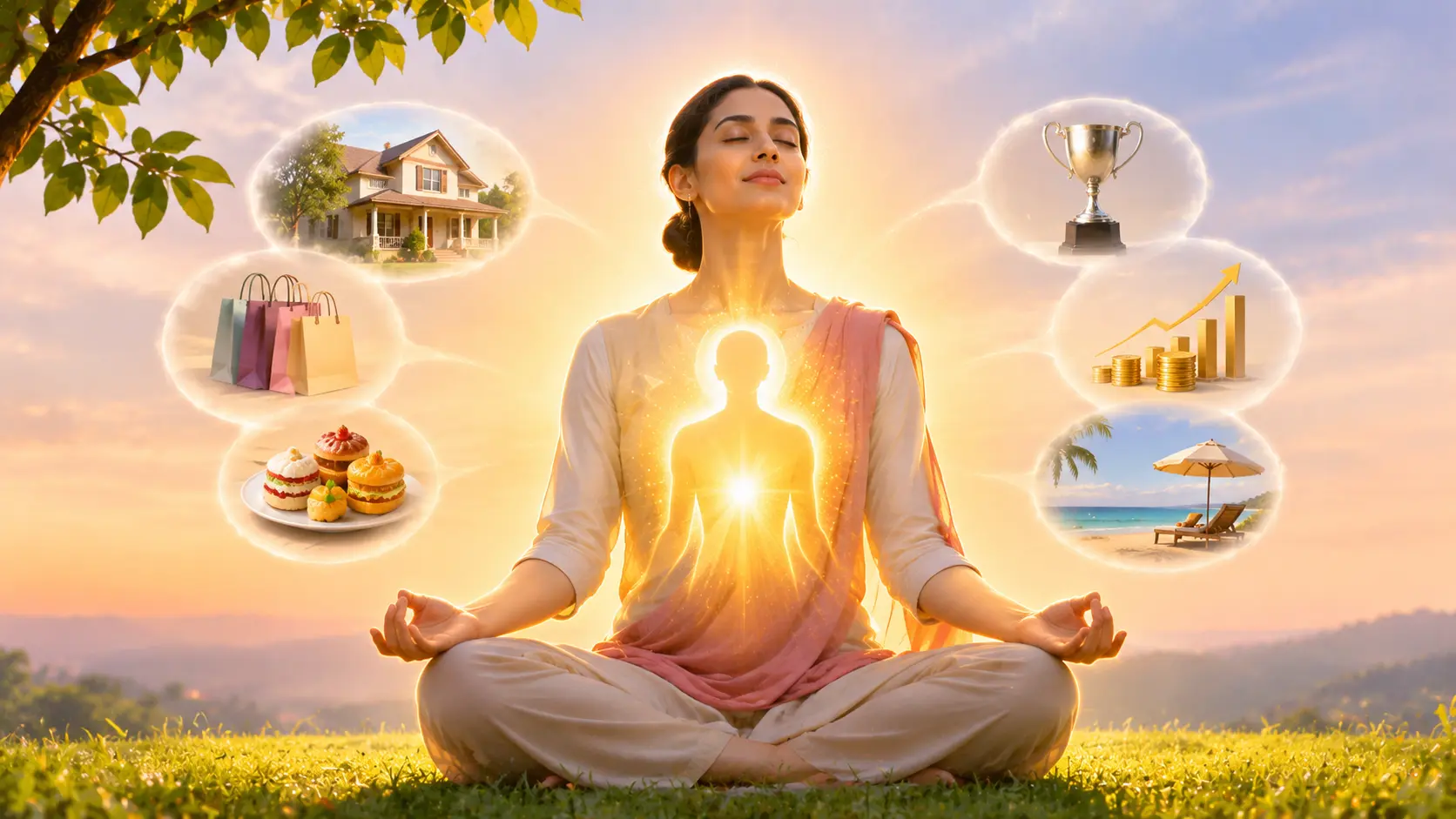
One of the central teachings of Swami Mukundananda is that human life has a higher purpose than simply satisfying physical needs, acquiring possessions, achieving worldly success, or seeking temporary pleasure. The body is important, and caring for it is a responsibility, but it is not the ultimate identity of the self.
Shree Krishna explains this beautifully in the Bhagavad Gita Chapter 2, Verse 20:

न जायते म्रियते वा कदाचि
नायं भूत्वा भविता वा न भूय: ।
अजो नित्य: शाश्वतोऽयं पुराणो
न हन्यते हन्यमाने शरीरे ॥ 20॥
na jāyate mriyate vā kadāchin
nāyaṁ bhūtvā bhavitā vā na bhūyaḥ
ajo nityaḥ śhāśhvato ’yaṁ purāṇo
na hanyate hanyamāne śharīre
BG 2.20: The soul is neither born, nor does it ever die; nor having once existed, does it ever cease to be. The soul is without birth, eternal, immortal, and ageless. It is not destroyed when the body is destroyed.
If our true identity is the soul, then physical fitness, although valuable, cannot be the final purpose of our existence. We need to care for our bodies while also nurturing our souls. We need to strengthen our muscles, but also our faith, character, self-discipline and devotion.
This is where yoga begins to take on its deeper meaning. The postures are not the destination. They can become part of a journey that helps us prepare to sit in meditation, control the restless mind, cultivate inner purity, and remember God with greater focus.
In JKYog, physical yoga is approached within a broader spiritual framework. Practices such as asanas, pranayam, relaxation, meditation, and devotional contemplation can complement one another. The goal is not merely to feel better physically, but to gradually transform the mind and consciousness and deepen the soul's connection with God.
Surya Namaskar: A complete workout for the body
In one of his practical yoga sessions, Swami Mukundananda describes Surya Namaskar as a comprehensive exercise that works the entire body. He explains that a well-rounded physical routine needs to incorporate stretching, muscle conditioning, and cardiovascular exercise. Yoga asanas can contribute to all three, and incorporating appropriate inverted postures can further round out a physical practice.
Surya Namaskar is particularly useful because it combines a series of movements that take the body through forward bends, backward extensions, lunges, supporting positions, and transitions. Rather than working only one isolated muscle group, the sequence engages different parts of the body in a coordinated flow.
Swamiji describes Surya Namaskar as a yogic form of cardio when practiced through multiple rounds. By varying the pace and incorporating short rest intervals, a practitioner can gradually increase the physical challenge and work the heart and circulatory system.
This is a reminder that yoga does not have to be limited to gentle stretching. It can be a powerful way of developing stamina, mobility, strength, and physical resilience. However, the intensity should always be appropriate for the practitioner's age, health, and current fitness level.
The beauty of the practice is that it can be approached gently or more vigorously. A beginner may focus on learning the postures and breathing, while an experienced practitioner may gradually build a more continuous flow.
But even when the physical challenge increases, the deeper purpose of yoga need not be lost. The body can be active while the mind remains calm, attentive, and inwardly connected.
Understanding the Surya Namaskar sequence
A traditional Surya Namaskar sequence consists of twelve postures, with the leading leg changing in the second half of the sequence. Together, the movements create a flowing practice that coordinates breath with the body.
The sequence demonstrated in Swami Mukundananda's yoga session includes:
- Pranamasana – Prayer Pose: Standing upright with palms joined, bringing the body into a position of reverence and balance.
- Hasta Uttanasana – Raised Arms Pose: Inhaling as the arms rise and the upper body gently extends backwards.
- Padahastasana – Forward Bend: Exhaling as the body folds forward, stretching the back and legs.
- Ashwa Sanchalanasana – Equestrian or Galloping Horse Pose: Stepping one foot back into a lunge, stretching the thighs and hip area.
- Parvatasana – Mountain Pose: Moving the other foot back and lifting the hips, creating an inverted V-shaped position.
- Ashtanga Namaskar – Eight-Point Salutation: Lowering the body so that eight points make contact with the ground in the traditional posture.
- Bhujangasana – Cobra Pose: Lowering the hips and gently arching the back while lifting the chest.
- Parvatasana – Mountain Pose: Returning to the mountain position.
- Ashwa Sanchalanasana – Equestrian Pose: Bringing the opposite foot forward into the lunge.
- Padahastasana – Forward Bend: Bringing the feet together and folding forward.
- Hasta Uttanasana – Raised Arms Pose: Rising with the arms lifted and a gentle backward extension.
- Pranamasana – Prayer Pose: Returning to standing with palms joined.
The sequence is then repeated, leading with the opposite leg. Each movement is coordinated with inhalation or exhalation, allowing the body and breath to work together rather than treating the postures as disconnected exercises.
The practice begins and ends with a prayerful posture. That in itself can be a beautiful reminder that I can bring an attitude of gratitude and reverence into even my physical exercise.
Moving with the breath, calming the mind
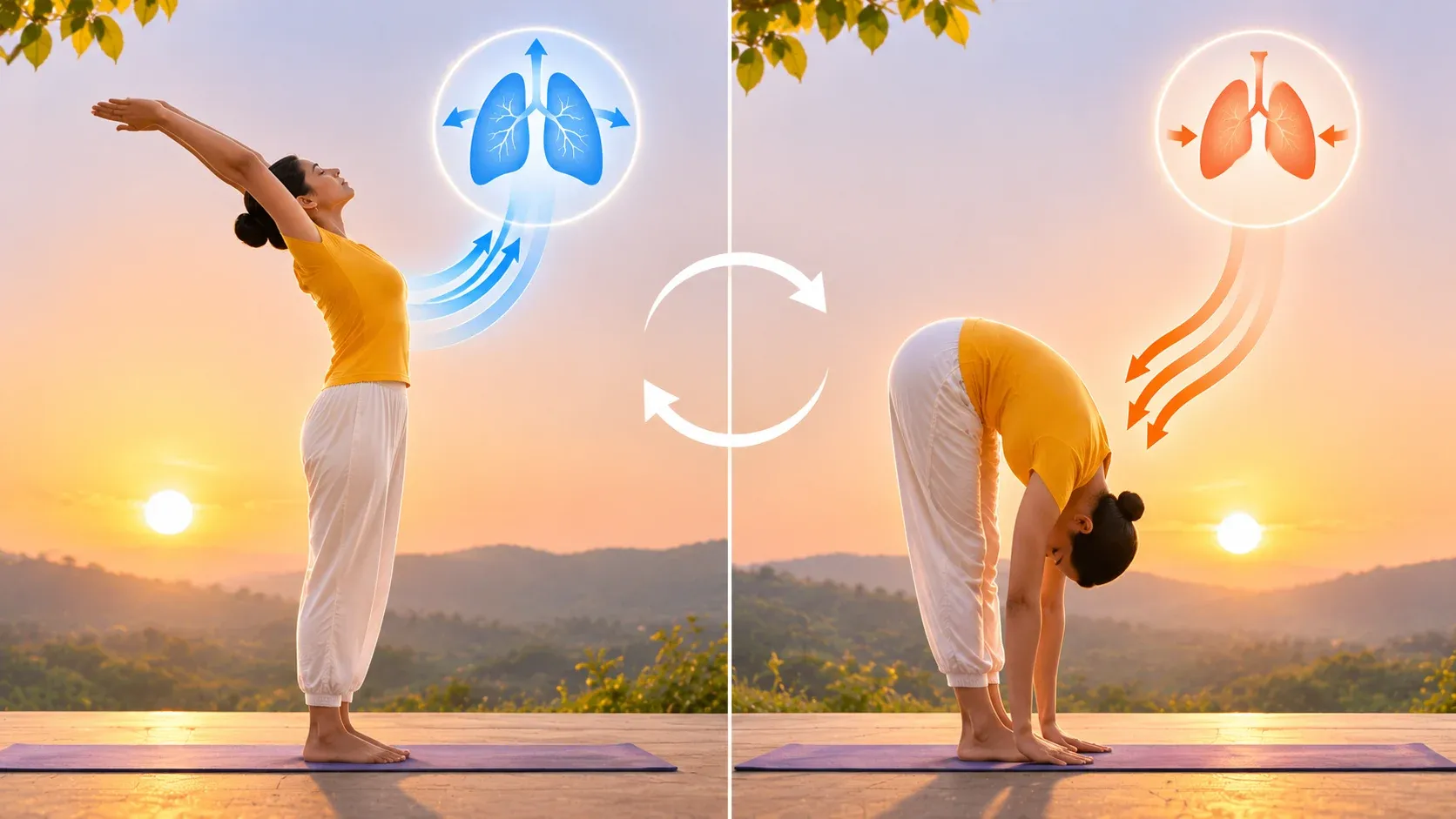
Swamiji emphasises the importance of breathing as we transition through the sequence. Generally, inhalation accompanies movements that expand the chest or gently extend the body, while exhalation accompanies forward bending or movements that contract the body.
This coordination helps us become more aware of how we are moving rather than simply trying to complete the sequence. If we are rushing, struggling to breathe, or forcing ourself into a posture, it may be a sign to slow down.
Breath awareness also creates an opportunity to bring the mind into the present moment. Instead of thinking about the day's responsibilities, worrying about something that happened yesterday, or mentally jumping ahead to what comes next, we can focus on one movement and one breath at a time.
In this sense, Surya Namaskar can become a moving meditation. The body is engaged, the breath is regulated, and the mind is gradually brought into a more attentive state.
This is an important step in the broader practice of Yog. A restless mind is easily pulled by sensory attractions, desires, emotions, and distractions. Learning to direct attention through breath and movement can help develop the discipline needed for deeper meditation and spiritual contemplation.
But the opportunity does not end with simply observing the breath. We can gradually bring my thoughts towards God, remembering that every breath and every moment of life is a gift.
From physical yoga to true Yog: Connecting with God
The Bhagavad Gita describes yoga in many ways, including equanimity, self-discipline, meditation, selfless action, and devotion. These are not competing paths but interconnected dimensions of spiritual growth.
In Bhagavad Gita 6.29, ShreeKrishna describes the vision of a yogi who sees the soul in all beings and all beings in the soul. This verse points towards a consciousness that goes beyond narrow self-interest and recognises the spiritual reality underlying life.
In Bhagavad Gita 6.30, Shree Krishna further says:
यो मां पश्यति सर्वत्र सर्वं च मयि पश्यति ।
तस्याहं न प्रणश्यामि स च मे न प्रणश्यति ॥ 30॥
yo māṁ paśhyati sarvatra sarvaṁ cha mayi paśhyati
tasyāhaṁ na praṇaśhyāmi sa cha me na praṇaśhyati
BG 6.30: For those who see Me everywhere and see all things in Me, I am never lost, nor are they ever lost to Me.
This is a profound vision of spiritual connection. Yoga is not merely the ability to balance the body or quiet the mind. It is learning to see God as the underlying reality and cultivating a relationship with Him.
Swami Mukundananda's teachings emphasise Bhakti Yog, the path of loving devotion to God. Through devotion, remembrance, prayer, meditation, service, and surrender, the soul can gradually turn away from its dependence on temporary worldly pleasures and develop a deeper attachment to the Divine.
This gives physical yoga a meaningful place within spiritual life. Surya Namaskar can help prepare us physically and mentally, but we can also use the practice to cultivate humility, gratitude, discipline, and remembrance of God. We can begin with the body, steady the breath, calm the mind, and gradually turn our awareness towards the soul's eternal relationship with God.
That is the difference between exercising the body and using the practice as a stepping stone towards true Yog.
Making Surya Namaskar accessible to everyone
One of the encouraging aspects of Swamiji's demonstration is that the sequence is explained simply, with the postures shown step by step. Yoga should not become another activity in which we feel pressured to compete, perform perfectly, or push beyond our physical limitations.
For beginners, the priority should be learning the basic movements, becoming familiar with the breath, and developing confidence. Forward bends can be performed with bent knees, hands can rest on blocks or a sturdy support, and transitions can be simplified. There is no need to complete every posture immediately.
For those with limited flexibility or mobility, the sequence can be adapted. A shorter lunge, partial forward bend, or chair-supported version may be more appropriate. The objective is to move comfortably, not to force the body into a prescribed shape.
For intermediate practitioners, a few rounds of the complete sequence may be a good starting point. Focus on smoother transitions, consistent breathing, and maintaining stability. Rather than immediately increasing speed or repetitions, improve the quality of the practice.
For experienced practitioners, additional rounds, more continuous movement, or a stronger variation may be appropriate, provided the practitioner maintains safe alignment and comfortable breathing. A vigorous session may provide a greater cardiovascular challenge, while a slower session can encourage more mindful awareness.
In the demonstration, Swamiji also describes using several rounds followed by a short rest and then repeating the process. This interval approach offers a way to build stamina without assuming that everyone should perform the same number of rounds.
Making the practice a devotional offering
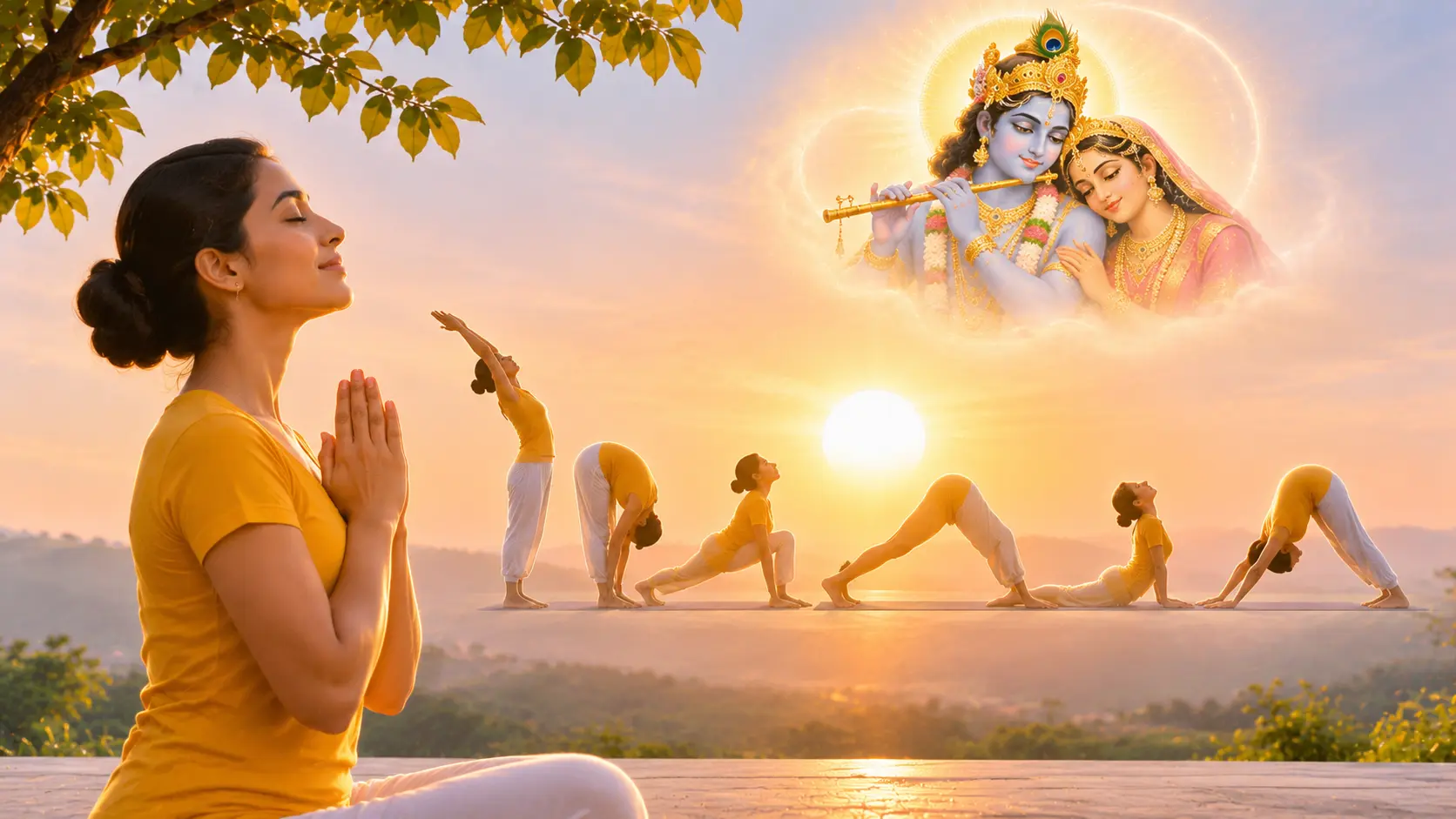
What if we approached Surya Namaskar not simply as something we do for ourselves, but as an opportunity to express gratitude to God?
Instead of beginning the practice with thoughts about how many calories we might burn, how flexible we might become, or how much stronger we might feel, we could begin by offering a simple prayer of gratitude for the body, the breath, the opportunity to live, and the ability to grow spiritually.
We could remember God as we move through each posture. We could use the quiet moments between movements to turn our thoughts away from distractions and towards the Divine. Even the final Namaskar posture could become more than a physical gesture: it could symbolise humility, surrender, and a willingness to align my life with God's wishes.
The Bhagavad Gita offers a beautiful principle for transforming ordinary activities into spiritual practice. In Chapter 9, Verse 27, Shree Krishna says:
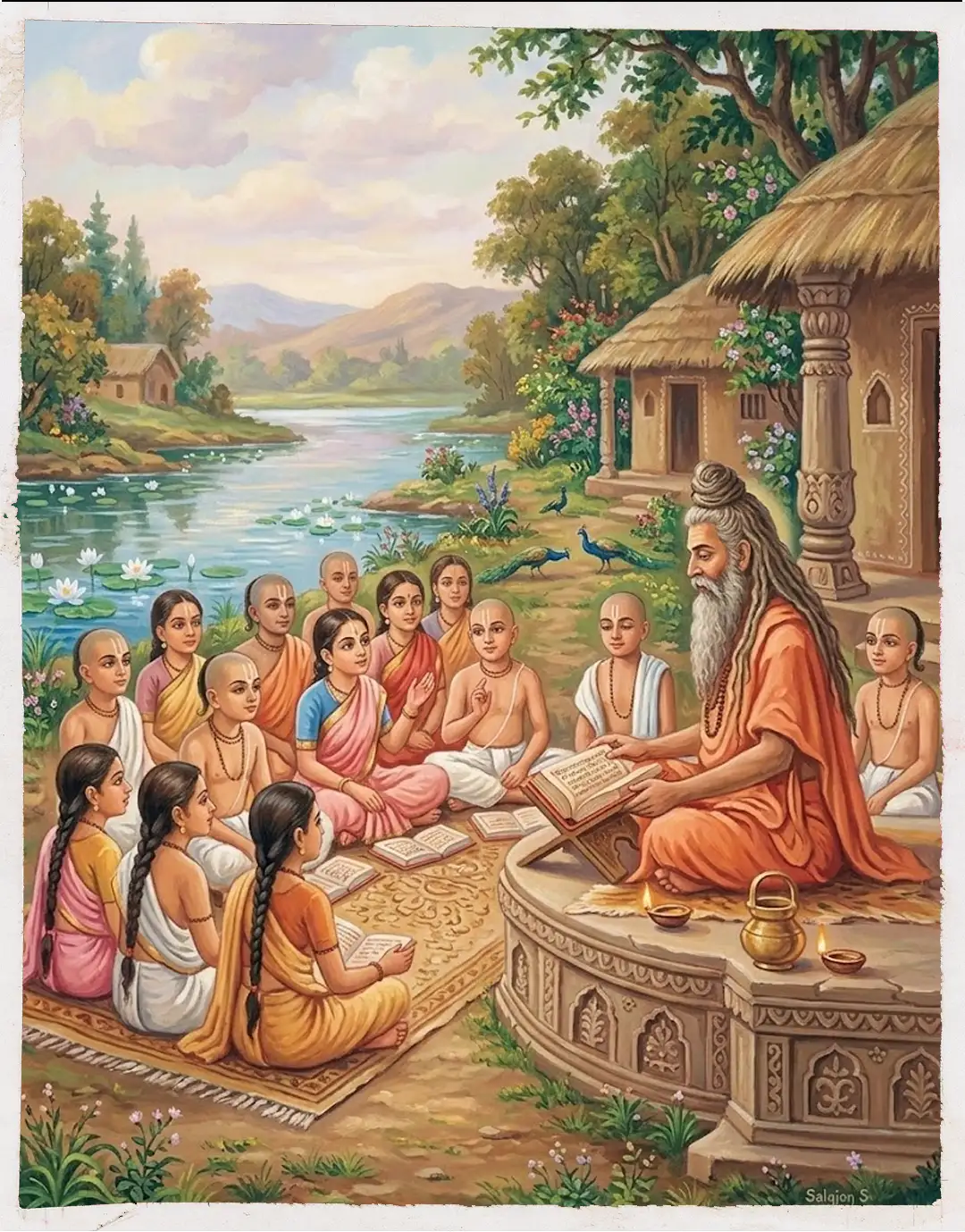
यत्करोषि यदश्नासि यज्जुहोषि ददासि यत् ।
यत्तपस्यसि कौन्तेय तत्कुरुष्व मदर्पणम् ॥ 27॥
yat karoṣhi yad aśhnāsi yaj juhoṣhi dadāsi yat
yat tapasyasi kaunteya tat kuruṣhva mad-arpaṇam
BG 9.27: Whatever you do, whatever you eat, whatever you offer as oblation to the sacred fire, whatever you bestow as a gift, and whatever austerities you perform, O son of Kunti, do them as an offering to Me.
This teaching can transform the way we approach everyday life. Spirituality does not have to be confined to a meditation room, a temple visit, or a designated prayer time. We can begin to bring remembrance of God into our actions, responsibilities, exercise, relationships, and even the smallest routines.
A simple daily routine to begin
- Begin with gratitude: Sit or stand quietly for a moment and offer a prayer to God.
- Warm up: Gently mobilise the neck, shoulders, wrists, hips, and ankles.
- Practice a few rounds: Begin with two or three modified rounds of Surya Namaskar, moving at a comfortable pace.
- Stay connected to the breath: Avoid rushing or holding the breath unnecessarily.
- Rest: Sit or lie down and allow the body to relax.
- Meditate or pray: Spend a few minutes remembering God, chanting, or sitting in quiet contemplation.
The important thing is to make yoga a regular part of life, not another activity that begins enthusiastically and disappears after a few days.
Take your first step at Prem Yoga Wellness Center, Radha Krishna Temple of Dallas
If you have been wanting to begin yoga but are unsure where to start, or if you already practice and wish to explore a more meaningful approach to wellness, the free yoga classes at Prem Yoga Wellness Center, located at Radha Krishna Temple of Dallas, offer a welcoming opportunity.
The classes are designed for all levels, from complete beginners to those who have been practicing yoga for years. Instructors guide participants through different focuses, including flexibility, balance, strengthening, relaxation, and breathing. Modifications are available, allowing participants to practice according to their comfort and ability.

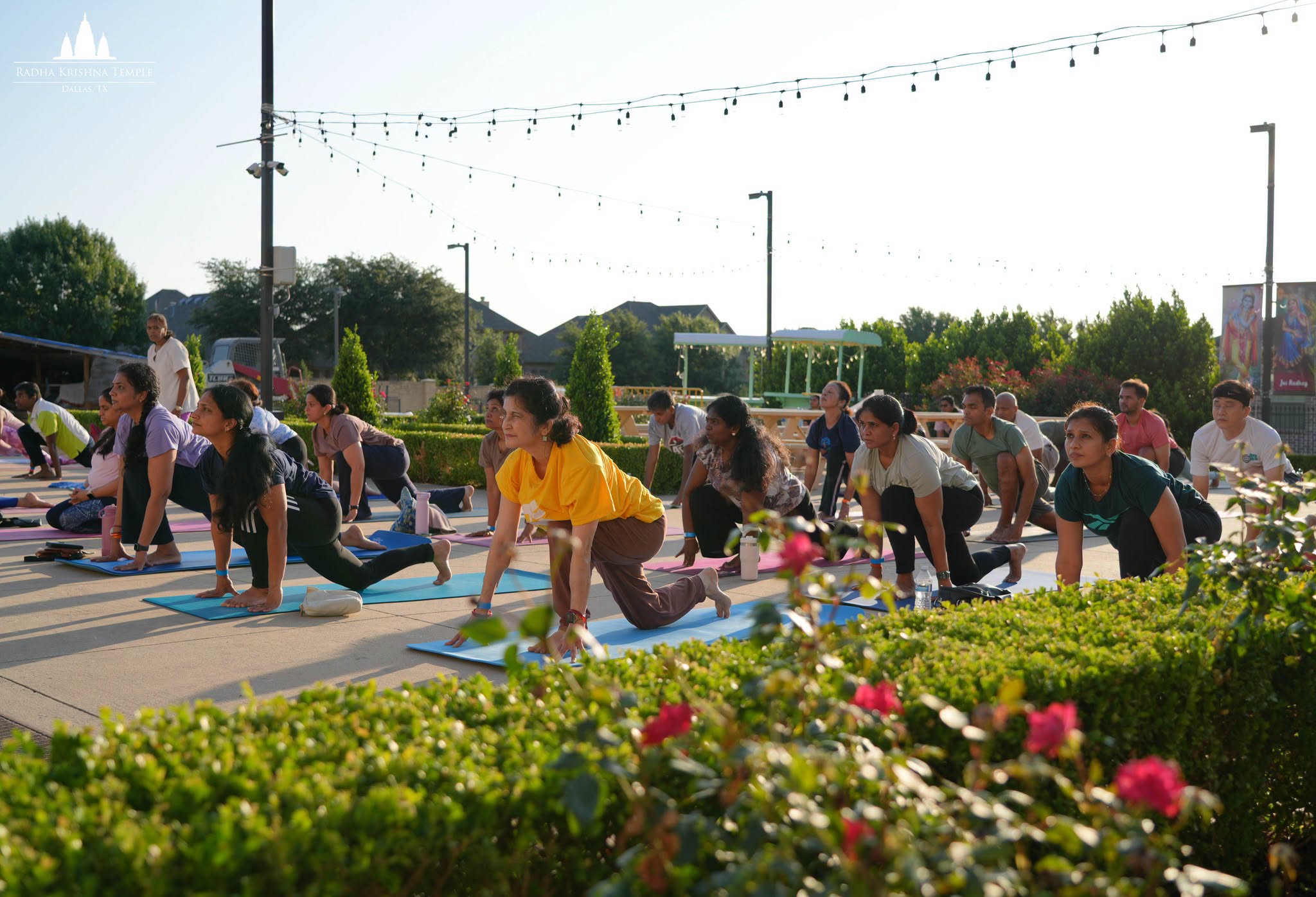
The weekday evening classes are followed by temple Aarti at 7:00 PM, offering an opportunity to extend the experience beyond physical wellness into devotion and spiritual reflection.
Classes are free, with a one-time registration required. You are welcome to attend on the days that work for you. Bring comfortable clothing, a water bottle, and a yoga mat if you have one. Arriving about ten minutes early is recommended.
Conclusion: Let the body move, let the mind become still, and let the soul turn towards God
Surya Namaskar is a beautiful practice that brings together movement, breathing, strength, flexibility, and awareness. Its physical benefits make it an accessible way to care for the body, while its traditional symbolism offers an opportunity to cultivate gratitude and reverence.
The teachings of Swami Mukundananda and JKYog invite us to look beyond the physical dimension of yoga and remember its deeper purpose. The body may become stronger, the breath more regulated, and the mind more peaceful; but these can also become foundations for a higher spiritual journey.
Perhaps the most meaningful way to practice Surya Namaskar is to begin with the body, become aware of the breath, bring stillness to the mind, and then turn the heart towards God.
Let yoga be more than exercise. Let it be a journey of awakening, devotion, and union with the Divine.
Frequently Asked Questions (FAQs)
1. What is the true purpose of yoga according to Swami Mukundananda?
According to Swami Mukundananda's spiritual teachings, the ultimate purpose of yoga is to connect the soul with God. Physical postures, breathing exercises, meditation, and other yogic practices can help prepare the body and mind for spiritual growth, but true Yog extends beyond physical fitness to loving devotion and God-realisation.
2. Is Surya Namaskar just a physical exercise?
No. Surya Namaskar can be practiced as physical exercise to improve flexibility, strength, coordination, and stamina. It can also be approached mindfully, with breath awareness, gratitude, prayer, and remembrance of God. Its spiritual significance depends in part on the intention and consciousness with which it is practiced.
3. How many rounds of Surya Namaskar should a beginner do?
Beginners can start with two or three modified rounds, moving slowly and comfortably. The number of rounds can gradually increase as strength, flexibility, stamina, and confidence improve. There is no need to rush or compete with others.
4. Can older adults practice Surya Namaskar?
Yes, many movements can be adapted for older adults, people with limited mobility, or those who find certain postures challenging. Chair-supported movements, shorter lunges, and simplified transitions can help make yoga more accessible. Appropriate guidance is important, especially if there are medical conditions or balance concerns.
5. What are the physical benefits of Surya Namaskar?
Surya Namaskar combines stretching, strengthening, and continuous movement. It may help improve flexibility, muscular endurance, mobility, coordination, and cardiovascular fitness, depending on how it is practiced. Scientific research has explored these benefits, although further studies are needed to strengthen the evidence for specific health outcomes.
6. How does yoga help with spiritual growth?
Yoga can help develop discipline, concentration, awareness, and control over the mind. When combined with meditation, self-reflection, prayer, and devotion, these practices can help turn the mind away from constant worldly distractions and towards God.
7. Are yoga classes at Radha Krishna Temple of Dallas free?
Yes. Prem Yoga Wellness Center at Radha Krishna Temple of Dallas offers free yoga classes throughout the week for all levels. A one-time registration is required, and participants can attend the sessions that fit their schedule.
8. Do I need previous yoga experience to attend classes at Radha Krishna Temple?
No. The classes welcome beginners as well as experienced practitioners. Guidance and modifications are offered to help you practice at your own pace and comfort level.