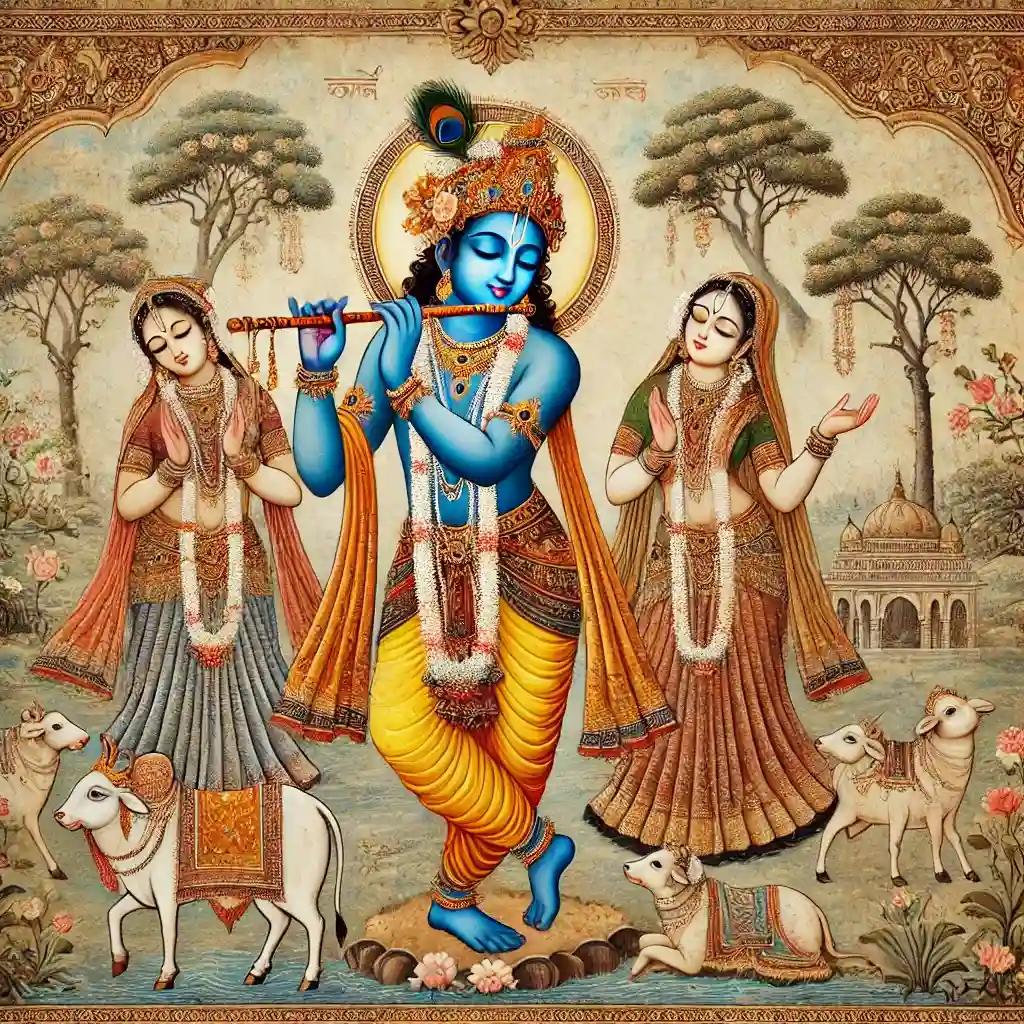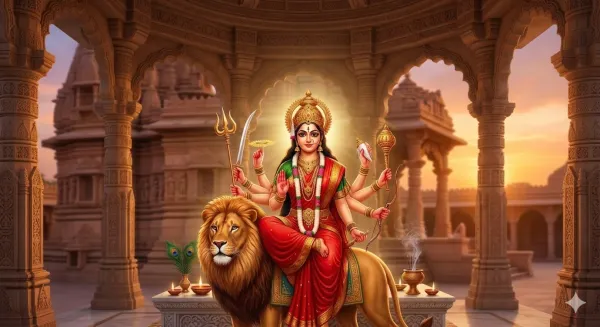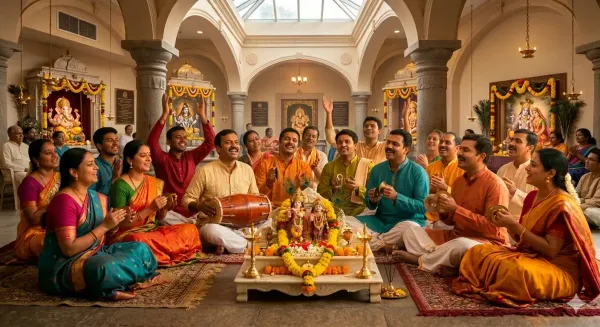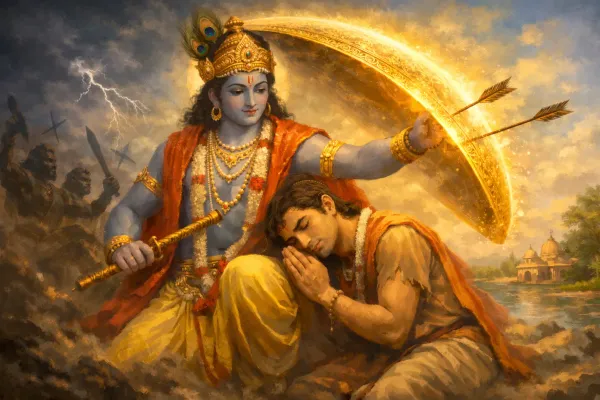

Across spiritual traditions, one paradox stands radiant and mysterious. The Infinite, who governs galaxies and transcends time, allows Himself to be bound by the fragile thread of human love. The idea that God, all-powerful and all-knowing, becomes “enslaved” by devotion may sound poetic or symbolic, yet within the path of bhakti it is deeply literal in a spiritual sense. Love, when purified of selfishness, becomes the supreme force that draws the Divine closer than any ritual, philosophy, or austerity ever could.
This blog explores how selfless and divine love, expressed through devotion, service, and surrender, becomes the most powerful bridge between the human soul and the Supreme. Drawing on ancient wisdom, lived examples, and the insights of Swami Mukundananda, we will journey into the heart of bhakti and discover why love alone has the power to bind the Boundless.
The Power of Bhakti: How Love Enslaves God

Bhakti, often translated as devotion or loving surrender to God, is not merely an emotional attachment or religious practice. It is a profound relationship that transforms both the devotee and the way the Divine is experienced. In the philosophy of bhakti, God is not approached as a distant ruler or abstract principle, but as a living, loving presence who responds to the heart’s call.
Scriptures across the Indian spiritual tradition speak of this remarkable dynamic. The Bhagavata Purana declares that God is conquered by love alone. Saints and sages narrate stories where the Divine becomes a servant to His devotees, running to their aid, accepting their simple offerings, and even bending cosmic laws for their sake. These narratives are not meant as mythology alone, but as spiritual truths illustrating the potency of pure love.
Swami Mukundananda often explains that God does not seek our wealth, intelligence, or accomplishments. What He desires is the sincerity of our hearts. According to him, devotion is not about impressing the Divine with grand gestures, but about offering one’s inner world. When the heart is offered without reservation, the relationship changes. The devotee no longer stands before God as a beggar or seeker, but as a beloved.
This is where the idea of “enslaving” God takes shape. It does not imply domination or control, but rather a voluntary surrender of the Divine to love. God chooses to be bound by devotion because love is the very nature of the Supreme. In responding to love, the Divine reveals His most intimate and compassionate aspect.
Bhakti thus becomes a path of transformation. The devotee begins with reverence and awe, but as love deepens, the relationship becomes more personal and tender. Fear gives way to trust, formality dissolves into familiarity, and the soul discovers that it is not merely worshipping God, but being loved in return.
Unconditional Love: The Only Way to Bind the Divine
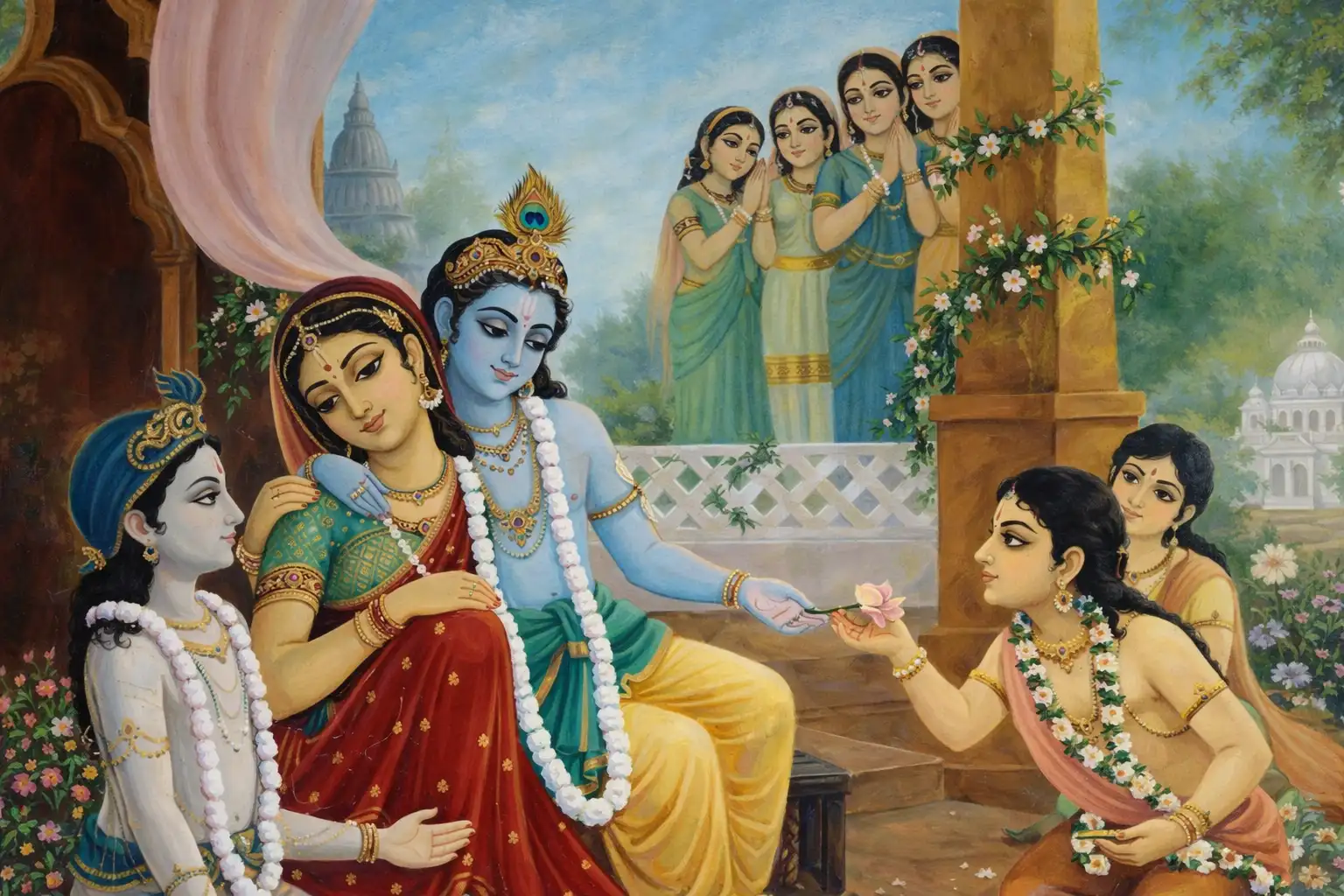
Unconditional love is a rare and powerful force in the human experience. Most of our relationships are shaped by expectations, needs, and exchanges. We love because we are loved, we give because we receive. In contrast, divine love is love without conditions, without demands, and without limits.
In the spiritual path of devotion, unconditional love is considered the key that opens the heart of God. This kind of love does not seek blessings, protection, or even liberation. It seeks only the joy of loving and serving the Divine. It is love for love’s sake.
Swami Mukundananda emphasizes that the moment devotion becomes transactional, it loses its purity. When we pray only for success, health, or relief from suffering, our focus remains on ourselves. But when we pray simply to express gratitude, reverence, and affection, our focus shifts entirely to God. This shift, he explains, is what draws divine grace most powerfully.
Stories from the lives of saints illustrate this beautifully. There are devotees who forget their own hunger while offering food to the Divine, who endure hardship with a smile because they see every circumstance as a gift from God. Their love is not shaken by difficulty, disappointment, or delay. It is steady, patient, and unwavering.
Such unconditional love has a magnetic quality. It does not demand a response, yet it naturally evokes one. In spiritual language, this is described as God being bound by devotion. The Divine, who is beyond all constraints, willingly enters into the devotee’s world, sharing in their joys and sorrows, walking beside them in every step of life.
Unconditional love also transforms the devotee. When the heart is trained to love without expecting anything in return, it becomes lighter, freer, and more expansive. The walls of ego begin to crumble, and the soul experiences a taste of the boundless compassion that defines the Divine.
Selfless Devotion: When the Lord Becomes Helpless
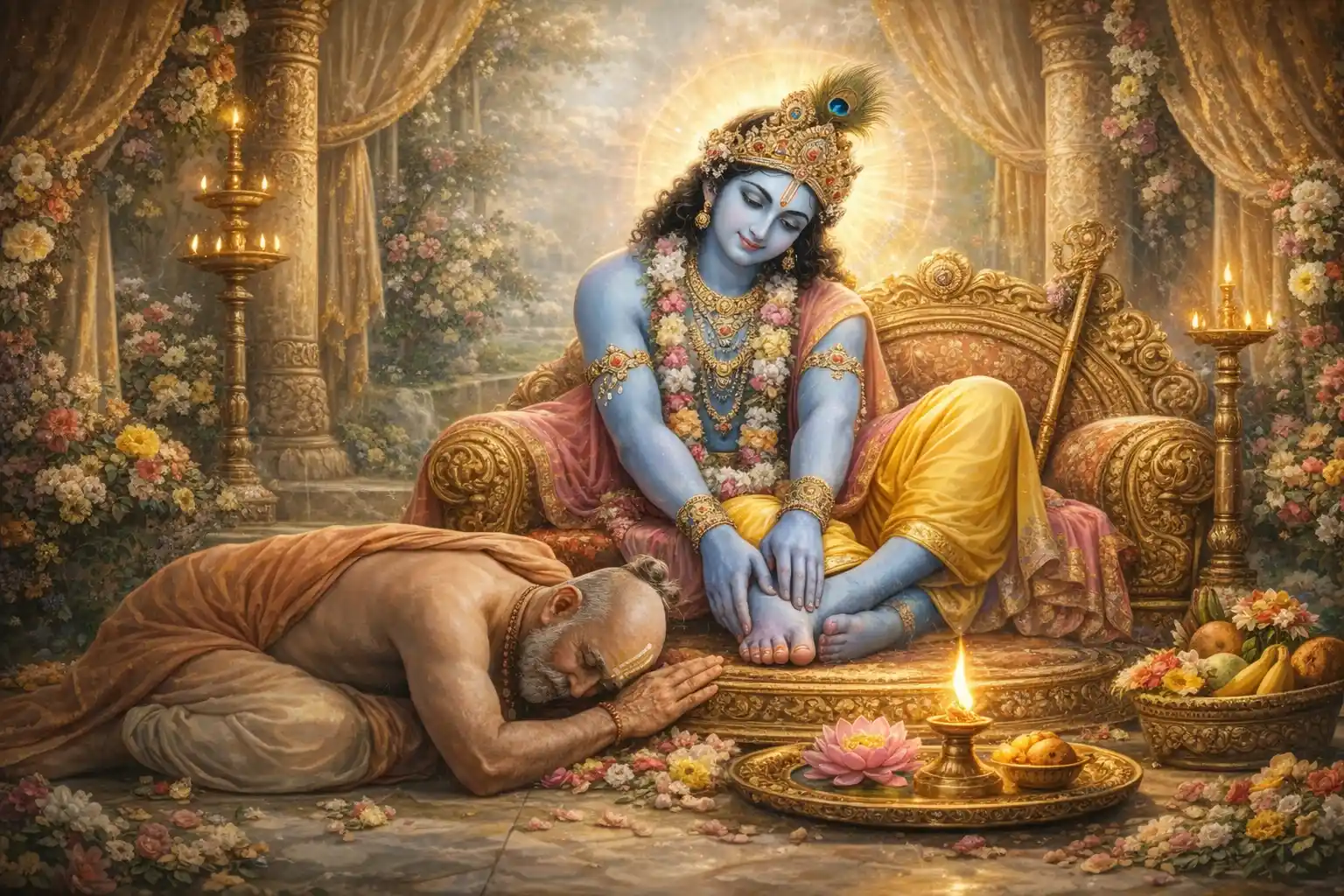
One of the most striking ideas in bhakti philosophy is the notion that God becomes “helpless” before the love of His devotees. Again, this is not helplessness in a literal or physical sense, but an expression of how deeply the Divine responds to selfless devotion.
Selfless devotion means placing the will of God above one’s own desires. It means serving without seeking recognition, giving without expecting reward, and loving without asking for reassurance. In such devotion, the devotee’s sense of “I” and “mine” gradually dissolves into a sense of “Thou” and “Thine.”
Swami Mukundananda often speaks about this inner shift as the essence of spiritual growth. According to him, as long as our actions are motivated by ego and personal gain, we remain centered on ourselves. But when our actions are motivated by love and service to God, our center moves outward, and our lives become expressions of devotion.
In this state, even the simplest actions become sacred. Cooking becomes an offering, work becomes worship, and relationships become opportunities to express compassion and kindness. The devotee no longer divides life into spiritual and worldly categories. Everything becomes a part of the divine relationship.
The idea of God becoming “helpless” reflects how deeply the Divine values this kind of love. It suggests that God chooses to respond, to protect, and to guide, not because He must, but because He is moved by the devotee’s sincerity. The relationship becomes one of mutual affection rather than distant reverence.This concept also carries a powerful message for human relationships. It reminds us that true influence does not come from power, authority, or control, but from genuine care and selflessness. Just as the Divine is “enslaved” by love, so too are human hearts softened and transformed by kindness and compassion.
The Transcendent Power of Pure Love

Pure love is often described as a bridge between the finite and the infinite. It begins in the human heart, shaped by emotion, memory, and experience, yet it has the power to reach beyond all limitations and touch the Divine.
What makes love transcendent is its ability to dissolve boundaries. When we love deeply, we forget ourselves. Our sense of separation from others fades, and we feel connected to something larger than our individual identity. In spiritual terms, this is a glimpse of unity with the Divine.
Swami Mukundananda explains that this experience of unity is not an abstract idea, but a lived reality for those who walk the path of devotion. As love deepens, the devotee begins to feel the presence of God not only in prayer or meditation, but in every aspect of life. Nature, people, and even challenges become reminders of the Divine.
This transcendent quality of love also reshapes our understanding of God. Instead of seeing the Divine as a distant judge or ruler, we begin to experience God as a compassionate friend, a loving parent, or a beloved companion. The relationship becomes intimate and personal, filled with warmth rather than fear.
Pure love also brings resilience. When life presents difficulties, the devotee does not feel abandoned or punished. Instead, challenges are seen as opportunities for growth and deeper trust. Love becomes the anchor that holds the soul steady in the storms of life.
In this way, the power of love extends beyond the spiritual realm and into everyday living. It teaches patience in conflict, generosity in scarcity, and hope in despair. The devotee who learns to love the Divine purely also learns to love the world more compassionately.
Bhakti Yoga: Surrendering to Divine Love
Bhakti Yoga is often described as the path of the heart. Unlike paths that emphasize knowledge or discipline, bhakti emphasizes relationship. It invites the seeker to approach God not as a concept to be understood, but as a presence to be loved.
Surrender is central to this path. To surrender does not mean to give up one’s responsibilities or individuality, but to align one’s will with a higher purpose. It means trusting that there is a divine intelligence guiding the flow of life, even when we do not understand its direction.
Swami Mukundananda teaches that surrender is not a single act, but a continuous process. Each day, and sometimes each moment, the devotee is invited to choose between the demands of ego and the call of love. Every choice becomes an opportunity to deepen one’s connection with the Divine.
This practice of surrender gradually transforms the inner world. Anxiety gives way to trust, restlessness to peace, and self-centeredness to compassion. The devotee begins to feel supported by a presence that is both powerful and tender.
Bhakti Yoga also emphasizes the importance of remembrance. Through prayer, chanting, meditation, and reflection, the devotee keeps the awareness of God alive in the heart. This constant remembrance turns ordinary moments into sacred encounters.
Over time, the relationship between the devotee and the Divine becomes so natural that it feels like an ongoing conversation rather than a formal practice. Life itself becomes a dialogue of love.
Divine Grace: Bound by Devotion
Grace is often described as the unearned gift of the Divine. It is the help, guidance, and inspiration that flows into our lives without being demanded or deserved. In the path of bhakti, grace is seen as a response to sincere devotion.
Swami Mukundananda explains that grace is not something we can claim as a right. It is something we receive as a blessing. The role of the devotee is not to control grace, but to create an inner environment where grace can flow freely.
This inner environment is shaped by humility, gratitude, and love. When the heart is open and receptive, even small experiences can carry deep spiritual meaning. A kind word, a moment of stillness, or a simple act of service can become a channel for divine presence.
The idea that God is “bound” by devotion reflects this dynamic. It suggests that when a devotee’s heart is fully turned toward the Divine, grace naturally follows. The relationship becomes one of mutual giving. The devotee offers love, and the Divine offers guidance, protection, and inner strength.
Grace also works in subtle ways. It may not always change external circumstances, but it often changes how we experience them. Difficulties become more bearable, joys become more meaningful, and life as a whole feels infused with purpose.
The Heart’s Offering: Love that Captures God
At the center of all devotional practices lies the simple act of offering. An offering can be a prayer, a song, a flower, or even a moment of silent gratitude. What matters is not the form, but the feeling behind it.
Swami Mukundananda often reminds devotees that God looks at the intention, not the scale of the offering. A small act performed with great love can carry more spiritual power than a grand ritual performed without sincerity.
This perspective brings spirituality into everyday life. Every action becomes an opportunity to make an offering. Helping a stranger, listening patiently, or performing one’s duties with care can all become expressions of devotion.
When life is lived as a series of offerings, the sense of separation between the spiritual and the ordinary disappears. The devotee begins to see the Divine not only in temples or sacred texts, but in the faces of people and the rhythms of daily life.
This way of living also nurtures a deep sense of fulfillment. The heart finds joy in giving rather than acquiring, in serving rather than seeking. Love becomes the guiding principle, shaping choices and actions in subtle but powerful ways.
Selfless Service: The Path to Absolute Divinity
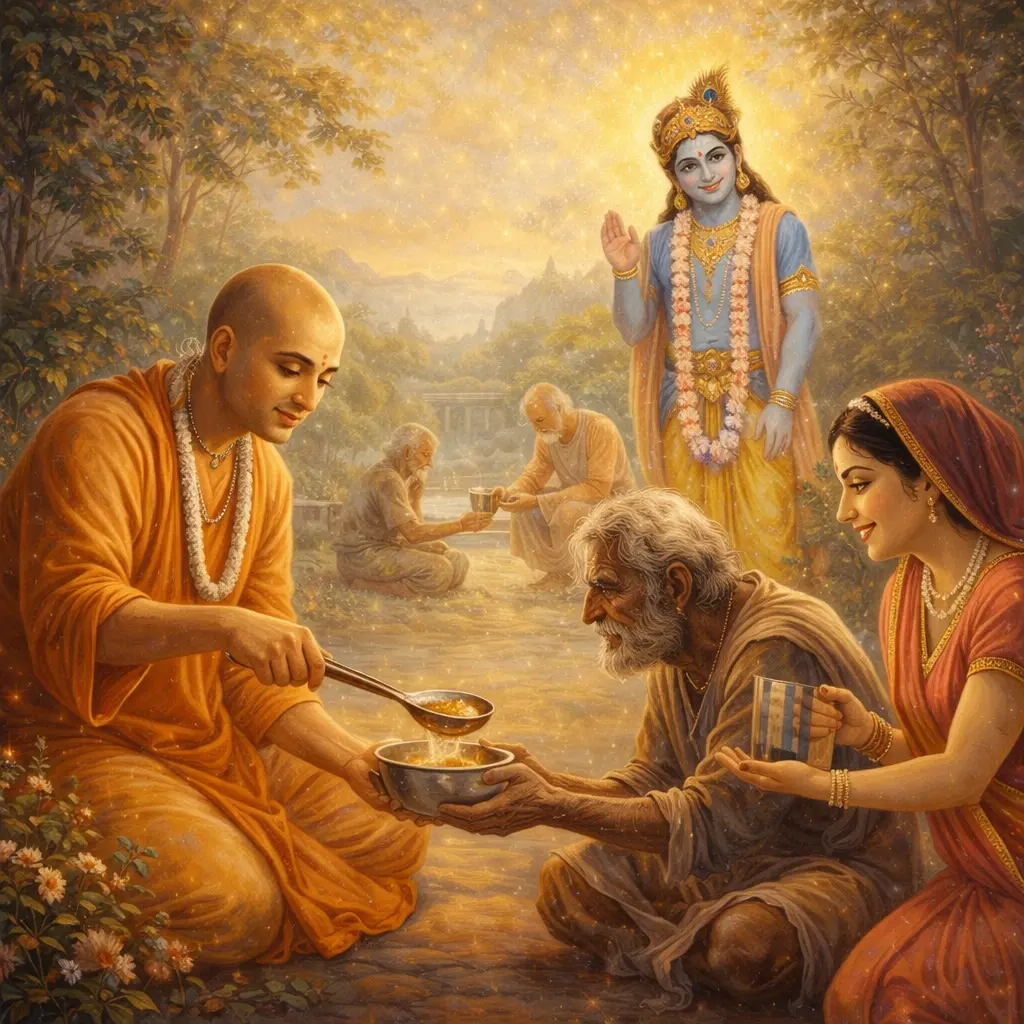
Service is often described as love in action. While prayer and meditation cultivate inner connection, service expresses that connection outwardly in the world.
In the philosophy of bhakti, serving others is seen as serving God, because the Divine is believed to dwell in every being. This understanding transforms social and ethical behavior into a spiritual practice.
Swami Mukundananda teaches that selfless service helps dissolve the ego, which is one of the main obstacles to spiritual growth. When we serve without seeking recognition or reward, we shift our focus away from ourselves and toward the well-being of others.
This shift has a profound impact on the heart. It fosters empathy, patience, and humility. It also creates a sense of interconnectedness, reminding us that we are all part of a larger whole.
Service also brings spirituality into the practical realm. It shows that devotion is not limited to personal salvation or inner peace, but extends to the healing and upliftment of the world.
Conclusion: Love as the Supreme Bond

The idea that God can be “enslaved” by love may challenge our usual notions of power and authority. Yet within the path of bhakti, it reveals a deeper truth. The highest form of power is not control, but connection. The greatest force in the universe is not command, but compassion.
Selfless and divine love transforms the relationship between the human and the Divine into one of mutual affection and trust. It invites us to approach God not with fear or calculation, but with an open heart and a willing spirit.
Through the insights of Swami Mukundananda and the timeless wisdom of devotional traditions, we are reminded that the ultimate goal of spirituality is not escape from the world, but deeper engagement with it through love. When we learn to love without conditions, to serve without expectations, and to surrender without resistance, we discover a truth that saints and sages have celebrated for centuries.
In that discovery, the soul realizes something extraordinary. The Infinite is not distant. The Divine is not unreachable. God is as close as the love we are willing to give, and in that love, the Boundless chooses to be bound
Call To Action
🌸 Deepen Your Journey into Divine Love 🌸
Let your heart grow closer to the Divine through inspiring talks on bhakti, selfless devotion, and spiritual wisdom. Discover more teachings by Swami Mukundananda and continue your path of unconditional love and surrender.
👉 Watch on YouTube:
https://www.youtube.com/c/swamimukundananda
2. Deepen your devotion with timeless spiritual secrets with Swami Mukundananda’s commentary: Narad Bhakti Sutras: Journey into the Heart of Bhakti at: https://amzn.in/d/7avTUBr or https://amzn.in/d/1RJXfTS
FAQs
1. What does it mean that love can “enslave” God?
It means that pure, selfless devotion draws the Divine so close that God willingly responds to the devotee’s love and sincerity.
2. What is bhakti in simple terms?
Bhakti is the path of loving devotion, where a person builds a personal, heartfelt relationship with God through love, trust, and surrender.
3. How does Swami Mukundananda describe true devotion?
He teaches that true devotion is offering the heart to God without expectations, focusing on love rather than personal gain or rewards.
4. Why is selfless service important in bhakti?
Selfless service expresses love in action and helps dissolve ego, allowing a person to feel more connected to God and others.
5. How can I practice divine love in daily life?
By offering your actions, kindness, and responsibilities to God with sincerity, seeing everyday life as a chance to express devotion.
Related Blogs you might be interested
 JKYog Team
 JKYog Team