

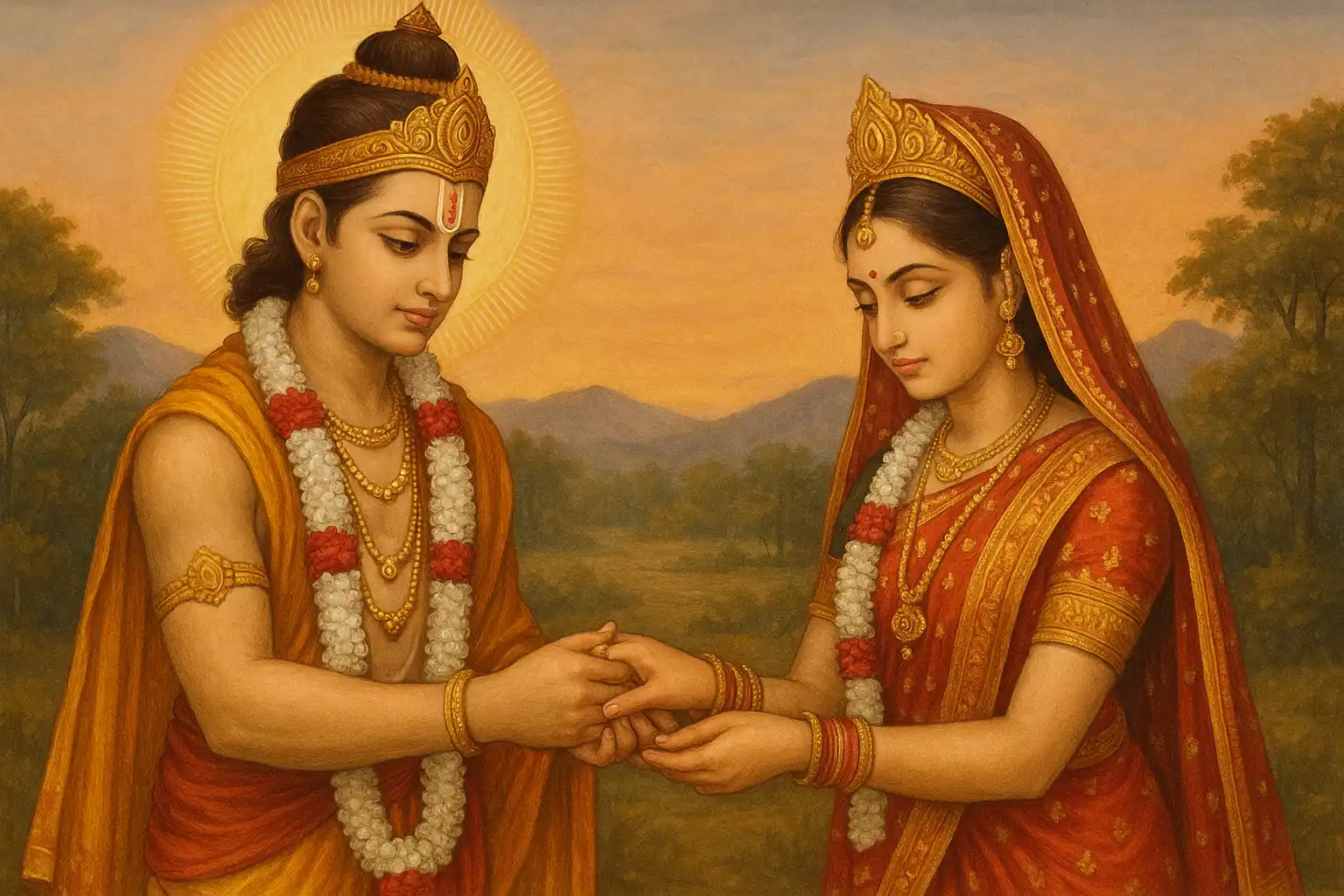
The Divine Union: Celebrating Love and Devotion on Vivah Panchami
Once upon a time, in the sacred land of Janakpur, a beautiful celebration unfolded under the moonlit sky. The air was filled with the sweet fragrance of flowers, and the melodies of divine hymns resonated across the land. The joyous occasion? The marriage of Lord Rama and Goddess Sita, a union of purity, devotion, and righteousness. As they stood before their loved ones, exchanging vows not only as husband and wife but as the embodiment of dharma and love, the world seemed to pause in awe of their sacred bond.
This divine wedding, celebrated on Vivah Panchami, continues to inspire millions to this day, teaching us the true meaning of love, commitment, and devotion. As we approach Vivah Panchami 2025, it’s the perfect time to reflect on the spiritual lessons of Lord Ram and Sita's marriage and explore how these timeless teachings can enhance our lives. Whether you're looking to deepen your spiritual practice, strengthen your relationships, or simply understand the essence of this beautiful festival, this blog will guide you through it all. Let's embark on this journey of love and devotion together.
What is Vivah Panchami?
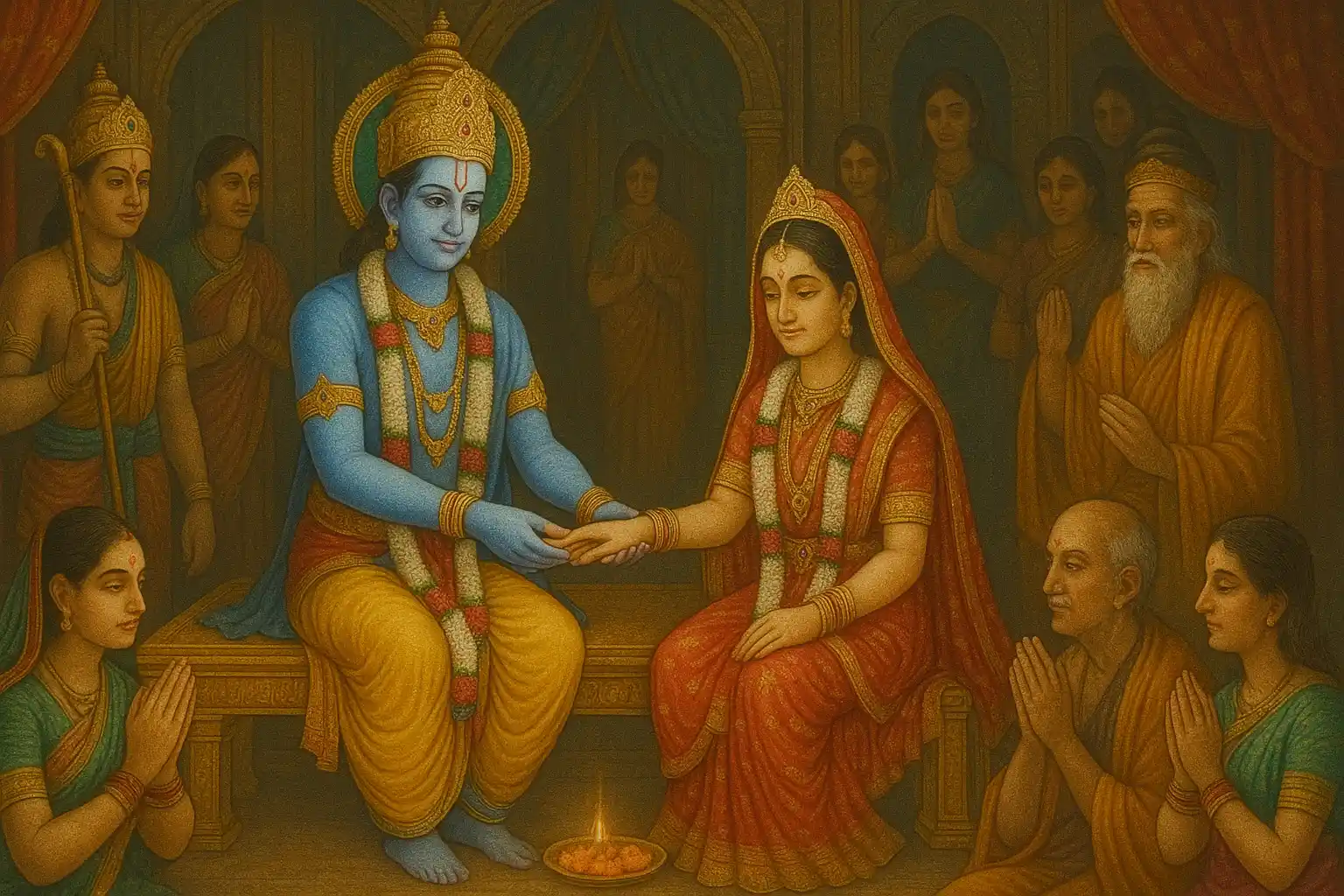
Vivah Panchami marks the celestial anniversary of the divine wedding of Lord Ram and Goddess Sita, a sacred union celebrated across Hindu tradition.
The festival is celebrated with much fervor in various regions of India and Nepal, particularly in Ayodhya and Mithila, where devotees gather in temples to participate in reenactments of the divine wedding. These celebrations are often accompanied by devotional singing, dancing, and joyous gatherings. Vivah Panchami serves as a reminder of the importance of duty, faith, and commitment in marital life, encouraging couples to embrace the virtues embodied by Lord Rama and Goddess Sita in their own relationship
Vivah Panchami 2025-Date and Muhurat
Puja Schedule Table
| Location | Panchami Tithi Starts | Panchami Tithi Ends |
|---|---|---|
| India (IST) | 24 November 2025, 09:22 PM | 25 November 2025, 10:56 PM |
| Dallas, USA (CST) | 24 November 2025, 09:52 AM | 25 November 2025, 11:26 AM |
- Because the lunar day (tithi) is based on the Moon’s position and can differ slightly by location, these times are approximate for India & Dallas.
- Many sources list a general muhurat of 07:07 AM to 12:27 PM IST for India on 25 Nov 2025. Converting to CST (~11.5 hours behind IST) gives the range above.
- If you plan any specific ceremony (especially a wedding or large ritual), please get a local panchang or ask a qualified astrologer.
- Consider local sunrise/sunset and any local time‑zone changes (CST vs CDT) — in November, Dallas uses CST (UTC−06:00)
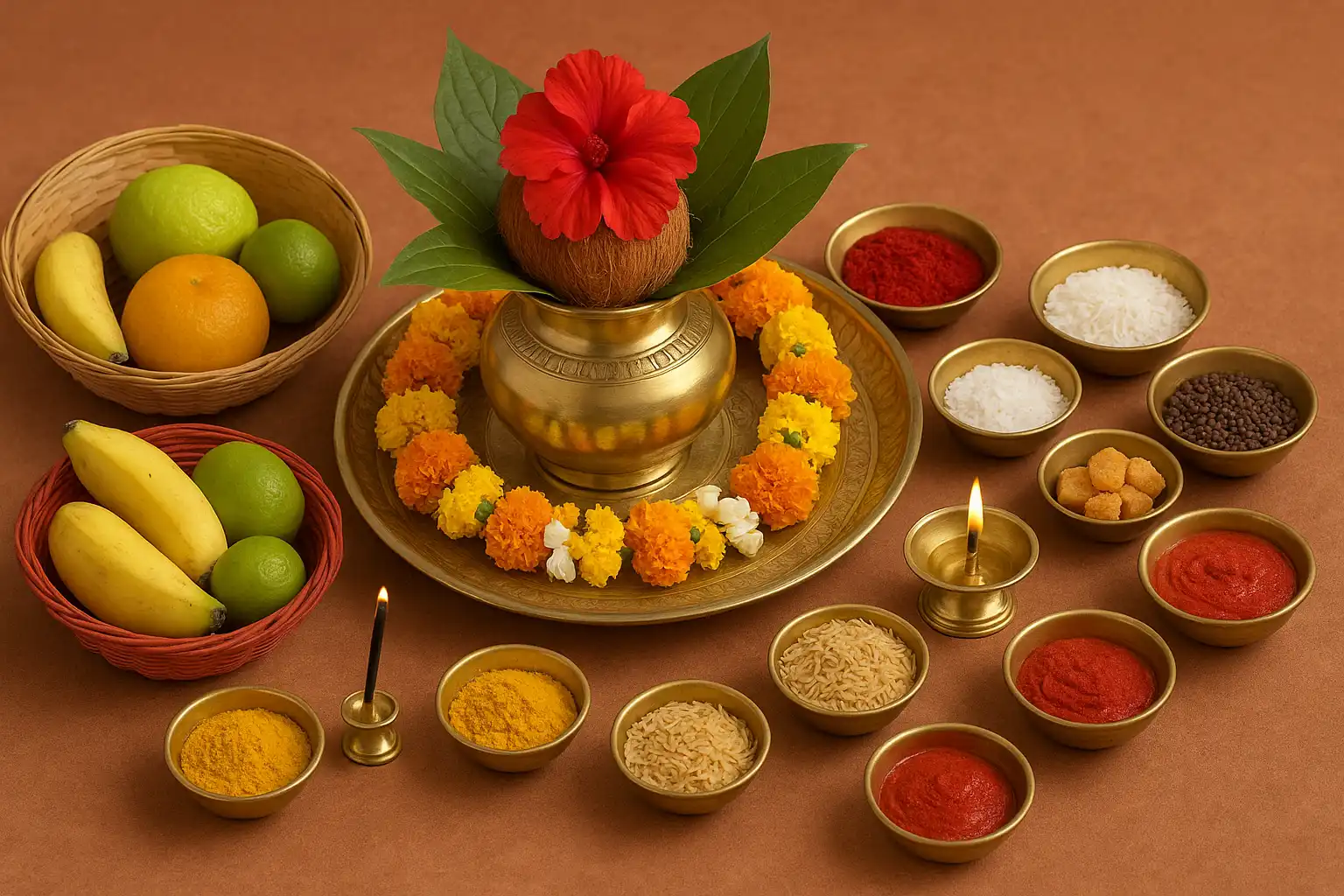
Puja Samagri (Materials Required) for Vivah Panchami:
Puja Samagri List
| S. No. | Item | Description |
|---|---|---|
| 1 | Idols or Pictures | Lord Rama and Goddess Sita idols or images for worship |
| 2 | Flowers | Marigold and lotus for decoration and offerings |
| 3 | Panchamrit | Mixture of milk, curd, honey, sugar, and ghee |
| 4 | Kalash | Sacred pot filled with water and mango leaves |
| 5 | Mauli | Red sacred thread tied during rituals |
| 6 | Chandan | Sandalwood paste for applying to idols |
| 7 | Kumkum & Haldi | Vermilion and turmeric for tilak and ritual purity |
| 8 | Incense & Dhoop | For fragrance and sanctifying the surroundings |
| 9 | Lamps (Diya) | Oil lamps lit with ghee, symbolizing divine light |
| 10 | Fruits & Sweets | Offerings made to the deities as prasad |
| 11 | Betel Leaves & Nuts | Traditional offerings symbolizing respect |
| 12 | Tulsi Leaves | Holy leaves offered to Lord Rama |
| 13 | Rice (Akshat) | Unbroken rice grains used for offering |
| 14 | Coconut | Symbol of devotion and completeness |
| 15 | Holy Book | Ramayana or Ramcharitmanas for recitation during puja |
Step-by-Step Vivah Panchami Puja Vidhi
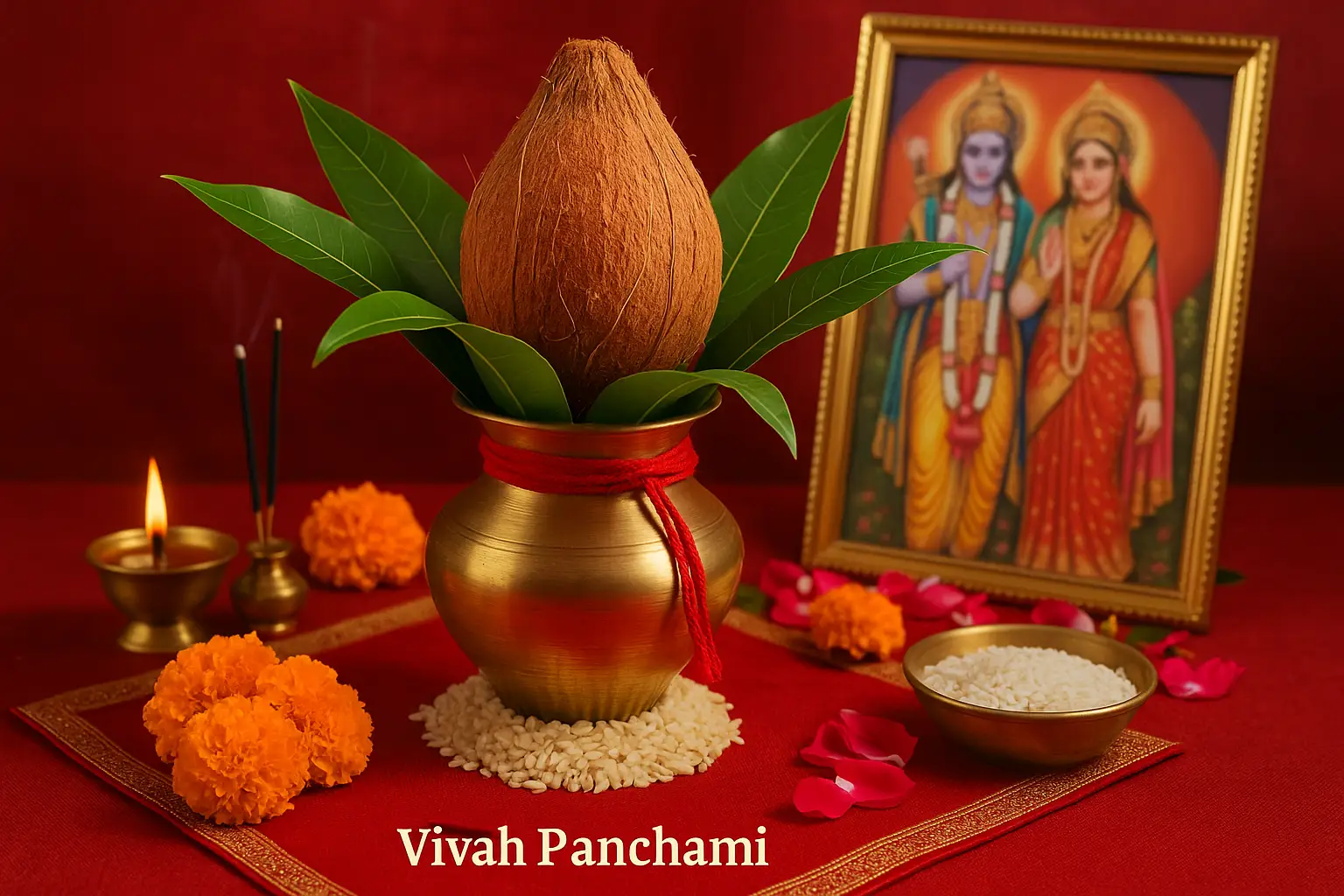
Puja Procedure Steps
| Step | Puja Activity | Details |
|---|---|---|
| 1 | Purification & Sankalpa | Wake early, bathe, and clean the altar. Place idols or images of Lord Rama and Goddess Sita. Sprinkle Gangajal and take a vow (sankalpa) to perform the puja with devotion. |
| 2 | Kalash Sthapana | Place a Kalash filled with water and mango leaves near the deities. Tie a Mauli and place a coconut on top. Chant: “ॐ गणानां त्वा गणपतिं हवामहे कविं कवीनामुपमश्रवस्तमम्”. |
| 3 | Invocation of Lord Ganesha | Light a diya and incense. Offer flowers and chandan while chanting: “वक्रतुण्ड महाकाय सूर्यकोटि समप्रभः निर्विघ्नं कुरु मे देव सर्वकार्येषु सर्वदा॥”. |
| 4 | Worship of Lord Rama & Sita | Apply chandan, kumkum, and haldi to the idols. Decorate with flowers. Offer Tulsi leaves, recite “Sri Ram Chalisa” or “Sita–Ram Katha”. |
| 5 | The Marriage Ritual | Perform symbolic wedding of Lord Rama and Sita. Chant “Mangalashatak Mantras”, offer flowers, perform aarti, and apply sindoor to Sita idol. |
| 6 | Aarti & Prasad Distribution | Conclude with aarti: “Shri Ram Chandra Kripalu Bhajman” and “Jai Siyaram Jai Jai Ram”. Offer sweets and fruits, and distribute prasad. |
Why Celebrate Its benefits & Purpose
People often ask: What do I gain by celebrating Vivah Panchami? Here are key benefits and reasons to observe:
- Strengthening marital bonds — Because the festival commemorates the ultimate ideal marital union, celebrating it invites blessings for mutual respect, love and understanding in one’s own relationship.
- Devotion and righteousness — Emulating the virtues of Sita (purity, devotion) and Rama (righteousness, strength) helps devotees aspire to higher moral character.
- Spiritual upliftment — Engaging in the puja, recital of the story, devotional songs and temple visits creates positive vibrations and alignment with divine energy.
- Cultural transmission — For younger generations, this is an opportunity to connect with the heritage, values, rituals and community.
- Blessings for singles and families — Even if you are unmarried, you may pray for an ideal partner; in families, you may pray for harmony, prosperity and well‐being of all.
In essence, Vivah Panchami becomes more than just a date — it becomes a moment of reflection on relationships, values, spiritual aspiration and community
Tips for Better Observance
- Perform the puja during the shubh muhurat (auspicious time) — best morning hours as noted above for 2025.
- Keep the atmosphere serene: play soft bhajans of Rama and Sita, avoid distractions.
The Historical Story Behind Vivah Panchami
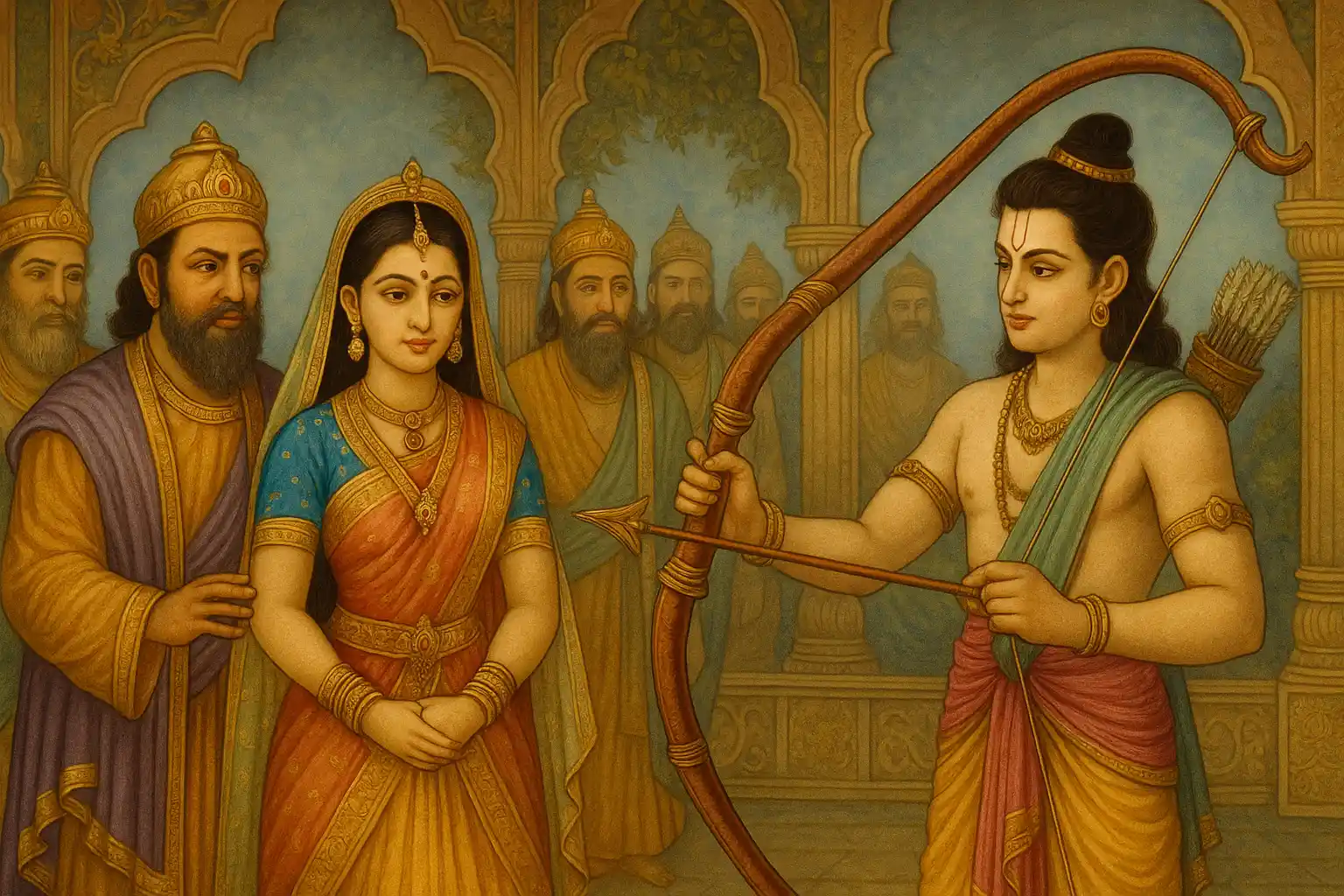
Vivah Panchami marks the divine wedding of Lord Rama and Goddess Sita, a union that is celebrated as a symbol of ideal love, respect, and dharma. The story is part of the ancient epic Ramayana.
Once upon a time, in the kingdom of Mithila, King Janak had a beautiful daughter named Sita, who was known for her grace and purity. King Janak wanted to find the best possible suitor for her. One day, he announced a grand Swayamvar (a ceremony where a princess chooses her husband from a group of suitors). The challenge for the suitors was to string the mighty Shiva Dhanush (the bow of Lord Shiva), an incredibly heavy and powerful bow.
Many princes and kings tried, but none were able to lift & string the bow. Then, Lord Rama, the prince of Ayodhya, arrived at the Swayamvara with his teacher Vishwamitra. As soon as he picked up the bow, he strung it effortlessly and even broke it into two pieces, proving his strength and divine prowess.
At that moment, Sita placed a garland around Rama’s neck, choosing him as her husband. The marriage between Lord Rama and Sita was a sacred event, not just a union of two individuals, but a divine bond that symbolized purity, devotion, and dharma.
Thus, the day of their wedding, which occurred on the fifth day of the Shukla Paksha in the month of Margashirsha, came to be celebrated as Vivah Panchami — a festival dedicated to the divine union of Lord Rama and Goddess Sita.
This marriage is a reminder to all devotees of the power of love, commitment, and the importance of upholding righteousness in life.
Deeper Significance: What the Festival Teaches — beyond date and ritual
Ideal Partnership
The union of Rama and Sita shows mutual respect, loyalty and support. It is not just a romantic tale, but a paradigm of dharma (duty), seva (service) and samarpan (surrender). For couples or even individuals, the underlying message is: relationships flourish when based on values rather than mere emotions.
Divine Play (Lila) & Human Aspiration
Although Rama and Sita are divine, their story is presented in human terms — struggle, sacrifice, reunion, celebration. Thus the festival connects the divine to human life, reminding us that our own lives too can reflect divine qualities if we strive.
Victory of Righteousness
Rama’s life is marked by adherence to dharma despite many challenges. Sita’s purity, resilience and devotion are celebrated. Their wedding stands as a milestone in Ramayana’s larger narrative — the establishment of righteousness on earth.
Renewal and Hope
The day invites devotees to renew vows — not only marital but personal: to live with integrity, to honour relationships, to treat life as sacred. In today’s fast‑paced world, such festivals become anchors for reflection and realignment.
Swami Mukundananda’s Teachings: A Spiritual Perspective for Vivah Panchami
As we observe the sacred occasion of Vivah Panchami, we can draw inspiration from the teachings of Swami Mukundananda Ji— who emphasizes self-realization, the power of love, and living a life of devotion. His teachings offer profound insights on how to cultivate inner peace, build harmonious relationships, and experience the divine presence in our everyday lives. Here’s how his wisdom can be intertwined with the celebration of Vivah Panchami:
- Devotion through Love: Swami Mukundananda teaches that true devotion is rooted in selfless love. On Vivah Panchami, as we celebrate the marriage of Lord Rama and Goddess Sita, we are reminded that love is the highest form of spiritual practice. This love transcends rituals and connects us to the Divine.
- Dharma in Relationships: Swami Mukundananda emphasizes living according to dharma in all relationships. Just as Shree Ram and Sita exemplified respect, duty, and righteousness, we can reflect on how to bring these virtues into our own relationships, nurturing them with integrity and love.
- Inner Harmony and Meditation: Swami Mukundananda highlights meditation and introspection as keys to self-realization. During Vivah Panchami, take a moment to meditate on the qualities of Lord Rama and Sita, and reflect on how these qualities can inspire you in your life.
- Celebrating Love as a Spiritual Practice for God: Swami Mukundananda often says that love is not just an emotion but a spiritual practice. On Vivah Panchami, celebrate the divine union by embodying love that is directed towards God as true love can only exist between soul and his master who is God.
Benefits & Donation / Spiritual Merits
Here are commonly believed benefits and aspects of donations or charitable acts on Vivah Panchami according to tradition / religious sources:
| Area | Spiritual Merits | Donation Merits | Social Benefit |
|---|---|---|---|
| Marital / family life | Devotion to Rama & Sita is believed to yield positive karma, purity, blessings, and spiritual growth. | Donating (daan) on the day is considered highly meritorious. It’s believed donations made on this auspicious day enhance one’s spiritual benefits and blessings. | Donations help temples or communities organize the festival celebrations, help underprivileged people to take part in the events, support temple upkeep etc. |
| Rituals / Puja Steps | The puja is said to purify one's soul and bring blessings from Lord Rama and Sita for a prosperous life. | Making donations during this time increases spiritual merit, especially if done with the intent of helping others. | Contributions to charity or temple projects help the broader community, especially the underprivileged, and support religious institutions. |
| Items for Rituals | Rituals performed with proper devotion are believed to bring blessings and purification to the devotee. | Items like clothes, food, or prasad offered during the puja are considered to have spiritual merit. | Offerings made during the festival benefit the community and help organize larger temple activities. |
| Festivals and Celebrations | By participating in the rituals, devotees can purify their hearts and grow spiritually. | Charitable acts are encouraged during the festival to enhance spiritual and worldly benefits. | By making donations, communities are able to support the festival and enhance the lives of the less fortunate. |
May the divine union of Shri Sita–Ram shower the world with peace, love, and auspiciousness — जयति सीता–रामोऽयं, मंगलं लोकमङ्ग
Vivah Panchami is a Hindu festival that commemorates the wedding of Lord Rama and Goddess Sita, celebrated on the fifth day of the waxing moon in the month of Margashirsha. The festival is a celebration of their divine union, symbolizing love, devotion, and the triumph of dharma. Celebrations are particularly vibrant in places associated with their story, such as Ayodhya in India and Janakpur in Nepal, where re-enactments of the wedding, processions, and devotional songs are held.
As we learned the pivotal role of Donation during Vivah Panchami 2025. We are fortune to receive an opportunity to help Swami Mukundananda Ji and his JKYog mission in supporting the underprivileged through Jagadguru Kripalu University (JKU) and Jagadguru Kripalu Hospital & Research Center — a transformative initiative bringing education, healthcare, and hope to rural India.
“True wealth is found not in what we have, but in what we give.”
🎓 Support the JKU Project – Here's How You Can Help:
💛 Make a Direct Donation
Light up a life with your generous contribution.
👉 Donate Now
👣 Start Your Own Fundraiser
Create your own fundraising page and rally your family, friends, or community.
👉 Start Fundraising Here
🤝 Join the Walk for Education & Healthcare
Be part of a global movement to raise awareness and funds.
🌼 Your Contribution Supports:
- Free & subsidized education for underprivileged children, youth, and adults
- Modern and alternative healthcare, including child health, dental, physiotherapy, and natural healing
- Vocational training and micro-enterprise development
- Promotion of spiritual, physical, and mental well-being based on Vedic and Yogic sciences
Final Thoughts
As we celebrate Vivah Panchami 2025, let the teachings of Swami Mukundananda serve as a beacon guiding us towards deeper devotion, righteous living, and meaningful relationships. The marriage of Lord Rama and Goddess Sita is not just a story from the past, but a living lesson in how we can connect with the Divine through our relationships, our duties, and our selfless actions. Let us take this occasion to reflect on our own spiritual path, practice dharma, and cultivate love in our hearts. By aligning our actions with divine principles, we can create harmony, peace, and prosperity in all aspects of our lives.
May the blessings of Mother Sita and Shri Ram bring peace to our homes, purity to our hearts, and righteousness to our actions.
🌿 जय सीता राम । May the world rejoice in their eternal union.
Call To Action
Discover the divine power and meaning behind these timeless chants:
- Shree Ram Raksha Stotra – Click Here
- Vishnu Sahasranamam – Click Here
- Mahamrityunjay Mantra – Click Here
- Sundarkand Path – Click Here
If the message of Vivah Panchami 2025 resonated with you, immerse yourself deeper in divine wisdom and practice by joining Swami Mukundananda’s enlightening talks on YouTube.
👉 Subscribe to Swami Mukundananda’s Official Channel
FAQ
Q1. Can unmarried people observe Vivah Panchami?
Yes — the festival is open to all. Unmarried persons can pray for a good life partner, for the blessings of ideal relationship, or simply resonate with the divine union for their own spiritual growth.
Q2. Are there restrictions (fasting, food, etc)?
Traditions vary. Some devotees may fast until the puja is done; others may offer specific sweets or foods. The key is devotion and sincerity rather than rigid rule‑keeping. You may check local family tradition or temple custom.
Q3. What if I miss the “ideal” Muhurat?
While it is best to perform the puja during the designated auspicious time, the intention (bhavana) matters most. If you perform it with devotion within the tithi (Panchami) you still gain benefit. For precise local timing, you may check your regional panchang.
Q4. Can this festival be combined with a wedding or proposal?
Yes, many choose Vivah Panchami or nearby auspicious dates for engagement or marriages considering its symbolism of perfect union. Consult a local priest or astrologer for personal muhurat.
Q5. What is the best way to explain this festival to children?
You may tell them the story of how Lord Rama, a prince, and Sita, a princess, chose to live their lives with virtue and love. Then show them how present‑day families honour that ideal by coming together, by worship, by giving thanks. Bring in simple activities: drawing Rama–Sita, reading a storybook, offering flowers together.
Shubh Vivah Panchami 2025!
References
- “2025 Vivah Panchami Date and Time for New Delhi, NCT, …” — DrikPanchang.
- “Shree Krishna’s Quotes to Foster Daily Habits (Drawing on Swami Mukundananda’s commentary)” — JKYog Blog.
Read other blogs on Vivah Panchami
📚 Learn about all 9 forms of Goddess Durga and explore Navratri rituals in our Complete Navratri 2025 Guide »
✨ Explore Diwali & Chhath Puja Blogs
Top 50 Diwali Wishes 2025
Spiritual greetings & status ideas
Explore over 50 heartfelt greetings, spiritual messages, and inspiring WhatsApp status ideas that reflect divine love and light for Diwali 2025.
Read More →Diwali Greetings 2025
Quotes for family & friends
Celebrate Diwali 2025 with heartfelt wishes, meaningful messages, and inspiring quotes for loved ones. Share the joy of Deepavali with spiritual warmth.
Read More →Diwali Dates & Muhurat
5-day guide & puja timings
Plan your Diwali 2025 celebrations with this full guide—covering 5 days of rituals, muhurat timings, and deeper spiritual meaning behind each festival day.
Read More →Rangoli Designs 2025
Traditional & creative styles
Celebrate Diwali with stunning Rangoli—from classic floral to 3D and LED designs. Explore eco-friendly and artistic ways to welcome prosperity this Deepavali.
Read More →Lakshmi Puja 2025
Puja date, rituals & seva
Worship Goddess Lakshmi with correct Diwali 2025 muhurat, rituals, and support JKYog’s rural upliftment. Light lives and invite divine blessings.
Read More →Navratri 2025 Guide
Puja date, rituals & seva
Discover Navratri 2025 in depth! Get the complete calendar, daily goddess significance, fasting rituals, regional traditions, and muhurat timings.
Read More →