
In a world that constantly urges us to take control, assert dominance, and never back down, the idea of surrender seems counterintuitive. We’re told to hustle, achieve, and compete. But what if true joy, peace, and power lie not in holding on, but in letting go? What if surrender is not a sign of weakness but a path to inner strength and spiritual freedom?
The Bhagavad Gita, a timeless spiritual scripture, teaches us that surrender is the gateway to liberation. It is through surrendering our ego, desires, and false notions of control that we align ourselves with divine will and find true bliss. Swami Mukundananda, a spiritual leader and teacher of Vedic wisdom, emphasizes that surrender is not about resignation—it is about realignment. It is stepping out of the way so that the Divine can take over.
Explore the liberating power of surrender through key teachings from the Bhagavad Gita and insights from Swami Mukundananda. We’ll look at why surrender matters, how it transforms our lives, and how we can practice it every day.
The Illusion of Control
We often believe we are the masters of our fate. While self-effort is vital, the belief that we control all outcomes is an illusion. This illusion fuels our anxiety, stress, and dissatisfaction.
Bhagavad Gita 3.27
"prakriteh kriyamanani gunaih karmani sarvashah
ahankara-vimudhatma kartaham iti manyate"
"All activities are carried out by the three modes of material nature. But in ignorance, the soul, deluded by false identification with the body, thinks of itself as the doer."
👉 Read Verse 3.27 with commentary
Swami Mukundananda explains that the ego falsely claims ownership over actions that are actually governed by nature. This illusion binds us to the cycle of karma and suffering. When we let go of this false identification, we begin to see life with clarity.
We spend countless hours planning, worrying, and strategizing—only to be blindsided by something we never expected. When we accept that we are not the ultimate controllers, we begin to relax into the flow of life. True control lies in the hands of the Supreme, who sees the full picture, while we only glimpse a fragment.
What Is Surrender According to the Gita?
Surrender (sharanagati) in the Gita is not passive submission but active trust. It is a conscious choice to let go of the ego and allow divine will to guide our lives.
Bhagavad Gita 18.66
"sarva-dharman parityajya mam ekam sharanam vraja
aham tvam sarva-papebhyo mokshayishyami ma shuchah"
"Abandon all varieties of dharmas and simply surrender unto Me alone. I shall liberate you from all sinful reactions; do not fear."
👉 Read Verse 18.66 with commentary
This verse is Lord Krishna’s ultimate call to Arjuna—and to all of us. It is an invitation to transcend the mind and rest in divine consciousness. True surrender brings protection, liberation, and divine grace.
When we hold onto our preferences and ideologies, we create resistance against the very wisdom that could save us. Surrender is the divine antidote to this resistance. It is a willing opening of our inner doors, allowing God to enter and lead.
Layers of Surrender: Swami Mukundananda's Teachings
Swami Mukundananda describes surrender as a multi-layered process:
1. Intellectual Surrender: Accepting the supremacy of God intellectually.
2. Emotional Surrender: Cultivating heartfelt love and trust in God.
3. Behavioral Surrender: Aligning one's actions with divine will.
Many stop at intellectual surrender. They agree mentally but do not emotionally trust God or live accordingly. The real transformation begins when all three levels align. It is then that surrender becomes a lived experience.
“Surrender is the act of handing over the reins of your life to the Divine, knowing that the charioteer sees the path more clearly than the passenger.” — Swami Mukundananda
Detachment from Outcomes: Karma Yog in Action
Surrender is closely tied to the practice of karma yog—acting without attachment to results.
Bhagavad Gita 2.47
"karmany-evadhikaras te ma phaleshu kadachana
ma karma-phala-hetur bhur ma te sango ’stvakarmani"
"You have a right to perform your prescribed duties, but you are not entitled to the fruits of your actions. Never consider yourself to be the cause of the results of your activities, nor be attached to inaction."
👉 Read Verse 2.47 with commentary
Swami Mukundananda explains that when we perform our duties as a service to God, without attachment to the outcome, we become peaceful and spiritually elevated.
This detachment doesn’t mean we stop caring—it means we care deeply, yet allow the outcome to rest with the Divine. It’s the path of action imbued with inner stillness.
Freedom from Fear Through Surrender
Fear thrives in uncertainty. Surrender replaces fear with faith.

Bhagavad Gita 12.15
"yasman nodvijate loko lokan nodvijate cha yah
harshamarsha-bhayodvegair mukto yah sa cha me priyah"
"Those who are not a source of annoyance to anyone and who in turn are not agitated by anyone, who are equal in pleasure and pain, and free from fear and anxiety, such devotees of Mine are very dear to Me."
👉 Read Verse 12.15 with commentary
Such a person is unshakable because they rest in divine trust. When we surrender, we stop reacting to life and start responding with grace.
We begin to understand that even adversity has a purpose. Every challenge is a tailor-made lesson from the Divine. With this understanding, even the storms become sanctified.
Hanuman: The Epitome of Surrender
Hanuman serves as the perfect embodiment of surrender. He saw himself only as a servant of Lord Ram and drew his strength from that identity.
He once declared:
As a body, I am Your servant.
As a soul, I am part of You.
But in devotion, You are my everything.
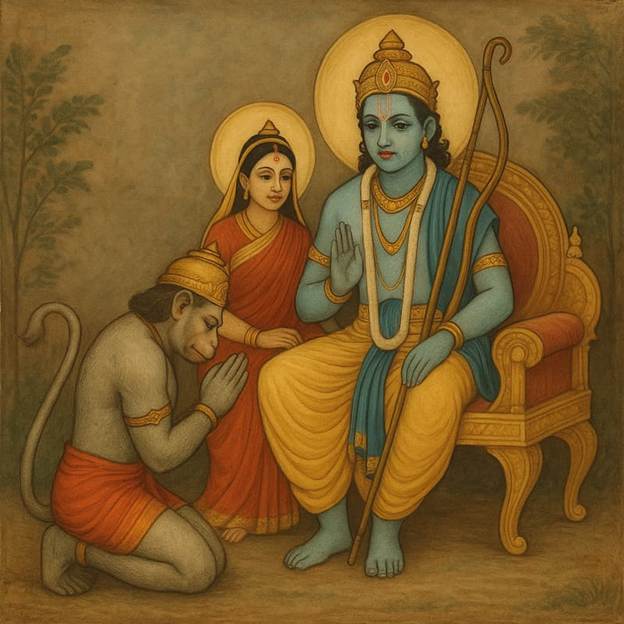
Because of his unwavering surrender, Hanuman became fearless and immortal.
His life was a continuous offering. Whether leaping across the ocean or tearing open his chest, he did it all out of surrendered love. His story teaches us that surrender doesn’t shrink us—it exalts us.
When Surrender Feels Difficult
The ego resists surrender. It clings to control. But surrender is a muscle that strengthens with practice.
Tips from Swami Mukundananda:
- Begin each day with a prayer: "O Lord, guide me. I am Yours."
- In moments of stress, remind yourself: "I trust in Your plan."
- Practice humility. Accept that you don't always know what's best.
Keep the company of saints and read scriptures daily. They act as mirrors that reflect the futility of ego and the beauty of devotion.
Surrender Is Not Inaction
Many mistake surrender for passivity. But the Gita teaches that the surrendered soul is still active—just without ego.
Bhagavad Gita 6.1
"shri bhagavan uvacha
anashritah karma-phalam karyam karma karoti yah
sa sannyasi cha yogi cha na niragnir na chakriyah"
"The Supreme Lord said: Those who perform prescribed duties without desiring the results of their actions are actual sanyāsīs (renunciates) and yogis, not those who have merely ceased performing sacrifices such as Agnihotra yajna or abandoned bodily activities."
👉 Read Verse 6.1 with commentary
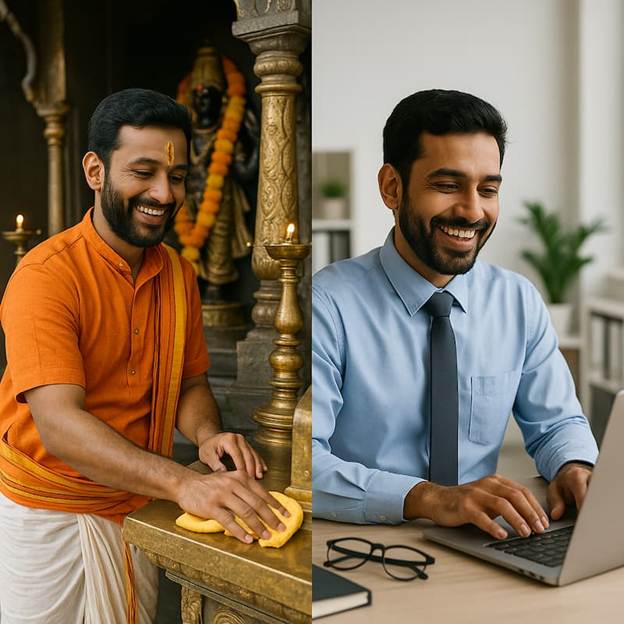
Acting in surrender means doing your best while leaving the rest to God. It also means knowing when to act and when to let go—both guided by inner wisdom.
The Ultimate Reward: Liberation
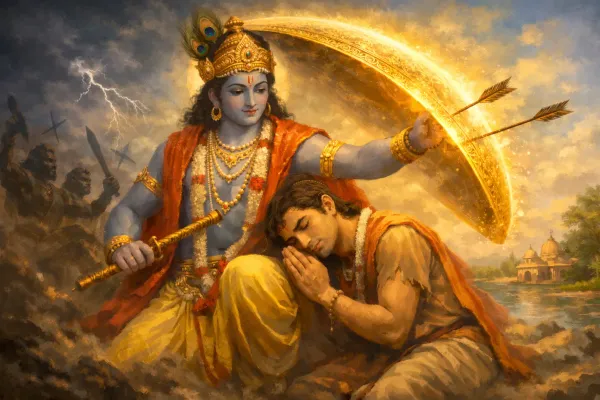
Surrender leads to moksha—freedom from the cycle of birth and death. When Arjuna surrendered to Krishna, clarity and strength returned.
Bhagavad Gita 18.73
"arjuna uvacha
nashto mohah smritir labdha tvat-prasadan mayachyuta
sthito ‘smi gata-sandehah karishye vachanam tava"
"Arjun said: O Infallible One, by Your grace my illusion has been dispelled, and I am situated in knowledge. I am now free from doubts, and I shall act according to Your instructions."
👉 Read Verse 18.73 with commentary

True surrender leads to wisdom, purpose, and divine connection. The soul is no longer tossed by life—it becomes anchored in the infinite.
How to Practice Surrender Daily
1. Start with Gratitude: Acknowledge the Divine’s presence in your life.
2. Offer Your Actions: Say, "Lord, this is for You."
3. Accept What Comes: Trust that every experience is a divine design.
4. Read and Reflect: Study the Gita and reflect on surrender.
5. Chant and Meditate: Use mantra meditation to connect with the Divine.
6. Pause Often: Throughout the day, remind yourself: "I am not the doer."
7. Write a Daily Surrender Journal: End your day by writing down what you surrendered and how it changed your experience.
Call to Action
✨ Today, pause for a moment. Take a deep breath.
🙏 Whisper this prayer: "Dear Lord, I surrender. Guide me, hold me, use me. I trust in You."
🌌 Then go about your day with a heart full of faith.
Make surrender your superpower. Live each moment in divine trust.
Resources for Further Exploration
- Watch: Lectures by Swami Mukundananda on YouTube
- Visit JKYog Website
- Buy Books on Amazon to deepen your knowledge:
❓FAQs
1: Is surrender a one-time event?
No, it is a daily practice. Each moment gives us a new chance to surrender.
2: Can I surrender and still be ambitious?
Absolutely. Ambition is not the issue. Attachment to outcomes is. Surrender the results, not the effort.
3: What if I feel resistance to surrender?
That’s natural. Begin with small acts. Surrender in prayer, in one task, or in one emotion.
4: How do I know I’m truly surrendered?
You will feel light, fearless, and filled with grace.
5: Does surrender mean I stop caring?
No. It means you care deeply but without fear or attachment.
6: Can surrender help with relationships?
Yes. It allows you to love unconditionally without controlling others.
7: Does surrender mean I won’t feel pain?
Pain may still come, but it won’t control you. Surrender brings inner resilience.