

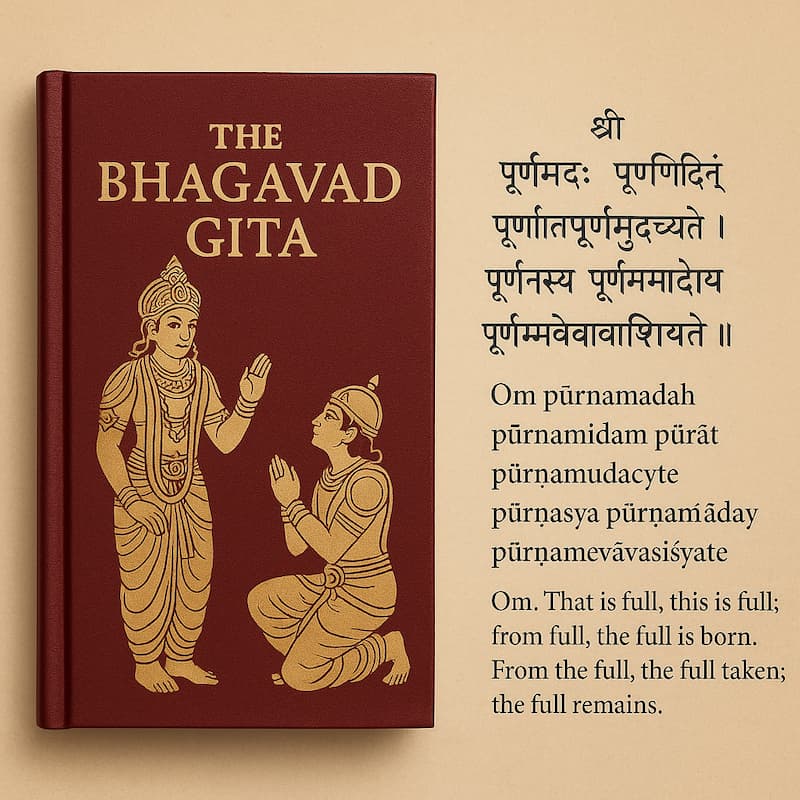
“ॐ पूर्णमदः पूर्णमिदं पूर्णात् पूर्णमुदच्यते।पूर्णस्य पूर्णमादाय पूर्णमेवावशिष्यते॥”
— Isha Upanishad, Invocation
“That is complete; this is complete. From completeness comes completeness. Even when completeness is taken away from completeness, completeness still remains.”
These mystic words from the Isha Upanishad have puzzled, inspired, and elevated countless seekers for millennia. They reveal a profound truth: the source—God—is complete; the manifestation—this world—is complete; and we, the souls, are also complete in our essence. But how can that be, when the world around us appears full of suffering, scarcity, and imperfection?
Let’s unpack the divine wisdom embedded in this mantra, exploring how it turns our understanding of the universe, ourselves, and life’s purpose inside out.
God Is Complete — But What Does That Mean?
The word “Poornam” simply means full, whole, or complete. But this is not a physical completeness, like a glass full of water. It is spiritual wholeness—without lack, without flaw, infinite in quality and dimension.
According to the Devi Bhagavatam, Maharshi Parāshar describes God as the possessor of six infinite opulences:
- Aishwarya (wealth)
- Yash (fame)
- Shree (beauty)
- Jnana (knowledge)
- Vairagya (renunciation)
- Bal (strength)
These six qualities, when possessed to the infinite degree, define the Supreme Divine.
But God is not limited to six virtues. As Ved Vyas puts it in the Srimad Bhagavatam: “If anyone claims to count the virtues of God, they possess the intellect of a child trying to measure the sky with two fingers.”
Even Anant Shesh, the thousand-mouthed serpent who serves as Vishnu’s bed, has been describing God's glories since the dawn of creation—and has yet to finish.
Poets like Kabir echo this sentiment:
“सबहु धरती कागद करूँ, लेखनि सब बनराय।सात समुद्र की मसि करूँ, हरि गुण लिखा न जाय॥”
If the entire earth were paper, all trees pens, and the oceans ink, still it would not suffice to describe God's glories.
God, therefore, is Poornamadah—limitlessly, immeasurably, eternally complete.
Then Why Call This World “Complete”? Isn’t It Full of Suffering?

Here lies the most delicate and powerful insight.
Poornamidam—“This is also complete.” The world, born from the complete, is complete. But this completeness is not the absence of pain. It is perfection of purpose.
This world was not meant to be a paradise. It is meant to be a divine university—a place for soul growth. Just like a perfect training ground tests a warrior, this world tests and trains the soul.
Suffering is not a flaw in design—it is part of the curriculum. The obstacles we face are the sculptor’s chisels, shaping our inner selves.
A Tale of Two Paintings: Peace Amid Chaos
Consider a story. A king held a competition: “Paint peace.”
Two finalists emerged. One depicted a serene valley—flowers, blue skies, deer grazing. The other showed dark clouds, lightning, a roaring waterfall. But hidden behind the waterfall, a tiny bird nested calmly, feeding her chicks.
The king declared the second painting the winner. Why?
Because true peace is not in the absence of chaos, but in remaining unshaken within it.

That’s the kind of inner growth the world is designed to teach.
Spirituality vs. Materialism: The Mindset Shift
Materialism breeds scarcity: “If someone else has more, I must have less.”
Spirituality reveals the abundance of the infinite: “The more you give, the more you have.”
As poet Anne Sexton wrote:
“Abundance is scooped from abundance,
yet abundance remains.”
Spiritual truth, like the infinite well, is never depleted. This is the logic of poornam—from completeness arises completeness, and yet, the source remains untouched.
But What About Me? I Feel So Incomplete.
You are part of that divine completeness too.
You may say, “I am full of flaws. I’m not perfect.”
But from God’s vantage point, you are perfect where you are in your journey—just like a fetus in the womb is “perfect” at each month of development.
God hates the sin, not the sinner. He sees the potential perfection in every soul.
As the Buddha once reminded his disciples about a depraved man they criticized:
“Forty lifetimes ago, I was like him too.”
Pain as a Teacher: Becoming Jagannath
Remember the story of a block of wood that approached the sculptor, asking to become beautiful?
As the sculptor began chiseling, the wood protested in pain. But in time, it was transformed into the deity of Lord Jagannath, worshipped by millions.
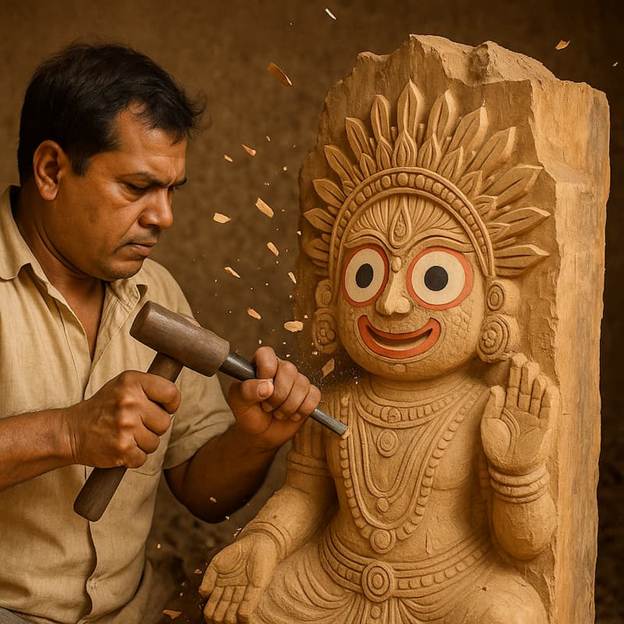
Pain, challenges, and loss shape us into divine expressions of purity and strength.
Even researchers found that in leprosy, it is not the disease that destroys limbs, but the absence of pain that leads to unnoticed injury.
Pain is a signal. Misery is a choice.
The Real Transformation: Changing the Self, Not the World
A monk always carried a mirror, checking his face. When questioned about his vanity, he replied:
“Whenever I’m disturbed, I check who’s responsible—my own mind.”
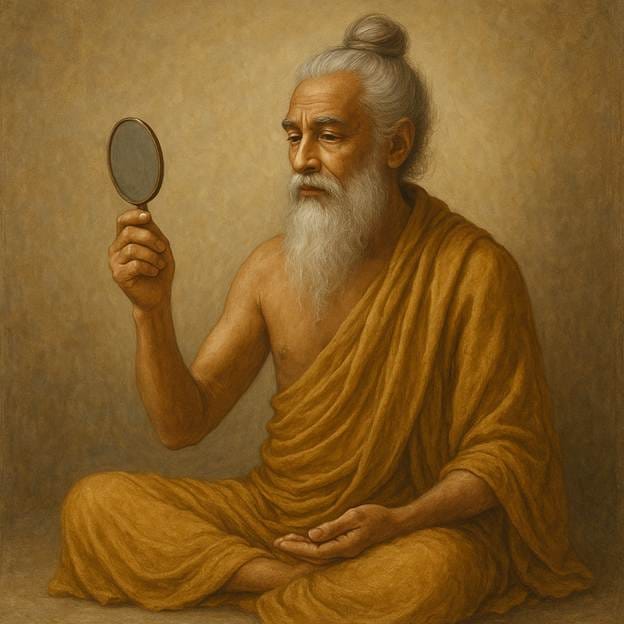
This self-awareness is the key.
Trying to change the world before changing oneself is like Lucy from the Charlie Brown comic, who said:
“I want to change the world.”
Charlie asked, “Where would you start?”
She replied, “With you.”
Instead, we must start within.
From the Perspective of the Divine: Everything Is in Order
Yes, there are wars, injustice, pain, and ignorance. But from the divine perspective, all this exists within the grand design for soul evolution.
God has faith in his creation. He has uplifted infinite souls, and He’s confident He can do it for you too.
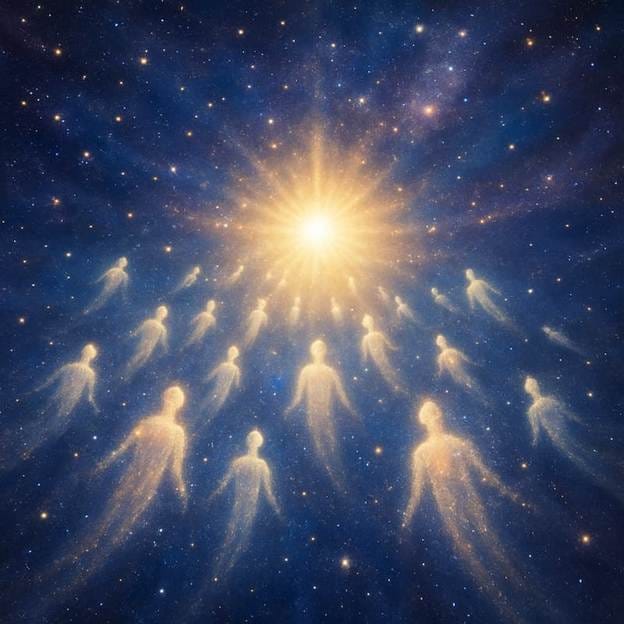
So whether you're thriving or struggling, whether your life feels perfect or broken, know this: you are part of a perfect system, progressing exactly as it should.
Final Thought: The Shanti in Poornam
The mantra ends with Shanti Shanti Shanti—peace three times.
- Peace in the physical world (Adhibhautik)
- Peace in the inner world (Adhyatmik)
- Peace from divine and cosmic forces (Adhidaivik)
This peace comes not from the absence of hardship but from knowing the world is complete, your soul is eternal, and God’s love is unconditional.
Call to Action
Let this not remain just a beautiful idea, but a lived experience. Begin each day by anchoring yourself in the truth:
🕉 “I am complete. I am a part of a divine design.”
Reflect on the Poornamadah mantra. Meditate on its meaning. Let its resonance calm your mind, realign your thoughts, and reawaken your soul's connection to the Infinite.
🎧 Listen to the mantra, absorb its vibrations, and internalize its message. Swami Mukundananda’s teachings offer rich, practical interpretations of this ancient wisdom, bringing it into your everyday life.
👉 Subscribe to Swami Mukundananda’s YouTube Channel to receive:
- Profound spiritual wisdom rooted in the scriptures
- Guided meditations and mantras for inner peace
- Tools to master the mind and elevate your consciousness
- Answers to life’s most pressing questions from a divine perspective
✨ Don’t just read about completeness—live it.
📤 Share this blog with someone who’s feeling lost, incomplete, or overwhelmed. It could be the reminder they need:
You are not broken. You are becoming.
📖 References
1. Ishavasya Upanishad – Invocation Verse
“ॐ पूर्णमदः पूर्णमिदं पूर्णात् पूर्णमुदच्यते। पूर्णस्य पूर्णमादाय पूर्णमेवावशिष्यते॥”
Translation: “That is complete; this is complete. From completeness comes completeness. Even when completeness is taken away from completeness, completeness still remains.”
2. Bhagavad Gita
o 2.14 – Matra-sparshas tu kaunteya...
Teaches endurance of pleasure and pain.
o 6.5 – Uddhared atmanatmanam...
Encourages self-upliftment and personal responsibility.
o 6.7 – Jitatmanah prashantasya...
Describes inner peace amid external dualities.
o 9.10 – Maya adhyakshena prakriti...
Explains divine supervision of the material world.
o 10.18 – Vistarena atmano yogam...
Arjun asks Shree Krishna to elaborate on His divine glories.
📘 Translation and Commentary by Swami Mukundananda
www.holy-bhagavad-gita.org
3. Devi Bhagavatam
Verse explaining the six divine opulences of the Supreme Being:
Aishwarya, Yasha, Shree, Jnana, Vairagya, Bala.
4. Srimad Bhagavatam (Bhagavata Purana)
Authored by Vedavyasa. Reference to the immeasurable attributes of God and the futility of trying to count them.
🙋 Frequently Asked Questions (FAQs)
1. What does “Poornamadah Poornamidam” mean in simple terms?
It means:
“That (God) is complete; this (world) is complete. From the complete arises the complete, and even after taking away from the complete, the complete remains.”
This mantra from the Isha Upanishad emphasizes the infinite nature of God and His creation. It reflects the idea that the Divine and all that emanates from Him is spiritually whole and perfect in design.
2. How can the world be called “complete” when there is so much suffering?
From the spiritual viewpoint, the world is not meant to be free from pain—it is designed as a field for growth and transformation. Just as a school is complete when it has challenges that teach, this world is complete in its ability to incubate souls and lead them to perfection across lifetimes.
3. What does the Bhagavad Gita say about suffering and completeness?
The Bhagavad Gita teaches that suffering is temporary and instructional, not absolute. In verse 2.14, Shree Krishna says:
“Pleasure and pain come and go like seasons. Learn to endure them, O Arjuna.”
It also teaches that the self (Atman) is eternal and complete, and inner peace can be attained despite outer turmoil.
4. If I’m complete, why do I feel broken or unworthy?
Feeling incomplete comes from identifying with the mind, body, and ego. But from the Divine’s perspective, you are like a child still growing in the womb—perfect at your stage, even if not fully developed. God sees your potential, not just your current flaws.
5. Is the mantra Poornamadah Poornamidam only relevant to Hindus?
No. While rooted in the Upanishads, the mantra’s message is universal. It speaks to the nature of divine abundance, inner peace, and purposeful suffering—concepts found across many spiritual traditions, including Buddhism, Christianity, and Sufism.
6. How can I apply the wisdom of this mantra in my daily life?
- Accept life’s challenges as part of divine design.
- Shift from complaining to learning from suffering.
- Practice self-reflection (like the monk with the mirror).
- Meditate on the mantra to remind yourself of your divine completeness.
- Read the Bhagavad Gita for practical tools to stay centered amidst life’s chaos.
7. Where can I hear or chant the Poornamadah mantra?
You can listen to beautiful renditions of the mantra on platforms like YouTube or Spotify, especially from Vedic chanters or spiritual teachers like Swami Mukundananda. Chanting it in the morning or before meditation helps anchor your mind in divine fullness.