
The Ultimate Benediction
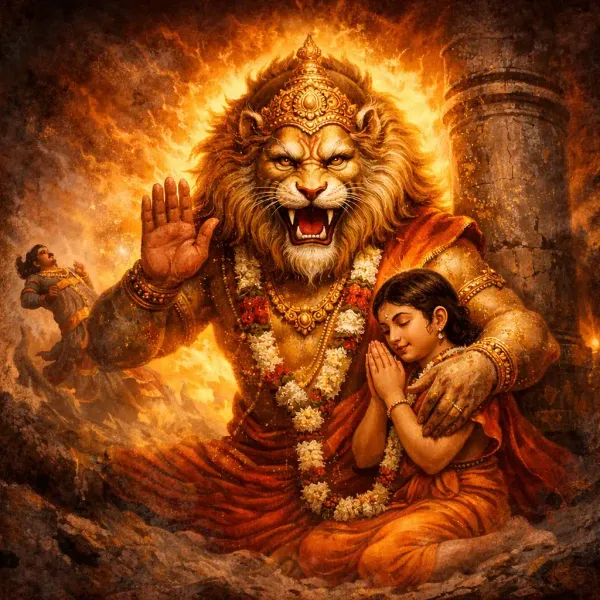
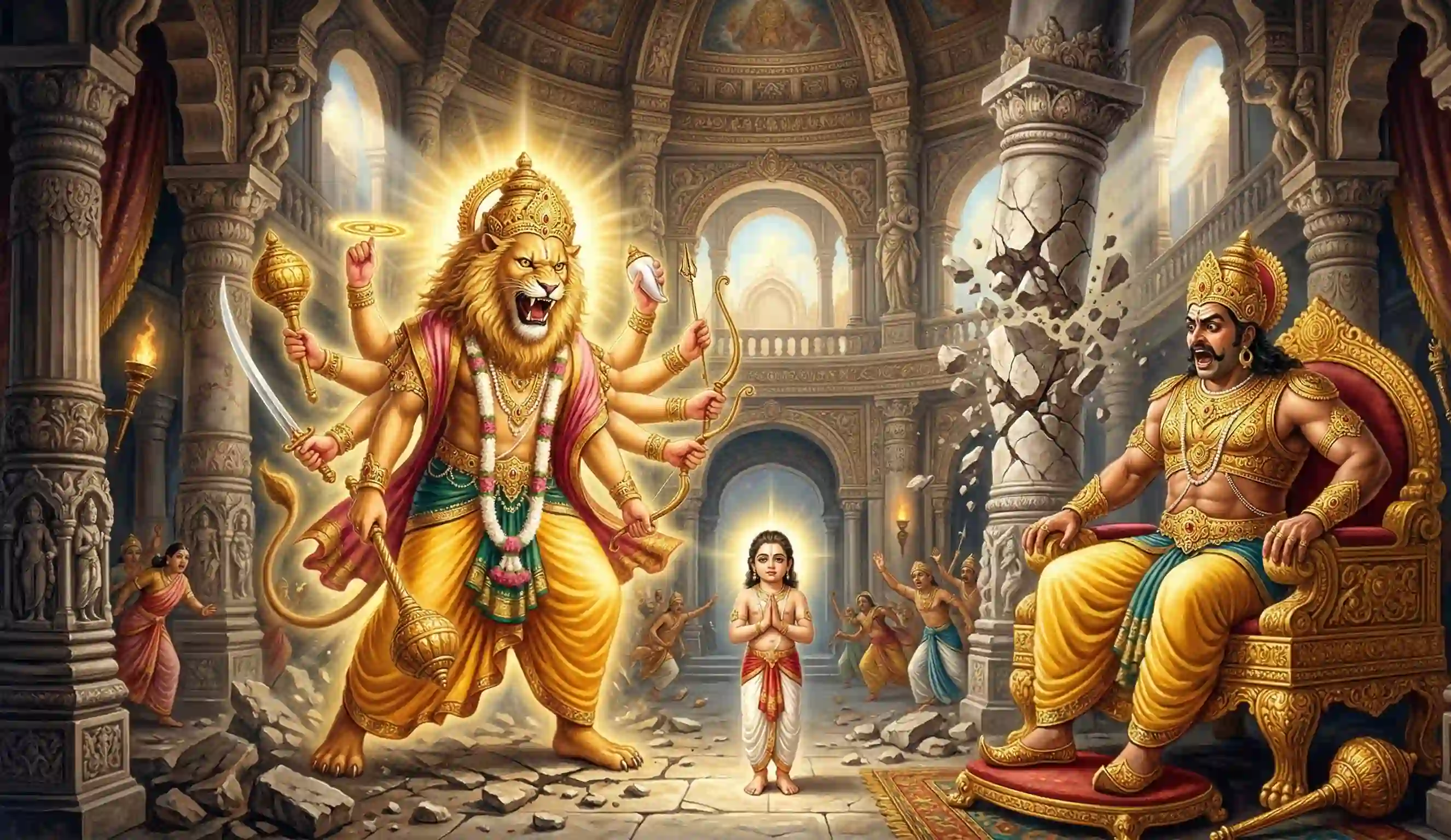
The story of five-year-old Prahlada Maharaja is one of the most instructive in spiritual history. Born in a demon clan yet possessing unwavering faith in Lord Vishnu, he endured unimaginable torture from his father, Hiranyakashipu. When the Lord finally appeared as Narasimha to slay the tyrant, He offered Prahlada any benediction he desired. What followed reveals the heart of pure devotion.
Through the illuminating teachings of Swami Mukundananda, we understand why Prahlada is considered the greatest of devotees (Bhagavatottam). His response to the Lord's offer provides the ultimate lesson in what a soul should truly value—not material wealth, but pure love and selfless service. As we reflect on Prahlada's unwavering devotion this Holi season, you are warmly invited to join the Radha Krishna Temple in Dallas for a spiritually uplifting Holi 2026 celebration.
Join us for a divine celebration where tradition meets festivity!
Point 1: Refusing the World's Greatest Treasures
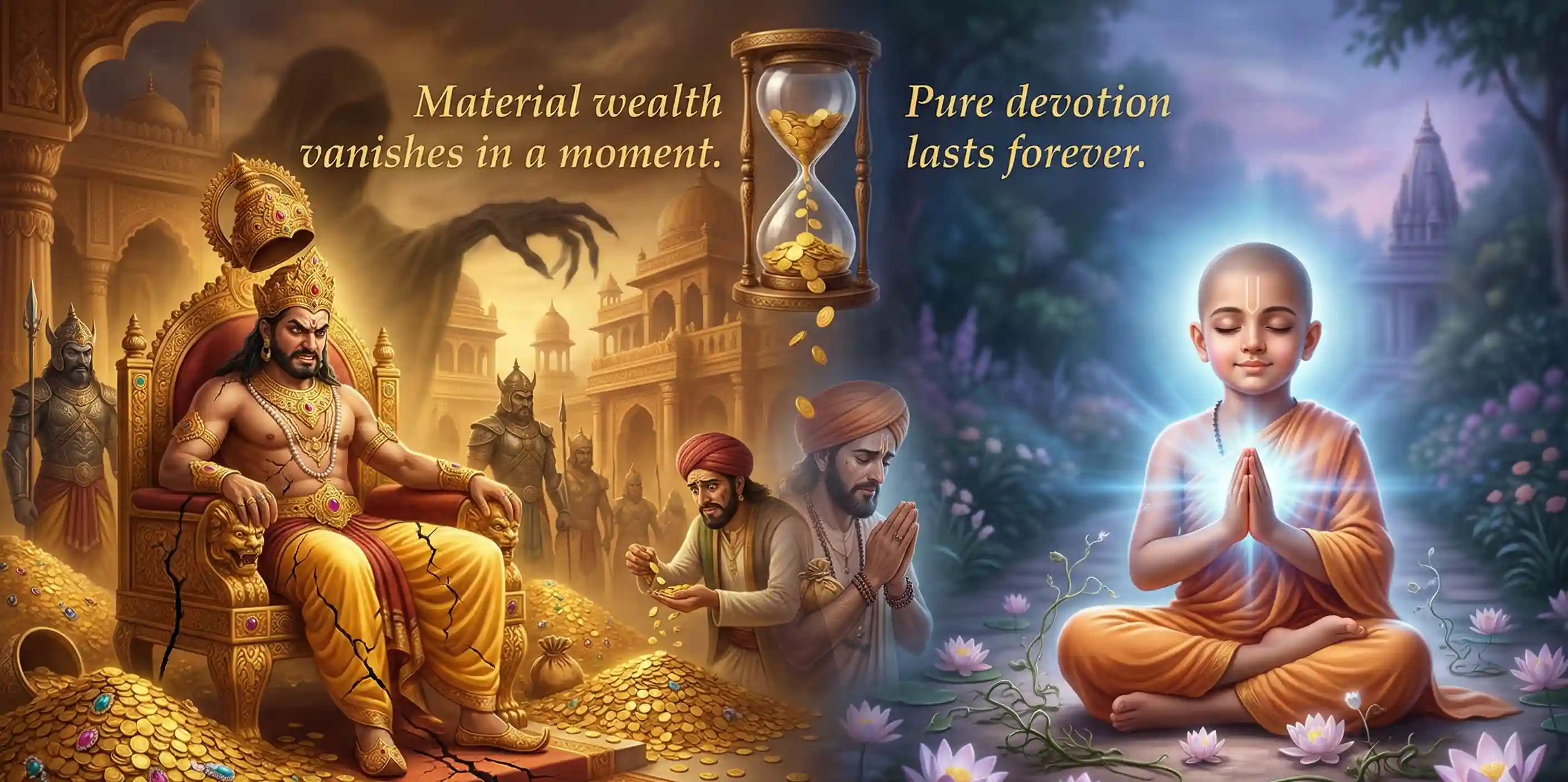
Prahlada had just witnessed something extraordinary. His father possessed everything—unlimited wealth, absolute power, longevity through severe austerities, special boons making him virtually indestructible. Yet in one moment, the Lord took it all away.
Swami Mukundananda uses this example to illustrate a fundamental truth: material opulence is temporary and unreliable. If the Lord can take away a mighty demon's kingdom in an instant, what security do we have in our bank accounts or achievements? The very things we spend our lives accumulating are precisely what death will separate us from.
Prahlada refused all material benedictions because of his unalloyed devotion (ekantitvad). He had no interest in wealth or power, having seen their ultimate fate. As Swamiji explains, when we approach God with material requests, we act like merchants—"I will worship You if You give me this." This "merchant devotion" is not the highest form of bhakti.
Video Recommendation: What did 5-year-old Prahlad ask the Lord after surviving torture? The answer will transform your prayers forever.
Point 2: Freedom from Material Desires
After refusing material gifts, Prahlada's first actual request was profoundly introspective. He asked to be freed from the material desires already within his heart.
Swami Mukundananda explains that material desires are like weeds in a garden. If we keep asking God for more things, we only water those weeds. True spiritual progress begins when we ask God to help us pull them out. The goal is not to fulfill desires but to become desireless for everything except God.
Prahlada understood that the real problem is not outside us but inside us. Our desires create our suffering. When we don't get what we want, we're unhappy. When we get what we want, we fear losing it. This cycle continues endlessly. He asked for purity of intention, recognizing that without inner purity, even religious activities become another form of materialism.
Point 3: Service to the Servant
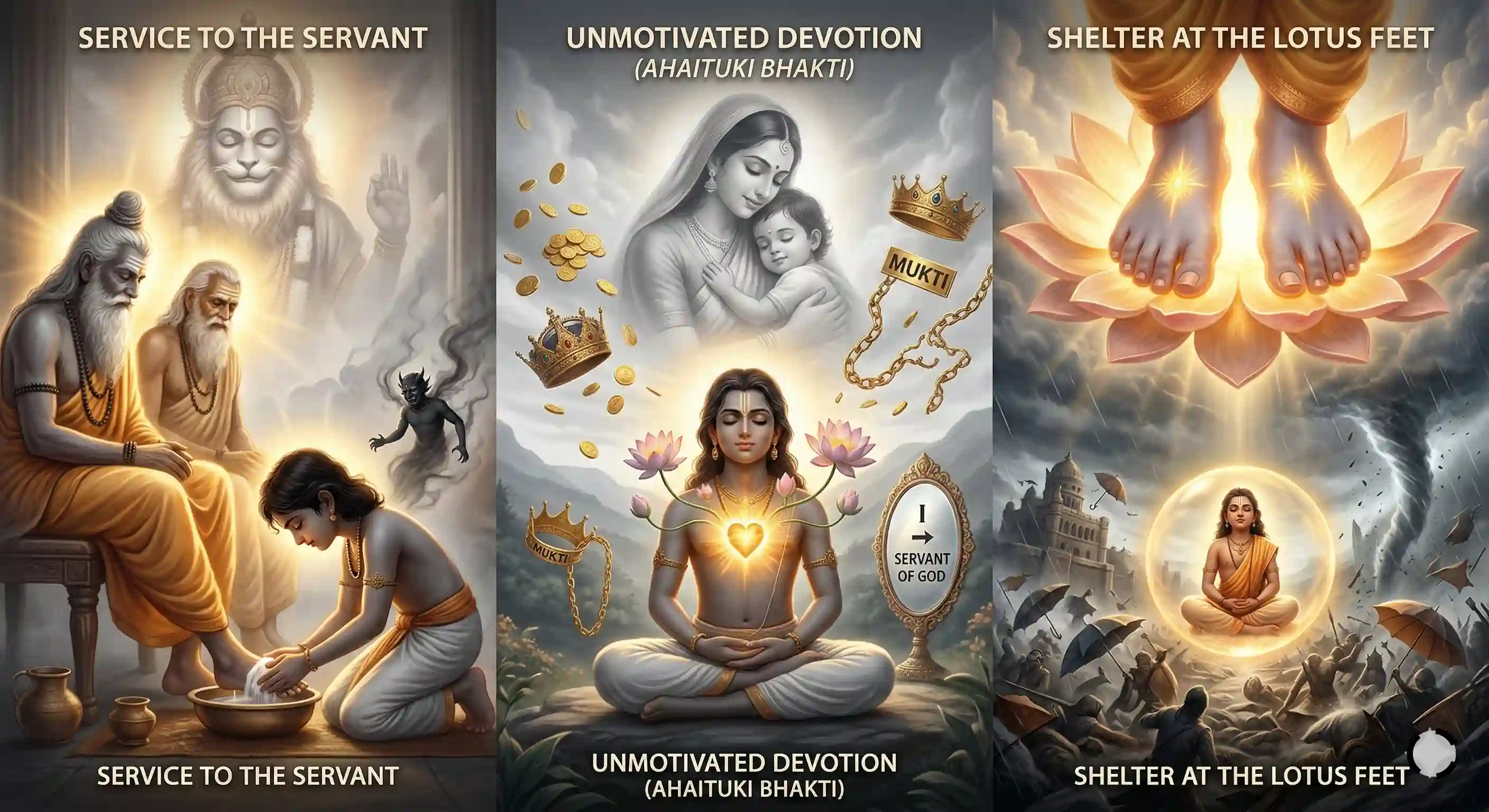
Perhaps the most famous aspect of Prahlada's prayer is his request not to be a direct servant of the Lord, but to be engaged in the service of the Lord's servant. This sentiment was later echoed by Sri Caitanya Mahaprabhu.
Swami Mukundananda explains the profound depth of this prayer. Why serve the servant rather than the Lord directly? Because serving the Lord's devotees pleases Him even more than serving Him directly. God feels immense pleasure when we serve those who love Him, for His devotees are infinitely dear to Him.
Moreover, serving devotees guarantees humility. When we serve God directly, there can be subtle pride—"I am serving the Lord." But when we serve the servant, that pride dissolves. We recognize our position as the lowest of the low, which attracts divine grace. As Swamiji teaches, the problem isn't using the word "I," but who that "I" represents. When "I" means servant of God, ego dissolves.
Point 4: Pure, Unmotivated Devotion
Prahlada sought ahaituki and apratihata bhakti—devotion that is unmotivated (not for any worldly gain) and uninterrupted (unbreakable).
Swami Mukundananda explains that unmotivated devotion means loving God without any selfish motive. We don't love God because He gives us things or grants us liberation. We love God simply because He is worthy of love. Just as a mother loves her child not because the child gives her something, the pure devotee loves God for no reason other than His inherent lovability.
The soul's natural function is to love God. When we engage in this function, we experience atma-prasadah—the satisfaction of the self. No amount of material enjoyment can give this because material enjoyment engages only the body and mind, not the soul. Prahlada didn't ask for liberation (mukti) because even liberation can become selfish if desired for one's own pleasure. He asked only for the opportunity to love God without interruption and without motive.
Video Recommendation: "Witness the divine fury that saved a child's faith—the timeless tale of Bhakti vs Ego this Holi!" 🙏✨
Point 5: Shelter at the Lord's Lotus Feet
Prahlada prayed for a place at the Lord's divine feet, considering this the ultimate refuge. This request reveals another profound truth—it makes one completely fearless.
Swami Mukundananda explains that fear comes from feeling unprotected. When we recognize that the Supreme Power is protecting us, what can we fear? Shree Krishna assures Arjuna: "I am the well-wisher of all living entities." If God Himself is our well-wisher, no genuine threat exists.
Hiranyakashipu sought shelter in material arrangements—boons, fortresses, armies. Yet all failed when Narasimha appeared. We all seek shelter in jobs, relationships, health, bank accounts. But these are temporary shelters, like umbrellas in a hurricane. Only the shelter of God's lotus feet is eternal and secure. When we build our security on our relationship with God, we become truly fearless, just like Prahlada standing before the enraged Narasimha without a trace of fear.
Point 6: Liberation for His Enemy
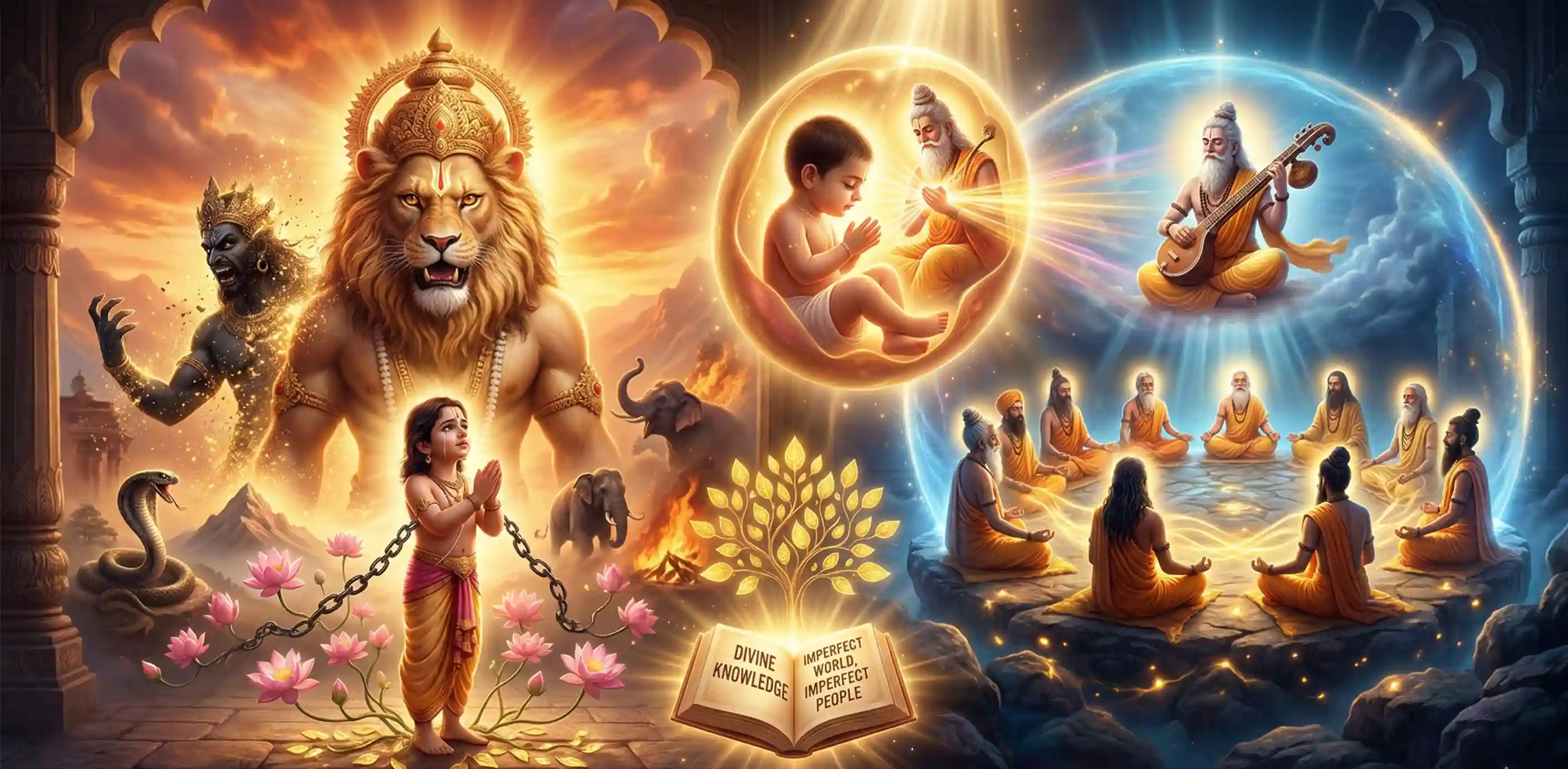
The most astonishing part of Prahlada's prayer is yet to come. Despite being tortured his entire life—poisoned, thrown from mountains, trampled by elephants, burned with fire—Prahlada's final request was for his father's liberation.
Swami Mukundananda teaches that forgiveness is an essential crowning virtue. Until one masters forgiveness, one has not truly entered the spiritual realm, because every little situation will pull one down. The capability to forgive comes from right knowledge—understanding we live in a world of imperfect people where everyone makes mistakes.
Lord Narasimha was so pleased with Prahlada's forgiveness that He granted liberation not only to Hiranyakashipu but to twenty-one generations of his family. A pure devotee has such power that his prayers benefit countless others. One whose heart is purified through bhakti abandons self-centered thinking and desires everyone's welfare. Prahlada couldn't bear to see even his torturer suffer—this is the natural result of pure devotion.
Point 7: Association with Devotees
Throughout his prayers, Prahlada emphasized the importance of the company of holy people (sadhu sanga). Devotion, once awakened, needs nurturing, and there is no better nourishment than the association of fellow devotees.
Swami Mukundananda often stresses this point. The spiritual path is difficult to walk alone. The mind creates doubts, the world creates distractions, time creates forgetfulness. But when we associate with sadhus, their devotion inspires us, their wisdom guides us, and their presence protects us.
The story of how Prahlada received his knowledge is instructive. While in his mother's womb, she was under Narada Muni's protection. Narada's instructions to her penetrated the womb and reached the unborn child. Devotional consciousness is "caught" more than "taught." When we spend time with elevated souls, their love for God becomes contagious.
Point 8: The Power to Always Glorify the Lord
Prahlada taught his school friends the nine processes of devotion: hearing (shravanam), chanting (kirtanam), remembering (smaranam), serving the Lord's feet (pada-sevanam), worshipping (arcanam), praying (vandanam), serving as a servant (dasyam), befriending (sakhyam), and complete surrender (atma-nivedanam).
Swami Mukundananda explains that the mind must be engaged in something. If we don't engage it in spiritual thoughts, it will automatically engage in material thoughts. Bhakti is not about emptying the mind but filling it with divine consciousness. When the mind is full of God, there is no room for material distractions.
Prahlada declared that his greatest happiness was constantly hearing and chanting about the Lord's glories. This made him completely fearless. Even when threatened with death, he remained calm, his mind absorbed in thoughts of Narayana. The regular practice of hearing and chanting transforms our consciousness. Gradually, the world loses its power over us.
Point 9: No Problems, Only Service
When Lord Narasimha asked Prahlada what he wanted, he stated he had no personal problems to bring. Why? Because his mind was already immersed in the bliss of glorifying God (tvad-virya-gayana-mahamrta-magna-cittah).
Swami Mukundananda uses this to illustrate a profound truth: a devotee doesn't approach God as a problem-solver but as a lover. When deeply in love with someone, you don't just call when you need something. You want to be with them for the joy of their company. Prahlada's relationship with God had reached that level.
Most of us approach spirituality with a give-and-take mentality. We pray when we have problems. This is natural in the beginning, and God accepts even this immature devotion. But the goal is to grow beyond it. Pure devotion is beyond happiness and distress. A devotee doesn't serve God to get happiness; serving God is itself the happiness.
Point 10: Compassion for the Suffering
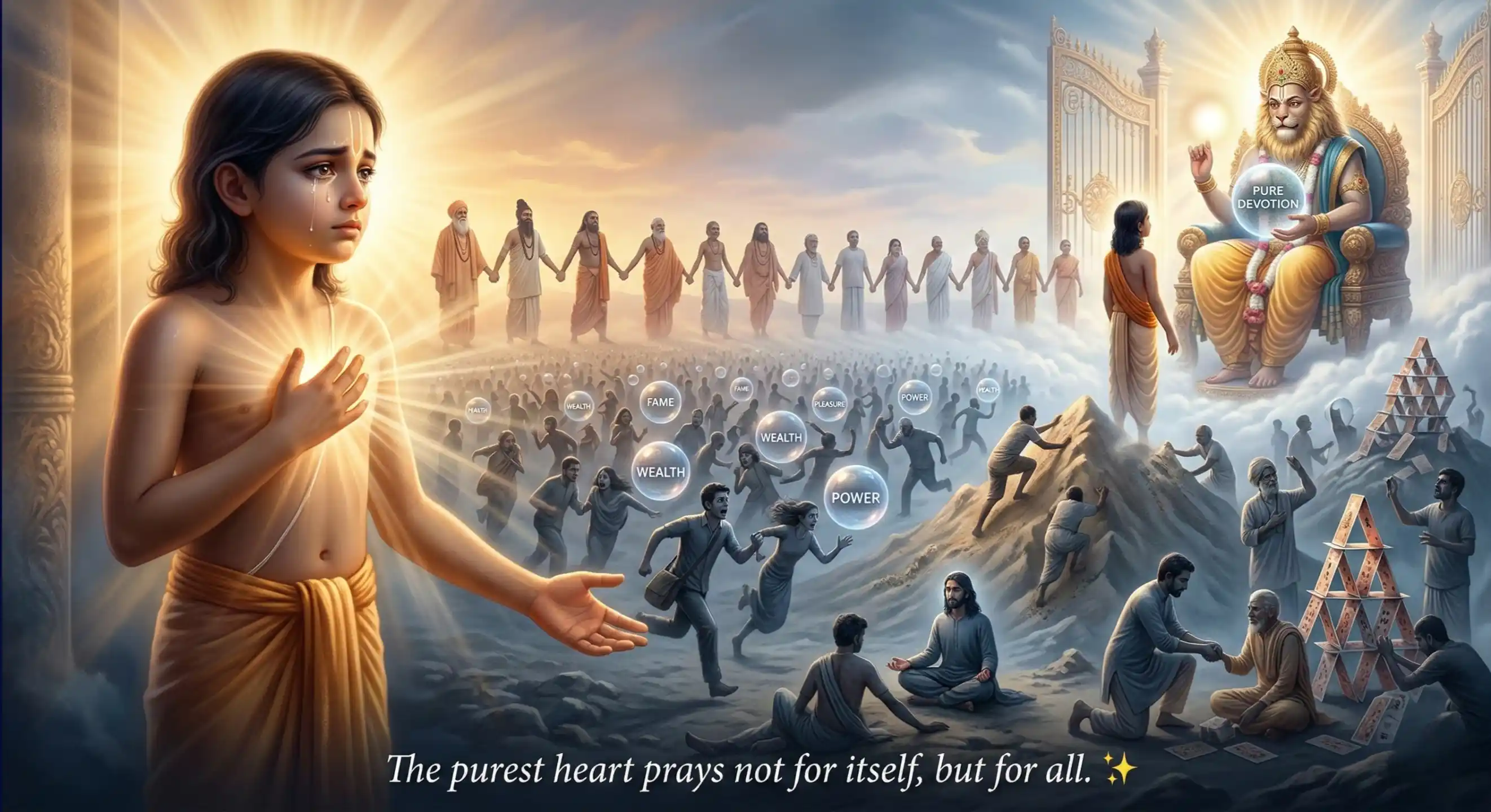
Prahlada revealed his compassionate heart when he shared his only source of unhappiness. It wasn't his own suffering. It was the suffering of "the fools who are vigorously making material endeavors for temporary, illusory happiness."
Swami Mukundananda explains that this compassion is the natural result of purification through bhakti. When our hearts are cleansed of selfish desires, we begin to feel others' pain as our own. We see people wasting precious human lives in pursuit of momentary pleasures, and we want to help them.
Prahlada's final request was to be an instrument of compassion. He asked the Lord to allow him to reform conditioned souls engrossed in material existence. He didn't want to be liberated alone, leaving others behind. He wanted to be used as a tool for their upliftment.
This is the pinnacle of selfless devotion. Prahlada could have asked for his own liberation instantly. Instead, he thought of others. This is the consciousness of a true saint—one who cannot enjoy liberation while others remain bound.
Conclusion: Applying Prahlada's Teachings Today
As we reflect on Prahlada's prayers, we see a consistent theme: selflessness. He refused wealth, asked for purity, sought humility, desired unmotivated devotion, took shelter at God's feet, forgave his enemy, valued saintly association, rejoiced in glorification, found bliss in service, and prayed for the welfare of all. Not once did he ask for anything for his personal enjoyment.
Swami Mukundananda's teachings bring these timeless truths to life for modern seekers. Through his discourses, he shows us that Prahlada's consciousness is not just an ancient ideal but a practical possibility for anyone who sincerely pursues bhakti.
Examine your own prayers. Are you asking for temporary solutions or the eternal asset of pure devotion? It's natural to start with material prayers. God understands and doesn't reject us. But we should also aspire to grow. We should want what Prahlada wanted—not things, but Him.
The path is simple: engage in hearing and chanting about God, associate with devotees, serve with humility, and gradually develop compassion that thinks of others' welfare. As we practice these things, our prayers will transform. We will begin to ask for what truly matters.
May we all follow in the footsteps of Prahlada Maharaja, and may Swami Mukundananda's teachings guide us on this blessed path. When we finally stand before the Lord, may we too have the wisdom to ask for the most powerful thing of all—pure, unmotivated, uninterrupted loving devotion to God.
Frequently Asked Questions
Q: Who was Prahlada Maharaja and why is he significant?
A: Prahlada was a five-year-old devotee of Lord Vishnu, born to the demon king Hiranyakashipu. Despite being tortured by his father, he remained unwavering in his devotion. He is considered the greatest of devotees (Bhagavatottam) because he exemplified pure, selfless love for God.
Q: What is the most powerful thing we can ask God for?
A: According to Prahlada's example, the most powerful request is pure, unmotivated, uninterrupted devotion (ahaituki apratihata bhakti)—loving God not for what He gives, but simply because He is worthy of love.
Q: Why did Prahlada refuse material wealth from Lord Narasimha?
A: Prahlada had witnessed how easily the Lord took away his father's vast kingdom and power. He understood that material opulence is temporary and unreliable. True security lies only at the Lord's lotus feet.
Q: What is "merchant devotion" and why should we avoid it?
A: Merchant devotion is approaching God with a business mindset: "I will worship You if You give me this." Swami Mukundananda explains that while God accepts even this, the highest devotion is selfless, expecting nothing in return.
Q: How did Prahlada forgive his demoniac father?
A: Prahlada understood that his father was spiritually sick, acting out of ignorance. Swami Mukundananda teaches that forgiveness comes from right knowledge—recognizing that we live among imperfect souls who make mistakes.
Q: Why is association with devotees (sadhu sanga) important?
A: Devotion, once awakened, needs nurturing. The company of holy people inspires us, guides us, and protects us. Devotional consciousness is "caught" more than "taught"—spending time with elevated souls makes their love for God contagious.
Q: What are the nine processes of devotion Prahlada taught?
A: Hearing (shravanam), chanting (kirtanam), remembering (smaranam), serving the Lord's feet (pada-sevanam), worship (arcanam), prayer (vandanam), servitude (dasyam), friendship (sakhyam), and complete surrender (atma-nivedanam).
CTA: Plan Your Holi 2026 Celebration
Q: When and where is the Holi 2026 celebration?
A: Join us at the Radha Krishna Temple in Dallas from 1st March 2026 to 7th March 2026 for an unforgettable Holi celebration featuring Phoolon Ki Holi, enchanting Leelas, Holika Dahan, and soulful Kirtans.
Q: What makes this Holi celebration special?
A: Experience Holi with Radha Krishna in its pure devotional spirit—filled with colors of bhakti, joy, and heritage. Celebrate the Bliss of Braj where tradition meets festivity!
Q: Is this event family-friendly?
A: Absolutely! The celebration welcomes devotees of all ages to immerse in spiritual joy, cultural performances, and the beautiful association of fellow seekers.
Q: How can I register or get more information?
A: Visit the Radha Krishna Temple website or contact the temple office for registration details and event updates. Don't miss this divine opportunity!