
The Eternal Embrace: Your Soul’s Journey to Divine Love
In a world overflowing with instant messages, fleeting romances, and ever-shifting loyalties, the human heart continues to whisper the same ancient longing: Is there a love that does not fade? We form bonds, celebrate connections, and invest ourselves in relationships, yet somewhere beneath the surface remains a quiet ache. It is not merely a desire for companionship; it is a yearning for permanence, depth, and absolute acceptance.
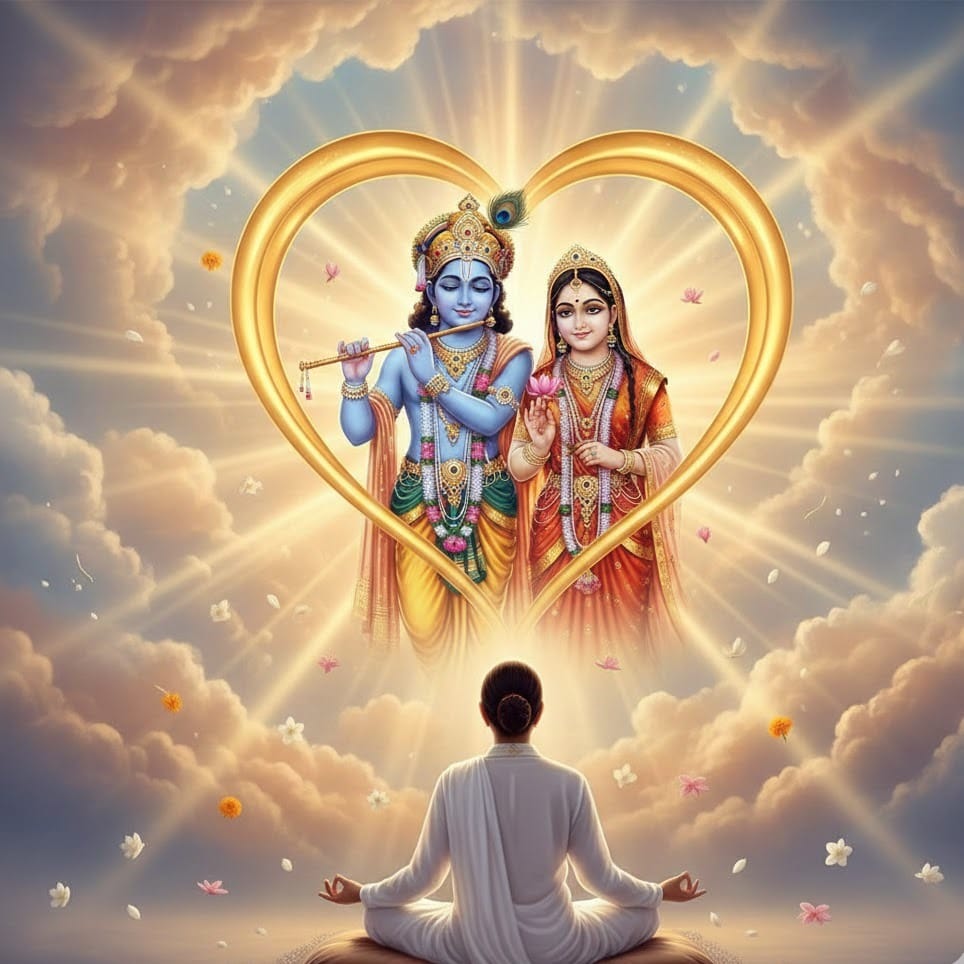
This longing is not a flaw in our emotional design. It is evidence of our spiritual origin. According to the wisdom of the saints and the teachings of Swami Mukundananda, this ache is the soul’s homing signal—a call back to Divine Love, or Prema. Far from being sentimental fantasy, Prema is described as the foundational truth of existence, the eternal relationship between the individual soul and God.
The journey to rediscover this love is not escapism. It is awakening. It requires us to look beyond the material world’s temporary imitations and rediscover the soul’s native language. This is the story of that rediscovery.
1. The Great Confusion: “Love” in a Material World
The word love has been stretched so thin that it barely retains its sacred meaning. We use it to describe our favorite foods, our hobbies, a passing attraction, and our deepest family bonds—all in the same breath. This linguistic collapse mirrors an emotional one. When everything is labeled love, we lose sight of its highest form.
Swami Mukundananda explains that most worldly affection operates under an unspoken contract: “I will love you if…” If you support my ambitions. If you make me happy. If you behave according to my expectations. This is not unconditional love; it is an emotional transaction. It may be warm and meaningful, but it is inherently fragile because it depends on circumstances.

A particularly powerful myth of modern culture is the idea that another person can “complete” us. Songs, films, and novels romanticize this notion. Yet the spiritual perspective asserts something radically different: the soul (atma) is already complete because it is a fragment of divine bliss (ananda). Seeking wholeness in another finite being is like a billionaire begging for pennies, unaware of the vast treasure already possessed within.
Conditional love carries the seeds of sorrow. When the conditions change—as they inevitably do—the affection weakens or dissolves. Time, distance, misunderstanding, and death all exert their force. Even the sweetest human relationships are subject to impermanence. Swamiji offers a simple analogy: when we board a train, we know fellow passengers will disembark at different stations. Why, then, are we shattered when earthly companions must part from us?
This does not diminish human love; it places it in context. The soul’s deepest longing cannot be fully satisfied by that which is temporary. When we attempt to quench spiritual thirst with material fulfillment, it is like drinking seawater—the thirst only grows stronger. The quiet feeling that “something is missing” is not evidence of failure. It is sacred discontent. It is the soul remembering its origin.
2. The Essence of Reality: What Is True Divine Love (Prema)?
Beyond transactional affection and emotional highs lies Prema—pure, selfless, eternal love directed toward the Divine. This is not merely human love magnified; it is categorically different. It is the soul’s natural state, temporarily forgotten in the drama of material existence.
Selfless and Eternal
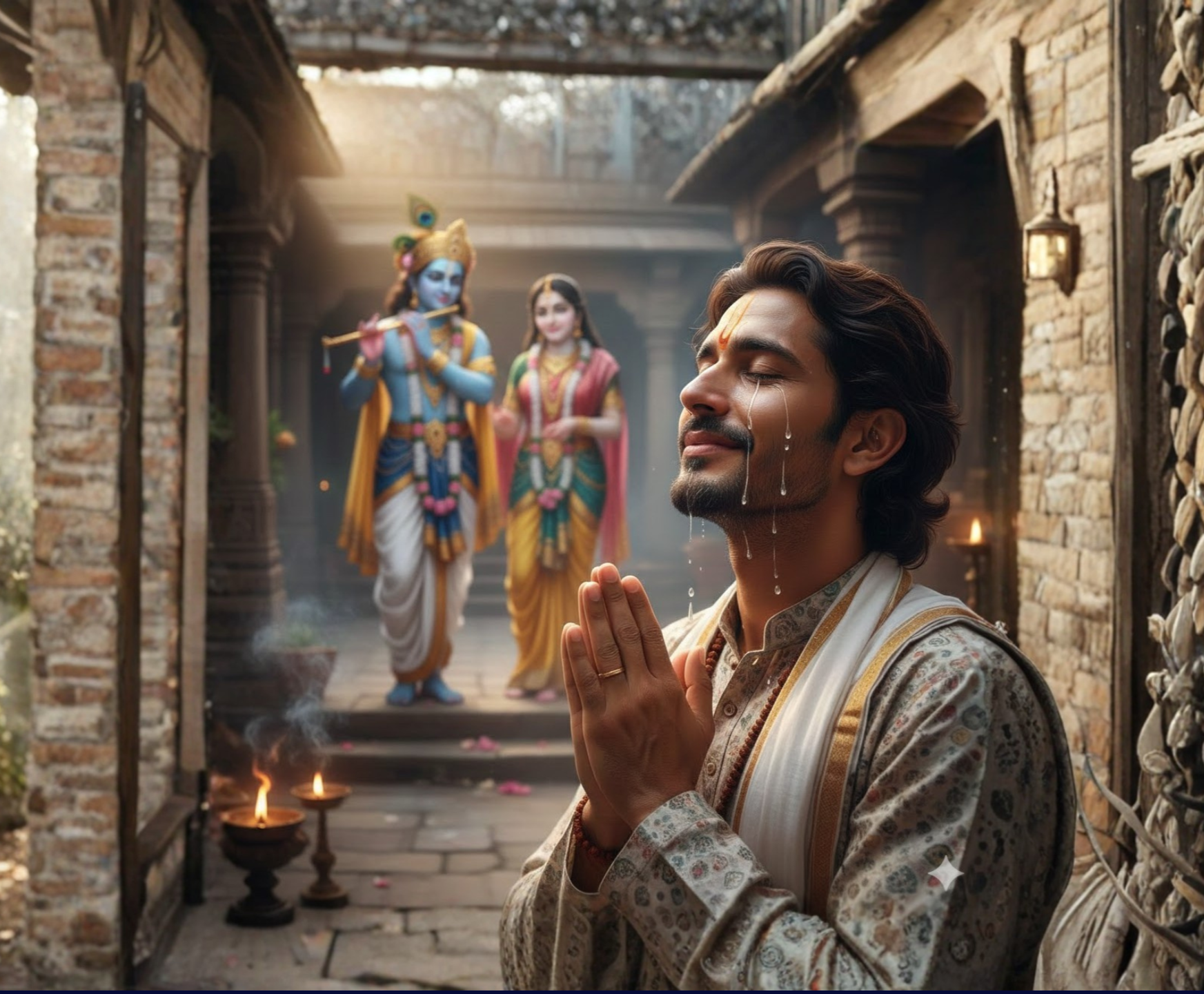
Prema is nishkam—free from selfish motive. Its joy lies not in receiving but in giving. Swami Mukundananda offers the analogy of a mother caring for her infant. Her happiness flows from the child’s well-being, not from repayment. Divine Love is this selflessness perfected and directed toward God.
Prema is also sanatan, eternal. It does not begin at birth or end at death because it exists between the eternal soul and the Eternal Supreme. Spiritual practice is not the cultivation of a new relationship; it is the remembrance of a forgotten one. As Swamiji beautifully explains, “You are not creating love for God. You are uncovering the love that has always been there.”
God-Centered and All-Fulfilling
Prema converges the soul’s scattered affections into a single current flowing toward the Divine. All beauty in this world is a spark of divine beauty. All love is a drop from God’s infinite ocean. To love God is to love the source from which every other love arises.
Swamiji presents a powerful metaphor: God is the infinite Power Station of bliss, and the soul is a bulb meant to radiate light. Ego and attachment are faulty wiring that disrupt the current. Bhakti, or devotion, repairs the circuit. When the connection is restored, bliss flows naturally. We stop begging for love because we become conduits of it.
The soul’s essential nature is described as sat-chit-ananda—eternal, conscious, and blissful. Just as a spark shares the qualities of fire, the soul shares the qualities of God. Every longing for love is that spark yearning to reunite with the flame.
3. The Divine Blueprint: Braj Ras—The Science of the Heart
How does one love the Infinite? The ancient tradition of Bhakti offers a structured yet profoundly poetic answer through the concept of Rasa—the “flavor” of a particular relationship with God.
The spiritual realm of Braj represents the highest expression of these loving relationships. It is not merely a geographical location but a state of divine consciousness where the soul relates to God in intimate, joyful ways.
The Five Primary Rasas
- Shanta Rasa (Peaceful Love) – Reverent admiration of God’s majesty. It is serene, contemplative, and foundational.
- Dasya Rasa (Servant Love) – Loving God as a devoted servant serves a master. Here, love expresses itself through humility and selfless service.
- Sakhya Rasa (Friendly Love) – Relating to God as a dear friend, marked by trust and playful intimacy.
- Vatsalya Rasa (Parental Love) – Loving God as a parent loves a child, characterized by tenderness and protective affection.
- Madhurya Rasa (Conjugal Love) – The most intimate form, symbolizing the soul’s total self-giving to the Divine.
Swami Mukundananda emphasizes that these Rasas are not whimsical choices. They unfold naturally under proper guidance and purification. The gateway for all is the chanting of God’s Holy Names. Through sincere repetition, the heart gradually softens and awakens its destined relationship.
4. The Pinnacle of Divine Emotion: Mahabhav and Maharas
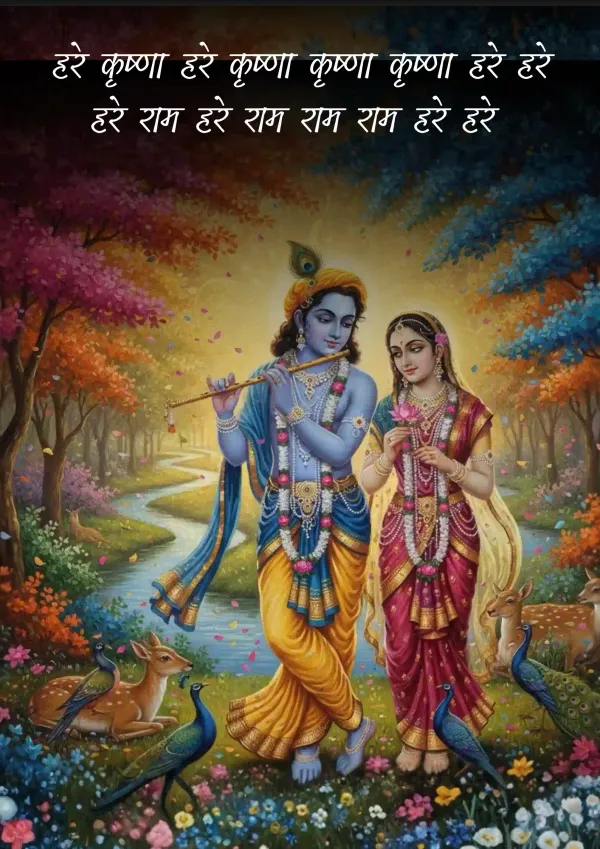
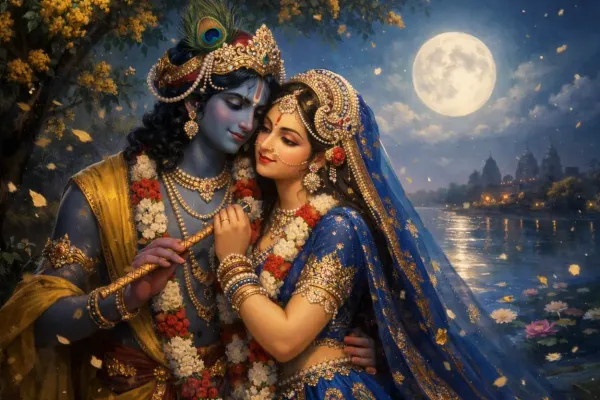
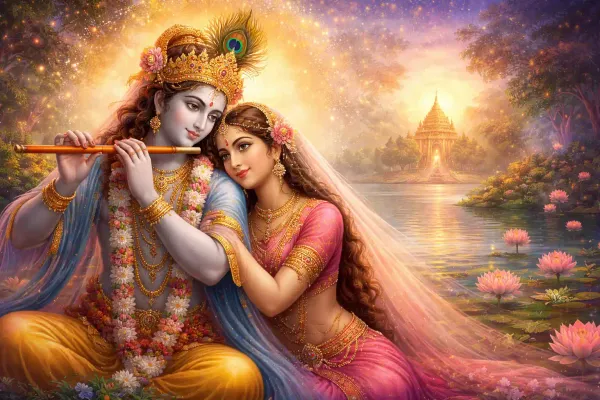
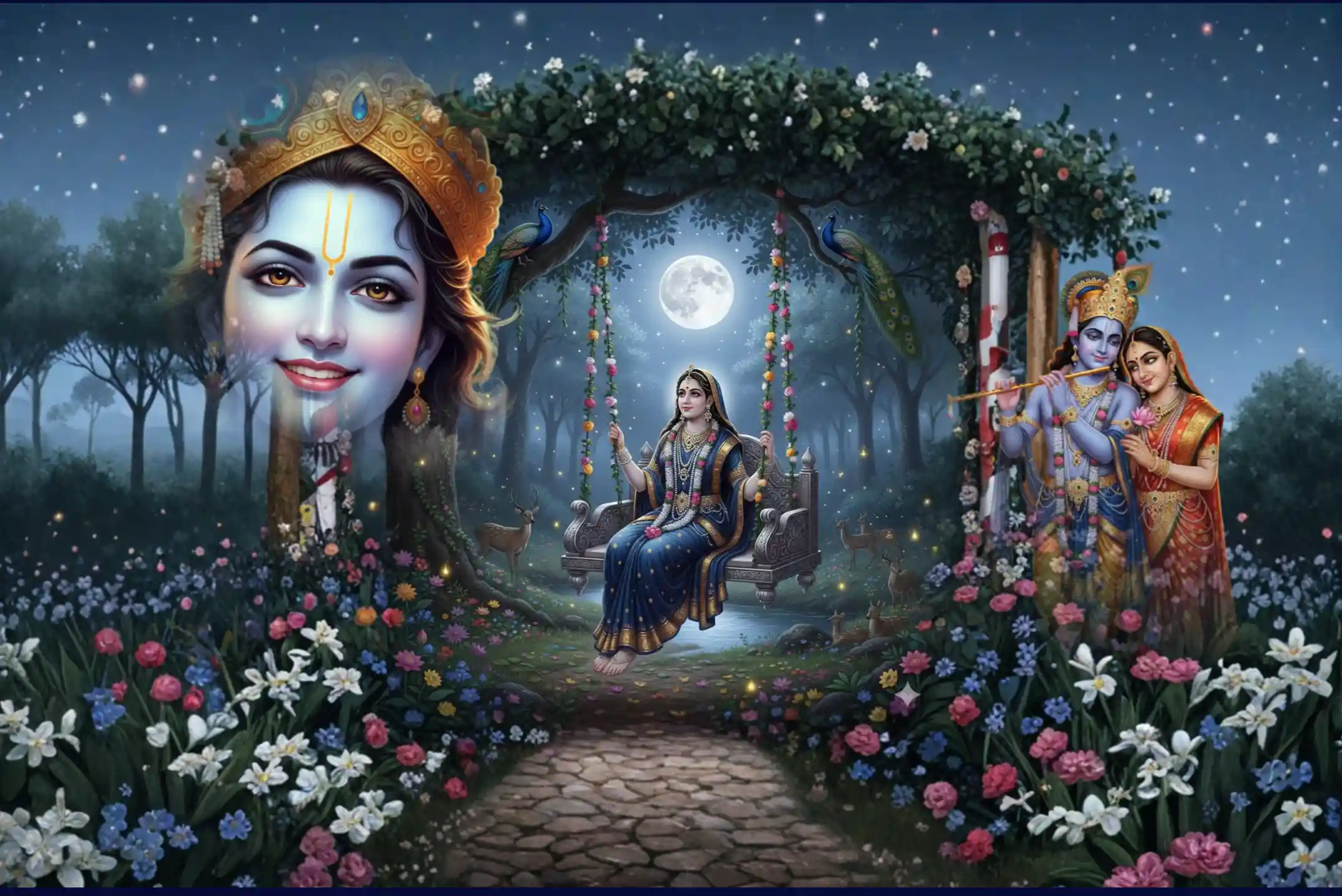
Within the highest Rasa lies Madanakhya Mahabhav—the supreme state of spiritual ecstasy exemplified by the Gopis of Vrindavan, particularly Srimati Radha Rani. Their love for Krishna was utterly selfless, free from ego, and unbroken by circumstance.
This divine love found expression in the Maharas, the celestial dance where Krishna multiplied Himself to dance with each devotee simultaneously. The symbolism is profound: the Infinite can give Himself completely to every soul without division. No sincere heart is excluded.
Swamiji clarifies that such exalted states cannot be manufactured through effort alone. They descend by grace. The Sadguru serves as the conduit of that grace. Spiritual discipline cleanses and enlarges the heart, but divine love itself is a gift.
5. Shri Chaitanya Mahaprabhu: Love Incarnate
History bears witness to a remarkable embodiment of Divine Love in Shri Chaitanya Mahaprabhu. Revered as Krishna in the mood of His greatest devotee, He appeared to taste and distribute the sweetness of devotion.
His central teaching for this age was Sankirtan Yajna—the congregational chanting of God’s names. Sound is subtle energy, and the Divine Name is considered non-different from God Himself. Chanting becomes direct communion.
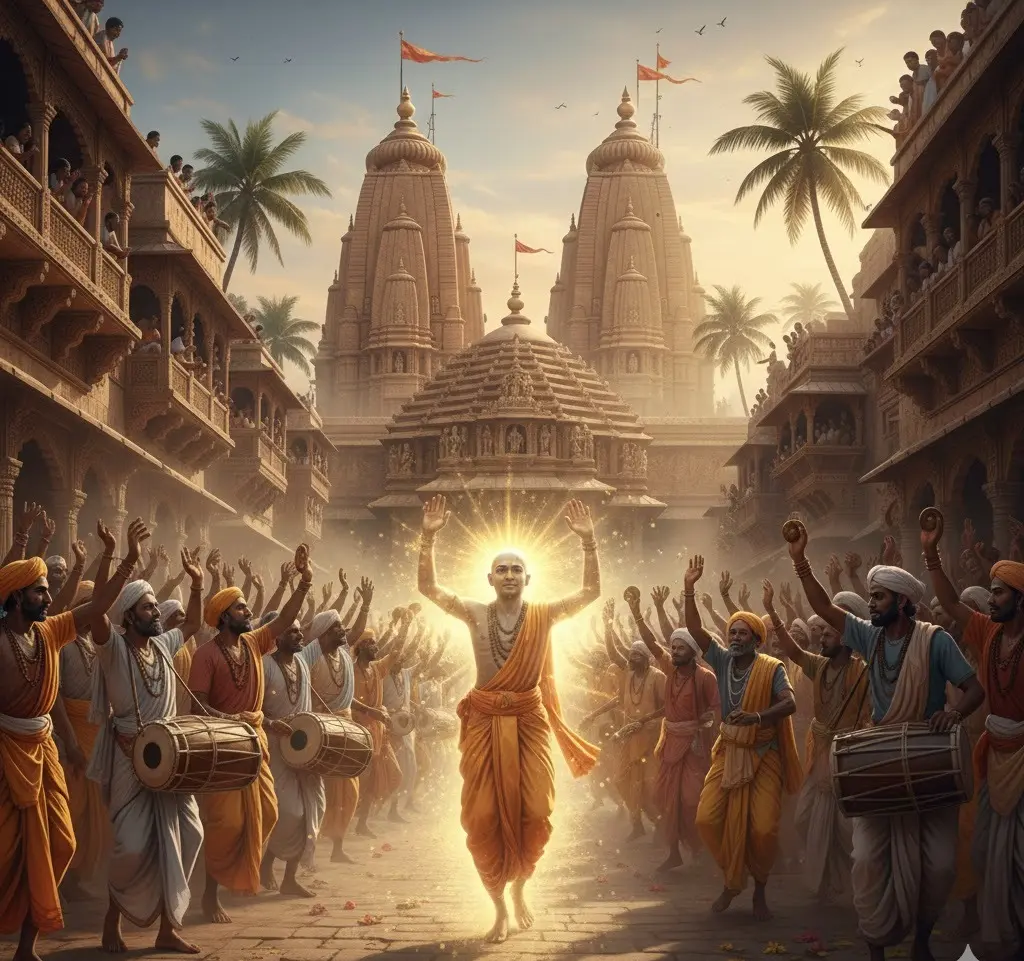
Through public chanting, barriers of caste, scholarship, and status dissolved. Divine Love was democratized. Transformations were dramatic: scholars became humble devotees, hardened hearts melted, and even those considered irredeemable found redemption through the power of sacred sound.
6. Jagadguru Shri Kripalu Ji Maharaj: Reviving the Path of Love
In the twentieth century, Jagadguru Shri Kripalu Ji Maharaj revitalized the path of spontaneous loving devotion. Recognized for his profound scriptural mastery, he emphasized that every soul has an eternal spiritual identity and relationship with God.
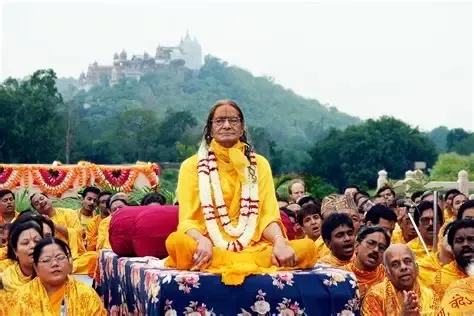
He taught that the Divine Name is not symbolic—it is God Himself in sound form. Therefore, chanting is direct association. The highest goal is not merging into God but serving Him in loving intimacy.
His formula for attainment centered on surrender to a genuine Guru, constant remembrance (smaran), and practicing the nine forms of devotion—listening, chanting, remembering, serving, worshiping, praying, cultivating servitude, friendship, and complete self-offering.
7. Practical Pathways: Cultivating Divine Love Today
The philosophy of Divine Love is sublime, but it is not impractical. It can be lived.
Consistent Practice
Swami Mukundananda advises consistency over intensity. Even fifteen minutes of daily meditation or mantra repetition acts like a spiritual shield. Just as we bathe the body daily, the soul requires regular cleansing through remembrance.
Redirect the senses rather than suppress them. Offer your work, meals, and relationships to God. Such conscious offering transforms ordinary actions into worship.
The Power of Holy Company
Spiritual growth flourishes in Satsang, the association of sincere seekers. Just as plants thrive in fertile soil, the soul blossoms in uplifting company. Serving other devotees accelerates humility and softens the heart.
The Master Key: Surrender
True surrender shifts our prayer from “Fulfill my desires” to “Fulfill Your purpose through me.” It is not weakness but alignment with divine wisdom. A simple daily affirmation—“O Lord, I am Yours”—gradually dissolves ego’s grip.
Challenges become tools. Anger becomes a reminder to chant. Greed becomes a cue for gratitude. Obstacles polish the soul like sandpaper on a diamond.
The journey home begins not with grand gestures but with a single, sincere step. And in that step, the Eternal waits—not distant, but closer than your next breath.
🌿 Frequently Asked Questions (FAQ)
1. What does it mean that Divine Love is both the path and the destination?
Divine Love (Prema) is unique because practicing devotion is itself fulfillment. Each act of remembrance, chanting, or loving service is not merely preparation—it is participation in the goal. The journey itself becomes the experience of arrival.
2. Do I need to be spiritually advanced to begin Bhakti?
No. Bhakti responds to sincerity, not perfection. As Swami Mukundananda teaches, you are already qualified. Start exactly where you are—with one mantra, one verse, or one loving action.
3. How can I make my heart a “personal Braj”?
By cultivating steady remembrance. When you engage in chanting, reflection, gratitude, and loving service, your inner world gradually transforms into a sacred space resonating with devotion and divine presence.
4. Is worldly love opposed to Divine Love?
Not at all. Worldly love is a reflection—a shadow—of Divine Love. It hints at something eternal and unconditional. Bhakti refines and elevates love to its pure, everlasting form.
5. What is Prema, and why is it the soul’s true goal?
Prema is unconditional Divine Love—unchanging, eternal, and complete. Beneath every ambition lies the soul’s longing to reunite with its source. Prema fulfills that deepest desire.
✨ Powerful Calls to Action (CTA)
1. Begin Today—Exactly Where You Are
Chant one mantra. Read one sacred verse. Offer one action in love. Let your first sincere step begin the journey home.
2. Transform Your Heart into a Sacred Space
Commit to daily remembrance and watch your inner world blossom into your own personal Braj.
3. Reclaim Your Divine Inheritance
Divine Love is your birthright. Choose today to reclaim what was never truly lost.
4. Move Beyond Shadow to Substance
Let worldly love inspire you—but seek the eternal embrace that never fades.
5. Take the Step Toward the Eternal
The reunion you seek is closer than your next breath. Step forward in sincerity—and experience the love that never departs.