

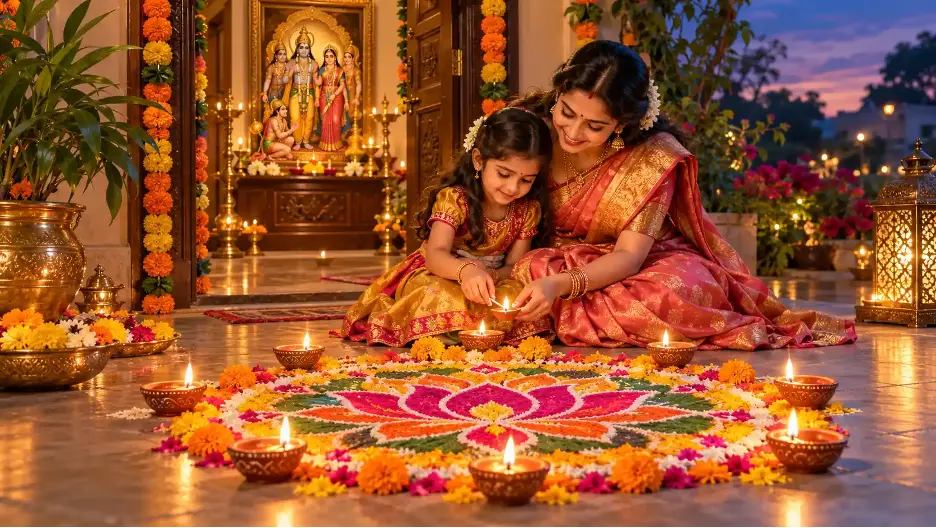
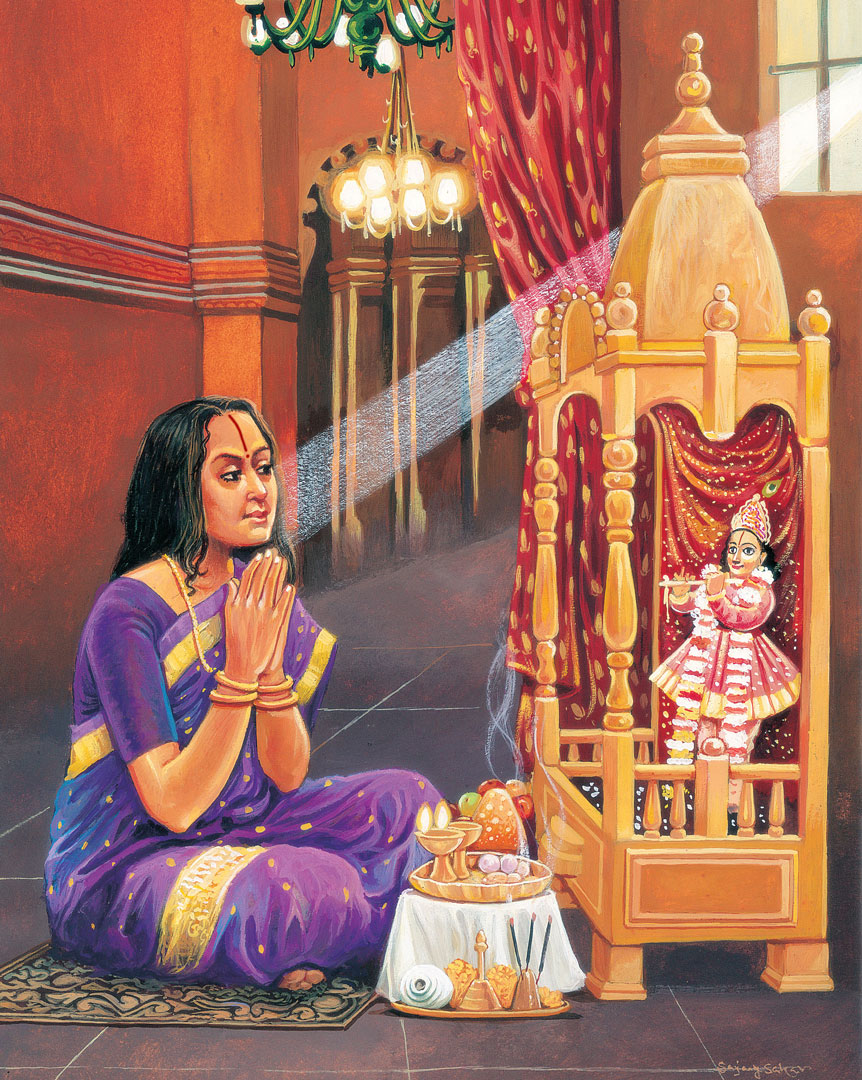
A mother placed a small clay diya at the doorway. Beside her, a child watches the flame rise, casting a gentle glow upon their faces.
“Why do we light so many lamps?” the child asks.
“To celebrate the homecoming of Shri Ram, Mother Sita, and Lakshman,” she replies. “Imagine welcoming the Lord after fourteen long years of waiting!”
The child carefully places another diya beside hers. Watching its flame, the mother’s heart offers a quiet prayer: “Lord, may I welcome You with that same love.”
Diwali brings this invitation to each of us. We clean our homes, brighten our doorways, and prepare offerings with affection. Amid these cherished preparations, a question gently arises: Have I made room for God in my thoughts, my choices, and my daily life?
In the Bhagavad Gita, Shri Krishna assures us that, out of compassion, He dispels the darkness of ignorance within His devotees through the luminous lamp of knowledge:

तेषामेवानुकम्पार्थमहमज्ञानजं तम: ।
नाशयाम्यात्मभावस्थो ज्ञानदीपेन भास्वता ॥ 11॥
teṣhām evānukampārtham aham ajñāna-jaṁ tamaḥ
nāśhayāmyātma-bhāva-stho jñāna-dīpena bhāsvatā
BG 10.11: Out of compassion for them, I, who dwell within their hearts, destroy the darkness born of ignorance, with the luminous lamp of knowledge.
Our celebration thus becomes an invitation to journey from ignorance toward wisdom, from harmful tendencies toward goodness, and from forgetfulness of God toward loving remembrance.
The Ramayana gives this journey a living form. Mother Sita holds fast to remembrance through anguish; Bharat loves without claiming the throne; Shabari waits with patient devotion; Hanuman offers his strength in service.
Their lives invite us to prepare our hearts for the Lord through love, humility, and remembrance, seeking the grace by which He illuminates our lives.
Ayodhya’s Welcome: The Joy of the Lord’s Homecoming
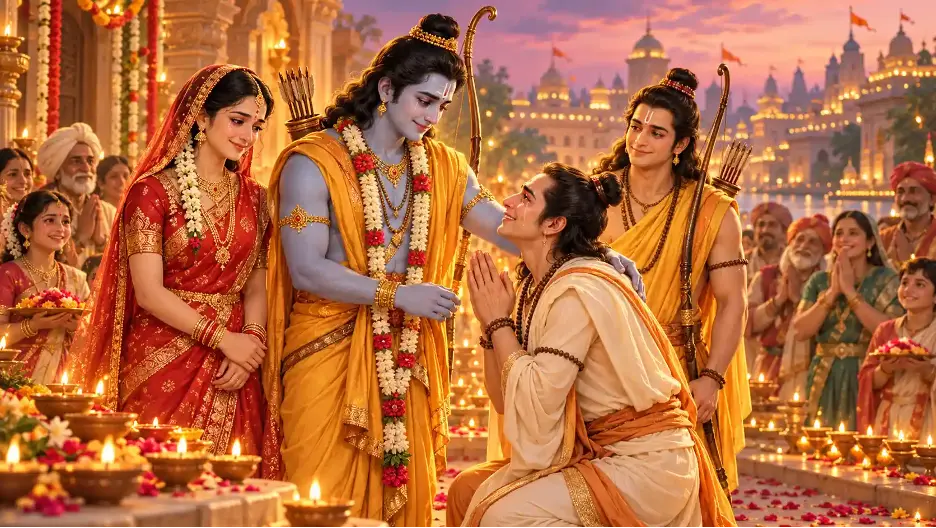
Fourteen long years had passed. Bharat had served with Shri Ram’s padukas upon the throne, his heart sustained by the hope of placing the kingdom at his beloved brother’s feet.
Now only one day remains before the appointed period ends. Auspicious signs awakened his joy, yet Shri Ram had not arrived. Hope mingled with anguish: would he soon behold the face he had yearned for through all those years?
Then Hanuman brought the blessed news: Shri Ram was returning with Mother Sita and Lakshman. Overwhelmed, Bharat embraced the messenger who had brought such comfort. The long waiting was ending. His beloved Lord was coming home.
Across Ayodhya, the news stirred eager hearts. Fourteen years of separation had deepened their longing; now they hurried to welcome Shri Ram. Imagine the tears, the searching eyes, and the joy of finally beholding Him again. Their beloved prince had returned, and the city prepared to receive its king.
Tulsidas describes the happiness of His homecoming:
कृपासिंधु जब मंदिर गए।पुर नर नारि सुखी सब भए॥
Kripā sindhu jab mandir gaye,
pur nar nāri sukhī sab bhaye.
Meaning: When the ocean of compassion entered the palace, all the men and women of the city were filled with happiness.
(Ramcharitmanas, Uttar Kand, in the passage preceding Doha 10 · Meaning paraphrased.)
The lamps we light at Diwali recall this cherished welcome. While arranging flowers, preparing bhog, or lighting a diya, we can remember the love that made His homecoming so precious.
Each preparation can carry a quiet offering: “Shri Ram, this is for You.”
Understanding the Darkness Within
What clouds our remembrance of God, even when we sincerely wish to draw closer to Him?
The Bhagavad Gita directs our attention to a truth we easily forget:
देहिनोऽस्मिन्यथा देहे कौमारं यौवनं जरा ।
तथा देहान्तरप्राप्तिर्धीरस्तत्र न मुह्यति ॥ 13॥
dehino ’smin yathā dehe kaumāraṁ yauvanaṁ jarā
tathā dehāntara-prāptir dhīras tatra na muhyati
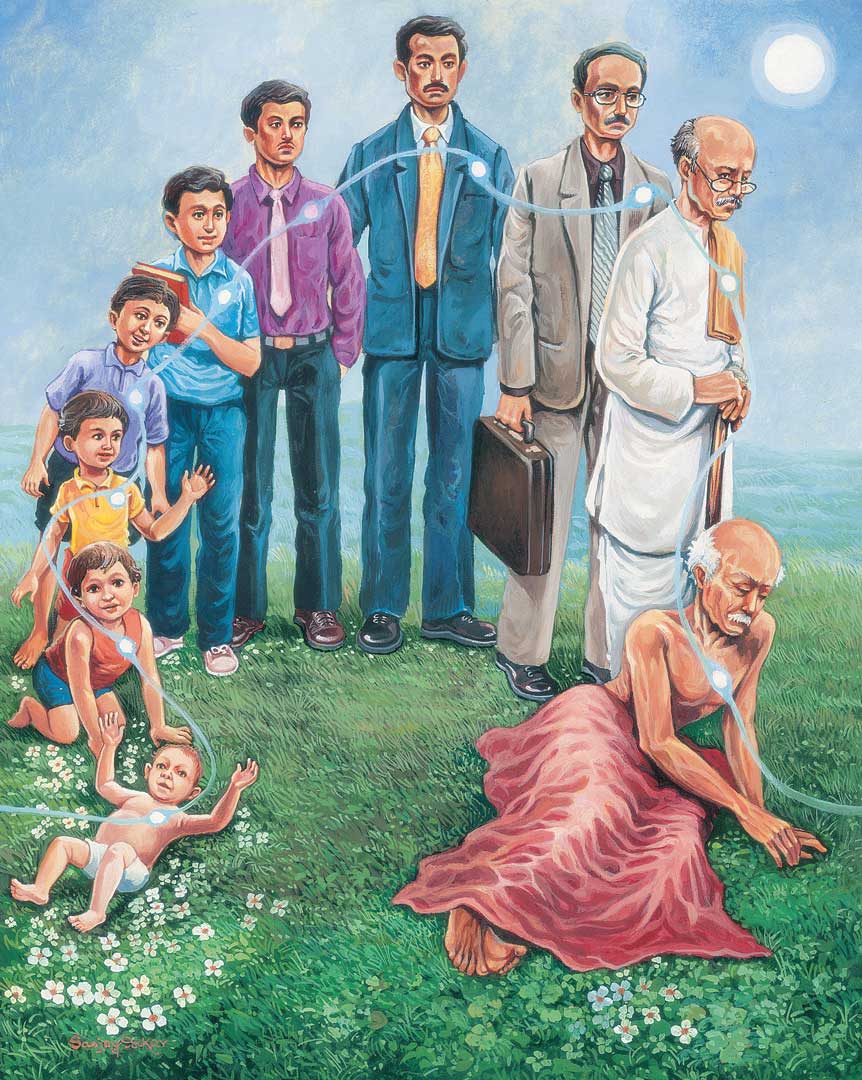
BG 2.13: Just as the embodied soul continuously passes from childhood to youth to old age, similarly, at the time of death, the soul passes into another body. The wise are not deluded by this.
We are souls, eternally related to God. Yet we often build our identity around appearance, possessions, achievements, and approval, expecting these changing things to give us lasting fulfillment. When our expectations remain unmet, anger, envy, or resentment can take root. Amid these concerns, remembrance of our beloved Lord grows faint.
Recognizing this forgetfulness is a hopeful beginning. We can bring our attachments and imperfections before Him, seeking the wisdom to understand ourselves and the strength to change.
The journey unfolds through ordinary choices: gratitude when greed urges us to seek more, compassion when anger rises, and a moment of remembrance when the mind wanders far from Him.
Sorrow itself is no measure of our distance from God. Mother Sita’s longing will remind us that a heart can ache deeply while remaining steadfast in love.
Diwali invites us to turn toward the Lord with that understanding, allowing wisdom to guide us, goodness to shape our actions, and remembrance to renew our love.
The Lord Lights the Lamp of Wisdom
A row of diyas brightens a home, but beyond their glow, the night remains. Even countless stars and a full moon cannot bring the dawn. Then the sun rises, and darkness gives way to light.
In his special Diwali message, Swami Mukundananda uses this analogy to turn our attention inward: the darkness of the heart needs the divine sun, God Himself. Diwali invites us to renew our relationship with Him through love and remembrance.
How reassuring this promise is for a heart struggling with old attachments and wandering thoughts. The Lord knows our confusion and responds with compassion. As we lovingly turn toward Him, His grace illuminates our understanding and guides us closer.
Swami Mukundananda also evokes a cave that has remained dark for a thousand years: when light enters, the darkness yields. The image encourages us to begin, however long we have lived in forgetfulness. We can offer the Lord our attention today, remember His name, and seek His guidance in the choices before us.
As we light our homes this Diwali, may each flame awaken the longing to turn toward Him. Through sincere practice and His grace, we nurture the wisdom that reveals our relationship with God and the love that makes His remembrance precious.
Cleaning Our Homes, Preparing Our Hearts
Before Diwali, we sweep corners, clear cupboards, and lovingly prepare our homes. Every flower and diya becomes part of a welcome.
In his Diwali reflection, Swami Mukundananda draws our attention to Ayodhya’s sorrow during Shri Ram’s absence and its joy upon His return. The long pain of separation gives way to celebration; homes shine with lamps, and hearts rejoice in His presence.
This homecoming invites an inward reflection. When remembrance grows faint, our hearts can become crowded with resentment, restless desires, and anger. As we prepare our homes for the festival, we can also renew our desire to welcome the Lord into our daily lives.
Shri Krishna describes the compassionate disposition of His devotee:
अद्वेष्टा सर्वभूतानां मैत्र: करुण एव च ।
निर्ममो निरहङ्कार: समदु:खसुख: क्षमी ॥ 13॥
सन्तुष्ट: सततं योगी यतात्मा दृढनिश्चय: ।
मय्यर्पितमनोबुद्धिर्यो मद्भक्त: स मे प्रिय: ॥ 14॥
adveṣhṭā sarva-bhūtānāṁ maitraḥ karuṇa eva cha
nirmamo nirahankāraḥ sama-duḥkha-sukhaḥ kṣhamī
santuṣhṭaḥ satataṁ yogī yatātmā dṛiḍha-niśhchayaḥ
mayy arpita-mano-buddhir yo mad-bhaktaḥ sa me priyaḥ
BG 12.13-14: Those devotees are very dear to Me who are free from malice toward all living beings, who are friendly, and compassionate. They are free from attachment to possessions and egotism, equipoised in happiness and distress, and ever-forgiving. They are ever-content, steadily united with Me in devotion, self-controlled, of firm resolve, and dedicated to Me in mind and intellect.
These words give our inward preparation a direction. An apology offered sincerely, a generous act performed quietly, or a pause before an angry reply can express our wish to live with greater love. Where hurt runs deep, we can seek His help to loosen resentment while acting with wisdom.
The heart is a cherished dwelling of the Lord. Preparing it means becoming more receptive to His presence and allowing remembrance to shape how we treat others.
As each diya finds its place, may we nurture love, kindness, hope, and compassion within, offering the Lord a welcome that continues beyond the festival.
The Lamp of Ram Naam: From Repetition to Loving Remembrance
How can we nurture this welcome each day? Tulsidas offers a beautiful image: the Lord’s name upon our tongue as a lamp illuminating both within and around us.
राम नाम मनिदीप धरु जीह देहरीं द्वातुलसी भीतर बाहेरहुँ जौं चाहसि उजिआर॥
Rām nām mani-dīp dharu jīh deharīṁ dvār,
Tulsī bhītar bāherahuṁ jauṁ chāhasi ujiār.
Meaning: Place the jewel lamp of Shri Ram’s name upon the threshold of your tongue, says Tulsidas, if you desire illumination within and around you.
As we chant “Shri Ram,” we can remember His compassionate face and the tenderness with which He receives His devotees. We may contemplate Him beside Mother Sita, with Lakshman near and Hanuman at His feet. A cherished leela can accompany the name, drawing our attention to the Lord we are calling.
Sometimes the lips continue while the mind wanders into worries or unfinished tasks. When we notice, we can gently return to Him. Each return is a small renewal of love.
Even a few attentive minutes beside a diya can become precious: His name upon our lips, His form before the mind, and a sincere desire to please Him within the heart.
The Ramayana reveals how this remembrance lives through different circumstances: Mother Sita’s anguish, Bharat’s responsibility, Shabari’s waiting, and Hanuman’s service. Their devotion gives warmth and living meaning to the lamp of Ram Naam.
Mother Sita: The Light of Remembrance in Ashok Vatika
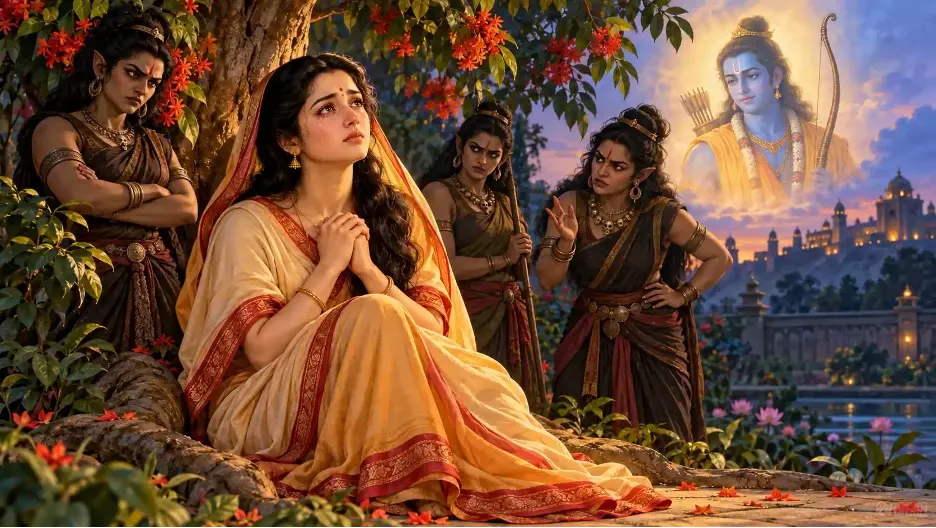
In Ashok Vatika, Mother Sita waited for Shri Ram. Held captive, surrounded by threats, and far from His comforting presence, she longed to hear His voice and behold His beloved face again.
Through those sorrowful days and nights, His name remained with her. Returning from Lanka, Hanuman described her condition to Shri Ram:
नाम पाहरू दिवस निसि ध्यान तुम्हार कपाट।लोचन निज पद जंत्रित जाहिं प्रान केहिं बाट॥
Nām pāharū divas nisi dhyān tumhār kapāṭ,
lochan nij pad jantrit jāhiṁ prān kehiṁ bāṭ.
Meaning: Your name stands guard day and night; contemplation of You forms the door. Her eyes, fixed upon her own feet, serve as the lock. Through what passage could her life depart?
In the message she entrusted to Hanuman, Mother Sita expressed the unbearable anguish of separation. Yet her eyes, yearning for Shri Ram’s darshan, would not let her life depart. Their tears cooled the fire of separation, preserving her for the sight of Him once more.
Her longing was profound, and her love unwavering. His name guarded her; His remembrance sheltered her heart. Even under Ravana’s threats, she preserved her dignity and refused to yield.
Her example reaches gently toward every sorrowing heart. We too can bring our pain into remembrance, calling upon God with whatever strength we have. Tears and faith can dwell together; even through hardship, the heart can remain turned toward Him.
Bharat: A Heart That Loves Without Claiming
While Mother Sita remembered Shri Ram in Lanka, Bharat longed for Him in Ayodhya. The throne was within his reach, yet how could a kingdom satisfy a heart yearning for its beloved Lord?
On his journey to bring Shri Ram home, Bharat prayed at Prayag:
अरथ न धरम न काम रुचि गति न चहउँ निरबान।जनम जनम रति राम पद यह बरदानु न आन॥
Arath na dharam na kām ruchi, gati na chahaũ nirbān;
janam janam rati Rām pad, yah baradānu na ān.
Meaning: I seek neither wealth, religious merit, worldly pleasure, nor liberation. Grant me only love for Shri Ram’s feet, birth after birth.
Ramcharitmanas, Ayodhya Kand, Doha 204 ·
Birth after birth, he wished only to love. Even liberation held no attraction beside devotion to Shri Ram’s feet.
At Chitrakoot, when Shri Ram remained firm in honoring their father’s word, Bharat reverently received His padukas. Placing them upon the throne, he cared for the kingdom as the Lord’s representative, living austerely at Nandigram through the remaining years of separation. Love found expression in faithful responsibility.
Bharat’s devotion gently searches our own hearts. Can we serve when our contribution goes unnoticed? Can we rejoice in another’s recognition? Can we care deeply without seeking control?
His example invites us to offer our responsibilities to God and loosen our attachment to praise or position. A heart devoted to the Lord finds its treasure in pleasing Him.
Shabari: Preparing Every Day for the Beloved
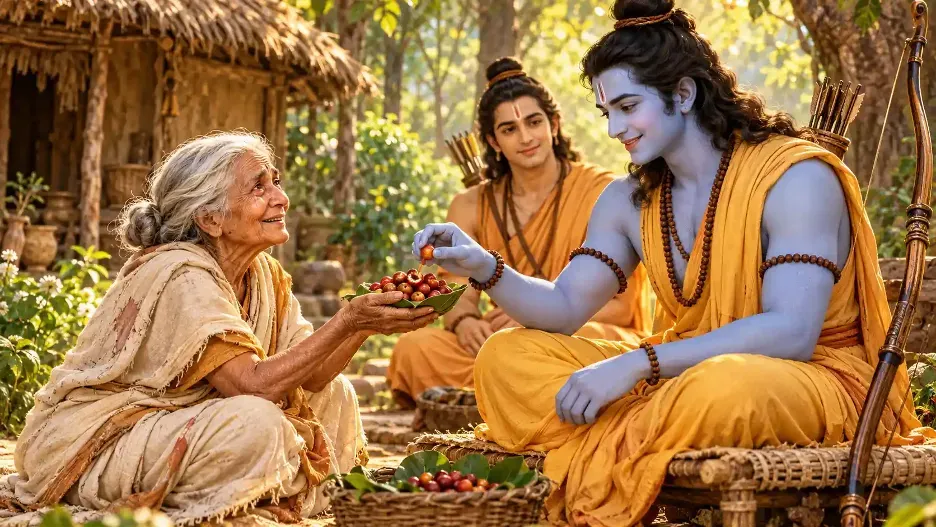
In her forest hermitage, Shabari awaited Shri Ram, holding close her guru’s assurance that He would come. Through the long waiting, she nurtured her devotion and prepared to welcome Him.
Then, one blessed day, her beloved Lord stood before her.
प्रेम मगन मुख बचन न आवा।पुनि पुनि पद सरोज सिर नावा॥
Prem magan mukh bachan na āvā,
puni puni pad saroj sir nāvā.
Meaning: So absorbed was she in love that words would not come; repeatedly, she bowed her head at His lotus feet.
Ramcharitmanas, Aranya Kand, passage preceding Doha 35 ·
Her voice fell silent; her repeated bows spoke for her. She washed His feet and lovingly offered Him a seat.
In the beloved devotional retelling, Shabari tastes each berry before offering it to Shri Ram. How could she bear to give Him a sour fruit? She chooses only the sweet ones, scarcely thinking of having tasted them herself. Each berry carries her tender wish: may my beloved Lord enjoy this.
Shri Ram receives her offering with affection. The sweetness we remember is the love of a heart seeking only to please Him.
Shri Krishna similarly assures us in Bhagavad Gita 9.26 that He accepts a leaf, a flower, a fruit, or water offered with devotion.
Shabari encourages us to keep preparing our hearts, even when progress feels slow. As we arrange Diwali bhog, we can remember her loving care and offer what we have with sincerity. Patient remembrance and humble service make each day an opportunity to welcome the Lord.
Hanuman: When Love Becomes Service

Hanuman returned from Lanka carrying Mother Sita’s message. He had crossed the ocean and brought comfort to her sorrowing heart. Before Shri Ram, he stood as a servant whose greatest joy was to fulfill his Lord’s work.
Shri Ram spoke with deep gratitude:
सुनु सुत तोहि उरिन मैं नाहीं।देखेउँ करि बिचार मन माहीं॥
Sunu sut tohi urin maiṁ nāhīṁ,
dekheuṁ kari bichār man māhīṁ.
Meaning: Listen, my son: having reflected deeply, I find that I cannot repay you.
Ramcharitmanas, Sundar Kand, passage following Doha 31.
The Lord of the universe calls His devotee “my son” and speaks of a debt He cannot repay. His eyes fill with tears. Overwhelmed by that affection, Hanuman falls at His feet, and Shri Ram lifts him into His embrace.
When asked about his achievements, Hanuman attributes them to the Lord’s power. All that strength, courage, and intelligence rests in a heart seeking to serve.
His devotion invites us to offer our own abilities with the same intention. Time given patiently, a meal prepared lovingly, or a temple task performed quietly can become seva when offered for God’s pleasure.
The light of devotion reaches our actions when we remember whom we serve. Hanuman shows how beautiful a life becomes when its gifts are placed at the Lord’s feet.
Our Effort and the Lord’s Grace
These devotees awaken a longing within us: May I too learn to love and serve the Lord with such sincerity.
We bring Him the heart we have, with its affection, distractions, and attachments. We set aside time for devotion and gently return our wandering attention to Him. Some days remembrance comes easily; on others, simply sitting for practice becomes a humble offering of perseverance.
Our effort expresses our willingness to turn toward Him. His grace guides that turning and illuminates our understanding. We persevere with hope, trusting the compassion of the Lord who knows our struggles and receives our sincere offerings.
Keeping the Lamp Burning After Diwali
When the celebrations end, we return to familiar duties. The flowers fade, the diyas are put away, and daily concerns fill our attention again. Yet the love renewed during Diwali can accompany us into these ordinary days.
Swami Mukundananda explains that saints experience Diwali every day through their constant connection with God. For us, this teaching offers a direction: nurture remembrance until it becomes an increasingly cherished part of life.
We can begin with a small, steady commitment. Set aside a few minutes to chant while contemplating the Lord’s form. Read a scriptural passage slowly and carry one teaching into the day. Before beginning work, remember Him and offer the task at His feet.
When difficulties arise, recall Mother Sita’s steadfast remembrance. When recognition tempts us, remember Bharat. When waiting feels long, draw encouragement from Shabari; when an opportunity to help appears, serve in Hanuman’s spirit.
Before sleep, gently reflect: When did I remember the Lord today? Where did I forget? Receive the answers honestly, then begin again with hope.
Our journey from darkness to divine light continues through these sincere returns to God. Gradually, the welcome offered beside a Diwali diya becomes a welcome renewed through our thoughts, choices, and actions.
A Diwali Offering: Welcoming the Lord Within
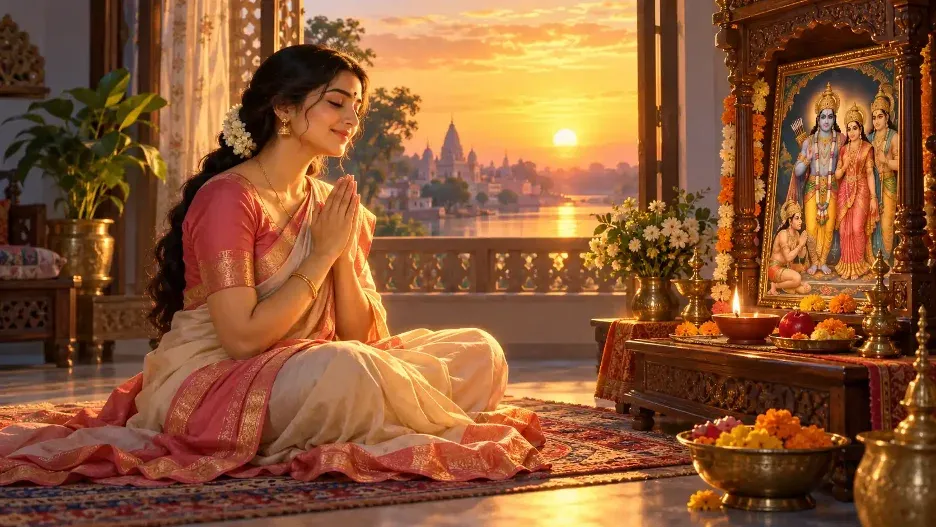
At the doorway, the mother and child place their last diya. A row of small flames shines before them; each lovingly lit in remembrance of Shri Ram’s homecoming.
The mother folds her hands. Her heart returns to Ayodhya’s joy: the long waiting ended, the beloved Lord finally home. She longs to carry something of that welcome into her own life.
This Diwali, we too can offer Him a heart willing to learn, to release resentment, and to love more deeply. We can remember Him through sorrow, serve with humility, and patiently renew our devotion.
As Swami Mukundananda’s sun analogy reminds us, the deepest illumination comes through God Himself. We tend our practice and seek His grace, trusting Him to guide our journey from ignorance to wisdom and from forgetfulness to loving remembrance.
“O Lord, as these lamps brighten my home, illuminate my understanding with Your grace. Help me loosen what hardens my heart and cherish what brings me closer to You. May my thoughts remember You, my hands serve You, and my heart welcome You with love, today and always.”
Key Takeaways
- Diwali invites an inward homecoming. As we celebrate Shri Ram’s return to Ayodhya, we can renew our desire to welcome Him through remembrance, love, and service.
- Divine light reveals our relationship with God. In BG 10.11, Shri Krishna assures His devotees that His grace dispels ignorance through the radiant lamp of knowledge.
- Preparing the heart gives meaning to our preparations. Cleaning our homes can inspire sincere efforts to loosen resentment, anger, and greed while cultivating kindness and compassion.
- Remembrance can sustain us through sorrow. Mother Sita’s devotion shows that anguish and steadfast love for God can dwell together.
- Love finds expression in humble offerings. Bharat’s selflessness, Shabari’s loving care, and Hanuman’s service inspire us to offer our responsibilities and abilities for the Lord’s pleasure.
- The journey continues after Diwali. Regular practice, attentive remembrance, and reliance on divine grace help us carry the festival’s devotional spirit into daily life.
Frequently Asked Questions
1. What does moving from darkness to divine light mean?
· It means growing from ignorance toward spiritual understanding and from forgetfulness of God toward loving remembrance. Bhagavad Gita 10.11 describes the Lord compassionately illuminating His devotees’ hearts through the lamp of knowledge.
2. How can cleaning our homes become a devotional practice?
· We can prepare our homes with remembrance and love, while reflecting on the attitudes we wish to change. An apology, a generous act, or a patient response can give practical expression to our desire to welcome the Lord.
·3. How can I make Naam Jap more attentive?
· While chanting, remember the Lord’s form, qualities, or a cherished leela. When thoughts wander, gently return your attention to Him. Beginning with a short practice you can sustain and nurture its sincerity over time.
4. Does devotion mean that we will no longer experience sorrow?
· Devotion can sustain us through sorrow without immediately changing our circumstances. Mother Sita’s longing in Ashok Vatika shows how anguish and unwavering remembrance can coexist.
5. What can Bharat teach us about everyday responsibilities?
· Bharat cared for the kingdom as Shri Ram’s representative, without seeking the throne for himself. His example encourages us to fulfill our duties faithfully and offer our efforts to God, gradually loosening attachment to recognition and control.
6. Does an offering need to be elaborate to please God?
· Bhagavad Gita 9.26 emphasizes devotion in the offering of a leaf, flower, fruit, or water. Shabari’s loving welcome reminds us to offer what we have with sincerity and thoughtful care.
7. How can I carry Diwali’s devotional spirit through the year?
· Set aside regular time for chanting, contemplation, and scriptural study. Offer daily work to God, serve with humility, and reflect gently on your remembrance. Continue with patience, seeking His guidance and grace.
Call To Action
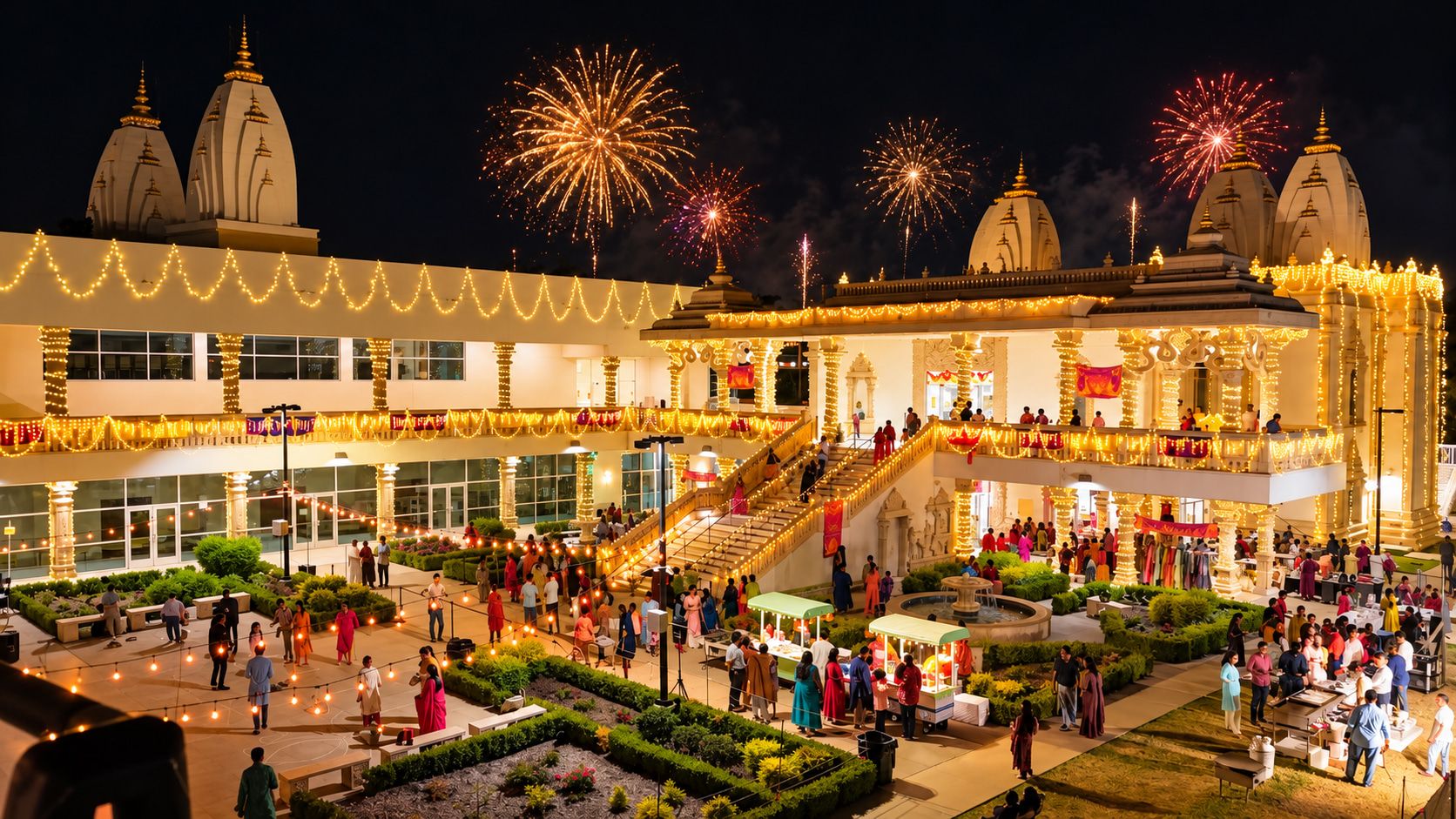
Let the love awakened through these reflections find expression in shared worship and celebration. Join Diwali Mahotsav 2026 at the Radha Krishna Temple of Dallas in Allen, Texas, from November 5 to 10.
The six-day celebration offers families an opportunity to come together for sacred ceremonies, cultural programs, and festive joy.
| Event Details | Highlights |
|---|---|
| Dates | November 5 to 10, 2026 |
| Location | Radha Krishna Temple of Dallas, Allen, Texas |
| Special Highlights | 11,111 diya lighting and musical fireworks |
| Sacred Observances | Dhanteras, Mahalakshmi Pooja, Kali Chaudas, Govatsa Pooja, and Govardhan Pooja with Annakoot |
Come with your family, offer your prayers, and let each diya become a loving reminder to welcome the Lord into daily life.
View the temple’s Diwali Mahotsav announcement for celebration details and updates:

Deepen Your Diwali Reflection with Swami Mukundananda
Take a quiet moment to listen to the messages that inspired our reflections on illuminating the heart through God’s love, remembrance, and grace:
Watch Swamiji’s special Diwali message on the divine light that dispels the darkness within.
Watch the short Diwali reflection on preparing the heart to welcome the Lord.
May this Diwali renew our joy in His presence and our resolve to remember and serve Him throughout the year.