


Each year, Dussehra marks the triumph of good over evil — the defeat of Ravana by Shri Ram. It is a momentous occasion celebrated across India with effigies, firecrackers, and joyous gatherings. But beyond the rituals lies a deeper truth — one that isn’t about slaying an external demon, but the inner demons we face daily.

In a powerful spiritual discourse, Swami Mukundananda draws from the Yoga Vasistha, a sacred dialogue between Shri Ram and his Guru Maharishi Vasistha, to reveal the real battlefield of Dussehra — the mind. This blog will help you reflect on how thoughts shape your health, destiny, and inner peace — and how, like Shri Ram, you can conquer the subtle enemies within.
🧠 The Power of the Mind: Where Every Battle Begins
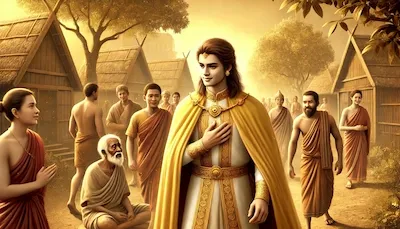
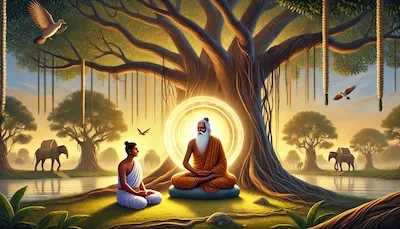
"Shree Ram walks among his people, moved by their suffering — compassion is where wisdom begins. In the stillness of nature, Maharishi Vasistha reveals timeless truths to a humble seeker."
Shri Ram, while touring his kingdom, noticed that many people were suffering from disease. Moved with compassion, he returned to his Guru and asked:
“Maharishi, what is the cause of disease?”
Maharishi Vasistha’s answer was revolutionary — and timeless:
“Ram, disease begins with the mind.”
Centuries later, modern science is finally catching up. Leading institutions like Harvard Medical School have begun acknowledging the mind-body connection, establishing dedicated departments to study how thoughts influence physical health. Yet, this understanding had already been beautifully described thousands of years ago in the Yoga Vasistha.
⚙️ Brain vs. Mind: The Forgotten Distinction
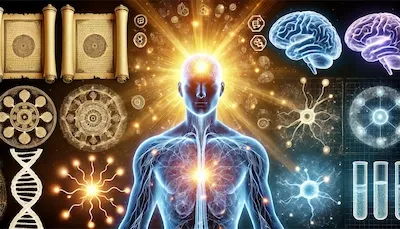
Swami Mukundananda explains this distinction with clarity:
"The brain is the hardware. The mind is the software."
The brain is a physical organ. But the mind is subtle, non-physical — it operates through the brain, just as software runs on hardware. And what does this mind do?
It creates thoughts — and these are not just random ideas. According to Vedic wisdom and modern neuroscience, thoughts are subtle bundles of energy.
Depending on their quality, these thought waves influence the body, emotions, appearance, and overall health. For example:
- Depressive thoughts dampen your facial expressions
- Joyful thoughts uplift your presence
- Negative thoughts send your immune system into distress
- Positive thoughts bring strength and clarity
🌊 Thoughts: Invisible Waves, Visible Impact
Imagine this: You’re carrying your phone, unaware that invisible electromagnetic waves are passing through you. A call comes in — proof that the wave was there.
Likewise, thoughts are unseen energetic vibrations. Swami Mukundananda compares them to radio waves — always present, but only accessed when the right tuner is set.
Your mind is that tuner.
These waves impact your emotions, blood chemistry, heart rate, and even your appearance. As Swami Mukundananda humorously notes, you can look at someone and say “they look untrustworthy” or “such a peaceful soul” — because thoughts leave physical impressions.
🩺 Disease Begins in the Mind: The Five Sheaths of Existence
The Yoga Vasistha explains how disease travels from the mind to the body:
- Manomaya Kosh (Mental Sheath) gets disturbed by thoughts of:
- Anxiety
- Fear
- Greed
- Anger
- Hatred
- Envy
- This disturbance transfers to the Pranamaya Kosh (Vital Energy Sheath), disrupting energy flow.
- It finally manifests in the Annamaya Kosh (Physical Sheath) — where disease becomes visible.
In short, when the mind loses its balance, the body pays the price.
💧 Thoughts and Water: A Scientific Parallel


“Positive = Harmony ❄️ | Negative = Chaos ❌”
Swami Mukundananda shares the intriguing work of Japanese scientist Masaru Emoto, who found that water crystals change their structure based on the words or emotions placed near them.
- When water was exposed to positive words like "love", it formed beautiful, symmetrical crystals.
- When exposed to negative words like "hate", it formed ugly, distorted ones.
If words can impact water molecules, imagine what your thoughts — continuously swirling inside your 70%-water body — are doing to you!
“Every cell in your body is listening to your thoughts.”
🌱 The Mind is Malleable: Be Its Gardener

Swami Mukundananda offers a beautiful analogy:
“The mind is like a fertile piece of land. And you are the gardener.”
You must:
- Sow good seeds: Positive, noble, lofty thoughts
- Remove weeds: Negative, harmful, and repetitive patterns
But beware — as with any garden, weeds grow faster than flowers. Likewise, anxiety, anger, and fear arise more easily than peace, joy, and discipline.
To grow the inner garden of your mind, you need daily effort, not external tools — just the right techniques, and the willingness to change.
🧘♂️ Thoughts Become Actions: Seed to Fruit

Swami Mukundananda explains:
“Thoughts are the seeds. Actions are the plants. Habits are the trees. Destiny is the forest.”
Every action begins with a thought. If you want to improve your destiny, you must start by changing your thinking.
This is why Shri Ram’s journey was not just about defeating Ravana — it was about cultivating mastery over the mind, resisting the internal demons of doubt, distraction, and delusion.
🔥 Who Is Your Ravana Today?
Ravana had ten heads. Symbolically, they represent ten dominant inner enemies:
- Lust
- Anger
- Greed
- Attachment
- Ego
- Jealousy
- Fear
- Laziness
- Self-doubt
- Delusion
This Dussehra, ask yourself:
- Which of these heads do I face daily?
- Have I unknowingly allowed them to rule my mind?
- What can I do to reclaim control?
The answer lies in Shri Ram’s conversation with Maharishi Vasistha — in mastering your thoughts.
💪 You Already Have the Weapon
The bow of Ram was called Kodanda — powerful, steady, and sacred.
You too have a spiritual Kodanda — your mind.
Swami Mukundananda says:
“You don’t need anything from the outside to change your thoughts — just commitment and knowledge.”
Once you take charge of your thoughts:
- Your health improves
- Your relationships heal
- Your decisions gain clarity
- Your life regains direction
🎯 Key Takeaways from Shri Ram’s Wisdom
Here’s what you can begin doing today, based on this powerful teaching:
- Observe your thoughts regularly
- Reject negative thinking patterns immediately
- Sow noble thoughts — through reading, satsang, or meditation
- Understand the mind-body connection — mental purity leads to physical vitality
- Be consistent — mental gardening is a lifelong practice
🙏 A Dussehra Call to Inner Victory
This Dussehra 2025, let your celebration be more than symbolic.
Don’t just burn an effigy of Ravana outside — burn the inner Ravanas of anger, greed, and doubt inside.
Don’t just chant Shri Ram’s name — live His wisdom.
Start by cleansing your thoughts, managing your mind, and unlocking your inner potential.
You don’t need a sword — you need awareness.
📺 Want to Go Deeper? Start with This
If this wisdom resonates with you, don’t stop here.
👉 Subscribe to Swami Mukundananda’s Official YouTube Channel
Discover hundreds of videos on:
- Thought transformation
- Meditation and mind mastery
- Bhagavad Gita wisdom
- Practical spirituality for modern life
📌 https://www.youtube.com/@swamimukundananda
🎉 Join the Dussehra Celebrations at Radha Krishna Temple, Dallas
Experience the spirit of Shri Ram in an atmosphere of devotion, celebration, and wisdom.
🎊 Radha Krishna Temple of Dallas – Dussehra 2025 Celebrations
Enjoy:
- Ram Leela
- Cultural performances
- Wisdom talks
- Fireworks
- Delicious prasadam
📍 Join the celebrations in-person or virtually!
🌐 Visit: https://www.radhakrishnatemple.net/dussehra
✍️ Final Reflection
“You may never know what results come of your actions. But if you do nothing, there will be no result.” – Mahatma Gandhi
Don’t wait for the perfect moment to master your mind.
Let this Dussehra 2025 be your moment of personal victory — over the distractions, emotions, and patterns that no longer serve you.
Let Shri Ram’s legacy become your life practice.
Let Swami Mukundananda’s teachings guide your transformation.
And let your mind be the kingdom you reclaim.
❓ FAQs About Dussehra
1. What is the deeper meaning of Dussehra beyond burning Ravana’s effigy?
Dussehra symbolizes not just the external triumph of Shri Ram over Ravana, but also the inner victory over our own mental enemies — like anger, greed, fear, and self-doubt. It is a reminder to conquer the mind.
2. Why does Swami Mukundananda emphasize the mind as the battlefield?
Drawing from the Yoga Vasistha, Swami Mukundananda explains that all suffering and disease begin in the mind. Thoughts influence health, emotions, and destiny. By mastering the mind, we transform our entire life.
3. How is the brain different from the mind?
- Brain = Hardware (the physical organ)
- Mind = Software (the subtle energy that creates thoughts)
The mind uses the brain to function, just as software runs on hardware. Thoughts from the mind determine health, mood, and destiny.
4. Can thoughts really affect health?
Yes. According to both Vedic wisdom and modern science, negative thoughts disturb energy flow and manifest as disease. Positive thoughts, on the other hand, strengthen the immune system, uplift emotions, and enhance vitality.
5. What are the “five sheaths” and how do they relate to disease?
The Yoga Vasistha describes layers of existence:
- Manomaya Kosh (mind) – disturbed by negative thoughts
- Pranamaya Kosh (vital energy) – energy flow disrupted
- Annamaya Kosh (body) – disease manifests physically
Thus, illness begins in the mind before reaching the body.
6. Who or what is Ravana in today’s context?
Ravana’s ten heads symbolize ten inner enemies: lust, anger, greed, attachment, ego, jealousy, fear, laziness, self-doubt, and delusion. True Dussehra means burning these within ourselves.
7. What practical steps can I take to master my mind?
- Regularly observe your thoughts
- Stop negative thinking patterns early
- Replace them with noble, positive thoughts
- Engage in reading, meditation, and satsang
- Be consistent — mental mastery is a lifelong practice
8. How can I participate in the Dussehra 2025 celebrations at Radha Krishna Temple, Dallas?
You can attend in person or virtually. The celebration includes Ram Leela, cultural programs, wisdom talks, fireworks, and prasadam. Visit radhakrishnatemple.net/dussehra to register.
9. Where can I learn more from Swami Mukundananda?
You can explore his teachings on the Official YouTube Channel: youtube.com/@swamimukundananda. It features videos on meditation, thought transformation, Bhagavad Gita wisdom, and practical spirituality.
10. What is the key takeaway from this blog?
That the real Dussehra is won within. By managing your thoughts and emotions, you reclaim your inner kingdom, improve health, relationships, and destiny — just as Shri Ram conquered Ravana.