
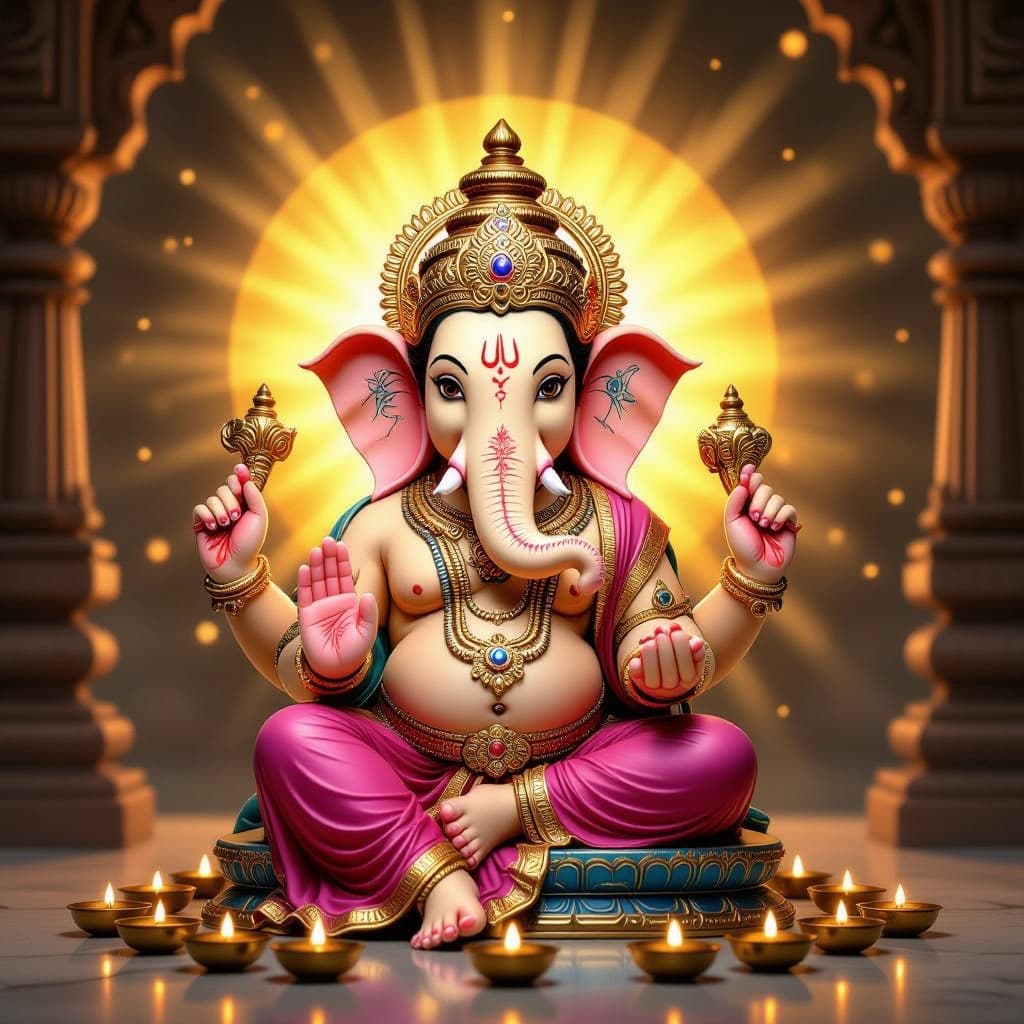
Introduction: The Festival of Wisdom and Devotion
Ganesh Chaturthi is one of the most beloved Hindu festivals, celebrated across India and the world with grandeur, devotion, and cultural richness. Known as the birthday of Lord Ganesha—the remover of obstacles, the patron of wisdom, intellect, and prosperity—it unites families, communities, and entire cities in collective worship. From the making of clay idols to the joyous processions for immersion, every ritual carries a deep spiritual and mythological significance.
At the heart of this festival lies the Vrata Katha, the sacred stories told and retold during the festival’s rituals. These stories, originating in the Puranas and local traditions, reveal why Lord Ganesha is worshipped in a particular manner, why certain offerings are made, and why the festival is observed with specific customs. The narratives are not just tales of the past; they serve as guides for spiritual living, reminding devotees of divine qualities like humility, patience, determination, and faith.
This blog explores the Ganesh Chaturthi Vrata Katha in detail, unraveling the stories behind the rituals and their timeless wisdom.
The Birth of Lord Ganesha: A Tale of Divine Creation
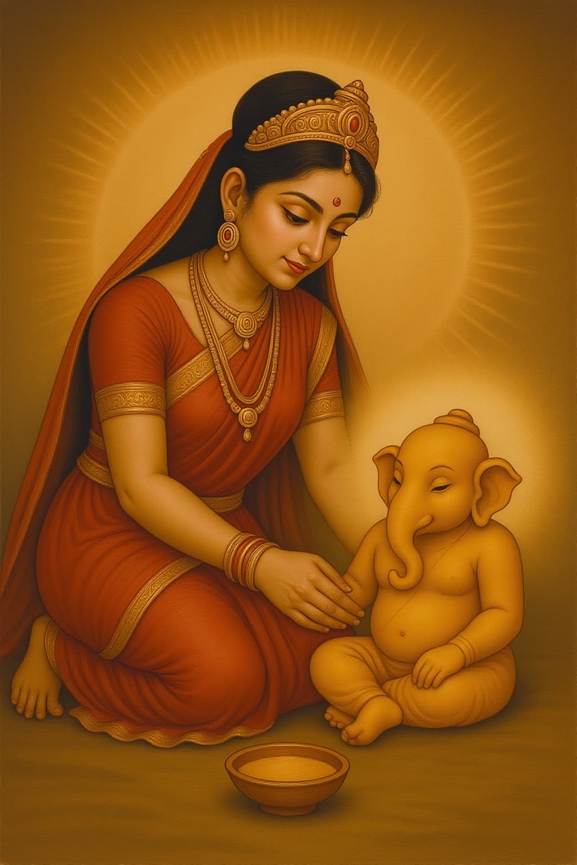
The most well-known Vrata Katha begins with Parvati Devi, the divine consort of Lord Shiva. Longing for companionship during Shiva’s meditative absences, Parvati created a son out of turmeric paste while bathing. She molded the figure with her own hands, breathed life into him, and named him Ganesha.
When Parvati left for her bath, she instructed her new son to guard the entrance of her chamber and not let anyone enter. Soon, Lord Shiva returned from meditation, wishing to enter. But the boy, unaware of who Shiva was, stood guard and refused him entry.
Angered, Shiva and his ganas (attendants) tried to convince the child, but Lord Ganesha stood firm. The confrontation escalated until Shiva, in a fit of rage, severed Lord Ganesha’s head.
When Parvati saw what had happened, she was inconsolable. To appease her, Shiva promised to bring Lord Ganesha back to life. He instructed his followers to bring the head of the first living being they found facing north. They returned with the head of a young elephant, which Shiva placed on the boy’s body. Breathing life into him, Shiva declared him his own son and made him the leader of all ganas—hence the name Gana-isha, or Lord Ganesha.
This story explains why Lord Ganesha has the head of an elephant and why he is regarded as the remover of obstacles—because even in his creation, he demonstrated steadfastness, courage, and loyalty to dharma.
Why Lord Ganesha Is Worshipped First: The Story of the Gods’ Test
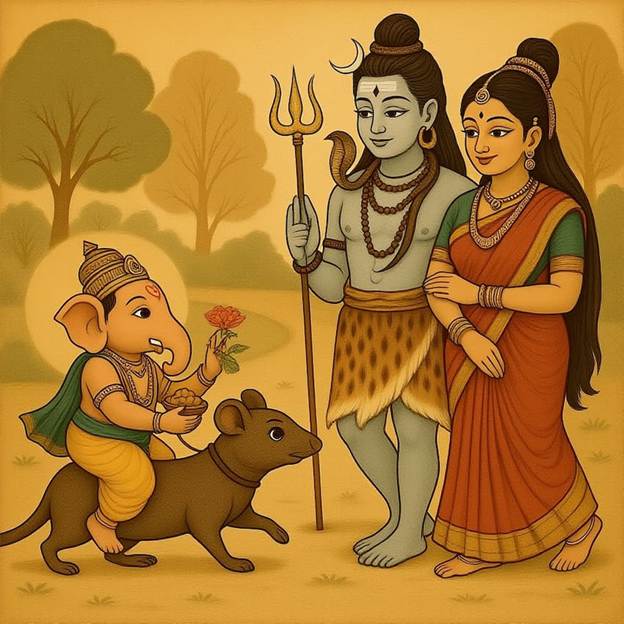
Another significant Vrata Katha answers the question of why Lord Ganesha is worshipped before all other deities. According to the Puranas, once the gods had a debate about who among them should be revered first during rituals. To resolve this, a competition was organized: whoever could circumambulate the entire universe three times would be declared the winner.
The mighty gods immediately mounted their celestial vehicles—Indra on Airavata, Kartikeya on his peacock, and others—setting off on the race. But young Lord Ganesha, riding a small mouse, realized his vehicle could not compete with theirs. Instead of giving up, he reflected on the true meaning of the universe.
He quietly circled his parents, Shiva and Parvati, three times, declaring that they embodied the entire cosmos for him. His wisdom and devotion touched the divine couple, and they declared him the victor. From then on, Lord Ganesha was honored as the first deity to be worshipped before any other ritual or auspicious activity.
This Vrata Katha teaches that intellect and devotion triumph over brute force, and it explains why no Hindu ceremony begins without invoking Lord Ganesha’s blessings.
The Moon’s Curse: Why We Avoid Looking at the Moon
An intriguing Vrata Katha associated with Ganesh Chaturthi explains why devotees avoid looking at the moon on this day. It is said that once on Ganesh Chaturthi, Lord Ganesha was riding his mouse after enjoying a feast of modaks and sweets. The mouse stumbled upon a snake, causing Lord Ganesha to fall, and his stomach burst open, spilling all the sweets.
Unbothered, Lord Ganesha calmly tied his stomach with the snake and continued on his way. But the moon, Chandra, laughed at him mockingly. Angered, Lord Ganesha cursed the moon, declaring that anyone who looked at it on Ganesh Chaturthi would be falsely accused of wrongdoing.
The moon begged for forgiveness, and eventually, Lord Ganesha softened the curse. He decreed that the curse would not last forever, but anyone who saw the moon on Ganesh Chaturthi might still face a baseless accusation. To nullify its effects, listening to the story of the Syamantaka Jewel would provide relief.
This story explains a unique ritual of the festival and also imparts a moral: pride and ridicule can bring misfortune, while humility and forgiveness restore balance.
The Story of the Syamantaka Jewel: Relief from the Moon’s Curse
The Vrata Katha continues with the Syamantaka Jewel, a tale from the Mahabharata. A nobleman named Satrajit owned the jewel, which was said to bring immense wealth and prosperity. However, when his brother Prasena wore the jewel and went hunting, he was killed by a lion. The jewel was then taken by Jambavan, the bear king.
When the people saw Prasena dead without the jewel, they suspected Lord Krishna of theft. To clear his name, Krishna went in search of the jewel. After defeating Jambavan in a fierce battle, Krishna recovered the jewel and returned it to Satrajit, who then realized Krishna’s innocence.
Listening to or narrating this story on Ganesh Chaturthi is believed to absolve the curse of seeing the moon. Symbolically, it teaches that truth and righteousness ultimately prevail over suspicion and false accusation.
Lord Ganesha and Kubera: The Story of Humility
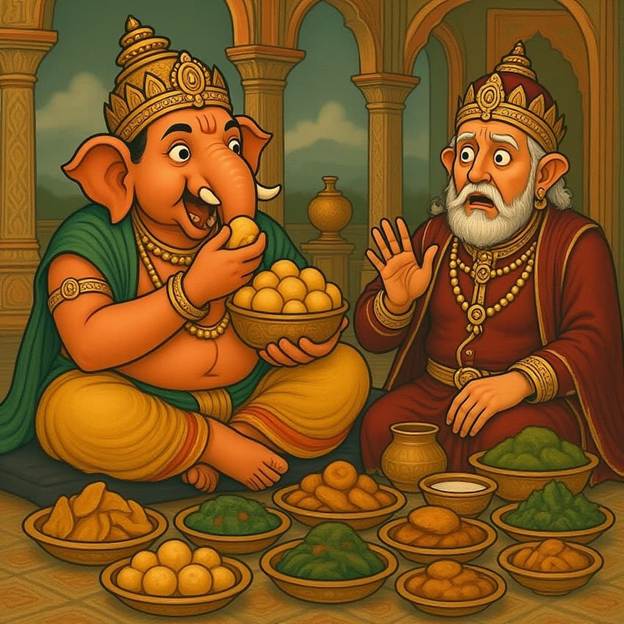
Another beloved Vrata Katha tells of Kubera, the god of wealth, who once invited Shiva and Parvati to a feast to display his riches. Shiva declined the invitation and instead sent young Lord Ganesha.
Lord Ganesha, with his insatiable appetite, began devouring everything served. Soon he had eaten all the food in Kubera’s palace. Still hungry, he threatened to eat Kubera himself. Terrified, Kubera rushed to Shiva for help.
Shiva advised Kubera to offer Lord Ganesha a handful of rice with humility and devotion. When Kubera did so, Lord Ganesha’s hunger was satisfied immediately.
This Vrata Katha highlights the futility of pride in material wealth and the supremacy of devotion and humility. It is one reason rice offerings are made to Lord Ganesha during Ganesh Chaturthi.
The Writing of the Mahabharata: Lord Ganesha as the Divine Scribe
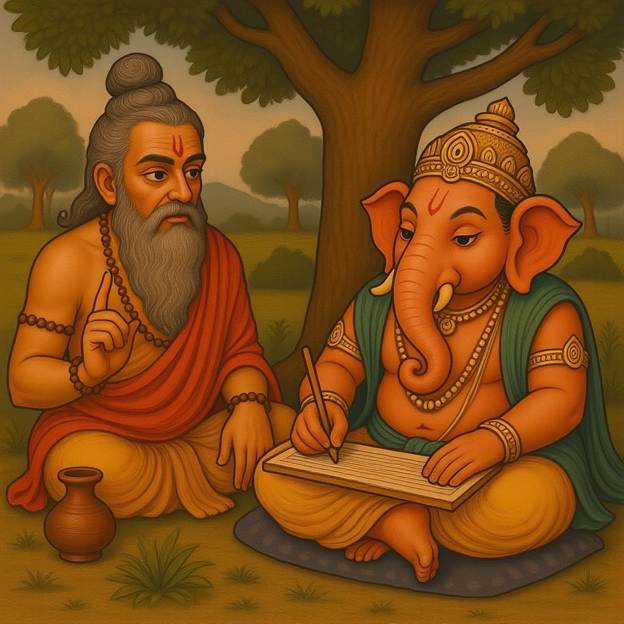
One of the most famous stories associated with Lord Ganesha is his role as the scribe of the Mahabharata, the epic that has guided Indian civilization for millennia. The sage Vyasa, seeking someone to write down the great epic as he dictated, approached Lord Ganesha for help.
Lord Ganesha agreed but placed a condition: Vyasa must recite the poem without pause. Vyasa countered with his own condition: Lord Ganesha must understand every verse before writing it down.
As Vyasa narrated, whenever he needed time to compose the next set of verses, he would insert deep, complex passages that gave Lord Ganesha pause. This allowed Vyasa the time to continue. The collaboration resulted in the creation of the Mahabharata.
This Vrata Katha explains Lord Ganesha’s association with wisdom, literature, and learning, which is why students and scholars seek his blessings during Ganesh Chaturthi.
Rituals of Ganesh Chaturthi and Their Stories
Each ritual of Ganesh Chaturthi is backed by stories that reinforce its symbolism.
Installation of Clay Idols
The tradition of bringing home clay idols of Lord Ganesha stems from the belief in returning the deity to the elements after worship. The clay represents the impermanence of the physical body, while immersion symbolizes the eternal cycle of creation and dissolution. It reminds devotees that God resides not in statues but in the heart.
The Offerings of Modak
The sweet modak, shaped like a dumpling, is Lord Ganesha’s favorite. Its outer covering symbolizes the challenges of life, while the sweet filling represents the bliss of spiritual realization. The Kubera Vrata Katha explains the offering, as modaks represent humility in devotion rather than opulence.
The Elephant Symbolism
The elephant head itself has a deeper story—it symbolizes wisdom, strength, and foresight. In some lesser-known Vrata Kathas, the elephant’s association with water and fertility connects Lord Ganesha to prosperity and abundance.
Ten-Day Celebration
The ten days of Ganesh Chaturthi, from Chaturthi to Anant Chaturdashi, symbolize the gradual journey from invoking the divine presence to merging with the infinite. Stories of Lord Ganesha’s victories over pride, greed, and arrogance reinforce this spiritual progression.
Regional Variations in Vrata Katha Traditions
Ganesh Chaturthi Vrata Katha is not limited to one story—it varies across regions, reflecting India’s cultural diversity.
- Maharashtra: The moon curse story is widely narrated, and community processions emphasize collective devotion.
- Tamil Nadu: Lord Ganesha is linked with the harvest, and stories of him protecting the land from drought are highlighted.
- Andhra Pradesh: The story of Lord Ganesha writing the Mahabharata is prominent, and students especially observe the festival.
- Odisha and Bengal: Lord Ganesha is worshipped with Lakshmi and Saraswati, and local Vrata Kathas connect him with prosperity and learning.
- Nepal: Stories emphasize Lord Ganesha’s role as the remover of household obstacles, with rituals centered on family unity.
These variations show how the universal themes of wisdom, humility, and devotion take on unique expressions across traditions.
The Spiritual Meaning Behind the Vrata Kathas
The Vrata Kathas of Ganesh Chaturthi go beyond mythology; they embody timeless lessons for daily life.
- Steadfastness (Birth Story): Stand firm in duty, even in the face of challenges.
- Wisdom (Circumambulating Parents): True knowledge lies in seeing divinity in the immediate, not just the grand.
- Humility (Kubera Story): Wealth without devotion is empty.
- Self-Control (Moon’s Curse): Ego and pride lead to downfall.
- Devotion (Mahabharata Writing): Wisdom and patience together create greatness.
These lessons remind devotees that Ganesh Chaturthi is not just a festival but also a guide for righteous living.
Conclusion: The Eternal Relevance of the Vrata Kathas
Ganesh Chaturthi Vrata Katha is a tapestry woven from myth, symbolism, and spiritual wisdom. The stories reveal not only the origins of the rituals but also the deeper truths about life, devotion, and the divine.
When families gather around the idol of Lord Ganesha, chanting mantras and listening to these sacred Kathas, they participate in an ancient tradition that connects them with countless generations of devotees. The stories breathe life into the rituals, ensuring that every offering, every chant, and every act of devotion carries meaning.
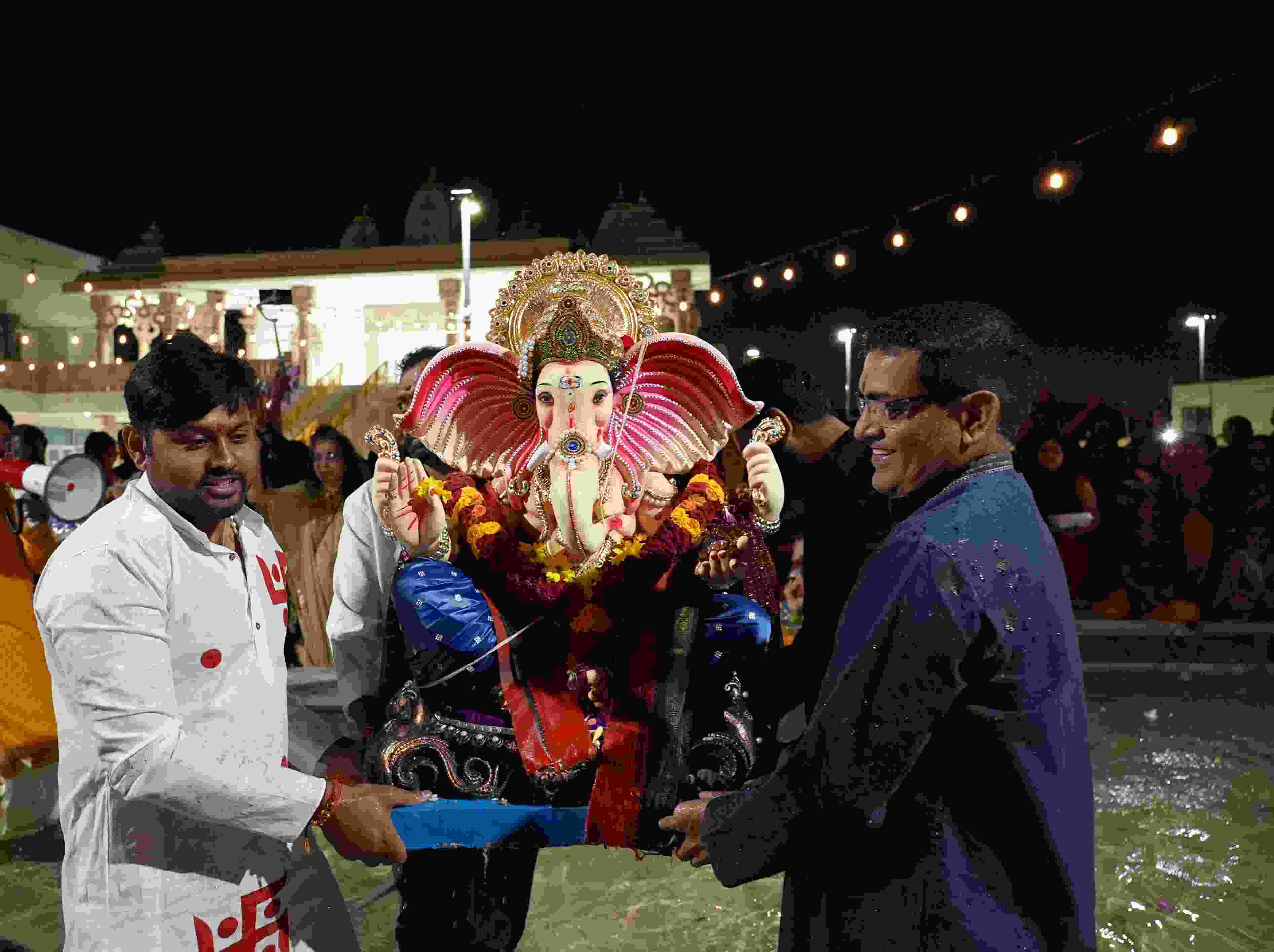
As the clay idol dissolves into the waters on Anant Chaturdashi, devotees are reminded of the eternal message of the Vrata Kathas: life is transient, but the wisdom of faith, humility, and devotion remains everlasting.
🌸 Call to Action
This Ganesh Chaturthi, let the Vrata Kathas guide your devotion. As you perform the rituals, remember the timeless wisdom they hold—humility, patience, and faith. Share these stories with your family, meditate on their meaning, and let Lord Ganesha bless your home with peace, prosperity, and joy.
🛕 Celebrate Ganesh Chaturthi Mahotsav 2025 at Radha Krishna Temple of Dallas
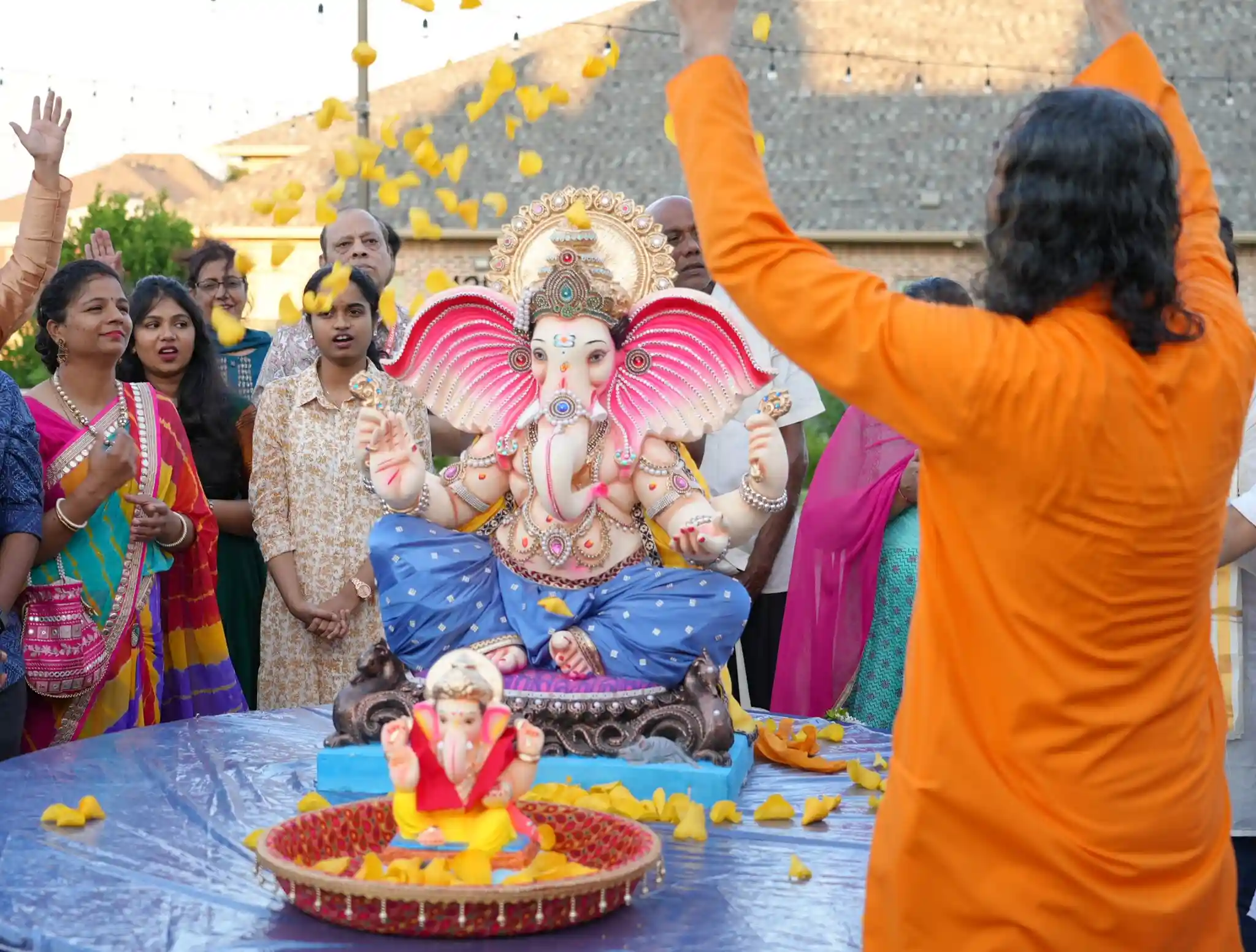
Ganesh Chaturthi Mahotsav 2025
Radha Krishna Temple of Dallas
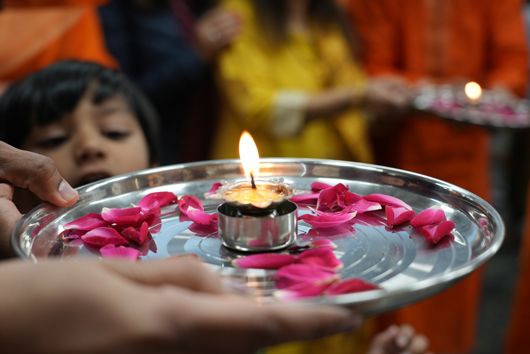
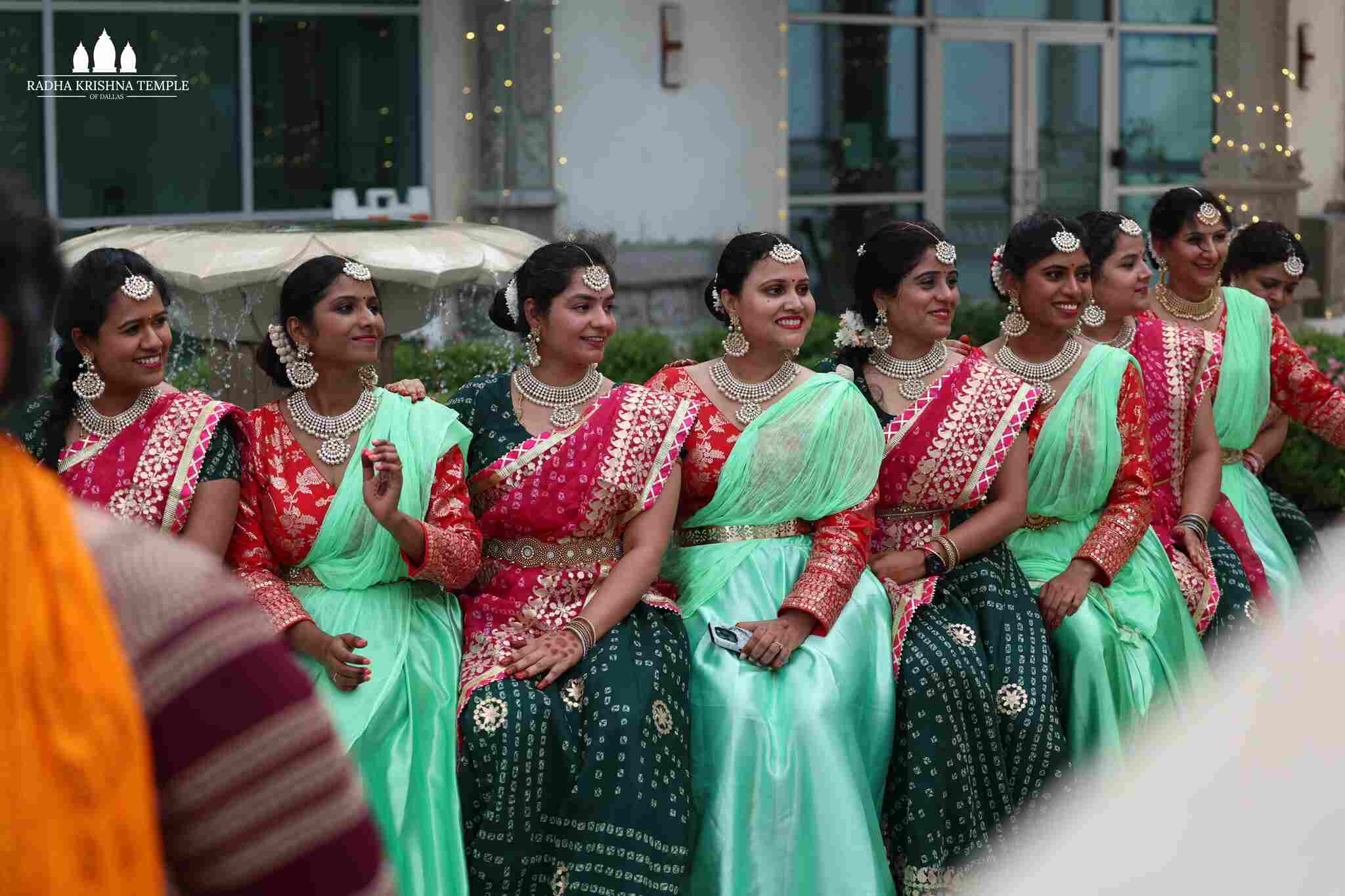
Celebrate the divine presence of Lord Ganesha at the Radha Krishna Temple of Dallas (Allen)! Join us for Ganesh Chaturthi, soul-enriching Kirtans, Aarti, Modak Making, and more!
✨ Event Highlights ✨
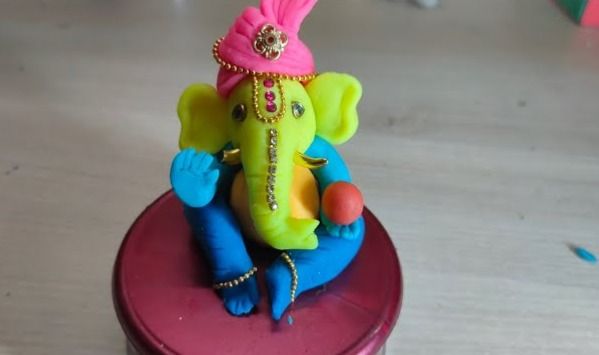
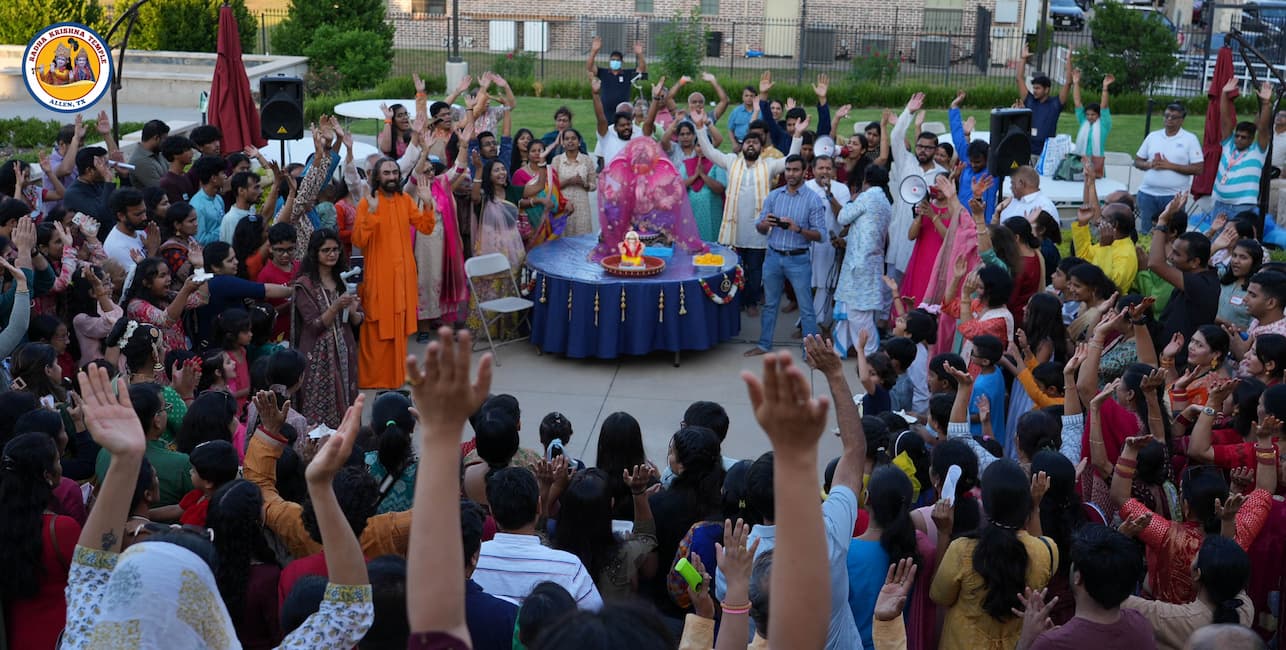
Ganesh Sthaapana & Pooja
Sacred installation and collective worship with powerful Vedic mantras.
Join Us
🎁 Sponsorship Opportunities
Support the event by sponsoring Pooja, Mahaprasad, or Grand Offerings. Your contribution helps keep this divine tradition alive!
🪔 Bring flowers, fruits, and prasad • 🙏 Become a Yajman • 🎁 Sponsor a Seva
📚 References
- Ganesh Purana and Mudgala Purana – Primary scriptures detailing the birth and deeds of Lord Ganesha.
- Shiva Purana – Accounts of Lord Ganesha’s creation by Goddess Parvati and his role as remover of obstacles.
- Skanda Purana – Narratives explaining Lord Ganesha’s first-worship status and festival observances.
- Mahabharata – Story of Vyasa dictating the epic to Lord Ganesha.
❓ FAQs
Q1. Why do we avoid looking at the moon on Ganesh Chaturthi?
According to Vrata Katha, Lord Ganesha cursed the moon for mocking him, leading to false accusations for those who see it. Narrating the Syamantaka Jewel story removes the curse’s effect.
Q2. Why is Lord Ganesha worshipped first in all rituals?
Because in a divine contest, Lord Ganesha circled his parents, symbolizing the universe, proving that wisdom and devotion outweigh physical power. Since then, no ritual begins without his blessings.
Q3. Why is modak considered Lord Ganesha’s favorite sweet?
The modak symbolizes the sweetness of spiritual wisdom hidden inside the challenges of life. Offering modaks is an act of devotion and humility.
Q4. What does immersing the idol in water symbolize?
It represents the cycle of creation and dissolution—reminding devotees of life’s impermanence and the eternal presence of the divine beyond form.
Q5. What is the deeper meaning of Ganesh Chaturthi rituals?
Each ritual reflects a spiritual lesson: humility (Kubera story), devotion (birth story), wisdom (Mahabharata), and surrender (immersion). Together, they guide devotees toward spiritual growth.