

Introduction: A Hymn of Devotion Beyond Time
Among the most beloved and widely recited spiritual hymns in the world is the Hanuman Chalisa, a 40‑verse devotional composition that celebrates the virtues, courage, and loving, selfless service of Lord Hanuman, the great devotee of Lord Rama. Written in the 16th century by the saint‑poet Goswami Tulsidas, this powerful chant has echoed through innumerable temples, homes, and spiritual gatherings for centuries, acting as both a shield for the faithful and a guidepost for sincere seekers of truth.
However, beyond the poetic verses lies something far deeper: a message of selfless love, unwavering dedication, and complete surrender to the Divine. This blog explores not just the literal meaning of the Hanuman Chalisa, but its devotional core, its lessons for everyday life, and the transformative power it offers, especially when understood through the lens of selfless love and service taught by spiritual luminaries like Swami Mukundananda.
The Story Behind the Hymn

The Hanuman Chalisa was composed in the Awadhi language by Goswami Tulsidas, a revered saint and poet devoted to Lord Rama, whose devotional epic Ramcharitmanas remains a treasure of spiritual literature.
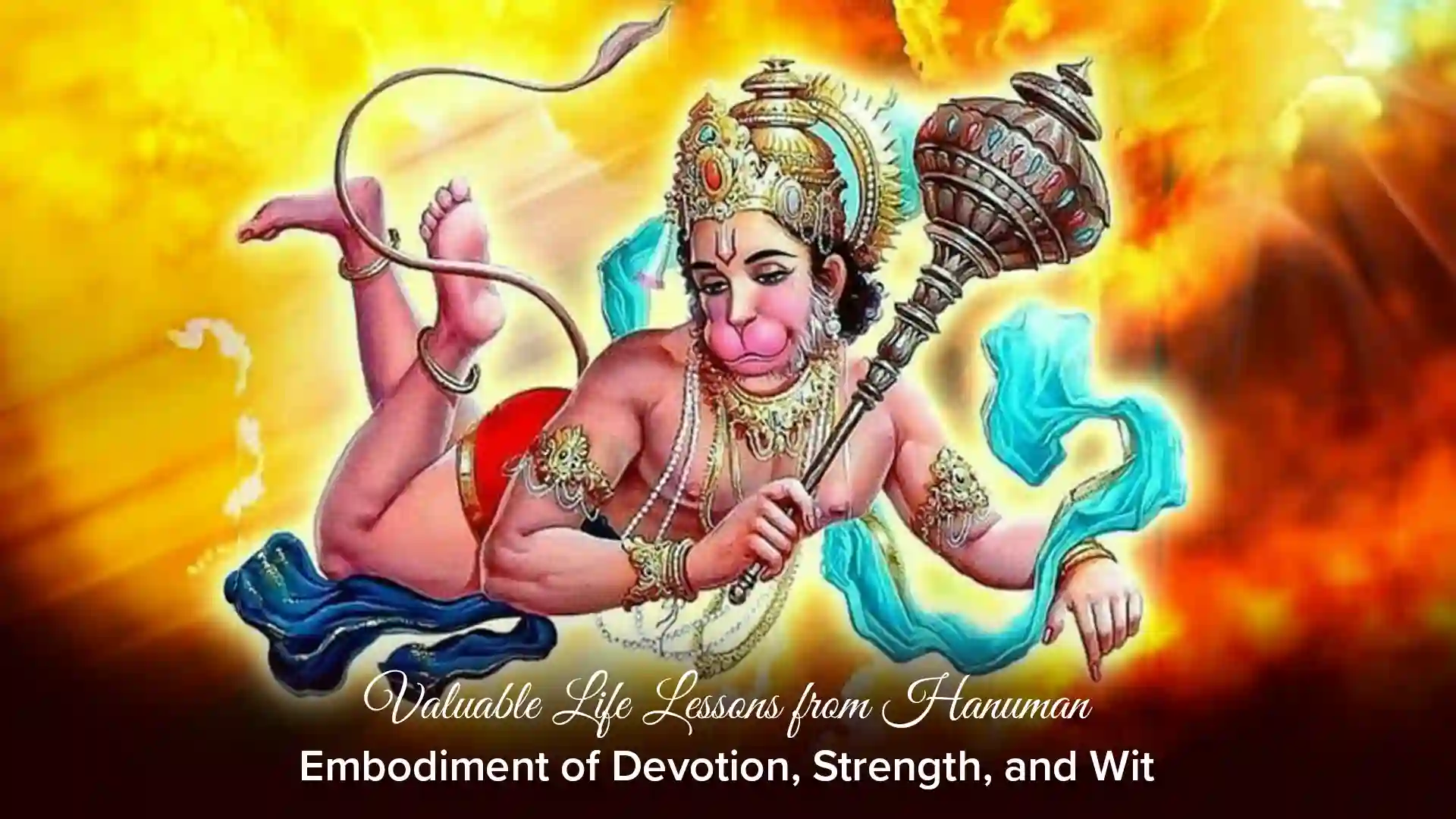
Lord Hanuman, whom the Chalisa praises, is one of the most iconic figures of the Ramayana: a text that recounts the life and divine mission of Lord Rama. Hanuman is celebrated not as a distant deity but as an intimate expression of pure devotion (bhakti), strength of spirit, and loving obedience. His life story exemplifies what it means to live in constant remembrance of the Divine, to serve others selflessly, and to act with humility even in moments of great triumph.
The Chalisa encapsulates Hanuman’s life; his feats, his virtues, his superhuman courage, and, above all, his unshakable devotion to Lord Rama. Each verse paints a picture of his inner and outer journey, making the hymn not only a prayer but a roadmap for devotional living.
The Heart of the Hymn: Eternal Love and Devotion

1. The Essence of Bhakti in Hanuman’s Life
What sets Hanuman apart in the spiritual pantheon is not merely his strength or valor, but his single‑minded dedication to Lord Rama. In every act, from the search for Sita to the burning of Lanka, Hanuman’s motivation is never for personal glory but for the satisfaction of his Lord.
This is the essence of Bhakti: seeing God in everything, loving without condition, and surrendering the ego so that one’s life becomes an act of service. Swami Mukundananda teaches that true love is never self‑wanting, it is self‑giving, and this is precisely what Hanuman embodies: he sees divinity in the beloved Lord, yet chooses service over self‑interest. His love for Rama becomes his identity.
2. Love That Transcends the Self
In the Hanuman Chalisa, Hanuman is described not just as strong and wise but as a repository of love and devotion: virtues that carry even greater importance than physical strength or mental acuity. The Chalisa begins with a prayer for the cleansing of the mind and an invocation of Hanuman’s grace, reminding us that the journey of devotion starts within, by purifying our thoughts and opening our hearts to the Divine presence.
In Swami Mukundananda’s teachings, devotion is not merely sentiment but a transformative force; one that softens the ego, expands the heart, and enables us to see every soul as part of the greater whole. When we chant with this consciousness, devotion becomes not just an emotion but a way of life.
Understanding the Chalisa’s Devotional Themes

1. The Ocean of Devotion (Gyan Gun Sagar)
The very first chaupai celebrates Hanuman as the “ocean of knowledge and virtues,” proclaiming his glories, not his might or fame, but his spiritual wisdom and loving service. In this praise, we are encouraged to cultivate the same qualities within ourselves.
Devotion begins with recognition, by seeing the divine in others and letting that vision inform every thought and action. Hanuman’s life demonstrates that when devotion becomes our anchor, our tasks in life, no matter how difficult, are undertaken with courage rather than fear.
2. The Bridge from Mind to Heart
The Hanuman Chalisa does not merely describe Hanuman’s deeds; it invites us into the inner landscape of his consciousness. His consciousness is anchored in love, service, and surrender. Each verse expands our awareness of these qualities:
- Strength born of devotion: Hanuman’s bravery emerges not from ego but from love.
- Wisdom rooted in service: His intellect is subordinated to compassion.
- Courage sourced from surrender: His courage is not self‑assertion but surrender to duty.
Thus, the Chalisa connects the head and the heart, guiding the seeker from intellectual understanding to heartfelt devotion, a core principle in Swami Mukundananda’s teachings, which emphasize that real spirituality is not theory but love that is realised and practiced.
3. Love That Serves
Hanuman didn’t worship Lord Rama from a distance but served Him tirelesslly, including through the greatest of hardships, such as his leap across the ocean to Lanka and his rescue of Lakshmana by bringing the life‑saving herb Sanjivani.
This is love in action: not sentimental, not passive, but active service for the benefit of another. It demonstrates that when love is selfless, it transcends fear, limitation, and personal comfort. Swami Mukundananda often explains that service is the highest expression of love, and here Hanuman gives us the perfect example.
The Spiritual Benefits of Chanting the Hanuman Chalisa

Reciting the Hanuman Chalisa is more than ritual, it is a vibrational gateway to qualities such as courage, steadfastness, inner peace, and divine protection. Millions around the world recite it daily as a source of strength and refuge.
1. Inner Transformation Over Time
When recited with devotion and contemplation of its meaning, the Chalisa becomes a method of inner transformation by helping cleanse the mind, sharpen devotion, and cultivate emotional resilience. Many practitioners report that regular chanting with devotion creates a profound sense of peace, clarity, and purpose.
2. Protection in Turbulent Times
Traditional belief and lived experience both suggest that chanting the Chalisa provides protection; a shield against negativity, fear, and inner turmoil. This is not magical thinking but an experiential reality: through devotion, the mind becomes calmer, the heart purer, and the soul more aligned with divine will.
3. A Path to Courage and Confidence
Hanuman’s presence dissolves fear, not by removing challenges, but by infusing us with the strength to face them courageously. Chanting the Chalisa connects us to this spirit of the Lord, reminding us that inner fear can only be overcome by inner strength grounded in love.
Life Lessons from Hanuman’s Example
1. Devotion Over Distraction
Hanuman’s life teaches that what we place in the center of our heart dictates our life’s direction. When devotion is central, distraction and discord fall away. Swami Mukundananda teaches that a devotee’s mind should be fixed upon the Divine, not out of obligation, but out of love.
2. Service Above Self
Hanuman does not serve for reward. He serves because love doesn’t calculate, it gives freely. This is the essence of selfless service and it is the foundation of a purposeful life. In his teachings, Swami Mukundananda echoes this truth: service transforms the server first.
3. Resilience Through Surrender
Hanuman faced trials without fear not because he was invincible, but because he believed that surrender to the Divine grants inner resilience. Prayer, study, and meditation are not escapes from life but tools to engage life with courage born of devotion.
Practicing the Hanuman Chalisa in Daily Life
1. Begin with Contemplation
Don’t just recite, reflect. Take moments before or after chanting to contemplate Hanuman’s qualities and consider how they might manifest in your life. This approach transforms chant into practice.
2. Let Devotion Lead Your Actions
Let devotion guide your actions, not abstractly, but practically. Serve others with compassion, stand up for what is right, and act courageously even in the face of adversity. This is how Hanuman’s spirit lives through us.
3. Use the Chalisa as a Meditation Tool
Chanting can be meditative, not merely verbal repetition, but a heartfelt calling toward the Divine within and without. This aligns beautifully with Swami Mukundananda’s emphasis on transforming everyday life through spiritual practice.
FAQs
1. What is the Hanuman Chalisa?
It is a 40‑verse devotional hymn written by Goswami Tulsidas in praise of Lord Hanuman, celebrating his virtues, strength, wisdom, and devotion.
2. Who benefits from chanting the Hanuman Chalisa?
Anyone’s life can be uplifted by chanting, as it fosters courage, inner peace, resilience, clarity of purpose, and divine connection.
3. How should one chant the Chalisa?
Chant with sincerity, understanding of meaning, and devotion. Morning or evening is ideal, but heartfelt chanting at any time is powerful.
4. Is it necessary to know the meaning to benefit?
While meaning deepens the experience, even recitation with faith opens the heart and mind to transformation.
5. How is Hanuman a model for selfless love and service?
Hanuman’s entire life demonstrates devotion that is loving, active, selfless, and wholly surrendered. This is a model for approaching life with dedication and compassion.
Call to Action
If the story of Hanuman and the Hanuman Chalisa has touched your heart, make it a part of your daily spiritual practice. Start a 21‑day chanting journey: commit to reciting the Chalisa with devotion and contemplation of its meaning. Join a community, attend a satsang, or explore guided recitations to deepen your experience.
Like Hanuman, let your life become an offering of love, courage, and selfless service, not only in prayer but in every step of your journey.
Further Resources
 JKYog Team