

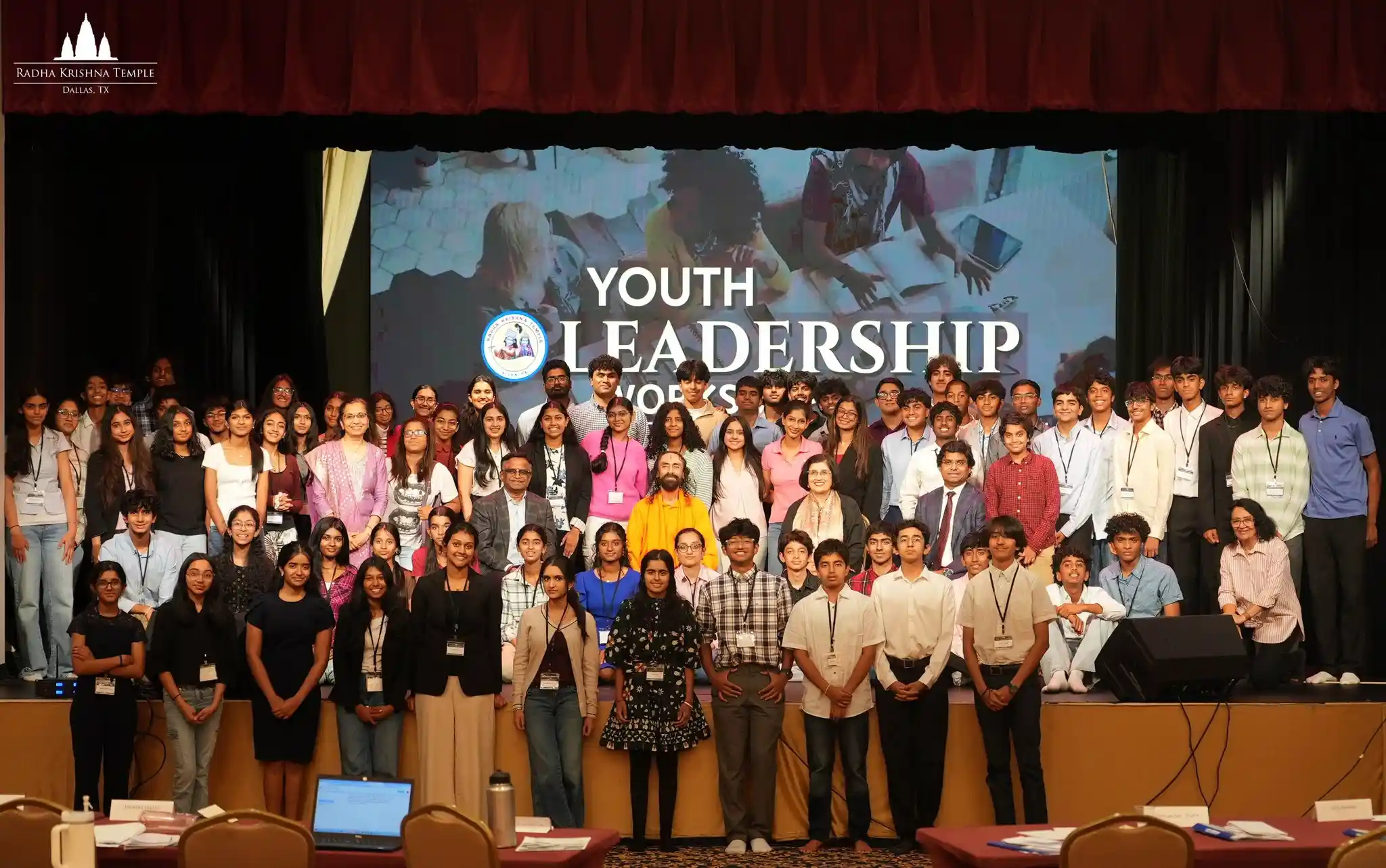
What does it take for today’s youth to become tomorrow’s leaders?
Inside the grand hall of Radha Krishna Temple Dallas, young participants sat around round tables with laptops, notebooks, name placards, and ideas waiting to take shape. The atmosphere felt like a professional leadership conference, yet it carried the warmth of a values-based spiritual community. They were not there simply to listen. They were there to question, collaborate, solve problems, present ideas, and discover how leadership begins from within.
Held on May 28 and 29, 2026, the Youth Leadership Workshop at Radha Krishna Temple Dallas brought together high school and college students for a powerful 2-day experience centered on the theme “Be the Change: Learn. Lead. Lift.” With guidance from Swami Mukundananda and sessions led by mentors, entrepreneurs, professors, and industry experts, the workshop helped students build real-world skills while staying rooted in purpose, character, and service.
The program addressed a reality many students face today: academic achievement is important, but it is no longer enough by itself. Today's youth also need communication skills, emotional intelligence, teamwork, practical problem-solving, entrepreneurial thinking, AI fluency, and the ability to act with purpose. Through expert-led sessions, team activities, and hands-on challenges, the workshop created a space where these skills could be learned in action.
What made the event especially meaningful was its balanced approach. It combined professional skill-building with values, self-growth, and service. Participants learned how to think about careers and innovation while also reflecting on character, discipline, fulfillment, and the larger purpose of success.
🌟 Quick Highlights from the Workshop
The 2026 Youth Leadership Workshop gave students a hands-on leadership experience through:
- 🧭 Guidance from Swami Mukundananda on purpose, discipline, and fulfillment
- 🤖 Expert sessions on AI, emotional intelligence, communication, and real-world readiness
- 💡 A Shark Tank style business challenge where students developed and pitched ideas
- 🤝 Team-building activities and student presentations
- 🎓 Mentorship from entrepreneurs, professors, and industry professionals
Learn. Lead. Lift.: A Framework for Purposeful Youth Leadership
The theme “Be the Change: Learn. Lead. Lift.” gave the entire workshop a clear and memorable structure.
Learn focused on gaining real-world skills. Students explored communication, business strategy, research, emotional intelligence, artificial intelligence, problem-solving, and presentation techniques. These are the tools that help youth succeed in school, college, internships, entrepreneurship, and future careers.
Lead encouraged students to take responsibility for their own growth. The workshop presented leadership not as a title, but as a way of thinking and acting. A young leader learns to make thoughtful decisions, work well with others, stay disciplined, and face challenges with maturity.
Lift gave the workshop its deeper meaning. Students were reminded that leadership is not only about personal success. It is also about uplifting others. The workshop encouraged youth to ask how their talents, education, and ideas can contribute to society.
This three-part theme helped connect every part of the program. Whether students were listening to Swamiji, learning from professionals, working on a business pitch, or participating in a team activity, the message remained consistent: learn with sincerity, lead with courage, and lift others with compassion.
A Workshop for High School and College Students
The Youth Leadership Workshop was designed for high school and college students, especially youth preparing for college, internships, entrepreneurship, leadership roles, and future careers. It was especially relevant for students in 9th grade and above, as well as college-level participants.
This age group is at an important stage of life. High school students are exploring interests, building skills, and preparing for college, while college students are developing career direction, professional habits, and leadership experience. By bringing both groups together, the workshop created a dynamic environment where younger students could gain early exposure and older students could deepen their readiness for the future.
By bringing both groups together, the workshop created a dynamic environment where younger students could gain early exposure and older students could deepen their readiness for the future
“Leadership does not begin with a title. It begins with self-growth, responsibility, and service.”
Swami Mukundananda’s Guidance: Leadership from the Inside Out
While the workshop offered professional tools for communication, AI, entrepreneurship, and teamwork, its deepest foundation came from Swami Mukundananda’s guidance. He helped students understand that true leadership begins not with managing others, but with mastering oneself.
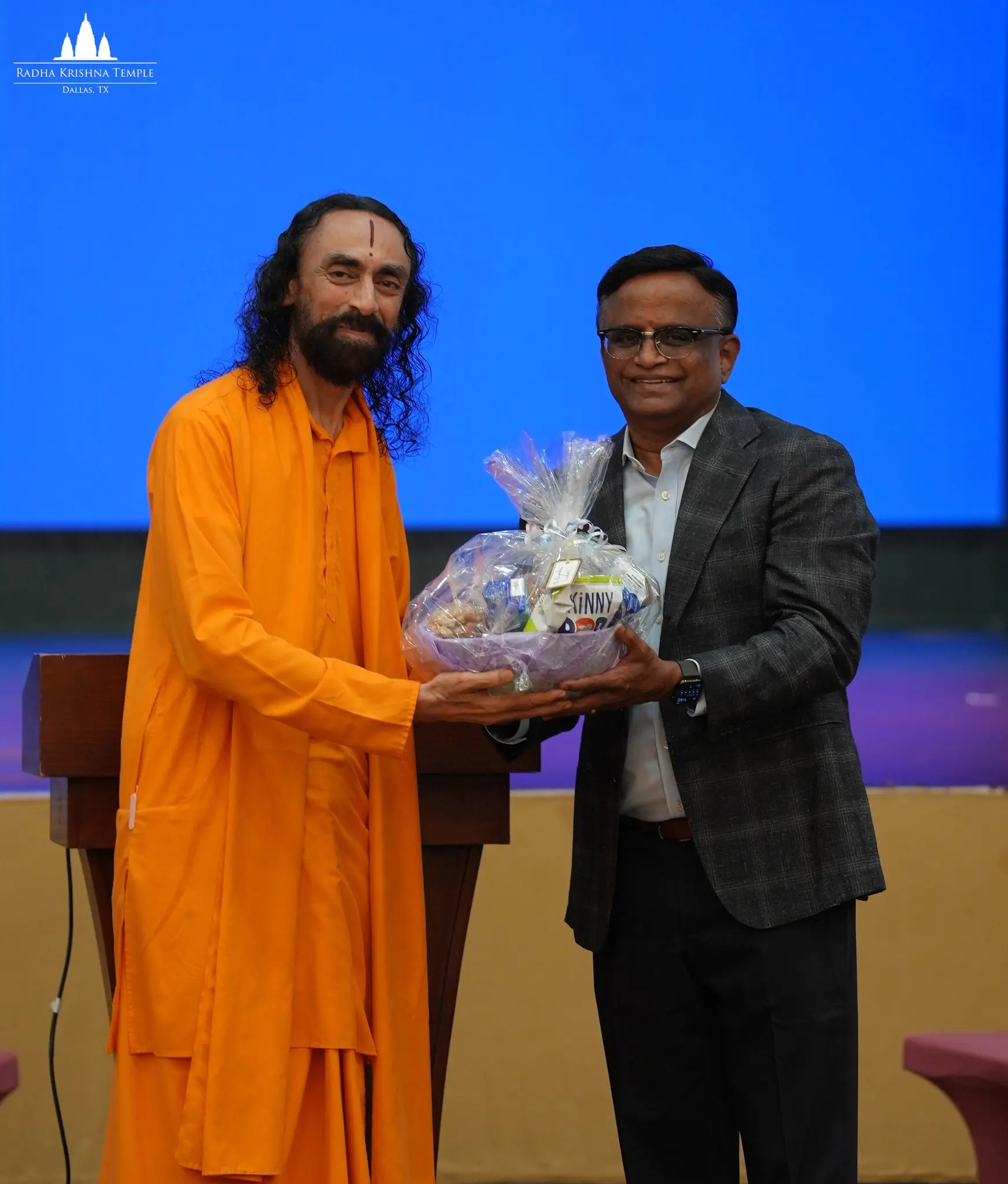
A central highlight of the workshop was the presence and guidance of Swami Mukundananda. As a global spiritual leader, author, IIT and IIM alumnus, mind management expert, and founder of JKYog and Radha Krishna Temple Dallas, Swamiji brought a unique blend of spiritual wisdom, intellectual depth, and practical leadership insight.
His sessions helped students understand that leadership begins within. Before a person can guide others, manage projects, or influence society, they must learn to manage themselves. This includes developing clarity, discipline, humility, emotional balance, and a strong sense of purpose.
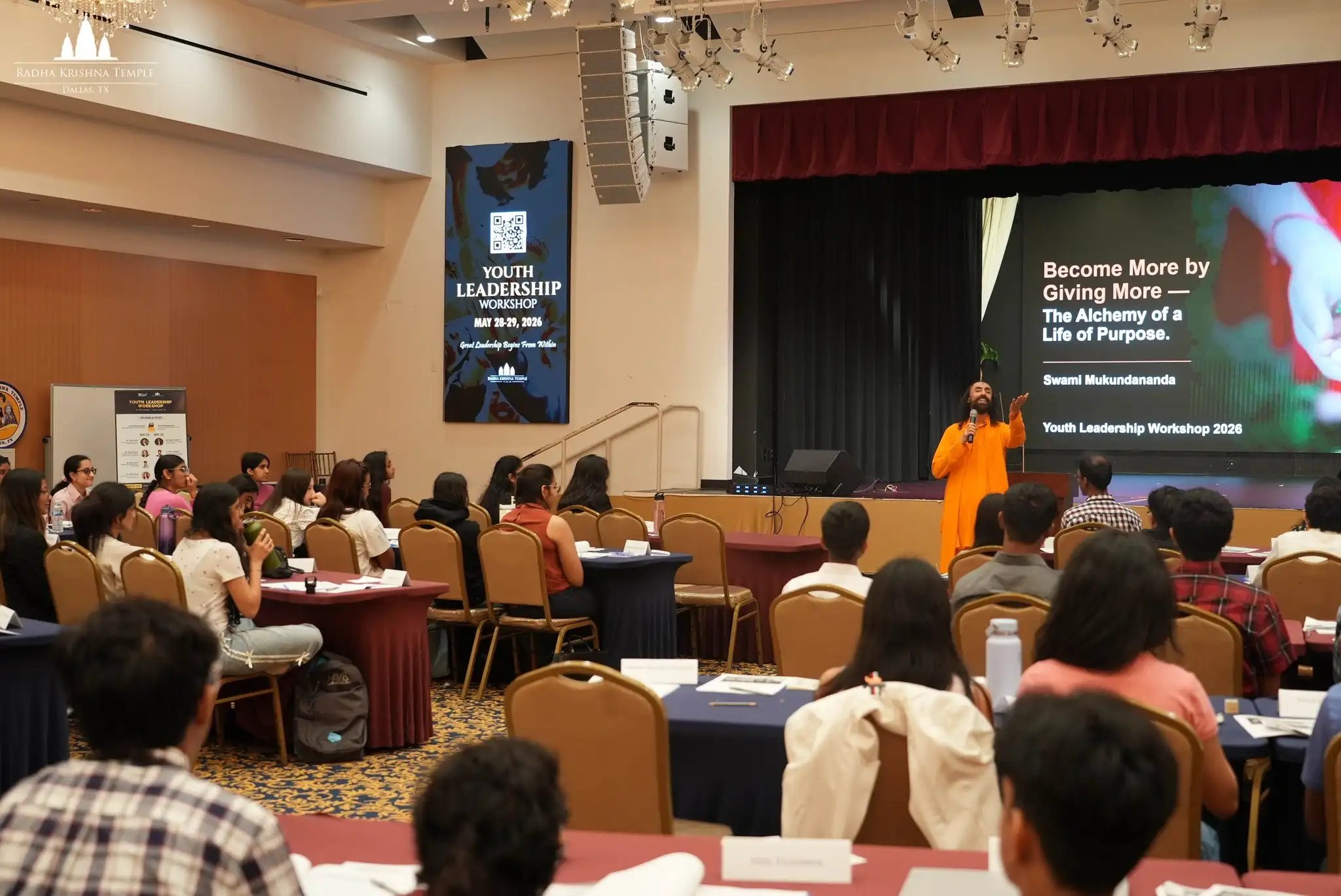
One of Swamiji’s key session themes was “The Three Steps of Impact: Grow, Guide, and Give.” This simple framework gave students a powerful way to understand leadership.
To Grow means to develop oneself first. Students were encouraged to build good habits, strengthen their minds, and continue learning.
To Guide means to use one’s growth to help others. Leadership is not about control or ego. It is about inspiring, supporting, and directing others toward something positive.
To Give means to use one’s abilities in service. A person’s success becomes more meaningful when it benefits others and contributes to a higher goal.
Another powerful message from Swamiji’s session was “Leadership is the Difference Between Success and Fulfillment.” This idea helped students reflect on the difference between achieving goals and living a meaningful life. Many young people are taught to pursue grades, awards, college admissions, careers, and recognition. Swamiji reminded them that outer success alone may not bring inner satisfaction. Fulfillment comes when achievement is connected with values, service, and purpose.
Through his guidance, students were encouraged to become not only successful individuals, but thoughtful and compassionate contributors to the world.
Purpose and Service: The Heart of Leadership
One of the defining features of the Youth Leadership Workshop was its emphasis on purpose and service. Many programs teach students how to achieve success, but this workshop also helped them reflect on why success matters.
“The workshop reminded students that success becomes meaningful when it is guided by purpose.”
The “Lift” pillar was especially important. It encouraged students to look beyond competition and ask, “How can I use my talents to help others?” This question gave the workshop a deeper foundation.
Through Swamiji’s teachings, youth learned that ambition becomes more powerful when it is guided by values. A student may become skilled, confident, and successful, but the highest form of leadership is to use those strengths for the benefit of others.
This message was especially relevant for high school and college students. At this stage of life, they are beginning to make important decisions about education, career, identity, and personal goals. The workshop encouraged them to think not only about what they want to become, but also about what kind of impact they want to make.
A Professional and Immersive Learning Environment
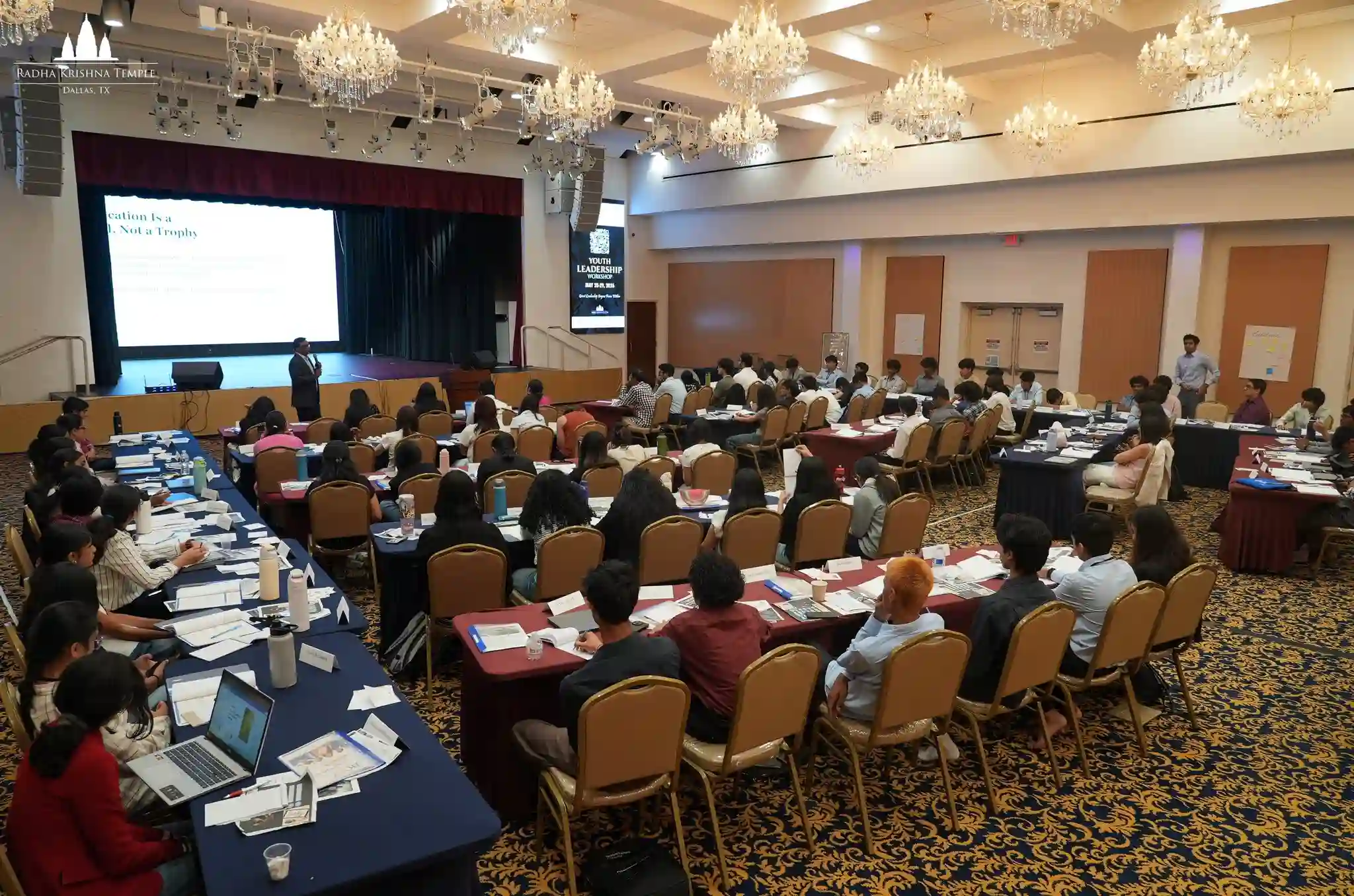
The workshop was carefully organized to give students a focused and professional experience. The hall was arranged with round tables to encourage discussion and teamwork. Presentation screens displayed session topics, project guidelines, and learning frameworks. Students came prepared with laptops or Chromebooks and participated in structured sessions throughout the 2 days.
This setup helped students feel that they were part of a serious leadership experience. The event was not passive. Participants listened, discussed, collaborated, planned, presented, and reflected.
The in-person format added great value. Students could interact directly with speakers and mentors, work alongside peers, and take part in activities that required communication and coordination. In a time when much learning happens online, the face-to-face setting helped create deeper engagement.
Breakfast and lunch were also included, giving participants time to connect informally. These moments outside the formal sessions allowed students to meet peers, ask questions, and build relationships in a relaxed setting.
Learning from Leaders, Professors, and Industry Experts
A major strength of the workshop was the opportunity to learn from a distinguished group of leaders, professors, entrepreneurs, and professionals. Their presence gave the program credibility, variety, and a strong real-world dimension.
Along with Swami Mukundananda, the workshop featured Dayakar Puskoor, founder of Dallas Venture Capital and a serial entrepreneur and investor focused on AI-first startups. His involvement was especially valuable for students participating in the Shark Tank style business challenge. He brought the perspective of an investor and entrepreneur who understands what makes ideas practical, scalable, and competitive.
Students also learned from Dr. Gopal Gupta, professor of computer science and co-director of the Center for Applied AI and Machine Learning at UT Dallas. His presence connected the workshop with artificial intelligence, research, and technology-driven innovation. For students preparing for the future, this connection between AI and leadership was highly relevant.
The program also included Dr. Gaurav Shekhar, who contributed to the discussion on artificial intelligence and the importance of human judgment in a technology-driven world. His session helped students think about the role of actual intelligence in the age of artificial intelligence.
Ms. Debjani Biswas brought expertise in emotional intelligence and leadership from within. Her session helped students understand that self-awareness, empathy, and emotional balance are essential for young leaders.
Prof. Jeff Willie contributed to the broader leadership and mentorship experience, helping students see leadership through the lens of communication, influence, and personal development.
Ms. Deepika Mettu addressed real-world readiness, focusing on the practical skills students are expected to have but are not always directly taught.
Mr. Manish Gorre guided students in areas such as business communication, research, and presenting ideas effectively. His contribution was especially connected to the business challenge and student presentations.
The workshop also featured Dr. Vaidy Jayaraman and Mr. Satish Gupta, who added to the program’s leadership, mentorship, and professional learning environment.
Together, these speakers gave students exposure to multiple fields, including entrepreneurship, AI, emotional intelligence, communication, business strategy, research, education, and service. This variety helped students understand that leadership is not limited to one career path. It is needed in every field.
From Ideas to Action: The Shark Tank Style Business Challenge
One of the most exciting parts of the workshop was the Shark Tank style business challenge. This activity gave students the chance to move from learning to action.
Participants worked in teams to develop original business ideas, think through real-world problems, prepare a plan, and present their concepts. The challenge required creativity, research, teamwork, communication, and practical thinking.
This activity was valuable because it gave students a direct experience of entrepreneurship. They learned that a strong idea needs more than enthusiasm. It must solve a problem, serve a need, stand out in the market, and be explained clearly.
The involvement of mentors and professionals such as Dayakar Puskoor made the challenge especially meaningful. Students were not just pretending to pitch an idea. They were learning how entrepreneurs and investors evaluate concepts in the real world.
The challenge also helped students practice public speaking under pressure. Presenting an idea to others requires preparation, confidence, and clarity. For many participants, this may have been one of their first experiences pitching a business concept in a serious setting.
The Project Rubric: Clear Standards for Student Teams
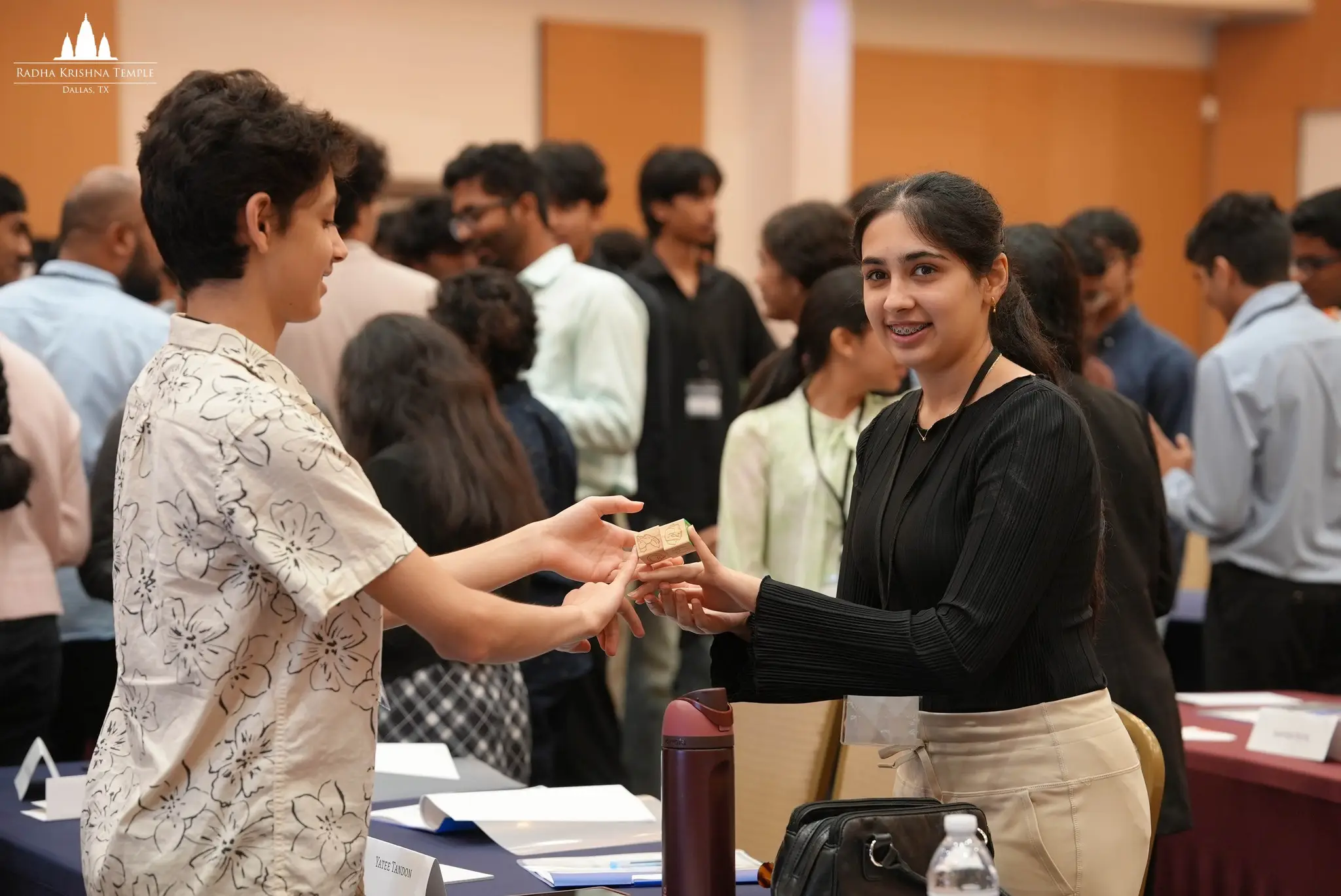
The workshop included a formal project rubric, which gave students clear expectations for their team presentations. This made the business challenge more structured and meaningful.
The rubric evaluated students across several categories, each worth 10 points.
Originality focused on creative ideas, a unique approach, market understanding, and alignment with the workshop theme. This encouraged students to think beyond common solutions and develop ideas with fresh value.
Uniqueness looked at the quality of research, innovation, and preparation based on a clear design or plan. Students had to show that their ideas were not only interesting, but also carefully developed.
Practicality evaluated whether the idea could realistically work. Teams had to consider challenges, execution, and a well-integrated action plan. This helped students connect imagination with real-world implementation.
Team Work assessed collaboration within and outside the team, as well as openness to different perspectives. This reminded students that strong projects often come from shared effort, not individual work alone.
Presentation focused on clear articulation, smooth delivery, and audience engagement. Students learned that even the best idea needs effective communication to make an impact.
The rubric was one of the strongest parts of the workshop because it taught students what quality work looks like. Creativity, research, practicality, collaboration, and presentation were all treated as essential.
Thinking Like Entrepreneurs: “Do You Have a Moat?”
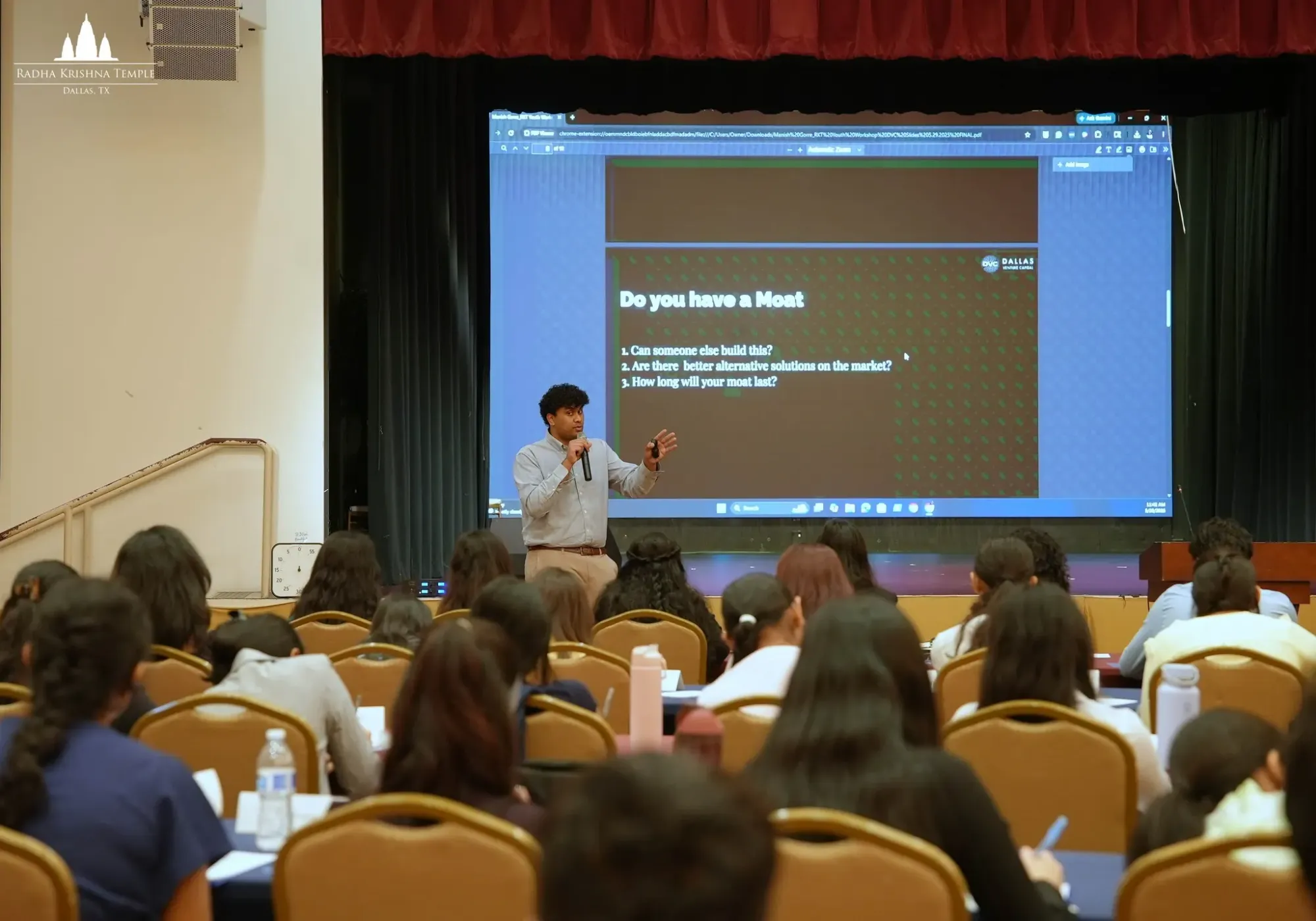
Another memorable session asked students an important business question: “Do you have a Moat?”
In entrepreneurship, a moat refers to a competitive advantage that protects an idea, product, or business from being easily copied or replaced. This concept helped students think more deeply about their business ideas.
The session asked questions such as:
Can someone build this?
Are there better alternative solutions on the market?
How long will your moat last?
These questions helped students move beyond the excitement of having an idea. They had to think about competition, market demand, alternatives, and long-term value. This is the kind of thinking entrepreneurs and investors use when evaluating a business.
The moat discussion connected naturally with the Shark Tank style challenge. It helped students strengthen their pitches by asking whether their ideas were truly useful, different, and sustainable.
Emotional Intelligence: Leading from Within
The workshop also included an important focus on emotional intelligence. Ms. Debjani Biswas contributed to this area through a session on leading from within.
Emotional intelligence is the ability to understand oneself, manage emotions, listen to others, and respond with maturity. For students, this skill is essential. High school and college life can bring academic stress, peer pressure, uncertainty, and many important decisions.
By learning about emotional intelligence, students were encouraged to become more aware of their thoughts, reactions, and relationships. They learned that effective leadership requires more than intelligence or ambition. It also requires empathy, patience, and self-control.
This session added a human dimension to the workshop. It reminded students that how they treat others, handle challenges, and respond to pressure matters as much as what they achieve.
AI Fluency with Human Wisdom
Artificial intelligence was another important topic at the workshop. With speakers such as Dr. Gopal Gupta and Dr. Gaurav Shekhar, students were exposed to the role of AI in the future of education, business, research, and careers.
AI is rapidly changing the world students are preparing to enter. It can help with research, writing, coding, data analysis, creativity, and problem-solving. However, the workshop emphasized that AI must be guided by human judgment.
One powerful idea discussed was the role of actual intelligence in the world of artificial intelligence. Actual intelligence includes critical thinking, ethics, creativity, curiosity, empathy, and wise decision-making. AI may provide tools, but human beings must decide how to use them responsibly.
This lesson was especially important for youth. Students need to become fluent in technology, but they also need to remain grounded in values. The future will need leaders who can use AI effectively without losing sight of human purpose and responsibility.
Communication, Research, and Presentation Skills
Communication was a key part of the workshop, especially in the business challenge and team presentations. Mr. Manish Gorre played an important role in helping students understand how to communicate ideas effectively and conduct research for creative projects.
Students learned that a good idea must be organized before it can be shared. They had to think about the problem they were solving, the audience they were addressing, the research behind their idea, and the way they would present it.
This training was useful beyond the workshop. Students can apply these skills in school presentations, college interviews, internships, competitions, club leadership, and future careers.
The presentation category in the project rubric reinforced this lesson. Students were evaluated not only on what they created, but also on how clearly and confidently they communicated it.
Real-World Readiness
Another important part of the workshop focused on practical skills that students are often expected to know but may not be formally taught. Ms. Deepika Mettu contributed to this area through her focus on real-world readiness.
Students need more than textbook knowledge to succeed. They need to know how to communicate professionally, manage responsibilities, work with teams, think through problems, and present themselves with confidence.
The workshop helped participants understand that preparation for the future begins now. Whether they are applying to college, preparing for internships, joining student organizations, or exploring careers, these real-world skills can make a major difference.
This practical focus made the workshop especially useful. Students could take what they learned and begin applying it immediately in their academic and personal lives.
Team-Building Through Interactive Activities
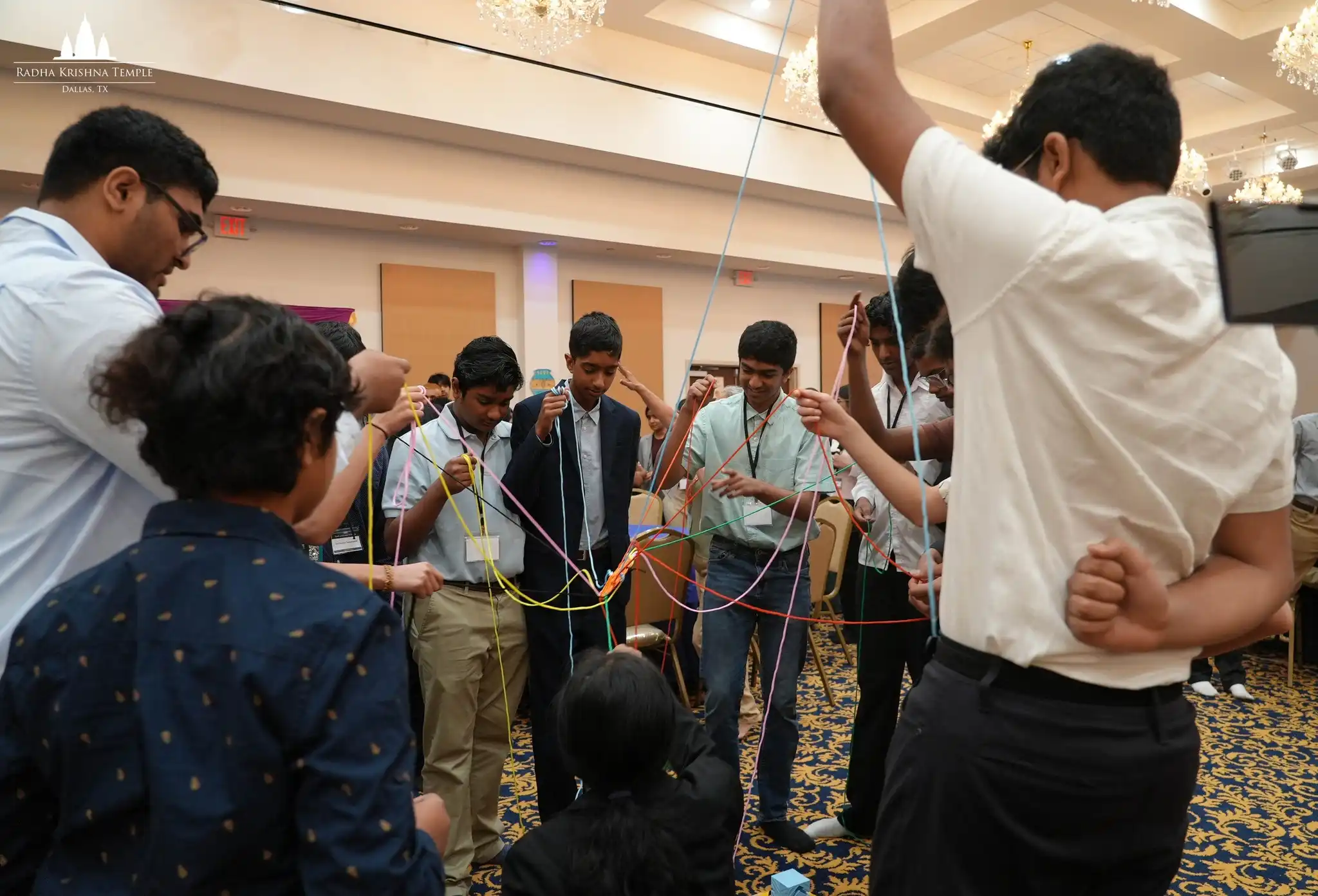
One of the most engaging visual highlights of the workshop was the team-building activity with colorful strings. Students stood in a circle, each holding part of the string network, working together to complete the activity.
This exercise gave students a direct experience of teamwork. When one person moved, it affected others. The group had to communicate, coordinate, listen, and adjust together.
Activities like this are powerful because they turn abstract lessons into lived experience. Students did not simply hear that teamwork matters. They felt how collaboration works in real time.
The activity also showed that leadership is not always about speaking first or taking control. Sometimes it means listening carefully, staying aware of others, and contributing to a shared goal.
Mentorship and Networking
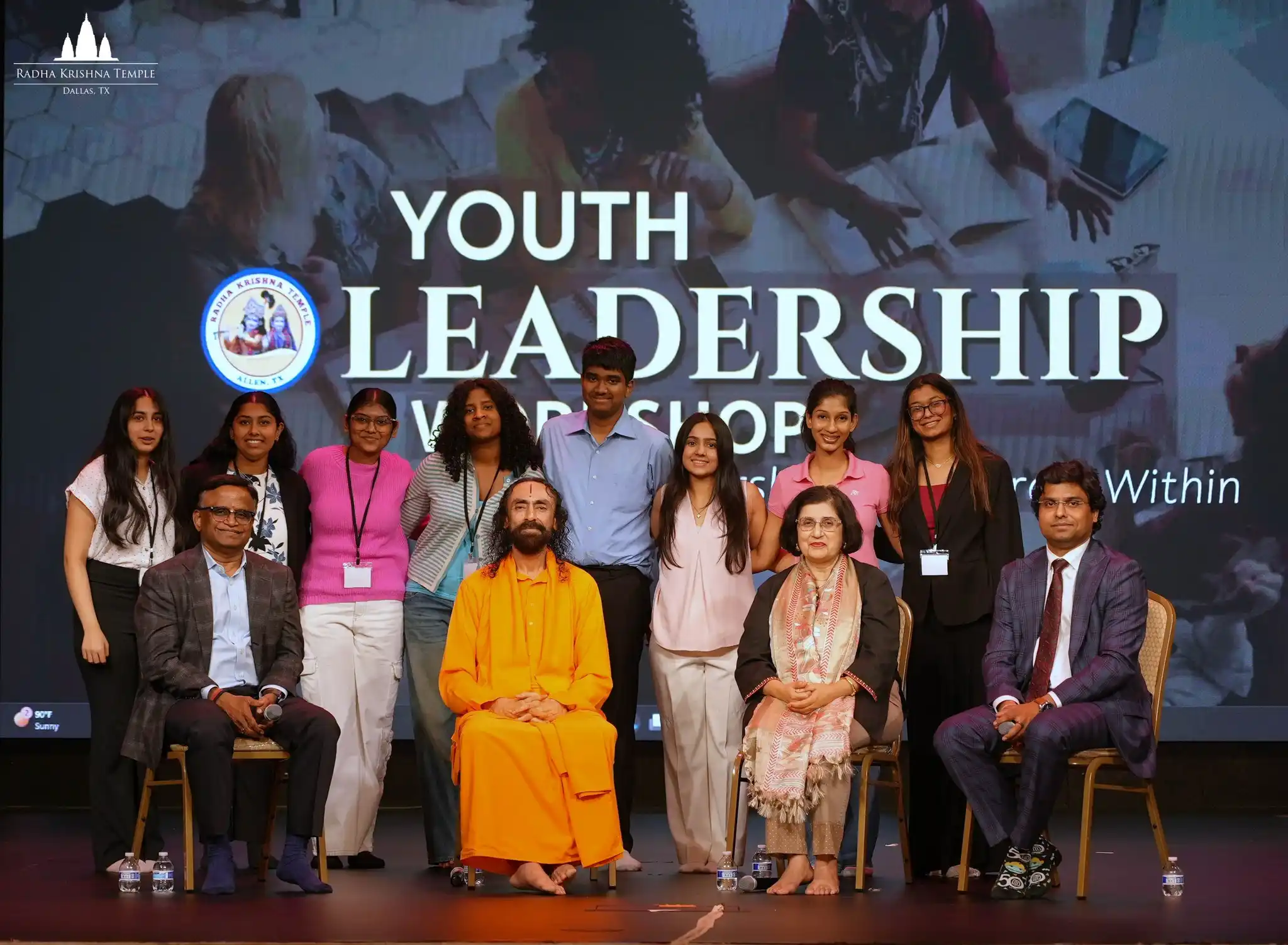
The workshop also gave students the opportunity to connect with mentors, speakers, professionals, and peers. This was an important part of the experience.
For youth, mentorship can be life-changing. A conversation with an experienced professional can help a student understand a career field, refine an idea, or gain direction. Meeting peers with similar interests can also create motivation and support.
The panel discussion and networking opportunities allowed students to engage with leaders such as Swami Mukundananda, Dayakar Puskoor, Dr. Gopal Gupta, Dr. Gaurav Shekhar, Ms. Debjani Biswas, Prof. Jeff Willie, Ms. Deepika Mettu, Mr. Manish Gorre, Dr. Vaidy Jayaraman, and Mr. Satish Gupta.
These interactions helped students see leadership in real people, not just in theory. They could observe how professionals think, communicate, solve problems, and guide others.
The Role of Radha Krishna Temple Dallas
The Radha Krishna Temple of Dallas served as more than the venue for the workshop. It provided a values-based environment where youth could learn practical skills while staying connected to spirituality, community, and service.
This setting made the workshop different from a typical career or business program. Students were encouraged to become capable and successful, but also grounded, thoughtful, and compassionate.
The temple’s role reflected its larger commitment to youth development. By hosting a program that combined Swamiji’s guidance, expert mentorship, entrepreneurship, AI, emotional intelligence, and teamwork, Radha Krishna Temple Dallas created a meaningful platform for the next generation.
The environment reminded students that leadership should be rooted in values. Skills are important, but they become more powerful when guided by ethics, humility, and a desire to serve.
Why the Workshop Matters in 2026
The timing of the 2026 Youth Leadership Workshop is significant. Students are entering a world shaped by rapid technological change, especially artificial intelligence, along with increasing competition in college admissions, career paths, and professional opportunities. In this environment, youth need more than academic instruction. They need real-world preparation, emotional resilience, communication skills, adaptability, creativity, and ethical judgment.
The workshop addressed this need by helping students think beyond exams and applications. Through expert sessions, team activities, AI discussions, business challenges, and Swami Mukundananda’s guidance, participants learned skills they can carry into school, college, internships, startups, community service, and future careers.
This section gives the blog stronger relevance. It explains why the event was not just inspiring, but necessary for today’s students.
What Students Took Home Beyond the Workshop
The impact of the Youth Leadership Workshop likely continued beyond the 2-day event. Students left with practical experiences they could carry into school, college, internships, community service, and future careers.
They learned that a strong idea needs research, strategy, and execution. They saw that teamwork requires listening and respect. They practiced communication through presentations and pitches. They explored AI with an emphasis on human wisdom. They reflected on emotional intelligence, purpose, and service.
Most importantly, the workshop gave youth a clear message: leadership can begin now. Students do not have to wait until adulthood to make a difference. They can start by improving themselves, supporting others, and using their talents thoughtfully.
“Youth do not have to wait for the future to lead. They can begin by growing, guiding, and giving today.”
Conclusion
The 2026 Youth Leadership Workshop at Radha Krishna Temple Dallas was more than a 2-day program. It was a meaningful experience that helped high school and college students discover leadership as a blend of skill, character, purpose, and service.
Through the theme “Be the Change: Learn. Lead. Lift.”, participants gained practical exposure to AI, emotional intelligence, entrepreneurship, communication, teamwork, and real-world readiness. The Shark Tank style challenge, project presentations, mentorship sessions, and team-building activities gave students the opportunity to move beyond listening and actively practice leadership.
Swami Mukundananda’s guidance gave the workshop its deeper foundation. His teachings on “Grow, Guide, and Give” reminded students that true leadership begins within—with self-growth, discipline, clarity, humility, and a desire to uplift others.
By the end of the workshop, young leaders carried home more than notes and ideas. They carried confidence, inspiration, and a clearer sense of purpose. For every participant who attended, the workshop was not just a 2-day event. It was a reminder that leadership begins now, with the courage to learn deeply, lead responsibly, and lift others with purpose.
Call to Action
🌱 Continue the Journey of Youth Leadership
Encourage your student to stay connected with future youth programs at Radha Krishna Temple Dallas. These programs help young minds build confidence, character, leadership skills, and a spirit of service.
✨ Through learning, mentorship, teamwork, and values-based guidance, students are inspired to Learn, Lead, and Lift in every area of life.
The Youth Leadership Workshop showed how youth can grow through Swamiji’s guidance, AI awareness, emotional intelligence, entrepreneurship, teamwork, mentorship, and the Shark Tank style business challenge.
FAQs
1. Who can attend the Youth Leadership Workshop?
The Youth Leadership Workshop is designed for high school and college students, especially youth who are preparing for college, internships, entrepreneurship, leadership roles, and future careers.
2. What is the main theme of the workshop?
The theme is “Be the Change: Learn. Lead. Lift.” Students are encouraged to build real-world skills, develop leadership qualities, and use their talents to make a positive impact.
3. What activities are included in the workshop?
The workshop includes expert-led sessions, interactive team-building activities, mentorship opportunities, AI and emotional intelligence discussions, communication training, and a Shark Tank style business challenge where students work in teams and present ideas.
4. What is Swami Mukundananda’s role in the workshop?
Swami Mukundananda guides students on leadership from the inside out. His sessions focus on self-growth, purpose, discipline, service, and fulfillment, helping youth understand that true leadership begins with inner development.
5. Why should students attend this workshop?
Students should attend because the workshop helps them gain practical skills that are valuable for school, college, internships, careers, and life. It also gives them a chance to learn from inspiring mentors, build confidence, collaborate with peers, and discover how to lead with purpose.