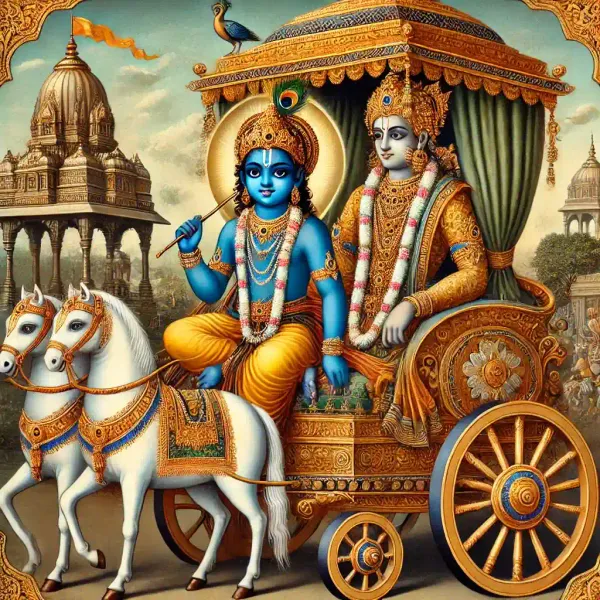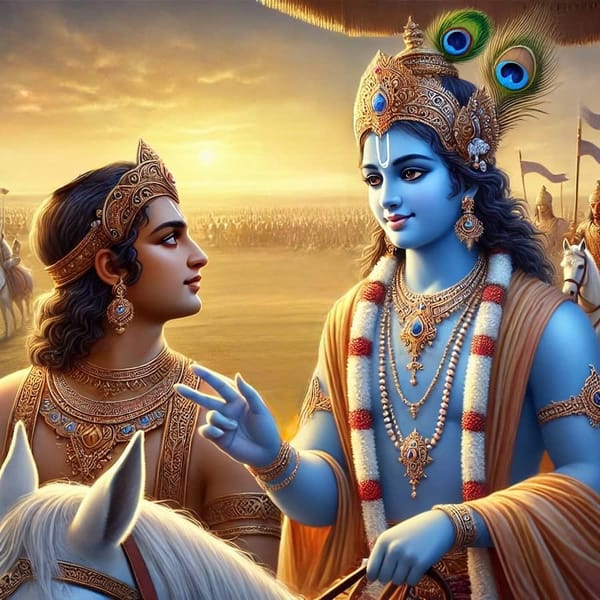

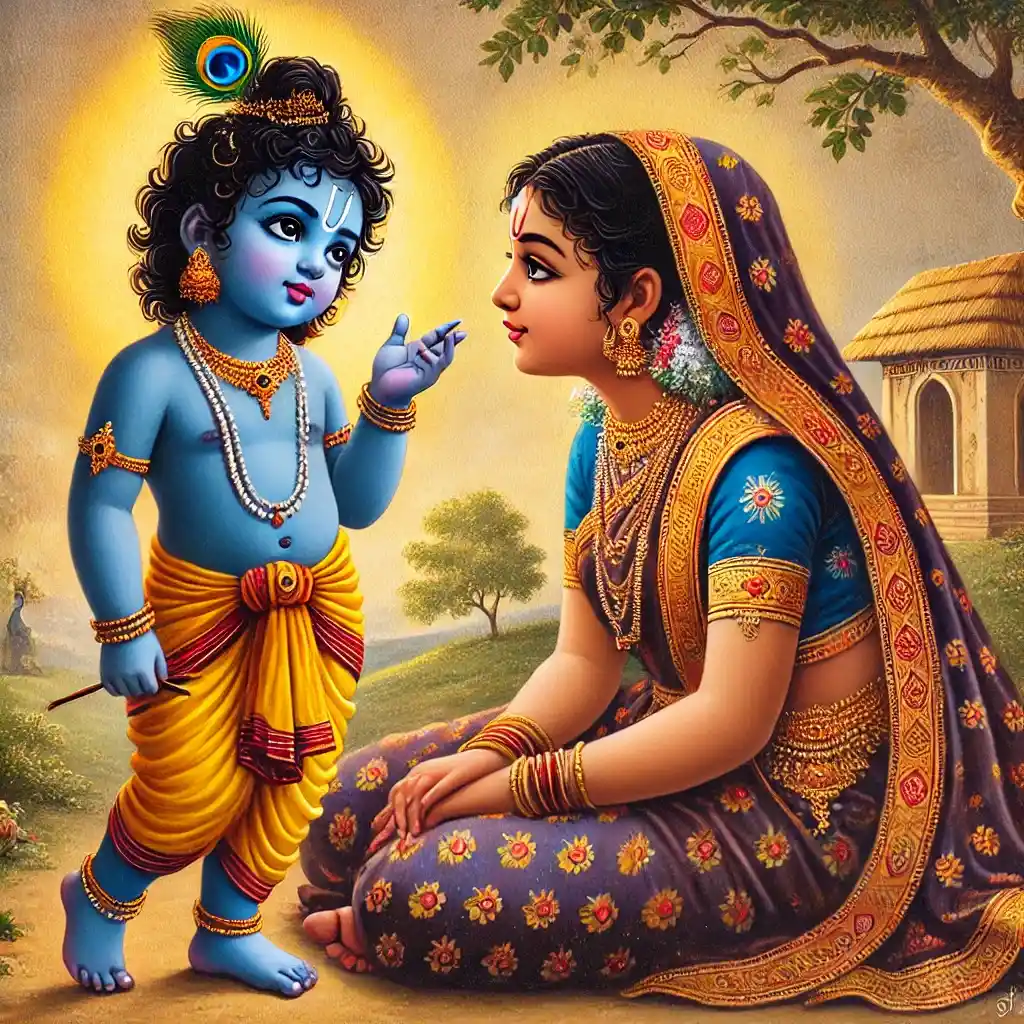
The divine pastimes (Leela) of Shree Krishna have captivated saints, sages, and devotees for millennia. These are not ordinary tales of childhood mischief but deep spiritual episodes filled with profound meaning. These divine pastimes reveal not only Shree Krishna's transcendental nature but also timeless teachings that guide spiritual seekers on their path.
In one such episode from his early life, the young Shree Krishna astonished his mother, Yashoda, with a curious proclamation—he had acquired Guru Gyan, deep spiritual knowledge, after listening to a discourse by Sage Durvasa. While still a toddler, Shree Krishna presented his learning with logic and conviction, testing the intellect and devotion of those around him. This blog explores that moment in detail, diving into the setting of Shree Krishna’s cowherd community, his interaction with Sage Durvasa, and the curious mud-eating episode that followed. Through it all, his pastime offers lessons in humility, devotion, simplicity, and divine wisdom.
The Simplicity of the Cowherd Life
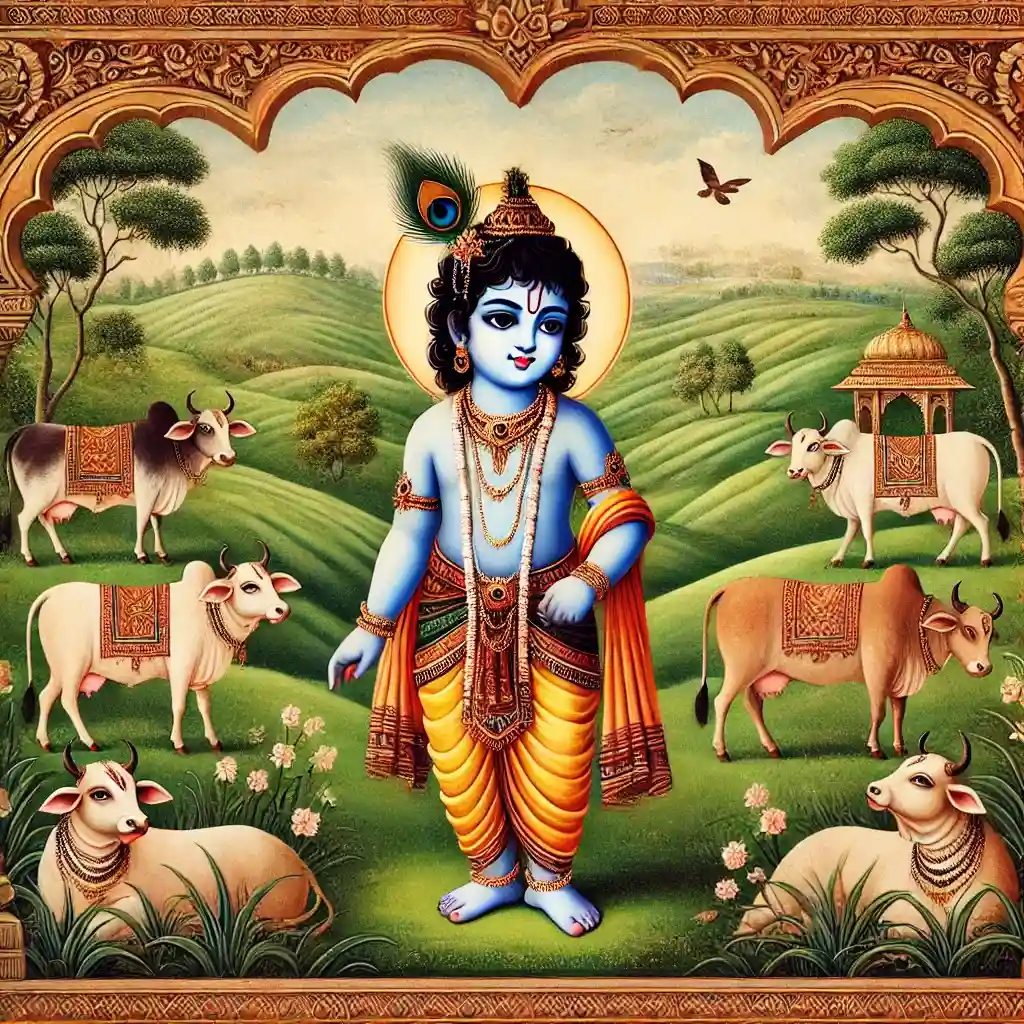
Shree Krishna's early childhood unfolded in the humble setting of Braj, among the cowherd families of Gokul and Nanda Gaon. After his birth in Mathura, he was taken to Gokul for safety and raised by Nanda Baba and Mother Yashoda. The cowherd lifestyle, rooted in the soil, was characterized by simplicity, purity, and reverence for nature.
The cowherds of ancient India lived close to the land and revered the cow as sacred, considering her a mother. They depended on the cow for nourishment and practiced a lifestyle of minimalism with a focus on inner values over outer wealth. This way of life aligned with sattvic (pure and balanced) principles, which promote spiritual clarity and harmony.
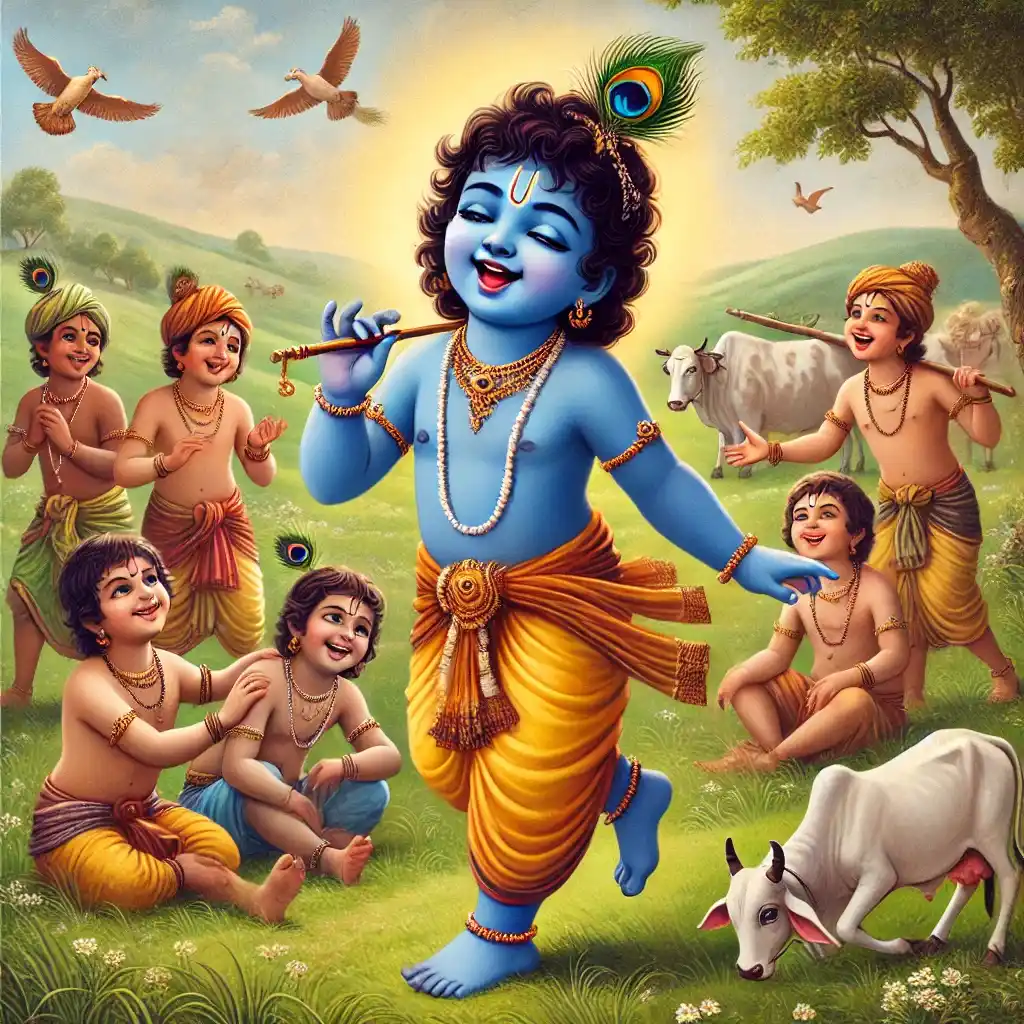
A major event in Shree Krishna’s early life was Gopasthami, a festival celebrating the moment when a young cowherd is deemed ready to take the cows into the forest for grazing. For Shree Krishna, this happened at the tender age of five. On that day, he officially began his duty as a cowherd, joining the elder boys in caring for the herd.
A custom among the cowherds was to walk barefoot while grazing the cows. When asked why he didn’t wear sandals, Shree Krishna explained that since the cows walked barefoot, he too would do the same out of respect and devotion to them. For Shree Krishna, the cow was not just a source of nourishment but a sacred divine being, his Ishtadev. By mirroring her steps, he expressed deep reverence. This act was more than a simple imitation; it was a gesture of humility and divine empathy. In choosing to bear the pain of thorns and stones on his own feet, Shree Krishna embodied the spirit of servitude and love for all living beings, especially those that served without expectation.
Lessons
- Shree Krishna's lifestyle reflected deep respect for nature and alignment with dharma (righteous living).
- This pastime teaches that true divinity often walks with the humble, not above them.
Shree Krishna Attends a Sage’s Discourse
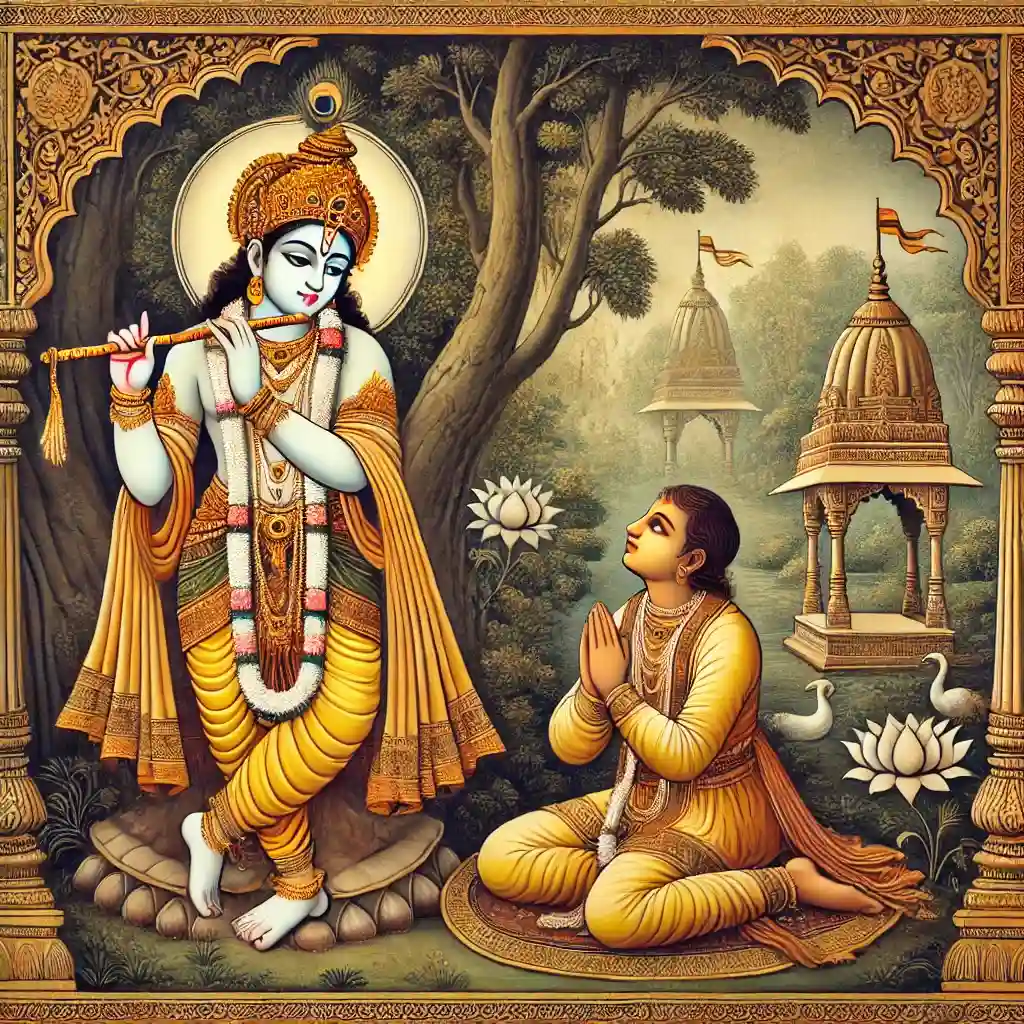
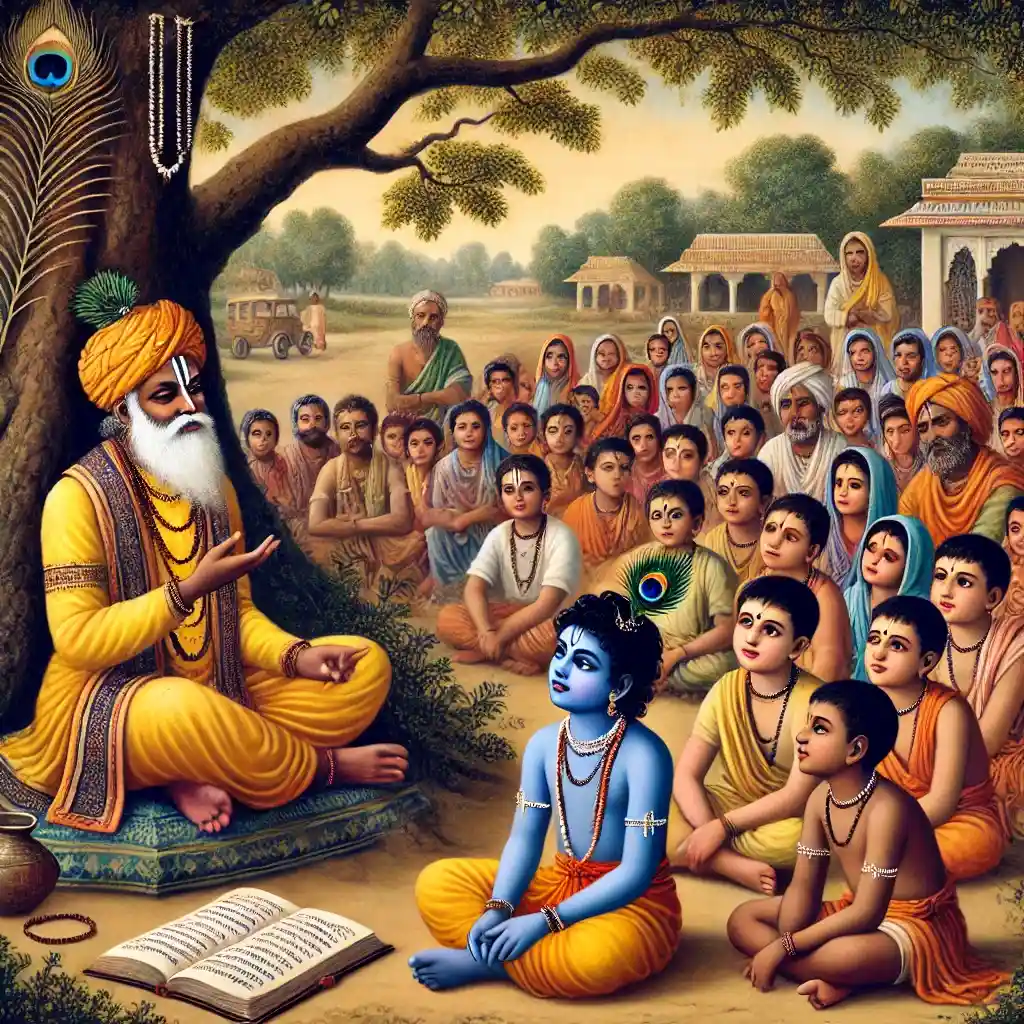
One time, before the Gopasthami initiation, Shree Krishna accompanied the older cowherd boys to the forest, where a discourse was taking place by the banks of the Yamuna River. The renowned Sage Durvasa was delivering a sermon. In those times, the presence of saints was so revered that entire villages would gather just to hear their teachings. To avoid being overwhelmed by the crowds, many sages preferred to stay outside the main village, which is where Sage Durvasa had chosen to speak.
As the elder boys sat to listen, Shree Krishna too joined them. Despite being so young, he showed the demeanor of a sincere student. He offered his respects to Sage Durvasa, sat quietly, and attentively absorbed the entire discourse.
Shree Krishna’s behavior might seem ordinary to a casual observer. But for those who recognize his divine nature, the moment carried deeper meaning. Though Shree Krishna has divine wisdom, He played the role of an innocent child attending a guru's (spiritual teacher) lecture. This was not ignorance but his pastime in which God chooses to hide his omniscience to participate in the human experience.
After the discourse, Shree Krishna returned home, eager to share his newfound knowledge with Mother Yashoda. With excitement, he declared that he had received profound Guru Gyan (divine knowledge from a teacher). Mother Yashoda, initially amused by her little one’s enthusiasm, listened patiently as Shree Krishna explained that the body is made of mud and ultimately returns to mud. He elaborated that this teaching was not random but supported by quotations from the Vedas and aligned with scriptural truths.
Lessons
- Shree Krishna’s example embodies the spirit of a true seeker, showing humility despite being divine.
- He listened carefully and thought deeply about the knowledge, shown by how he shared and explained it to his mother, proving that understanding comes from reflection and talking it through.
The Mud-Eating Argument
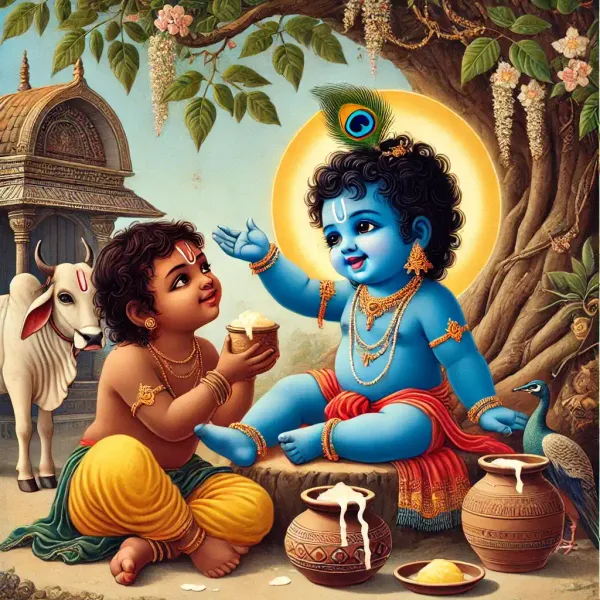
The climax of this pastime unfolds in a humorous yet enlightening exchange between Shree Krishna and his mother. After presenting the idea that the body is made from mud and returns to mud, Shree Krishna made a seemingly innocent yet deeply challenging proposition: if the body is made of mud, why shouldn’t he eat mud?
Mother Yashoda was stunned. On the surface, the argument seemed logical. Shree Krishna had presented a conclusion grounded in scriptural wisdom. His rationale was sound—if mud was the origin and end of all physical forms, then eating mud should be acceptable. She now found herself challenged by her toddler’s divine intellect.
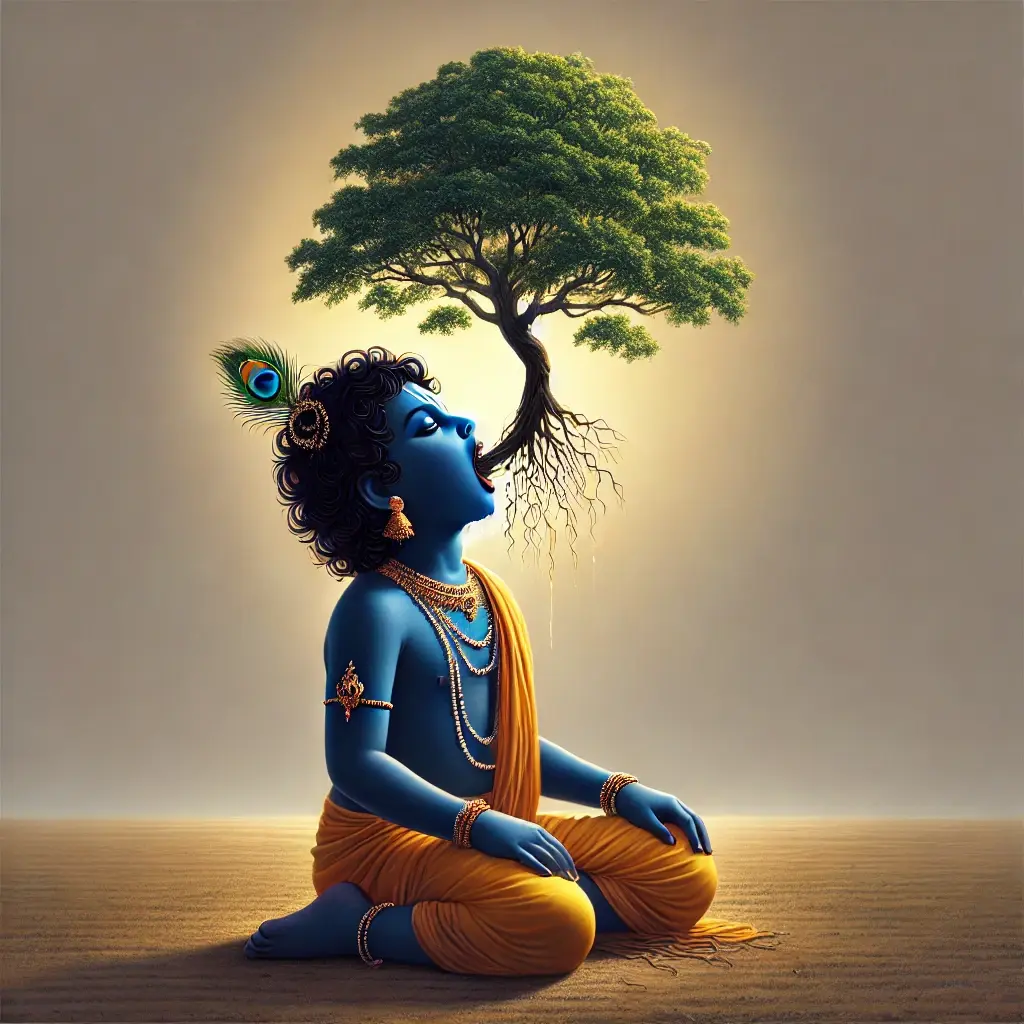
Refusing to back down, Mother Yashoda devised a clever and affectionate response. She painted a vivid image of what would happen if he ate mud. If mud went into his stomach, she said, plants would start to grow. Trees, bushes, and shrubs could sprout from his ears, nose, and mouth. His friends might even swing from the branches that grew from his body. She asked with concern if that wouldn’t hurt. Shree Krishna, wide-eyed and alarmed at the prospect, quickly abandoned his intention to eat mud.
He gratefully thanked Mother Yashoda for saving him and promised never to eat mud again—at least in that lifetime.
Lessons
- Shree Krishna’s question highlights how spiritual teachings need to be deeply understood, not taken only literally.
- When intellect is not mature, trying to grasp true knowledge too soon can cause confusion—so patience and growth are necessary.
- True wisdom unfolds with time, love, and the right readiness.
Conclusion
The childhood of Shree Krishna is more than a collection of charming stories. Each pastime carries layers of meaning that reveal themselves through contemplation. From his barefoot walk with the cows to his engagement with a sage’s discourse and his witty conversation with Mother Yashoda, Shree Krishna’s early life is rich with lessons for all ages.
His divine pastimes remind humanity that spiritual truth is not confined to ascetics or scholars. It lives in the daily rhythm of life—in conversations, in relationships, and even in the mischievous smile of a child. Shree Krishna’s pastimes illustrate how God interacts with the world not through dominance but through affection, humility, and joy.
They invite devotees to remember Him—not just through rituals but through reflection, by immersing the mind in his divine actions. In doing so, one connects with the eternal, the blissful, the ever-present divine.
Call to Action
- Immerse yourself in the divine pastimes of Shree Krishna and transform your spiritual journey by listening to Swami Mukundananda's Srimad Bhagavatam sessions on YouTube.
- Embark on a soul-stirring week at the Dallas Life Transformation Program with Swami Mukundananda from August 2nd to 9th, 2025 at the Radha Krishna Temple in Allen, TX. Participate in inspiring evening discourses, rejuvenating yoga and meditation, uplifting kirtans, and intimate morning walks that will ignite inner peace, clarity, and devotion
FAQs
1. What is a Leela in the context of Shree Krishna?
A Leela refers to the divine pastimes of God where He hides his all-mightiness and behaves like an ordinary being. These actions, though seemingly human, are filled with deep spiritual significance and are meant to draw the devotee’s mind toward God through love and remembrance.
2. Why did Shree Krishna bow to Sage Durvasa if he is God?
In his pastime, Shree Krishna conceals his divine identity to play the role of a human. By bowing to Sage Durvasa, he was honoring the tradition of respecting saints and gurus. It also served to teach humility and reverence, even from the Supreme to a sage.
3. What was the significance of Shree Krishna saying he received Guru Gyan?
Though just a child, Shree Krishna expressed that he had received profound spiritual knowledge from listening to Sage Durvasa’s discourse. This highlighted his divine intellect and playfully questioned how literal interpretations of scriptures can lead to amusing yet thoughtful conclusions.
4. Why did Shree Krishna argue that he should be allowed to eat mud?
Krishna told Mother Yashoda that since the body is made from mud and returns to mud, eating mud should be logical. This playful reasoning was part of his Leela to challenge superficial understanding of scriptural truths and to evoke deeper contemplation through innocent questioning.
5. What spiritual lessons can be learned from Shree Krishna’s mud-eating pastime?
The pastime teaches humility, the importance of internalizing knowledge, and the power of loving correction. It also reminds devotees that spiritual maturity takes time.
Resources
Specific Blog
What Does Shree Krishna’s Mud-Eating Leela Reveal About Our Relationship with God?
Specific Video
Krishna Janmashtami Special Discourse by Swami Mukundananda