

![Janmashtami Special | Life-Changing Bhagavad Gita Quotes from Lord Krishna [With Meanings]](/blog/content/images/size/w2000/2025/08/DALL-E-2025-08-07-19.43.14---A-cinematic--semi-closeup-majestic-depiction-of-Shri-Krishna-in-the-Mahabharata-setting.-His-face-and-upper-body-are-in-focus--adorned-in-golden-armor.webp)
The Bhagavad Gita's wisdom has touched countless lives through the ages. Lord Krishna's teachings, though spoken on a battlefield over 5,000 years ago, still resonate deeply with our modern life's challenges and questions.
Janmashtami gives us the perfect opportunity to reflect on Krishna's eternal wisdom. This piece highlights six life-changing lessons from the Gita. The selected teachings speak to universal human experiences - from karma-related quotes that explain our connection with action to Sanskrit verses that preserve their original depth. These powerful quotes from the Gita address our basic questions about purpose, emotional balance, mental strength, and spiritual identity. The teachings provide practical wisdom that you can apply daily, whether you seek guidance about love or professional challenges.
Quote 1: Perform your duty without attachment to results
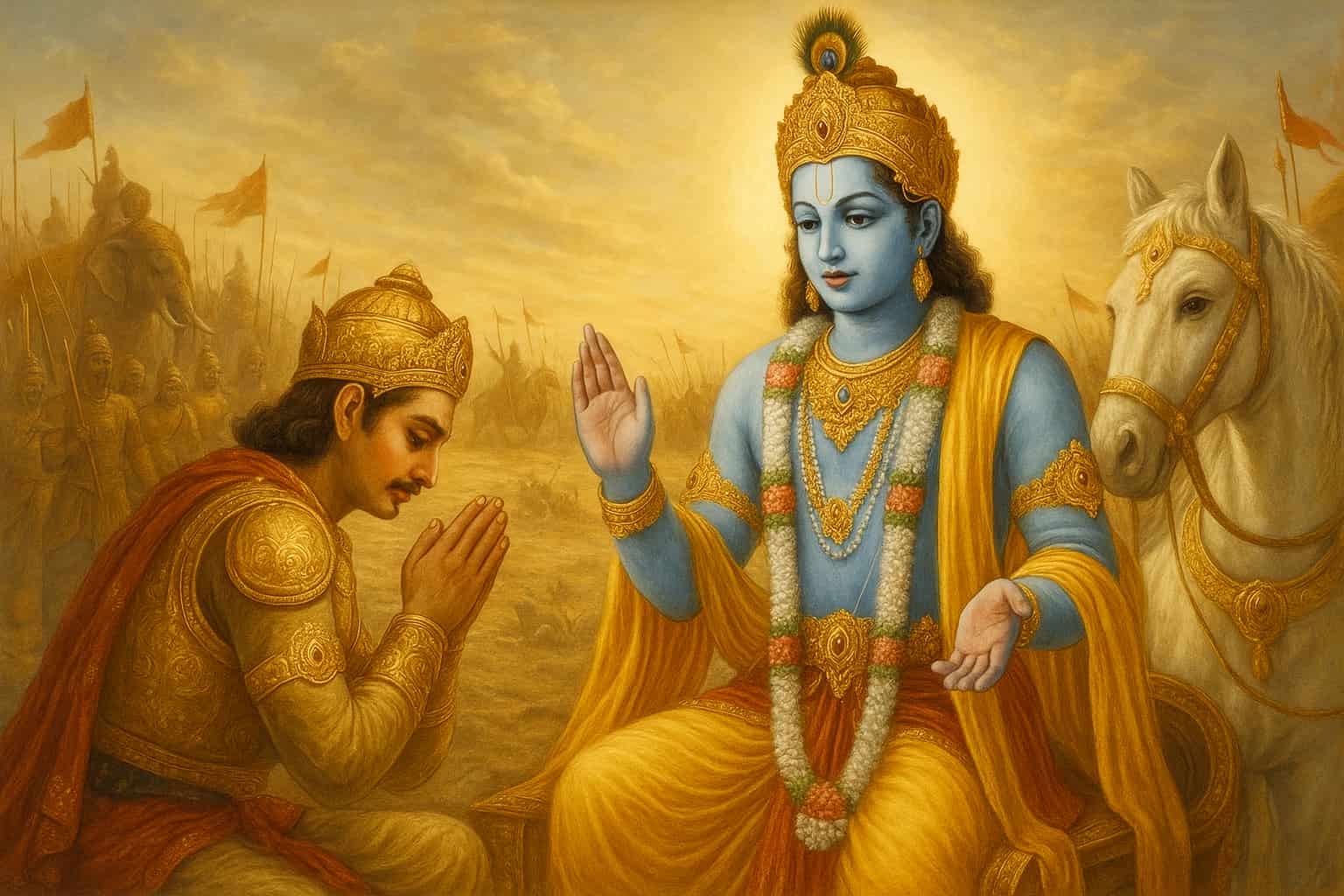
Lord Krishna's most celebrated teaching appears in the second chapter of the Bhagavad Gita. His fresh view on action and results has guided seekers for thousands of years. This deep verse changes our approach to duties and expectations.
Bhagavad Gita 2.47 – Sanskrit and meaning
कर्मण्येवाधिकारस्ते मा फलेषु कदाचन। मा कर्मफलहेतुर्भूर्मा ते सङ्गोऽस्त्वकर्मणि॥
Karmanye vadhikaraste ma phaleshu kadachana, Ma karma-phala-hetur bhur ma te sango 'stvakarmaṇi
This bhagavad gita quote in sanskrit translates to: "You have a right to perform your prescribed duties, but you are not entitled to the fruits of your actions. Never call yourself the cause of the results, and never be attached to inaction."
Why this quote is the foundation of karma yoga
The verse lays down the core principle of karma yoga—performing action without attachment to outcomes. Karma yoga turns everyday duties into spiritual practice by reshaping our connection with results.
The Gita shows a simple equation for outcomes: Karma (action) + Daiva (destiny) + Kala (time) = Phala (results). Our current efforts are just one part of this complex system. Destiny and timing play vital roles in shaping outcomes.
This teaching makes a clear distinction between goals and specific results. Goals give us direction and purpose. Attachment to particular outcomes creates worry and letdown. Understanding this difference frees us from emotional ups and downs.
People often think this teaching supports indifference to outcomes. The truth is it supports purposeful action with inner freedom. Our performance gets better naturally when we focus on doing our best rather than worrying about results.
How to apply this in daily work and goals
This bhagavad gita quote can transform modern life through a practical change in view:
1. Focus on your Circle of Influence: Stephen Covey's concept lines up with Krishna's teaching. Put your energy into what you can control (your thoughts, attitudes, responses, current actions) instead of what you cannot (external circumstances, others' actions, past karma).
2. Maintain balanced expectations: Results depend on many factors beyond your control. This helps you avoid both excessive pride ("I did this all myself") and despair ("This is all my fault") when facing challenges.
3. Transform work into worship: Your ordinary activities become paths to spiritual freedom when you treat duties as sacred offerings instead of self-serving tasks. The Gita teaches that work done with devotion breaks karma's bonds.
Real-life examples make this principle clear. A farmer plants seeds but can't control the weather or growing time each crop needs. Students study hard but might face unexpected test questions or health issues during exams. Peace of mind comes from focusing on effort while accepting factors beyond control.
This teaching values effort highly. It just places it in proper context within our complex universe of interacting forces.
Quote 2: Stay balanced in success and failure
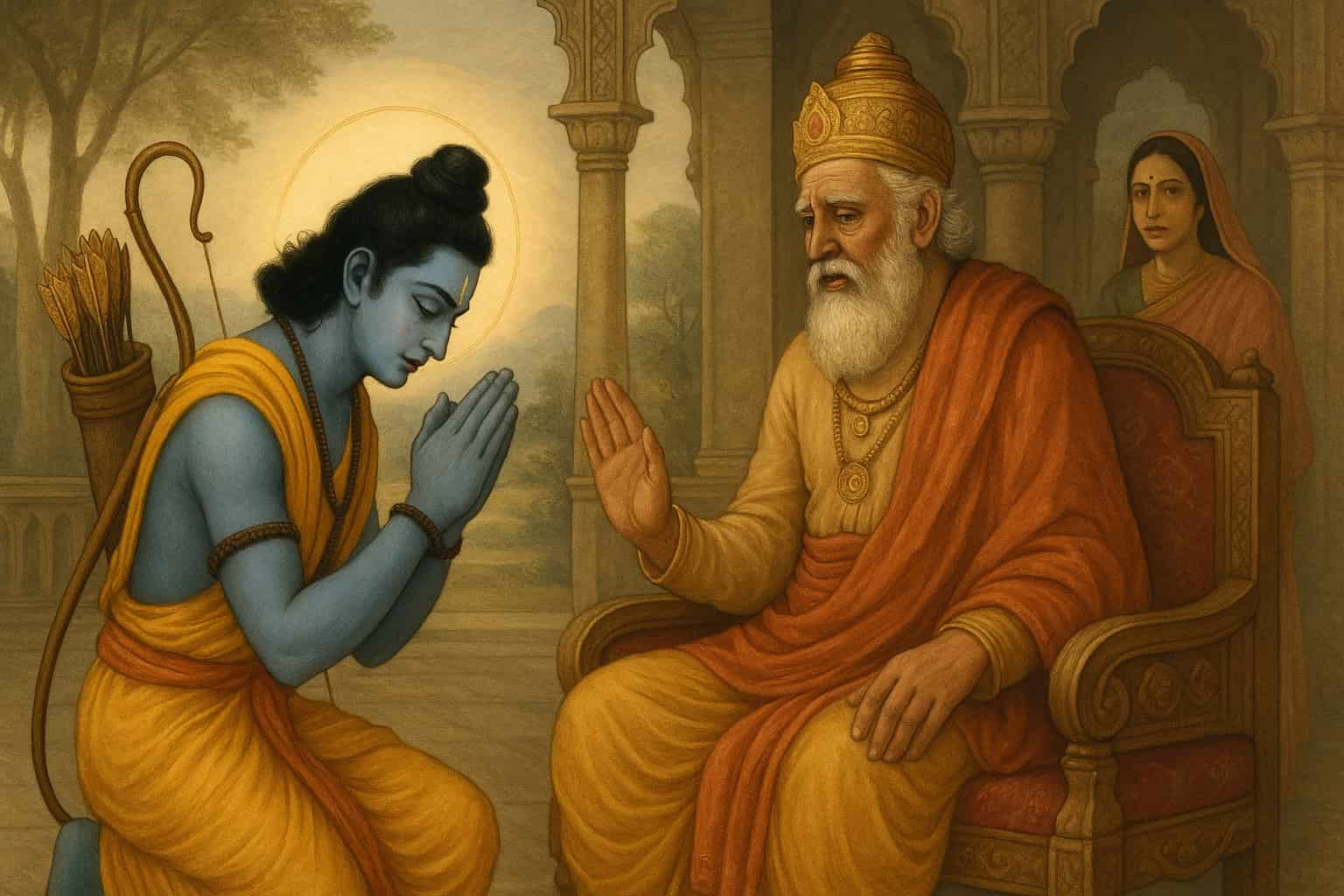
The foundation of detachment from outcomes leads us to another pearl of wisdom in verse 2.48. Krishna takes the spiritual practitioner to a higher level of consciousness by teaching perfect balance whatever the results.
Bhagavad Gita 2.48 – Sanskrit and meaning
योगस्थः कुरु कर्माणि सङ्गं त्यक्त्वा धनञ्जय। सिद्ध्यसिद्ध्योः समो भूत्वा समत्वं योग उच्यते॥
Yogasthah kuru karmani sangam tyaktva dhananjaya, Siddhy-asiddhyoh samo bhutva samatvam yoga uchyate
This bhagavad gita quote in sanskrit means: "Established in yoga, perform actions abandoning attachment, remaining balanced in success and failure. Equanimity is called yoga."
The concept of equanimity in yoga
This verse reveals Krishna's definition of yoga—equanimity or perfect balance. Many people link yoga with physical postures, but the Gita defines it as a state of consciousness that shows steadfast stability during life's ups and downs.
This teaching builds on the previous verse about detachment from outcomes. Krishna first teaches us to let go of result-fixation and then shows us the mental state we need to develop—perfect equanimity whatever happens.
A commentator puts it beautifully: "When work itself becomes the reward, we get drunk with the joy and satisfaction of a noble work done." Regular action becomes spiritual practice through this perspective—duty turns into devotion and work becomes worship.
How this mindset builds resilience
You develop extraordinary resilience with equanimity because it breaks free from the emotional rollercoaster of external outcomes. Here's how it shows up in daily life:
4. Freedom from emotional turbulence – Success doesn't make you soar, failure doesn't make you crash
5. Improved decision-making – Emotional reactions don't compromise your clarity
6. Sustained energy – Anxiety about outcomes doesn't drain your mental resources
This balanced mindset stops both arrogance in success ("I did this all myself") and dejection in failure ("This is all my fault"). Results come from karma (our actions), daiva (destiny), and kala (timing) working together—this understanding helps maintain balance.
Krishna's teaching shows that life works within a complex cosmic system where many forces meet. Our efforts are just one piece of a bigger puzzle. A stable foundation for spiritual growth and practical success comes from staying balanced during life's inevitable ups and downs.
This equanimity becomes a true yogi's hallmark—someone who excels at their duties while keeping inner peace whatever the circumstances. This bhagavad gita best quote gives us both philosophical wisdom and a practical way to handle life's uncertainties gracefully.
Quote 3: Control the mind, or it controls you

Krishna's teaching on mind control stands out as one of the most powerful Bhagavad Gita quotes. It speaks to anyone facing mental challenges in life. Our mind walks with us every step of the way. It can elevate us to greatness or pull us into suffering based on our relationship with it.
Bhagavad Gita 6.6 – Sanskrit and meaning
बन्धुरात्मात्मनस्तस्य येनात्मैवात्मना जितः। अनात्मनस्तु शत्रुत्वे वर्तेतात्मैव शत्रुवत्॥
Bandhur ātmātmanas tasya yenātmaivātmanā jitaḥ Anātmanas tu śatrutve vartetātmaiva śatruvat
The verse means: "For one who has conquered the mind, a mind becomes the best of friends; but for one who has failed to control the mind, the mind remains the greatest enemy."
The mind as friend or enemy
This powerful quote reveals a simple truth—our minds act as either loyal friends or fierce enemies. The mind stays closer than any external enemy and shapes our thoughts, decisions, and emotions.
A wild mind breeds suffering. It worries too much, dwells on past regrets, fears the future, and clings to specific outcomes. A disciplined mind, on the other hand, brings clarity and peace. It helps us respond wisely to life's challenges.
Earlier verses taught us about letting go of results. This teaching shows us how to master the tool that helps us see those results—our mind. Without this mastery, we can't truly detach from outcomes.
Simple practices to master the mind
The Gita offers practical ways to turn the mind from enemy to friend:
7. Regular meditation – Watch your thoughts without attachment daily
8. Self-discipline – Build habits that strengthen mental control
9. Balanced living – Stay moderate in sleep, food, work, and play
10. Focused attention – Train your mind to concentrate on one thing
11. Self-knowledge – Learn about your thought patterns and triggers
Krishna stresses that mind control needs daily practice, not occasional effort. This mastery lays the groundwork for spiritual growth.
Think of it like driving. People who master their minds handle life's twists and turns skillfully with less suffering. Those ruled by their minds are like passengers without control—carried wherever thoughts and emotions take them.
This teaching reminds us that we can't control external events. But we can shape our response to them. By conquering our minds, we find the balance described in earlier teachings, whatever life throws our way.
Quote 4: Actions done in devotion do not bind the soul

Krishna's teachings on karma reveal a powerful aspect through devotional action that changes how we approach our work. This fourth quote shows us how actions done with devotion create spiritual freedom instead of karmic bondage.
Bhagavad Gita 3.9 – Sanskrit and meaning
यज्ञार्थात्कर्मणोऽन्यत्र लोकोऽयं कर्मबन्धनः। तदर्थं कर्म कौन्तेय मुक्तसङ्गः समाचर॥
Yajñārthāt karmaṇo 'nyatra loko 'yaṁ karma-bandhanaḥ Tadarthaṁ karma kaunteya mukta-saṅgaḥ samācara
This bhagavad gita quote in sanskrit means: "Work done as a sacred offering (yajna) frees one from bondage. Otherwise, work binds one to this material world. Therefore, perform your prescribed duties as an offering, free from attachment."
What is selfless action (nishkama karma)?
Selfless action (nishkama karma) serves as the foundation of this teaching. The concept refers to work done without self-centered motives and with spiritual dedication. Regular action creates karmic ties, but selfless action guides us toward spiritual liberation.
Selfless action brings two significant benefits:
12. Inner peace - Krishna explains, "When consciousness is unified, all vain anxiety is left behind. There is no cause for worry, whether things go well or ill."
13. Spiritual purification - Devotional actions cleanse the mind of ego-driven motives and become like nectar that washes away impurities.
Many people misunderstand this teaching as promoting indifference toward work quality. In stark comparison to this, actions offered as divine offerings naturally require excellence, as we offer only our best to the divine.
How bhakti transforms karma
Bhakti (devotion) changes karma completely by reshaping our relationship with work. Devotion turns everyday tasks into worship—duty becomes devotion and work becomes sacred offering.
This change happens through a transformation in consciousness. Actions performed for divine pleasure rather than personal gain no longer bind the soul to karma's cycle. The Gita teaches us that we are instruments of divine will, not independent doers claiming ownership of results.
Our dharma (duties) performed with faith and devotion helps us connect with our spiritual nature. This connection brings immediate peace and long-term spiritual growth. Gandhi showed this principle in action—combining purposeful work with complete surrender to divine will, creating extraordinary results without attachment.
Quote 5: You are not the doer – let go of ego

Taking a closer look at attachment's roots, Krishna reveals a profound truth. The illusory nature of doership changes our fundamental relationship with actions and their results.
Bhagavad Gita 3.27 – Sanskrit and meaning
प्रकृतेः क्रियमाणानि गुणैः कर्माणि सर्वशः। अहङ्कारविमूढात्मा कर्ताहमिति मन्यते॥
Prakṛteḥ kriyamāṇāni guṛaiḥ karmāṇi sarvaśaḥ Ahaṅkāra-vimūḍhātmā kartāham iti manyate
This bhagavad gita quote in sanskrit translates to: "All activities are carried out by the three modes of material nature. Yet the soul, deluded by false ego, thinks itself the doer."
Understanding divine energy behind action
Krishna's powerful teaching exposes our fundamental misconception that causes suffering. The gunas (qualities) of prakriti (nature) carry out all actions, yet we claim ownership over them. Divine energy works through our body, mind, and senses to perform all actions, while our ego falsely claims "I am doing this."
This wisdom builds on earlier bhagavad gita quotes about karma and shows why result-attachment creates suffering. We misidentify as the doer and claim ownership of results. To name just one example, a farmer thinks "I grew this crop" and forgets nature's role in providing soil, seeds, and growth conditions. He serves as just an instrument in the process.
Why humility guides us to peace
This teaching frees us from pride and shame. Excessive pride in accomplishments makes no sense if we aren't the ultimate doers. Self-condemnation for perceived failures loses its power when we see ourselves as instruments rather than independent actors.
Srila Prabhupada used a car analogy to explain this concept: "The body is yours but it is not you." A driver operates a vehicle without being the vehicle, just as consciousness guides the body without being the body. This perspective creates genuine humility—not self-deprecation but accurate self-awareness.
This ranks among the bhagavad gita's best quotes because it releases us from the psychological weight of total outcome responsibility. We find freedom from anxiety while maintaining purposeful action when we see ourselves as instruments of divine will.
Quote 6: The soul is eternal and unchanging

The soul's immortal nature is the life-blood of Krishna's spiritual teachings in the Bhagavad Gita. These profound insights about our eternal essence are a great way to get philosophical depth and practical comfort when life throws its biggest challenges at us.
Bhagavad Gita 2.20 – Sanskrit and meaning
न जायते म्रियते वा कदाचिन् नायं भूत्वा भविता वा न भूयः। अजो नित्यः शाश्वतोऽयं पुराणो न हन्यते हन्यमाने शरीरे॥
Na jayate mriyate va kadacin Nayam bhutva bhavita va na bhuyah Ajo nityah sasvato'yam purano Na hanyate hanyamane sarire
This verse translates to: "The soul is never born nor dies. It has not come into being, does not come into being, and will not come into being. It is unborn, eternal, ever-existing, and primeval. It is not slain when the body is slain."
How this quote helps overcome fear and grief
The sort of thing I love about this Bhagavad Gita quote is how it addresses our deepest fears about mortality. Most human anxiety comes from fear of death and loss, and understanding the soul's immortality creates deep emotional resilience. Krishna shared this wisdom with Arjuna to help him overcome his grief about losing loved ones in battle.
People who identify with their temporary bodies live in constant fear, while those who understand their eternal nature find lasting peace. This teaching helps us see the difference between genuine, permanent loss and temporary physical separation.
Seeing beyond the physical body
Many spiritual teachers explain this concept through the car-driver analogy. A car needs its driver to function, just like the body needs the soul. The driver remains important with or without the car. Srila Prabhupada put it simply: "The body is yours but it is not you."
This understanding revolutionizes our view of ourselves and others. We start to see beyond physical forms that decay and recognize the eternal consciousness in each person. This view encourages both self-respect and respect for others based on our shared immortal nature rather than temporary external attributes.
Conclusion
The Bhagavad Gita's six deep teachings share wisdom that speaks to our modern lives. People have looked to Krishna's words when they felt lost, doubtful, or spiritually confused. This Janmashtami gives us a perfect chance to think about these teachings.
Krishna's wisdom reshapes how we see action, results, mind, and our identity. We learn to do our duty without worrying about outcomes. The importance of staying balanced whatever the result comes next. Our mind can be our best friend or worst enemy. Devotional actions help break free from karma's chains. We see through the illusion of being the doer. A glimpse of our soul's eternal nature follows.
These teachings were shared on an ancient battlefield, yet they address human challenges that surpass time and culture. The Gita's wisdom helps us handle work problems, relationships, and spiritual growth. Even applying one principle can completely change how we experience life.
The Gita shows us that real freedom doesn't come from controlling what's outside. It comes from changing our relationship with action, results, and identity. People who welcome these teachings are better prepared to handle life's ups and downs peacefully. Times and societies change, but human nature stays the same - we all want purpose, meaning, and freedom from suffering. Krishna's wisdom continues to guide people through life's complex path.
Key Takeaways
These timeless teachings from Lord Krishna's Bhagavad Gita offer practical wisdom for navigating modern life's challenges while maintaining inner peace and spiritual growth.
• Focus on effort, not outcomes: Perform your duties with excellence while detaching from specific results, as outcomes depend on multiple factors beyond your control.
• Maintain equanimity in all circumstances: Stay balanced during both success and failure, as this emotional stability builds resilience and improves decision-making.
• Master your mind or it masters you: Practice meditation and self-discipline to transform your mind from your greatest enemy into your most trusted ally.
• Transform work into worship: Perform actions with devotion and selfless service, which purifies the soul and creates freedom from karmic bondage.
• Recognize your eternal nature: Understanding that you are an immortal soul, not just a temporary body, helps overcome fear of death and loss while fostering genuine self-respect.
These teachings work together to create a comprehensive approach to spiritual living—combining purposeful action with inner detachment, mental mastery with devotional service, and practical wisdom with profound spiritual insight.
Celebrate Shri Krishna Janmashtami 2025 at Radha Krishna Temple of Dallas

Janmashtami Mahotsav 2025 🦚
Celebrate the divine appearance of Lord Krishna at the
Radha Krishna Temple of Dallas (Allen). Join us for an unforgettable evening of Abhishek, Jhulan, Bhajans, Krishna Leelas, and the soul-stirring Midnight Janmotsav.
📅 August 16–17, 2025
📍 Radha Krishna Temple of Dallas (Allen)
• Bhajans • Jhulan • Leelas • Aarti • Prasad
🌼 Join the Janmashtami Celebration
🪔 Bring flowers, fruits, and prasad 🙏 Become a Yajman 🎁 Sponsor a Seva
🎉 Grand Festival of the Lord’s Divine Appearance 🎉
📿 Join the jubilant celebration of Lord Krishna’s birth – a night of devotion, joy, and divine love!
🗓 Date: Saturday, August 16 – Sunday, August 17, 2025
📍 Location: Radha Krishna Temple of Dallas (Allen)
🌐 radhakrishnatemple.net/janmashtami
✨ Highlights of Janmashtami Mahotsav:
🪔 Abhishek (Ceremonial Bath) of Baby Krishna
🎶 Soulful Bhajans & Kirtans by devotees and youth
🎭 Krishna Leela Dramas & vibrant Cultural Performances
🎉 Jhulan (Swinging of Baby Krishna) – a cherished tradition
🥁 Midnight Janmotsav (Birth Celebration) with Maha Aarti
🍛 Mahaprasad for all attendees
🎨 Kids Carnival & Activities – fun-filled devotion for the whole family
🕯️ Devotee Offerings & Seva Opportunities
🌸 Experience a night steeped in bhakti, where every moment celebrates the divine charm, love, and leelas of Shree Krishna! 🌸
📌 Get Involved
🛕 Become a Yajman
🙏 Sponsor Abhishek, Prasad, or Cultural Programs
🎁 Bring fruits, flowers, and prasad for Lord Krishna
🎟️ Reserve your spot & seva now:
👉 Register Here
📷 Capture the Divine Moments!
Don't miss this chance to immerse yourself in divine celebrations and create unforgettable memories with your family in the divine atmosphere of the Radha Krishna Temple!
FAQs
Q1. What is the core message of Krishna's teachings in the Bhagavad Gita? The core message of Krishna's teachings in the Bhagavad Gita is to perform one's duties without attachment to results, maintain equanimity in all circumstances, master the mind, transform work into worship, and recognize the eternal nature of the soul.
Q2. How can we apply the wisdom of the Bhagavad Gita in our daily lives? We can apply the Gita's wisdom by focusing on our efforts rather than outcomes, maintaining emotional balance in success and failure, practicing meditation and self-discipline to control our minds, performing actions with devotion, and cultivating awareness of our spiritual nature beyond the physical body.
Q3. What does Krishna say about the nature of the soul? Krishna teaches that the soul is eternal, unchanging, and indestructible. It is never born and never dies, existing beyond the physical body. This understanding helps overcome fear of death and fosters a deeper sense of self-respect and respect for others.
Q4. How does the Bhagavad Gita define yoga? According to the Bhagavad Gita, yoga is defined as a state of equanimity or perfect balance. It involves performing actions while remaining balanced in success and failure, abandoning attachment to outcomes.
Q5. What is the significance of selfless action in the Bhagavad Gita? Selfless action, or nishkama karma, is a key concept in the Gita. It refers to work performed without self-centered motives and with spiritual dedication. Such actions lead to inner peace, spiritual purification, and ultimately, liberation from karmic bondage.