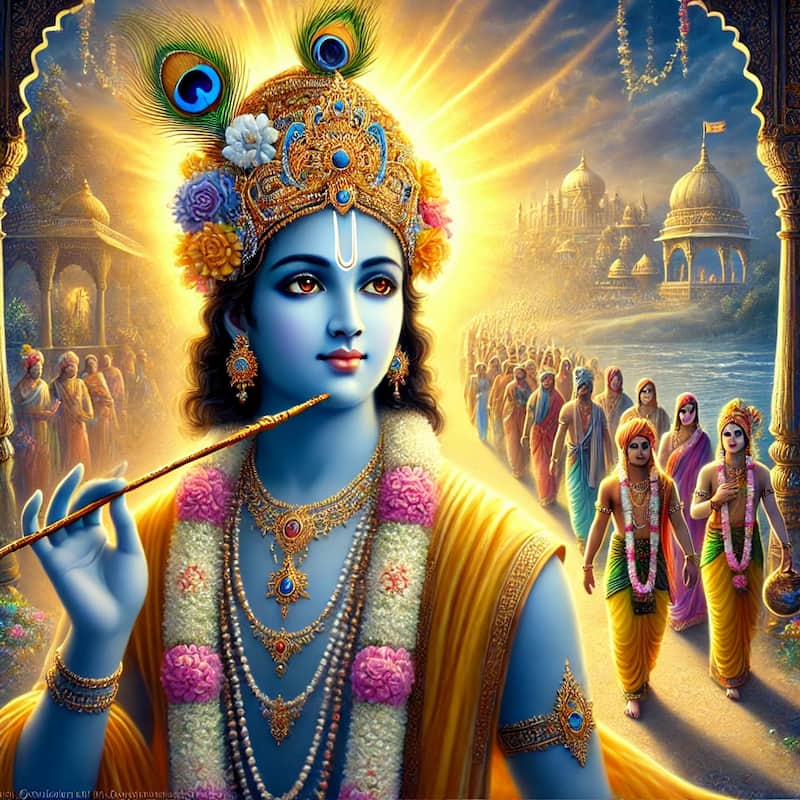
Introduction: Janmashtami as a Living Celebration
Janmashtami is more than a date on the Hindu calendar—it is an unfolding spiritual experience. It marks the divine descent of Shri Shree Krishna, Svayam Bhagavan (the Supreme Personality of Godhead), as described in the Śrīmad Bhāgavatam and celebrated by saints for millennia. His birth in Mathura, mischievous childhood in Gokul and Vrindavan, kingship in Dwarka, and pivotal role in the Mahabharata are not isolated events but interconnected expressions of His eternal mission.
The Bhagavad Gita (4.8) captures it succinctly:
“To protect the righteous, to annihilate the wicked, and to reestablish the principles of dharma I appear on this earth, age after age.”
👉 Read Verse 4.8 with commentary
Swami Mukundananda explains that Shree Krishna’s leelas (divine pastimes) are not mere stories from the past; they are divine interventions that continue to guide seekers today. By reflecting on them, especially during Janmashtami, we invite Shree Krishna into our lives—not only as a historical figure but as a living presence in our hearts.
1. The Divine Birth in Mathura
In the dead of night, in a prison cell bound by iron chains, Shree Krishna appeared before Devaki and Vasudeva. The Śrīmad Bhāgavatam (Canto 10) narrates that He first revealed His four-armed Vishnu form, holding the conch, disc, mace, and lotus, before transforming into a charming infant. He assured His parents that He would fulfill the prophecy by destroying Kamsa, the tyrant king.
Miracles marked the night: the guards fell asleep, the chains unlocked, and the Yamuna parted to allow Vasudeva to carry the newborn across to Gokul. Swami Mukundananda often highlights that Mathura’s prison is symbolic of the human heart, bound by ego and desires. Shree Krishna’s birth there teaches us that divinity manifests in the humblest and most unlikely of places when faith is strong.
2. Gokul: Sweet Pastimes of the Divine Child
The Joy of Nanda’s Home
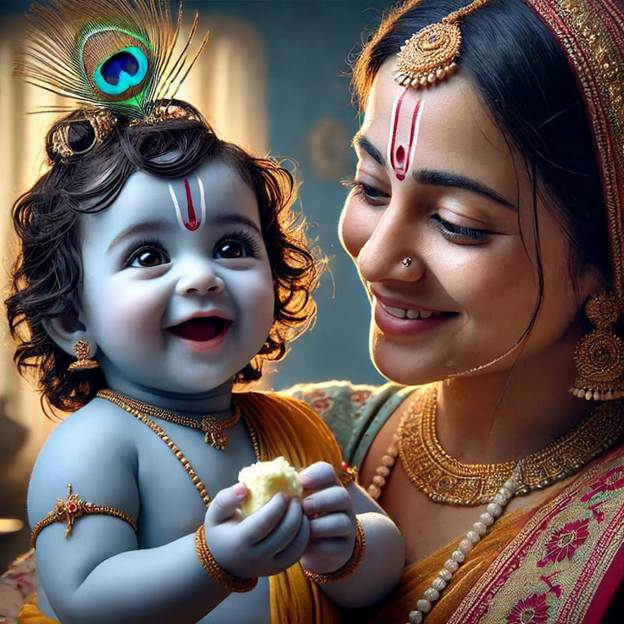
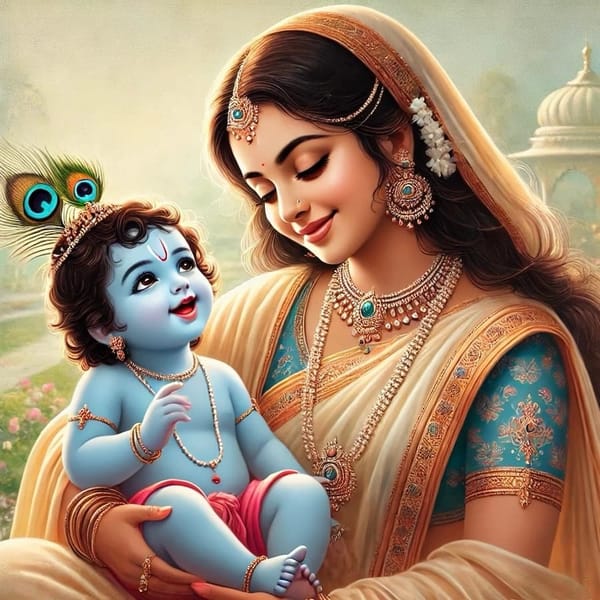
In Nanda Maharaj’s home, joy overflowed as Yashoda Maiya cradled her beloved son. The sage Gargacharya named the child “Shree Krishna” (the all-attractive one). Though Lord of the cosmos, Shree Krishna thrived in their humble care—crawling in the courtyard, laughing with gopis, and filling Gokul with bliss.
Putana’s Salvation
The demoness Putana entered Gokul disguised as a nurse, intending to kill Shree Krishna with poisoned milk. Yet the infant sucked out her life air, granting her liberation. Swami Mukundananda notes that God’s grace is so boundless that even a malicious act, if connected to Him, can result in the highest blessing.
The Cart Demon and Trinavarta
Barely able to walk, Shree Krishna overturned a heavy cart demon and later defeated the whirlwind demon Trinavarta. These early leelas showed that no force—seen or unseen—can harm one under the Lord’s protection.
3. Vrindavan: The Playful Protector
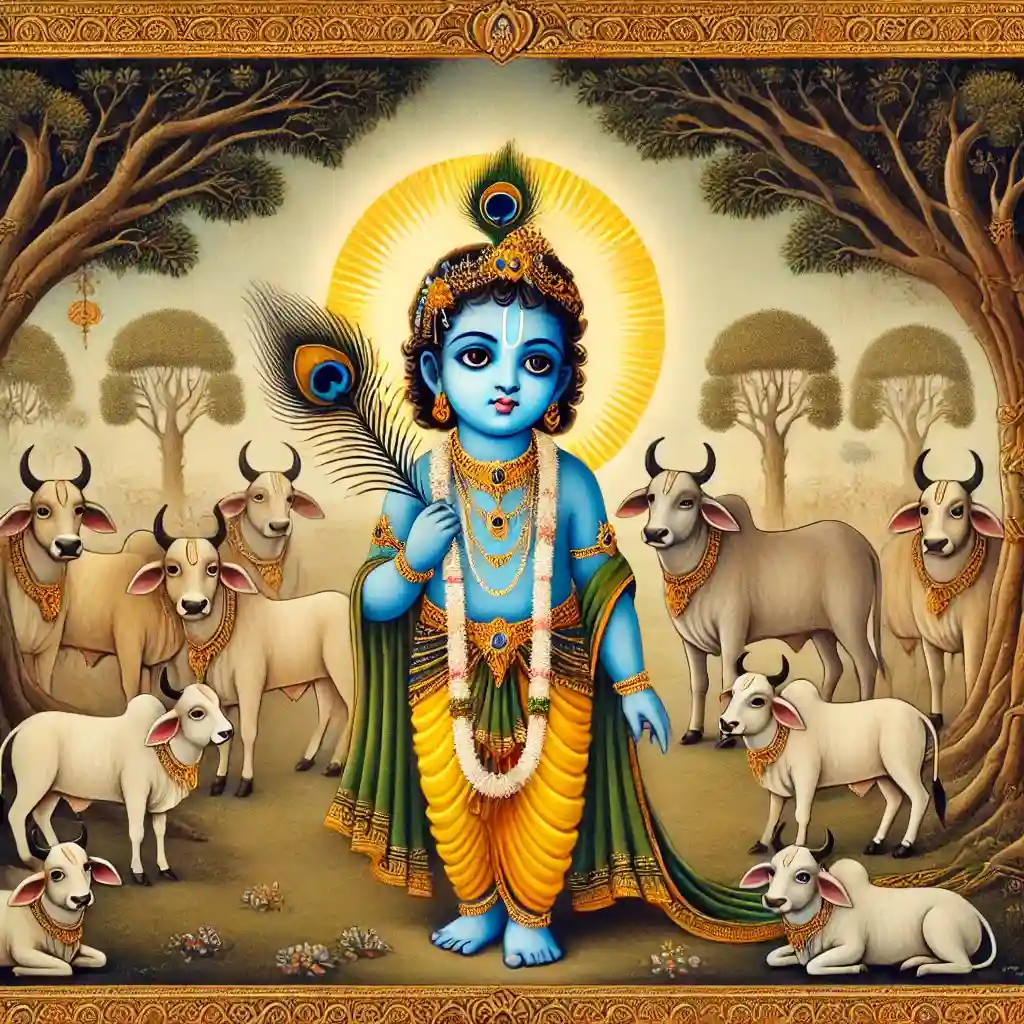
When threats from Kamsa’s demons persisted, Nanda moved the community to Vrindavan, where Shree Krishna’s enchanting cowherd leelas unfolded.
Makhan-Chor (The Butter Thief)
The gopis often found their butter pots mysteriously empty. The culprit? Shree Krishna, with butter-smeared cheeks and innocent eyes. Swami Mukundananda explains that the butter symbolizes the pure essence of the heart, which Shree Krishna “steals” through love and devotion.
Kaliya Mardan
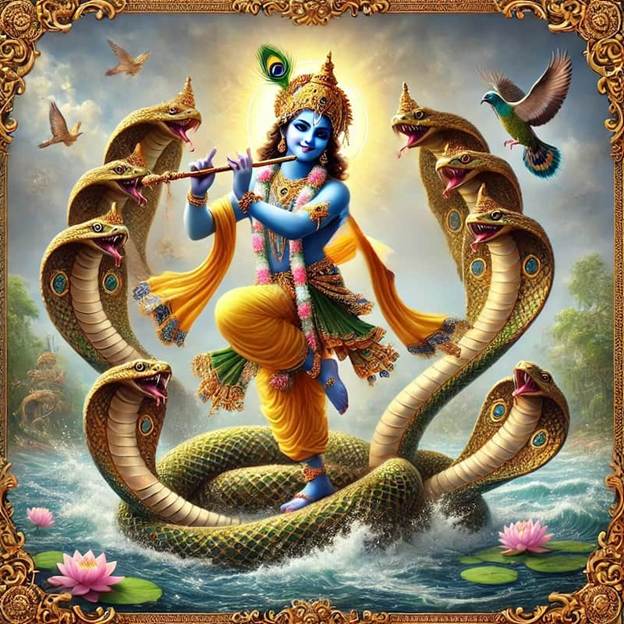
The serpent Kaliya had poisoned the Yamuna. Shree Krishna leapt into the waters, danced upon Kaliya’s many hoods, and banished him. This leela represents how the Lord removes the “poison” of envy, anger, and greed from our inner river of consciousness.
Govardhan Leela
When Indra threatened Vrindavan with torrential rains, Shree Krishna lifted Govardhan Hill with His little finger, sheltering all for seven days. It was a call to shift worship from mere ritual to heartfelt devotion, as also reinforced in the Bhagavad Gita (9.26):
“If one offers to Me with devotion a leaf, a flower, a fruit, or even water, I delightfully partake of that item offered with love by My devotee in pure consciousness.”
👉 Read Verse 9.26 with commentary
4. The Raas Leela: The Soul’s Highest Union
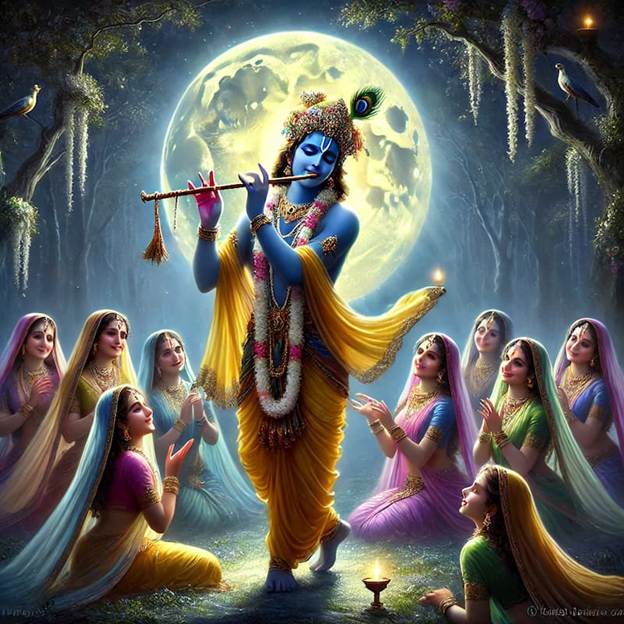
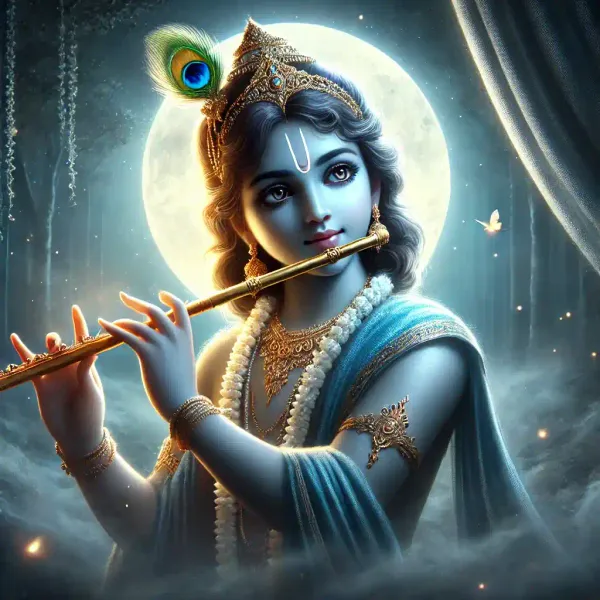
In the moonlit forest, Shree Krishna played His flute, summoning the gopis into the transcendental dance of the Raas Leela. Each gopi felt He was hers alone, a manifestation of His infinite nature. Swami Mukundananda clarifies that the gopis’ love was devoid of selfish desire—it was pure, unconditional surrender. The Raas Leela is thus the highest metaphor for the soul’s longing for divine union.
5. Mathura: Fulfilling the Prophecy
As a youth, Shree Krishna and Balarama journeyed to Mathura. There, Shree Krishna slew Kuvalayapeeda the elephant, vanquished the wrestlers Chanura and Mushtika, and ultimately killed Kamsa. With the tyrant’s death, dharma was restored in Mathura. The episode teaches that we must conquer our inner “Kamsa”—our ego and uncontrolled mind—before we can truly serve God.
6. Dwarka: The Royal Chapter
To protect His people from relentless attacks, Shree Krishna established His kingdom in Dwarka. Here, His leelas took a majestic form—blending kingship, diplomacy, and compassion.
Rukmini Haran
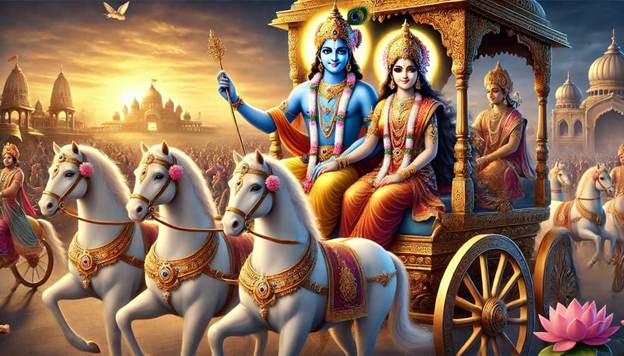
Princess Rukmini, deeply devoted to Shree Krishna, was to be married to another. Shree Krishna arrived on the wedding day, swept her onto His chariot, and married her. This leela reflects that sincere longing for God never goes unanswered.
Rescue of the Captives
Shree Krishna slew the demon Narakasura and freed 16,100 captive women, marrying them to restore their honor. This act was not indulgence but supreme compassion, uplifting the downtrodden without judgment.
7. Shree Krishna in the Mahabharata: The Divine Statesman and Charioteer
While Shree Krishna’s Vrindavan and Dwarka pastimes are celebrated for their sweetness, the Mahabharata reveals His depth as a strategist, moral guide, and protector of dharma.
Friendship with the Pandavas
From the moment He met the Pandavas, Shree Krishna stood by them as friend, counselor, and protector. When Draupadi was humiliated in the Kaurava court, it was Shree Krishna who provided her unending saree, shielding her honor. Swami Mukundananda points out that this episode teaches: when the devotee calls sincerely, God responds instantly—beyond the constraints of time and space.
Peace Mission to Hastinapur
Before the Kurukshetra war, Shree Krishna attempted peace by traveling to Hastinapur, urging the Kauravas to return at least five villages to the Pandavas. His refusal to compromise on dharma, yet willingness to prevent bloodshed, shows His mastery of both compassion and justice.
The Bhagavad Gita on the Battlefield
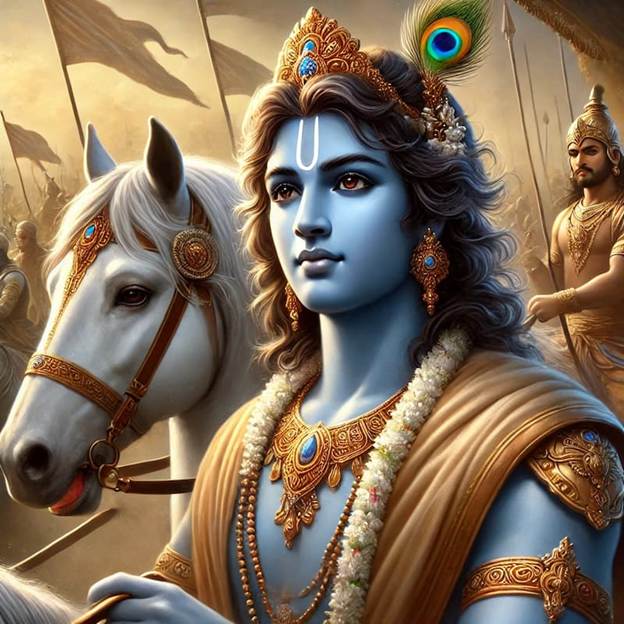
When Arjuna faltered at the sight of his kinsmen on the battlefield, Shree Krishna delivered the Bhagavad Gita. In its 700 verses, He revealed the essence of life: selfless action (karma yoga), devotion (bhakti yoga), knowledge (jnana yoga), and complete surrender (sharanagati).
Verse 18.66 stands as His ultimate call:
“Abandon all varieties of dharmas and simply surrender unto Me alone. I shall liberate you from all sinful reactions; do not fear.”
👉 Read Verse 18.66 with commentary
Swami Mukundananda describes the Gita as a “spiritual GPS” given by Shree Krishna to navigate the battlefield of life.
Guiding the War to Victory
Shree Krishna vowed not to wield weapons in the war, yet His presence was decisive. As Arjuna’s charioteer, He guided every move, ensuring the victory of dharma. His strategic counsel—from advising Bhima to strike Duryodhana’s thigh, to protecting Arjuna from Karna’s fatal weapon—demonstrates that God’s guidance is both subtle and powerful.
8. Lessons from Gokul to Dwarka to Kurukshetra
Shree Krishna’s journey offers timeless teachings:
1. Childhood Leelas (Gokul/Vrindavan) – God seeks our love, not formality.
2. Heroic Feats (Mathura) – Conquering inner demons precedes outer victory.
3. Royal Life (Dwarka) – Leadership demands compassion and justice.
4. Mahabharata Role – Dharma must be upheld even when it demands courage and sacrifice.
5. Bhagavad Gita – The ultimate path is surrender.
9. Swami Mukundananda on Living Janmashtami Daily
Swami Mukundananda advises that Janmashtami should not be limited to ritual observance. It should be a spiritual renewal where we:
- Reflect on Shree Krishna’s leelas as personal guidance.
- Chant His names with full absorption.
- Offer our talents in service to Him.
- Let go of one binding attachment as a gift to Him.
By doing so, we allow Shree Krishna to “take birth” in the heart every day.
Conclusion: Shree Krishna’s Eternal Presence
From the butter-smeared child of Gokul to the king of Dwarka and the divine charioteer at Kurukshetra, Shree Krishna’s life is a single, continuous leela of love, wisdom, and protection. The Śrīmad Bhāgavatam assures that hearing these pastimes cleanses the heart, while the Bhagavad Gita assures that surrendering to Him grants freedom from fear.
This Janmashtami, let us not only celebrate the Lord’s birth but also embrace His role in our lives—as our guide in confusion, our shelter in trials, and our eternal beloved.
✨ Call to Action
This Janmashtami, go beyond celebration—live Shree Krishna’s teachings. Reflect on His leelas, chant His holy names, and surrender one attachment to Him as your offering. Share this blog to spread the joy of Shree Krishna’s divine journey, and inspire others to let Him take birth in their hearts today.
🛕 Celebrate Shree Krishna’s Janmashtami Mahoutsav 2025 at Radha Krishna Temple of Dallas
📿 Join the jubilant celebration of Lord Krishna’s birth – a night of devotion, joy, and divine love!
🗓 Date: Saturday, August 16 – Sunday, August 17, 2025
📍 Location: Radha Krishna Temple of Dallas (Allen)
🌐 Register Here:
Radha Krishna Temple of Dallas, Janmashtami Celebration 2025
Resources
1. Primary Scriptures
- Śrīmad Bhāgavatam, Canto 10 – Narratives of Shree Krishna’s birth, childhood, and pastimes.
- Bhagavad Gita – Shree Krishna’s timeless wisdom to Arjuna on dharma, devotion, and surrender.
- Mahabharata – Historical context of Shree Krishna’s role as guide, friend, and statesman.
2. Teachings & Commentaries
- Swami Mukundananda’s discourses on Shree Krishna’s life and the Bhagavad Gita.
🔗Watch YouTube videos - “Bhagavad Gita – The Song of God” with commentary by Swami Mukundananda.
🔗Read Online - JKYog online satsangs and bhajan sessions.
🔗Join Here
3. Further Learning
- The Nectar of Devotion by Srila Rupa Goswami.
- Krsna – The Supreme Personality of Godhead by Srila Prabhupada.
❓FAQs
1. When is Janmashtami this year?
In 2025, Krishna Janmashtami falls on Saturday, August 16.
2. Why is Janmashtami celebrated at midnight?
Shree Krishna was born at midnight under the Rohini nakshatra. Symbolically, midnight represents the darkest hour before dawn—when God descends to dispel ignorance.
3. What is the spiritual benefit of hearing Shree Krishna’s leelas?
According to the Śrīmad Bhāgavatam, hearing these pastimes purifies the heart, awakens devotion, and grants liberation.
4. How can I celebrate Janmashtami at home?
Fast until midnight, decorate a small swing for baby Shree Krishna, chant His names, read the Bhagavad Gita or Bhāgavatam, and offer simple sattvic foods with love.
5. How is Shree Krishna’s role in the Mahabharata connected to Janmashtami?
Janmashtami honors Shree Krishna’s entire mission—from His birth in Gokul to His guidance in the Bhagavad Gita. His Mahabharata role exemplifies dharma in action.
6. What does Swami Mukundananda emphasize about Janmashtami?
He teaches that Janmashtami should be a day of inner renewal—inviting Shree Krishna into our lives daily through love, surrender, and service.