

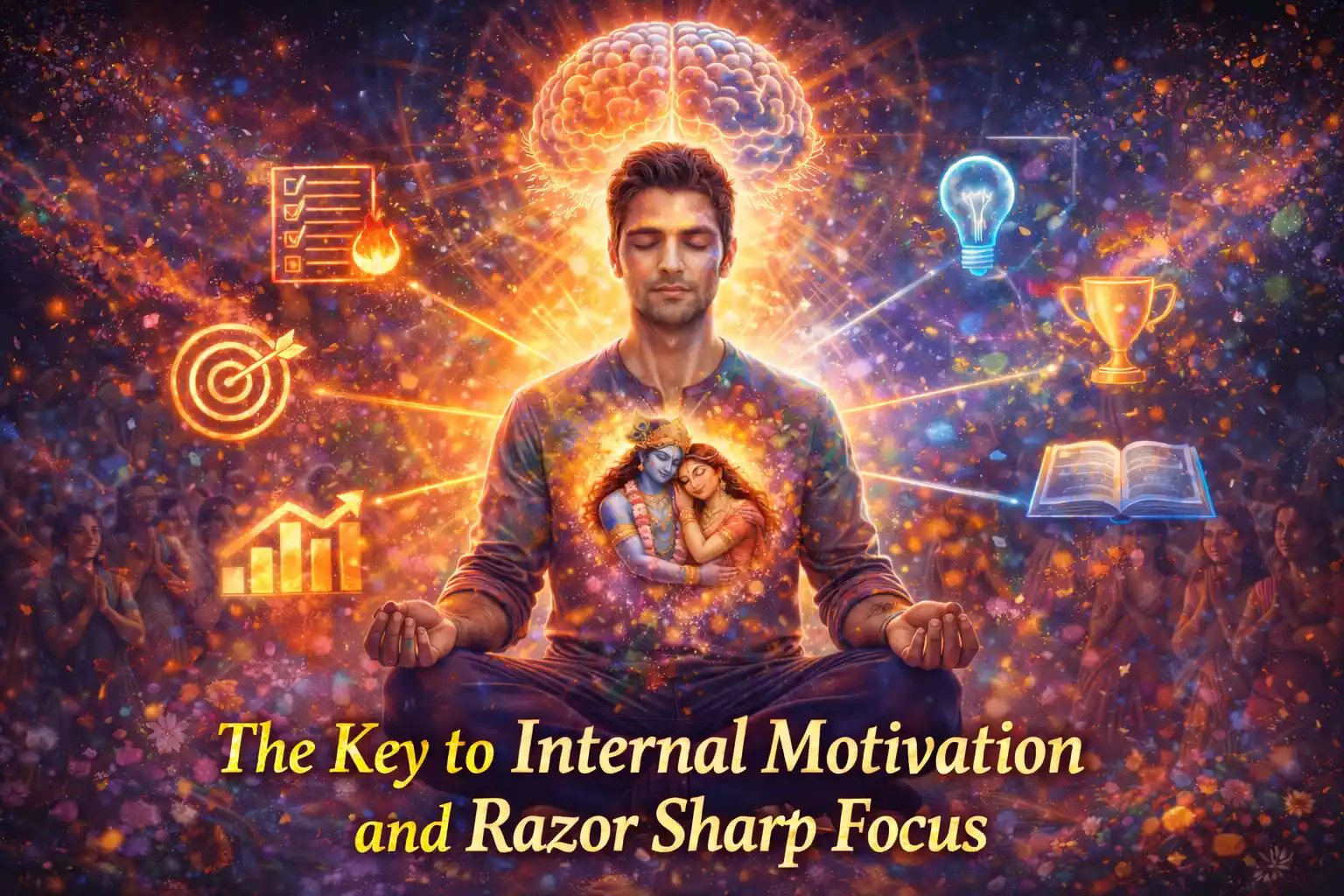
In our modern, hyper-connected world, the ability to maintain unwavering focus has become a rare and precious commodity. We are constantly bombarded by a relentless stream of notifications, demands, and fleeting distractions that systematically fracture our attention. Have you ever wondered why some individuals seem utterly unstoppable in their pursuit of their goals, remaining perfectly anchored even in the midst of absolute chaos, while others have their attention hijacked by the slightest interruption?
When faced with difficult tasks or long-term goals, we often rely on the external world to provide the push we need: a promise of a financial bonus, a word of praise from a mentor, a structured deadline, or the looming fear of failure. Yet, as many of us have experienced firsthand, this type of motivation is highly volatile. It surges and crashes, leaving us stranded when we need it most.
Global spiritual leader, Swami Mukundananda, sheds light on the ultimate secret to an inexhaustible supply of enthusiasm and laser-like concentration. The key to sustained excellence does not lie in manipulating our external environment or seeking constant validation. Instead, it requires us to journey inward and awaken a powerful mechanism we all possess but rarely utilize to its full potential: our intellect.
By understanding the vital difference between external and internal motivation, integrating insights from modern behavioral psychology, and learning the ancient science of Buddhi Yoga (the Yoga of the Intellect) from the Holy Bhagavad Gita, you can learn to instantly focus your mind 100% on your goals.
The Illusion and Fragility of External Motivation

To deeply understand how to cultivate razor-sharp focus, we must first examine the flawed ways we typically attempt to motivate ourselves. According to Swami Mukundananda, all human drive can essentially be categorized into two primary kinds of motivation: external and internal.
External motivation is driven entirely by environmental factors and outside stimuli. The key to our inspiration lies on the outside, acting as either a carrot to chase or a stick to run away from.
Imagine a common scenario in the corporate world: your manager pulls you aside and says, "Look, if you work hard and perform well on this project, I'll give you a commendation to the board."
Suddenly, a fire is lit beneath you. You are energized, you stay late at the office, you work through the weekends, and your productivity skyrockets. Your mind is hyper-focused on the reward. There is nothing inherently wrong with being externally motivated; in fact, society is largely built upon these transactional systems, and they can be incredibly effective for short-term compliance.
However, external motivation carries a massive, hidden vulnerability: it is entirely dependent on variables outside of your control. What happens if, the very next week, the company's budget is drastically cut, the promotion is taken off the table, or your boss sharply reprimands you for a minor mistake?
As Swamiji humorously and accurately points out, "That motivation that had climbed the Himalayas will go to the Pacific Ocean." Because the source of your inspiration was external, its removal results in an immediate collapse of your internal drive. You are left feeling deflated, bitter, apathetic, and entirely unable to focus on the work at hand. Relying on external motivation makes us victims of our circumstances, tossed around by the unpredictable waves of praise and criticism.
The Science of Intrinsic Power
Modern psychology strongly validates this ancient Vedic wisdom. Research into Self- Determination Theory (SDT), a framework for understanding human motivation developed by psychologists Edward Deci and Richard Ryan, highlights the vastly superior power of intrinsic motivation. Intrinsic motivation is the drive to engage in an activity because it is inherently fulfilling, meaningful, and aligned with your values, rather than for an external reward.
Striving for intrinsic goals (like self-growth, community contribution, and deep learning) rather than extrinsic ones (like fame, wealth, or avoiding punishment) is directly linked to greater psychological well-being and sustained focus. When you are driven from within, you are far less susceptible to external pressure and much more likely to approach challenges with creativity and resilience.
Further research emphasizes that having a strong "why" is the ultimate key to focus. Highlighting the work of world-renowned psychiatrist Viktor Frankl, another Psychology Today article notes that the search for meaning is our primary intrinsic motivation. Frankl famously observed that those who have a strong "why" to live can bear almost any "how."
This internal "why" acts as a stabilizing force, completely insulating you from the ups and downs of the external environment. When your drive is internal, your enthusiasm remains steady regardless of whether the world praises you or ignores you. But how do we achieve this elevated state of detachment from external variables while remaining intensely engaged in our worldly and spiritual duties?
Swami Mukundananda beautifully illustrates this profound concept through a captivating, timeless story from ancient Vedic history.
Ancient Wisdom: The Story of King Janak and the Cup of Oil
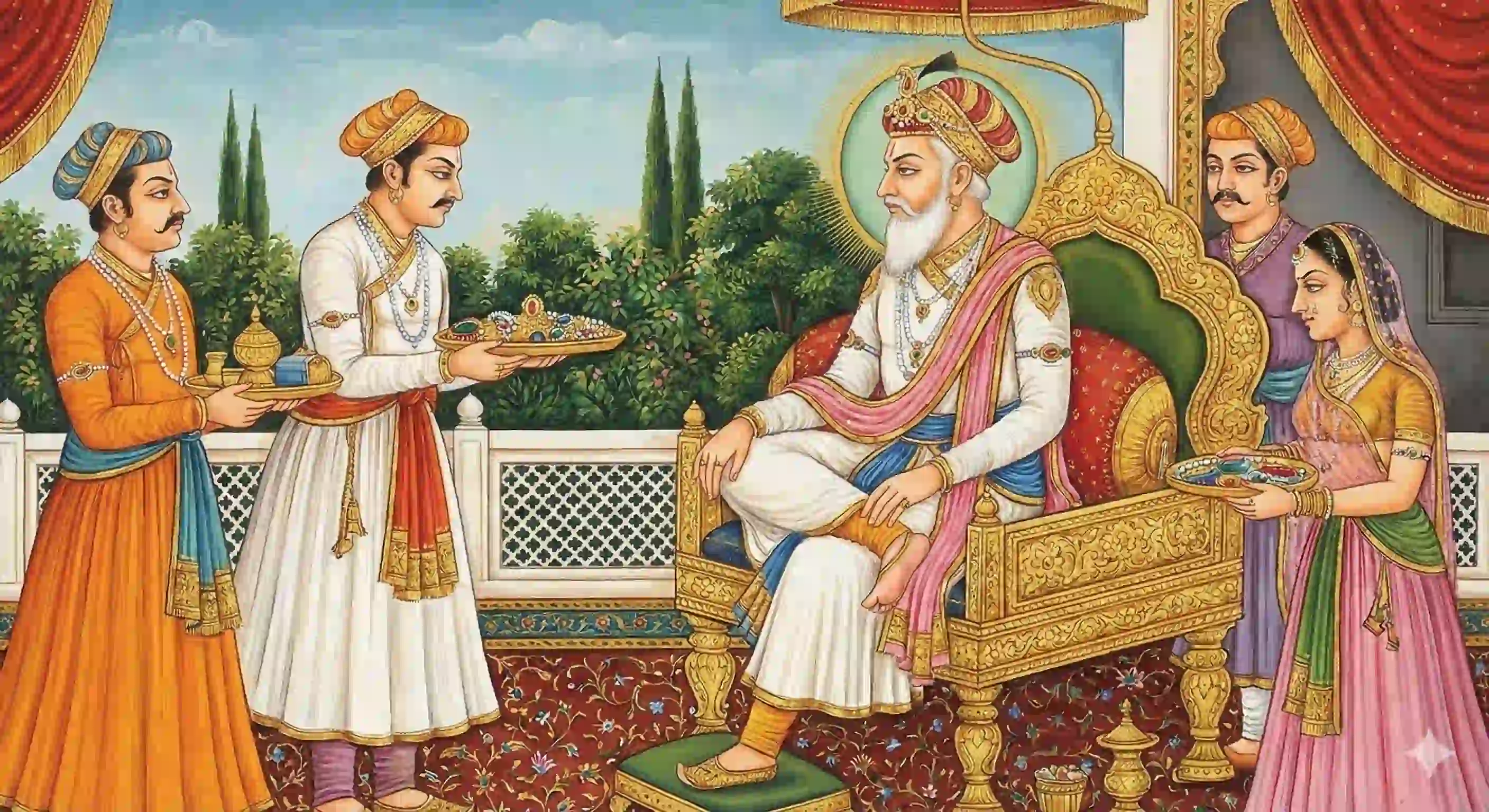
King Janak is a legendary and highly revered figure in Vedic texts, respected not just as an immensely powerful monarch, but as a fully realized sage. He was the father of Mother Sita, making him a soul of incredibly elevated spiritual status.
King Janak was famously bestowed the title Videharaj, which translates to "the king who is without a body" or "the one who has transcended the perception of his physical body." His spiritual practice (sadhana) and internal absorption were so advanced that scriptures state if he were to put his hand in a fire, he would not even register that his flesh was burning. He lived in a state of absolute opulence, surrounded by grand palaces, queens, servants, and immense wealth, yet he remained completely untouched by material attachments.
One day, two renowned scholars (pundits) residing in his kingdom began passionately debating this very title. One pundit was highly skeptical of the king's spiritual attainments: "How can he possibly be called Videharaj? In the midst of so much opulence, look at the palace in which he lives and his beautiful queen and children. Ah, people just create such titles for nothing."
The second pundit, more open-minded, suggested they go directly to the king to respectfully resolve their doubt. They approached King Janak and challenged him: "Maharaj... you are famous as the king who is beyond the body, who has no attachment to even an atom of this material creation. Can you please tell us that in the midst of all this opulence, how do you remain Videharaj?"
To their absolute horror, King Janak's demeanor shifted. He lifted his eyebrows, frowned, and thundered, "Your impudence to ask a king how he is Videharaj! You have transgressed your rights as citizens. You will need to pay for this." He declared that they would both be hanged the very next morning.
However, he added a cruel twist: "But today you can enjoy." He ordered his royal servants to give the two terrified scholars the ultimate royal treatment. They were given luxurious oil massages, dressed in regal attire, adorned with attractive ornaments, and fed a sumptuous fifty- six-item royal feast (chappan bhog). Finally, they were put to sleep in the softest of beds.
Despite being surrounded by the absolute pinnacle of sensory pleasures, the two pundits were in sheer psychological agony. They could not relish the delicious food or the soft beds. All night, they tossed and turned, consumed entirely by the terrifying reality that they would be executed in a few short hours.
The next morning, pale and exhausted, they were brought before the royal court. King Janak offered a tiny sliver of hope: "I have decided to give you one chance for respite... You will both be handed cups of oil filled till the brim. You will have to walk with them around my capital Janakpuri. If you can make it back without a single drop falling from the cup, I will then forgive you."
Desperate to live, the scholars took the cups. They walked out into the bustling, vibrant streets of the capital. They passed by the grand drama halls playing enchanting music, they walked past their favorite sweet shops and luxurious cloth merchants. Yet, nothing was pulling their minds. Their attention was completely, absolutely focused on one single thing: the fragile surface of the oil in their cups.
When they finally returned to the palace with all the oil intact, King Janak pardoned them. But he asked a crucial question: "Last night you received such wonderful luxury... did your mind get tempted by them?" "No, Maharaj, absolutely not," they replied. "Death was meandering on our head."
"And today," the king continued, "did your mind go to the various gratifications of the senses available in my market?" "Maharaj, where was the question of it? We had to retain the oil in the cups."
King Janak then revealed his profound lesson. "Look, it was the same world, and yet you were detached from all these objects of enjoyment... because your intellect realized that at this moment something else is more important. If we are not careful, we can die."
Janak explained that this was precisely his secret. "You asked me that in the midst of opulence, how do I remain Videharaj? The answer is simple. I just remember my death. Any day can be my last. This precious human life can just be wasted away. Every moment of it is invaluable. I must put it to good use, and the best use is Hari Chintan, remembrance of God. By keeping the proper knowledge in my intellect, I sustain my state of detachment from the world."
The Bhagavad Gita on Mind Management: The Power of Buddhi Yoga
The story of the terrified pundits brilliantly and practically illustrates the hierarchy of our internal machinery. The mind (manas) is naturally drawn to pleasure; the sweets, the dramas, the soft beds, the social media notifications. But when the intellect (buddhi) makes a firm, life-or-death decision based on strong reasoning, the mind is instantly and entirely subdued. The intellect commands the mind, pulling it away from frivolous distractions and forcing it to focus with razor-sharp intensity.
This dynamic relationship between the mind and the intellect is central to the teachings of the Holy Bhagavad Gita. Swami Mukundananda frequently emphasizes that understanding and mastering this internal hierarchy is the very first step to mastering your focus and achieving success in both the material and spiritual realms.
In his profound commentary on the Bhagavad Gita, Swamiji highlights a pivotal verse that clearly lays out this divine chain of command.
Bhagavad Gita 3.42 states:
indriyāṇi parāṇyāhur indriyebhyaḥ paraṁ manaḥ manasas tu parā buddhir yo buddheḥ paratas tu saḥ
Translation: "The senses are superior to the gross body, and superior to the senses is the mind. Beyond the mind is the intellect, and even beyond the intellect is the soul."
In his illuminating commentary on this verse, Swami Mukundananda explains: "An inferior entity can be controlled by its superior entity. Shree Krishna explains the gradation of superiority amongst the instruments God has provided to us... This knowledge of the sequence of superiority amongst the senses, mind, intellect, and soul, can now be used for rooting out lust [and distraction]."
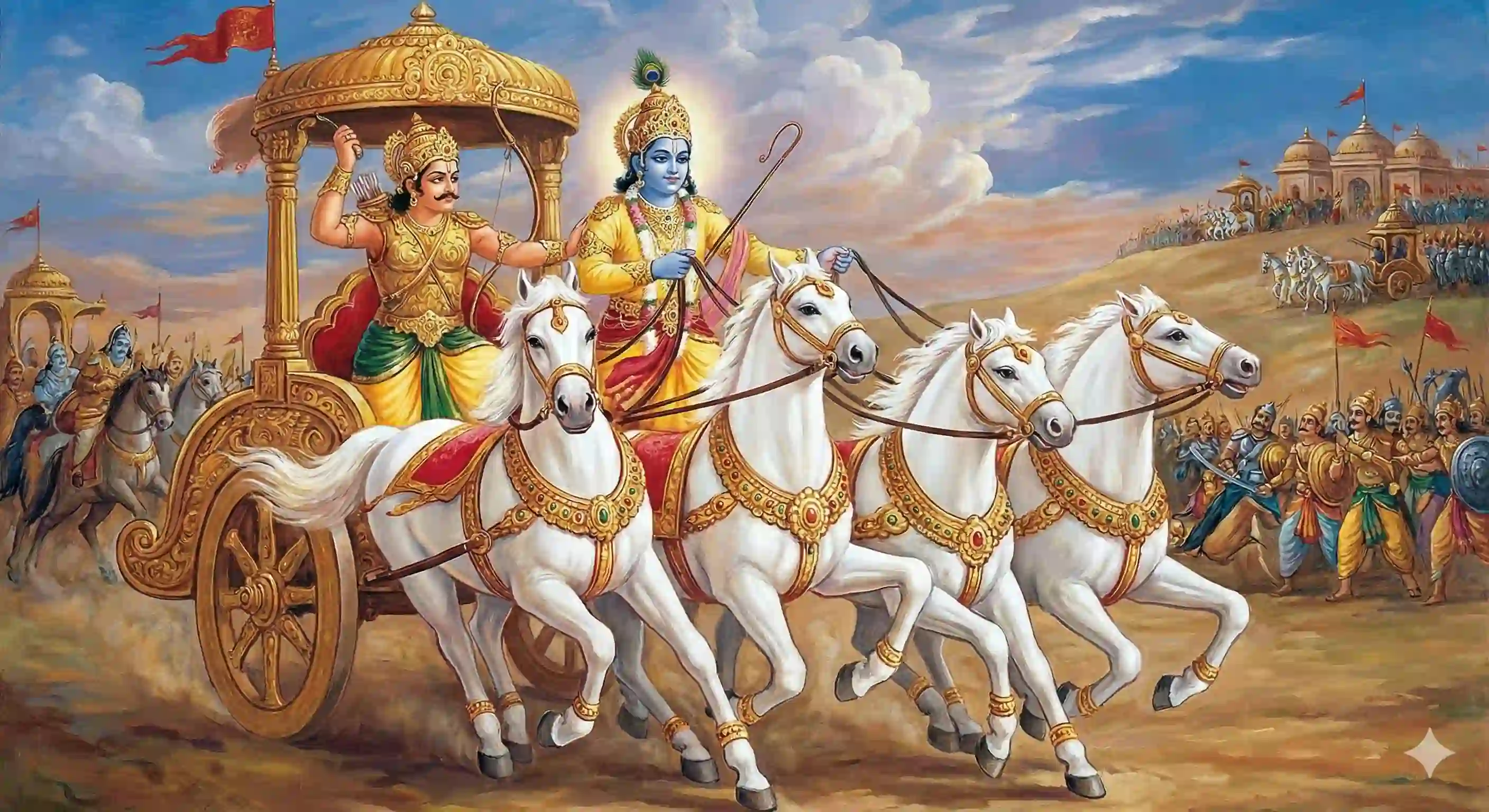
To understand this, we must look at the famous chariot metaphor found in the Vedic scriptures. The intellect acts as the charioteer of our lives. The mind acts as the reins, and the five senses are the wild, powerful horses. If the intellect is weak, indecisive, or "asleep at the wheel," the mind is dragged helplessly by the senses wherever they please. The horses run wild, and the chariot crashes.
However, when the intellect is awakened and empowered by the soul with strong spiritual knowledge and a powerful, undeniable "Why," it grips the reins of the mind firmly. It pulls the horses into alignment. This unique capacity to subjugate lower, animalistic instincts and direct one's life according to higher values, divine truths, and conscious beliefs is the defining trait of human beings.
Using the intellect to conquer the mind is called Buddhi Yoga.
Overcoming Inner Obstacles: Swami Mukundananda's Personal Journey

To demonstrate that this powerful principle applies to everything from the highest spiritual realization to practical skill acquisition, Swami Mukundananda shares a beautiful, deeply inspiring story from his own life, shortly after he renounced the world to become a monk in 1989.
His spiritual master, the profound Jagadguru Shri Kripaluji Maharaj, instructed the young Swamiji to study the deep Vedic scriptures for twelve hours a day. Kripaluji Maharaj also informed him that his future duty would be to travel and distribute this vital spiritual knowledge for the welfare of others.
Realizing he had absolutely zero experience as a public speaker, Swami Mukundananda decided he needed to begin practicing immediately. The problem? He lived in a tiny, secluded ashram with only about fifteen other individuals, all of whom were deeply busy with their daily devotional service (seva). There was no public.
Determined, he decided to practice delivering full lectures to the blank wall of his small room. However, he quickly ran into a severe, crippling motivational roadblock.
"That was extremely demotivating," Swamiji recalls. "Try giving a lecture to the wall. It will not even smile or not even frown. It will not even say that was a stupid joke. So after five minutes, I would become so uninspired, I would stop speaking."
Frustrated by his lack of drive, he approached his Guru and respectfully begged for a solution. He asked if just one person from the ashram could be designated to sit and listen to him for just one hour a day. He reasoned that with a live human being present, his external motivation would be restored, and he would easily be able to deliver the lecture.
Because no one was free, Kripaluji Maharaj utilized that opportunity to teach him a life-altering truth about internal motivation:
"My child, you do not need anything from the outside to become inspired. Carelessness, the reverse of inspiration, also doesn't come from the outside. It comes from within, and it can be eradicated from within as well."
Kripaluji Maharaj then delivered a profound formula for ultimate success and unwavering focus:
"If you have a deep yearning, you will make a firm resolve. When you have a strong decision, you will put in tremendous effort, and that is how you will become. Instead, if your aspiration is mild, your decision will be weak, your effort will be lukewarm, and that is how you will become."
This singular statement completely shattered Swamiji's perspective. He realized he had been blaming his environment (the lack of a physical audience) for his own internal carelessness. His Guru reminded him that the ultimate responsibility for inspiration lay entirely within his own intellect.
Armed with this powerful new realization, Swami Mukundananda returned to his room. The very next day, he faced the blank wall and made a firm, unshakeable resolve in his intellect: I will not be careless.
With thunderous effort and unwavering focus, he delivered a complete, passionate lecture to "the most enlightened wall in the world." Once his inner laziness was eradicated by his intellect's strong decision, finding an external audience became entirely irrelevant. He soon began lecturing to the open cornfields, to the grazing goats and cows, to the flowing water canal; to anything under the sun. Because he tapped into the infinite well of internal motivation, he became fully insulated from his environment.
The Power of the Intellect in Everyday Life: Lalitha’s Transformation

You might think that such focus is reserved only for monks or highly elevated saints. However, to prove that this power is accessible to absolutely everyone, Swamiji shares the relatable story of a little girl named Lalitha.
All year long, Lalitha's parents came to Swamiji, complaining that their daughter simply would not study. When Swamiji asked the young girl why she wasn't doing her schoolwork, Lalitha gave the classic, honest answer of a child: "Uncle, my mind does not like to study."
Her mind found studying incredibly boring compared to playing. Because her intellect was not yet supplying a strong enough reason to override her mind's desire for pleasure, she remained chronically unfocused and unmotivated.
However, when the year-end final examinations arrived, a miraculous transformation occurred. For a grueling two-hour exam, little Lalitha sat perfectly still in her chair in the examination hall. She was entirely oblivious to her surroundings. She didn't look around at her classmates; she didn't peep out of the window. Her focus was absolute, razor-sharp, and completely locked onto the question paper in front of her.
How did a child, who claimed she couldn't control her mind all year, suddenly achieve the deep concentration of a seasoned yogi?
It happened because her intellect finally made a powerful calculation. Her intellect
decided: "These two hours are now critical to me. If I am careless in this time, I will lose the whole year. My classmates will go ahead, and then what face will I show to my parents?" Her own self-interest provided a massive, undeniable "Why." Once her intellect was utterly convinced of the sheer necessity to perform, it immediately seized complete control of her wandering mind and forced it into a state of hyper-focus.
Actionable Steps: Cultivating Buddhi Yoga Daily
So, how can you actively apply the wisdom of Swami Mukundananda, the science of intrinsic motivation, and the divine teachings of the Bhagavad Gita to your daily life? How do you move from theory to practice and instantly focus your mind on your ultimate goals?
Here are the practical steps to tap into internal motivation:
- Find Your "Strong Why": Internal motivation requires giving your intellect an undeniable reason for action. As Swamiji says, if you are told to stay awake meditating until 3 a.m., it feels like torture. But if you have to prepare a crucial presentation for your company board, you will easily stay awake until 5 a.m. Make your "Why" so powerful and emotionally resonant that your mind has no choice but to surrender to the intellect's command.
- Feed Your Intellect the Right Knowledge Daily: Your intellect is a vessel; it can only work with the fuel and information you provide it. If you feed it superficial social media, your decisions will be weak. Consume uplifting, philosophical, and empowering knowledge every single day. Read scriptures like the Bhagavad Gita, listen to spiritual discourses, and study the lives of great individuals.
- Revise, Reflect, and Contemplate: Simply hearing knowledge is not enough. As Swamiji notes, you must take the good knowledge you receive from God, Guru, and scriptures, and revise it over and over again. Contemplate it deeply until your intellect is unshakably convinced of its absolute truth. Only then will it have the power to align the sentiments of the mind.
- Practice Buddhi Yoga Constantly: Catch your mind when it wanders toward external distractions, procrastination, or seeks external praise. When it drifts, consciously and firmly use your intellect to remind the mind of your ultimate goal, gently pulling it back to the present task.
- Remember the Value of Time: Take a lesson directly from King Janak. Regularly remind yourself that human life is fragile, unpredictable, and every moment is invaluable. By deeply recognizing the urgency of your own spiritual and personal evolution, the petty distractions of the material world will naturally lose their magnetic grip on your attention.
Conclusion
The lifelong journey to achieving razor-sharp focus does not involve fighting your mind directly, nor does it involve constantly manipulating your external environment to force yourself into action. True, unbreakable focus and boundless enthusiasm come from awakening the dormant power of your intellect.
By feeding your intellect the right spiritual knowledge, establishing a powerful, unshakeable "Why," and daily practicing the principles of Buddhi Yoga, you can master your restless mind. You can transcend the fluctuations of your environment, stop relying on external carrots and sticks, and achieve magnificent success in both your material endeavors and your spiritual journey to the Divine.
Call to Action
Are you ready to dive deeper into the ancient, transformative science of mind management and spiritual elevation?
- Subscribe to Swami Mukundananda’s YouTube Channel for your daily dose of inspiration, practical wisdom, and guided meditations.

- Explore the profound, life-changing teachings of the Holy Bhagavad Gita through Swami Mukundananda's masterful, easy-to-understand commentary.


• Join us for transformative events, spiritual retreats, and vibrant community gatherings at the Radha Krishna Temple in Dallas. Elevate your mind, nourish your soul, and transform your life today!


Frequently Asked Questions (FAQs)
1. What is the fundamental difference between intrinsic and extrinsic motivation? Extrinsic motivation is driven by external rewards such as money, physical prizes, praise, or the desire to avoid punishment. Intrinsic motivation comes from deep within; it is the natural drive to engage in an activity because it is inherently fulfilling, aligns closely with your core values, or contributes to your personal and spiritual growth.
2. How exactly does the Bhagavad Gita describe the relationship between the mind and the intellect? In Bhagavad Gita verse 3.42, Lord Krishna explains a specific internal hierarchy: the senses are superior to the physical gross body, the mind is superior to the senses, the intellect (buddhi) is superior to the mind, and the eternal soul is superior to the intellect. To achieve true focus, the intellect must be empowered by spiritual knowledge to control the restless mind.
3. What is Buddhi Yoga? Buddhi Yoga literally translates to the "Yoga of the Intellect." It is the conscious, daily practice of empowering your intellect with divine knowledge and absolute conviction, and then utilizing that resolute intellect to guide, discipline, and subjugate the wandering mind and wild senses toward a higher purpose.
4. Why do I lose my focus so quickly even when I desperately want to achieve a specific goal? According to the teachings of Swami Mukundananda, a chronic lack of focus stems directly from a weak resolve in the intellect. As Kripaluji Maharaj taught, if your inner aspiration is only mild, your decision-making will be weak, and your resulting effort will be lukewarm. You must supply your intellect with a massive, undeniable "Why" to force the stubborn mind into compliance.
5. How can I practically practice controlling my mind on a daily basis? Start your day by consuming positive, spiritually uplifting knowledge to strengthen the "muscles" of your intellect. Before beginning any task, explicitly remind your intellect why it is crucial to your life and spiritual journey. When your mind inevitably drifts toward distractions, use your intellect to firmly remind the mind of its higher purpose, pulling it back to the present moment.
Further Reading
Keep the momentum going! Deepen your understanding of mind management by exploring these related articles from our blogs:
 RKT Blog Team
 RKT-Blog
 JKYog Team