

1. Focus on your duty, not the outcome

Lord Krishna shared one of his deepest teachings with Arjuna amid the chaos at Kurukshetra battlefield. This teaching appeals to millions who seek inner peace during life's challenges. "You have a right to perform your prescribed duties, but you are not entitled to the fruits of your actions," Krishna declared. These words laid the foundation of karma yoga - the path of selfless action.
Why Krishna emphasized karma over results
Krishna's teaching goes beyond simple detachment. He knew that true freedom comes when we break free from our attachment to outcomes. The Bhagavad Gita explains that our basic nature makes us act - no living being can stay inactive even for a moment. Notwithstanding that, our fixation with results brings suffering.
Krishna addresses a basic human trait: we hold onto our action's fruits and get emotionally tangled in success and failure. Results depend on many factors we can't control. We free ourselves from needless worry by focusing on our duties without attachment.
Krishna explains in Chapter 3 of the Gita, "The world is bound by actions other than those performed for the sake of sacrifice; do thou, therefore, perform action for that sake alone, free from attachment". Actions done as offerings create freedom instead of bondage.
Modern-day stress and performance anxiety
This ancient wisdom fits perfectly in today's high-pressure world. People face tremendous stress in their daily lives. Professionals worldwide feel anxious, especially after recent mass layoffs in the tech industry. Work stress and personal worries can stop us from doing anything good for ourselves or others.
Our obsession with results causes much of this stress. We worry too much about promotions, recognition, and success. This creates constant anxiety. Questions flood our minds: Will I get the promotion? Will they like me? What if I fail?
The Bhagavad Gita suggests a radical alteration: separate action from expectation. Gripping ourselves with outcome expectations hurts our performance and peace of mind. Focusing on present action with full attention and detachment leads to what modern psychology calls "flow state" - what Lord Krishna described as karma yoga thousands of years ago.
How to apply this teaching in daily life
Here's how to bring this deep teaching into modern life:
- Begin with awareness - Dedicate your daily actions to something bigger than yourself. This moves your focus from self-centered outcomes to work quality.
- Focus on the present - Redirect your attention to the task at hand when result anxiety hits. The Gita teaches, "The present moment becomes your place of power, not your fears of the future".
- Develop equanimity - Stay balanced through success and failure. Note that Krishna said: "Yoga is evenness of mind".
- Redefine success - Measure success by your attention and effort quality rather than outcomes.
These principles help transform ordinary actions into spiritual practice. This ancient teaching shows us how to break free from result anxiety in our ever-changing world. The process becomes rewarding whatever the outcome when we focus on doing our duties well without attachment - just as Lord Krishna promised Arjuna.
2. Accept change as a constant
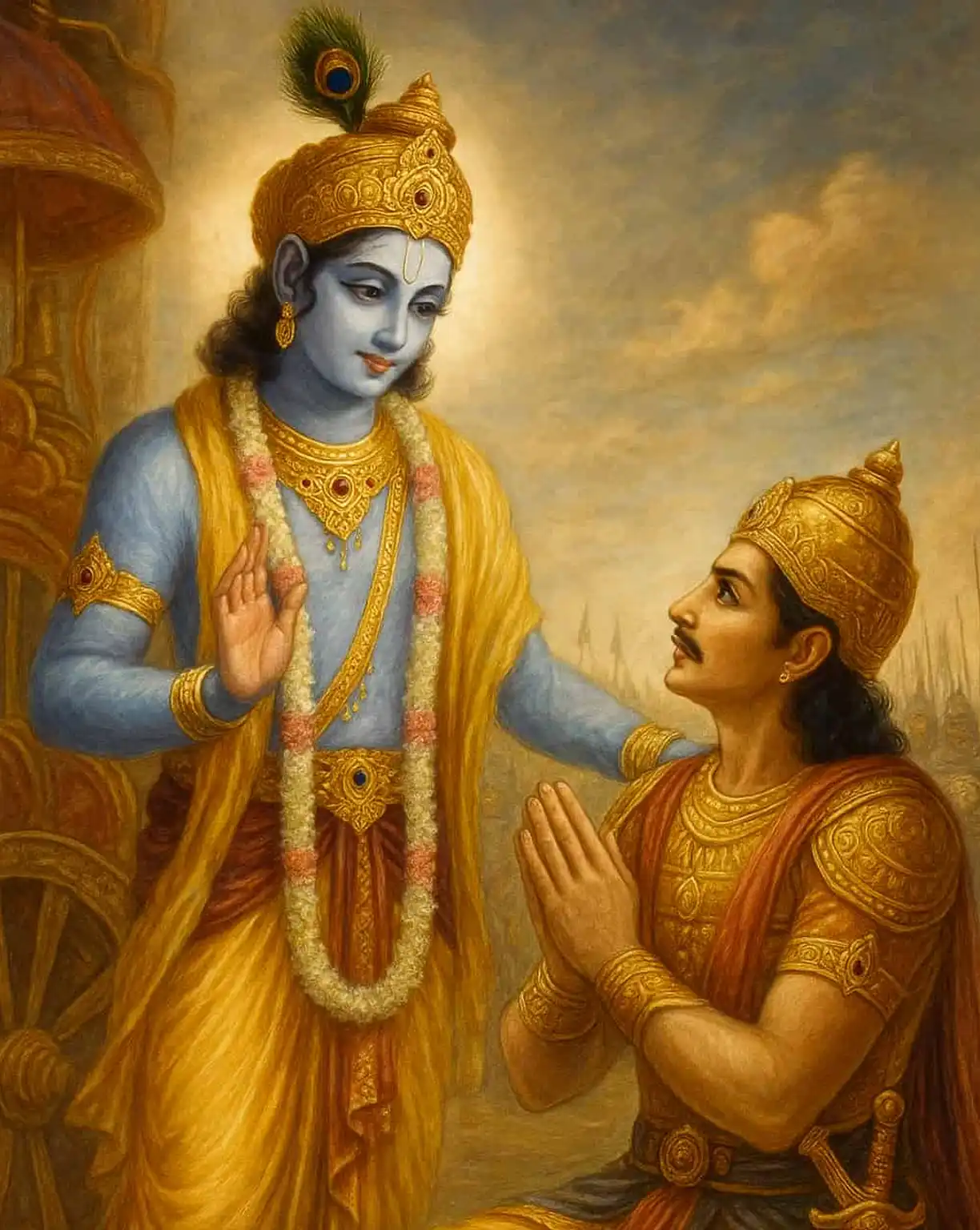
Life throws unexpected challenges at us. Seasons change, relationships evolve, and circumstances take new turns without warning. The Bhagavad Gita provides deep wisdom through Krishna's timeless teachings about dealing with these constant changes.
Krishna's quote on impermanence
In Chapter 2, Verse 14 of the Bhagavad Gita, Lord Krishna reveals a fundamental truth about existence: "O son of Kunti, the contact between the senses and the sense objects gives rise to fleeting perceptions of happiness and distress. These are non-permanent, and come and go like the winter and summer seasons. O descendent of Bharat, one must learn to tolerate them without being disturbed."
This verse shows impermanence as nature's law. Krishna teaches us that our sensory experiences—whether pleasurable or painful—never last. Winter gives way to summer, and our joys and sorrows keep changing throughout our lives.
Krishna reveals the spiritual reward in verse 2.15 for those who stay balanced: "O Arjun, noblest amongst men, that person who is not affected by happiness and distress, and remains steady in both, becomes eligible for liberation."
Why resisting change causes suffering
Our need to hold onto things are the foundations of much of our psychological pain. Krishna shows how our mind reacts with pleasure or pain to stimuli based on what we like or dislike. These reactions flow through our nervous system like rivers carrying our life force and thoughts.
"Desires are never satisfied—they burn like fire endlessly," the Gita warns us. Brief moments of satisfaction from chasing temporary pleasures lead to new cravings. This cycle keeps us unhappy.
The pain comes from our denial of impermanence rather than from change itself. We suffer when we desperately hold onto things, relationships, or circumstances that will transform or dissolve.
How to build inner stability
Krishna doesn't just point out the problem—he gives us a detailed solution through developing mental equanimity (titiksha). This spiritual strength helps us stay steady through life's ups and downs.
The path to inner stability needs:
- Recognizing our eternal nature – The soul "is neither born, nor does it ever die" gives us an anchor of permanence in life's storms
- Practicing observer awareness – We learn to watch our thoughts and emotions without letting them overwhelm us
- Developing detachment – We appreciate experiences without clinging to them, like "a lotus leaf untouched by water"
- Maintaining spiritual practices – Regular meditation creates what Krishna describes as a mind "like a lamp in a windless place that does not flicker"
Yogis who master their minds "rise above the dualities of cold and heat, joy and sorrow, and honor and dishonor. Such yogis remain peaceful and steadfast in their devotion to God."
Krishna teaches that true stability comes from developing inner resilience rather than controlling external circumstances. Swami Mukundananda explains that the secret lies in "temperature control of our inner world," as we stay balanced whatever happens around us.
3. Live in the present moment

Lord Krishna's most powerful teachings in the Bhagavad Gita emphasize living fully in the present moment. This ancient wisdom provides a remedy for our scattered attention and restless minds, especially relevant in today's world of constant notifications, information overload, and endless distractions.
The mind as friend or enemy
Chapter 6, Verse 6 reveals one of Krishna's most profound psychological insights: "For one who has conquered the mind, it is their friend. For those who have failed to do so, the mind works like an enemy". This verse shows our mental faculties' dual nature - they can be our greatest ally or worst adversary.
Our untamed mind bounces between past regrets and future anxieties, which creates unnecessary suffering. Krishna teaches Arjuna that controlling the mind is challenging yet possible through consistent practice and detachment.
Arjuna expresses his concern about mind control in Chapter 6: "The mind is very restless, turbulent, strong and obstinate, O Krishna. It appears to me that it is more difficult to control than the wind". Many of us experience this turbulence as our thoughts jump chaotically between topics daily, rarely settling in the present moment.
How distractions affect clarity
Modern life has multiplied our distractions exponentially. A spiritual teacher points out that "Those who commit to nothing are distracted by everything". The Gita explains how our senses naturally pull attention outward, which fragments our focus and reduces our effectiveness.
These distractions create several problems:
- They cloud judgment and decision-making
- They waste precious energy and time
- They prevent deep connection with others and ourselves
- They inhibit spiritual growth and self-knowledge
The Bhagavad Gita describes this scattered state: "One who is ignorant and faithless, and has a doubting mind perishes in their spiritual attempts. For a person of doubting mind, there is neither this world, nor the next, nor bliss". Krishna explains that mental clarity emerges only when we withdraw our senses from external objects—like a tortoise pulling in its limbs.
Mindfulness as taught in the Gita

Mindfulness weaves through the Bhagavad Gita, though not by its modern name. Krishna teaches present-moment awareness that surpasses both past and future concerns: "Wherever the flickering and restless mind wanders, he (the Yogi) must withdraw it from all those distractions, and bring it back under the control of the self alone".
The Gita uses powerful metaphors to describe ideal consciousness: "One should be tranquil like the ocean which is unaffected by rivers flowing into it," and "being like water drop on a lotus leaf which does not have an attachment to the leaf".
Krishna recommends several practices to achieve this mindful state:
- Regular meditation - Setting aside time to anchor awareness in the present
- Controlled breathing (pranayama) - Using breath as a tool to calm the mind
- Balanced living - "Those who eat too much or eat too little, sleep too much or too little, cannot attain success in Yoga"
- Self-observation - Watching thoughts without attachment
Krishna describes the ultimate outcome of these practices as "Sthithapragna"—a state of unperturbedness where one stays steady despite life's inevitable fluctuations. This state brings exceptional mental clarity and insight, letting us see reality as it truly is, rather than through past conditioning or future anxiety's distorted lens.
4. Master your emotions
Emotions can be our greatest allies or our fiercest adversaries—this fundamental truth lies at the heart of Lord Krishna's teachings in the Bhagavad Gita. Modern neuroscience now confirms what ancient wisdom has known all along: our emotional responses shape the quality of our decisions and the direction of our lives.
Anger and delusion in Bhagavad Gita
The Bhagavad Gita offers a detailed psychological analysis of how emotions, particularly anger, cloud judgment. Lord Krishna explains this process to Arjuna in Chapter 2, Verses 62-63: "While contemplating on the objects of the senses, one develops attachment for them. Attachment leads to desire, and from desire arises anger. Anger leads to clouding of judgment, which results in bewilderment of memory. When memory is bewildered, the intellect gets destroyed; and when the intellect is destroyed, one is ruined."
This sequence shows how unchecked emotions trigger a destructive chain reaction—from attachment to desire, from unfulfilled desire to anger, from anger to delusion, and finally to complete ruin. Krishna describes anger as "the all-devouring sinful enemy of this world" that blocks wisdom like smoke covers fire.
Steps to emotional regulation
Mastering emotions might seem as difficult as controlling the wind at first. Krishna's practical guidance helps regulate emotions effectively:
- Delay your reaction - Your logical mind needs time to step in when emotions surface. Take a deep breath, sip water, or count slowly. A spiritual teacher once shared how this simple practice helped an anger-prone woman—she would sip water before responding, creating a vital pause that changed her reactions.
- Develop self-awareness - Krishna teaches us to "observe the mind without becoming entangled in thoughts." This mindfulness practice helps spot emotional patterns before they take over.
- Practice detachment - "One who is able to withdraw the senses from their objects, just as a tortoise withdraws its limbs into its shell, is firmly fixed in perfect consciousness." This metaphor shows how we can choose our emotional responses rather than let external stimuli control us.
Why emotional mastery leads to better decisions
Emotional mastery substantially improves decision-making quality. Raw emotions, especially anger, can hijack our reasoning. Krishna explains that anger creates "sammoha" (delusion), where we "no longer know what actions to take or avoid."
The Bhagavad Gita teaches that emotionally intelligent people stay balanced despite life's ups and downs. "One who is not disturbed in mind even amidst the threefold miseries or elated when there is happiness, and who is free from attachment, fear and anger, is called a sage of steady mind."
A stable emotional state protects physical health. Uncontrolled anger releases stress hormones that raise heart rate, blood pressure, and disrupt digestion and sleep. Mark Twain captured this perfectly: "Anger is an acid that does more harm to the vessel in which it is stored than to anything on which it is poured."
Emotional mastery doesn't mean suppressing feelings—it means reshaping them. Krishna's guidance teaches us to channel emotional energy positively rather than destructively. This leads to clearer decisions and more meaningful living.
5. Practice true sacrifice
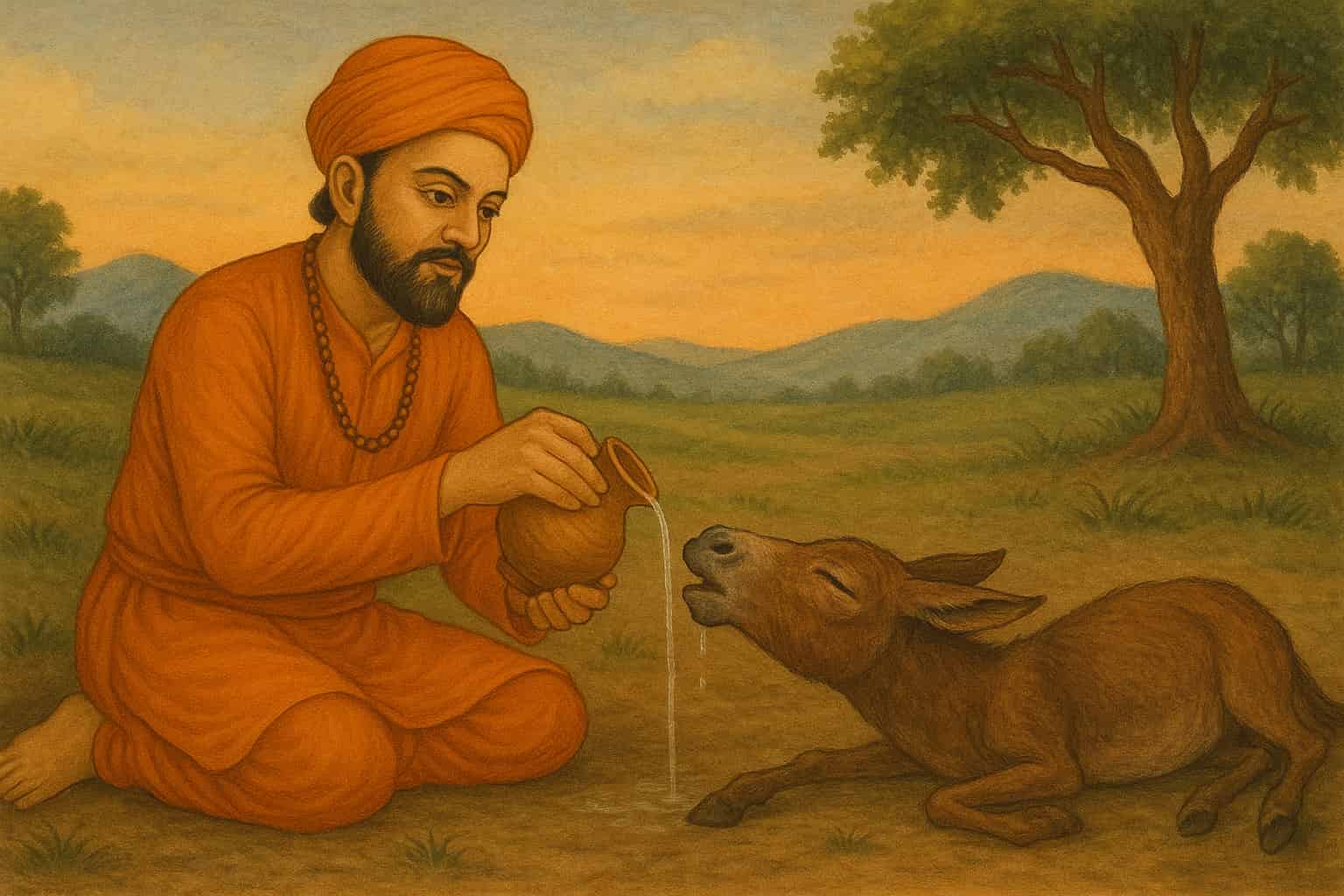
The concept of sacrifice (yajna) is the life-blood of Lord Krishna's spiritual philosophy. It goes way beyond the reach and influence of ritual offerings. Krishna's teachings in the Bhagavad Gita raise this ancient practice into a complete approach that turns everyday actions into sacred offerings.
What Krishna means by offering everything
Lord Krishna shares a game-changing viewpoint in Chapter 9, Verse 27 of the Bhagavad Gita: "Whatever you do, whatever you eat, whatever you offer or give away, and whatever austerities you perform – do that, O son of Kunti, as an offering to Me." This teaching redefines sacrifice as a mindset that covers all aspects of life rather than just ceremonial acts.
True sacrifice means dedicating our whole life to the divine, Krishna explains. The real meaning lies in the consciousness behind the offering, not what's being offered. Chapter 4, Verse 24 states: "For such a person, the act of offering is God, the oblation is God, the fire is God, and that which is to be attained is also God." This deep understanding shows that real sacrifice happens when we see divinity in everything we do.
Sacrifice beyond rituals
The Gita's concept of sacrifice goes much deeper than just pouring oblations into sacred fires. Krishna presents several forms of sacrifice that everyone can practice:
- Dravya-yajna: Offering one's well-earned wealth to noble causes
- Tapo-yajna: Practicing austerities and self-discipline
- Yoga-yajna: Engaging in spiritual practices
- Svadhyaya-yajna: Studying sacred texts to grow spiritually
- Jnana-yajna: Cultivating transcendental knowledge
Krishna makes sacrifice available to everyone through these different approaches. People can contribute based on their natural abilities and inclinations. This broader view lets anyone participate in sacrifice, even without knowledge of Vedic rituals.
Daily acts of selflessness
Krishna guides us to turn these teachings into action through daily acts of selflessness. He teaches that people who cook only for themselves "eat sin," while those who share participate in the cosmic cycle of giving.
Daily sacrifices can happen in many ways:
- Offering our work's results without attachment
- Sharing our resources with the needy
- Doing our professional duties with a service mindset
- Growing in knowledge and sharing wisdom with others
Krishna's teachings show that treating life as one continuous sacrifice leads to spiritual growth and freedom from karmic bondage. A change from self-centered living to a giving mindset helps us exceed mere existence and truly live.
6. Stay humble despite success

Humility stands as the first quality of true wisdom in the Bhagavad Gita. It's maybe even the toughest test for people who find success in life. Our ego tends to grow with our achievements. This creates a spiritual barrier that Lord Krishna warns us about repeatedly.
Ego vs humility in Krishna's teachings
Sanskrit refers to ego as "ahamkar" (literally "I-maker"). It's the false identity that emerges when our soul connects with body, mind, and actions. The Bhagavad Gita makes this clear: "All actions are performed by the modes of material nature, but one deluded by ego thinks, 'I am the doer'" (3.27). This delusion chains us and blocks our spiritual growth.
Krishna's approach is unique. He doesn't ask us to destroy our sense of self. Instead, we should transform it. True humility isn't about feeling worthless. It's about seeing ourselves as instruments rather than independent actors. The Gita (13.8) lists humility (amanitva) first among twenty qualities that make up wisdom. This shows it's the gateway to all spiritual understanding.
How humility leads to peace
Our ego just needs constant validation and recognition. We suffer when these needs aren't met. The mind stays disturbed and peace remains elusive. Krishna teaches that real peace comes when we:
- Know we're not the doer of our actions
- See ourselves as instruments of divine will
- Serve without wanting recognition
- Accept our limits and strengths
Srila Prabhupada's life shows how authentic humility works with healthy self-esteem. He moved confidently with purpose. Yet he kept a humble attitude, knowing his success came from divine grace.
Examples from Arjuna and Karna

The Mahabharata gives us powerful contrasting examples through Arjuna and Karna. Both mastered archery, but they handled success differently. Arjuna stayed humble and open to guidance despite his amazing skills. Karna had great talent too, but his pride ended up leading to his downfall.
Here's another telling story. Krishna once asked his devotee Yudhishthira to find someone lower than himself. He asked the proud Duryodhana to find someone greater. Yudhishthira's true humility shone through - he couldn't find anyone beneath him despite his virtues. Duryodhana's vanity was clear. He couldn't find anyone better than himself.
Krishna's teachings remind us that real humility isn't weakness - it's strength. It's knowing how to succeed without becoming a slave to our ego's constant need for recognition and praise.
7. Value your own path
Lord Krishna's most liberating teachings center on embracing your unique path—the profound concept of "svadharma" or one's own duty. This wisdom speaks to our human habit of seeking validation from others instead of looking within for authenticity.
Why Krishna says it's better to fail in your own duty
Success-obsessed society makes Lord Krishna's revolutionary view in the Bhagavad Gita even more relevant: "It is far better to perform one's natural prescribed duty, though tinged with faults, than to perform another's prescribed duty, though perfectly. In fact, it is preferable to die in the discharge of one's duty than to follow the path of another, which is fraught with danger" (3:35).
This teaching goes beyond philosophy—it's deeply practical. Each person has a unique nature (svabhava) that shapes their authentic path, Krishna explains. We create inner conflict by abandoning our true tendencies to chase what seems more prestigious or profitable. Our actions drift away from our nature and cause mental distress and spiritual confusion.
Krishna makes this clearer: "Better is one's own duty, though destitute of merits, than the well-executed duty of another. He who doeth the duty laid down by his own nature incurreth not sin" (18:47).
Comparison and imitation in modern life
Social media makes our habit of unhealthy comparison worse. People scroll through carefully selected highlights of others' lives, forgetting these are just fragments of reality. The digital world makes Krishna's ancient warning more meaningful than ever.
The "crab mentality" shows this clearly—just as crabs pull down any trying to escape a trap, people often discourage authentic self-expression through envy and criticism. This mindset assumes someone else's success takes away from our own chances.
A fish that thrives in water would die in milk, whatever the milk's quality—the same way, following another's dharma brings spiritual risk. Imitating others instead of expressing our authentic nature takes us off our true path.
How to find your swadharma
Self-examination starts your journey to find your svadharma. Think about activities that give you energy rather than drain you. Notice when you lose track of time because you're fully absorbed. These moments often show your natural tendencies.
The Gita suggests asking yourself:
- What are my inherent strengths?
- What unique opportunities lie before me?
- What internal or external challenges must I overcome?
Note that svadharma isn't set by birth or social position but by your psychological makeup and natural abilities. True svadharma goes beyond outdated caste interpretations and recognizes that "each one must try to understand his psychological makeup and function in accordance with it."
Krishna's teachings show that doing your natural duty with dedication helps you grow spiritually and realize yourself—the highest goal of human life.
8. Set high standards for yourself
Excellence serves as the life-blood of Lord Krishna's teachings in the Bhagavad Gita. Krishna's teachings go beyond inner transformation. He stresses the importance of outward excellence that demonstrates spiritual growth and stimulates societal improvement.
Leadership through example
Lord Krishna reveals a fundamental principle in Chapter 3, Verse 21 of the Bhagavad Gita: "Whatever actions great persons perform, common people follow. Whatever standards they set, all the world pursues." This profound teaching highlights the responsibility that comes with influence. Krishna explains to Arjuna that leaders must embody the qualities they wish to see in others.
Sita's father, King Janak, perfectly exemplifies this principle. He achieved self-realization yet continued his kingly duties with excellence. His actions, not just words, set standards for his subjects. Krishna teaches that genuine leadership requires you to become what you want others to be.
How Krishna inspired Arjuna
Krishna embodies this teaching himself. He tells Arjuna in Chapter 3, Verse 22: "There is no duty for Me to do in all the three worlds, O Parth, nor do I have anything to gain or attain. Yet, I am engaged in prescribed duties." Krishna chose to set high standards through his conduct despite having no personal obligations.
Krishna helped Arjuna recognize his true potential during moments of doubt. He inspired Arjuna to rise to challenges instead of lowering expectations. Krishna understood that high standards ended up liberating rather than limiting people.
Why personal excellence matters
Personal excellence creates ripple effects that go way beyond the reach and influence of individual achievement. The Gita emphasizes that communities rise when leaders set high standards. Managers who excel professionally while staying spiritually aware create workplaces filled with integrity, purpose, and meaningful contribution.
Personal excellence also sets standards that inspire future generations. We contribute to what Krishna describes as "loka-sangraha"—the welfare and upliftment of society—by embodying excellence in our chosen fields.
9. Believe in your actions
Faith (shraddha) serves as the foundation of meaningful action in Lord Krishna's philosophy. This concept goes beyond simple belief and becomes the force that drives purposeful living.
Faith as the foundation of karma
Chapter 17 of the Bhagavad Gita reveals Krishna's profound wisdom: "According to one's faith, one becomes that. Whatever the nature of one's faith, that they verily are" (17.3). This powerful teaching demonstrates that faith does more than shape our beliefs—it molds our identity. Our deepest truths naturally guide our actions.
Krishna teaches us that faith determines the fruits of our actions. A farmer's belief in planting seeds without seeing immediate results mirrors spiritual practitioners' steadfast dedication to their practice despite slow progress.
How conviction shapes outcomes
The connection between conviction and results follows an intricate pattern. Krishna's teachings point to three essential elements that must work together: karma (action), daiva (destiny), and kala (time). We control our efforts but must trust divine timing for results.
A startup founder learned this lesson firsthand. He used to list his achievements before meetings because of his insecurity. "I thought confidence meant having an impressive story," he realized. "But Lord Krishna showed me something different. My need to impress came from feeling insufficient. True confidence speaks for itself."
Krishna's advice on self-belief
Krishna balances personal effort with divine surrender in his guidance on self-belief. He urges Arjuna to act with complete dedication while recognizing a higher power's role in outcomes. This creates genuine confidence—not the ego-driven kind that needs constant validation, but authentic trust in one's path.
Genuine self-belief comes from knowing your core identity surpasses temporary successes and failures. Krishna's teachings reveal that you are not just the limited body-mind complex but eternal consciousness itself. Nothing can shake you once this truth becomes clear.
10. Have courage in the face of fear

Fearlessness stands as one of Lord Krishna's most profound teachings in the Bhagavad Gita. People naturally feel fear—from everyday worries to the deep fear of death. Krishna shares a powerful point of view: fear is just an illusion that comes from identifying with things that don't last.
Krishna's quote on fear and illusion
Krishna gives his most powerful assurance in the Gita's final chapter: "Abandon all varieties of religion and just surrender unto Me. I shall deliver you from all sinful reactions. Do not fear" (18.66). These simple words "mā śucah" (do not fear) capture Krishna's complete teaching about courage. The Gita also names fearlessness (abhayam) as the primary trait of those with divine nature (16.1). Fear comes from attachment—we feel afraid because we hold onto outcomes, relationships, and possessions too tightly.
How to overcome internal doubts
Krishna suggests several ways to beat fear. You must understand your true self as the eternal soul that "cannot be cut by weapons, burned by fire, moistened by water, nor dried by wind." Building faith through divine surrender helps too. A story tells of a young child traveling alone who finds his father's note saying "I'm in the next coach." This divine presence removes all fear. The practice of detachment from temporary things works because "vairagya eva abhayam" (detachment alone is fearlessness).
Courage as a spiritual quality
True courage surpasses simple bravery in dangerous situations. Spiritual understanding brings this courage, showing us that life's challenges help us grow. Krishna teaches that real courage doesn't mean having no fear—it means facing fear with divine awareness. Arjuna slept peacefully before battle because he knew Krishna protected him. This spiritual courage shows up when we see the divine presence in everything around us.
Conclusion
Lord Krishna's teachings in the Bhagavad Gita share wisdom that exceeds time, culture, and circumstance. These ten teachings are the foundations of a detailed guide to navigate life's complex trip with grace and purpose. The battlefield teachings from ancient times remain powerful today in our modern world of distractions, uncertainties, and challenges.
Krishna's wisdom shines through its ground application. His guidance teaches us to focus on duty rather than outcomes and frees us from result-based anxiety. Life brings unpredictable changes, and accepting this helps build resilience. His focus on present-moment awareness helps cure our scattered attention spans.
The teachings dive deep into our inner world. Krishna's explanation about emotional mastery shows ways to stop destructive reactions that cloud judgment. He redefines sacrifice beyond rituals into daily acts of selflessness. True strength comes from knowing our place in the cosmic order, and his emphasis on humility reinforces this truth.
Krishna's message about honoring our unique path (svadharma) resonates strongly, especially when you have a world obsessed with comparison. His call pushes us toward excellence instead of mediocrity. Our actions backed by faith create meaningful effort, while his wisdom about fearlessness gives courage during tough times.
Students of these teachings learn about their interconnected nature. Someone who practices detachment from outcomes becomes more present-focused naturally. People who honor their authentic path develop stronger emotional stability. Those who understand their eternal nature face fears courageously.
The Bhagavad Gita's timeless wisdom serves as practical guidance and spiritual food for the soul. Krishna's teachings show that some fundamental truths stay constant despite life's complexity. These principles help anyone reshape the scene of ordinary existence into an extraordinary spiritual trip filled with purpose, peace, and deep understanding.
Key Takeaways
The Bhagavad Gita's timeless wisdom offers practical guidance for modern life challenges, from workplace stress to personal relationships. These teachings provide a comprehensive framework for living with purpose, peace, and spiritual awareness.
• Focus on performing your duties with excellence rather than obsessing over outcomes to reduce anxiety and achieve flow state • Accept change as life's natural constant and develop inner stability through detachment rather than resistance to circumstances • Master your emotions before they cloud judgment by practicing self-awareness and creating pauses between stimulus and response • Stay humble despite success by recognizing yourself as an instrument rather than the sole creator of achievements • Follow your authentic path (svadharma) instead of imitating others, as it's better to fail in your own duty than succeed in another's • Cultivate fearlessness through understanding your eternal nature and surrendering attachment to temporary things and outcomes
These interconnected principles work together as a complete system for transforming ordinary existence into meaningful spiritual practice while maintaining effectiveness in worldly responsibilities.
Call to Action:
🌟 Upcoming Opportunities to Deepen Your Practice
📍 Dallas LTP with Swami Mukundananda
🗓️ Aug 30 – Sept 2, 2025 | Allen, TX
🔗 Register Now
📍 Dallas Spiritual Retreat
🗓️ Sept 13–15, 2025 | JKYog Retreat Center
🔗 Reserve Your Spot
📺 Ready to Make the Most of Time?
🎥 Subscribe to Swami Mukundananda’s YouTube Channel for:
- Daily Gita reflections
- Life transformation tips
- Live Bhagavat Katha videos
- Meditation and mind-management content
FAQs
Q1. What are the core teachings of Lord Krishna in the Bhagavad Gita? Lord Krishna's key teachings include performing one's duty without attachment to results, accepting change as constant, living in the present moment, mastering emotions, practicing selfless service, maintaining humility, following one's authentic path, striving for excellence, having faith in one's actions, and cultivating courage in the face of fear.
Q2. How can Krishna's teachings be applied to modern life? Krishna's teachings can be applied to modern life by focusing on performing duties with excellence rather than obsessing over outcomes, practicing mindfulness to stay present, developing emotional intelligence, maintaining work-life balance through detachment, and following one's authentic path instead of comparing oneself to others.
Q3. What does Krishna say about overcoming fear? Krishna teaches that fear arises from attachment to temporary things and misidentification with the body. He advises realizing one's true identity as the eternal soul, developing faith through surrender to divine protection, and practicing detachment to overcome fear and cultivate courage.
Q4. How does Krishna define true sacrifice? Krishna redefines sacrifice beyond traditional rituals. He teaches that true sacrifice involves offering one's entire life to the divine, performing daily acts of selflessness, and recognizing divinity in every aspect of one's actions. This can include sharing resources, performing professional duties with a service attitude, and cultivating and sharing wisdom.
Q5. What is the importance of following one's own path (svadharma) according to Krishna? Krishna emphasizes the importance of following one's own path (svadharma) rather than imitating others. He teaches that it's better to perform one's natural duty imperfectly than to excel at another's duty. Following svadharma leads to authentic self-expression, spiritual growth, and ultimately, self-realization.