
In the spiritual heart of India’s sacred scriptures, the Srimad Bhagavatam shines as one of the greatest treasures of divine narration. It is in this revered scripture that the pastimes of Shree Krishna are vividly described, not merely as stories of a divine child but as timeless events that reveal the deepest truths of the soul and the cosmos. Among these sacred pastimes, the episode of Shree Krishna’s subjugation of the serpent Kaliya stands out as an awe-inspiring testimony to divine love, justice, and spiritual redemption.
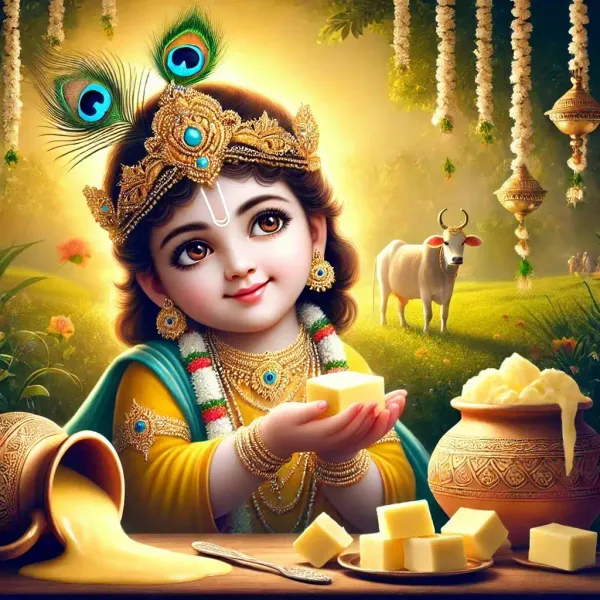
Shree Krishna, often known by the name Chit Chor (one who steals the chit or consciousness of his devotees), did not merely perform miracles to display power. His every action had a deeper purpose, designed to uplift, purify, and transform all who came into contact with him. This blog reveals how Shree Krishna, even as a young boy, confronted grave danger not with fear, but with determination and a sense of divine duty. Through his fearless actions and supreme grace, he turned even the heart of a venomous serpent towards the path of devotion.
The Poisoned Waters of Yamuna
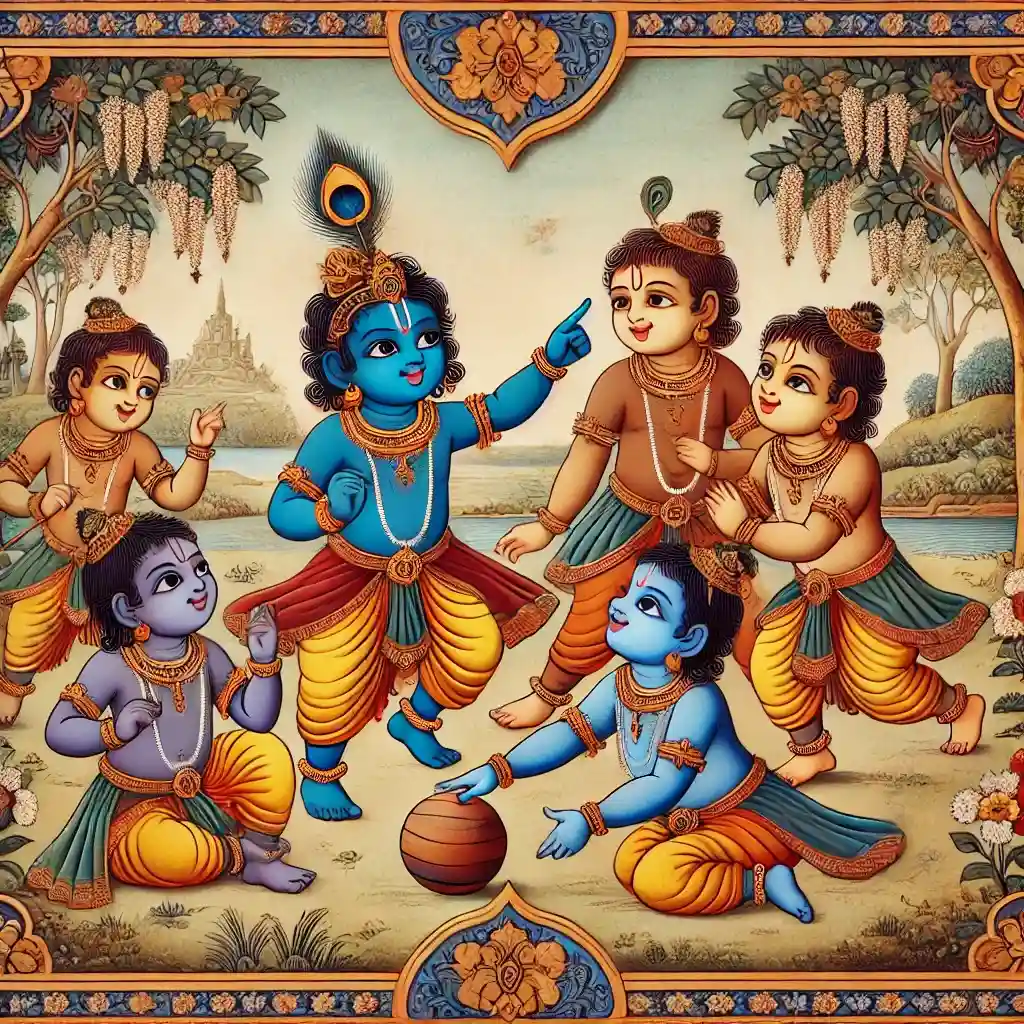
One sunny day in Braj, Shree Krishna and his childhood friends were playing a game of ball on the lush riverbanks of the Yamuna. The boys had one simple rule: anyone who accidentally threw the ball into the river had to retrieve it himself. The game was lively, filled with laughter and joyful energy.
Suddenly, a couple of the boys who approached the water’s edge collapsed and fainted. Fear spread quickly among the children. If it had happened in today’s world, the boys might have been rushed to a hospital for testing and treatment. However, in that time, the people of Braj relied on the wisdom and divine insight of Shree Krishna. He immediately understood that something far more sinister was at play. Beneath the surface of the Yamuna lurked a dangerous presence, Kaliya, a powerful and venomous serpent.
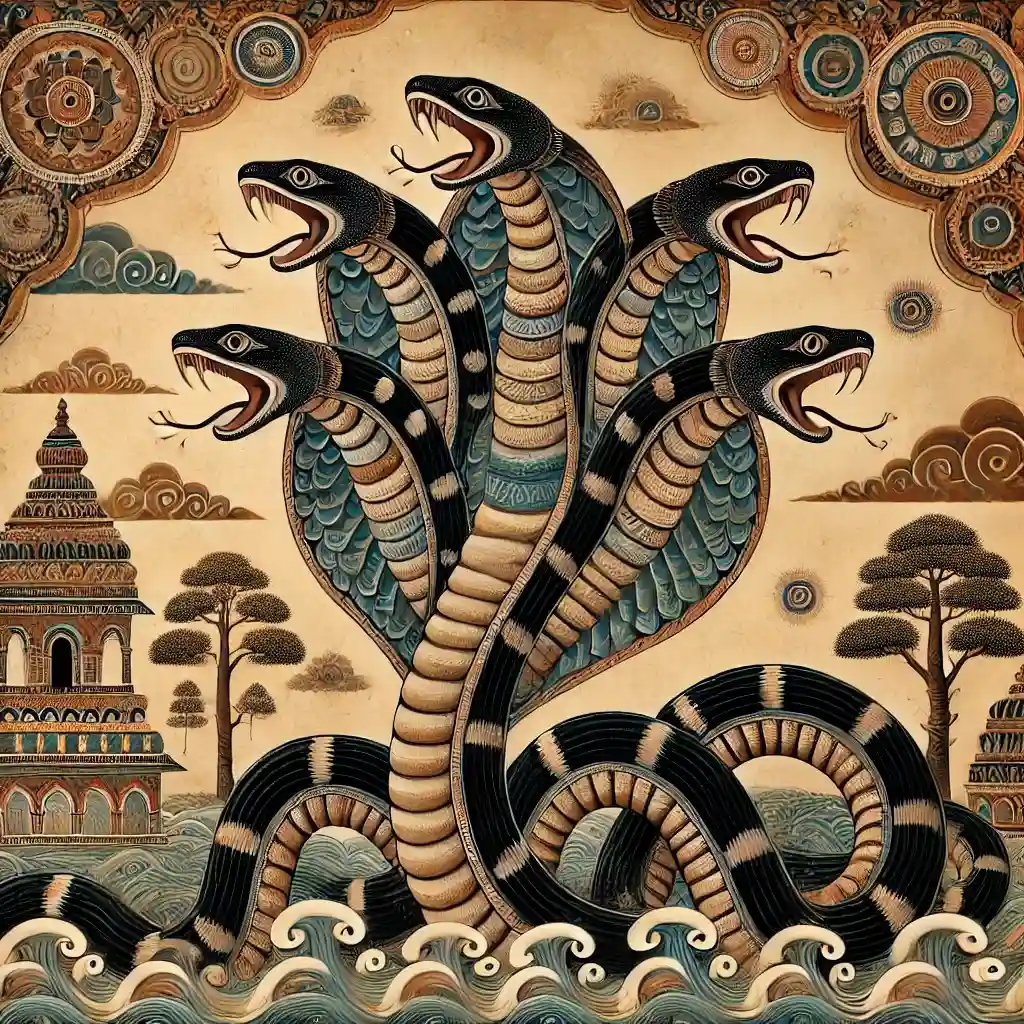
Kaliya had made the river his home. Freed from the fear of Garuda, the celestial bird and enemy of serpents, due to a curse involving the sage Saubhari Rishi who meditated by the Yamuna, Kaliya lived there undisturbed. But the venom from Kaliua’s body had turned the water toxic. Even its vapors were enough to make children unconscious. It had become a deadly zone in what was once a sacred and playful space. Shree Krishna knew he had to act. Without hesitation, he threw the ball deliberately into the river and then dove in to retrieve it.
Lessons
- Divine wisdom sees beyond appearances.
- True leadership requires bold and timely action.
- Danger often hides beneath beauty, requiring vigilance.
- Shree Krishna's pastimes are symbolic of inner purification.
The Battle Beneath the Surface
As Shree Krishna entered the waters, he began to churn it vigorously. This agitation reached deep into the riverbed, disturbing Kaliya who had been lurking in the depths. Outraged by the intrusion into his domain, the serpent slithered upward in fury. When he saw Shree Krishna, his pride and anger exploded. He wrapped Shree Krishna tightly in his coils and dragged him down to the riverbed.
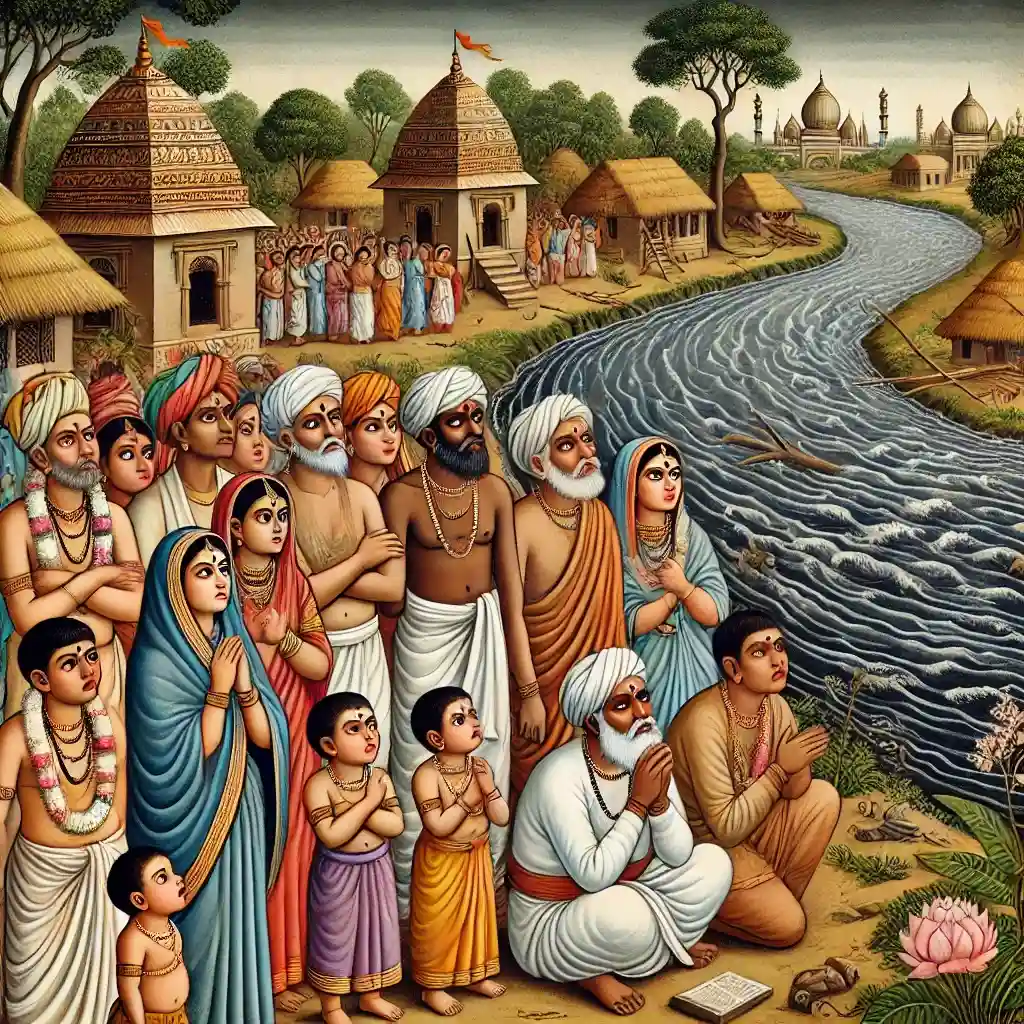
On the riverbank, chaos unfolded. Shree Krishna's friends' panicked. Word spread quickly to the village. Nanda Baba and Mother Yashoda arrived, frantic with worry. Mother Yashoda, in her desperation, attempted to jump into the river to save her beloved son, but Nanda Baba held her back. The entire village held its breath, waiting in fear.
Shree Krishna, though bound tightly, knew the danger was escalating. Delay might lead to irreversible tragedy. In response, he began to expand his divine form. His body grew so immense that Kaliya could no longer contain him. The serpent had no choice but to release his grip.
Krishna rose to the surface with divine composure, while Kaliya followed behind, his many hoods spread wide. It was then that Shree Krishna, with divine grace, leapt upon one of the hoods and began his celestial dance.
Lessons
- Divine power always finds a way to overcome evil.
- Shree Krishna’s expansion represents the overwhelming force of good.
- Even the fiercest enemy cannot bind the divine for long.
- Love and faith in divinity provide strength in uncertainty.
Shree Krishna's Celestial Dance and Kaliya's Redemption
Shree Krishna’s dance on Kaliya’s hoods was no ordinary performance. Each step he took subdued a different hood of the serpent. He moved with rhythm and grace, balancing on a shifting, living platform, never missing a beat. The scene was unlike any other in the history of the cosmos. Although Lord Shiva’s Tandava Nritya was often regarded as the most divine dance, this dance of Shree Krishna surpassed even that in beauty and significance.
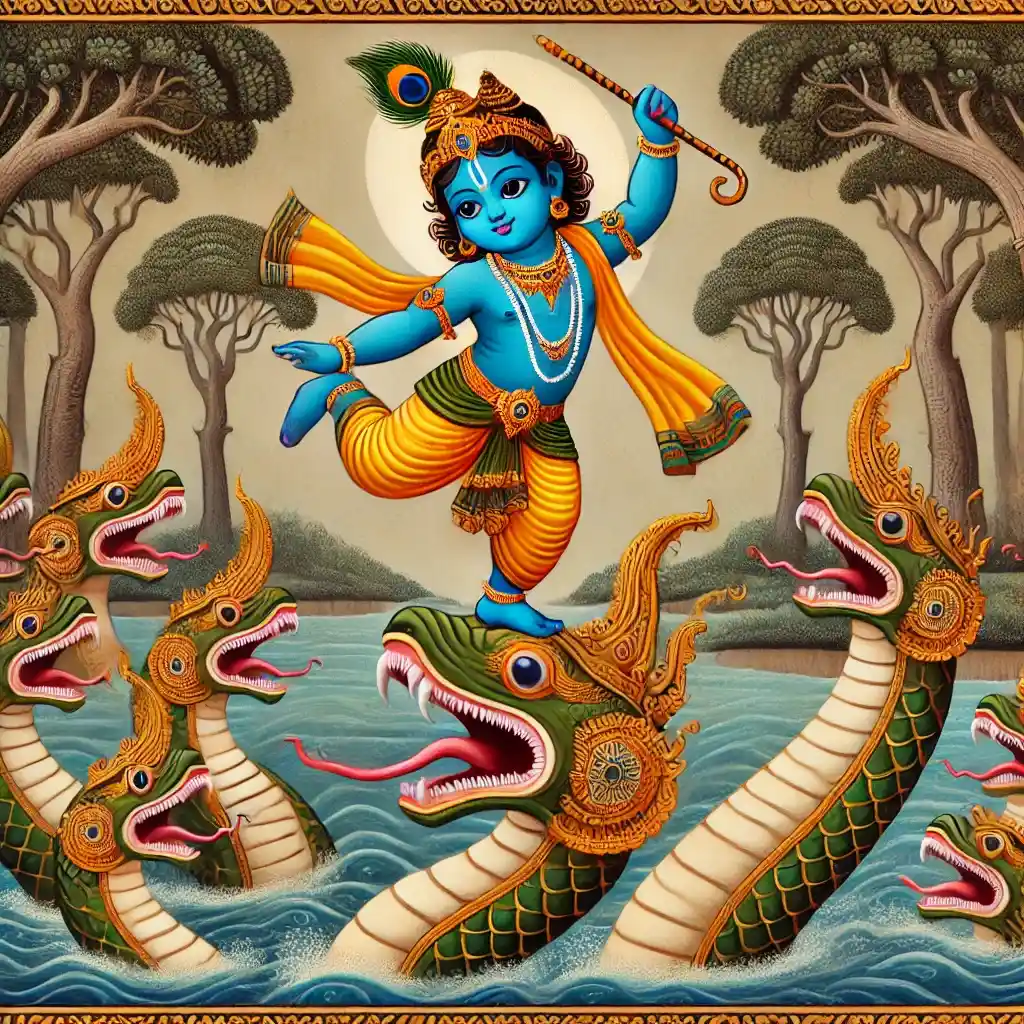
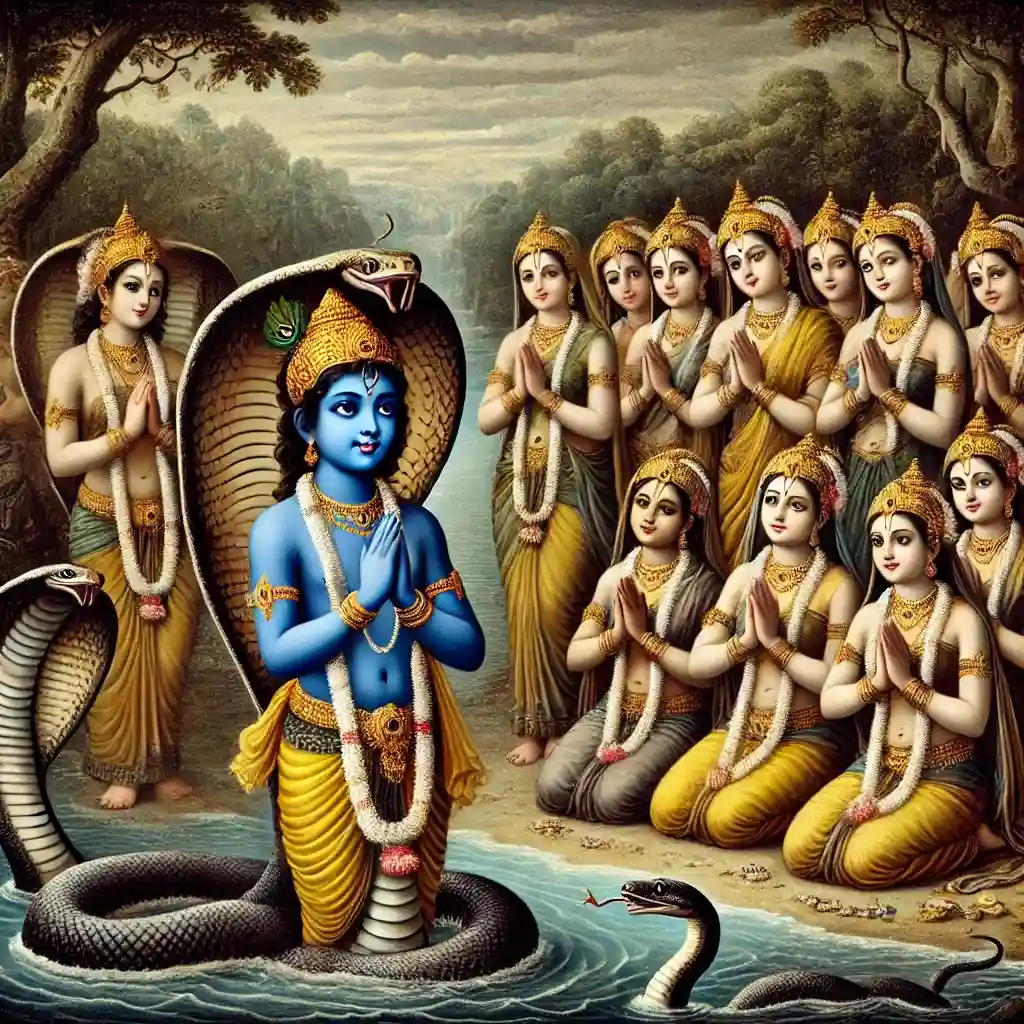
As Shree Krishna danced, Kaliya grew weaker. He became overwhelmed by Shree Krishna’s weight and divinity. Blood began to spew from his mouth. He was nearing death. Witnessing the unbearable sight, Kaliya’s wives, the Nagapatnis, emerged from the water and surrounded Shree Krishna. With folded hands and tearful eyes, they began to pray.
They admitted Kaliya’s wrongdoings, acknowledging that his nature was vile, and that his life as a serpent was itself a punishment. However, they expressed that despite his evil past, Kaliya had now been touched by the dust of Shree Krishna’s feet—a blessing even great yogis longed for.
Moved by their devotion and honesty, Shree Krishna listened. Kaliya himself, broken and transformed, sought forgiveness. Shree Krishna, ever compassionate, pardoned him. However, he warned Kaliya that he could no longer stay in Braj. Kaliya was banished from the Yamuna, freeing the river from his poison.
Where Kaliya went after this remains a mystery. Some legends say he traveled to distant lands. A few even speculate that he might have reached the Mediterranean, and that he might still be spotted occasionally, perhaps even as the legendary Loch Ness monster.
Lessons
- Grace can transform even the darkest hearts.
- Humility and prayer can invite divine mercy.
- True redemption begins with acknowledgment of one’s faults.
Conclusion
Shree Krishna’s subjugation of Kaliya, as described in the Srimad Bhagavatam, is far more than an ancient miracle. It is a timeless message about inner transformation, spiritual courage, and the healing power of divine love. Shree Krishna entered the poisoned waters of the Yamuna not to punish but to purify, not to destroy but to uplift.
In our modern lives, we too encounter poisons—negativity, pride, fear, and inner conflict. The story teaches that these can only be overcome through clarity, humility, and connection with the divine. Just as Shree Krishna transformed Kaliya through compassion and divine presence, we can approach our challenges with grace rather than aggression, with transformation rather than judgment.
His dance on the serpent's hoods symbolizes the need to subdue the restless energies of the mind with focused awareness and spiritual discipline. The prayers of the Nagapatnis remind us that sincere devotion and repentance can bring even the most fallen back to the path of truth.
Shree Krishna’s pastimes are not distant stories of the past. They are living teachings that guide us in how to face darkness with light, how to replace ego with humility, and how to transform our inner world to bring peace to the outer one.
Call to Action
- Immerse yourself in the divine pastimes of Shree Krishna and transform your spiritual journey by listening to Swami Mukundananda's Srimad Bhagavatam sessions on YouTube.
- Celebrate Ganesh Chaturthi at the Radha Krishna Temple of Dallas with devotional kirtans, traditional poojas, cultural programs, and delicious prasadam. Experience the joy of Ganesh Sthapana, community festivities, and an eco-friendly Visarjan that brings spiritual upliftment for the whole family.
FAQs
1. Why is Shree Krishna called Chit Chor?
Shree Krishna is called Chit Chor because he steals the chit or heart of his devotees. His divine actions and love captivate the mind and soul, leaving no space for anything but him in a devotee’s thoughts.
2. Who was Kaliya and why was he dangerous?
Kaliya was a powerful and poisonous serpent who had made the Yamuna River his home. His venom was so potent that it poisoned the water and even the air above it, causing children to faint just by nearing the river.
3. Why was Garuda not present in the Yamuna during this time?
Garuda, the divine eagle and enemy of serpents, was forbidden from entering the Yamuna region due to a curse involving Saubhari Rishi, who meditated nearby. This allowed Kaliya to live there without fear of attack.
4. What was the significance of Shree Krishna’s dance on Kaliya’s hoods?
Shree Krishna’s dance was symbolic of the triumph of divine over evil. Each step subdued Kaliya’s pride and poison, and the dance itself became a celestial act more remarkable than even Lord Shiva’s Tandava.
5. What happened to Kaliya after Shree Krishna spared him?
After being forgiven, Kaliya was banished from Braj. Some believe he moved to distant waters, and a few suggest he might be linked to modern myths such as the Loch Ness monster, though these are more symbolic than factual.