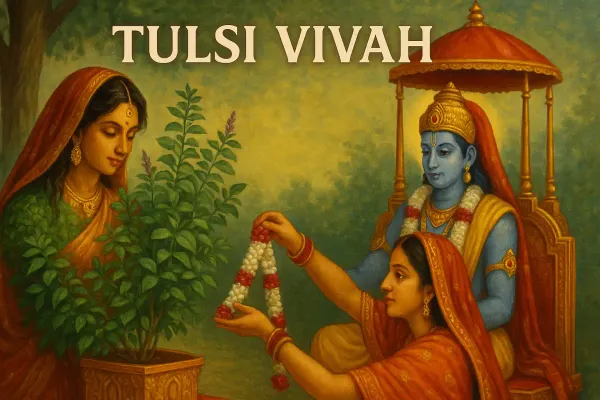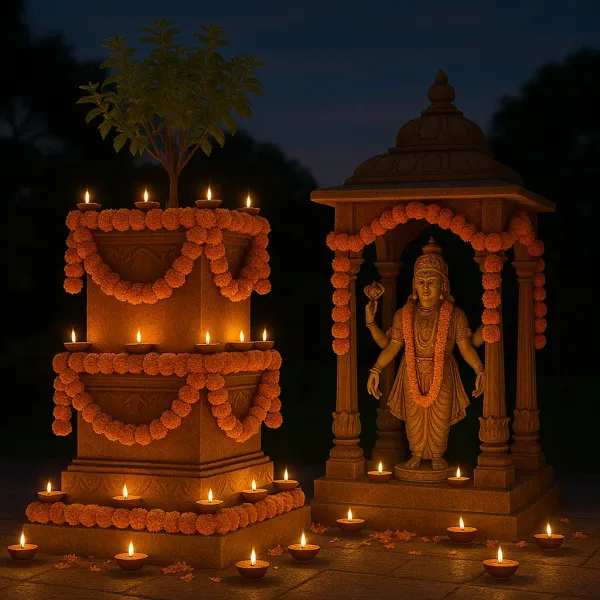
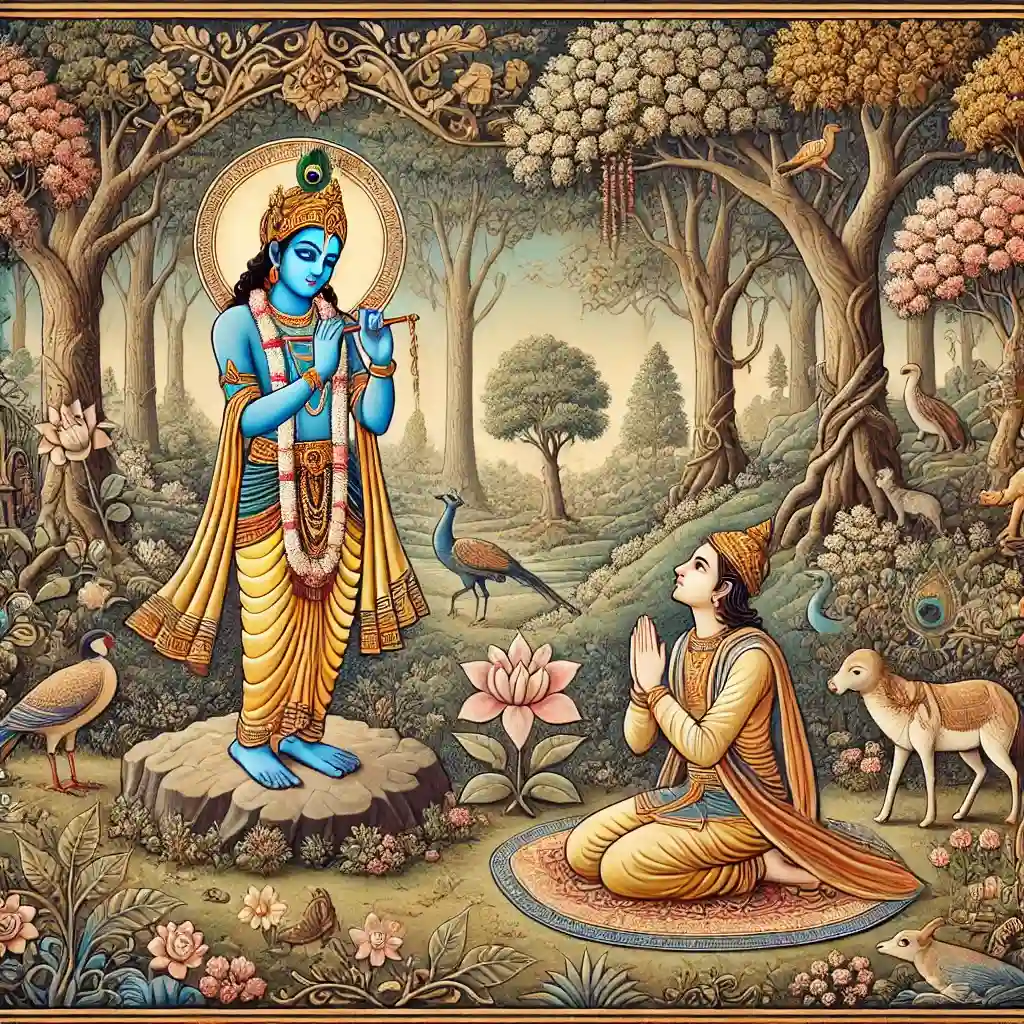
The Shrimad Bhagavatam, a revered Hindu scripture, offers deep insights into the nature of divine love and the path to spiritual realization. Among its many profound teachings, one of the most poignant moments occurs when Shree Krishna departs from Vrindavan, leaving his beloved Brajwasis in a state of intense sorrow. His departure is a significant event that encapsulates the essence of viraha—the suffering of separation. This theme is not only central to Shree Krishna’s life but also resonates with the spiritual yearnings and devotion expressed during the festival of Tulsi Vivah, which celebrates the sacred union between Lord Vishnu and the Tulsi plant. Through both Shree Krishna's departure and the celebration of Tulsi Vivah, we see the transformative power of love, devotion, and the yearning for divine union.
This blog explores how Shree Krishna's separation from his devotees teaches deep lessons about divine love, devotion, and the power of longing. It connects these lessons to the themes of devotion and spiritual union celebrated in Tulsi Vivah, offering practical insights for spiritual aspirants today.
Shree Krishna’s Departure
The sorrowful scene of Shree Krishna leaving Vrindavan marks a pivotal moment. For years, the residents of Vrindavan—his parents, friends, and especially the gopis—had experienced a life full of joy and bliss with Shree Krishna. His playful presence, his soothing flute music, and his divine persona had shaped every moment of their lives. However, when Shree Shree Krishna departed for Mathura, the entire community was engulfed in despair. The realization that Shree Krishna would no longer be physically present in their lives created an emotional and spiritual void.
The chariot began its return from Mathura, and after days of sorrow, the Brajwasis eagerly awaited its arrival. Word spread that Shree Krishna was coming back, and his cowherd friends (sakhas), who had not accompanied him, rushed to meet him. One Sakha, feeling hurt and abandoned by Shree Krishna, became annoyed and decided not to speak to him. He sat under a tree, sulking in his annoyance. However, when he saw the others running to meet Shree Krishna, he couldn't resist and joined them.
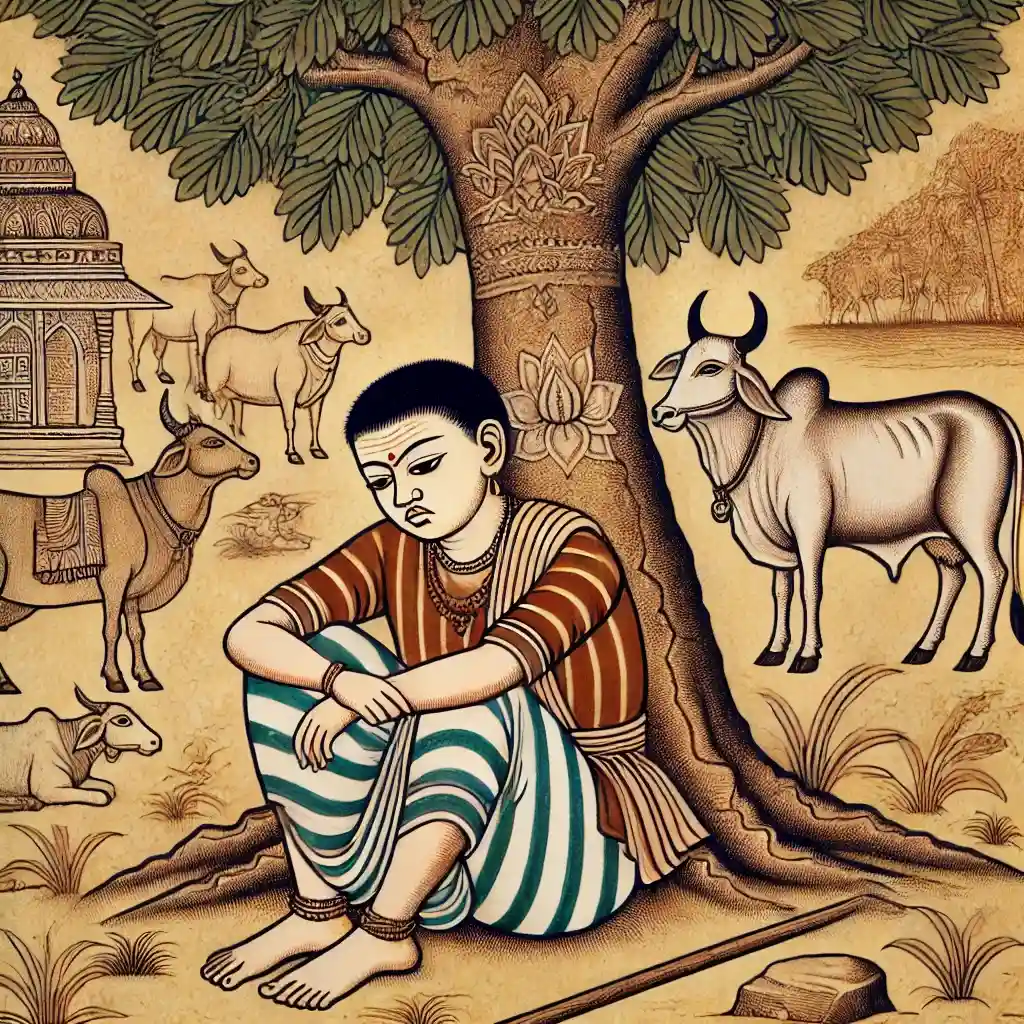
When the chariot finally arrived, it carried Nand Baba but not Shree Krishna. In that moment, the Brajwasis felt the absence of Shree Krishna, realizing that the very heart and soul of Vrindavan had left, and things would never be the same again.
Lessons
- The grief of the gopis at Shree Krishna’s departure from Vrindavan exposed the depth of their attachment and the emptiness left in his absence. Though their sorrow was immense, it ultimately purified their hearts and deepened their devotion. Similarly, Tulsi Mata’s anguish for Lord Vishnu reflected this same spiritual transformation. Both stories demonstrate how sorrow, longing, and anguish, when directed towards the divine, can foster profound spiritual growth and a deeper connection with the sacred.
- The sakha’s reaction to Shree Krishna’s departure offers a powerful lesson in love and ego. Initially, he allowed his hurt and pride to block his devotion, refusing to engage with Shree Krishna. However, witnessing his friends run to meet Krishna reignited his love, showing that true devotion rises above personal wounds and ego. This shift reveals that love for the divine remains, even when emotions are tested. The sakha’s eventual return underscores the importance of setting aside ego to reconnect with the divine. This lesson mirrors the essence of Tulsi Vivah, where Tulsi Mata’s union with Lord Vishnu represents selfless love—free from ego and material desires, focused solely on spiritual connection.
The Transformation of the Gopis' Love
Shree Krishna's departure from Vrindavan was not a random event but a deliberate act designed to deepen the devotion of his followers. By giving the Brajwasis the gift of viraha (separation), Shree Krishna intended to purify and elevate their love for him. This separation, though painful, became the means through which their devotion grew stronger. For one hundred years, the gopis and other devotees would experience longing and loss, which would strip their love of any selfish motives. Just as gold must be placed in fire to shine, love must be tested in the fire of separation to become truly selfless. Shree Krishna’s absence allowed their love to mature into something beyond physical presence, transcending personal fulfillment and worldly desires.
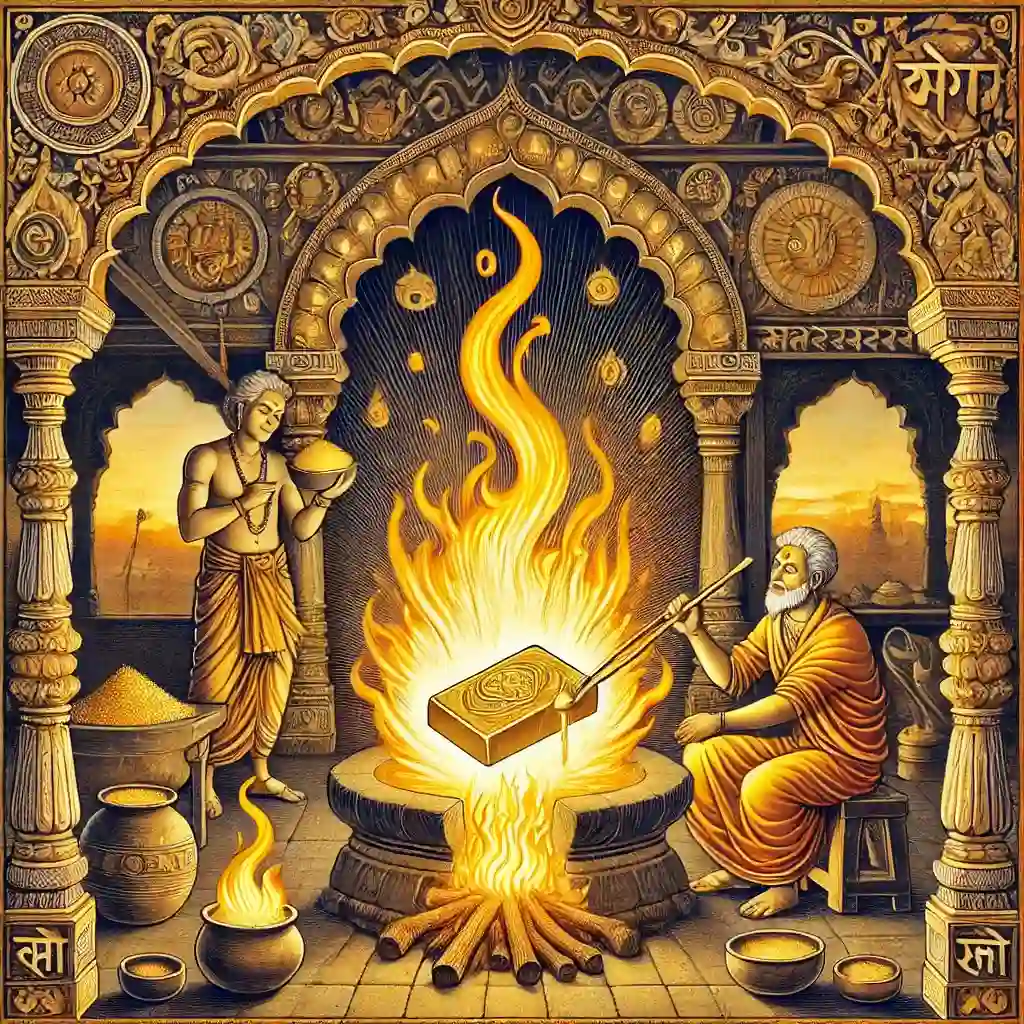
In contrast to worldly love, where withdrawal or neglect often leads to retaliation, divine love is unconditional. The gopis, despite Shree Krishna’s absence and silence, never turned away or expressed resentment. They did not say, “You don’t care for us, so we don’t care for you.” Their love remained steadfast, illustrating that true divine love is not dependent on the beloved’s actions or presence. It is constant and selfless, growing even in separation. This highlights the difference between worldly and divine love, with the latter transcending ego and self-interest, blossoming into a love that is pure and unwavering.
Lessons
- The viraha (separation) experienced by the Brajwasis teaches that true love is not dependent on physical presence. In Shree Krishna’s absence, their devotion deepened, showing that spiritual growth often occurs through moments of separation and longing. Just as the gopis’ love for Shree Krishna was purified in the fire of separation, so too does the worship during Tulsi Vivah reflect a yearning for the divine that transcends the need for physical proximity. During Tulsi Vivah, devotees express their devotion to Lord Vishnu, not with the expectation of material gain, but through selfless rituals and offerings. This illustrates that love for the divine can thrive even in the absence of physical form, deepening the connection to the divine through unwavering faith and spiritual practices.
Shree Krishna’s Journey to Dwarka
After his departure from Vrindavan, Shree Krishna traveled to Mathura and later to Dwarka, where he continued his divine mission. One notable episode during this period was Shree Krishna’s education at the ashram of Sandipani Muni. Though Shree Krishna was the Supreme Lord, he humbly chose to learn under the guidance of his guru acquiring 64 different sciences in a short span of 64 days.
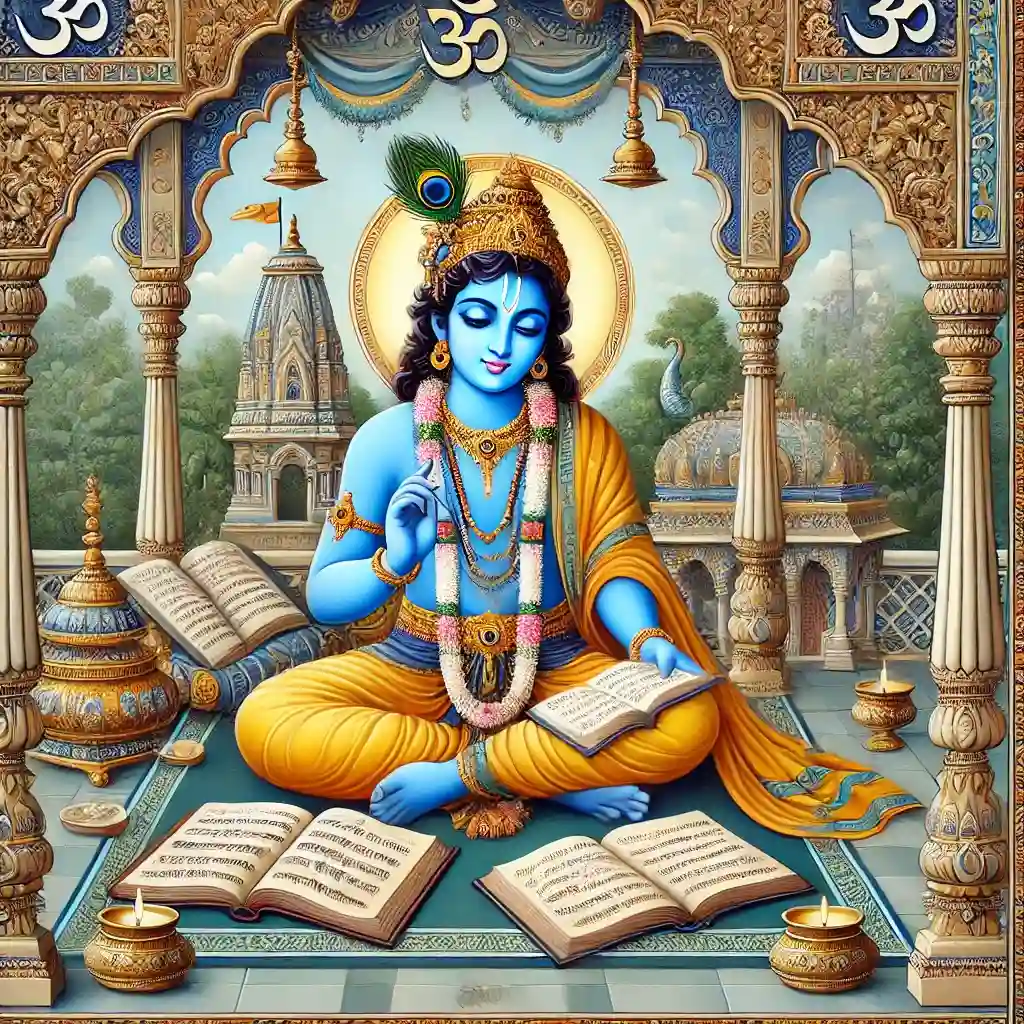
A significant event occurred when Sandipani Muni’s child drowned in the ocean. Shree Krishna, with his divine powers, retrieved the child, demonstrating his compassion and power. In return, Varun Devata, the ocean god, blessed Shree Krishna with the sacred conch.
Lessons
- Shree Krishna’s humility in seeking knowledge from Sandipani Muni underscores the importance of the guru in the spiritual journey. Even the Supreme Lord chose to submit himself to the guidance of a spiritual master, demonstrating the significance of learning and humility in spiritual growth. Similarly, during Tulsi Vivah, the devotee submits to the divine, acknowledging the need for guidance and spiritual wisdom in their journey.
- Shree Krishna’s act of rescuing Sandipani Muni’s child was a selfless service, performed without any expectation of reward. In return, he received divine blessings, symbolized by the gift of the sacred conch. This illustrates the principle that selfless service to the divine and to others attracts spiritual blessings. The worship during Tulsi Vivah, performed with devotion and sincerity, is a form of selfless service that brings the devotee closer to Lord Vishnu.
Conclusion
The lessons from Shree Krishna’s departure deeply resonate with the essence of Tulsi Vivah, highlighting the transformative power of selfless devotion. Just as Shree Krishna's absence intensified the gopis' love and purified their devotion, Tulsi Vivah emphasizes the same spirit of devotion that transcends worldly attachments. During Tulsi Vivah, devotees express their love for Lord Vishnu through selfless worship, mirroring the gopis’ unconditional love, which was strengthened through separation and longing.
In today’s world, where distractions and material pursuits often take precedence, the teachings from both Shree Krishna’s life and Tulsi Vivah offer timeless guidance. They remind us that true devotion is not dependent on external circumstances or personal gain. Rather, it is rooted in spiritual yearning and an unwavering connection to the divine, one that remains steadfast even in times of separation. The spiritual practices of Tulsi Vivah serve as a reminder that through pure love and devotion, one can transcend earthly attachments and experience a deeper connection to the divine.
Call to Action
- Immerse yourself in the divine pastimes of Shree Krishna and transform your spiritual journey by listening to Swami Mukundananda's Srimad Bhagavatam sessions on YouTube.
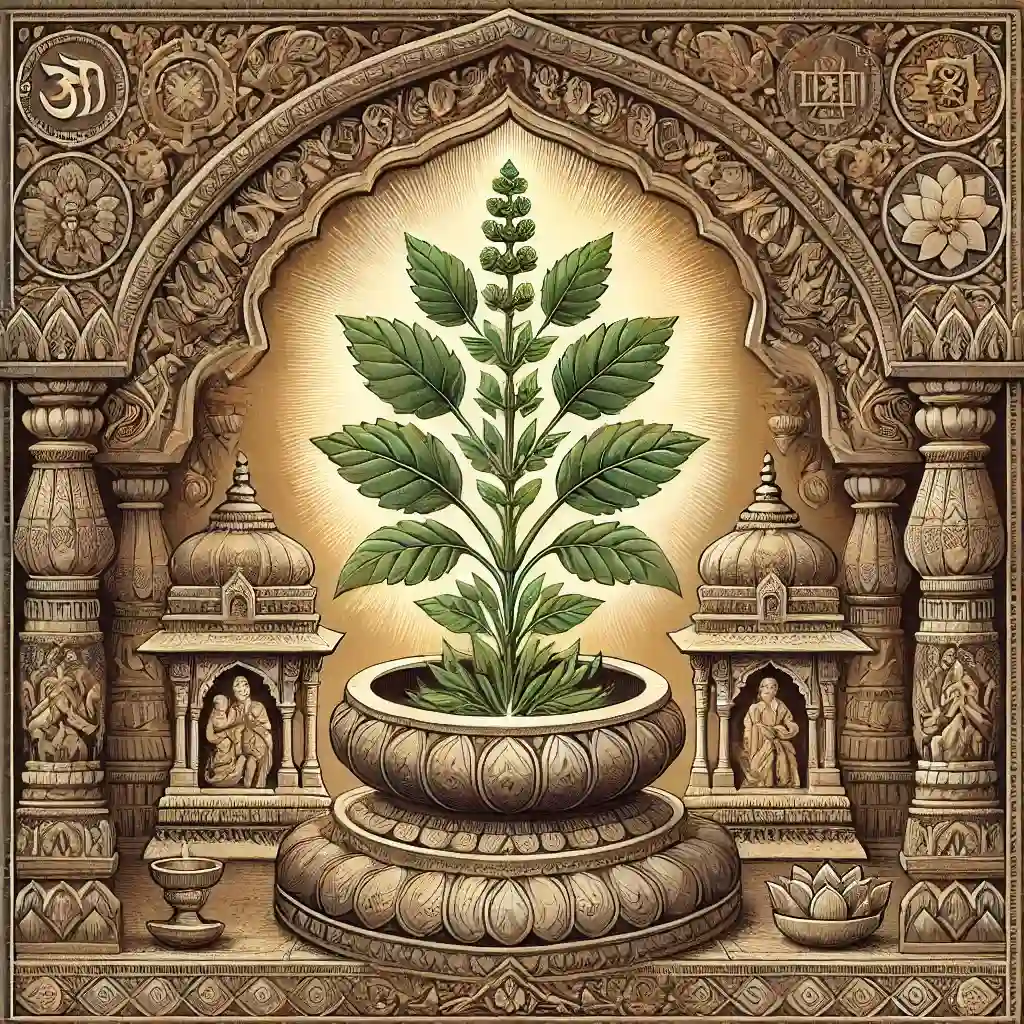
- Celebrate the divine union of Lord Vishnu and Tulsi Mata at the Tulsi Vivah ceremony at the Radha Krishna Temple of Dallas. Experience blessings, joy, and Bhakti-filled celebrations at the ceremony
FAQs
1. What is the significance of viraha?
Viraha (separation) is seen as a means of purifying love. The emotional pain of separation allows the devotee to transcend worldly attachments and deepen their connection with the divine.
2. How does Shree Krishna’s departure reflect divine love?
Shree Krishna’s departure illustrates that divine love is unconditional. Even in separation, the love of his devotees for him deepens, showing that true devotion is not based on physical proximity but on spiritual connection.
3. What lessons can be learned from the gopis’ reaction to Shree Krishna’s departure?
The gopis’ unwavering love, even in Shree Krishna’s absence, teaches the lesson of selfless devotion. True love is not driven by material or emotional fulfillment but is an offering of the heart to the divine.
4. How does Shree Krishna’s education under Sandipani Muni relate to spiritual growth?
Shree Krishna’s time spent with Sandipani Muni emphasizes the importance of learning and wisdom in the spiritual journey. It also highlights the significance of humility and service in gaining true knowledge.
5. How can the lessons from Shree Krishna’s journey be applied today?
The lessons from Krishna’s life encourage the cultivation of unconditional love, selfless devotion, and spiritual growth. By focusing on divine love and service, individuals can cultivate a deeper connection to the higher self and navigate life’s challenges with greater purpose.
Resources
Specific Blog
Tulsi Vivah 2025: Date, Vidhi, Muhurat, Story & Significance
The Light Within: Diwali Lessons from Shree Krishna’s Journey to Mathura