

If you want to dive into the profound sweetness of bhakti (devotion), you must understand something very subtle.
This sweetness does not arise merely from reverence.
It does not come from folding hands, offering prayers, or acknowledging God’s greatness from a distance.
It emerges only when there is a deeply intimate and personal connection with the Divine.
This raises a quiet but powerful question:
Who truly understands this kind of love?
Bhakti, often translated as devotion, is one of the most profound and transformative paths in spiritual life. Yet, to truly understand its essence, we must go far beyond the surface-level idea of worship or reverence.
Many seekers begin their spiritual journey with a sense of distance from the Divine. God is often perceived as an all-powerful, omniscient being—distant, majestic, and beyond reach. While this perspective inspires reverence, it can also create a subtle barrier. The sweetness of bhakti does not emerge from distance; it blossoms through closeness, familiarity, and heartfelt connection.
The essence of bhakti lies in transforming our relationship with God from one of formality to one of intimacy. It is about feeling, “He is mine,” rather than merely thinking, “He is महान (great).” This shift—from awe to affection—is what unlocks the true nectar of devotion.
It emerges only when there is a deeply intimate and personal connection with the Divine.
When spiritual seekers once asked who the real teachers of devotion are—who we should learn from if we wish to experience this intimacy—Narad did not point to kings, sages, or even himself.
He did not mention Prahlad.
He did not mention Bhishma.
He did not mention Yudhishthir.
Instead, he gave an answer that feels almost surprising: the Gopis of Braj.
Their love for Sri Krishna represents the highest possible state of divine connection—one where the boundary between the self and God dissolves entirely.
After hearing such examples of simple yet profound devotion, one may wonder—can bhakti truly be this direct, this intimate?
Narad answers this simply and powerfully:
Narad Bhakt Sutra 20
“अस्त्येवमेवम्” (astyevamevam)
“Such indeed is bhakti.” / “It is exactly like this.”
It is not imagination. It is not exaggeration.
It is a living reality for those who approach God with sincerity.
What This Sutra Actually Means
This sutra comes after describing the nature of bhakti, and Narad concludes:
“Yes—bhakti is exactly as described above.”
It is a confirmation sutra, not a definition.
It emphasizes:
- Bhakti is not theoretical.
- It is experiential, real, and verifiable.
- The descriptions given are not exaggerations—they are truth.
The Gopis: The Pinnacle of Devotional Love
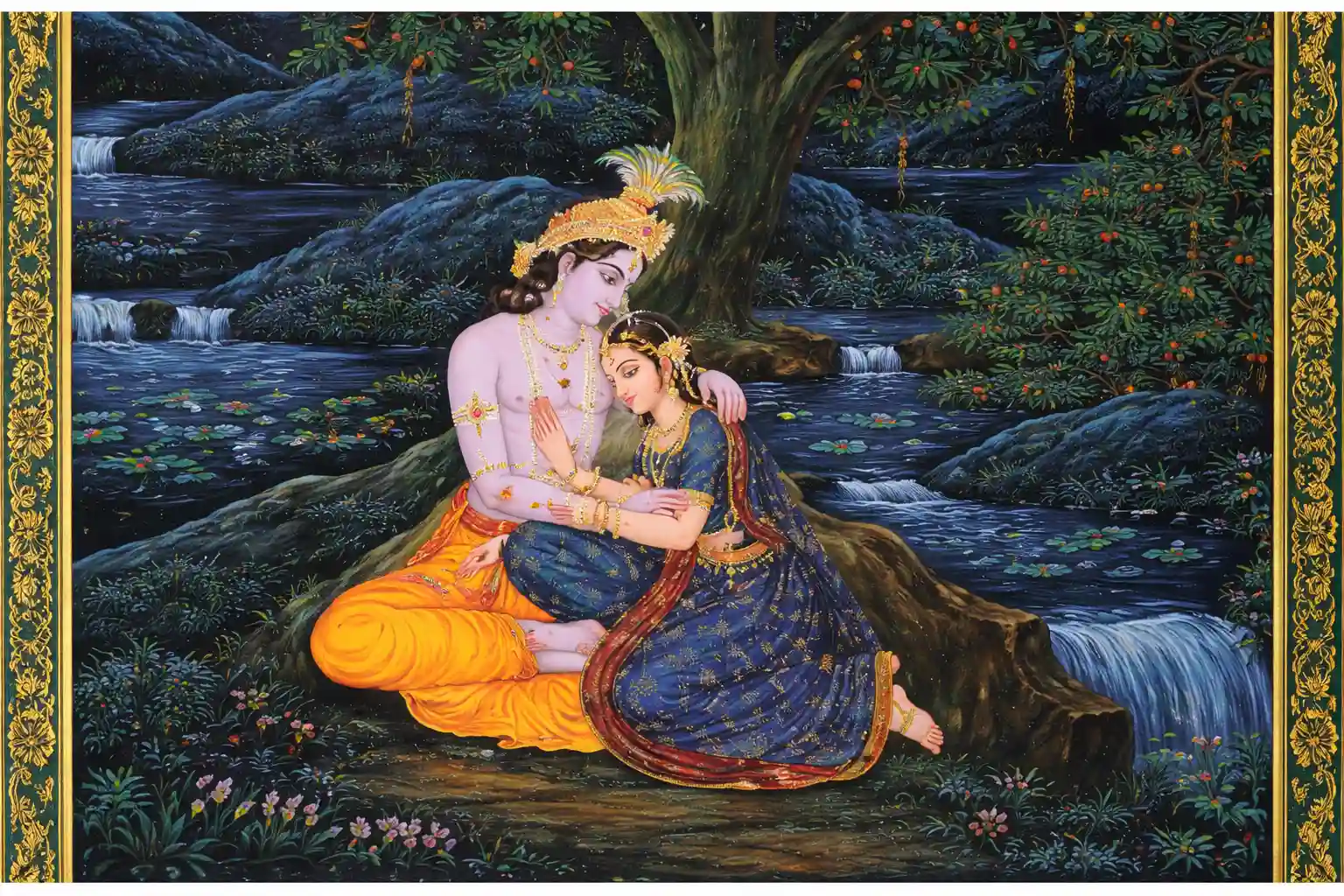
Swamiji talks about the speciality of the Bhakti of those Gopi's. He says they had innumerable specialties in their devotion, The outstanding feature was the intimacy of their connection with God
Because the Gopis represent a form of love that transcends logic, duty, and even spiritual ambition. Their devotion is not driven by fear, obligation, or desire for liberation. It is pure, selfless, and overwhelmingly intimate.
Their love for Krishna was so intense that it surpassed even their attachment to their own souls. This idea may seem paradoxical at first. How can anything be dearer than one’s own self? Yet, the Gopis reached a state where Krishna became more central to their existence than their own identity.
One Gopi expressed this beautifully: when she looked at Krishna, He felt like her very life force—but when she examined her own life, it seemed that Krishna was the one living within it . This is not poetic exaggeration; it is a glimpse into the deepest level of spiritual absorption.
In this state, love is no longer directional—it is total. The lover and the beloved merge into one continuous experience
At this point, Narad turns our attention to the Gopis of Braj, presenting them as the highest embodiment of devotion.
He makes it explicit:
“यथा व्रजगोपीकानाम्”
Like the Gopis of Vraj.
Their devotion was not based on awe or distance. It was rooted in complete intimacy. They did not love Krishna as God—they loved Him as their own.
So deep was their love that Krishna became dearer to them than even their own soul.
Sutra 21 — “यथा व्रजगोपीकानाम्”
(yathā vraja-gopikānām)
From the Narad Bhakti Sutra, this sutra means:
“(Bhakti should be) like that of the Gopis of Vraj.”
According to Swami Mukundananda ji
Narad is not giving a general example—
he is pointing to the highest possible standard of devotion.
If you want to understand true bhakti,
look at the Gopis.
What Makes the Gopis’ Bhakti Unique
According to Swami Mukundananda ji, the Gopis’ love had three extraordinary qualities
The Unparalleled Love of the Gopis
The Gopis’ devotion represents the highest form of bhakti because of the extraordinary nature of their love.
Their relationship with Krishna was marked by complete intimacy. They did not see Him as the Almighty or Creator—they saw Him as their own beloved. There was no distance, no formality—only pure closeness.
What made their love even more unique was its complete selflessness. They did not love Krishna for liberation, happiness, or blessings. Their only desire was His happiness. As Swami Mukundananda ji explains, this is tat-sukha-sukhitvam—finding joy only in Krishna’s joy.
If He was pleased, they were fulfilled.
If He was joyful, their purpose was complete.
Their love did not ask, “What do I receive?”
It lived only in the sentiment, “How can He be pleased?”
And along with this selflessness came a state of total absorption.
Their minds were constantly immersed in Krishna—while working, while speaking, in every moment of their lives. There was no division between worldly activity and devotion; everything flowed in remembrance of Him.
So deep was this absorption that even a moment of separation became unbearable. Time itself seemed to stretch, and the world lost its meaning in His absence.
Understanding Intimacy Through the Hierarchy of Attachment
To grasp the magnitude of the Gopis’ devotion, it helps to reflect on what we hold dear in our own lives.
Ordinarily, we are attached to the external world—our possessions, relationships, and achievements. Yet, deeper reflection reveals a hierarchy:
- The body is dearer than external objects
- The life force (prana) is dearer than the body
- The mind is dearer than the life force
- The intellect is dearer than the mind
- The soul (atma) is the dearest of all
Astonishingly, the Gopis reached a spiritual zenith where God seemed dearer to them than their very own soul.
In the Braj language, Sri Krishna is affectionately known as "Kanh". Expressing this total immersion, one Gopi described her state by saying that when she looks at Sri Krishna, He seems like her life air, but when she examines her own life, it seems as though Sri Krishna is the one moving within it. She had reached a level of love so consuming that she became entirely confused as to which was her own life and which was Sri Krishna.
This is the ultimate inversion of worldly attachment. Instead of centering life around the self, they centered it around God. Their identity was no longer “I am” but “I am His.”
This level of devotion is not about losing oneself in a negative sense; rather, it is about discovering a higher identity—one rooted in divine love.
When Love Rises Above Greatness
After presenting the Gopis of Vraj as the highest example of devotion, a natural question arises.
If their love for Krishna was so intimate—so personal, so deeply human—did they forget who He truly was? Did they lose sight of His divine greatness?
Narad answers this subtle doubt with remarkable clarity in the next sutra
Sutra 22
“तत्रापि न माहात्म्यज्ञानविस्मृत्यपवादः”
Meaning (accurate):
“Even in that (Gopi-like devotion), there is no criticism (fault) of not forgetting God’s greatness.”
The Gopis were not unaware. They did not lack knowledge. They knew that Krishna was not just a charming युवक of Braj—He was the Supreme Divine.
And yet…
That awareness did not create distance.
It did not introduce hesitation.
It did not make their love formal.
Instead, their love flowed freely—unrestricted, intimate, and deeply personal.
As Swami Mukundananda ji explains, the Gopis did not deny Krishna’s divinity—they simply did not allow it to interfere with their love.
This is the subtle beauty of bhakti.
When we focus only on God’s greatness—His power, His vastness, His supremacy—we naturally feel small. Reverence arises, but so does distance.
But the Gopis chose differently.
They allowed love to take precedence over awe.
They chose closeness over formality.
They chose relationship over reverence.
And in doing so, they reached a state where God was no longer “the Almighty”—
He became their own.
The Quiet Teaching Within
This sutra reveals a profound truth for every seeker.
You do not need to reject God’s greatness.
You simply need to move beyond being overwhelmed by it.
Because the goal of bhakti is not to stand at a distance and admire God—
It is to come close enough to say:
“You are mine.”
And when that happens,
God does not remain distant.
He responds in the same spirit—
not as the distant ruler of the universe,
but as your very own.
The Illusion of Worldly Relationships
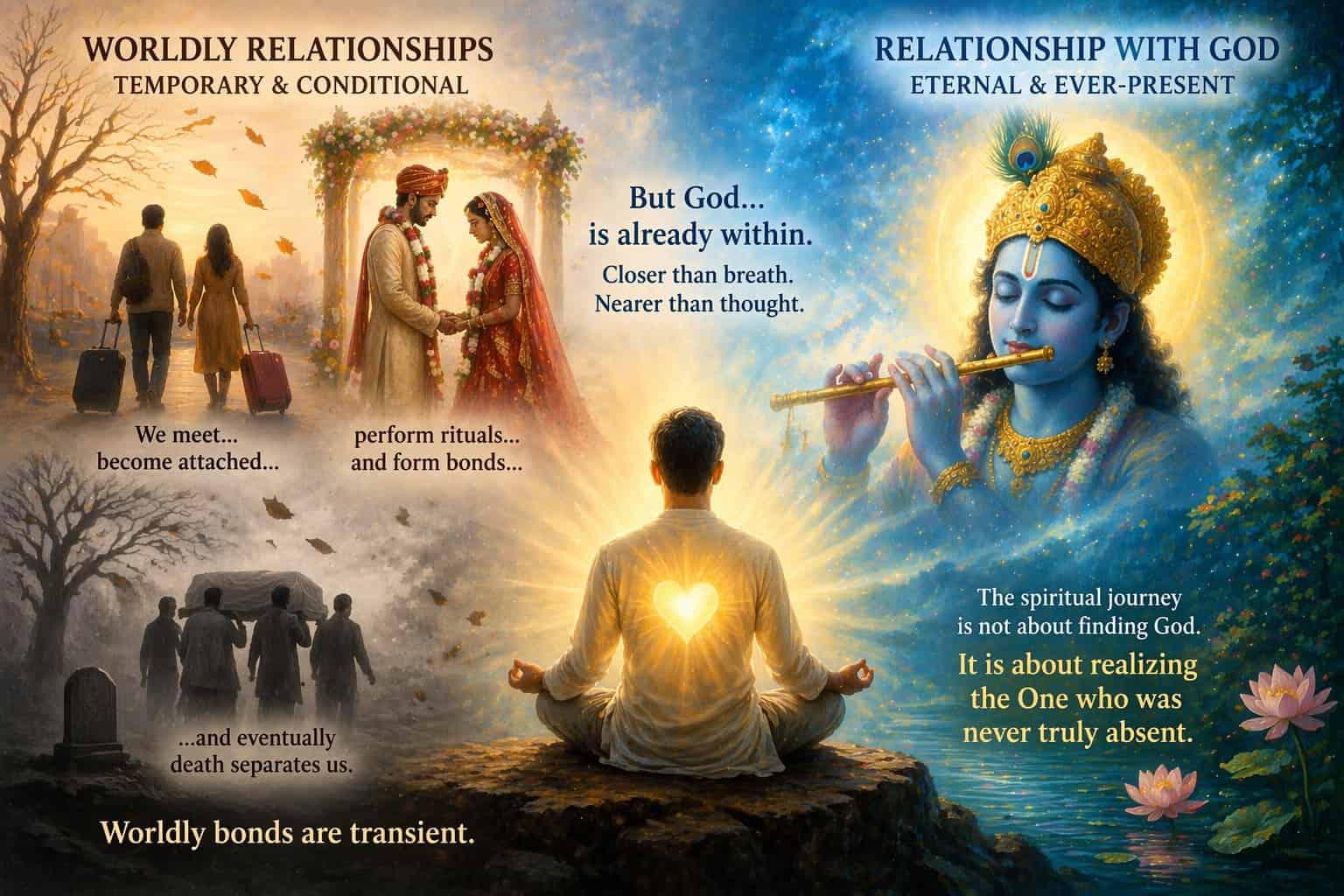
One of the most powerful insights in bhakti philosophy is the recognition that worldly relationships, though meaningful, are temporary.
Consider how relationships are formed in the world. Two individuals from different places meet, perform certain rituals, and are declared husband and wife. Before that moment, they were strangers. And eventually, death separates them once again.
This reveals an uncomfortable truth: worldly bonds are conditional and transient.
In contrast, our relationship with God is eternal.
God is not someone we need to “meet” or “form a bond with.” He is already present within us—closer than our breath, nearer than our thoughts. The spiritual journey, therefore, is not about creating a new relationship but about rediscovering an existing one.
As emphasized by Swami Mukundananda ji , the Divine is our most intimate relative. The problem is not absence—it is forgetfulness.
Bhakti is the process of remembering.
Bhakti is not about creating a bond—it is about awakening awareness of an existing one.
This insight is echoed in the Bhagavad Gita (15.15), where Krishna says:
“I am seated in the hearts of all beings.”
The Divine is not distant. The distance is psychological, not existential.
The Barrier of Almightiness
While acknowledging God’s greatness is important, it can also become an obstacle if it is the only perspective we hold.
When we view God only through His limitless power, knowledge, and grandeur, we tend to feel insignificant—leading to reverence, but also creating a sense of distance.
“As Swamiji explains, if we focus solely on God's almightiness, our devotion will naturally evoke sentiments of fear rather than love. While this perspective creates reverence, it entirely lacks the crucial sentiment of mamtva—the feeling that ‘He is mine’. This precious sentiment of ‘He is mine’ is exactly what fulfills the devotee's heart; without it, devotion remains mere reverence.”
We see a vivid example of this distance in the Bhagavad Gita when Arjun asked to see Sri Krishna's universal form. After Arjun confirmed his desire, Sri Krishna bestowed divine vision upon him, What he witnessed was overwhelming— Arjun saw infinite universes contained within Shri Krishna, including his own universe with himself and Krishna in it, but this terrifying form possessed innumerable hands, feet, legs, and flames emanating from its mouth. This was a pure display of the Aishwarya (almightiness) of God, who is Sarvishwarya Sampanna and possesses innumerable opulences to an infinite extent.
For the sake of human understanding, Maharishi Parashar in the Devi Bhagwat Puran enumerated six of these opulences, defining God as possessing infinite knowledge, infinite beauty, infinite strength, infinite wealth, infinite fame, and infinite detachment. However, if you only contemplate this almighty aspect, you will feel a massive distance. This is exactly what Arjun experienced. Instead of joy, Arjuna felt भय (fear).
His mouth dried up, his body trembled, and he pleaded with Krishna to return to His familiar, gentle form, "Oh Shri Krishna... Kindly hide this form of yours". Consequently, Shri Krishna returned to His four-armed form and finally back to His sweet, two-armed form.
This moment reveals an important truth: awe alone cannot sustain love.
Love requires closeness, warmth, and relatability. Without these, devotion remains incomplete.
Bhagavad Gita 4.11: The Law of Reciprocation
ये यथा मां प्रपद्यन्ते तांस्तथैव भजाम्यहम् |
मम वर्त्मानुवर्तन्ते मनुष्या: पार्थ सर्वश: || 11||
Translation
BG 4.11: In whatever way people surrender unto Me, I reciprocate accordingly. Everyone follows My path, knowingly or unknowingly, O son of Pritha
This is one of the most important verses for understanding bhakti.
God responds to the devotee in the same भाव (sentiment) and intensity .
- See Him as Master → He becomes Master
- See Him as Friend → He becomes Friend
- See Him as Beloved → He becomes Beloved
This aligns perfectly with the Gopis’ experience and Narad’s definition of love-based devotion.
The Missing Ingredient: “He is Mine”
The sweetness of bhakti lies in a subtle but powerful भावना (sentiment):"mamtva"—the feeling that “God is mine.”
This is not a statement of possession but of belonging.
When a devotee feels that God is theirs, the relationship transforms. Prayer becomes conversation. Worship becomes interaction. God is no longer distant—He becomes a companion.
The distance we feel from God is not created by Him—it is created by our own perception.
The Law of Divine Reciprocation
The ultimate takeaway according to Swamiji is: if you wish to experience the true sweetness of bhakti, you must cultivate a deep, personal connection with God, rather than remaining confined to fear-based reverence. When devotion is rooted only in awe of God’s greatness, it may inspire respect—but it cannot awaken love.
At times, your intellect may resist this idea. It may question, “How can I think of Sri Krishna as my friend? Is that not a transgression?” But this hesitation arises from misunderstanding. In reality, Krishna Himself reveals that He is the closest to you. The distance you feel is not created by Him—it is created by your own intellect.
The moment you are willing to see God as your own—as your friend, your companion—He is immediately ready to reciprocate.
God functions under a profound and beautiful law: as you surrender to Him, He reciprocates accordingly. This divine principle gives tremendous scope to the soul. In essence, the experience of God’s love is placed in your own hands. You have the freedom to determine how much love—and what kind of love—you wish to receive from Him
The Divine Law of Love: As You Love, So You Receive
In the tender language of devotion, Jagadguru Shri Kripalu Ji Maharaj expresses a truth so simple, yet so profound:
“जैसैं जीव करे प्यार, तैसैं करे यार।
मन तेरो सोचो यार, ब्रजराज कुमार॥”
As the soul loves, so does the Divine respond.
The relationship is not distant, not imposed—it is mirrored.
If the heart turns toward Him with love, He responds not as a distant God, but as a यार—one’s very own.
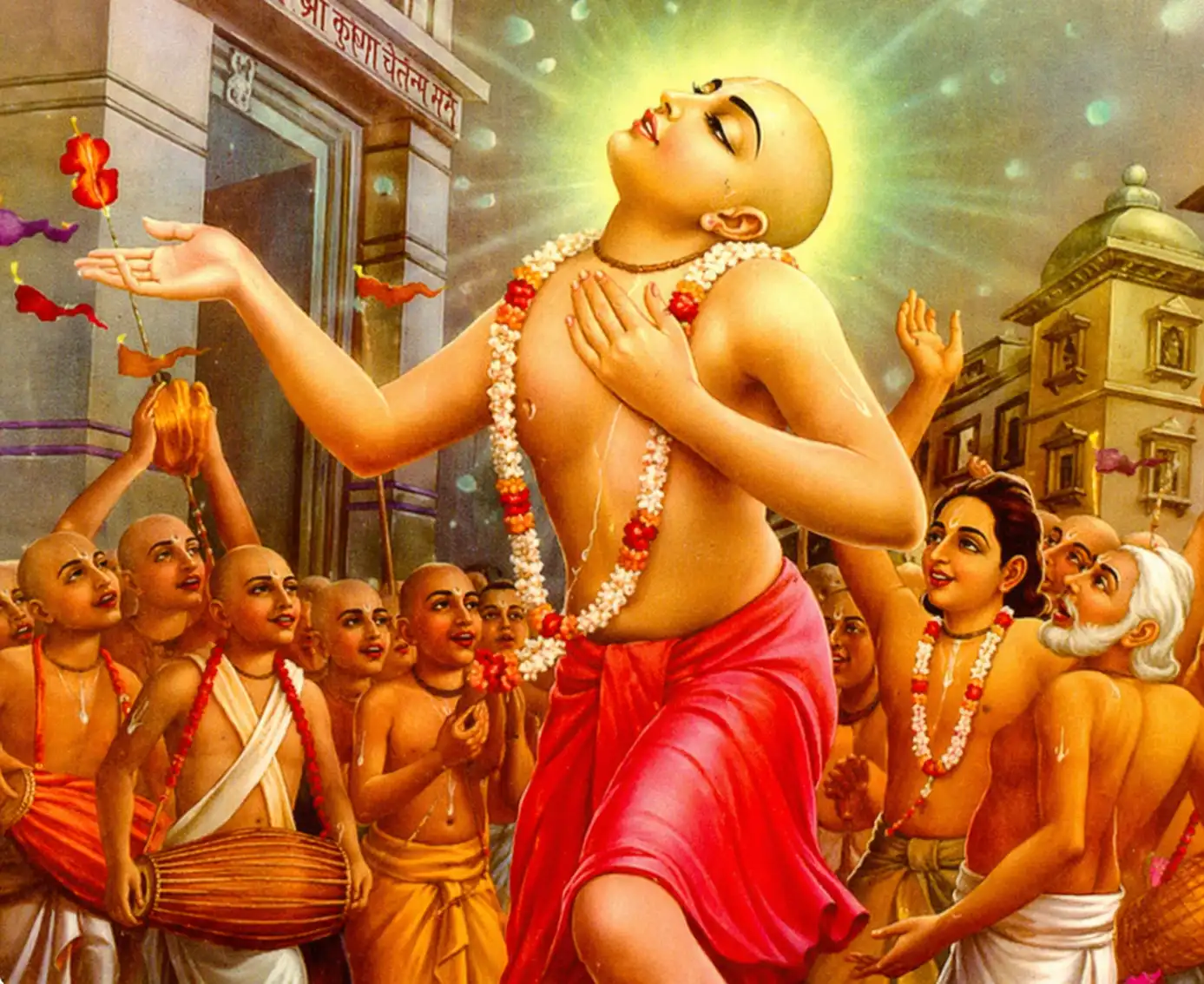
Centuries earlier, Chaitanya Mahaprabhu illuminated this same eternal principle through the depth of bhakti:
Whichever soul loves Sri Krishna—at whatever time, to whatever extent, and in whichever bhav—He reciprocates with that very soul, at that same time, to the exact same extent, and in that exact same bhav.
No more. No less.
Not according to status, knowledge, or ritual—
but purely according to love.
Sutra 23:
“तद्विहीनं जाराणामिव”
(tad-vihīnaṁ jarāṇām iva)
Meaning
“Without that (selfless divine love), it becomes like the love of worldly paramours (lustful relationships).”
Narad gives a powerful clarification. If this love is not understood properly, it may appear similar to worldly attachment.
He cautions:
“तद्विहीनं जाराणामिव”
Without the element of selfless devotion, such love becomes like ordinary, selfish relationships.
The love of the Gopis was not based on personal desire—it was completely centered on Krishna’s happiness. That is what makes it divine.
The Deeper Meaning
This is the most empowering truth in bhakti:
God does not decide the distance—
we do.
- If we approach Him with hesitation, He remains formal
- If we approach Him with reverence, He remains majestic
- But if we approach Him with love—He becomes ours
This is why the Gopis experienced Krishna as their beloved.
This is why Arjun experienced Him as a friend.
This is why Yashoda could bind Him as a child.
The difference was not in Krishna—
the difference was in their bhav.
- If the soul says, “Sri Krishna, You are my Swami,” offering itself in the mood of a servant, Krishna lovingly accepts that relationship.
- If the soul approaches Him as a dear friend, saying, “Come, my friend, let me walk beside You,” Krishna responds with warmth and companionship, just as He did with Arjun.
- If a soul chooses to care for God selflessly, feeling that being cared for is still tinged with self-interest, Krishna joyfully allows Himself to be placed in their care, as He did with Mother Yashoda.
- And if the soul declares, “Sri Krishna, You are my beloved, and I know no one but You,” then Krishna responds by becoming their beloved, just as He did with the Gopis.
Such is the extraordinary nature of divine love—it is not imposed from above, but awakened from within, and lovingly mirrored by God Himself.
This is not metaphorical—it is a fundamental law of spiritual interaction.
As said by Swamiji , God reciprocates with the same intensity, timing, and emotional tone (bhav) that we offer.
This means that the depth of our relationship with God is not predetermined—it is chosen.
We are not passive recipients of divine love; we are active participants in shaping it.
The Many Faces of Devotion
Bhakti is not one-dimensional. It offers a spectrum of relationships, each valid and beautiful:
1. Dasya Bhav (Servitude)
The devotee sees themselves as a servant of God. This brings humility and discipline.
2. Sakhya Bhav (Friendship)
Krishna as a Friend
While many approach God with reverence, the path of bhakti allows something deeper—a personal relationship.
Krishna was not only the Supreme Lord to Arjun; He was also his closest friend, walking beside him, guiding him, and sharing life with him.
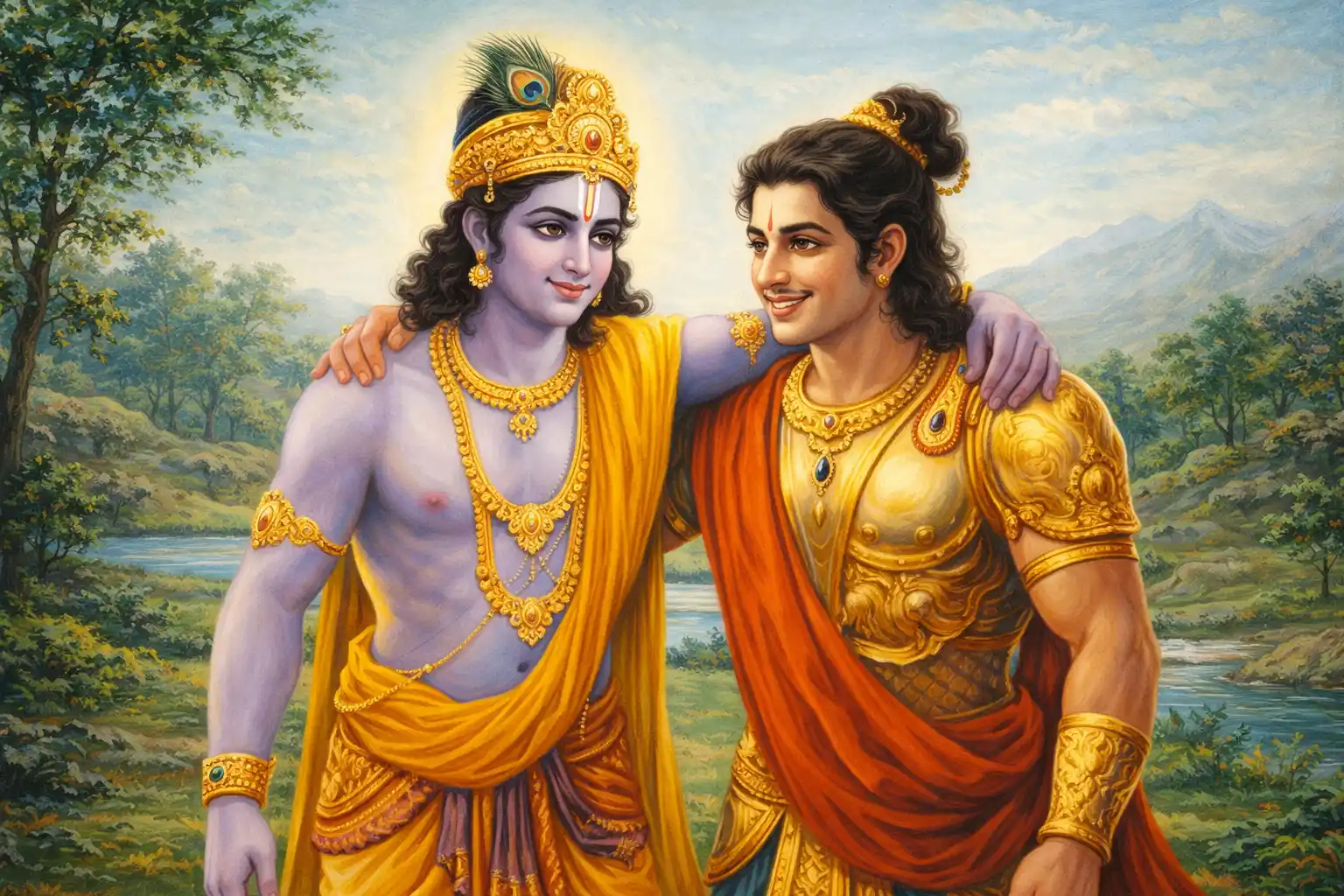
The devotee relates to God as a close friend—sharing joys, struggles, and laughter
This is the beauty of bhakti—God becomes not distant, but deeply personal..
3. Vatsalya Bhav (Parental Love)
The devotee feels protective toward God, like a parent caring for a child. This reverses the usual dynamic and removes all fear.
4. Madhurya Bhav (Romantic Love)
The highest and most intimate form—where God is seen as the beloved. This is the realm of the Gopis.
Each of these relationships is a doorway into divine intimacy. The choice depends on the seeker’s heart.
Bhaktavatsal and Bhaktawasha: The Nature of Divine Love
God is often described as Bhaktavatsal—one who loves His devotees deeply.
But bhakti goes even further.
God becomes Bhaktawasha—controlled by the love of His devotees.
This idea is astonishing. The infinite becomes influenced by the finite. The all-powerful becomes responsive to love.
This is not a limitation of God—it is the highest expression of His nature.
Love, not power, is the ultimate force in the spiritual universe.
Realizing this opens up the entire realm of bhakti to you, allowing you to achieve a spiritual seat that even Lord Shiva (Shankar Ji) did not initially possess
The Mystery of Maharas
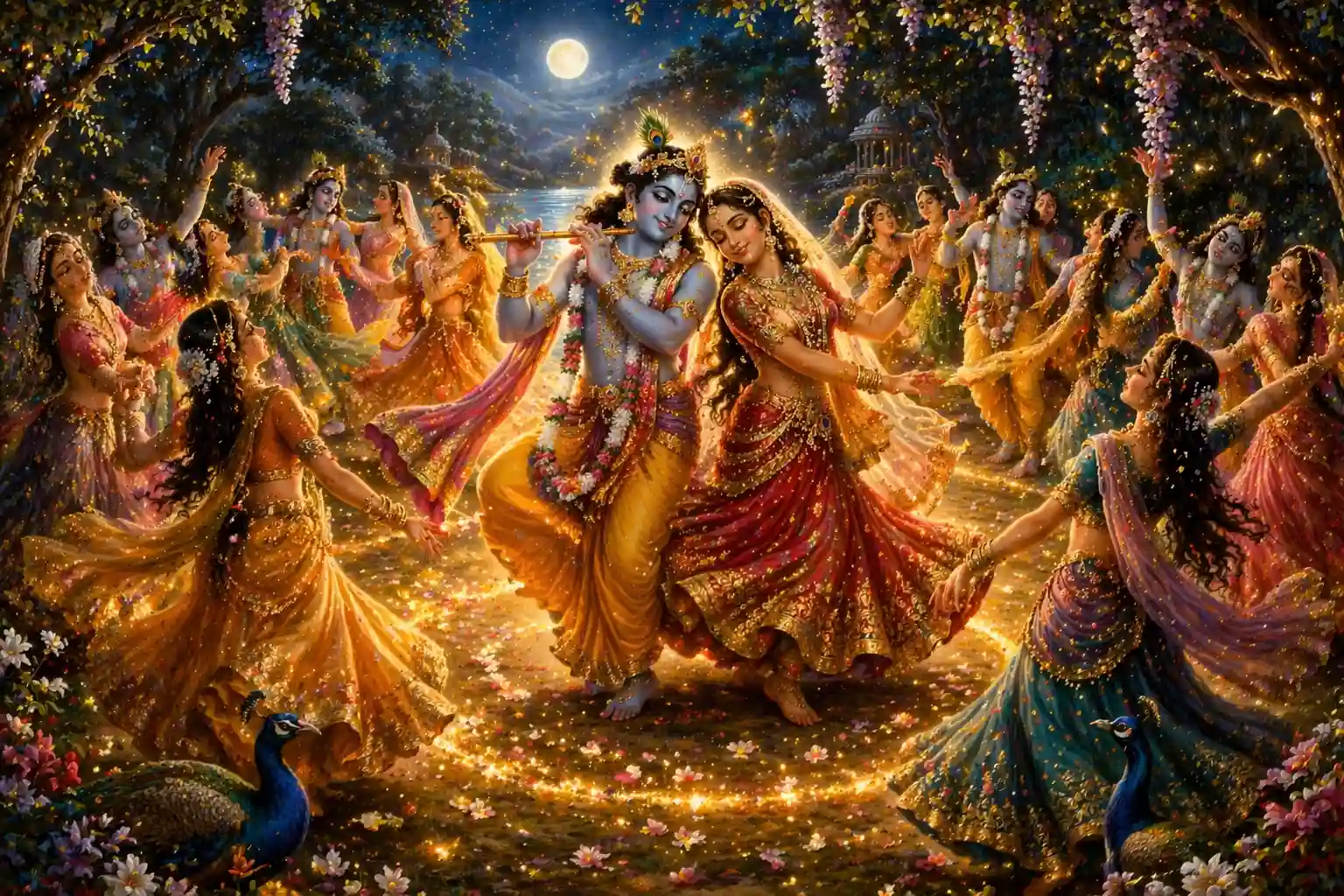
One of the most profound illustrations of divine love is the Maharas—the cosmic dance of Krishna with the Gopis.
When the divine Maharas dance took place, Shankar Ji was refused permission to enter. When he expressed his desire to relish the Maharas bestowed by Shyam Sundar, the Gopis bluntly told him he had no entry. They informed him that he needed permission from Radharani, who decreed that he could only attend in a feminine body.
Consequently, Shankar Ji had to bathe in Mansarovar to transform into "Shivani Gopi" before he was provided entry. When he arrived, Parvati noted that he was looking very beautiful that day. This extraordinary event illustrates that the nature of divine love (prem) is so sweet and profound that to relish it, even Lord Shiva must become a Gopi. Because Maharas is not accessible through power, knowledge, or status—it is accessible only through pure प्रेम (love).
This story reveals a profound truth: spiritual experiences are not granted based on hierarchy but on alignment of heart.
Cultivating Bhakti: A Journey from Practice to Personal Connection
Bhakti Begins with Sincerity, Not Perfection
Bhakti is often spoken about as a lofty spiritual ideal—something associated with saints, sages, or the Gopis of Braj. But in truth, bhakti is not reserved for the extraordinary; it is meant to be lived in the ordinary rhythms of daily life. It does not begin with perfection—it begins with sincerity.
The journey of bhakti unfolds gradually. It starts with small, conscious efforts and evolves into a deep, natural relationship with the Divine. The key is not to force devotion, but to nurture it gently, allowing it to grow from within.
The First Shift: From Distance to Personal Connection
It begins with a simple shift in perception.
Instead of seeing God as a distant, abstract force, you begin to relate to Him personally. You choose a form, a relationship, a feeling that resonates with your heart. Perhaps you see Him as a friend who walks beside you, or as a loving guide who understands you completely.
This personalization is the first step toward intimacy. Without it, devotion remains formal; with it, devotion becomes alive.
From Prayer to Conversation
As this relationship begins to take shape, your communication with God also transforms.
Prayer is no longer confined to memorized words or fixed rituals. Instead, it becomes a conversation—honest, unfiltered, and deeply personal. You begin to share your thoughts, your struggles, your gratitude, even your confusion.
In these moments, God is no longer someone you “pray to,” but someone you speak with.
Living in Remembrance
Gradually, this connection extends beyond isolated moments of prayer and enters the flow of your daily life.
You begin to remember God in small ways—while working, walking, or even during quiet pauses in the day. This remembrance does not have to be intense or constant; what matters is its sincerity.
Over time, these moments weave together, creating an undercurrent of divine awareness that stays with you throughout the day.
From Thinking to Feeling
At this stage, something important begins to shift.
Your approach to spirituality moves away from mere intellectual understanding. While knowledge can guide the path, it cannot replace experience. Bhakti asks you not just to think about God, but to feel Him.
You allow yourself to experience gratitude, longing, and love. These emotions are not distractions—they are the very medium through which devotion deepens.
Learning Through Divine Stories
To support this emotional connection, you may find yourself drawn to stories of divine play—Krishna’s leelas, the love of the Gopis, and the devotion of great devotees.
These are not just stories; they are living examples of how the soul can relate to God. They give form to feeling and direction to devotion.
Turning Actions into Offerings
As your awareness grows, your actions begin to transform.
Everyday tasks—work, responsibilities, interactions—gradually become offerings. You begin to perform them not just for personal gain, but as an expression of devotion.
A simple inner intention—“This is for You”—can turn even the most ordinary action into an act of worship. In this way, life itself becomes a spiritual practice.
From Transaction to True Seeking
Along this journey, a subtle but profound shift takes place.
You begin to move away from transactional devotion. Instead of approaching God with a list of desires—asking for solutions, success, or relief—you begin to seek something deeper.
You begin to seek God Himself.
This is a turning point in bhakti. When the desire for God replaces all other desires, devotion becomes pure.
🌼 Returning to Simplicity and Innocence
At the same time, your heart begins to simplify.
The need for complexity fades. You realize that devotion does not require perfect rituals or deep scholarship. What it requires is sincerity.
Like a child who speaks to God without doubt or hesitation, you rediscover a sense of innocence in your relationship with the Divine.
The Power of Spiritual Association
This inner transformation is supported by the company you keep.
When you surround yourself with spiritual thoughts, teachings, and like-minded seekers, your devotion is strengthened. The mind, which is easily influenced, gradually aligns itself with higher ideals.
The Gradual Path of Surrender
And then comes surrender—not as a sudden act, but as a gradual unfolding.
You begin by trusting God in small matters, accepting outcomes with faith, and loosening your grip on control. Over time, this trust deepens into a quiet confidence:
Whatever unfolds is guided by a higher wisdom.
The Final Realization: God Was Never Far
Through all of this, one truth becomes increasingly clear—
Bhakti is not about becoming someone else; it is about becoming more authentic. It is not about adding complexity, but about removing distance.
You do not need to reach the highest state immediately. You simply need to begin—where you are, as you are.
With each step, the relationship deepens.
With each moment of sincerity, the connection strengthens.
And one day, you realize:
God was never far away.
He was always there—
waiting not for perfection,
but for your love.
The Inner Stability of a True Devotee
As devotion matures, it brings about a profound inner transformation.
The scriptures describe this state:
“Na shochati, na dveshti, na ramate, na utsahi bhavati”
One who has attained divine love transcends sorrow, hatred, worldly attachment, and restless excitement.
Such a person is no longer controlled by emotional turbulence. Their center becomes steady—anchored in divine love.
At first glance, this may seem different from the intense devotion of the Gopis. But in reality, it is the same truth at a deeper level.
While their love appeared outwardly intense, inwardly it was free from selfish desire and worldly agitation. Their emotions were not born of lack—but of complete absorption in the Divine.
This is not instability.
It is transcendence.
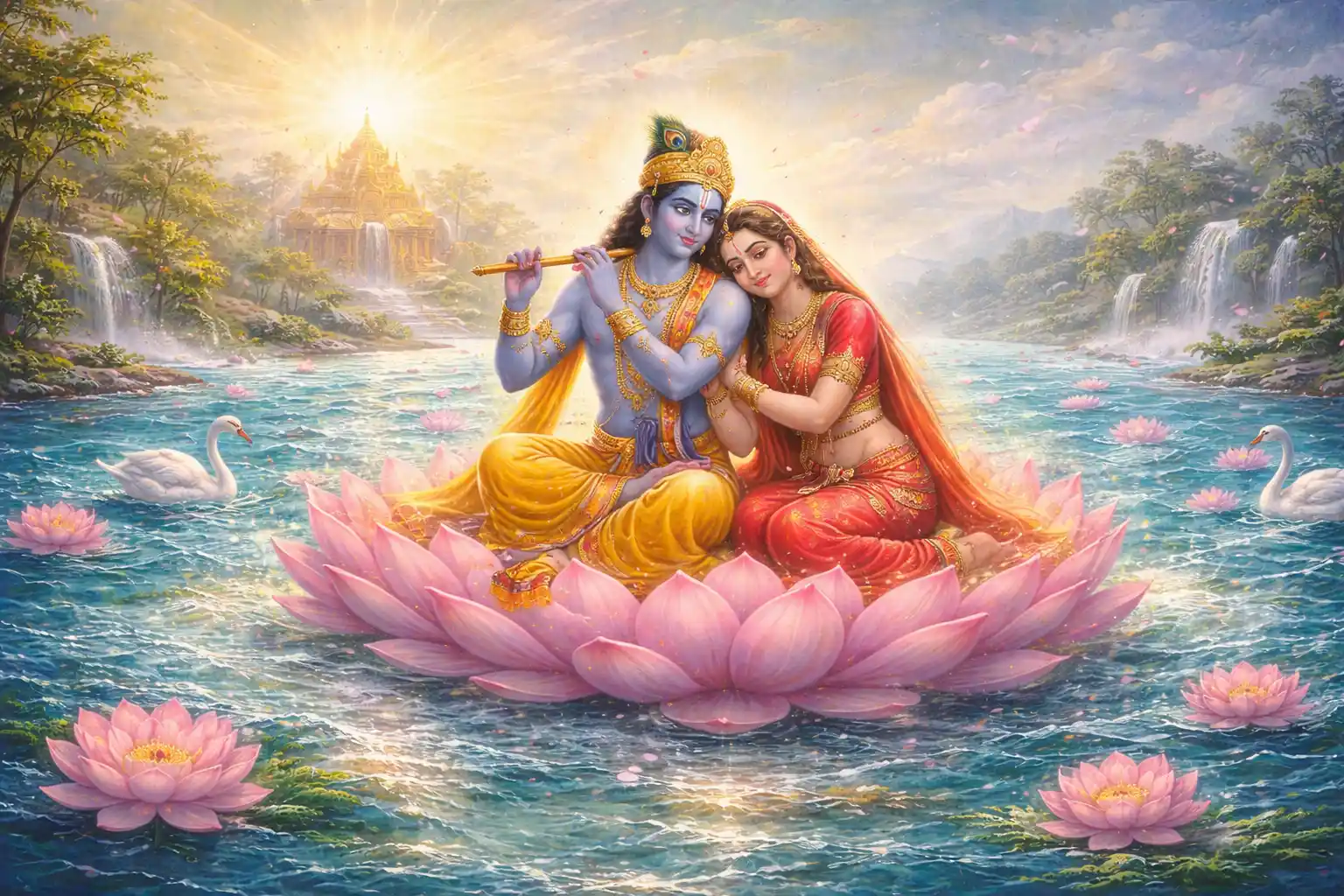
The joy experienced in divine connection is not fleeting. It is deep, infinite, and ever-increasing—like an ocean that never runs dry.
Conclusion
To beautifully conclude this understanding, Swamiji draws upon a striking example once given by Swami Vivekananda, who explained that if he had been a thief, he would not have stolen petty things—he would have robbed a bank; if he had been an administrator, he would not have settled for a small post—he would have aspired to be the king. And since he chose to love, he resolved to love the highest—he chose to love God.”
Through this powerful analogy, the message becomes clear:
whatever path you choose, aim for the absolute highest.
Applying this to bhakti, Swamiji explains that we should not be content with a distant or superficial relationship with God. The path of devotion offers a vast spectrum—from reverence to intimacy—and it is upon us to consciously choose the deepest, sweetest connection.
Why stop at formality when प्रेम (divine love) is possible?
Why remain in distance when intimacy is available?
Even if attaining that supreme state of love takes lifetimes, it does not matter. Time is not the concern—direction is. The responsibility of a seeker is not to calculate how long it will take, but to ensure that the goal itself is the highest.
And that highest goal is this:
to love God not just as the Almighty—but as your very own.
🌟 Final Call to Action
👉 For more life-changing teachings, subscribe to the official YouTube channels:
👉 Watch the complete Narad Bhakti Sutra series on the Bhagavad Gita Krishna Bhakti Channel:
Buy the "Narad Bhakti Sutras" by Swami Mukundananda
Now that we’ve explored the divine wisdom of the Narad Bhakti Sutras, it’s time to take the next step on your spiritual journey. To deepen your understanding of the Narad Bhakti Sutras, we highly recommend Swami Mukundananda’s commentary, which beautifully unpacks each mantra providing a clear and practical guide for modern seekers.
Order the Book: Swami Mukundananda’s Commentary
Unlock the deeper wisdom of the Narad Bhakti Sutras with this insightful commentary by Swami Mukundananda. Perfect for modern seekers who wish to explore the divine teachings in greater depth.
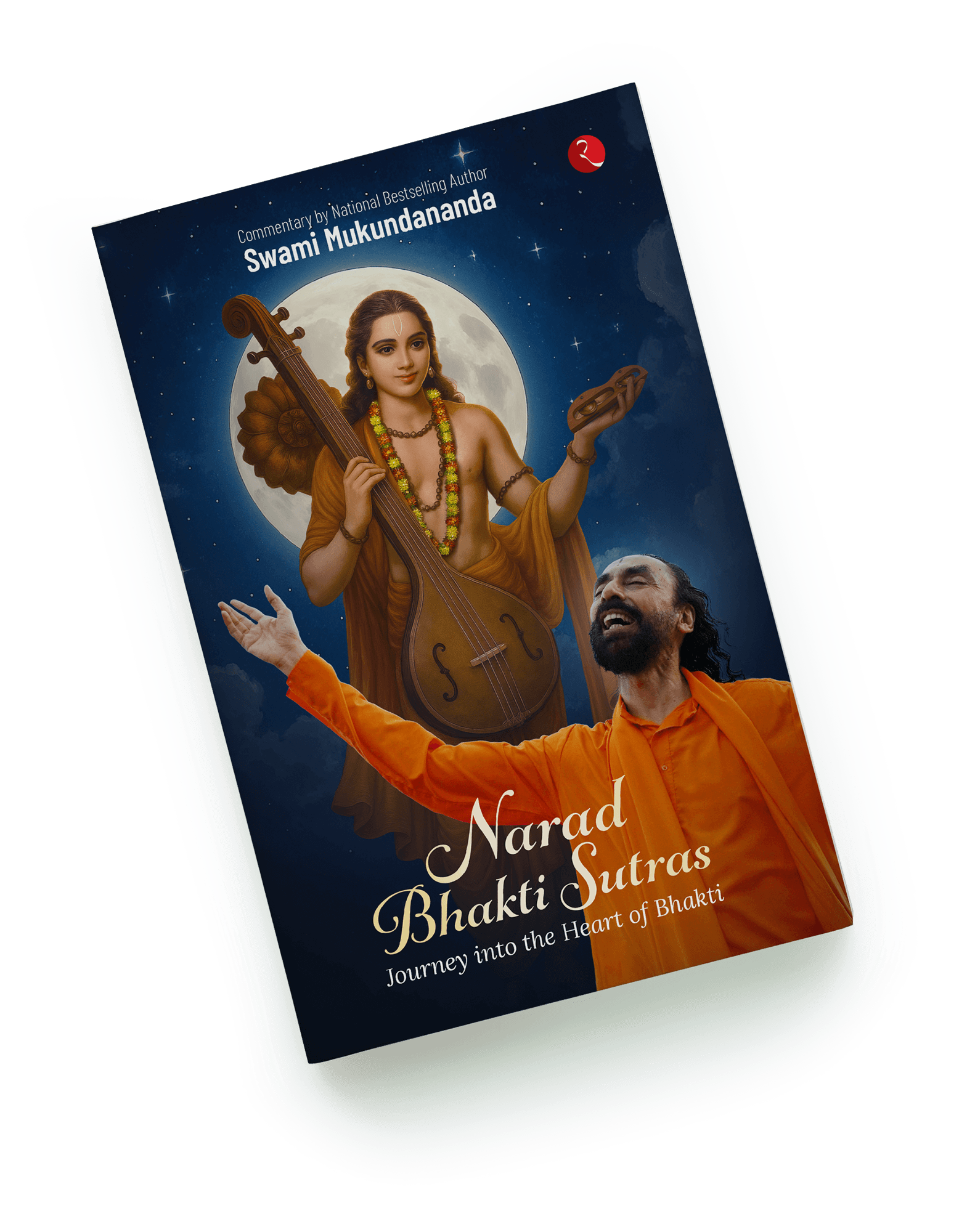
Order the Book Now (India)Order the Book Now (USA)
FAQs
❓ 1. What is the essence of bhakti according to this blog?
Bhakti is not merely ritualistic worship or reverence—it is a deep, personal connection with God. True bhakti begins when we move beyond seeing God as distant and start relating to Him as our own, with sincerity, love, and emotional intimacy.
❓ 2. Why is a personal relationship with God important in bhakti?
A personal relationship transforms devotion from something formal into something alive and meaningful. When you begin to feel “God is mine,” your prayers become conversations, and your connection becomes natural. This intimacy is what brings the true sweetness of bhakti.
❓ 3. How can I start cultivating bhakti in my daily life?
You can begin by:
- Speaking to God sincerely, like a friend
- Remembering Him during daily activities
- Offering your actions with the intention, “This is for You”
- Focusing on feeling rather than overthinking
Bhakti grows gradually through consistent, heartfelt effort, not perfection.
❓ 4. Why don’t worldly pleasures bring lasting happiness?
Worldly pleasures are temporary and limited, while the soul seeks infinite and lasting bliss. True fulfillment comes from God, who is described as the ocean of happiness. When we turn toward Him, we begin to experience deeper and more lasting joy.
❓ 5. Do I need deep knowledge or strict rituals to practice bhakti?
No. Bhakti does not require intellectual mastery or perfect rituals. What it truly requires is sincerity, simplicity, and faith. Like a child who connects with pure trust, anyone can experience bhakti by approaching God with a genuine heart.