Introduction
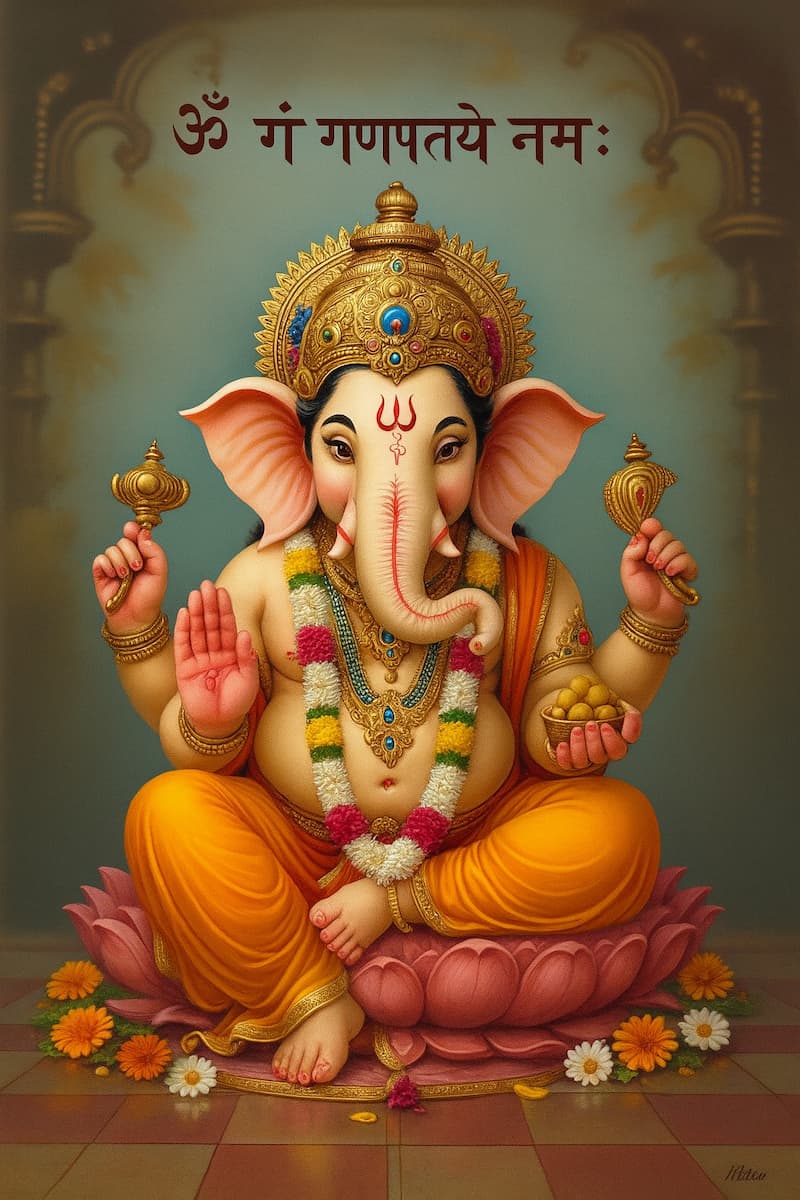
Ganesh Chaturthi, one of the most joyous and spiritually significant festivals in Hinduism, celebrates the divine birth of Lord Ganesha—the remover of obstacles (Vighnaharta), the embodiment of wisdom (Buddhipriya), and the bestower of prosperity (Siddhidata). Every year, devotees welcome Ganapati into their homes and temples with rituals, decorations, and above all—devotional singing and chanting.
Two of the most powerful modes of worship during this festival are mantras (sacred sounds that connect the mind to the divine) and bhajans (devotional songs sung with love). Together, they purify the heart, elevate consciousness, and invoke the presence of Lord Ganesha in both the outer world of rituals and the inner world of the soul.
This blog explores the depth of Ganesh mantras and bhajans, their scriptural roots, meanings, and transformative power.
The Scriptural Basis of Mantras
The Power of Sound in Hindu Thought
The Vedas emphasize the primordial role of sound (shabda) in creation. The Rig Veda proclaims that through the vibration of sound, the cosmos itself manifests. Mantras are therefore not ordinary words—they are sound vibrations infused with divine energy. The Mundaka Upanishad calls mantras “bows” that launch the arrow of the soul toward the supreme target.
Lord Ganesha, as the presiding deity of beginnings, is invoked first in all Vedic rituals through mantras. The Ganapati Atharvasirsha Upanishad declares:
“Tvam eva pratyaksham tattvam asi” – “You alone are the visible reality, O Ganapati.”
Here, Ganapati is praised as the embodiment of Om, the root vibration of the universe.
Essential Ganesh Mantras
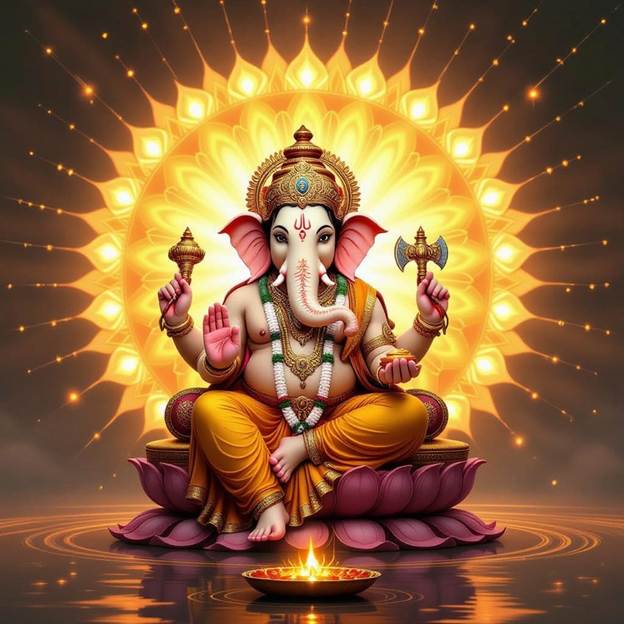
1. Om Gan Ganapataye Namah
Meaning:
This is one of the most popular and widely used Ganesh mantras.
- Om – The primordial sound, symbol of Brahman.
- Gan – Refers to Ganas (celestial attendants) and also the collective energy of beings.
- Ganapataye – To the Lord of the Ganas, Ganesha.
- Namah – I bow down.
Power:
Chanting this mantra aligns the devotee with Ganapati’s energy, removing inner and outer obstacles. The Ganesha Purana describes that reciting this mantra with devotion bestows clarity of thought and courage before new ventures.
2. Vakratunda Mahakaya
Verse:
“Vakratunda Mahakaya, Suryakoti Samaprabha
Nirvighnam Kurume Deva, Sarva-Kaaryeshu Sarvada”
Meaning:
“O Lord with the curved trunk and mighty body, whose radiance is equal to millions of suns, may You remove all obstacles in my endeavors, always and forever.”
Power:
This mantra is often recited before starting anything new—studies, business, journeys—echoing the Vedic injunction to seek Ganesha’s blessings first. The Padma Purana suggests that remembering Ganesha before work ensures success.
3. Ganapati Atharvasirsha Mantra
From the Upanishad dedicated to Ganesha, this hymn recognizes Him as Brahman itself:
“Om namaste ganapataye
Tvameva pratyaksham tattvam asi
Tvameva kevalam kartasi
Tvameva kevalam dhartasi…”
Meaning:
“I bow to You, O Ganapati. You alone are the ultimate truth. You are the creator, the sustainer, and the dissolver.”
Power:
Reciting this daily is said to purify the intellect (buddhi-shuddhi), making the devotee receptive to divine wisdom.
4. Siddhi Vinayak Mantra
“Om Shri Ganeshaya Namah
Om Siddhi Vinayakaya Namah”
Meaning:
“O Auspicious Lord Ganesha, I bow to You, the one who grants siddhi (success) and removes obstacles.”
Power:
The Mudgala Purana praises Ganesha as Siddhivinayaka, the granter of spiritual and material achievements. This mantra is especially chanted during Ganesh Chaturthi to invite both prosperity and devotion.
5. Ganesha Gayatri Mantra
“Om Ekadantaya Vidmahe
Vakratundaya Dhimahi
Tanno Danti Prachodayat”
Meaning:
“Om, let us meditate upon the one-tusked Lord, the curved-trunk Lord; may that tusked one inspire and illumine our mind.”
Power:
The Gayatri form invokes divine illumination. Here, Ganesha is meditated upon as the eternal wisdom within, guiding the mind away from ignorance.
Bhajans: Singing Devotion
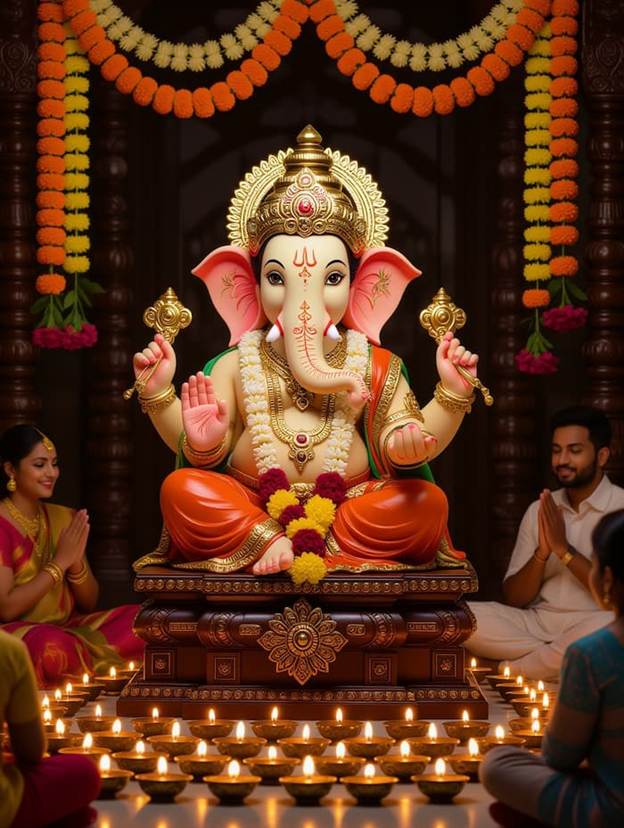
If mantras are concentrated sound capsules of divine energy, bhajans are rivers of melody that carry the heart into surrender. Bhajans to Lord Ganesha have been sung for centuries, from the saints of Maharashtra like Samarth Ramdas and Sant Tukaram, to modern devotional singers.
The Bhagavata Purana affirms that kirtan (devotional singing) purifies the heart:
“Kalau tad dhari-kirtanat” – “In the age of Kali, chanting the names of God is the greatest spiritual practice.”
During Ganesh Chaturthi, devotees gather for aarti and sing bhajans in chorus, creating an atmosphere charged with devotion and unity.
Popular Ganesh Bhajans and Their Meanings
1. “Jai Ganesh Jai Ganesh Deva”
A simple yet profound bhajan often sung during aarti. It praises Ganesha’s form, His love for devotees, and His role as the remover of obstacles.
The repetition of “Jai Ganesh” not only expresses victory and praise but also imprints His name in the devotee’s consciousness.
2. “Ganpati Bappa Morya”
A powerful chant originating from Maharashtra, attributed to saint Morya Gosavi.
- Bappa means father, an affectionate name.
- Morya is both the saint’s name and an expression of love.
Chanting this creates a surge of collective devotion during processions, symbolizing surrender to the divine father.
3. “Sukhkarta Dukhharta”
Composed by Samarth Ramdas, this Marathi aarti describes Ganesha as:
- The giver of joy (Sukhkarta).
- The remover of sorrow (Dukhharta).
- The compassionate lord who blesses devotees with strength and wisdom.
4. “Moreshwar Bhajan”
Dedicated to Moreshwar form of Ganesha (in Morgaon, one of the Ashtavinayak shrines), this bhajan links devotion to pilgrimage, reminding devotees that Ganesha manifests in countless sacred forms.
5. Contemporary Bhajans
Modern devotional singers like Anup Jalota and Shankar Mahadevan have popularized Ganesh bhajans globally, keeping the tradition alive. While not scriptural, these are expressions of bhakti-rasa, aligning with the Bhagavad Gita’s teaching:
“Patram pushpam phalam toyam yo me bhaktya prayacchati” – “Whatever is offered to Me with love, I accept.” (BG 9.26)
The Transformative Power of Mantras and Bhajans

1. Removal of Obstacles (Vighna Vinashana)
The Skanda Purana narrates that even the gods invoke Ganesha before cosmic tasks. Devotees experience smoother progress in life when chanting His mantras.
2. Awakening Wisdom and Intellect
The Ganapati Atharvasirsha identifies Ganesha with pure consciousness. Chanting His Gayatri mantra develops discrimination (viveka) and wisdom.
3. Emotional Healing Through Bhajans
Singing bhajans creates emotional catharsis. Collective singing dissolves loneliness and brings devotees into a shared vibration of joy.
4. Spiritual Purification
The Bhagavata Purana emphasizes that chanting God’s name destroys sins of countless births. Both mantras and bhajans serve this function, leading the devotee closer to moksha.
5. Cultivation of Devotion (Bhakti)
The Narada Bhakti Sutra states: “Bhakti is of the nature of supreme love toward God.” Mantras focus the mind; bhajans melt the heart. Together, they complete the path of bhakti.
Ganesh Chaturthi: Mantras and Bhajans in Practice
During the festival, devotees observe a structured sequence:
1. Pranapratishtha (Invocation of Ganesha)
Mantras like Om Gan Ganapataye Namah are chanted to invite the divine presence into the idol.
2. Daily Aarti and Bhajan Singing
Morning and evening, families gather for Jai Ganesh Jai Ganesh Deva or regional bhajans, reinforcing devotion.
3. Meditative Chanting (Japa)
Devotees repeat mantras like Vakratunda Mahakaya on mala beads, aligning their breath and mind.
4. Immersion Procession (Visarjan)
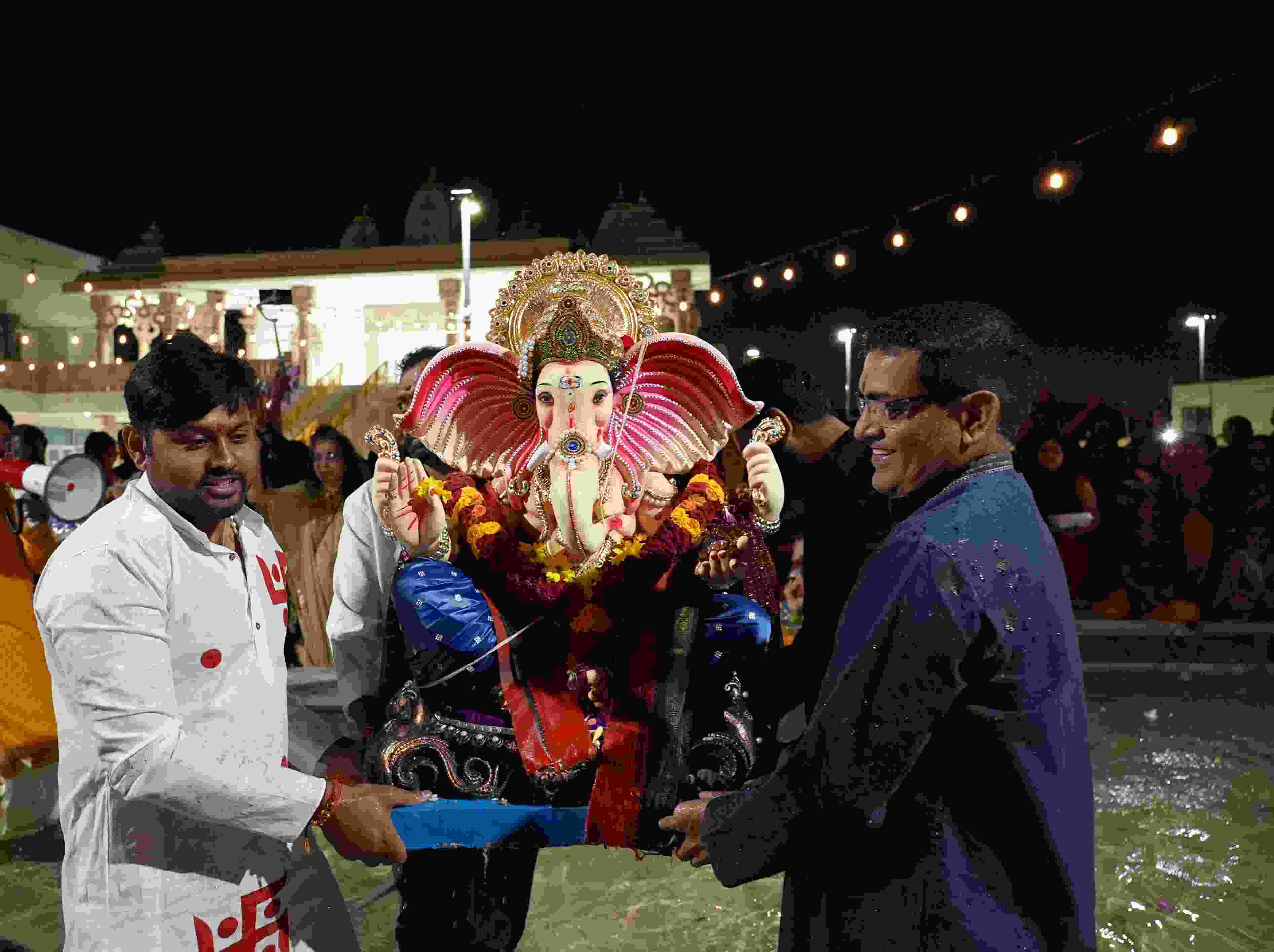
As the idol is carried to immersion, crowds chant “Ganpati Bappa Morya, Pudhchya Varshi Lavkar Ya” (“Come back soon next year!”), combining farewell with faith.
Practical Tips for Devotees
- Consistency over quantity: Even five minutes of daily chanting can transform the mind.
- Understand the meaning: Mantras become powerful when recited with awareness.
- Sing with emotion: In bhajans, sincerity matters more than musical skill.
- Create a sacred atmosphere: Lighting a lamp and incense while chanting enhances focus.
Conclusion
Ganesh Chaturthi is not merely a cultural celebration—it is a spiritual opportunity. Through mantras, we invoke Lord Ganesha’s divine vibrations into our minds. Through bhajans, we surrender our hearts in melody. Both are paths to the same goal: overcoming obstacles, purifying the self, and realizing the divine presence in all.
As the Ganapati Atharvasirsha reminds us, Ganesha is none other than the supreme reality itself. By chanting His names and singing His glories during Ganesh Chaturthi, we align our lives with wisdom, joy, and liberation.
🙏 Call to Action
This Ganesh Chaturthi, let your celebration go beyond rituals. Chant the mantras with awareness, sing bhajans with heartfelt love, and invite Lord Ganesha into your life as the remover of obstacles and the giver of wisdom. Begin today—let His divine presence guide every step of your journey.
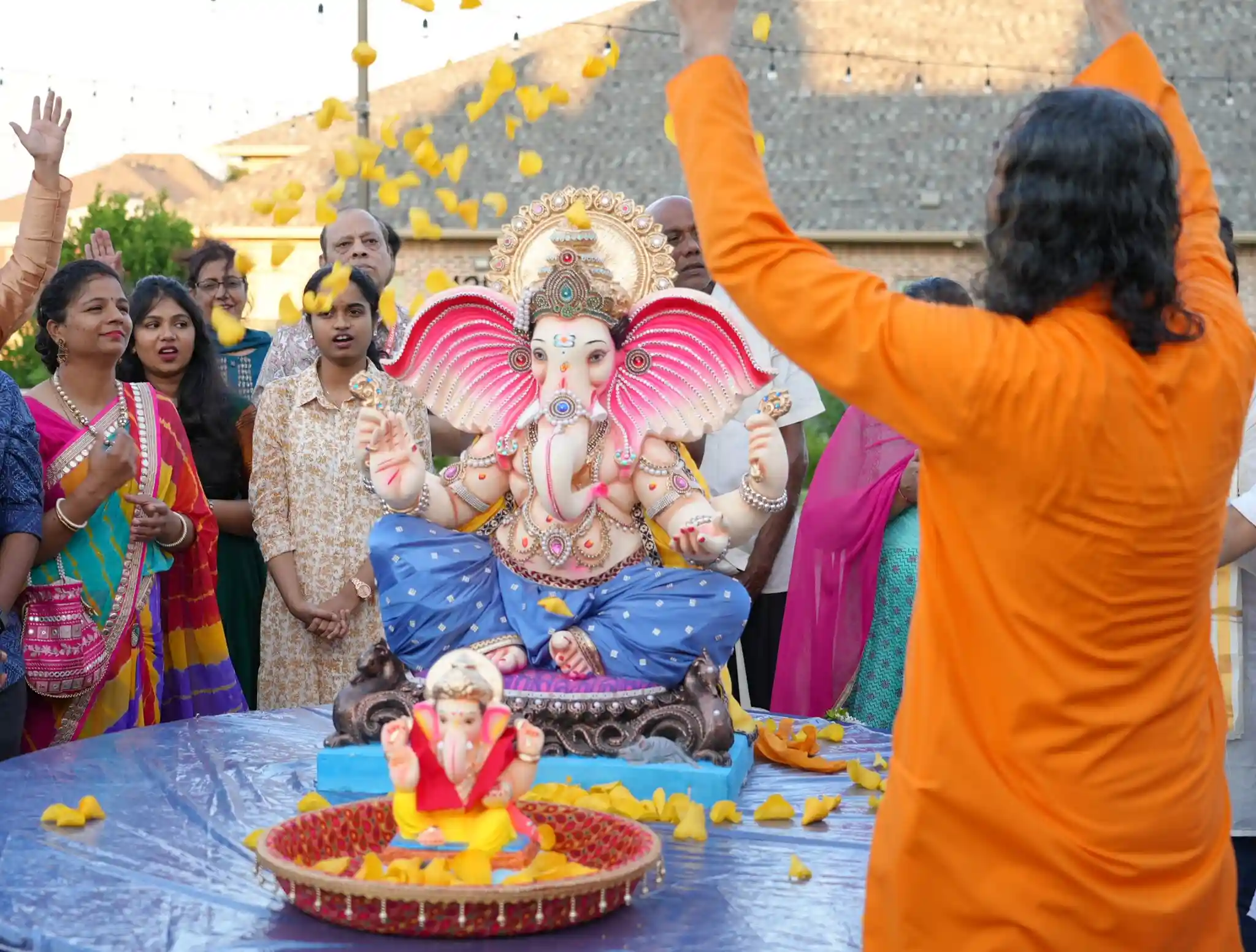
Ganesh Chaturthi Mahotsav 2025
Radha Krishna Temple of Dallas
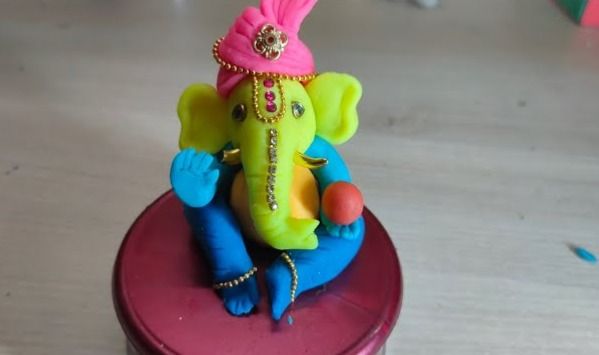
Celebrate the divine presence of Lord Ganesha at the Radha Krishna Temple of Dallas (Allen)! Join us for Ganesh Chaturthi, soul-enriching Kirtans, Aarti, Modak Making, and more!
✨ Event Highlights ✨
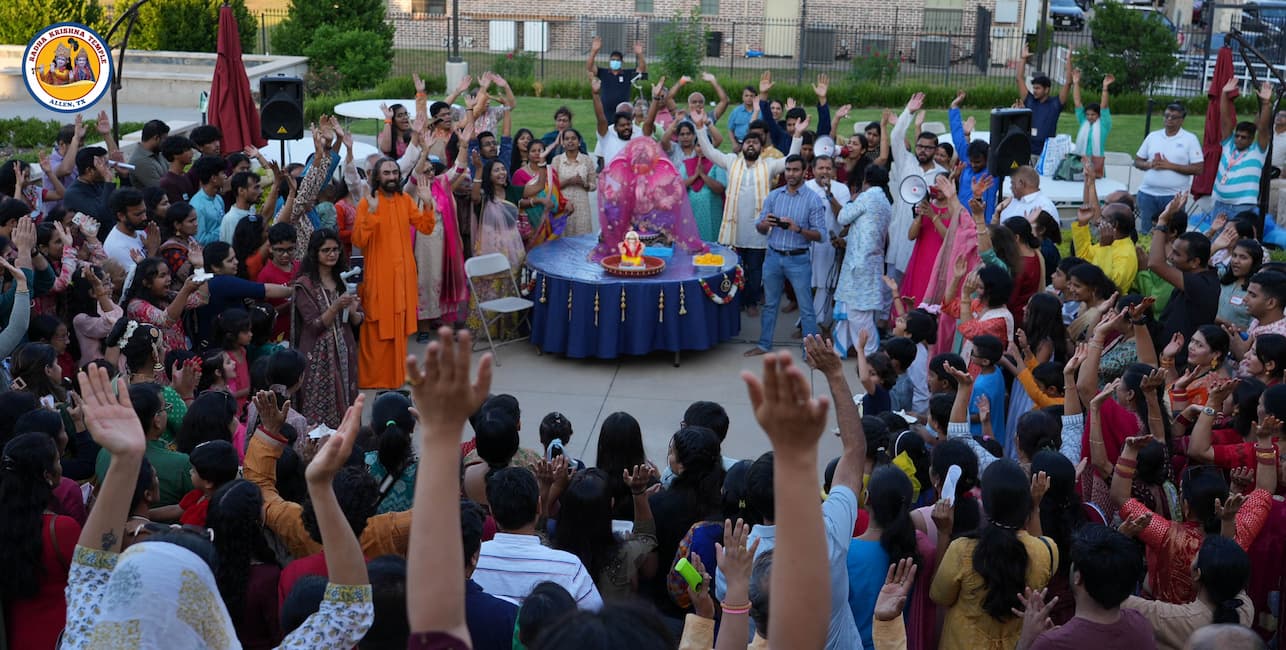
Ganesh Sthaapana & Pooja
Sacred installation and collective worship with powerful Vedic mantras.
Join Us

🎁 Sponsorship Opportunities
Support the event by sponsoring Pooja, Mahaprasad, or Grand Offerings. Your contribution helps keep this divine tradition alive!
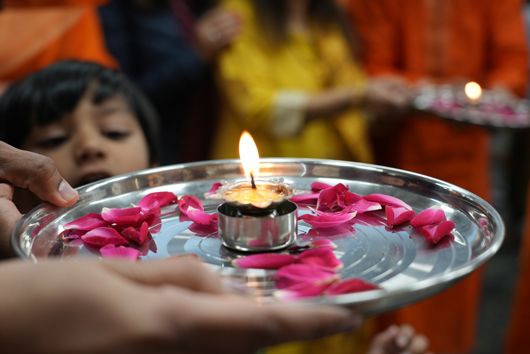
🪔 Bring flowers, fruits, and prasad • 🙏 Become a Yajman • 🎁 Sponsor a Seva
📚 References
- Rig Veda – Hymns on sound and creation.
- Ganapati Atharvasirsha Upanishad – Philosophical teachings on Lord Ganesha as Brahman.
- Mudgala Purana and Ganesha Purana – Narratives on Ganesha’s forms and powers.
- Padma Purana – Praise of Ganesha’s role in removing obstacles.
- Bhagavad Gita, 9.26 – On devotion and offerings.
- Bhagavata Purana, 12.3.52 – Kirtan as the supreme practice in Kali Yuga.
- Narada Bhakti Sutra – Teachings on the nature of devotion.
❓ FAQs
Q1: When is Ganesh Chaturthi in 2025?
In 2025, Ganesh Chaturthi falls on Friday, August 29. The Chaturthi Tithi begins at 12:01 AM and ends at 9:29 PM the same day.
Disclaimer: All timings are given in IST (Indian Standard Time).
Q2: Which is the most powerful mantra for Ganesh Chaturthi?
Om Gan Ganapataye Namah is considered the most universal and powerful, removing obstacles and inviting Ganesha’s blessings.
Q3: Can I chant Ganesh mantras without initiation?
Yes, Ganesha mantras are open to all. What matters most is sincerity and correct pronunciation.
Q4: Why are bhajans important during Ganesh Chaturthi?
Bhajans fill the heart with devotion, create collective joy, and make the home or temple atmosphere divine.
Q5: How many times should a mantra be chanted?
Traditionally, using 108 times in a mala is ideal, but even a few minutes daily with focus is effective.
Q6: Do mantras only bring material success?
No. While they can remove worldly obstacles, their higher purpose is spiritual— purifying the mind and awakening wisdom.