
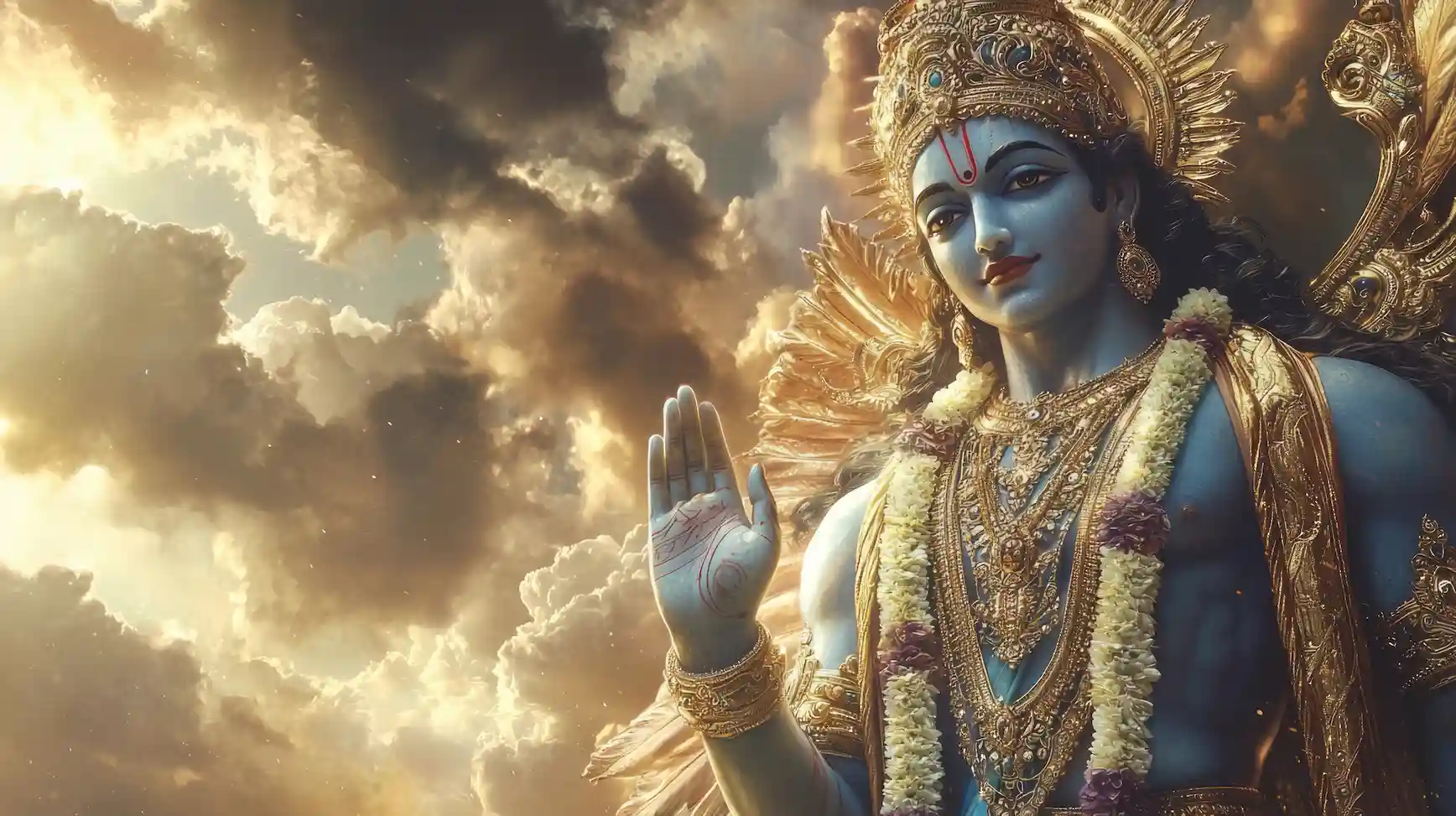
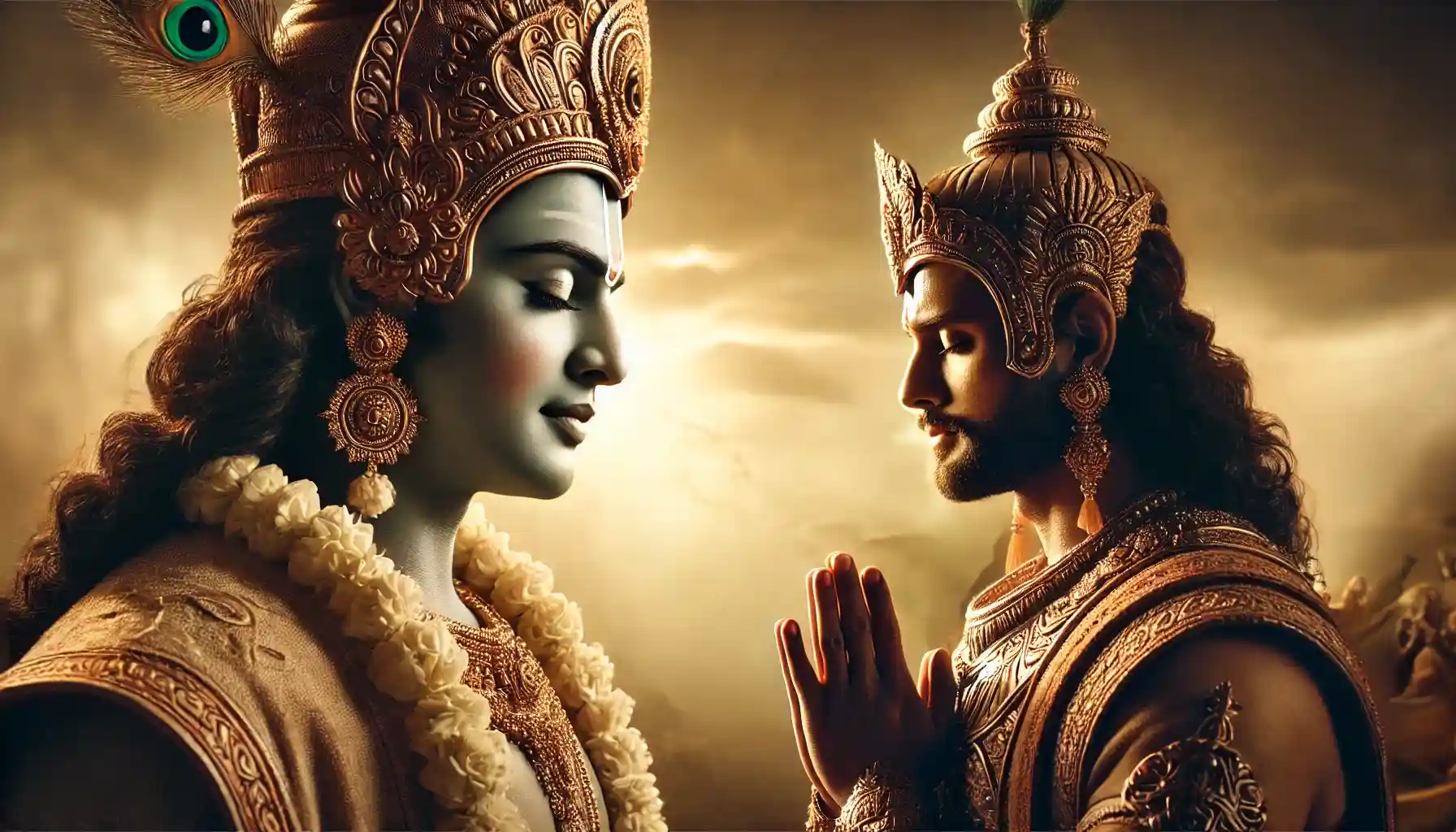
Quote 1: Perform your duty without attachment
The Bhagavad Gita's most powerful teaching comes from Krishna's words to Arjuna about doing one's duty without result attachment. This timeless wisdom helps us deal with life's challenges while keeping our inner peace and clarity.
The meaning of karma yoga
The Bhagavad Gita outlines three classical spiritual paths, with karma yoga being the "yoga of action." Karma yoga blends two basic ideas: karma (occupational duties) and yoga (union with God). A karma yogi stays mentally connected with the divine while doing worldly duties.
"Karma Yoga is the spiritual practice of selfless action performed for the benefit of others," Krishna tells Arjuna. This path shows that spiritual seekers should follow their dharma (righteous duty) without getting attached to the results or personal outcomes of their actions.
Karma yoga's brilliance shows in its practical nature. It encourages full participation in life with inner detachment, unlike paths that ask for giving up worldly activities. The law of karma binds to result attachment, not the actions themselves. This means a karma yogi stays free from karma even while doing various works.
Krishna's words in verse 3.19 of the Bhagavad Gita capture karma yoga's essence: "Therefore, without being attached to the results of activities, one should act as a matter of duty, for by working without attachment one attains the Supreme".
Story of Arjuna in the battlefield
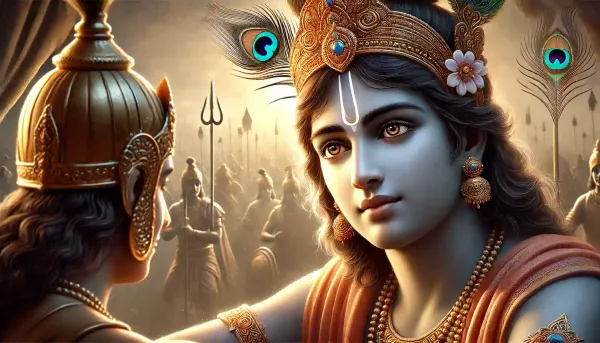
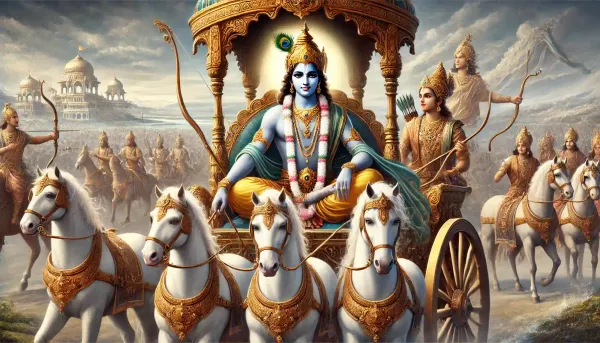
The battlefield of Kurukshetra sets this powerful teaching's stage. Two massive armies gather for war. Arjuna, the Pandava army's skilled warrior, asks his charioteer Krishna to place his chariot between the opposing forces. He wants to see who he'll fight against.
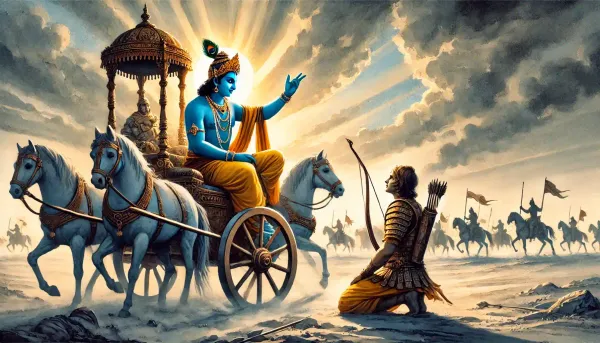
Arjuna's heart sinks when he sees his relatives, friends, and teachers in the enemy army. His hands shake, his mouth dries up, and he drops his bow. He questions if he should give up his warrior's duty. He tells Krishna, "I do not wish to kill my teachers, uncles, sons, grandfathers, maternal uncles, fathers-in-law, grandsons, brothers-in-law, and other relatives who are about to kill us".
This scene shows the moral challenge we face when duty clashes with emotional bonds. Arjuna's struggle mirrors our own battles between necessary actions and comfortable choices.
Lesson: Focus on action, not results
Krishna responds with one of the Bhagavad Gita's most quoted verses (2:47): "You have a right to perform your prescribed duties, but you are not entitled to the fruits of your actions. Never consider yourself to be the cause of the results of your activities, nor be attached to inaction".
This teaching brings four vital lessons. We should do our duty without worrying about outcomes. Results depend on many things beyond our control—our efforts, destiny (past karmas), God's will, others' work, and circumstances. Better performance and less anxiety come from focusing on our efforts alone.
God should receive the fruits of our actions, not us. The Padma Puran states, "God is the Master of the entire creation; all moving and non-moving beings are his servants".
We need to let go of our doer's ego. God's power gives us the ability to act. Without divine energy, we could do nothing.
Running away from action isn't the answer. Krishna clearly states that attachment to inaction is wrong.
This wisdom helps us face life's challenges with balance. We can excel in our duties while staying free inside.
Quote 2: You are your own friend or enemy

The Bhagavad Gita contains Krishna's profound wisdom about our mind's dual nature. He states, "For one who has conquered his mind, a mind is best of friends, but for one who has failed to do so, a mind is the greatest enemy." This powerful quote explains how our inner world shapes our outer reality and determines our success or failure.
Understanding the power of the mind
The Gita describes the mind as both our greatest ally and worst adversary. Krishna explains this duality in Chapter 6, verse 5: "Raise yourself through the power of your mind, and not degrade yourself, for the mind can be the friend and also the enemy of the self." His fundamental teaching shows that true strength comes from within.
Our mind works at multiple levels—creating thoughts (mana), analyzing decisions (buddhi), forming attachments (chitta), and creating ego-based identity (ahankār). These functions belong to the same mind rather than being separate entities. Krishna teaches us to use our higher mind (intellect) to guide the lower mind (emotions and impulses).
The untamed mind creates constant turbulence. Arjuna himself admits, "The mind is very restless, turbulent, strong and obstinate, O Krishna. It appears to me that it is more difficult to control than the wind." His honest confession appeals to our daily battles against mental distraction and emotional reactivity.
Story of Karna's inner conflict
Karna, the tragic hero from the Mahabharata, perfectly shows this inner conflict. Kunti gave birth to him through a blessing from Surya (the sun god) before her marriage. She abandoned him as an infant, and a charioteer family raised him. People knew him as "a charioteer's son" and denied him the respect given to warriors of noble birth, despite his royal lineage.
Karna's craving for respect and recognition defined his life. His low self-esteem made him emotionally vulnerable to manipulation, especially when Duryodhana offered him friendship and a kingdom. Karna stayed loyal to Duryodhana throughout his life, even though he knew his friend's unrighteous intentions.
Krishna later revealed Karna's true identity as the eldest Pandava brother and offered him the throne. Karna refused and declared, "Though I was born from Kunti, it was Radha who gave me love and sustenance." He chose loyalty to his adoptive family over his biological one. He had also committed himself to Duryodhana's cause.
Karna's inner conflict between loyalty, identity, and duty led to his downfall. His mind became his enemy by clinging to misplaced loyalty and status anxiety instead of guiding him toward righteousness.
Lesson: Self-mastery leads to success
Karna's story teaches us that exceptional abilities alone don't guarantee success without mastering the mind. Krishna explains that a disciplined mind becomes our greatest asset: "For those who have conquered the mind, it is their friend. For those who have failed to do so, the mind works like an enemy."
Self-mastery transforms rather than suppresses. It involves:
1. Recognizing that we are not our thoughts but their observer
2. Using the intellect (buddhi) to guide emotions and impulses
3. Practicing mindfulness to develop awareness of mental patterns
4. Cultivating positive thoughts that raise rather than degrade
Jagadguru Shree Kripaluji Maharaj says: "Look on your uncontrolled mind as your enemy. Do not come under its sway." His wisdom reminds us to actively discipline our minds rather than let them rule us.
Yogis who achieve this mental mastery "rise above the dualities of cold and heat, joy and sorrow, and honor and dishonor." They remain peaceful whatever the external circumstances. They become their own best friends by transforming their greatest potential enemy—the mind—into their most powerful ally.
Quote 3: Change is the law of the universe
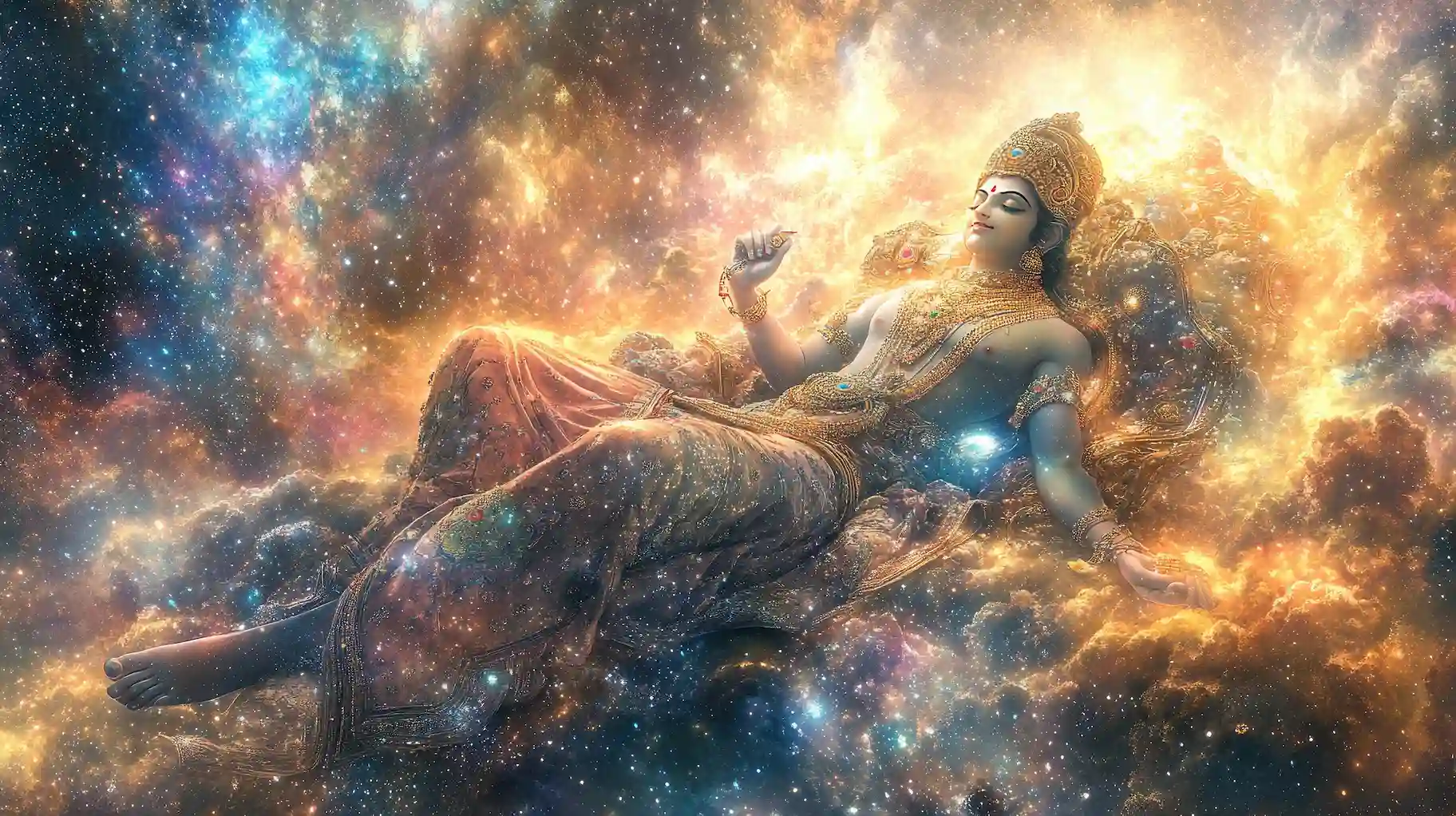
Change represents one of the deepest yet most challenging principles in the Bhagavad Gita. Lord Krishna clarifies this concept with the powerful quote: "Change is the law of the universe. You can be a millionaire, or a pauper in an instant". This timeless wisdom from the bhagavad gita quotes holds special meaning in our modern world of constant change.
Embracing impermanence
Krishna emphasizes that impermanence exists in all aspects of life. He explains that sensations, whether pleasurable or painful, "are transitory, fickle, evanescent. They come and go". Understanding this basic truth helps us develop mental equanimity (titiksha) toward life's ups and downs.
The idea of impermanence goes beyond our possessions to include our bodies, relationships, and circumstances. Krishna explains, "We behold what we are, and we are what we behold". Our perception creates our reality, and both keep changing.
Krishna uses a beautiful comparison: "As a person sheds worn-out garments and wears new ones, likewise, at the time of death, the soul casts off its worn-out body and enters a new one". This shows how change works at every level—physical, emotional, and spiritual.
The Gita also describes the metaphorical "ashvattha tree" of life, whose principles of creation "produce endless variations". These manifestations change constantly, but the creative force behind them stays eternal.
Story of Krishna's advice to Arjuna
Arjuna stood on the battlefield of Kurukshetra facing not just enemies but inner conflict about the coming war. Krishna saw his confusion and shared deep wisdom about change's nature.
Krishna told Arjuna that all fourteen worlds of material creation exist within the cycle of change. He said, "In all the worlds of this material creation, up to the highest abode of Brahma, you will be subject to rebirth". Peace would come to Arjuna only by letting go of his attachment to the material world.
Krishna shared Indra's story to make his point clear. Indra, the celestial gods' king, was building a massive palace. Vishwakarma, the celestial architect, grew tired of endless construction. God stepped in and showed Indra countless ants that were once Indras in previous lives. Later, Rishi Lomash visited Indra wearing a straw mat on his head and showing a circle of hair on his chest with gaps from fallen hair. Each missing hair marked the end of an Indra's time.
This story taught Indra humility by showing that even the most stable positions change eventually.
Lesson: Adaptability is strength
Krishna's teaching about impermanence shows us something important: real strength comes from adapting rather than fighting change. The Gita notes, "When we open our hearts to love, we open ourselves to the infinite possibilities of life".
Accepting change means actively working with life's shifting nature, not giving up. Krishna tells us to "be ready to accept changes anytime". Staying still leads to "ignorance, inactivity, carelessness, and delusion".
The wisdom lies in knowing that "seasons change, people change, day follows night". This natural flow helps us become more resilient. Krishna's positive quotes remind us that "whatever happened, happened for good. Whatever is happening, is happening for good. Whatever will happen, will also happen for good".
Our greatest strength comes from adapting to change. This allows us to grow through challenges instead of being overwhelmed by them.
Quote 4: Surrender to me, I will protect you
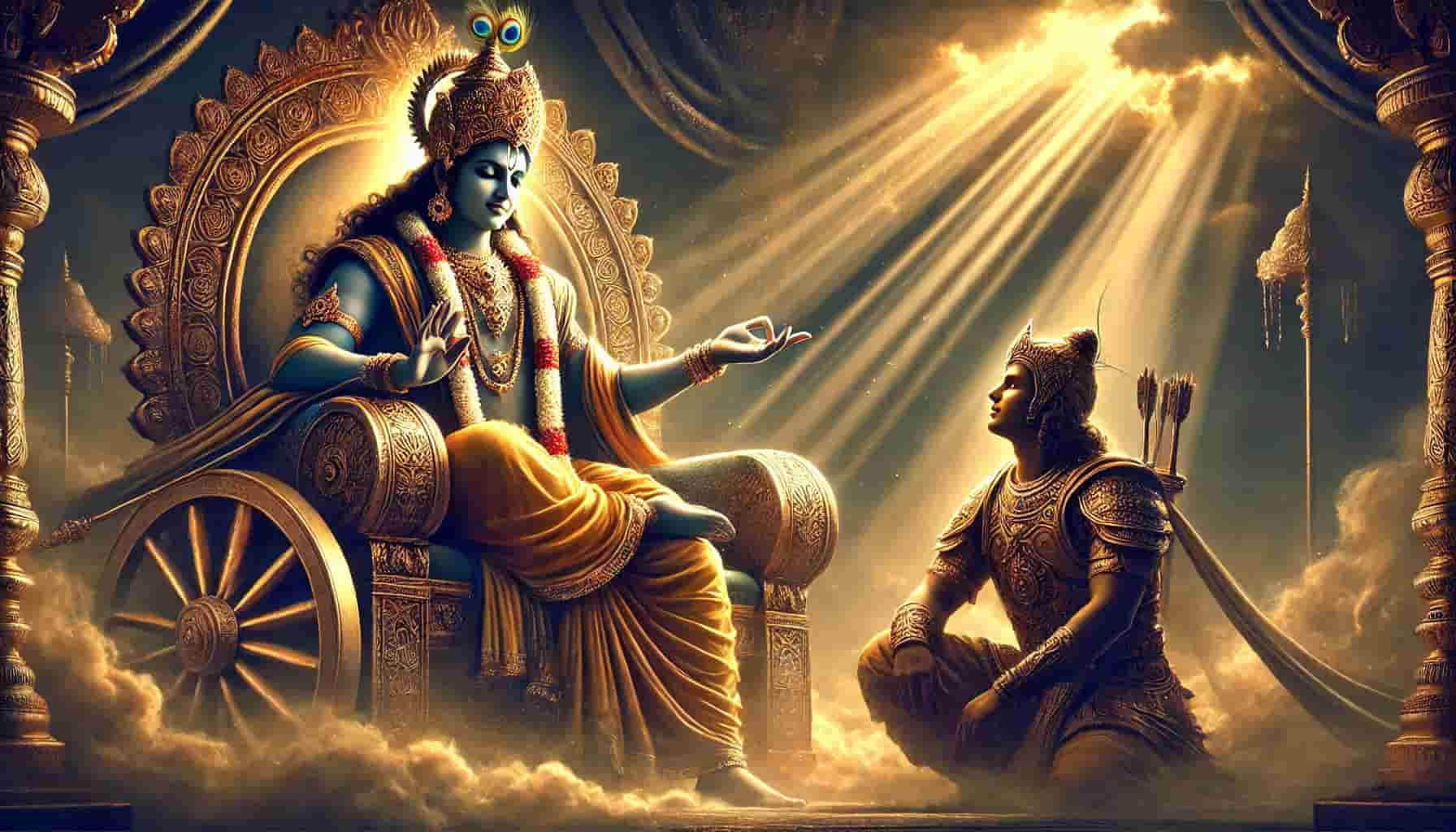
Surrender serves as the life-blood of spiritual devotion in the Bhagavad Gita. Krishna's most powerful promise appears in Chapter 18, Verse 66, where he declares: "Abandon all varieties of dharmas and simply surrender unto Me alone. I shall liberate you from all sinful reactions; do not fear."
The essence of spiritual surrender
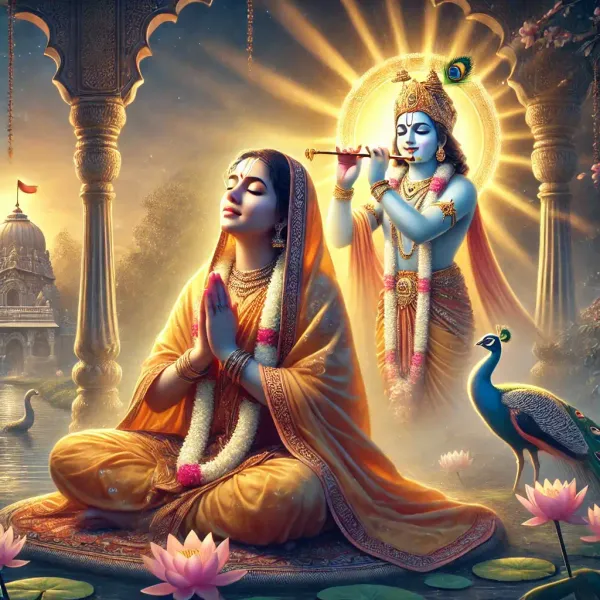
Spiritual surrender—or śaraṇāgati in Sanskrit—surpasses mere passive resignation. Complete trust in divine protection extends beyond one's limited human capabilities. This sacred offering demands surrendering actions and their outcomes to the divine will.
The Bhagavad Gita outlines six distinct aspects of surrender. A devotee must desire what God desires and avoid anything against God's will. Faith in divine protection must remain firm. The heart should overflow with gratitude toward God. Everything belongs to God rather than oneself. True humility, without pride in one's surrender, completes these aspects.
Complete surrender (prapatti) is different from intellectual understanding or ritual practices. Krishna guides those who find complete surrender challenging. He suggests dedicating actions to God, practicing devotional remembrance, working for God's pleasure rather than personal gain, and letting go of attachment to results.
Story of Draupadi's faith
Draupadi's surrender during her humiliation in the Kuru court stands as a powerful illustration of surrender in action. The royal assembly witnessed her public humiliation as she was dragged in. She tried protecting herself by holding onto her sari with her own strength.
Her human effort failed completely. She reached the absolute limits of her capability. Both hands raised toward Krishna, she begged for divine intervention. Her moment of total surrender brought Krishna's miraculous protection as her garment became endless, preventing her disrobing.
This moment shows surrender's greatest power emerging at human capability's limits. Draupadi's story reveals true strength lies not in resistance but in divine surrender.
Lesson: Let go and trust the divine
A paradoxical spiritual truth emerges through surrender—freedom comes through letting go. God's omniscient and omni-benevolent nature knows what serves our highest good.
Surrender means we stop trying to control everything and everyone around us. Forces beyond our control govern outcomes while we focus on giving our best effort. We break free from needless worries and find inner peace that surpasses understanding.
Swami Mukundananda teaches that our "materially conditioned human intellect has limitations." Worldly reasoning creates confusion when we try to rationalize everything. Peace comes when we accept that some things aren't ours to control.
Krishna promises those who accept this path of surrender: "By His grace, you will attain perfect peace and the eternal abode". The experience begins as we understand God's love, accept all circumstances as divine mercy, and learn about our infinitesimal nature compared to Krishna's infinitude.
Quote 5: Peace comes to those free from desire
The Bhagavad Gita's deep wisdom shows us that true peace comes from freedom from desire, not external achievements. Lord Krishna shares one of his most powerful quotes: "That person who gives up all material desires and lives free from a sense of greed, proprietorship, and egoism, attains perfect peace".
Desire vs contentment
Our spiritual experience puts desire and contentment at odds with each other. Krishna tells us that desire never gets satisfied—it burns like fire endlessly. It grows stronger the more we feed it. People first think about sense objects, then get attached to them. This attachment turns into desire and ended up creating anger when unfulfilled.
We stay discontent through this cycle. Brief moments of satisfaction come from chasing temporary pleasures, followed by new cravings. Krishna cautions that "while contemplating the objects of the senses, one develops attachment to them. Attachment guides to desire, and from desire arises anger".
Peace comes from detachment—not from giving up possessions, but from changing our mental connection to them. We find true contentment by understanding that inner peace, not external stimulation, brings happiness.
Story of Bhishma's detachment

Bhishma stands as a perfect example of detachment in the Mahabharata. King Shantanu and river goddess Ganga's son, born as Devavrata, took a difficult vow (Bhishma pratigya). He chose lifelong celibacy and gave up his throne rights to help his father marry Satyavati.
Detachment shaped his entire life. Bhishma managed to keep perfect balance despite his immense power and wisdom. He showed remarkable equanimity even while dying on a bed of arrows.
His detachment didn't mean avoiding duties. In stark comparison to this, he served Hastinapura with steadfast dedication across generations. Freedom from desire gave him clear purpose and inner strength throughout life's challenges.
Lesson: True peace is internal
Krishna's teachings and Bhishma's life join to show a deep truth: peace lives inside us, untouched by outside events. People who stay peaceful inside "are not disturbed by happiness and distress" and become "eligible for liberation".
Swami Mukundananda teaches that we choose peace of mind by understanding life's natural ups and downs. We find true peace by developing "temperature control of our inner world". This helps us stay balanced whatever happens outside.
Bhishma's story proves that real peace comes through spiritual growth—staying calm despite others' words and seeing pleasure and pain equally. We reach this state by letting go of material desires, living without greed, and breaking free from false ownership and ego.
A simple yet powerful lesson emerges: we find peace not by looking outside but by breaking free from desire's chains.
Quote 6: The mind is a powerful tool
Lord Krishna's teaching about the mind stands out among the powerful Bhagavad Gita quotes that deal with mental mastery: "For those who have conquered the mind, it is their friend. For those who have failed to do so, the mind works like an enemy". This deep insight helps clarify how our mental state shapes our life's experience.
Controlling thoughts and emotions
The mind works at four connected levels: as mana when it creates thoughts, as buddhi when it analyzes and decides, as chitta when it forms attachments, and as ahankār when it identifies with external elements like status or appearance. We can recognize how thoughts can raise or lower us by understanding these functions.
Krishna compares a disciplined mind to "a lamp in a windless place" that "does not flicker". This shows the calm achieved through proper control. Arjuna honestly admits, "The mind is very restless, turbulent, strong and obstinate... more difficult to control than the wind".
Krishna reassures us that we can achieve this seemingly impossible task "by practice and detachment". We can gradually tame even the wildest mind through consistent effort and by letting go of worldly attachments.
Story of Dhritarashtra's downfall
The Mahabharata's blind king Dhritarashtra serves as a warning about an uncontrolled mind. His emotional blindness caused more damage than his physical blindness, despite his strength and intelligence.
His deep attachment to his son Duryodhana clouded his judgment and he could not prevent injustice. Others exploited Dhritarashtra's emotional vulnerabilities as he became "psychologically weak, easily manipulated".
Dhritarashtra remained "torn between the principles of dharma and his love for his son" during his reign. He chose emotional attachment over righteousness and his dynasty's destruction followed.
Lesson: Discipline your mind
The Gita shows us that mental discipline starts when we understand we are not our thoughts—we observe them. Swami Krishnananda explains that conquering the mind needs "an inner transformation... like milk becoming curd"—a natural process needing the right conditions.
"Sadhakas do not keep things which are unnecessary". We should remove distractions that pull our minds toward material attachments. Japa (mantra repetition), spiritual text study, and meditation strengthen our mental muscles each day.
Persistent practice can change what Krishna calls our "greatest enemy" into our "best friend". A truly disciplined mind brings boundless joy.
Quote 7: Better to fail in your own duty
The Bhagavad Gita's most powerful quote comes from Chapter 3, Verse 35, where Krishna tells Arjuna: "It is far better to perform one's natural prescribed duty, though tinged with faults, than to perform another's prescribed duty, though perfectly."
Understanding swadharma
Swadharma combines "sva" (one's own) and "dharma" (duty) to represent our unique responsibilities based on our true nature. Each person has distinct qualities, abilities, and a purpose in life.
Krishna's message is clear - our natural duty, even with flaws, is nowhere near as important as doing someone else's duty perfectly. This truth shows that being genuine matters more than copying others perfectly. Krishna's words ring true: "Destruction in the course of performing one's own duty is better than engaging in another's duties, for to follow another's path is dangerous."
Our swadharma flows naturally from our swabhava (inner nature). Much like a fish runs on water but dies in milk, we thrive when we arrange ourselves with our authentic nature. This concept breathes and grows - our duties change as we move through life, yet they stay uniquely ours.
Story of Lord Ram's exile
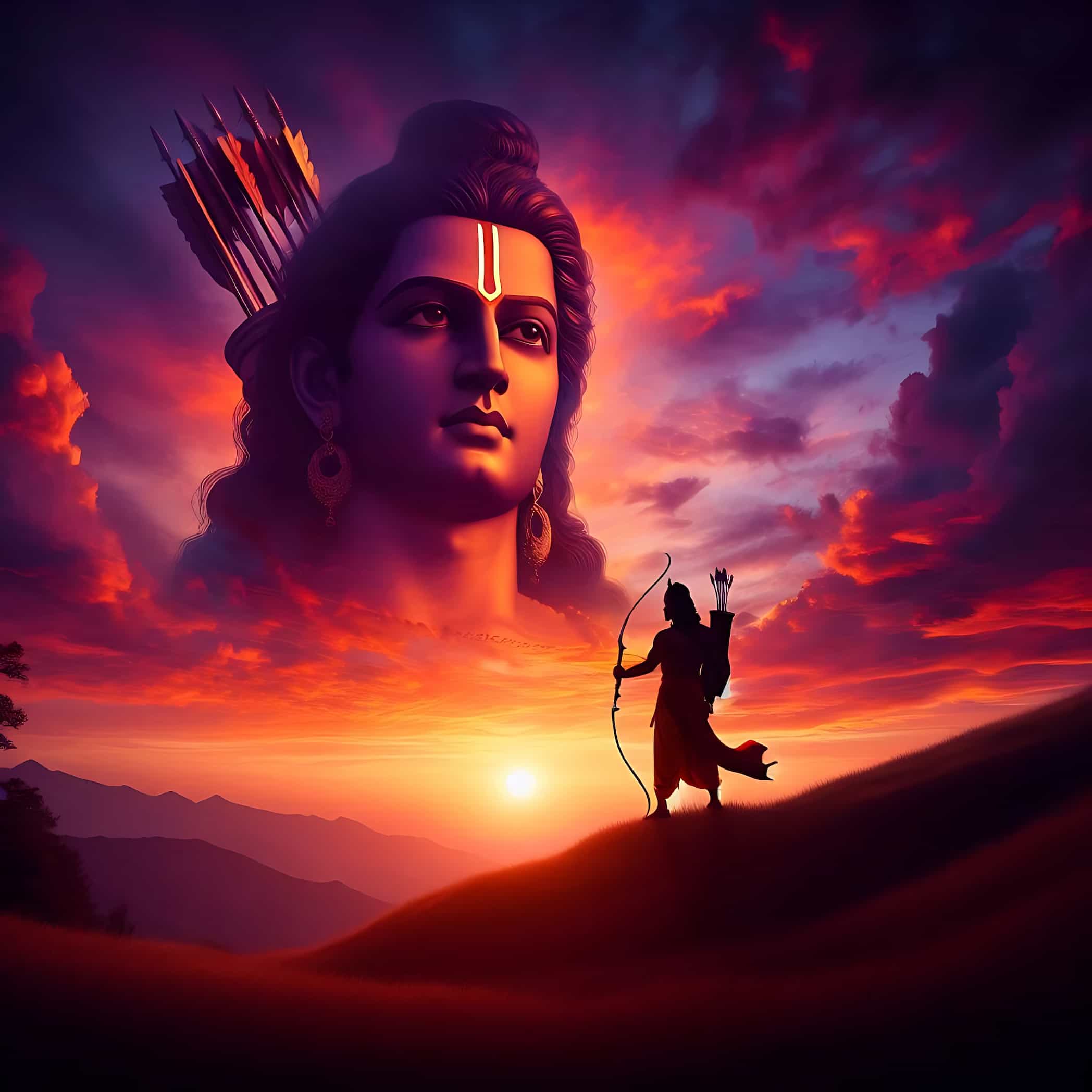
Lord Ram's life stands as a perfect example of unwavering dedication to swadharma. King Dasharatha, swayed by Queen Kaikeyi, ordered Ram's fourteen-year exile. Ram accepted this without question and honored his father's word and his duty as a son.
Ram chose fourteen years of forest hardships over disobeying his father, even though he was Ayodhya's rightful heir. He showed that following one's duty, whatever the challenges, guides us to greater spiritual heights than abandoning it for comfort.
Lesson: Authenticity over imitation
The lesson speaks volumes - real beats fake every time. A flawed natural gem holds more value than a perfect fake diamond. Similarly, following someone else's path cannot match the spiritual growth that comes from embracing our unique dharma.
Krishna's teaching reveals that our spiritual trip focuses on being genuine rather than perfect. We contribute something special to universal harmony by arranging with our swadharma. Each person can foresee their purpose without stepping on others' paths.
This wisdom resonates deeply today and reminds us that being true to ourselves brings more peace than perfectly copying others.
Quote 8: I appear whenever dharma declines
The Bhagavad Gita quotes powerfully echo the cyclical promise of divine intervention. Lord Krishna declares: "Whenever there is a decline in righteousness and an increase in unrighteousness, I manifest myself on earth". This profound assurance of cosmic protection demonstrates the deep connection between dharma and divine purpose.
Krishna's divine promise
Krishna makes one of his most remarkable promises in the Bhagavad Gita Chapter 4, Verses 7-8: "To protect the virtuous, to annihilate the evil-doers, and to re-establish Dharma, I manifest myself age after age". This extraordinary commitment explains the sacred bond between the divine and the universe's moral order.
The promise extends beyond any single time or place and spans cosmic ages or Yugas. Divine intervention becomes increasingly vital as societies progress through these cycles—from Satya Yuga (100% dharma) to Kali Yuga (25% dharma). Krishna's assurance brings eternal hope that righteousness will return, even during the darkest periods.
Story of Krishna's role in Mahabharata
Krishna's promise came alive throughout the Mahabharata. He undertook multiple roles as an avatar of Vishnu—counselor, diplomat, warrior, and teacher—all supporting his task to restore dharma.
Krishna worked with purpose to secure the Pandavas' victory, which symbolized dharma's triumph. His methods occasionally seemed controversial but served justice's higher purpose. Krishna later addressed the troubled Pandavas about their methods: "Duryodhana and those other valiant chariot-fighters could not have been slain by you in fair fight. That is why I devised these stratagems—otherwise the victory of the Pandavas could never have happened".
Lesson: Stand for righteousness
Krishna's promise teaches us to line up with dharma even when it appears to lose ground. The Bhagavad Gita states clearly, "Dharma protects those who protect dharma". Our dedication to righteousness must remain unwavering.
Krishna's intervention reminds us that protecting dharma requires both divine and human effort. We must uphold righteous principles and become instruments of cosmic restoration whenever moral order declines in society or our personal lives.
Quote 9: He who sees me in all is never lost
Krishna's declaration in the Bhagavad Gita reaches deep spiritual heights: "He who sees me in all beings and all beings in me, is never lost to me, nor am I ever lost to him." These words help us understand spiritual awakening by seeing the divine presence everywhere.
Unity in diversity
Krishna reveals himself as the ultimate reality that exists in everything. "There is nothing higher than Myself," he declares. He explains how "everything rests in Me, as beads strung on a thread". This cosmic thread of consciousness binds all beings into one divine mixture.
This view changes how we look at the world's variety. Krishna talks about the highest knowledge in Chapter 18. He describes it as that "by which a person sees one undivided imperishable reality within all diverse living beings". This vision shows us that a single spiritual essence lies beneath our physical differences.
Hindu tradition emphasizes this unity and states that "the Divine is equally present in all". This understanding means that "prejudice and discrimination against anyone violates this most profound and fundamental teaching". People who see Krishna in everything build a foundation of universal compassion and respect.
Story of Sudama's devotion
Sudama's story with Krishna shows this principle beautifully. They were childhood friends who studied under Guru Sandipani. Life took them down different paths—Krishna became king of Dwaraka while Sudama stayed a poor Brahmin.
Sudama visited Krishna with just a simple gift of beaten rice. Krishna surprised him by offering royal honors, washing his feet and showing extraordinary respect. Krishna saw the divine within his friend and looked past his poverty to see his spiritual wealth.
Sudama's humble home had turned into magnificent palaces when he returned. He accepted this gift "in a spirit of renunciation" and used it to serve others instead of personal pleasure.
Lesson: See divinity in all beings
Our relationships naturally change when we see divinity in others. Prahlada understood this well and said, "If Vishnu is everywhere, how can there be enemies? Gods, humans, birds, animals are all full of the same Vishnu". Mira Bai also saw Krishna everywhere and remained calm even during persecution.
Spiritual vision that sees God in everything creates true equality and respect. We surpass surface differences and connect with each being's sacred essence through this practice.
Quote 10: Action in inaction, inaction in action
A paradoxical Bhagavad Gita quote stands out for its philosophical depth: "One who sees inaction in action and action in inaction is intelligent among men, and he is in the transcendental position, although engaged in all sorts of activities." Krishna's enigmatic teaching reveals our deepest understanding of karma.
Understanding deeper karma
The Gita goes beyond simple cause and effect. It presents three distinct categories of action: karma (action leading to positive reactions), vikarma (action causing negative reactions), and akarma (selfless action that surpasses karmic law). Wise people see that proper action without attachment creates no binding reaction—they see "inaction in action." They also understand that avoiding rightful duties creates substantial karmic consequences—seeing "action in inaction."
This wisdom helped Arjuna realize that fighting righteously without attachment would not create negative karma. Running away from his warrior duty would generate negative karma instead. This principle works everywhere—when we perform our duties selflessly, we break free from karmic bondage.
Story of Krishna's role as charioteer
Krishna's position as Arjuna's charioteer represents a deep spiritual truth. Krishna directs not just Arjuna's chariot but the entire creation as the Supreme Controller. Each living being moves through existence in their material body's chariot, with Krishna as the ultimate guide.
Arjuna first saw Krishna as just his friend. Later, Krishna showed himself as the supreme driver of all existence. The chariot symbol teaches us that while we traverse life's battlefield, a higher intelligence guides our experience.
Lesson: Purposeful stillness is powerful
True wisdom comes from finding inner stillness during outward activity. Swami Vivekananda put it perfectly: "He who finds in the midst of intense activity the greatest rest, and in the midst of the greatest rest intense activity, he has become a yogi."
This teaching changes how we approach work and life completely. We stay inwardly still despite external activity by doing our duties without ego-attachment. This purposeful stillness isn't about running away—it represents the highest state of consciousness. Our actions continue outwardly while inner peace remains undisturbed.
Conclusion
Lord Krishna's timeless teachings surpass centuries and provide deep wisdom that stays remarkably relevant today. Krishna guides Arjuna—and all of us—through life's toughest battlefields, both external and internal.
These ten powerful quotes give a complete framework to live with purpose, peace, and spiritual awareness. Krishna teaches us to do our duties without attachment and control our minds instead of letting them control us. Change becomes natural in our existence. He also guides us toward complete surrender to divine guidance, freedom from desire, mental discipline, and staying true to our authentic path.
Krishna promises to step in whenever righteousness declines, giving eternal hope in dark times. His teaching shows us how to see divinity in all beings and builds the foundation for universal compassion. His paradoxical wisdom about action and inaction shows the path to freedom while staying involved in worldly duties.
Without doubt, these teachings are not just philosophical ideas but practical guidelines for everyday life. People who use these principles see life-changing results—better balance during challenges, clearer decisions, stronger relationships, and true spiritual growth.
The Bhagavad Gita stands like a lighthouse in life's storms. Its guidance remains steady despite our changing cultural world. Though spoken on an ancient battlefield, Krishna's words directly address our modern challenges. His message shows that real change starts within—through disciplined minds, selfless action, and knowing our divine nature.
Students of these teachings ended up finding what Arjuna realized: the path to lasting peace and fulfillment doesn't lie in avoiding life's challenges but facing them with spiritual wisdom, detachment, and steadfast faith.
Key Takeaways
These timeless teachings from Lord Krishna's Bhagavad Gita offer transformative wisdom for navigating modern life's challenges with spiritual clarity and inner peace.
• Perform duties without attachment to results - Focus on giving your best effort while releasing control over outcomes to reduce anxiety and improve performance.
• Master your mind or it becomes your enemy - Use intellect to guide emotions and develop self-awareness, as mental discipline determines success or failure.
• Embrace change as the universal law - Develop adaptability and resilience by accepting impermanence rather than resisting life's natural fluctuations.
• True peace comes from freedom from desire - Lasting contentment emerges from inner detachment, not external achievements or possessions.
• Stay authentic to your unique path - Following your own dharma imperfectly brings greater fulfillment than perfectly imitating someone else's journey.
• See divinity in all beings - Recognizing the sacred essence in everyone creates the foundation for universal compassion and genuine equality.
These profound insights transform how we approach work, relationships, and personal growth—offering practical guidance for achieving both worldly success and spiritual fulfillment in our daily lives.
Call to Action
Let these timeless stories from Ramayan and Mahabharat be more than just inspiration—make them your way of life. Reflect, apply, and walk the path of dharma, selfless action, and surrender, just as Lord Krishna taught.
✨ Attend In-Person or Online Sunday Satsangs to immerse yourself in divine kirtans, discourses, and meditations.
👉 Join Weekly Satsang
📘 Explore Online Classes on Bhagavad Gita, Sanskrit, Yoga, and more — guided by experienced teachers.
👉 View Online Classes
📱 Download the Bhagavad Gita Krishna Bhakti App for daily inspiration, guided chanting, and access to sacred texts.
👉 Get the App Now
FAQs
Q1. What is considered the most powerful quote from the Bhagavad Gita? One of the most powerful quotes is: "You have the right to work, but never to the fruit of work." This encapsulates the essence of karma yoga - performing one's duty without attachment to results.
Q2. How can Krishna's teachings in the Bhagavad Gita transform one's life? Krishna's teachings can transform life by providing guidance on mastering the mind, performing duties without attachment, embracing change, finding inner peace, and seeing divinity in all beings. This wisdom helps navigate life's challenges with spiritual clarity and equanimity.
Q3. What does the Bhagavad Gita say about the nature of the soul? The Gita states that the soul is eternal, immortal, and indestructible. As mentioned in Chapter 2, Verse 20: "The soul is without birth, eternal, immortal, and ageless. It is not destroyed when the body is destroyed."
Q4. How does the Bhagavad Gita advise dealing with life's ups and downs? The Gita teaches to maintain equanimity in both joy and sorrow, success and failure. It advises developing mental discipline, surrendering to the divine will, and understanding that all experiences, good or bad, contribute to spiritual growth.
Q5. What is the significance of Krishna's role as Arjuna's charioteer in the Bhagavad Gita? Krishna as Arjuna's charioteer symbolizes divine guidance in our life's journey. It represents how the Supreme Controller steers not just Arjuna's chariot but the entire creation, teaching us to trust in higher wisdom while navigating life's challenges.