
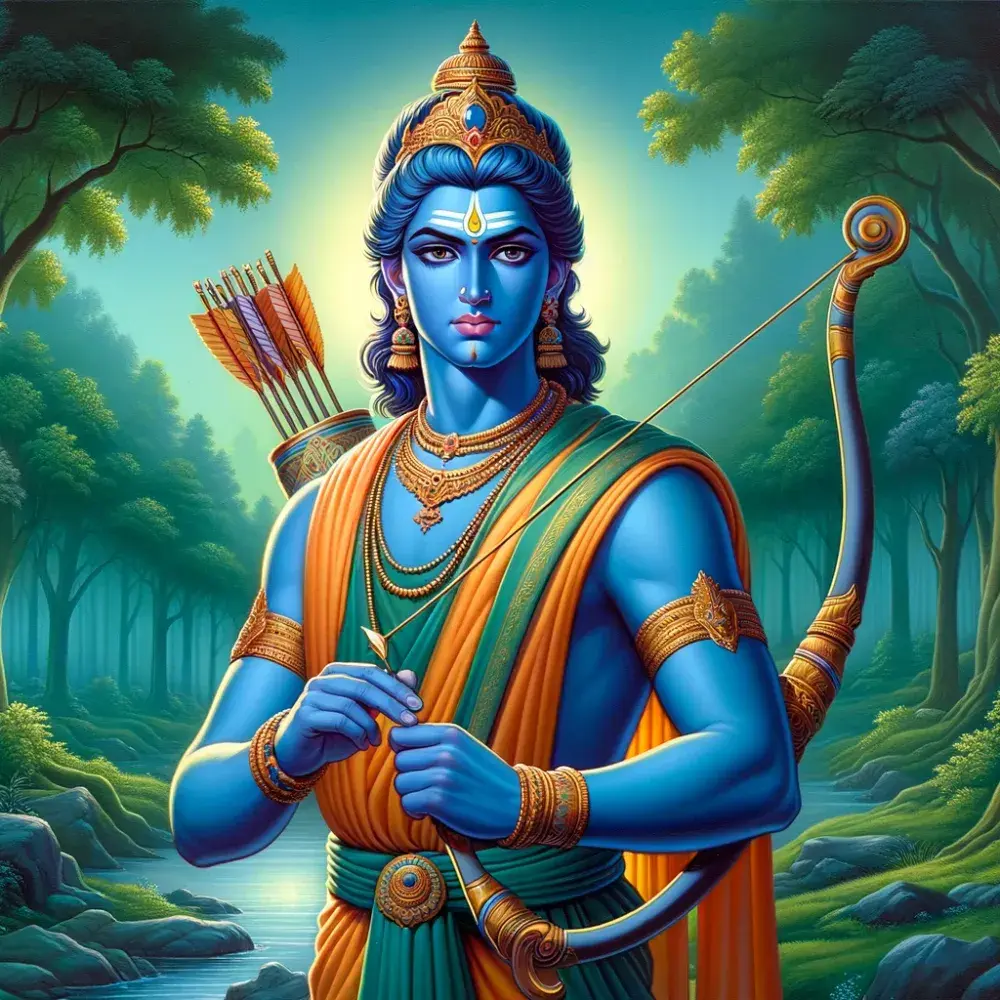
The epic Ramayan has been told in countless ways in several Indian and Southeast Asian languages and geographical locations. Nonetheless, the following are the two most well-known and significant versions:
· The Valmiki Ramayan: Written by the sage Valmiki, this version is regarded as the oldest and original. It provides a thorough and objective narrative and is written in Sanskrit.
· Tulsi Ramayan or Ramcharitmanas: Written in the sixteenth century by the poet-saint Tulsidas. Composed in the Hindi dialect of Awadhi, a shortened and more concise rendition that emphasizes Lord Ram, Sita, and Lakshmana's emotional journey. This narrative is poetic and aims for the reader to develop love for God.
This blog focuses primarily on Tulsidas’ Ramayan as the main reference. The seven chapters that make up the Tulsidas' Ramayana are known as Kands (chapters or episodes); they are Bal Kand, Ayodhya Kand, Aranya Kand, Kishkindha Kand, Sunder Kand, Lanka Kand, and Uttar Kand.
The story of Lord Ram is gradually revealed in these chapters, emphasizing the divine qualities of selfless love, sacrifice, patience, forgiveness, righteousness, commitment, and so forth. This concise synopsis aims to inspire the reader to explore this profound and timeless scripture in greater depth.
Chapter 1 - The Bal Kand of Ramayan
The epic Ramayan's Bal Kand establishes the divine beginnings of Lord Ram, his extraordinary attributes, and the dharma that forms the basis of his life.
Lord Ram's Birth
The chapter begins with salutations to Goddess Saraswati, the goddess of knowledge, and Ganesha, the remover of obstacles, invoking their blessings. The author, Tulsidas, presents the idea of Brahman, the ultimate reality, from whom Lord Vishnu manifests.
Lord Vishnu chooses to become an incarnation in human form because he is alarmed by the abundance of evil in the world. Lord Brahma is approached by sage Narad and others, who implore him to disclose the form that Lord Vishnu will become.
The story of Lord Vishnu's descent as Lord Ram, the eldest son of King Dashrath of Ayodhya, is told by Lord Brahma. He talks about Lord Ram's divine attributes, such as his courage, strength, compassion, and knowledge.
The story then moves to Ayodhya, a wealthy kingdom under the moral leadership of King Dashrath. The king had four sons: Lord Ram, Lakshman (born to Sumitra), Bharat (born to Kaikeyi), and Shatrughna (born to Sumitra). He has three wives: Kaushalya, Kaikeyi, and Sumitra.
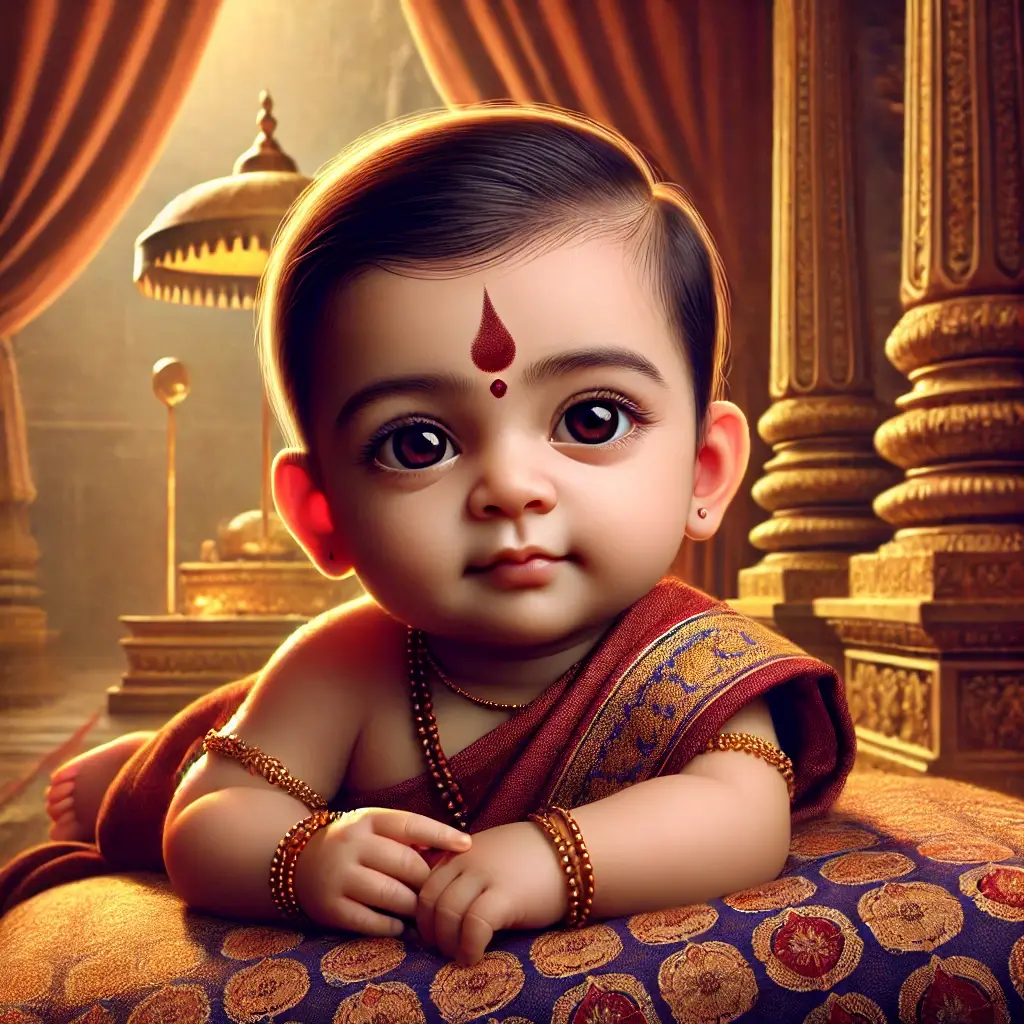
Dohas (couplets) describe the celebrations of Lord Ram's birth, featuring grand events and prophecies of his future glory. The narrative also portrays the extraordinary upbringing of Lord Ram and his brothers. Loved by all in the kingdom, Lord Ram is described as beautiful, intelligent, and compassionate.
Vishwamitra 's Yagya and Encounters With Demons
When the sage Vishwamitra arrives in Ayodhya, he begs Lord Ram for assistance in defending his yagya (fire sacrifice) from demons that interfere with the ceremonies. Lord Ram is quite happy to go with sage Vishwamitra, even though he is still quite young. Lakshman also accompanies them.
Along their path, they come face to face with the horrifying demon Tadaka, known for causing terror in the area. When Lord Ram bravely vanquishes Tadaka, the people and sages are grateful.
When Lord Ram and Lakshman arrive at sage Vishwamitra's ashram, they encounter a number of obstacles from demons like Maricha and Subahu. Through his cleverness and prowess in battle, Lord Ram defeats the demons and ensures a successful completion of the yagya.
Vishwamitra is impressed by Lord Ram's courage and commitment, and he bestows upon him and Lakshman celestial weapons and divine knowledge, effectively preparing them for their forthcoming challenges.
Sita’s Swayamvara and the Divine Wedding
Lord Ram and Lakshman are brought to Janakpur, the kingdom of King Janak, by sage Vishwamitra. King Janak is holding a swayamvara (self-choice of husband ceremony) for his beautiful and clever daughter, Sita.
Kings and princes assemble to compete in a task that involves lifting and stringing an incredibly hefty bow. Many try, but Lord Ram's great strength allows him to lift and string the bow with ease.
When King Janak realizes Lord Ram as a divine personality, he is ecstatic and agrees to proceed with the wedding ceremony. The chapter recounts the splendor of the marriage ritual that united Lord Ram and Sita, a representation of the essence of devotion and love.
Significance of the Bal Kand
The Bal Kand demonstrates Lord Ram's goodness, extraordinary abilities, and divine mission. Sita is also introduced in this chapter, emphasizing the significance of their relationship. The emphasis on dharma, duty, and education foreshadows the difficulties Lord Ram would encounter and his unyielding adherence to these values.
Chapter 2 - The Ayodhya Kand of Ramayan
The Ayodhya Kand of Tulsidas' Ramcharitmanas sets the stage for Lord Ram's epic journey. Lord Ram, the personification of virtue and the presumed heir to the Ayodhya kingdom, encounters an unjust turn of events.
Preparations for the Coronation of Lord Ram
Overcome with happiness, King Dashrath chooses to appoint Lord Ram as his heir. The city is decked out for the coronation event, and people are looking forward to a golden age under Lord Ram's rule as preparations get underway. But there's a cloud of doom hanging over the celebrations.
Kaikeyi's Two Boons
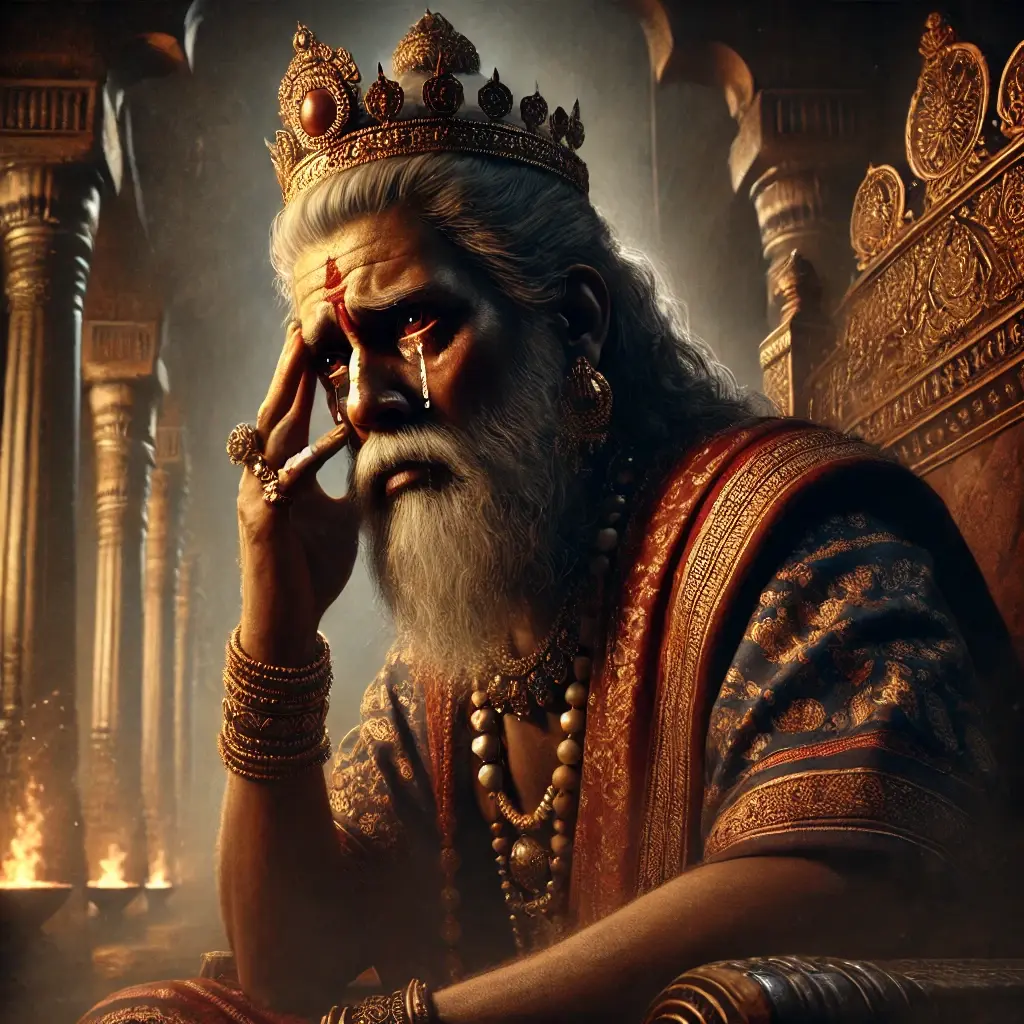
Manthara, the maidservant of Kaikeyi, manipulates her and reminds her of the two boons granted by King Dashrath in the past. Driven by excessive love for her son Bharat, Kaikeyi goes to King Dashrath and insists on her two wishes being granted: her son Bharat's coronation as king is the first boon and Lord Ram's fourteen-year exile into the forest is the second boon. Hearing this, King Dashrath is devastated and collapses, overwhelmed by sorrow but bound by his solemn oath. He begs Kaikeyi to change her mind but she is relentless. King Dasharath becomes seriously ill because he is torn between his love for Lord Ram and his obligation to his wife.
Lord Ram's Unflinching Determination
When Lord Ram finds out about the circumstances, he shows a great deal of acceptance and maturity. He puts the stability of the kingdom and his father's prestige ahead of his personal interests. Despite the catastrophe that is happening, he doesn't lose his composure.
Sita declares her steadfast support for Lord Ram. Enraged by the injustice, Lakshman criticizes Lord Ram's choice to go into exile without voicing any opposition. Lord Ram emphasizes the value of following their father's instructions and preserving dharma (righteousness). He emphasizes that keeping their father's pledge is worth the tiny price of being exiled.
Sita, unwilling to be separated from Lord Ram, insists on accompanying him into exile. Lakshman, devoted to Lord Ram, also chooses to join them.
Lord Ram, Sita and Lakshman Head to the Forest
With great sadness, King Dashrath bids farewell to Lord Ram, Sita, and Lakshman. He expresses his deep regret and helplessness against Kaikeyi's demand. Lord Ram consoles his devastated father, assuring him of his everlasting love in the midst of overwhelming sorrow.
The people of Ayodhya are unwilling to accept the forthcoming exodus. In an effort to persuade Lord Ram to stay, they assure him of his legitimate right to the throne. Despite their pleas, Lord Ram remains resolute in his commitment to carry out his father's wishes. He encourages the residents of Ayodhya to maintain their loyalty to Bharat and acknowledges that his exile is a duty towards his father that he must fulfill.
Significance of The Ayodhya Kand of Ramayan
The Ayodhya Kand establishes the core conflict of the Ramayan – the violation of dharma (righteousness) by Kaikeyi and the subsequent consequences. It showcases Lord Ram's righteousness, Sita's devotion, Lakshman's loyalty, Bharat's integrity and King Dashrath's commitment to his words.
Chapter 3 - The Aranya Kand of Ramayan
The Aranya Kand in the Ramcharitmanas narrates the tale of the forest life of Lord Ram, Lakshman and Sita including Sita’s abduction by the demon King Ravan.
Finding Home in the Forest
After being banished, Lord Ram travels far into the Dandakaranya forest with Sita and Lakshman. The tranquil lakes and verdant surroundings of the natural world provide a striking contrast to the chaos they left behind in Ayodhya. Lord Ram constructs a modest ashram and begins a life of serenity, abiding by the precepts of dharma and coexisting with the natural world. They become friends with the sages and ascetics who live in the forest.
Dandakaranya forest is infested by demons who bother the saints and ascetics. Lord Ram kills demons such as Viradha and others, so sages can live peacefully. Then he visits the ashrams of sages Sharabhanga and Suteekshna.
Lord Ram, Sita and Lakshman reach the ashram of Sage Agasthya. Agasthya greets Lord Ram and offers powerful weapons. He also suggests them to go to Panchavati, on the banks of river Godavari, and settle there. On the way to Panchavati, the mighty old eagle Jatayu greets Lord Ram.
Encounter with Surpanakha, Sister of Ravan
A demoness woman, Surpanakha, the sister of Ravan, was captivated by the matchless beauty of Lord Ram. She attempted to seduce him. But when she failed to win either of the two princes, she turned to attack Sita. Lakshman cut off her nose and ears as a punishment. Hearing of this, her demon brother, Khara, organized an attack against the princes. Lord Ram destroyed Khara and his huge army.
In order to avenge her humiliation, Surpanakha approached Ravan. She well knew of his weakness for women, and the wily demoness described the bewitching beauty of Sita. Her intention to bring this beautiful woman to him was foiled and she was mutilated. Ravan was aroused more by lust than by anger and he resolved to punish Lord Ram by capturing Sita.
The Deception of Maricha and the Abduction of Sita
With Maricha's help, Ravan devises a plan and successfully kidnaps Sita. Jatayu, a giant vulture and friend of Lord Ram, tries to rescue Sita, but instead gets severely wounded in the attempt. Sita is help captive under guard in the Ashoka Vatika in Lanka. Ravan used various means of persuasion to force her to accept him but remains unsuccessful.
Search for Sita and Meeting with Shabari
Lord Ram and Lakshman learnt about Sita’s abduction from Jatayu. Because of his devotion and service to Lord Ram. Jatayu received liberation from Lord Ram. The princes immediately set out in search of Sita. During their quest, Lord Ram killed a demon Kabandha, thus liberating him from a curse.
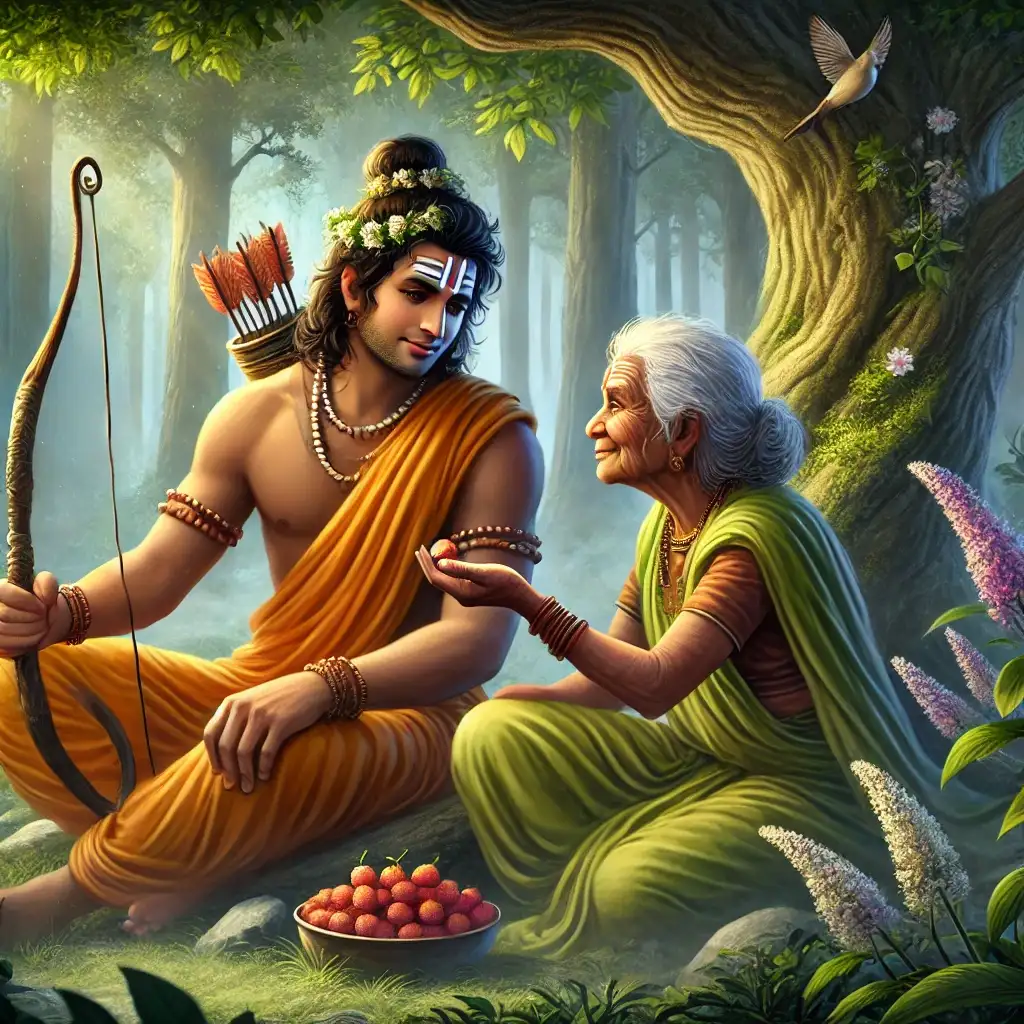
Kabandha also advised Lord Ram to visit the hermitage of sage Matanga and meet Shabari, the old disciple of the Sage. Lord Ram meets Shabari and was pleased with her pure devotion. Shabari was waiting eagerly for Lord Ram’s holy appearance. Shabari gave some clues about Sita. She left her body in the presence of Lord Ram seeking blessing to ascend to the holy celestial regions of Sages. After this incident, Lord Ram moves to Rishyamuka mountain to meet Sugreev.
Significance of the Aranya Kand of Ramayan
The story of Shabari in the Aranya Kand of Ramayan is highly acclaimed. It brings the point across that the key to attract God's grace is to embrace simplicity, like that of a child, and devote ourselves to God with absolute faith and surrender.
Chapter 4 - The Kishkindha Kand of Ramayan
The Kishkindha Kand of Ramcharitmanas describes Lord Ram's entry into Kishkindha, His meeting with Hanuman and partnership with Sugreev.
Meeting with Hanuman and Sugreev
As Lord Ram and Lakshman wandered in search for Sita, along the way, they found Rishyamhook mountain where Sugreev lived with his minister Jambavan and associate Hanuman. When Sugreev spotted the two princes, he suspected if they were sent by his brother Bali. Hanuman disguises himself as a brahmin and approaches Lord Ram and Lakshman. Hanuman recognizes Lord Ram and surrenders himself to his holy feet. He informs Lord Ram that Sugreev has seen Sita’s abduction. Sugreev also shares his story of how his brother Bali deceived him. They both agree to help each other.
Sugreev Challenges Bali for Battle
Lord Ram asks Sugreev to engage Bali in a duel and entice him out of Kishkindha. However, both Sugreev and Bali looked so alike that Lord Ram could not differentiate and was unable to kill Bali. As a consequence Sugreev is severely injured and has to run away. Nevertheless, Lord Ram asked Sugreev to wear a flower garland as a mark of identification between the two brothers. This time Lord Ram is able to kill Bali.
Sugreev Assembles His Forces to Begin the Search for Sita
Sugreev was crowned as the king of Kishkindha by Lord Ram following Bali's demise. However, Sugreev got distracted and forgot his promise to help Lord Ram in finding Sita. Lakshman rebuked Sugreev and refreshed his memory regarding his pledge.
Without delay, Sugreev commanded the assembly of the bear and vanara (monkey) communities. In order to find Sita, contingents of bears and monkeys were sent out to search in all directions. Hanuman was accompanied by Angad, Nala, Kesari, Jambavan, and others as they set off towards the southern direction. Closer to the sea coast, they noticed a cave that was occupied by Jatayu's brother Sampati. Angad informed Sampati about the demise of his borther Jatayu while trying to protect Sita. Sampati suggests that they will find Sita in the island of Lanka, which is four hundred miles away. He warned that only someone who could cross the vast ocean in one leap would be able to reach Lanka.

Hanuman is Reminded of His Extraordinary Powers by Jambavan
Angad shared that he could leap across the ocean, but he couldn't make it back. Jambavan knew that Hanuman was the only one capable of the task. Hanuman was reminded by Jambavan about his amazing powers that had become dormant as result of misuse. He also told Hanuman that he was born to accomplish the work of his master, Lord Ram. Additionally, he revealed to Hanuman that he had been born to carry out his master, Lord Ram's, assignment.
Significance of Kishkindha Kand
The Kishkindha Kand emphasizes how crucial it is to build coalitions around similar ideals. It also examines the difficult relationship between justice and war, and when action becomes necessary.
Chapter 5 - The Sundara Kand of Ramayan
The Sundara Kand (Beautiful Chapter) of the Ramcharitmanas deals primarily with Hanuman’s journey to Lanka and exemplifies Hanuman's selflessness, strength, and devotion to Lord Ram.
Obstacles in Hanuman’s Journey to Lanka
Hanuman encountered numerous obstacles while crossing the ocean to reach Lanka, including the Mainak mountain, Demoness Sinhika, and later Surasa. Even after successfully crossing the ocean, he faced the daunting task of finding a way through Lankini and other formidable forces that were guarding the golden city of Lanka. Hanuman uses his intelligence, strength, and agility to overcome all the challenges.
Hanuman Meets with Vibhishan
Upon reaching Lanka, Hanuman assumed the form of an insect and commenced his flight across the city in search of Sita. He came across a temple of Lord Ram in Lanka and was pleasantly surprised. Subsequently he spotted Vibhishan coming towards Lord Ram's temple and decided to approach him for a conversation. Hanuman imparts spiritual wisdom to Vibhishan and encourages him to surrender at the lotus feet of Lord Ram. Vibhishan guides Hanuman about the whereabouts of Sita in Lanka.
Hanuman Finds Sita and Assures Her
Hanuman sees Sita in the Ashoka Vatika, with numerous demons surrounding her. Soon after, Ravan appears and tries to intimidate Sita into marrying him, but his efforts are in vain. Hanuman spots Sita in the Ashoka Vatika, surrounded by many demons. In a short while, Ravan shows up there and tries to intimidate Sita into marrying him but is unsuccessful.
Hanuman, still in a tiny form, appears before Sita now and introduces himself as servant and messenger of Lord Ram while presenting Lord Ram's ring to Sita as a proof. He assures her that Lord Ram, Lakshman and their army will soon rescue her from Ravan's captivity.
Hanuman Sets Lanka on Fire
Hanuman gets permission from Sita to eat the fruits from the trees in Ashok Vatika. He deliberately creates a scene by uprooting trees and even killing a few of Ravan’s soldiers. Hanuman is uncontrollable, but finally, Meghnath captures Hanuman and is brought to Ravan's court. In spite of Hanuman's pleas, Ravan adamantly refuses to consider releasing Sita or take any of his advice into account.
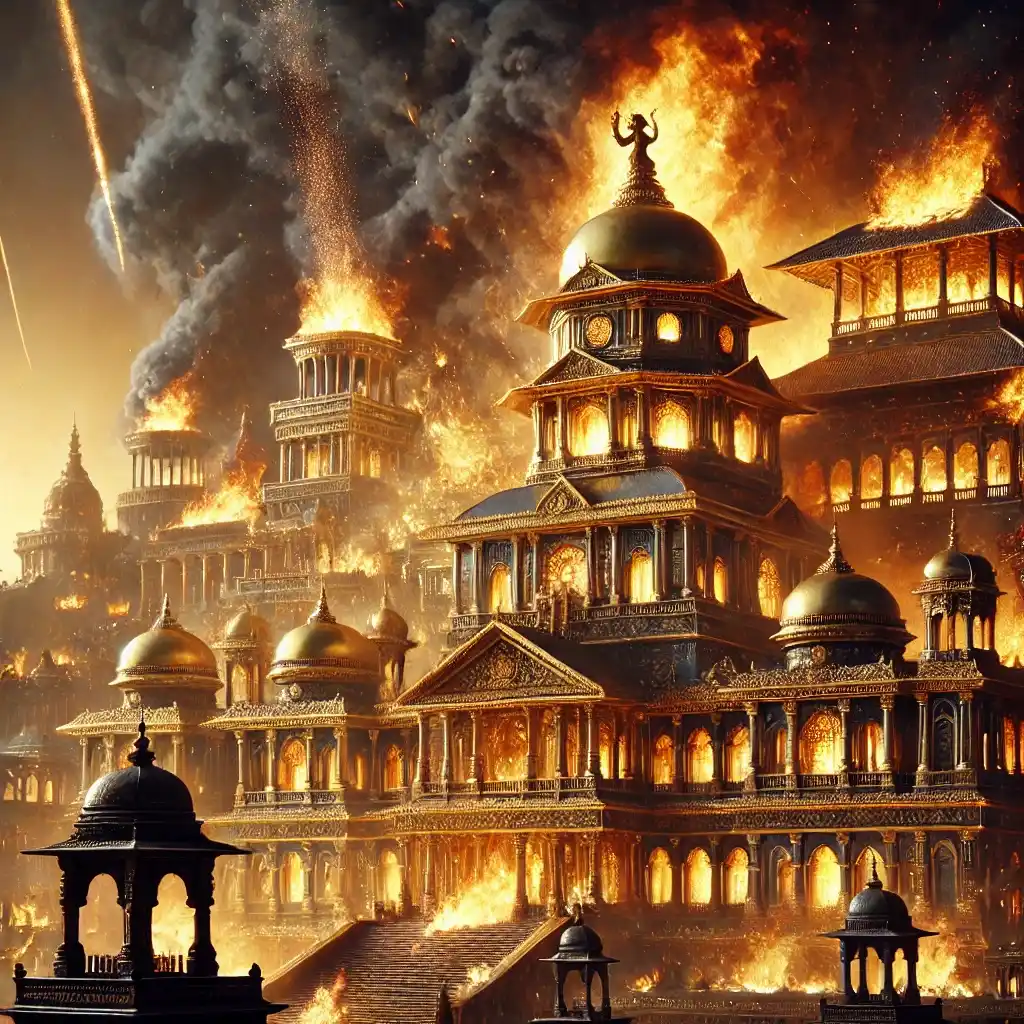
Ravan then instructed his men to put Hanuman's tail on fire and let him go. With his tail ablaze, Hanuman started jumping from one palace on to the other, setting Lanka ablaze.
Hanuman Heads Back to Kishkindha
Before leaving Lanka, Hanuman meets with Sita again and asks for her bangles to take back to Lord Ram as a proof of their meeting. Hanuman shares with Lord Ram about his journey to Lanka. Lord Ram then told Sugreev that they should make preparations to march towards Lanka. He encouraged and energized the Vanar army.
Vibhishan Surrenders to Lord Ram
Vibhishan attempts to persuade Ravan to free Sita and avoid engaging in a battle with Lord Ram. Realizing that it is futile to try and persuade Ravan, he chooses to depart Lanka and join Lord Ram and Lakshman in their quest to rescue Sita from Ravan's clutches. Lord Ram welcomes Vibhishan with open arms.
Significance of the Sundara Kand
The Sundara Kand is the heart of Ramayana and is also the most popular chapter. It showcases the power of faith, devotion, and surrender.
Chapter 6 - The Lanka Kand of Ramayan
The dramatic events leading up to Lord Ram and Ravan's confrontation are described in detail in the Ramcharitmanas' Lanka Kand. It highlights themes of bravery, devotion, the strength of faith and love, and the eventual victory of good over evil.
Construction of the Bridge and War Games
Lord Ram and Sugreev make arrangements to build a bridge across the vast sea, separating them from Lanka. Nala and Neel, blessed with extraordinary engineering skills, led the Vanara army to build the Ram Setu (bridge). Before beginning their march towards Lanka, Lord Ram established a Shivling at Rameshvaram and offered his worship.
Angad's Mission and Ravan's Arrogance
Lord Ram sends Angad as a peace messenger to Ravan's court before the war, offering one last chance for Ravan to release Sita and prevent the conflict. Angad urges Ravan to release Sita and avoid a catastrophic battle. Disregarding Angad's counsel, Ravan, driven by desire and pride, insults Lord Ram and his army. The battle is inevitable now.
The Battle of Lanka
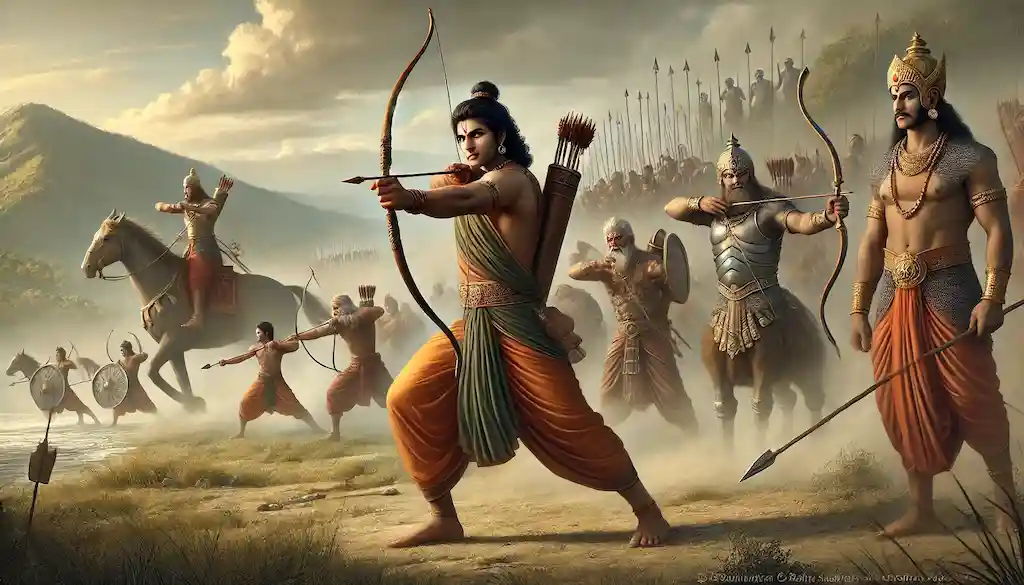
The army of Lord Ram arrives in Lanka and conflicts break out between Lord Ram's army and Ravan's sons and generals. Ravan's son Indrajit aims his Shakti baan at Lakshman knocking him unconscious. Hanuman saves Lakshman's life by bringing the magical herb Sanjivani from the Himalayas. Lord Ram ultimately defeats the ten-headed demon king Ravan by overpowering him and piercing him with his arrows thanks to the gods' aid.
Sita's Reunification with Lord Ram and Coronation of Vibhishan
At the end of battle, the Vanara army celebrate their victory, signifying triumph of good over evil. Lord Ram coronates Vibhishan as the King of Lanka. Sita goes through Agni Pariksha before they all head to Ayodhya on the Pushpak Viman where Bharat is eagerly waiting for their return, the fourteen years of exile in forests are coming to an end soon.
Significance of the Lanka Kand of Ramayana
The Lanka Kand highlights the power of unflinching faith in God that makes Angad fearless as he visits Ravan as Lord Ram's peace messenger. The triumph of good over evil is a prevailing theme of this chapter.
Chapter 7 - The Uttara Kand of Ramayan
The Uttara Kand is the last Chapter of the Book, and can be broadly divided into two parts. The first half celebrates return of Lord Ram to Ayodhya and establishment of Ram Rajya. The second half touches on spiritual knowledge in the form of dialects between Shiv-Parvati and Kag Bhushundi-Garud.
Ayodhya Celebrates Return of Lod Ram - Start of Diwali Tradition
Lord Ram and his companions reached Ayodhya on the Pushpak airplane. The entire kingdom is lighted with ghee candles and joy of the people of Ayodhya knows no bounds. The returning of Lord Ram back to Ayodhya has since been celebrated as the most revered festival amongst the Hindus. Amidst a spectacular ceremony, Lord Ram is crowned as the King of Ayodhya. Sugreev, Vibhishan and other companions depart from Ayodhya shortly thereafter. Hanuman stays in Ayodhya as he could not bear separation from Lord Ram even for a moment.
Establishment of Ram Rajya
Lord Ram established 'Ram Rajya', the rule of Dharma, throughout his realm. It is marked by righteous leadership, justice, fairness, and empathy, immense prosperity and universal happiness. In Lord Ram's kingdom, there were no widows to lament, nor there was any danger from wild animals, nor any fear born of diseases. The kingdom was bereft of thieves and robberies.
Lord Shiv Narrates Ram Katha Mahatmya (Glories of Lord Ram) to Mother Parvati
Lord Shiv narrates to goddess Uma, his consort, the enlightening conversation between Kaagbhusundi and Garud. Many important spiritual principles and philosophies are explained for the benefit of spiritual aspirants and seekers of divine knowledge.
Offering Prayers to Lord Ram
Finally, the Ramayan ends with offering of prayers to Lord Ram, and seeking the Lord's grace and mercy for one's spiritual well-being, stressing the fact that there is no living being in this world who has not benefited by submitting oneself before Lord Ram, and by worshipping and having devotion for him
Conclusion
Tulsidas' Ramcharitmanas offers more than just a poetic retelling of the Ramayan—it serves as a deeply spiritual and moral guide, highlighting the triumph of righteousness, the power of unwavering devotion, and the ideals of dharma that Lord Ram embodies. Through its seven Kands, from the divine birth of Lord Ram in Bal Kand to the establishment of the ideal rule in Uttara Kand, the text emphasizes timeless values such as courage, sacrifice, humility, and justice. The enduring relevance of these teachings continues to inspire countless generations, encouraging readers not only to admire the divine narrative but to internalize its virtues in their own lives. By reflecting on the journey of Lord Ram and his companions, one is invited to walk the path of truth, love, and selfless service in the modern world.
Call To Action
Immerse yourself in devotion by listening to Swami Mukundananda's Ram Katha on YouTube.
FAQs
1. What are the key versions of the Ramayan?
The primary versions are the Valmiki Ramayan (the original Sanskrit version) and the Tulsidas Ramayan (Ramcharitmanas, written in Awadhi Hindi), which focuses on devotion to Lord Ram.
2. What are the seven Kands of the Ramcharitmanas?
The seven Kands are Bal Kand, Ayodhya Kand, Aranya Kand, Kishkindha Kand, Sundara Kand, Lanka Kand, and Uttara Kand. Each chapter covers different stages of Lord Ram's journey.
3. What happens in the Bal Kand?
The Bal Kand narrates the birth of Lord Ram, his virtues, and the early events that set the tone for the challenges he will later face.
4. Why is the Sundara Kand significant?
The Sundara Kand is crucial for depicting Hanuman's unwavering devotion, his journey to Lanka, and his efforts to find and reassure Sita.
5. What is the meaning of Ram Rajya in the Uttara Kand?
Ram Rajya symbolizes an ideal, just, and prosperous kingdom, representing Lord Ram's perfect rule and governance.