

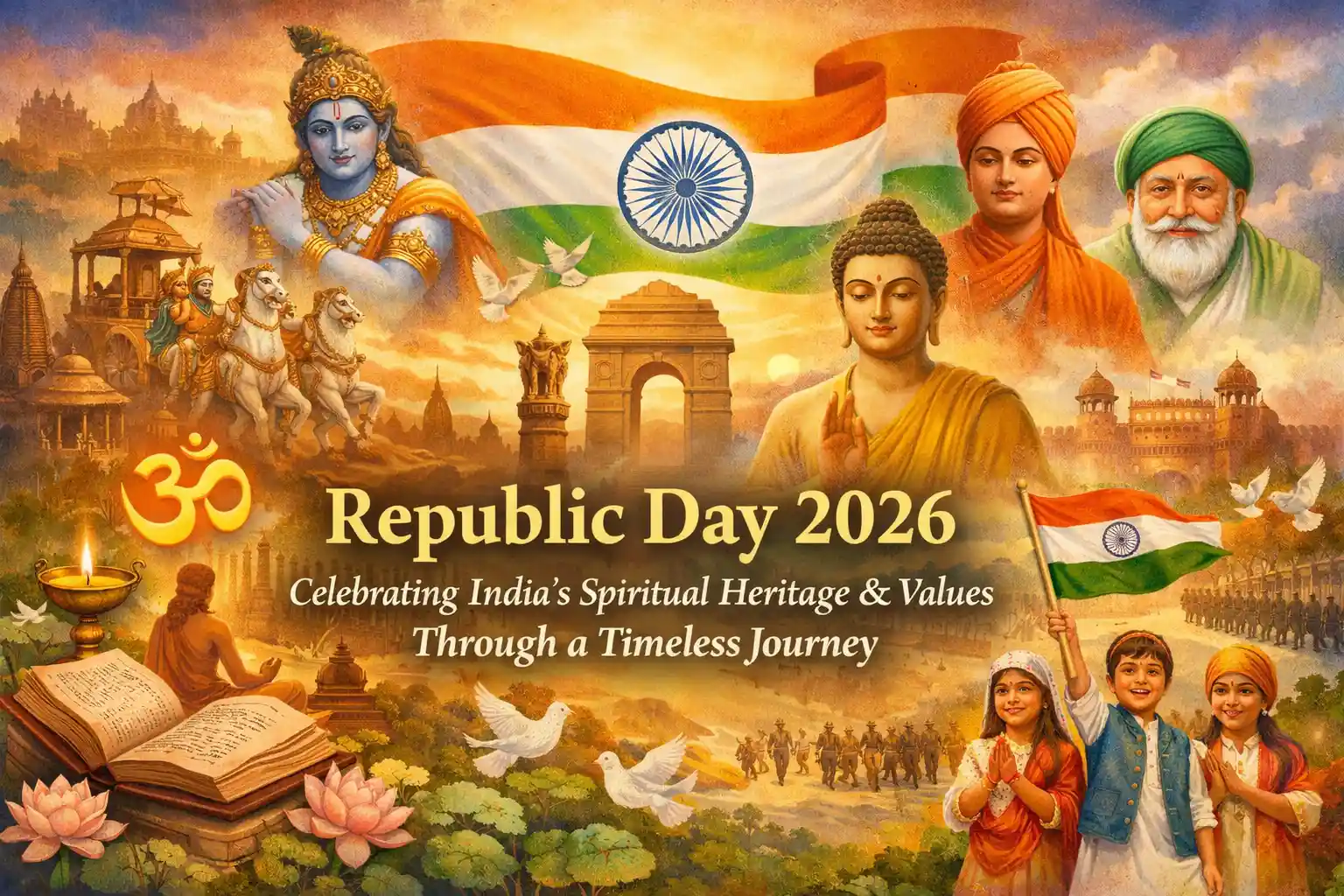
India’s Republic Day is more than a national celebration of constitutional governance and democratic ideals. It is a reminder of a deeper, older, and enduring spirit that has guided this land for thousands of years. On Republic Day 2026, as the tricolor unfurls across cities, villages, and hearts, India once again stands at the crossroads of its ancient wisdom and modern aspirations. This day becomes a living bridge between the sacred past and the vibrant present, between timeless values and contemporary challenges.
India’s spiritual heritage is not confined to temples, scriptures, or philosophical texts. It breathes through daily life, family traditions, social relationships, and the moral compass that guides millions. From the chants of the Vedas to the principles enshrined in the Constitution, from the compassion of the Buddha to the universal love of Sufi saints, India’s soul has always sought unity in diversity, harmony in difference, and purpose in service.
Swami Mukundananda often emphasizes that true spirituality is not an escape from the world but a way to live more meaningfully within it. According to him, the essence of spiritual life lies in cultivating inner strength, self-discipline, and selfless service. These ideals resonate deeply with the spirit of the Indian Republic, which calls upon every citizen to contribute to the collective good while honoring individual freedom.
As we celebrate Republic Day 2026, let us embark on a timeless journey through the roots, stories, teachings, and living values that continue to shape India’s spiritual and national identity.
I. Roots of India’s Spirit: Ancient Texts and Wisdom
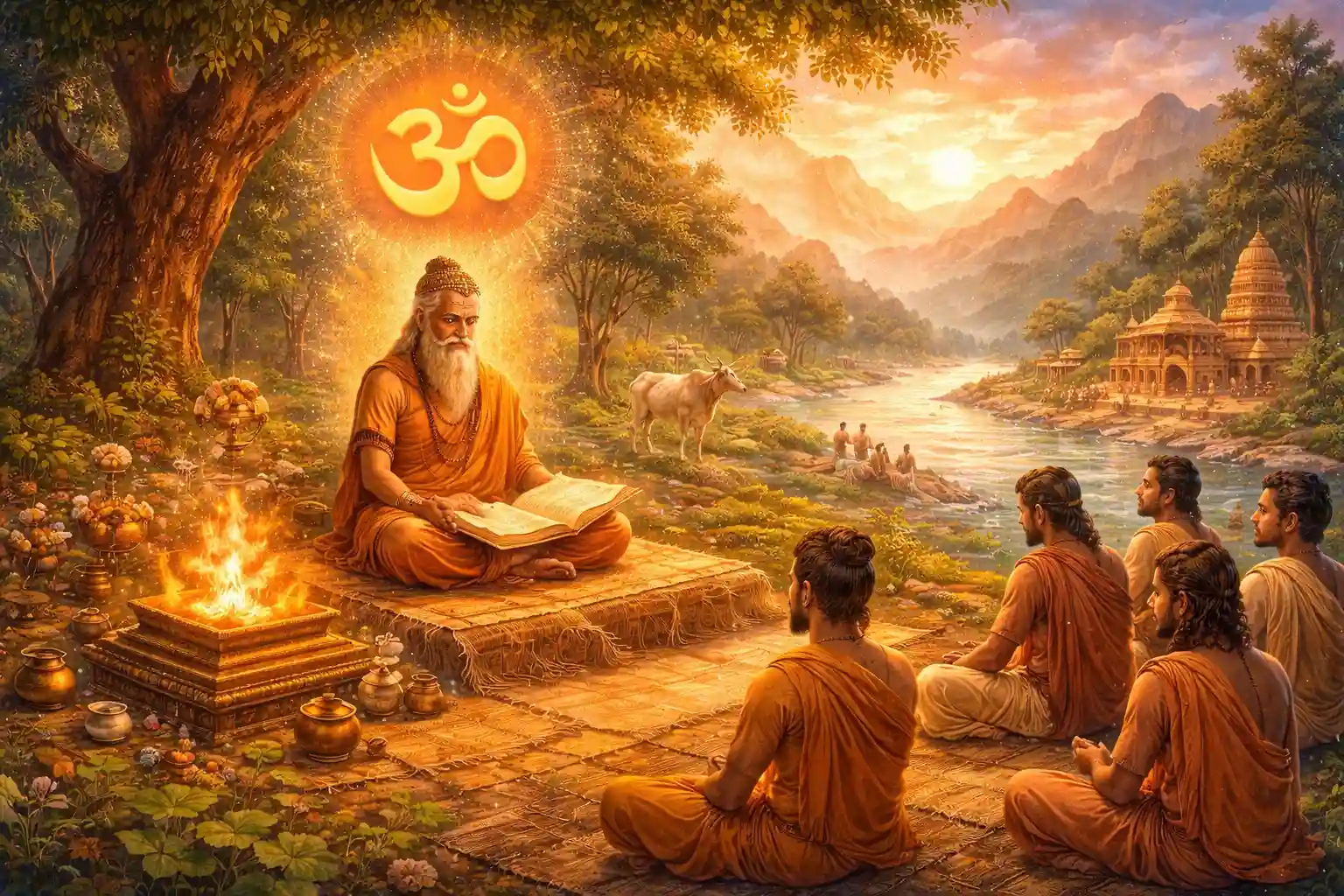
Echoes from the Vedas: Dharma and Duty
The Vedas are among the oldest known spiritual texts in human history, and they form the foundational bedrock of India’s philosophical and cultural life. Composed in an age when humanity looked to the skies, rivers, and forests for meaning, the Vedas speak of an interconnected universe governed by cosmic order known as Rta, which later evolved into the concept of Dharma.
Dharma is more than law or morality. It is the principle that sustains balance in the individual, society, and the cosmos. It calls upon each person to fulfill their duties with sincerity, integrity, and awareness of their role in the larger whole. This idea finds a powerful parallel in the Indian Constitution, which balances rights with fundamental duties, reminding citizens that freedom and responsibility must walk together.
Swami Mukundananda often reflects on Dharma as a guiding force for personal excellence. He explains that when individuals align their actions with higher principles rather than selfish desires, they experience inner peace and outer harmony. On Republic Day, this message becomes especially relevant as citizens reflect on their duties toward the nation, society, and one another.
Upanishadic Wisdom: Seeking Truth and Unity
The Upanishads mark a profound shift from ritualistic practice to inner inquiry. They ask timeless questions. Who am I? What is the nature of reality? What connects all living beings?
Their famous declaration, “Tat Tvam Asi,” meaning “You are That,” points to the essential oneness of all existence. This vision of unity goes beyond social, cultural, or religious boundaries. It sees humanity as a single family, echoing the later idea of Vasudhaiva Kutumbakam, the world is one family.
The Upanishads mark a profound shift from ritualistic practice to inner inquiry. They ask timeless questions. Who am I? What is the nature of reality? What connects all living beings?
Their famous declaration, “Tat Tvam Asi,” meaning “You are That,” points to the essential oneness of all existence. This vision of unity goes beyond social, cultural, or religious boundaries. It sees humanity as a single family, echoing the later idea of Vasudhaiva Kutumbakam, the world is one family.
In a modern republic built on pluralism, this ancient insight offers a powerful ethical foundation. It encourages respect for diversity while affirming a shared human essence. Republic Day thus becomes not only a celebration of political unity but also a reaffirmation of spiritual oneness.
Swami Mukundananda highlights that understanding our true self helps dissolve ego-driven conflicts. When people recognize the divine spark in themselves and others, compassion and cooperation naturally arise. This inner transformation, he suggests, is the true engine of social harmony.
The Essence of the Bhagavad Gita: Karma, Yoga, and Purpose
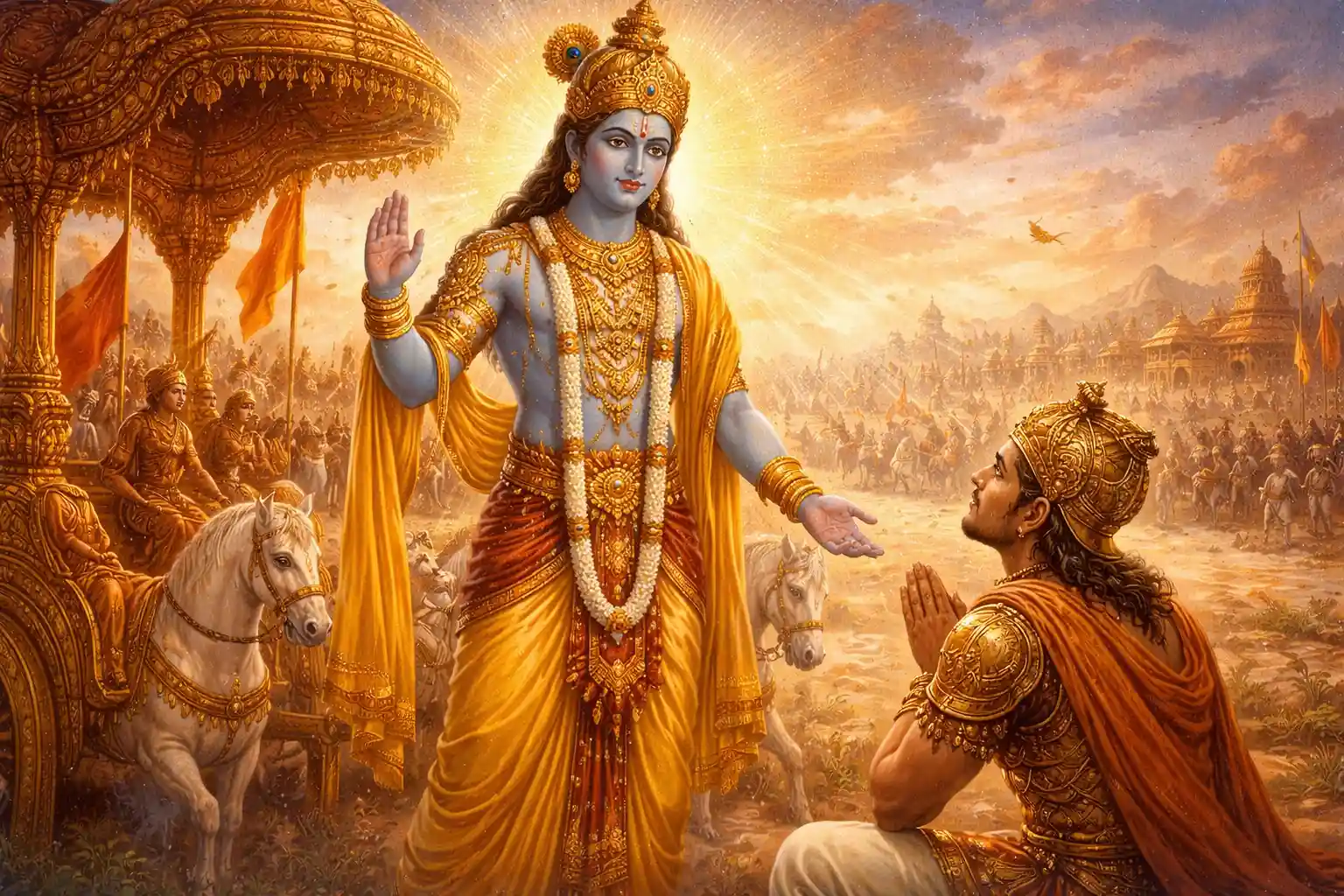
The Bhagavad Gita is a spiritual dialogue set on the battlefield of life, where duty wrestles with desire, fear with courage, and attachment with surrender. Through Krishna’s guidance to Arjuna, it offers Karma Yoga—the path of selfless action.
Its message is clear: do your duty, but don’t cling to outcomes.
BG 2.47: You have a right to perform your prescribed duties, but you are not entitled to the fruits of your actions. Never consider yourself to be the cause of the results of your activities, nor be attached to inaction.
And true yoga is inner balance:
“Be equal in success and failure—this evenness is yoga” (BG 2.48) —
BG 2.48: Be steadfast in the performance of your duty, O Arjun, abandoning attachment to success and failure. Such equanimity is called Yog.
This spirit aligns deeply with the values of public service in a republic. Krishna calls for steady work without attachment:
BG 3.19: Therefore, giving up attachment, perform actions as a matter of duty because by working without being attached to the fruits, one attains the Supreme
Whether one is a teacher, farmer, soldier, or leader, every role becomes sacred when done sincerely. As the Gita says:
BG 18.47: It is better to do one’s own dharma, even though imperfectly, than to do another’s dharma, even though perfectly. By doing one’s innate duties, a person does not incur sin.
Karma Yoga, then, is not escape from action—it is purifying action: work as worship, service as discipline, and results as surrender.
II. Timeless Tales of Virtue: Epics and Legends
The Ramayana: Ideal Relationships and Righteousness
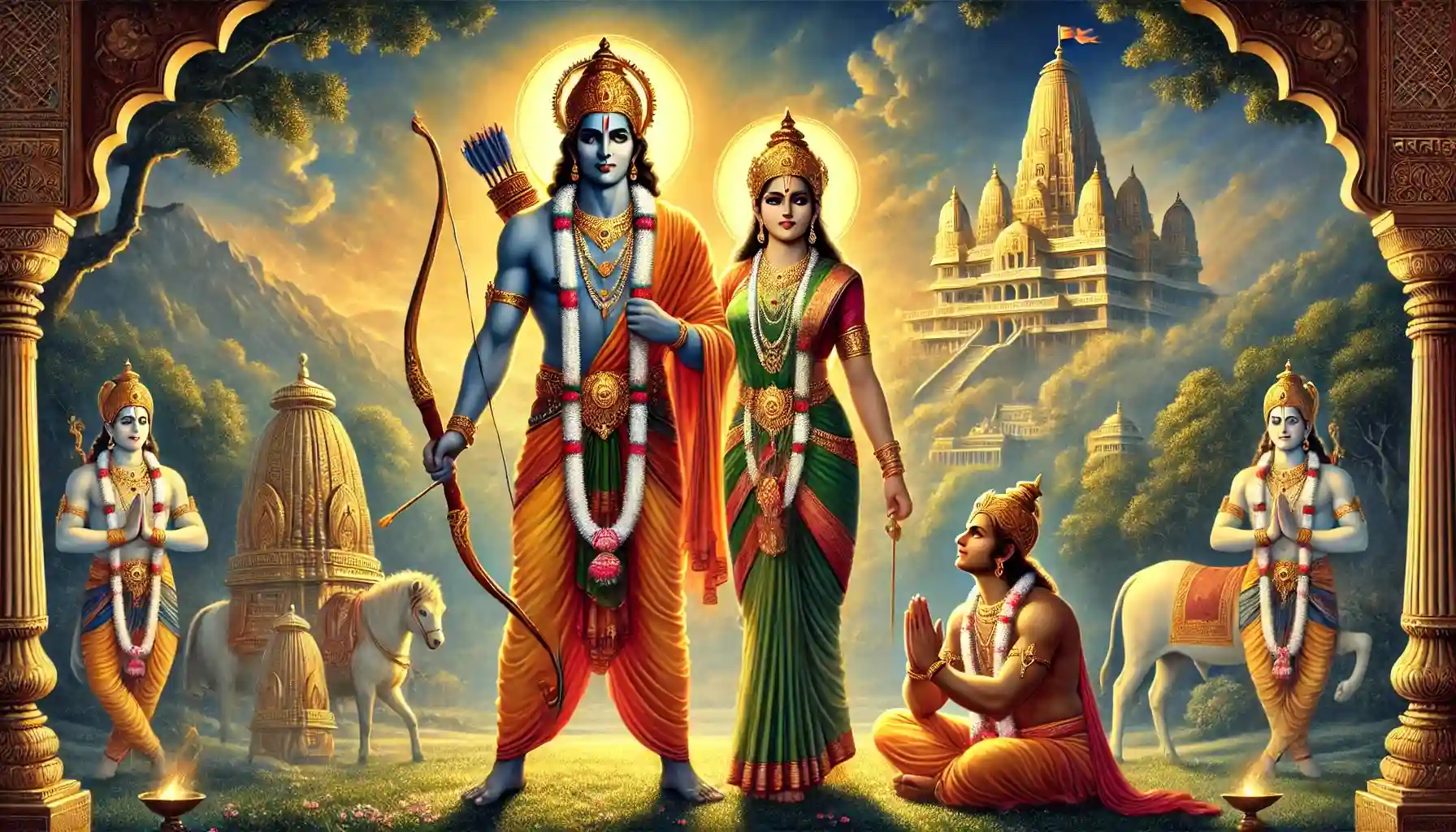
The Ramayana is not merely a story of a prince and a kingdom. It is a moral compass for human relationships. Lord Rama is often called Maryada Purushottam, the ideal person who upholds righteousness in every role he plays as son, husband, brother, and king.
Through Rama’s life, the epic teaches that true leadership is rooted in sacrifice, humility, and adherence to ethical principles. Sita embodies strength, purity, and resilience. Hanuman represents devotion, courage, and selfless service.
In the context of a democratic republic, these ideals translate into ethical governance, respect for family and community, and a commitment to justice. Republic Day celebrations that include tableaux and cultural performances often draw inspiration from such epics, reminding citizens of the timeless values that underpin national identity.
Swami Mukundananda often points out that the Ramayana teaches emotional mastery. He notes that Rama’s calm in adversity and compassion even toward adversaries demonstrate a higher level of inner strength. Such emotional and moral resilience, he suggests, is essential for building a peaceful and prosperous society.
The Mahabharata: Duty, Morality, and Cosmic Justice
The Mahabharata is a vast and complex epic that mirrors the intricacies of human life. It does not present a world of simple heroes and villains. Instead, it portrays moral dilemmas, conflicting duties, and the consequences of choices.
At its heart lies the concept of Dharma Yuddha, a righteous struggle for justice. The epic teaches that while the path of righteousness is often difficult and fraught with ambiguity, it ultimately leads to balance and restoration.
In a modern nation governed by laws and institutions, this message holds deep relevance. It reminds citizens and leaders alike that justice must be pursued with fairness, compassion, and integrity, even when circumstances are challenging.
Swami Mukundananda often uses examples from the Mahabharata to explain the importance of discernment. He teaches that wisdom lies in understanding not only what is right but also how and when to act. This balanced approach, he believes, is vital for both personal growth and responsible citizenship.
Stories of Kings and Sages: Inspiring Governance and Compassion
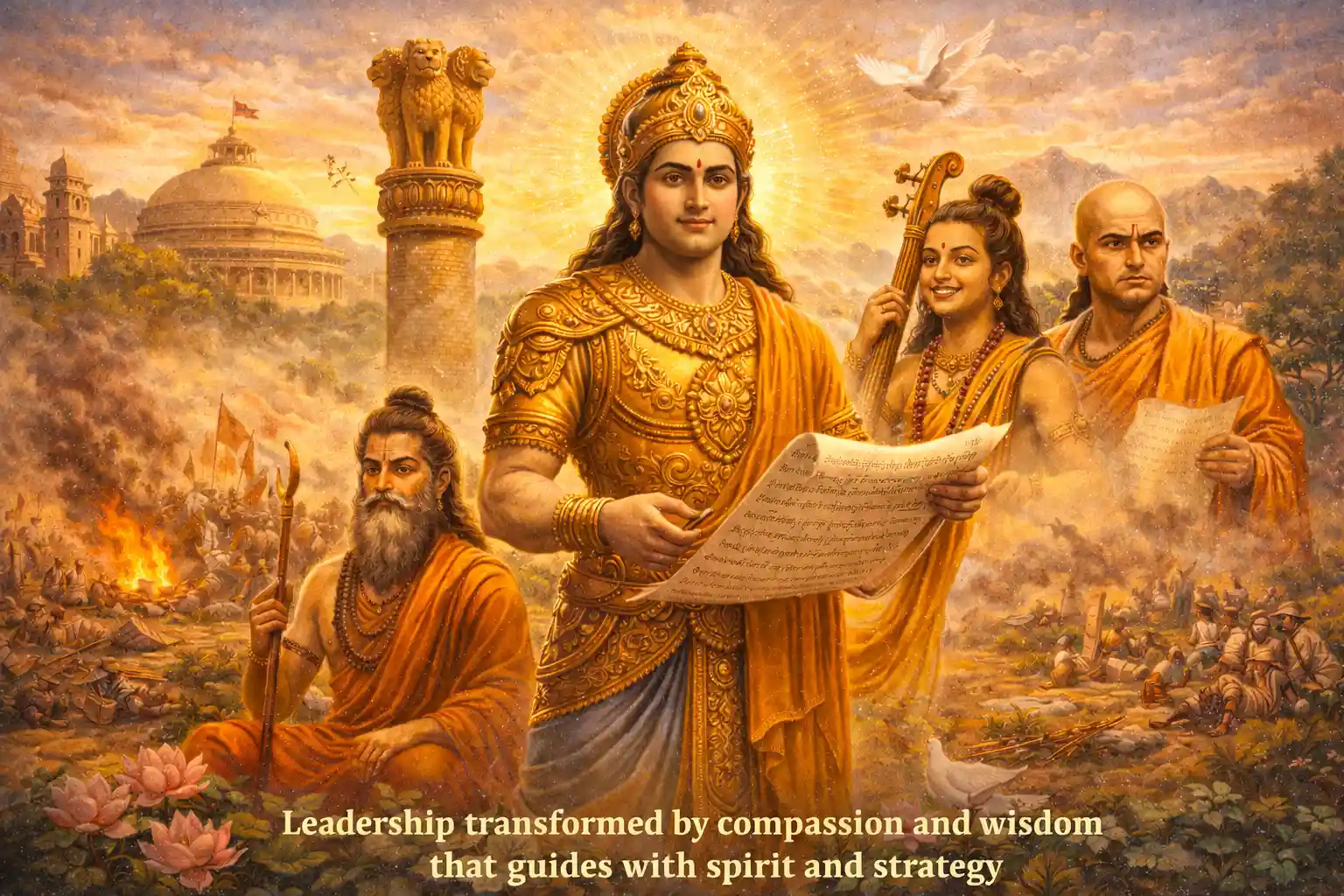
Beyond the great epics, India’s spiritual heritage is filled with stories of enlightened rulers and wise sages. King Ashoka’s transformation after the Kalinga war stands as a powerful example of how compassion can reshape governance. From a conqueror, he became a proponent of peace, spreading messages of non-violence and moral conduct across his empire.
Sages like Vishwamitra, Narada, and Chanakya represent different dimensions of wisdom, from spiritual insight to political strategy. Together, these stories highlight that leadership is not merely about power but about service, vision, and ethical responsibility.
Republic Day, which honors the birth of India’s Constitution, also celebrates this legacy of value-based leadership. It reminds citizens that the strength of a nation lies not just in its institutions but in the character of its people.
III. Guiding Lights: Philosophers and Reformers
Buddha’s Path: Peace, Compassion, and Non-Violence
The Buddha’s teachings emerged as a gentle yet powerful response to human suffering. His emphasis on the Four Noble Truths and the Eightfold Path offered a practical way to overcome desire, anger, and ignorance.
Compassion, mindfulness, and non-violence form the core of his philosophy. These principles later inspired global leaders, including Mahatma Gandhi, whose approach to freedom struggle was deeply rooted in Ahimsa.
On Republic Day, when India reflects on its journey as a sovereign nation, the Buddha’s message serves as a reminder that true strength lies in peace, understanding, and moral courage.
Swami Mukundananda often speaks about mindfulness as a tool for spiritual and personal growth. He explains that awareness of one’s thoughts and actions leads to better decisions and harmonious relationships, which in turn contribute to a healthier society.
Mahavira’s Teachings: Ahimsa and Self-Control
Lord Mahavira, the great teacher of Jainism, elevated Ahimsa, non-violence, to its highest form. For him, it was not limited to physical harm but extended to thoughts, words, and intentions.
His emphasis on self-control, truthfulness, and simplicity offers a powerful counterbalance to the excesses of modern life. In a consumer-driven world, these values encourage sustainability, respect for life, and ethical living.
Republic Day, which celebrates the collective will of the people, also invites reflection on how individual choices impact the nation’s moral and environmental future.
Swami Mukundananda highlights the importance of discipline in spiritual life. He teaches that controlling the senses and directing the mind toward higher goals leads to inner freedom. This inner freedom, he suggests, is the foundation of outer social responsibility.
Saints and Sufis: Bhakti and Universal Brotherhood
India’s spiritual landscape is adorned with saints and Sufi mystics who sang of divine love in the language of the heart. Figures like Kabir, Mirabai, Guru Nanak, and Khwaja Moinuddin Chishti broke down barriers of caste, creed, and religion.
Their message was simple yet transformative. Love God, serve humanity, and see the divine in every being. Their poetry and songs continue to inspire millions, fostering a culture of inclusiveness and empathy.
On Republic Day, their legacy reminds citizens that unity is not achieved through uniformity but through mutual respect and shared compassion.
IV. From Folklore to Nationhood: Connecting Past and Present
Village Tales: Preserving Values Through Generations
In India’s villages and towns, stories passed down through generations serve as living classrooms of moral education. Grandparents narrate tales of clever animals, wise elders, and brave heroes, subtly imparting lessons about honesty, courage, and cooperation.
These stories form the emotional and ethical foundation of communities. They create a sense of belonging and continuity that connects the youngest child to the oldest tradition.
Republic Day celebrations in rural areas often include folk dances, dramas, and storytelling, reflecting how national pride and cultural heritage blend seamlessly at the grassroots level.
Moral Fables: Panchatantra and Jataka Tales
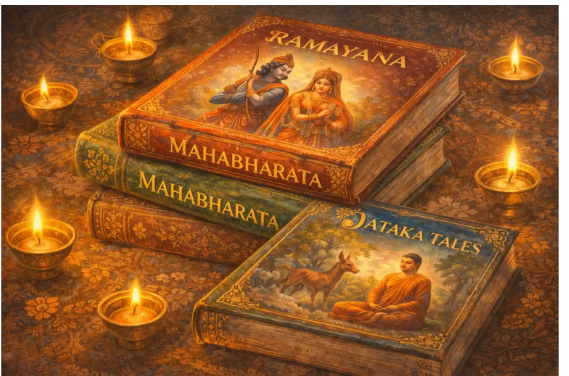
The Panchatantra and Jataka Tales use simple narratives to convey profound truths. Through animals and everyday characters, they explore themes of friendship, wisdom, greed, and justice.
These stories emphasize practical intelligence alongside moral integrity. They teach that success achieved without ethics is hollow and that true wisdom lies in balancing cleverness with compassion.
Swami Mukundananda often notes that spiritual growth does not require complex rituals. He suggests that even simple stories, when reflected upon deeply, can awaken higher understanding and guide ethical behavior.
India’s Spiritual Diversity: Unity in a Million Stories
India’s identity is a mosaic of countless traditions, languages, and beliefs. From the rituals of the Himalayas to the coastal festivals of the south, each region contributes a unique thread to the national tapestry.
This diversity is not a challenge to unity but its greatest strength. Republic Day symbolizes this collective harmony, as people from all backgrounds come together to celebrate shared ideals of justice, liberty, and fraternity.
V. The Constitutional Soul: Values in Modern India
The Constitution: A Modern Testament to Ancient Ideals
The Indian Constitution is often described as a modern document with an ancient soul. Its emphasis on equality, justice, and dignity reflects timeless spiritual principles found in India’s sacred texts.
The Preamble’s commitment to liberty and fraternity echoes the Upanishadic vision of unity and the Bhakti tradition’s message of universal love. Fundamental Duties remind citizens that rights must be balanced with responsibility, a concept deeply rooted in Dharma.
On Republic Day, when the Constitution is honored, it becomes clear that India’s spiritual heritage and democratic values are not separate paths but intertwined journeys.
Vande Mataram: The Mantra of Freedom and Motherland
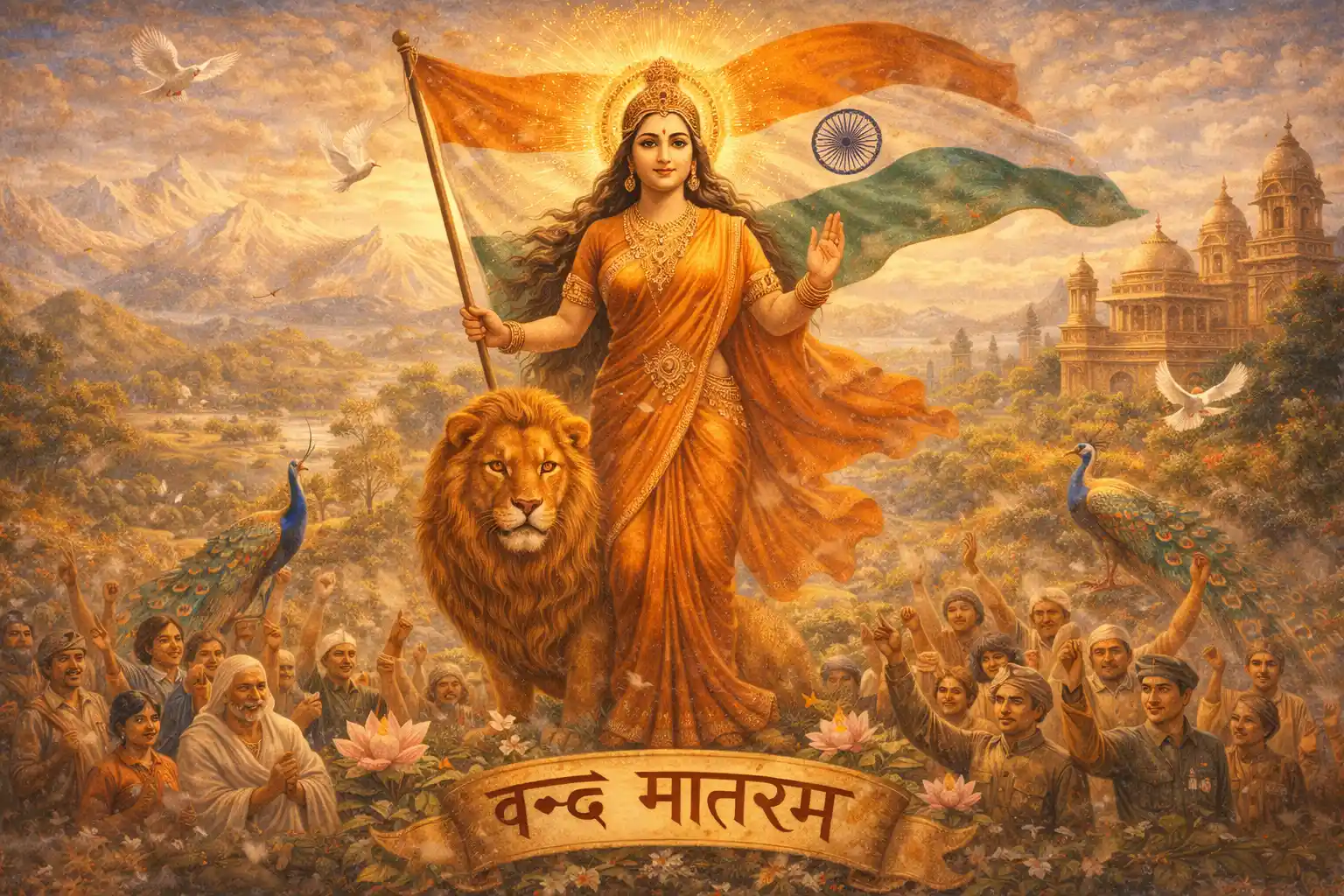
Vande Mataram is more than a song. It is a heartfelt expression of devotion to the land that nurtures and sustains. It blends patriotism with spirituality, viewing the nation as a living, sacred presence.
This भावना, this deep emotional connection, transforms citizenship into a form of service and reverence. Republic Day thus becomes a moment of collective gratitude and renewed commitment to the nation’s well-being.
Aatmanirbhar Bharat: Self-Reliance Through Spiritual Strength
The vision of Aatmanirbhar Bharat, a self-reliant India, extends beyond economic independence. It calls for inner strength, confidence, and ethical clarity.
Swami Mukundananda often emphasizes that self-reliance begins with self-mastery. He teaches that when individuals cultivate discipline, resilience, and purpose, they contribute more effectively to society.
In this light, Republic Day becomes a celebration of both national sovereignty and personal empowerment.
VI. Living the Legacy: A Call to Action
Embracing Values: Our Role in Building a Spiritual Nation
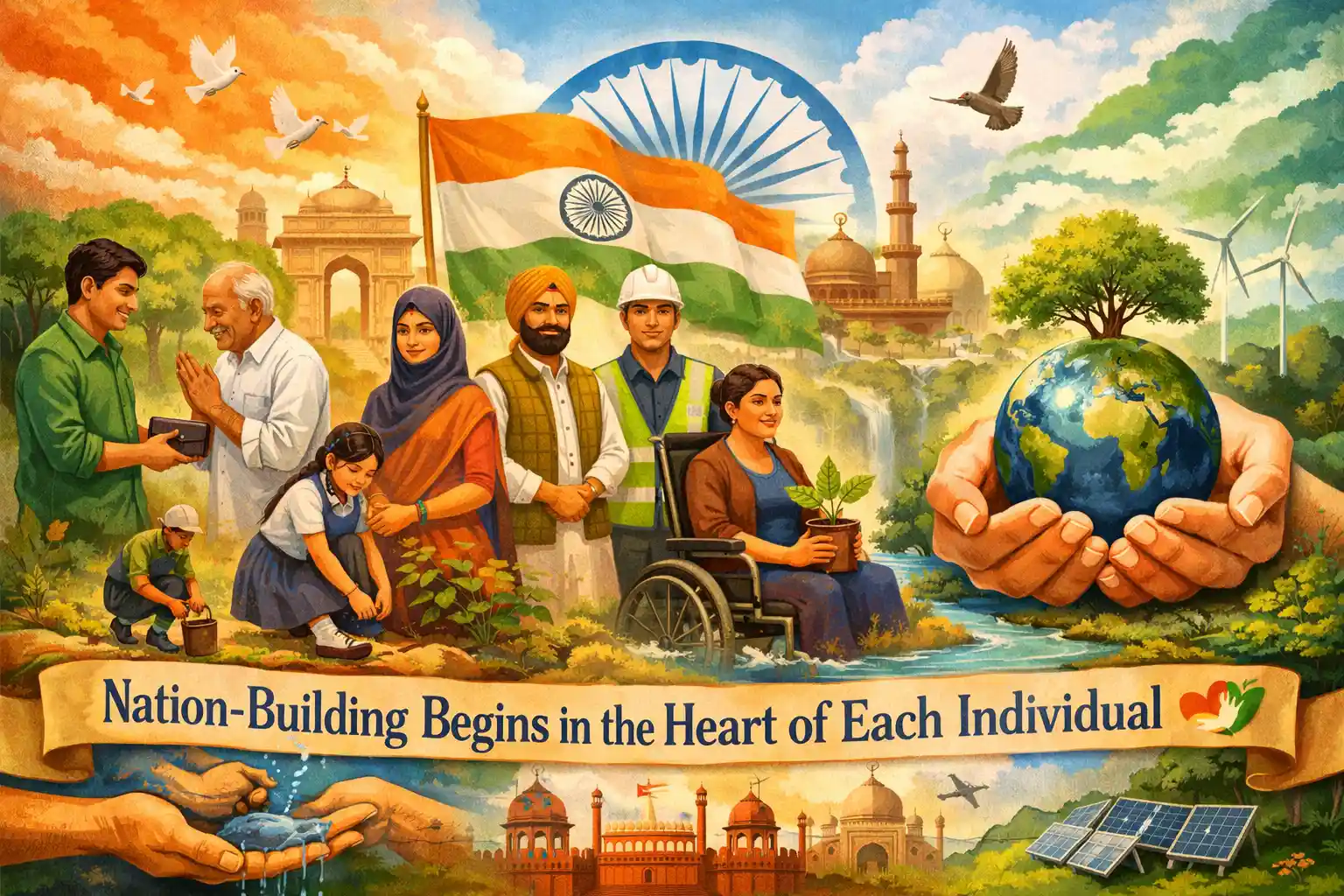
India’s spiritual heritage is not a relic of the past. It is a living tradition that evolves with each generation. Every citizen plays a role in shaping the moral and cultural future of the nation.
Simple acts of kindness, honesty in daily work, respect for diversity, and care for the environment are modern expressions of ancient values. Republic Day serves as an annual reminder that nation-building begins in the heart of each individual.
Swami Mukundananda often encourages people to see their lives as a form of service. He explains that when work is infused with a spirit of contribution rather than competition, it becomes a source of joy and fulfilment.
Sharing Our Stories: Inspiring Future Generations
The stories, teachings, and values of India’s spiritual heritage must be passed on to future generations. In a world of rapid change and digital distractions, these narratives provide grounding and guidance.
Parents, teachers, and community leaders play a crucial role in keeping these traditions alive. By sharing stories of courage, compassion, and wisdom, they help young minds develop a strong moral compass.
Conclusion: A Timeless Journey Forward
Republic Day 2026 is not just a celebration of a historical event. It is a reaffirmation of a timeless journey that began thousands of years ago in the forests of sages, the halls of kings, and the hearts of seekers.
India’s spiritual heritage offers a vision of life rooted in purpose, unity, and service. Its values continue to inspire not only a nation but the world.
As the tricolor rises and the anthem echoes across the land, let us remember that the true strength of the Republic lies in the spiritual and ethical foundations of its people. By living these values in our daily lives, we honor both our ancient past and our democratic present, carrying forward a legacy that is as enduring as it is enlightening.
In the words reflected through the teachings of Swami Mukundananda, when individuals grow inwardly, society grows outwardly. On this Republic Day, may India continue to shine as a beacon of spiritual wisdom, compassionate action, and collective harmony for generations to come.
Call To Action
FAQs
1. What is the main theme of this blog?
It explores how India’s ancient spiritual values connect with modern Republic Day ideals and national identity.
2. Why are ancient texts like the Gita and Upanishads mentioned?
They provide timeless guidance on duty, unity, and ethical living that still shape India today.
3. How does Swami Mukundananda’s insight fit into the message?
His teachings highlight self-discipline, inner growth, and service as foundations for a strong nation.
4. What role do stories and folklore play in Indian values?
They pass moral lessons and cultural wisdom across generations in simple, relatable ways.
5. How can individuals live these values today?
By practicing kindness, responsibility, respect for diversity, and service in daily life.