

From the Editor’s Desk
In a world often driven by appearances and external validation, spiritual integrity calls us inward – to align our thoughts, words, and actions with our highest self and divine purpose.
Utilizing the Vedic knowledge (i.e., tattva jnana) taught by Swami Mukundananda ji, this issue of JKYog’s E-Journal, Samarpan, uncovers the meaning of spiritual integrity, why it is so essential for aspirants on this path, and how it is manifested in people. Use the practical tool to self-assess the level of spiritual integrity.
Vedic Wisdom & Application
Theme of the Month
Spiritual Integrity: Living in Alignment with the Higher Self
Reflection Questions
- What is Spiritual Integrity?
- Why Is Spiritual Integrity Essential on the Path of Devotion?
- How is Spiritual Integrity Manifested in People?

Most of us understand integrity as being honest, consistent, and ethical. It is about keeping one’s word and doing the right thing. This type of integrity primarily focuses on actions that align with societal or moral codes. In contrast, spiritual integrity is a deeper, internal alignment. Rather than just “doing the right thing,” it is about being true to who we are at the level of the soul. Let us understand this in greater depth.
What is Spiritual Integrity?
Swamiji explains spiritual integrity as the alignment of one's actions, thoughts, and words with the eternal identity as a divine soul. He emphasizes that this integrity comes from conquering the internal enemies of ego, greed, and anger and replacing them with a state of pure devotion to God. In other words, spiritual integrity is not about external morality but about a profound internal transformation that is reflected in every aspect of daily life.
Spiritual integrity arises from purifying the mind and uplifting our consciousness. Every action begins as a thought. If our thinking is impure or misaligned with divine truths, our actions will follow suit. By consistently meditating on spiritual principles, one can retrain the mind, elevate thoughts, and gradually transform from within.
Here is a breakdown of the key distinctions between the two types of integrity:
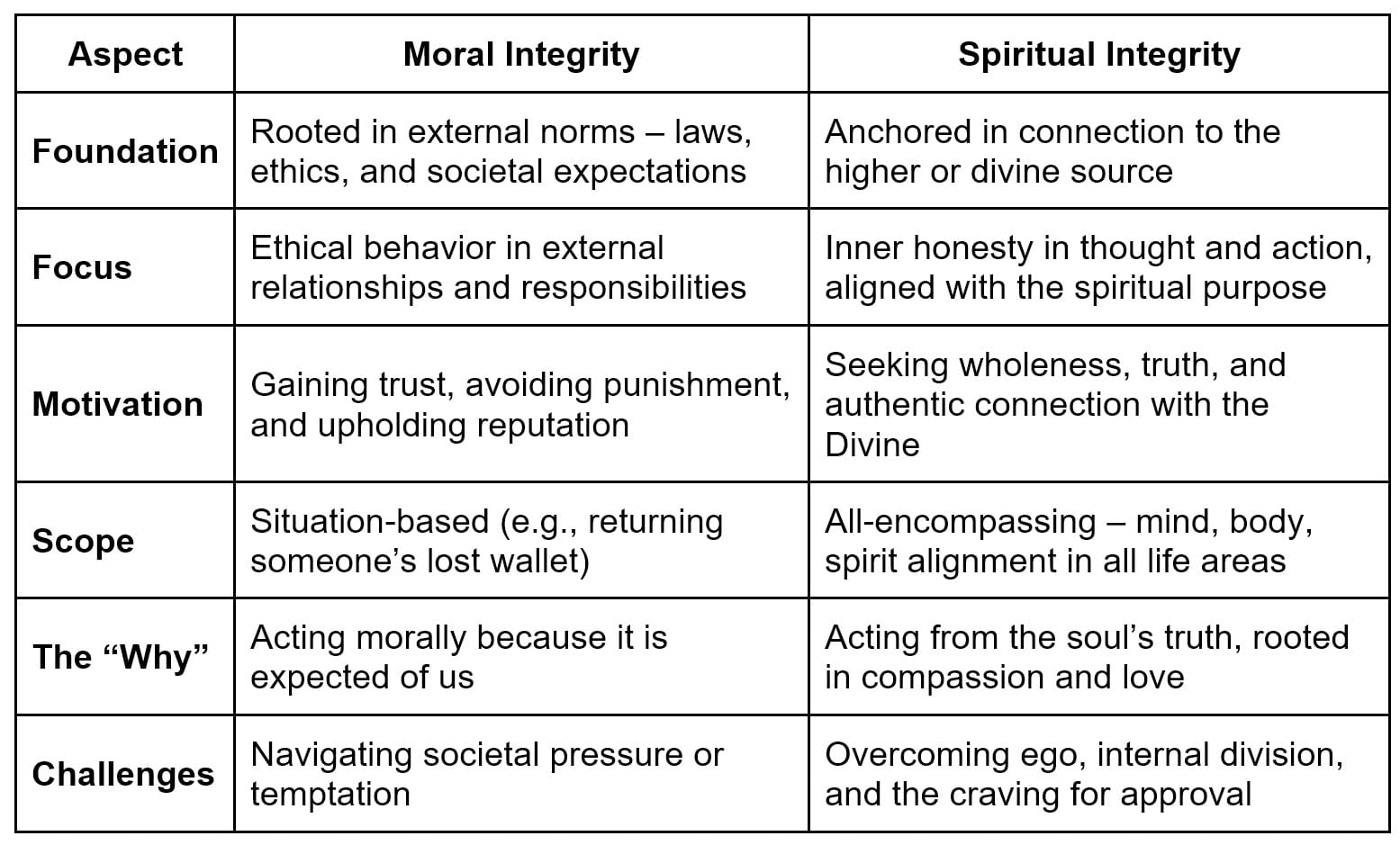
While moral integrity is about the "what" and "how" of our behavior, spiritual integrity is about the deeper "why" and "who," or our inner identity and intention. Further, spiritual integrity serves as the foundation for lasting inner peace and self-realization. It is characterized by four pillars:
- Alignment of identity: Recognizing “I am the soul” rather than merely the body, mind, and the doer, and acting from that perspective.
- Consistency of being: Focusing not merely on external conformity to rules, but internal coherence in thoughts, words, feelings, and actions, all moving in the same direction.
- Responsibility: Accepting that the life we lead is not just for our pleasure, but as an offering to the Divine, as a channel for service or seva and surrender.
- Sincerity of purpose: Acting not for superficial gains (e.g., recognition, praise, profit, etc.) but from a deeper intention: to live, serve, and love God/Guru.

JKYog’s e-Journal, Samarpan, itself means “surrender” or complete dependence on God’s grace, and integrity becomes the groundwork for that surrender: When our inner world is honest and our outer life reflects that honesty, our heart becomes ripe for surrender.
Why is Spiritual Integrity Essential on the Path of Devotion?
There are many reasons why integrity is indispensable in a sincere spiritual journey:
- Purity of Heart and Clarity of Vision: When a seeker’s inner and outer worlds diverge (i.e., hypocrisy), the mind becomes fragmented. The fragmentation weakens concentration, stirs guilt, and clouds the ability to meditate, serve, or connect inwardly. The path of devotion emphasizes tackling such inner obstacles to purify the heart for a clear understanding of the purpose of life.
- Attracting Divine Grace: Divine grace flows when the seeker is sincere, humble, consistent, selfless, and exclusive in devotional practice. These characteristics are rooted in integrity. This is what quietens the mind, chips off the ego, and turns the heart toward God/Guru.
- Seva and Community Trust: In the context of JKYog’s mission to transform the world through wisdom, integrity plays a crucial role. When a devotee or volunteer serves in a spirit of selfless love (i.e., nishkama karm) and integrity, others are inspired, trust is built, and the spiritual community becomes fertile. Without integrity, seva may become mechanical, self-justifying, or even filled with pride.
- Inner Freedom: Integrity leads to inner freedom – freedom from duplicity, inner conflict, tyranny of the ego that falsely claims doership of pious actions. When integrity replaces that egoic claim with humility, “I am not the doer; God is the doer,” the soul rests in its true identity and experiences a deep inner freedom.

How is Spiritual Integrity Manifested in People?
Spiritual integrity positively influences various aspects of people’s lives, including personal decisions, relationships, and daily choices.
In Personal Decisions:
- Choosing purpose over profit. People with spiritual integrity might turn down a high-paying job offer at a company whose practices conflict with their values, even if it creates financial hardship. For example, Mahatma Gandhi willingly gave up wealth and comfort to live a life of humility, showing his commitment to his principles of simplicity and nonviolence (i.e., Satyagraha). He inspired change by living out the values he preached. He was a vegetarian and wore simple, homespun cloth to promote Indian self-reliance. His decision honored his deep belief that their life's work should serve a higher purpose.
- Brutal self-honesty. When people with spiritual integrity make mistakes, they acknowledge their true motivations, even if they are rooted in fear, ego, or insecurity. For example, they might recognize that they offered to help a friend not out of pure compassion, but from a need to feel important. This self-awareness allows for genuine self-correction and inner growth.
- Honoring boundaries. People with spiritual integrity listen to their inner wisdom, even if it disappoints others. This could mean saying “No” to a social commitment to prioritize quiet reflection or spiritual practice, rather than succumbing to pressure for external validation.
In Relationships:
- Loyalty to the true self. Those with spiritual integrity stay true to their core self in a relationship, even when it costs them. For example, if a spouse asks to compromise a core value by not returning an item stolen by their child, the person protects their inner peace by returning it and teaching by example.
- Honesty without agenda. In a difficult conversation with loved ones, people with spiritual integrity speak the truth without a hidden agenda to control the other person's reaction. The focus is on authentic expression, not manipulation.
- Giving without expectation. When performing acts of kindness, people with spiritual integrity do so from a genuine place of compassion and love, without secretly expecting praise or reciprocation. For example, Mother Teresa's spiritual integrity reflected her unwavering faith and selfless service to the poorest of the poor. She ministered to the sick and dying without any desire for personal gain or glory, seeing it as serving Christ himself. Despite a lifelong period of profound inner darkness and feeling rejected by God, her outward actions of compassion and service never wavered.

In Times of Adversity:
- Persevering through faith. People with spiritual integrity remain steadfast in their beliefs even during severe trials. They have an unwavering commitment to the truth, even when doing so offers no relief. For example, King Harishchandra endured immense suffering and hardship, which culminated in the death of his son. Even then, he remained committed to the truth and to his duty.
- Showing compassion to those who harm. Those with spiritual integrity do not keep score or seek revenge when others mistreat them. They recognize that the harmful actions of others reflect their own spiritual state. For example, Nelson Mandela demonstrated spiritual integrity through his extraordinary capacity for forgiveness and reconciliation. After 27 years in prison, he chose to forgive his captors and work with them to build a new South Africa. He recognized that holding onto bitterness would only continue his own imprisonment.
- Choosing what is right, not what is easy. Those with spiritual integrity, like the Dalai Lama, advocate peace and compassion despite exile and persecution. It involves holding to one’s values even when it makes life more difficult.
In everyday behavior:
- Consistency in private and public. People with spiritual integrity are the same behind closed doors as they are in public. Their actions, thoughts, and words are aligned because they are driven by their core beliefs, not by who might be watching. For example, when sentenced to death, Socrates refused to abandon his philosophical mission or compromise his principles, even when it would have saved his life. He dedicated his life to encouraging others to question their beliefs and pursue wisdom.
- Confronting internal biases. Those with spiritual integrity are self-aware and willing to confront personal judgments, prejudices, and misperceptions. It is the openness to change when confronted with a deeper truth.
- Taking responsibility for psychological blind spots. With brutal self-honesty, people with spiritual integrity take responsibility for their actions and flaws rather than making excuses. This provides the primary potential for spiritual growth.

Living with spiritual integrity profoundly shapes one's daily life by fostering a deep sense of inner alignment that influences decisions, relationships, and self-perception. It replaces external, conditional validation with a consistent inner compass, leading to greater authenticity and purpose.

Tools for Your Personal Growth
Here is a practical and introspective self-assessment tool to help evaluate spiritual integrity (i.e., alignment between your inner values, beliefs, and outer actions in spiritual or moral contexts). These questions are designed for honest reflection, not judgment. A downloadable tracking sheet is available for you to use.
If you wish to speak with anyone about this topic or your practice, please contact us at [email protected], and give us time to respond. Thank you.

Gems of Wisdom from Swamiji
- Spiritual GPS That Shapes Your Destiny l Bhagavad Gita l Swami Mukundananda l Verse 9.25
- Shree Krishna's 2 GOLDEN Rules of Life: The Key to STOP Suffering and Reach God | Swami Mukundananda
- Mukundananda, S. (2025). Ishavasya Upanishad. Rupa Publications Pvt Ltd: New Delhi, India.
- Mukundananda, S. (2024). Spiritual Secrets from Hinduism: Essence of the Vedic Scriptures. Rupa Publications Pvt Ltd: New Delhi, India.
- Mukundananda, S. (2022). Golden Rules for Living Your Best Life, Rupa Publications Pvt Ltd: New Delhi, India.
- Mukundananda, S. (2022). The Power of Thoughts, Penguin Random House: Gurugram, India.

JKYog Transforming Communities
Here, we share evidence of amazing activities and news about the programs and initiatives of JKYog and its various U.S. centers.
Swami Mukundananda Exclusive (SMEx) Platform
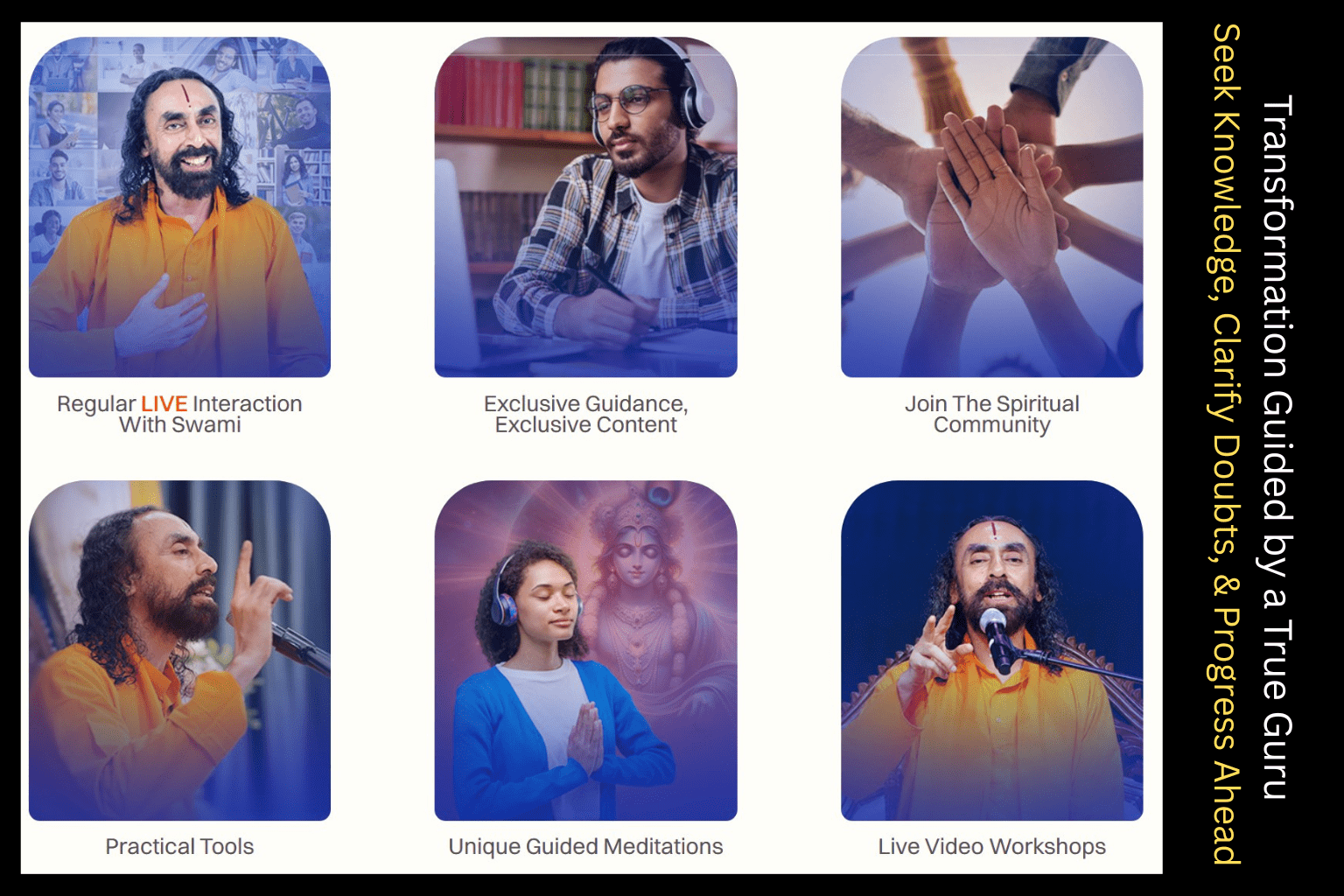
This is more than just a digital platform; it is a tool for transformation that nurtures personalized and elevated spiritual growth. By offering a unique blend of wisdom, practice, and community, it empowers individuals to walk the path of devotion and service in a structured and inspiring way.
Since its launch, SMEx has made a significant impact on the lives of thousands of spiritual seekers across the globe:
- Deepened Spiritual Growth: Members report a stronger connection with the teachings, increased clarity in their spiritual path, and more disciplined sadhana. The structured and sequential approach fosters real transformation.
- Global Reach & Inclusivity: The platform has connected seekers from diverse cultural and geographic backgrounds, creating a truly global Satsang (i.e., spiritual community).
- Enhanced Engagement: Compared to public content, SMEx members show higher retention, deeper engagement, and greater consistency in their practices.
- Transformation Through Accountability: By integrating journaling and reflections, SMEx has instilled greater accountability and self-awareness in practitioners.
SMEx represents the next evolution in spiritual learning, bridging timeless Vedic wisdom with the convenience and connectivity of the digital age. Become a member now! It’s your opportunity to transform your life!

JKYog’s Bhagavad Gita Krishna Bhakti App
Did you know about the "Trending Collection" on this App? Embedded within this collection, you will find an invaluable spiritual treasure – Roop Dhyan Guided Meditations by Swamiji!
This is a valuable means for spiritual growth, thanks to its quick accessibility and deeply insightful content. This feature provides a powerful and convenient way for individuals to integrate profound spiritual practices into their daily lives.
Swamiji's meditations are not just for relaxation; they are tools for profound spiritual transformation. He guides the user to focus on the Divine, which purifies the mind and cultivates devotion.
The deep meditation content helps aspirants achieve inner peace, clarity, and heightened self-awareness. They are designed to help us connect with our inner selves and purify our consciousness, rather than merely offering stress relief.
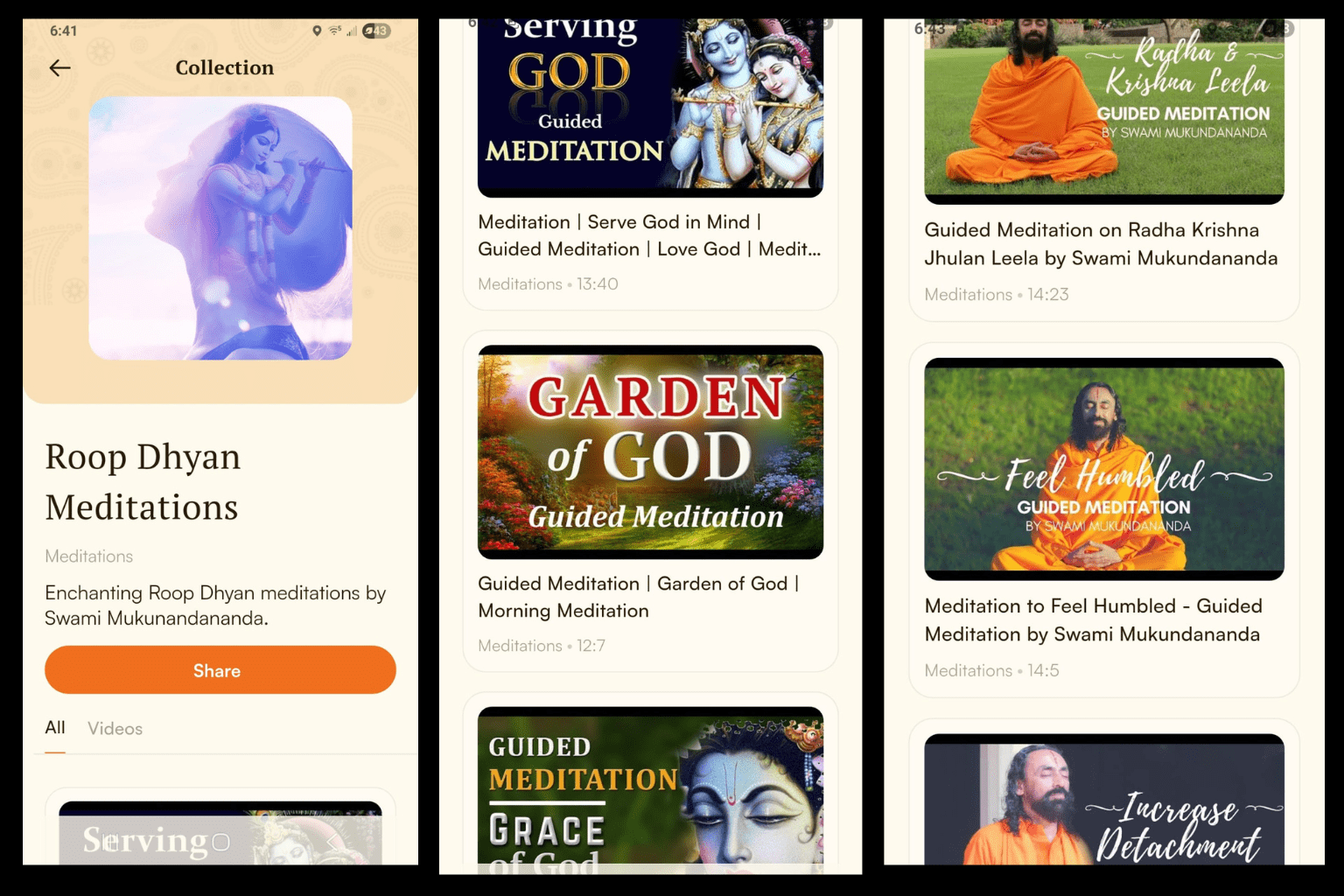
Start experiencing the guided meditations and stay in the blissful state if you have already discovered the treasure! Where else will you find other meditations on the app? Check it out yourself, or wait patiently for the next month’s issue!
If you have not already downloaded the app, do it now!
Download the App: https://www.jkyog.org/radha-krishna-bhakti-app