
Introduction: What Is a Home Puja and Why It Matters
For many devotees living away from their ancestral lands, in foreign countries, and among busy schedules, performing a full traditional temple‑style puja with grand decorations, special ingredients, elaborate rituals may feel impossible. Yet the core of devotion does not lie in external items or grandeur. What truly matters is the sincerity of the heart, the remembrance of the Divine, and the humble intent to connect.
A “home puja”, even a very simple one with minimal supplies, can become a powerful spiritual practice when approached with the right mindset. As Swami Mukundananda teaches, the inner journey: the pilgrimage of the heart, is far more important than outward ritual grandeur.
This blog will guide you, especially if you are an international devotee, or someone living simply, on how to create a meaningful home puja with minimal resources. The emphasis will always be on bhāv (devotional feeling), remembrance, and inner connection, rather than on accumulating many ritual items.
The Philosophy Behind Minimal‑Supply Puja: Inner Pilgrimage Over External Display
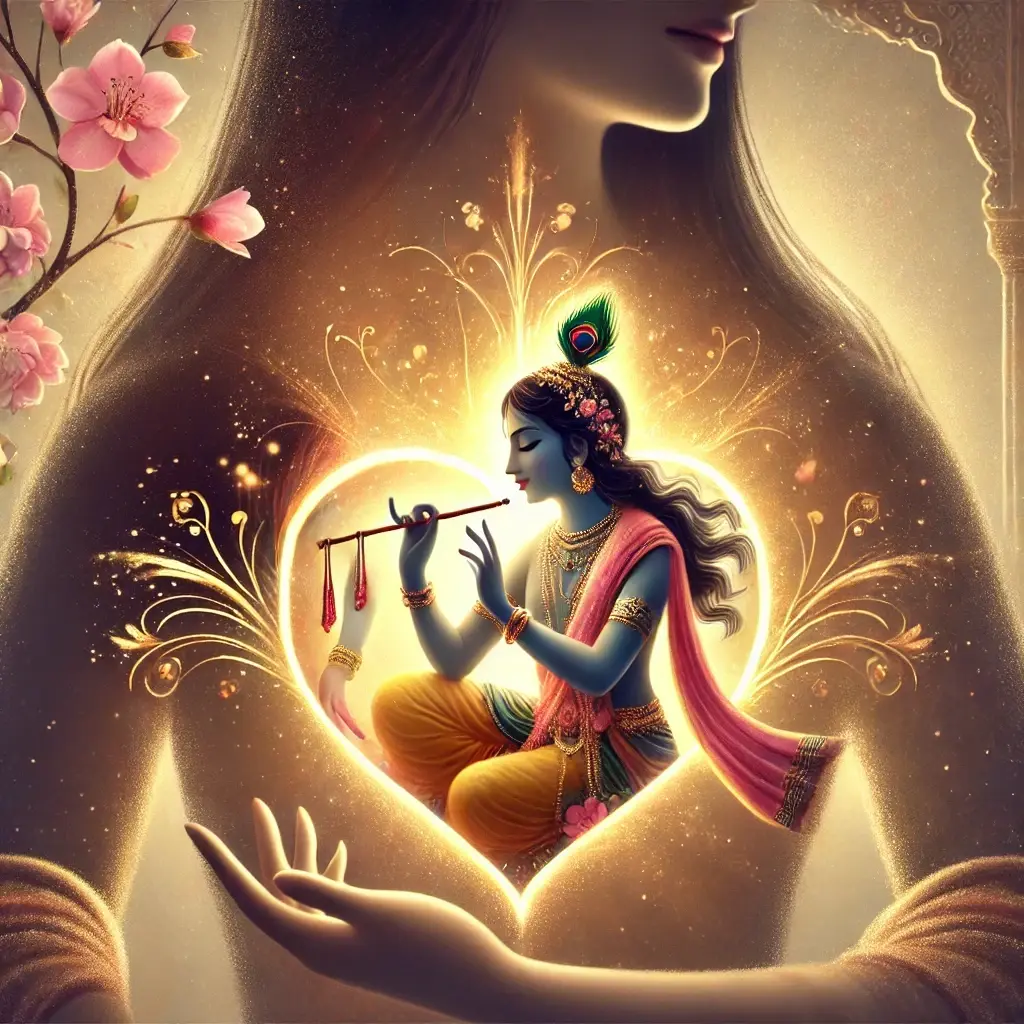
The Heart Is the Real Temple
According to Swami Mukundananda, true spiritual progress is not about physical journeys to holy sites or elaborate external ceremonies. Rather, it's about the “inner pilgrimage,” where one turns inward to the landscape of the soul.
In his words: we don’t need sandals, passports, or temples, if we sincerely open our heart, we realize God is already within us.
External rituals, temples, idols are helpful, but they are only supports. Without inner transformation, characterised by pure intent, contemplation, and remembrance, external rituals risk becoming mere “tourism.”
Thus, a minimalist home puja, even without fancy idols or an altar, can be deeply spiritual, if performed with awareness, sincerity, and love.
Bhakti Over Ritualism: The Heart’s Involvement Matters
As explained by Swami Mukundananda, the essence of true bhakti (devotion) lies in three components: chanting or singing divine names, listening/hearing them, and meditating upon their meaning and divine form. This is called Tridha Bhakti (three‑fold devotion).
In this approach, the external props or instruments — even if absent — are secondary. What matters is the mind’s involvement, the loving remembrance, the emotional absorption in divine names and forms.
Swamiji underscores that practices like chanting and visualization (Roop Dhyan — meditating upon the divine form) are like the “life air” of sadhana (spiritual practice), giving real life and depth to our devotion. Without them, rituals can be hollow.
Therefore, a home puja guided by bhakti and inner remembrance — even without elaborate ritual paraphernalia — can lead to profound spiritual growth.
What You Really Need: Minimal Supplies List
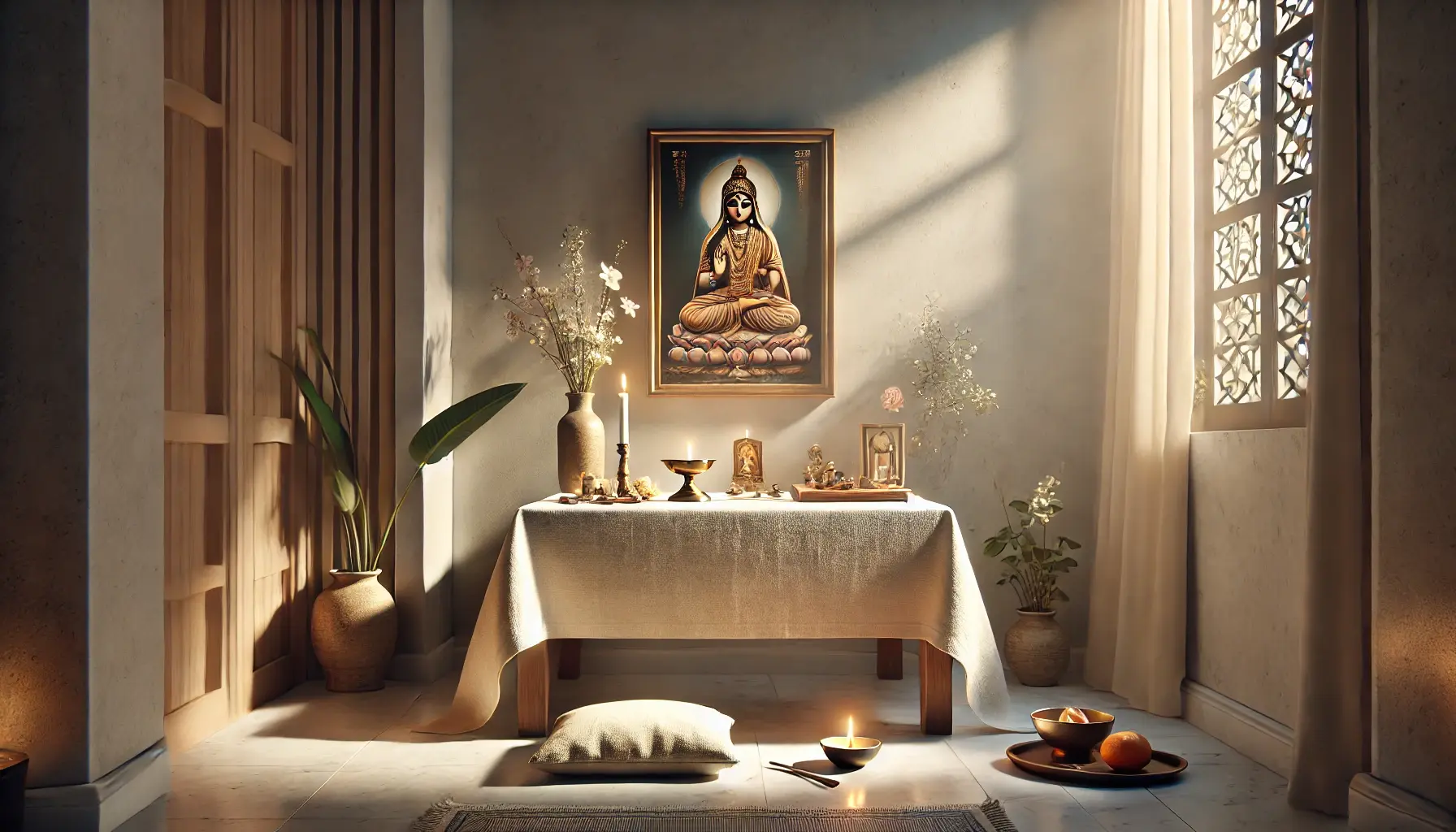
If you want to perform a simple home puja with minimal supplies: perhaps only what’s easily available in a typical household, here’s a recommended basic list. Use what you have; adjust as per your means; the sincerity of your heart will make up for any lack of items.
- A clean corner or small table (this becomes your “altar” but even a clean, quiet spot in your room will do).
- An optional cloth (to cover the table or define sacred space).
- A picture or small representation of the Deity you wish to worship (e.g., a photograph, a postcard, a small murti, or any symbolic image). If you don’t have any, you can mentally visualize the form (Roop Dhyan).
- A diya (oil lamp) or a simple candle: to symbolize light, purity, and the presence of the Divine. (If neither is available, even a silent prayer or intention to “light the lamp within your heart” works.)
- Flowers or leaves (or even a single flower/leaf) as an offering. If fresh flowers are not available, even a small token, or merely folded hands, can suffice.
- Clean water (a small glass or bowl): often used for offering (arghya) or for washing hands/feet. You can also mentally offer water in your heart.
- Minimal food offering (fruit is ideal); but remember: the offering most beloved to the Divine is your devotion, remembrance, surrender.
- Your own presence, devotion, and sincere intention (bhāv): this is the most essential item, often overlooked by many.
The guiding principle: treat your own body and mind as the temple; your act of devotion — your love — as the offering.
Setting the Stage: Preparing for the Puja
Before you begin, take a few moments to prepare:
- Find a quiet, clean space: this helps create a sense of sacredness. It can be any corner of your room. Cleanliness is not just external physical cleaning, but a readiness of mind.
- Sit comfortably and settle your mind: close your eyes for a moment, breathe deeply, and gently detach yourself from worldly thoughts.
- Set an intention (sankalpa): that is, mentally resolve why you are doing this puja. It could be for peace, spiritual growth, surrender, love, gratitude, or any sincere aspiration. The power of intention structures the internal energy of your practice.
- Invoke remembrance: recall the deity’s name, form, qualities, pastimes, or even divine stories that touch your heart. This mental remembrance anchors your mind inward, enabling deeper connection.
These steps remind us that before performing any ritual act, we prepare our own inner space: the heart and mind, for the Divine to enter.
Simple Step‑by‑Step Home Puja (Minimalist Method)
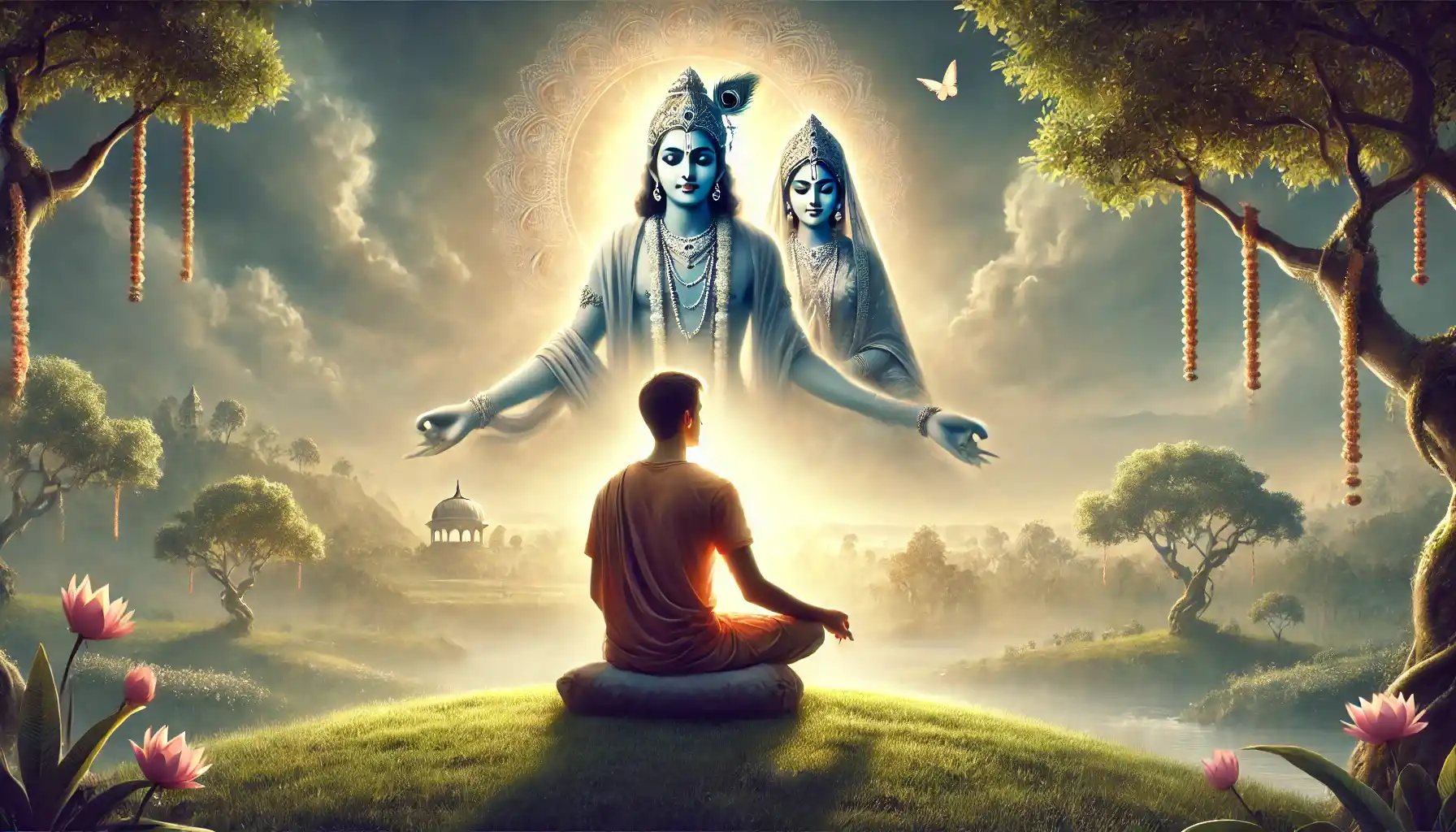
Here is a suggested simple procedure for a home puja. Feel free to adapt it as per your time, space, and resources.
Begin with a short prayer or invocation.
Light the lamp or candle (if you have one) and offer a silent prayer: invite the Divine into your heart, offer your surrender, gratitude, love.
Remember and meditate (Roop Dhyan).
Close your eyes and bring to mind the form of the Deity you are worshipping. Visualize the details: face, features, posture; or simply imagine a presence full of love and light. Let your heart dwell on the Divine qualities: compassion, love, kindness, beauty, grace. Reflect mentally on truths: you are the soul, not merely the body; you yearn for the eternal, not the transient. This process deepens inner devotion and connects you with your spiritual identity.
Chant, sing or remember Divine Names — practice Tridha Bhakti.
If you know a simple mantra, hymn, or a short prayer, recite it aloud or mentally. If you have a bhajan or kirtan (devotional song), chant it; else, quietly remember the name, form, virtues, and pastimes of the Deity. This constitutes chanting (kīrtanam), listening/remembering (śravaṇam), and thinking/meditating (smaraṇam) — the three limbs of Tridha Bhakti. If you prefer silence, you can simply hold a loving remembrance in your mind for a few minutes.
Offer a simple token: mental or physical.
Offer water, flowers, or food if available. If not, offer in your mind’s eye, a heartfelt offering of love and surrender. Offer your own time, attention, and surrender. The biggest offering is your own heart’s longing for the Divine.
Silence, reflection, and gratitude.
Sit quietly for a few moments. Absorb the presence, feel the inner peace, allow gratitude to rise. Resolve to carry the remembrance (smaraṇā) of the Divine in your day. Let the light which you kindled in your heart shine beyond the puja.
Dedicate your day.
Make a mental vow to be conscious of the Divine throughout your daily activities. Let all actions become an offering. If possible, repeat a short prayer or mantra once or twice during the day — even while at work or doing routine chores — to remain connected.
Why This Minimalist, Intent‑Focused Puja Is Powerful
Emotion and Remembrance Are What God Sees
External rituals, elaborate altars, many materials and long procedures may feel like “real worship.” But for the Divine, what matters is not the number of items offered, but the purity of heart.
In today’s world, full of distractions and material pull, the heart often remains restless. A simple puja done with concentrated remembrance offers a way to shift attention inward, reconnect with the Self, and anchor the heart in something eternal.
Consistency Matters More Than Complexity
It’s easy to get overwhelmed by trying to replicate a full temple‑style ritual, and then end up doing nothing. But a simple, minimal home puja is doable every day, even on a busy schedule or limited resources.
The teachings of Tridha Bhakti encourage devotion through chanting, listening, and remembrance — practices that don’t need special instruments, expensive idols, or elaborate setups. All you need is your mind, your intent, and your heart.
Over time, such consistent sadhana transforms the mind: it becomes steady, peaceful, aligned with the Divine. Small sparks of devotion repeated daily can gradually light up the entire inner world.
God Lives Within
God does not reside only in grand temples or sacred rivers: He lives within the heart of every sincere seeker.
Therefore, a humble home, a clean corner, a sincere heart — these can become as sacred as any temple. When you recognise the body-mind as the inner temple and treat your own self with respect and purity, your puja becomes complete — irrespective of external paraphernalia.
Common Challenges & How to Overcome Them
1. “I don’t have a murti or picture.”
Solution: Use mental visualization (Roop Dhyan). Swamiji teaches that visualization is often more powerful than external image, because the mind naturally works with images.
You can mentally visualize the form of your chosen deity with love and devotion. Use your imagination, see the features, colors, aspects; whatever resonates with your heart. What matters is the feeling behind it, not photographic accuracy.
2. “I don’t have flowers, diya, or offerings.”
Solution: Offer in the mind. The spirit behind offerings matters more than the material item. Offer a mental flower, mental water, mental surrender; because God responds to love and devotion, not to physical value.
3. “My mind is too restless, I cannot meditate or remember God.”
Solution: Start small, even a minute or two. Engage in chanting, or simply remember a divine name silently. The practice of Kirtan, even mental chanting, helps focus the mind.
Over time, regular practice calms the mind. As Swamiji notes, the mind naturally seeks images, so using visualization (Roop Dhyan) gives it an anchor and helps it stabilize.
4. “I worry my practice isn’t ‘real’ because it’s so simple.”
Solution: Reframe what “real” means. In bhakti, real devotion is sincerity, remembrance, love, surrender — not external show. The teachings of JKYog emphasise the inner transformation rather than external complexity. What matters is sincerity, not rigidity.
Remember the core message: God looks at your heart. If your heart is transparent, humble, surrendering: that is the highest worship.
Integrating Puja With Daily Life: Beyond the Altar
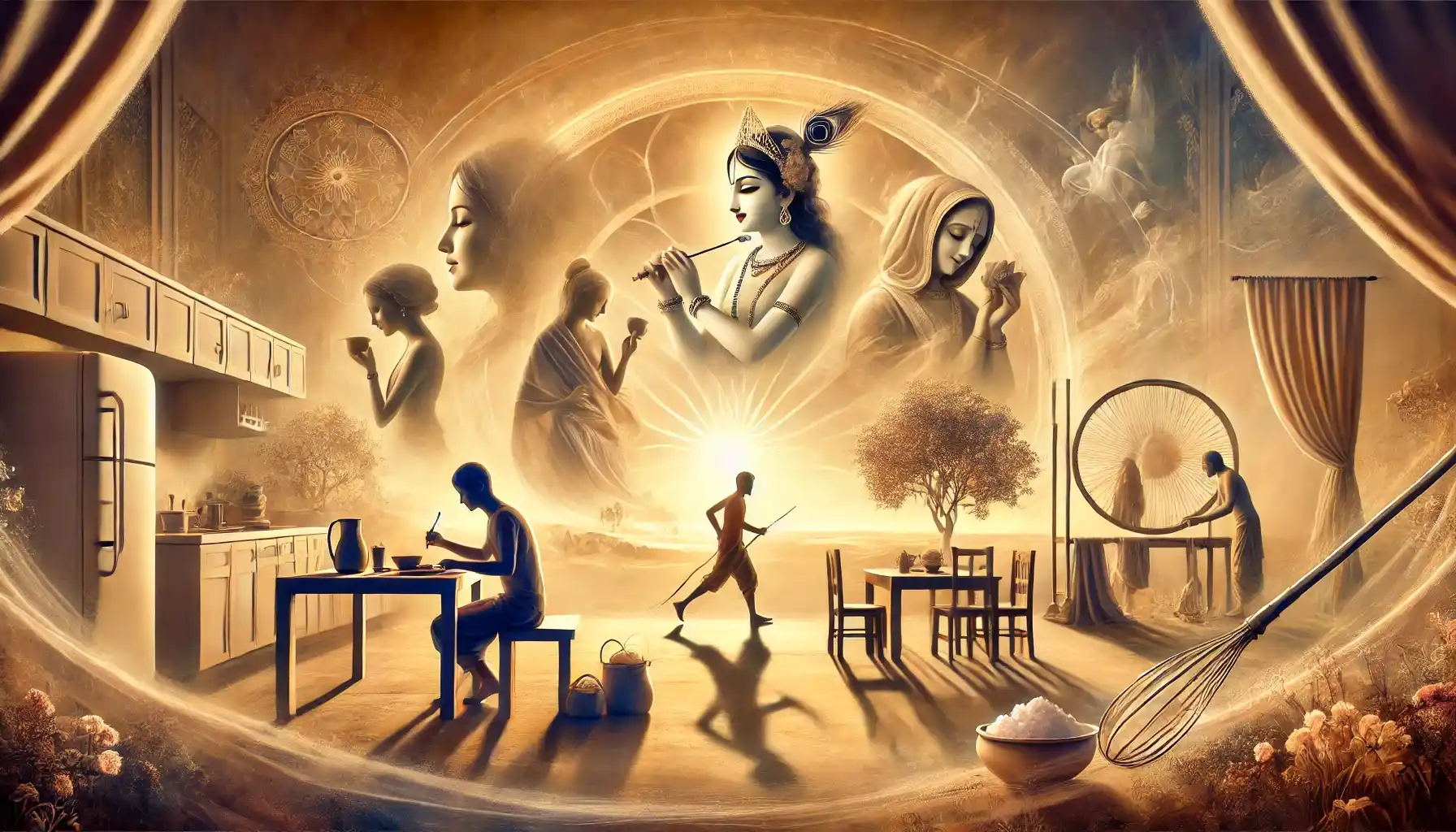
Remember this: your body is a temple; your mind is the shrine. When you treat your life as worship, every action becomes sacred.
Here are a few suggestions to integrate puja‑spirit into everyday living:
- Begin or end your day with a short puja or remembrance, even if just for a few minutes.
- While doing routine tasks such as cooking, cleaning, walking, working: maintain a silent awareness of the Divine; offer your actions to Him.
- Whenever you experience joy, gratitude, or even challenge: mentally dedicate it to God, see it as a part of your service (seva) and surrender.
- Use music, bhajans or kirtans when possible, to uplift your mind. The devotional songs (bhajans) help anchor the mind in love and remembrance.
- Occasionally reflect: Are your actions aligned with your inner values? Is your life moving toward peace, love, selflessness, surrender?
In this way, home puja isn’t just a ritual, it becomes a living, breathing, shifting force that transforms your entire life.
Why This Approach Is Especially Suited for International Devotees
Many devotees living abroad, or far from traditional temples and communities, often struggle to maintain cultural and spiritual ties. The barriers can be real: lack of space, resources, time, or access to temple rituals.
A minimalist, intent‑focused home puja offers a practical, accessible, and sustainable way to stay connected, no matter where you are and no matter how simple your surroundings.
- No need to carry heavy idols, elaborate ritual kits, or many materials.
- You don’t need to find a temple or travel across cities. Your home becomes your temple.
- Time constraints matter less: even 5–10 minutes a day can create a deep connection when done with sincerity.
- Emotional and spiritual connection doesn’t depend on external luxuries but on your inner love, devotion, and desire to connect with the Divine.
Most importantly: this method aligns with the core teaching of Swami Mukundnanda: God resides within your heart; you don’t require grand rituals — only sincere remembrance.
This is not about external display. This is about internal evolution.
Conclusion: Offer Your Heart, Not Just Your Hands
A simple home puja, done with humility, love, and remembrance, can spark profound spiritual growth. The external items: lamp, flowers, water, are helpful, but not essential. What truly matters is your inner posture: surrender, love, longing, devotion.
As Swami Mukundananda shows us: the real pilgrimage is the journey within; the temple is your own heart; the altar is your consciousness.
For international devotees, busy professionals, people living away from traditional temples, this minimal‑supply, heart‑centered home puja is not only practical but is deeply liberating.
If you wish, you can begin tonight: just a lamp, a moment of silence, a loving thought, a prayer and offer your heart.
May your humble puja awaken the divine presence within, bring peace to your mind, warmth to your heart, and transform your every moment into loving remembrance.
Call to Action:
Start Your Journey Today!
Embrace the path of devotion with a simple, heartfelt home puja. Whether you're an international devotee or someone with minimal resources, you can still connect deeply with the Divine. All it takes is sincerity, love, and a few minutes of your day. Begin your spiritual journey today and experience inner peace through devotion.
FAQs:
- What is the main focus of a simple home puja?
The primary focus is on devotion, remembrance, and inner connection with the Divine. It's about your intent and heart, not external rituals or material offerings. - Can I perform a home puja with minimal supplies?
Yes! A home puja can be performed with just a few basic items such as a clean space, a picture or mental visualization of the Divine, and your pure intention. - How can I make my home puja meaningful without many ritual items?
By focusing on love, remembrance, and visualization of the Divine, you can create a deep, spiritual experience. The sincerity of your devotion is what matters most. - Is this method of puja effective for spiritual progress?
Yes! This minimalist approach, when done with devotion, can help you experience spiritual growth, inner peace, and a deeper connection to the Divine. - Do I need to perform this puja at a specific time of day?
No, the timing of your puja is flexible. You can perform it at any time that fits your schedule, as long as you approach it with devotion.