

Introduction: Human Condition and the Delusion of Conditional Contentment
At the core of the human condition lies an enduring, universal pursuit: the search for lasting peace, joy, and emotional fulfillment. Yet, despite unprecedented technological advancement and intellectual progress, modern life is increasingly characterized by widespread emotional fragility, anxiety, and persistent discontentment.
A foundational cause of this pervasive suffering lies in a deeply ingrained psychological error, the unexamined assumption that internal well-being is contingent upon external circumstances.
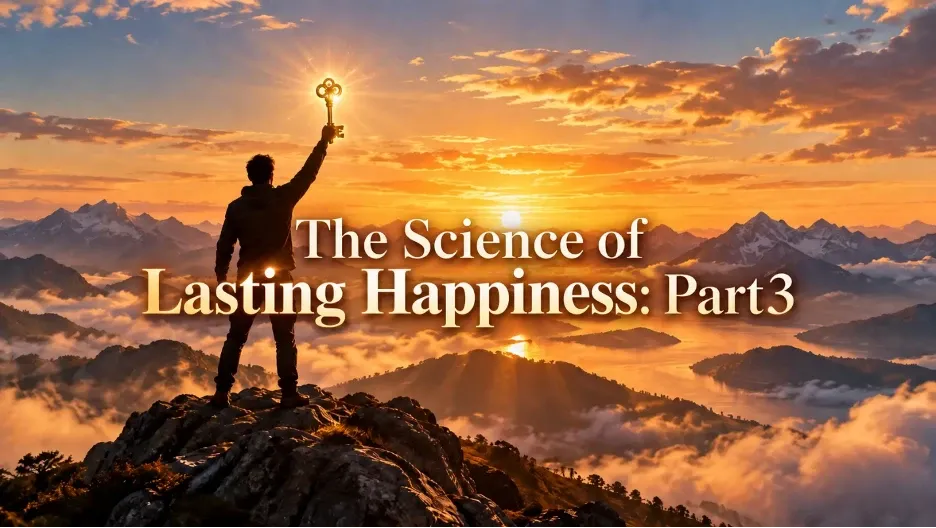
Throughout their lives, individuals operating in this reactive baseline operate under the tacit assumption that their happiness requires the world to conform to their desires. They demand that family members modify their temperaments, colleagues adjust their behaviors, traffic flow smoothly, and daily events unfold without friction before they permit themselves to experience peace. In doing so, they unconsciously perform what Swami Mukundananda identifies as a catastrophic spiritual and psychological surrender: they hand the key to their happiness over to external forces.
When an individual makes their joy dependent upon someone else’s conduct, they inadvertently grant that same person absolute power to dictate their misery. If a person's composure requires another individual to behave in a specific, favorable manner, then every word, mood, or action of that external person becomes an emotional trigger. This state of conditional contentment transforms human beings into passive victims of their environment, constantly oscillating between brief satisfaction when external conditions align with their expectations and profound despair when friction inevitably arises. Because the external world, replete with unpredictable events, shifting personalities, and unforeseen disruptions, remains inherently beyond personal command, relying on external alignment for inner serenity is a guaranteed recipe for perpetual helplessness and emotional volatility.
Realizing true, unshakeable fulfillment demands a radical paradigm shift toward emotional sovereignty, a state of psychological and spiritual maturity wherein an individual reclaims full, 100% ownership of their internal sentiments. Grounded in the core teachings of Swami Mukundananda’s Happiness Challenge (Days 4 and 5), emotional sovereignty establishes that while external events constitute neutral, objective conditions, the emotional interpretation of those events is an entirely internal creation. This treatise examines the essential pillars required to construct this inner sovereignty:
- Dismantling External Dependence: Breaking free from the chronic habit of blaming external people, events, or inanimate objects for internal gloom.
- The Existential Choice of Inner Attitude: Drawing upon Dr. Viktor Frankl’s discovery in Auschwitz that while physical pain and hardship are inevitable, emotional misery is an option.
- Cultivating Emotional Quotient (EQ) Over IQ: Addressing perceptual distortions through the parables of the dirty windowpane and the splintered finger, recognizing that external fault-finding typically reflects an unexamined internal defect.
- Transitioning from Reactive to Proactive Living: Embracing higher sentiments deliberately and recognizing that noble emotions, such as love, peace, and tolerance are active verbs and conscious choices rather than passive occurrences.
- Vedantic Mind Management: Applying the timeless wisdom of Bhagavad Gita 6.5 (Uddhared atmanatmanam) to discipline the mind, transforming it from a turbulent internal adversary into an unwavering spiritual ally.
By mastering these principles, an individual transitions from being an emotional victim of circumstantial turbulence to becoming the conscious architect of their own mind, establishing an inner sanctuary of peace that remains steadfast regardless of external storms.
The Psychological Mechanics of External Dependence and the Blame Game

A primary driver of emotional instability is the subconscious act of handing the key to one's happiness over to others. This occurs whenever an individual believes that someone else must modify their behavior before they can experience peace or joy. In doing so, the individual inadvertently grants that person equal control over making them miserable.
To demonstrate how easily human beings misattribute internal distress to external conditions, Swami Mukundananda describes a compounding morning ordeal: an individual has a morning 8:30 a.m. appointment with their boss, but their alarm clock fails to ring. After waking up late, a family member enters the washroom and takes an excessive amount of time. Upon reaching the highway, an accident creates a traffic jam, resulting in a 45-minute delay. When they finally arrive, their boss gives them a piece of his mind, leaving them thoroughly miserable for the rest of the day.
When assessing whom to blame. The scolding boss, the accident on the highway, the family member in the washroom, or the faulty alarm clock, the fundamental truth is that none of them are responsible for the misery. External events are merely objective conditions; internal sentiments do not have to hinge upon external circumstances. People who play the "blame game" remain perpetually desperate because external situations lie outside their control. True psychological progress begins when one accepts 100% ownership: "If I am unhappy, I alone am responsible for it, and I need to change my emotions". Taking responsibility for one's mood is the essential first step toward mastering the mind.
Existential Freedom in Extremity: Viktor Frankl’s Discovery in Auschwitz

The principle that emotional choice remains intact even under extreme hardship is demonstrated by the life of Dr. Viktor Frankl. An Austrian Jew and practicing psychologist whose early academic paper was published by Sigmund Freud, Frankl was rounded up during World War II and thrown into Auschwitz concentration camp alongside his wife, daughters, and brothers. There, he was separated from his family and later learned that they had died.
Despite enduring wretched prison conditions, including being forced to walk through the night without clothes, uncertain if he would survive until the next day,Frankl discovered a fundamental freedom that no captor could revoke: the freedom to choose to be happy.
Exercising this inner freedom, he was frequently found smiling and even laughing, astonishing the prison guards and serving as a source of inspiration for prisoners and guards alike. Following Germany's defeat and his release, he returned to Austria and authored Man's Search for Meaning, a seminal book translated into 29 languages and received honorary doctorate degrees from scores of universities worldwide. Frankl’s life encapsulates the foundational insight: pain is inevitable, but misery is an option. Difficult circumstances may come upon us, but succumbing to emotional misery remains a personal choice.
Emotional Quotient (EQ) vs. IQ: The Optics of Fault-Finding

As children grow into adulthood, their intellectual capacity (IQ) naturally increases; however, their Emotional Intelligence Quotient (EQ) the capacity to understand, regulate, and master internal sentiments—frequently lags behind. Emotional immaturity expresses itself as chronic external fault-finding, which Swami Mukundananda clarifies through two vivid parables:
- The Parable of the Dirty Windowpane: A woman repeatedly criticized her neighbors to her husband, complaining about their stained clothes lying on the line, their uncleaned car, and their dirty house walls. One morning, she woke up and was amazed to see that their neighbors' house and belongings appeared completely clean. Her husband gently clarified that the neighbors had done nothing; he had simply cleaned their own living room windowpane during the night. Finding fault with things outside often stems from a soiled internal lens rather than external defects.
- The Parable of the Splintered Finger: A patient visited a doctor complaining that his entire body was in unbearable pain. To test this, the doctor placed the patient's index finger onto his tie, forehead, and arm; each time, the patient screamed in agony. The doctor then pointed out that a sharp splinter was embedded directly in the patient's finger. That pained finger made every surface touched seem excruciating.
In the same way, when individuals perceive the world, the government, or the current era (Kali Yuga) as inherently defective, the root issue frequently resides within their own unexamined, inflamed internal state.
Proactive vs. Reactive Living: Love as an Active Choice

Human behavior and mental orientation can be broadly categorized into two types: reactive and proactive.
- Reactive Living: Reactive individuals fail to recognize the cognitive gap between external circumstances and their internal choice of thoughts. Because external situations lie beyond their command, they feel helpless and desperate. A prime example is an individual stating, "I don't feel any love for my spouse any longer... I am just waiting for love to come back". Such people treat love as a passive feeling rather than recognizing that love is a verb: an active choice to cultivate loving sentiments.
- Proactive Living: Proactive individuals recognize that emotions are personal choices. Whatever their situation or current sentiments, they intentionally reflect: "Is there a higher sentiment that I can keep? Is there a higher feeling that I can harbor within myself?". This conscious effort elevates emotional quotient (EQ) and leads toward genuine emotional mastery.
Vedantic Mind Management: Bhagavad Gita 6.5

This practice of proactive self-elevation directly aligns with the timeless wisdom of the Bhagavad Gita:
उद्धरेदात्मनात्मानं नात्मानमवसादयेत् ।
आत्मैव ह्यात्मनो बन्धुरात्मैव रिपुरात्मन: ॥ 5॥
uddhared ātmanātmānaṁ nātmānam avasādayet
ātmaiva hyātmano bandhur ātmaiva ripur ātmanaḥ
BG 6.5: Elevate yourself through the power of your mind, and not degrade yourself, for the mind can be the friend and also the enemy of the self.
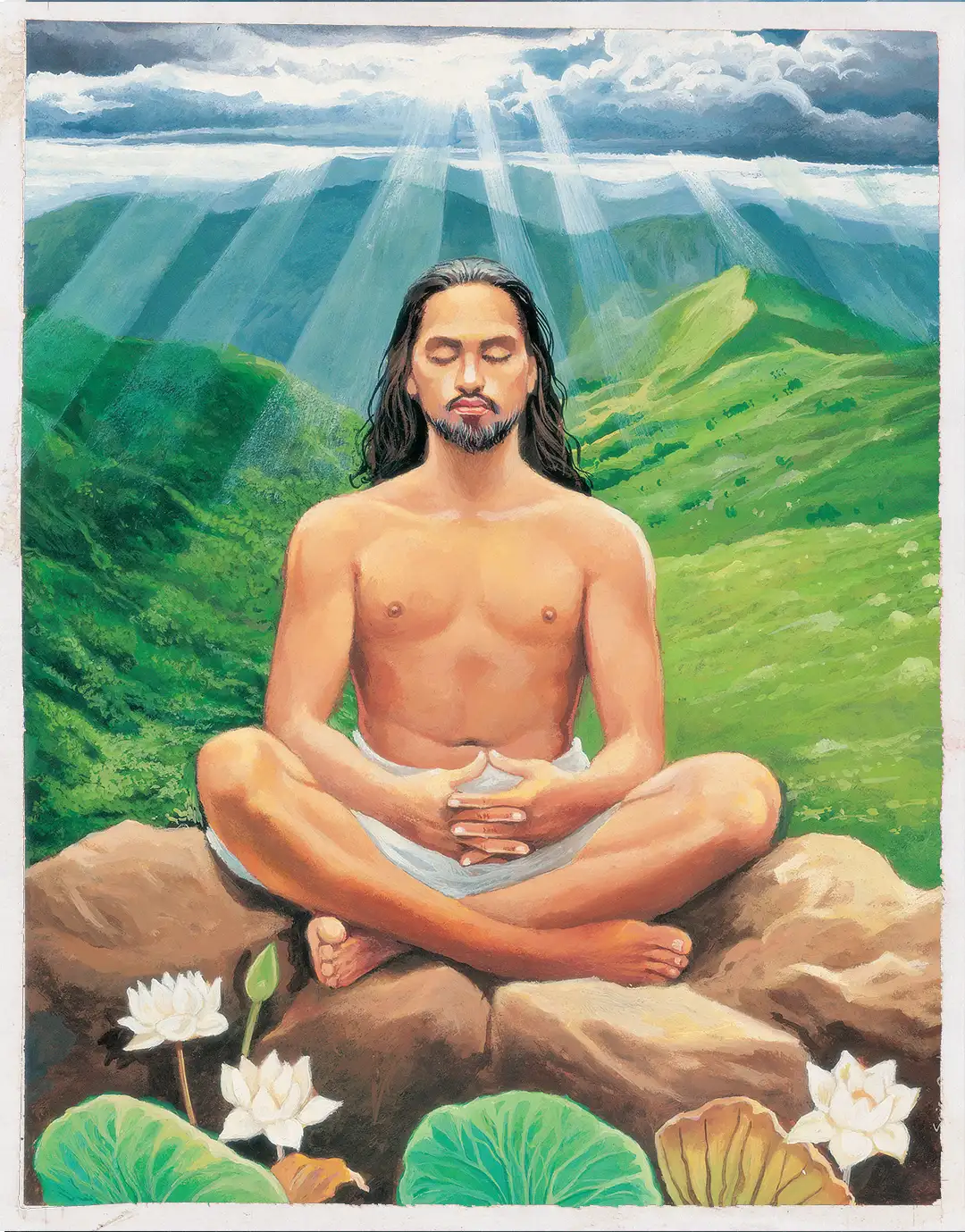
This verse instructs that an individual must uplift themselves by the power of their own mind and not allow themselves to be degraded. The human mind possesses dual potential: left reactive and unmanaged, it acts as an internal adversary (ripu); when disciplined and kept proactive, it becomes an individual's greatest friend (bandhu). By taking full ownership of internal sentiments and deciding to stop playing the blame game, one transforms the mind into a powerful ally on the path toward lasting contentment.
Conclusion: Synthesizing the Path to Internal Sovereignty
The synthesis of Swami Mukundananda’s teachings across Days 4 and 5 establishes that emotional freedom is not an accidental byproduct of favorable circumstances, but a deliberate, internal mastery. Reclaiming the key to one's happiness requires dismantling the victim’s mindset that external people, events, or inanimate obstacles dictate inner peace. As demonstrated by Viktor Frankl's endurance in Auschwitz, while physical hardship and pain are inevitable facets of human life, misery remains a personal choice.
Furthermore, the daily practice of emotional sovereignty requires a shift from passive intellectual agreement to active, moment-to-moment inner auditing. When unexpected friction arises, through minor inconveniences like traffic delays or major interpersonal conflicts, the sovereign mind treats these events not as excuses for gloom, but as diagnostic tests of internal maturity. Rather than reflexively looking outward to assign blame, one learns to pause and inspect the internal lens, asking whether a personal "splinter" of expectation or a "soiled windowpane" of judgment is skewing perception. By turning every external provocation into an opportunity to clean the mind's window, the practice transforms daily frustrations from causes of misery into catalysts for accelerating Emotional Quotient (EQ) and self-mastery.
Ultimately, this proactive mastery transforms the human mind from a turbulent adversary into an unwavering spiritual ally. As emphasized in the Bhagavad Gita, self-elevation is an ongoing internal duty; allowing oneself to be degraded by reactive moods only solidifies the mind's role as one's worst enemy. When an individual consistently chooses higher sentiments, recognizing that love, peace, and joy are deliberate actions rather than passive feelings—they transcend dependence on shifting external conditions. In doing so, they achieve true emotional liberation: a state of unshakeable poise where inner tranquility remains steadfast regardless of the storms that rage outside.
Key Takeaways
- Reclaim the Key to Your Happiness
Do not make your happiness dependent on how others behave or how circumstances unfold. Take 100% responsibility for your emotions and stop the game blaming. - Pain is Inevitable, Misery is an Option
Challenges and hardships are part of life, but your inner attitude remains your choice. Viktor Frankl’s example shows that even in extreme circumstances, inner freedom can remain intact. - Strengthening Your Emotional Intelligence
A high IQ does not guarantee emotional maturity. Examine your own inner lens before finding faults in others. Sometimes the “dirty window” or “splinter” is within us. - Choose Proactive Living
Do not wait passively for situations or feelings to change. When friction arises, ask: “What higher sentiment can I choose right now?” - Remember That Love Is a Verb
Love, kindness, patience, and tolerance are not merely feelings. They can be consciously chosen, practiced, and expressed through our thoughts and actions. - Make Your Mind Your Friend
The mind can either uplift or pull us down. Through conscious discipline and higher thinking, we can transform it from an enemy into our greatest ally. - Practice Self-Elevation Every Day
As taught in the Bhagavad Gita, use the power of your own mind to elevate yourself. True emotional freedom comes from mastering your inner world rather than trying to control the outer world.
Call to Action: The Daily Happiness Commitments
To move from passive understanding to active emotional mastery, Swami Mukundananda outlines a clear, proactive call to action rooted in the daily homework of the Happiness Challenge:
Commit to the Non-Blaming Vow: Decide today: "I will not blame anybody or any external situation for my unhappiness". Whenever you feel miserable or aggrieved, acknowledge that your sentiments do not have to hinge upon external circumstances.
Take 100% Ownership of Your Moods: Declare internally: "If I am unhappy, I alone am responsible for it, and I need to change my emotions". Stop handing the key to your peace over to others.
Practice the Proactive Inner Audit: Whenever unexpected friction, anger, or sadness arises, look inward and clean your own internal windowpane. Ask yourself:
"Is there a higher sentiment that I can keep? Is there a higher feeling that I can harbor within myself right now?"
Choose Action Over Reaction: Treat love, peace, and tolerance as active choices rather than passive feelings waiting to return. Actively project noble sentiments regardless of external triggers.
Uplift Yourself Through Mind Management: Remember the core message of the Bhagavad Gita: uplift yourself by the power of your own mind rather than allowing reactive thoughts to degrade you. Your mind can be your best friend or your worst enemy—choose to make it your ally today
Frequently Asked Questions (FAQs)
1. What does Swami Mukundananda mean by "giving the key to your happiness to someone else"?
Giving away the key to your happiness occurs whenever you believe that another person must alter their behavior before you can experience joy or peace. When your well-being requires someone else to act in a specific manner, you place control of your emotions in their hands, which inadvertently gives them equal power to make you miserable.
2. Why are external events or other people not responsible for our unhappiness?
External circumstances like a failed alarm clock, traffic delays, or a scolding boss are objective events rather than direct causes of internal distress. Our sentiments do not have to hinge upon external conditions because our emotional reaction is a choice that we generate internally
3. How does Dr. Viktor Frankl's story demonstrate the freedom to choose happiness?
Dr. Viktor Frankl, an Austrian psychologist, was incarcerated in the Auschwitz concentration camp during World War II and lost his family. Despite horrific conditions, he discovered that no one could deprive him of the ultimate human freedom: the freedom to choose his own attitude. By choosing to smile and stay positive, he inspired both guards and prisoners, later authoring Man's Search for Meaning and illustrating that while pain is inevitable, misery is an option.
5. What is the difference between IQ and EQ in the context of happiness?
While an individual's Intelligence Quotient (IQ) grows naturally with age and education, Emotional Quotient (EQ), defined as the mastery and understanding of one's own emotions, requires conscious effort. Developing EQ allows a person to stop blaming external factors and take direct responsibility for their internal state.
5. What do the parables of the "dirty windowpane" and the "splintered finger" teach us?
- The Dirty Windowpane: A woman criticized her neighbors' home and laundry as dirty until her husband cleaned their own living room windowpane, revealing that the fault was on their own lens.
- The Splintered Finger: A patient complained that touching any part of his body caused severe pain, unaware that a sharp splinter was embedded in his own index finger.
Both parables teach that when we perceive the world, government, or society as defective, the root problem often lies within our own unexamined internal perception.
6. What distinguishes a reactive person from a proactive person?
Reactive people do not recognize the gap between external triggers and internal choices; because external events lie beyond their control, they feel victimized and desperate. Proactive people recognize that emotions are personal choices and actively ask: "Is there a higher sentiment or feeling that I can harbor within myself right now?".
7. Why does Swami Mukundananda state that "love is a verb"?
Reactive individuals often treat love as a passive feeling, waiting helplessly for it to return when relationships feel strained. Proactive individuals recognize that love is an active verbal deliberate choice to cultivate and project loving sentiments regardless of external triggers.
8. How does Bhagavad Gita 6.5 guide mind management?
Bhagavad Gita 6.5 (Uddhared atmanatmanam...) states that an individual must uplift themselves by the power of their own mind and not degrade themselves. The mind possesses a dual nature: when disciplined and proactive, it becomes your best friend; when left reactive and unmanaged, it acts as your worst enemy.
Further Resources: