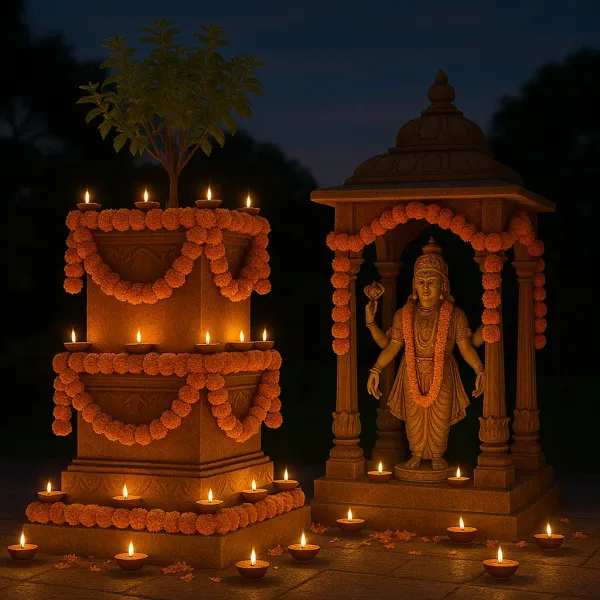

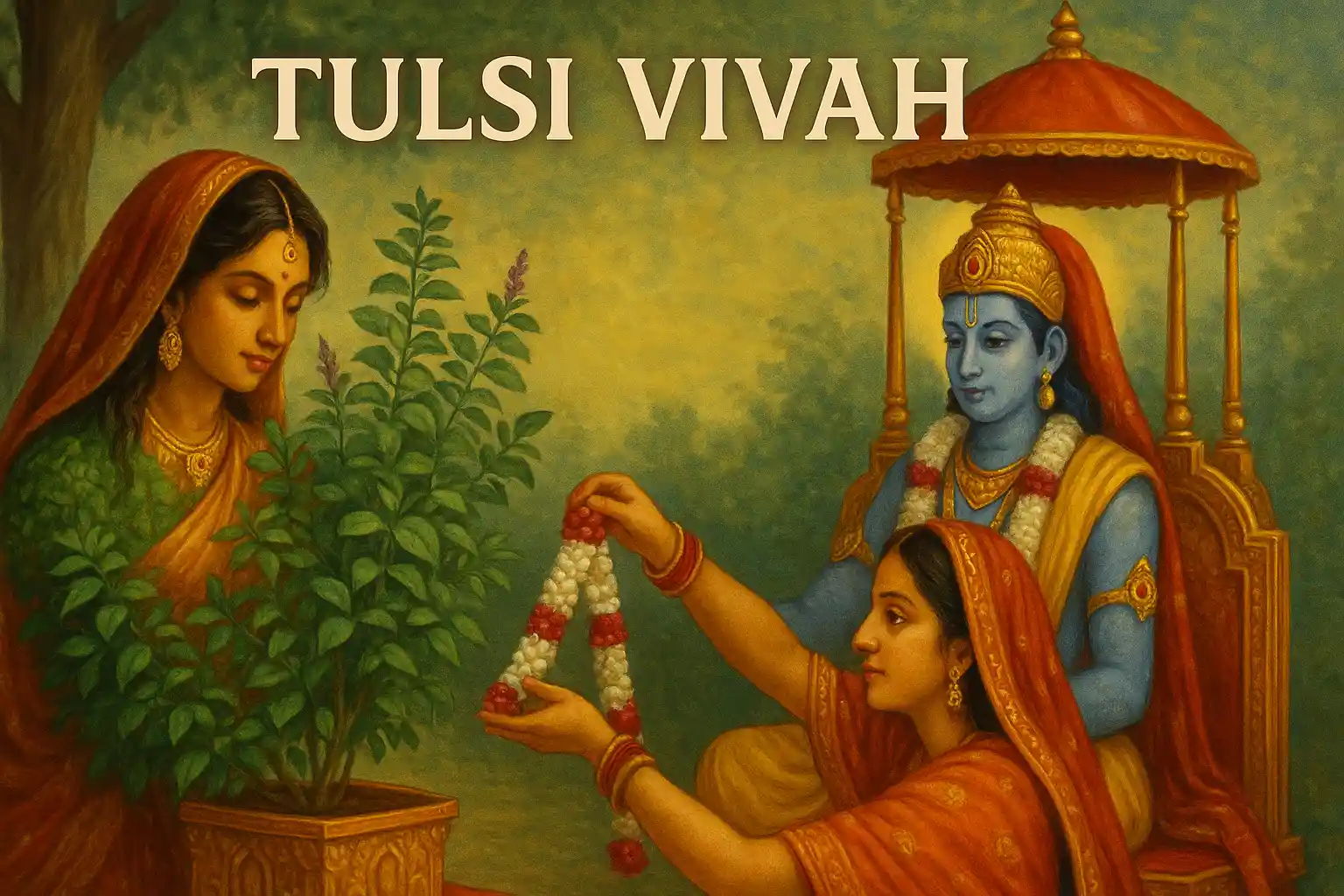
Tulsi Vivah is a deeply revered Hindu festival that marks the ceremonial marriage of Tulsi (Holy Basil), considered an incarnation of Goddess Lakshmi, with Lord Shaligram, a representation of Lord Vishnu. Celebrated with devotion and grandeur, Tulsi Vivah bridges the end of Chaturmas (a period of four holy months) and the beginning of an auspicious time for Hindu marriages and rituals.
In 2025, Tulsi Vivah will be celebrated with renewed enthusiasm as families, temples, and devotees across the globe prepare to honor this sacred union. Whether you're in Dallas, Texas, or New Delhi, India, this blog will help you understand the significance, date, rituals, and the deeper spiritual meaning of Tulsi Vivah, also reflecting on how it connects with the timeless teachings of Swami Mukundananda.
What is Tulsi Vivah?
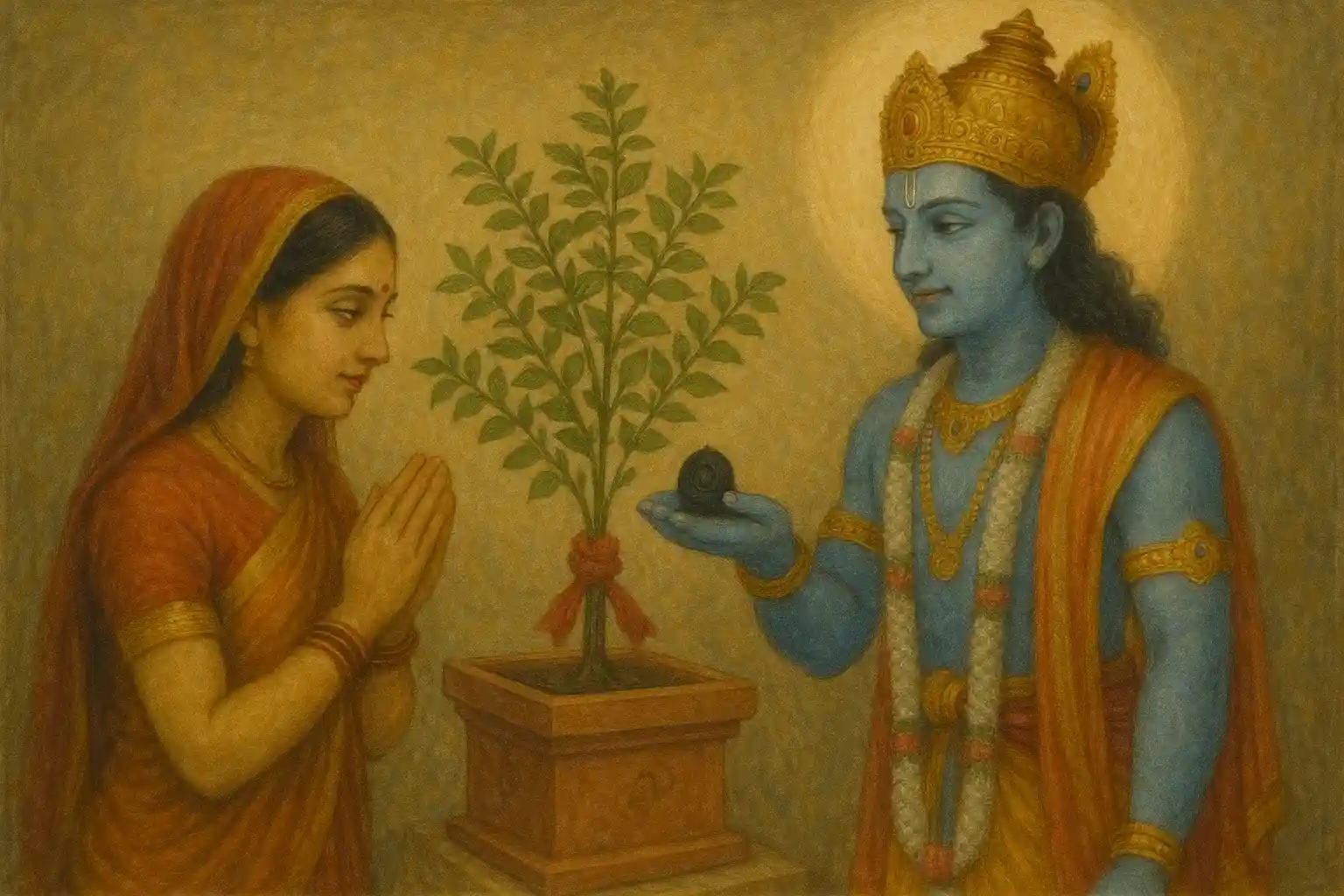
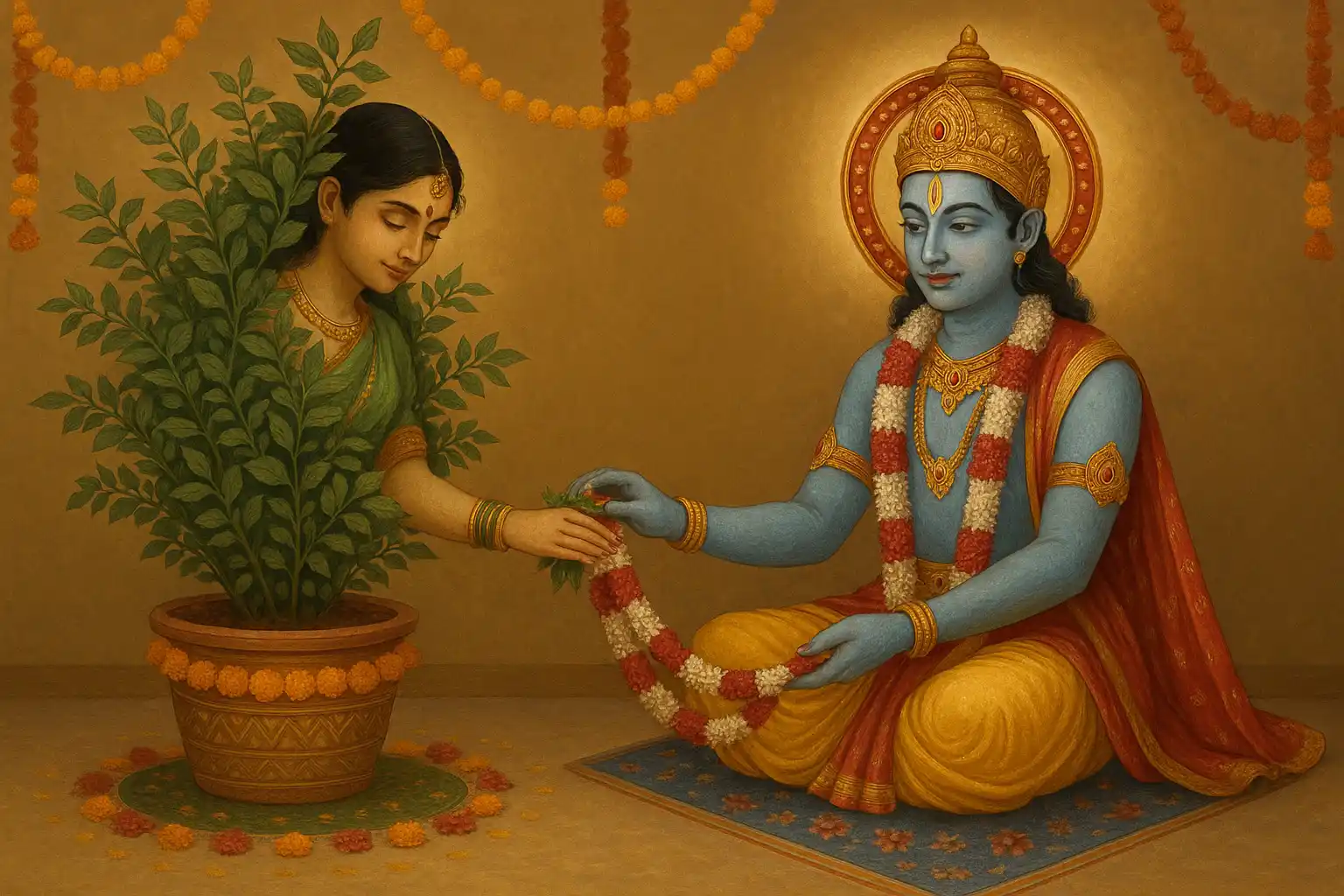
Tulsi Vivah is the symbolic wedding ceremony of Tulsi Mata (a sacred plant) with Lord Vishnu in the form of Shaligram or Krishna. This divine event is celebrated by households and temples alike, signifying the victory of devotion over ego and marking the official end of the inauspicious period of Chaturmas.
The festival is observed on the Ekadashi Tithi of Shukla Paksha in the Kartik month, which generally falls in October or November.
📅 Tulsi Vivah 2025: Date & Muhurat
| Event | Date | City | Start of Dwadashi Tithi | End of Dwadashi Tithi |
|---|---|---|---|---|
| Tulsi Vivah 2025 | Sunday, November 2, 2025 | New Delhi | Nov 2, 2025 – 07:31 AM IST | Nov 3, 2025 – 05:07 AM IST |
| Dallas, USA | Nov 1, 2025 – 09:01 PM CST | Nov 2, 2025 – 05:37 PM CST |
🕉️ Note: Timings may slightly vary by location and Panchang preference. Always consult your local priest or trusted Panchang before performing the rituals.
पूजन मंत्र ( Pujan Mantra)
तुलसी श्रीर्महालक्ष्मीर्विद्याविद्या यशस्विनी।
धर्म्या धर्मानना देवी देवीदेवमन: प्रिया।।
लभते सुतरां भक्तिमन्ते विष्णुपदं लभेत्।
तुलसी भूर्महालक्ष्मी: पद्मिनी श्रीर्हरप्रिया।।
Translation & Meaning:
- "तुलसी श्रीः महालक्ष्मीः विद्याविद्या यशस्विनी।"
Tulsi is Shri (wealth), Mahalakshmi (goddess of fortune), both knowledge and ignorance (symbolically encompassing all), and the bringer of fame. - "धर्म्या धर्मानना देवी देवीदेवमनः प्रिया।।"
She is righteous, has a face full of righteousness (Dharmānana), is a goddess among goddesses, and is dear to the hearts of both gods and goddesses. - "लभते सुतरां भक्तिम् अन्ते विष्णुपदं लभेत्।"
One who deeply worships Tulsi gains intense devotion and ultimately attains the feet (abode) of Lord Vishnu. - "तुलसी भूः महालक्ष्मीः पद्मिनी श्रीः हरप्रिया।।"
Tulsi is Bhumi (Earth), Mahalakshmi, Padmini (lotus-like or associated with Lakshmi), Shri (prosperity), and the beloved of Hari (another name for Vishnu).
Tulsi Vivah Vidhi – Ritual Summary Table
| Step | Details |
|---|---|
| 1. Tulsi Plant Setup | Clean the Tulsi pot or plant area; decorate with flowers, rangoli, and lights. |
| 2. Mandap Preparation | Create a small wedding mandap with kalash, diya, flowers, and shringar items. |
| 3. Groom Setup | Shaligram stone or idol of Lord Vishnu/Krishna is dressed as a groom. |
| 4. Bride Setup | Tulsi plant is adorned like a bride with sari, jewelry, and bindi. |
| 5. Kanyadaan | Symbolically given by the family performing the pooja. |
| 6. Wedding Rituals | Mantras, garland exchange, Mangal Aarti, and tying the sacred thread. |
| 7. Prasad & Bhog | Offer sweets, fruits, Panchamrit; distribute prasad after pooja. |
The Divine Story of Tulsi Vivah
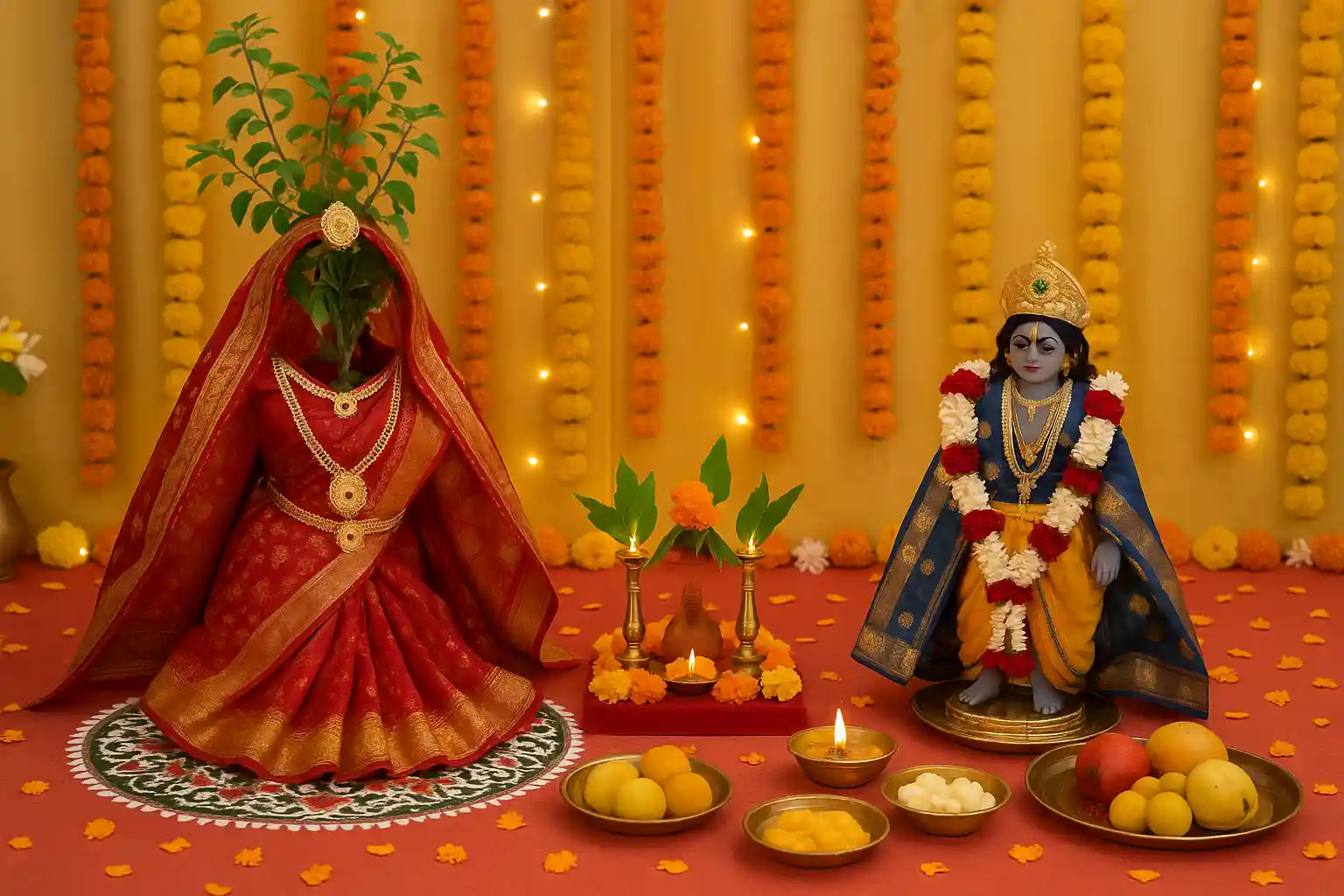
The origins of Tulsi Vivah are rooted in sacred Vedic legends filled with devotion, sacrifice, and divine love. Tulsi, originally known as Vrinda, was a pious and devoted wife of the demon king Jalandhar. Her unwavering chastity and deep devotion empowered her husband with a divine shield, rendering him invincible—even the gods could not defeat him.
To restore cosmic balance, Lord Vishnu intervened. Disguising himself as Jalandhar, he deceived Vrinda, thereby breaking her chastity and making it possible for the gods to defeat and kill Jalandhar in battle. Upon realizing the deception, a heartbroken Vrinda cursed Lord Vishnu to turn into a black stone, now worshipped as the Shaligram, and then immolated herself in grief and spiritual anguish.
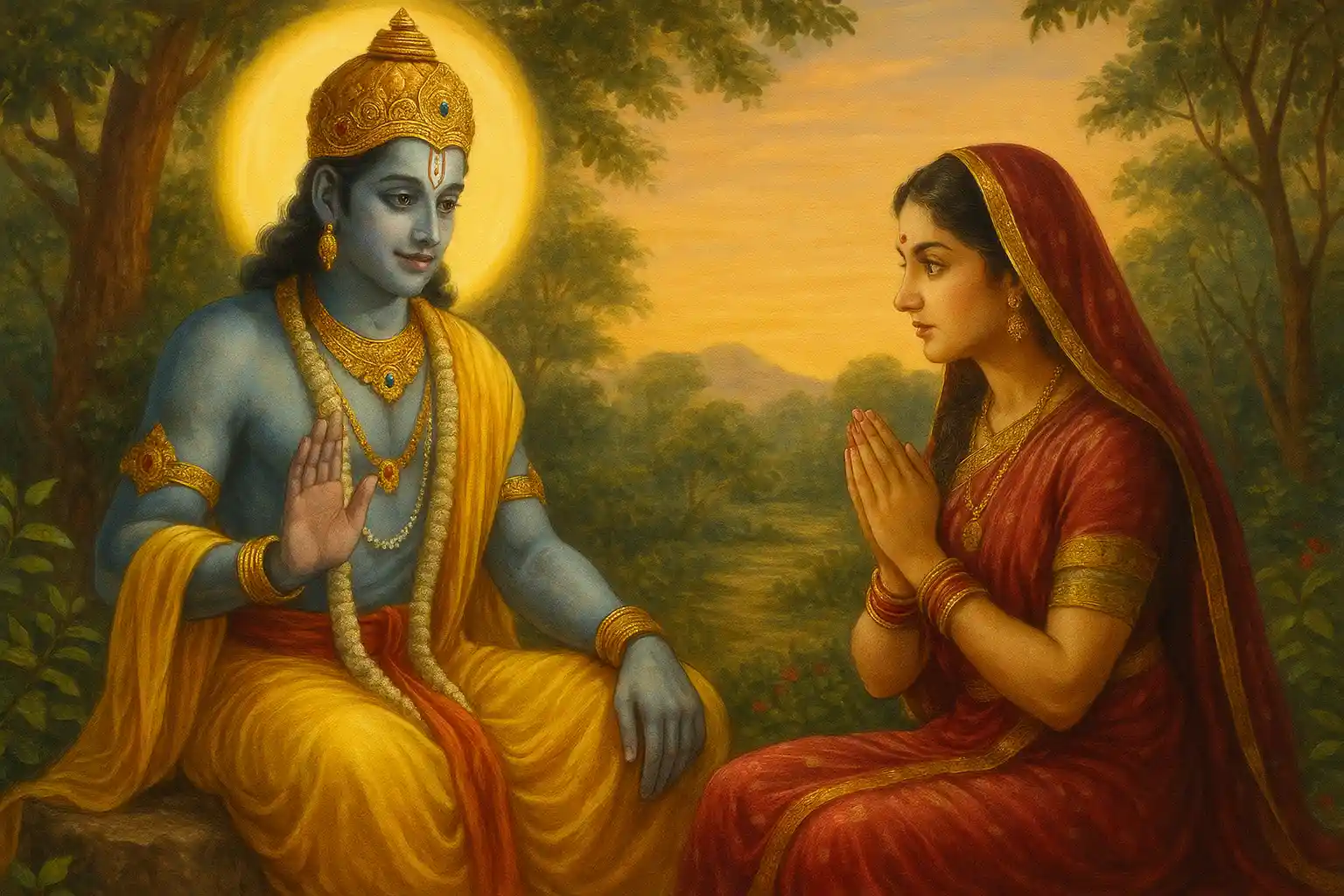
Deeply moved by her purity and devotion, Lord Vishnu granted Vrinda a divine boon: she would be reborn as Tulsi, the sacred plant revered in every Hindu household. In recognition of her devotion, He promised to marry her every year on the auspicious day of Kartik Ekadashi, which is now celebrated as Tulsi Vivah.
In many Puranic texts and Vaishnav traditions, Tulsi is regarded as a manifestation of Goddess Lakshmi, the eternal consort of Lord Vishnu. Just as Lakshmi represents divine love, prosperity, and spiritual devotion, Tulsi embodies these same divine virtues on Earth. Therefore, the marriage of Tulsi and Shaligram is not merely symbolic—it is the union of Lakshmi and Vishnu in a sacred earthly form.
Thus, Tulsi Vivah signifies not only the divine love between Vishnu and Tulsi, but also serves as a profound spiritual lesson on the power of chastity, selfless devotion, sacrifice, and eternal truth. Celebrating this festival allows devotees to reflect on the deeper meaning of surrender and love for God—values that are the essence of bhakti yog.
This timeless tale continues to inspire devotees across generations. For additional insights into the divine story and spiritual practices of Tulsi Vivah, visit the JKYog blog on Tulsi Vivah 2025.
Spiritual Significance of Tulsi Vivah
- Symbol of Purity & Devotion
Tulsi represents chastity, love, and devotion. Worshipping her invokes divine blessings and spiritual upliftment. - Marks the End of Chaturmas
Chaturmas, a four-month period when auspicious ceremonies are prohibited, ends with Tulsi Vivah. It signifies the reopening of the doors for marriages, Griha Pravesh, and other sacred rituals. - Marriage of Divine Energies
The symbolic union of Tulsi and Shaligram is the union of Bhakti (devotion) and Bhagwan (God) – a concept deeply echoed in the teachings of Swami Mukundananda Ji. - Brings Harmony in Household
Performing this ceremony with faith is believed to bring peace, prosperity, and harmony in family life.
Tulsi Vivah & Swami Mukundananda’s Teachings
Tulsi Vivah beautifully resonates with the spiritual principles taught by Swami Mukundananda Ji, especially the idea of uniting our soul with the Divine through selfless love and devotion.
Swami Mukundananda Ji often emphasizes that true spirituality is not about rituals alone but about internal transformation – replacing pride with humility, ego with surrender, and desire with divine longing. Tulsi's story is a shining example of these ideals.
- Vrinda’s devotion, even in the face of adversity, teaches us to remain steadfast in our love for God.
- The symbolic wedding reminds us that our highest goal is to marry ourselves spiritually to God, i.e., to live a life centered around devotion and surrender.
- As Tulsi merges into divinity, we too must strive to dissolve our ego to become one with the Lord, which is the essence of Bhakti Yog taught by Swami Mukundananda.
By celebrating Tulsi Vivah, devotees not only perform a sacred ritual but also rekindle their inner flame of devotion, aligning their lives with higher spiritual values.
How is Tulsi Vivah Celebrated at Home?
Many families conduct this divine wedding at home with simplicity and reverence.
🪄 Key Elements:
- Tulsi is dressed as a bride in a red sari, bangles, and flowers.
- A Shaligram or Krishna idol is decorated as a groom.
- A symbolic wedding is conducted with mantras, offerings, and garlands.
- The kanyadaan (giving away the bride) is performed.
- Bhog is offered, and prasad is distributed to family and friends.
- Devotees chant Vishnu Sahasranama, Tulsi Stotra, and perform kirtan.
This celebration, while external, should also be an occasion for internal spiritual reflection, as inspired by Swami Mukundananda’s teachings on mind purification and devotional elevation.
📜 Scriptural References
Tulsi Vivah is mentioned in various Puranas including:
- Padma Purana
- Skanda Purana
- Brahma Vaivarta Purana
These scriptures narrate the glory of Tulsi, her sanctity, and the significance of her divine marriage with Lord Vishnu.
🌐 Global Celebrations: From India to the USA
🛕 In India:
Tulsi Vivah is celebrated with great devotion in Vaishnav temples, local community mandirs, and traditional Hindu homes across the country. The ceremonies often include decorative mandaps, garlanding of Tulsi and Shaligram, bhajans, cultural programs, and kirtans. Many families also perform the Tulsi Vivah rituals at home, involving symbolic marriage ceremonies and festive meals.
🌎 In the USA:
Indian communities and temples in cities like Dallas, Houston, New York, and San Jose organize Tulsi Vivah with community participation, poojas, bhajans, and feasts.
Tulsi Vivah acts as a cultural bridge, keeping devotional traditions alive even in the diaspora, deeply aligning with Swami Mukundananda’s mission of reviving Vedic culture across the globe.

Key Takeaways
| Points | Insights |
|---|---|
| Date & Muhurat |
Tulsi Vivah 2025 is on Sunday, November 2nd, 2025. 📍 New Delhi (IST): Dwadashi Begins: 07:31 AM, Nov 2 | Ends: 05:07 AM, Nov 3 📍 Dallas (USA CST): Dwadashi Begins: 09:01 PM, Nov 1 | Ends: 05:37 PM, Nov 2 |
| Spiritual Meaning | Celebrates the divine union of Tulsi (Lakshmi) and Shaligram (Vishnu). |
| Ritual Importance | Involves symbolic marriage, devotion, and family togetherness. |
| Personal Growth | Encourages surrender, faith, and removal of ego through bhakti. |
| Swami Mukundananda’s Teachings | Emphasizes internal purity, surrender to God, and Bhakti Yoga. |
| Global Observance | Celebrated in temples and homes worldwide. |
Call to Action: Deepen Your Devotion
If you're inspired by the significance of Tulsi Vivah and wish to deepen your spiritual practice, subscribe to Swami Mukundananda’s YouTube Channel for guided wisdom, bhajans, and practical teachings.
Tulsi Vivah is not just a festival—it’s a doorway to internal transformation. As you perform the rituals externally, take a moment to offer your heart internally to God, aligning your soul with the teachings of the saints who show us the true path.
✨ Explore Diwali & Chhath Puja Blogs
Top 50 Diwali Wishes 2025
Spiritual greetings & status ideas
Explore over 50 heartfelt greetings, spiritual messages, and inspiring WhatsApp status ideas that reflect divine love and light for Diwali 2025.
Read More →Diwali Greetings 2025
Quotes for family & friends
Celebrate Diwali 2025 with heartfelt wishes, meaningful messages, and inspiring quotes for loved ones. Share the joy of Deepavali with spiritual warmth.
Read More →Diwali Dates & Muhurat
5-day guide & puja timings
Plan your Diwali 2025 celebrations with this full guide—covering 5 days of rituals, muhurat timings, and deeper spiritual meaning behind each festival day.
Read More →Rangoli Designs 2025
Traditional & creative styles
Celebrate Diwali with stunning Rangoli—from classic floral to 3D and LED designs. Explore eco-friendly and artistic ways to welcome prosperity this Deepavali.
Read More →Lakshmi Puja 2025
Puja date, rituals & seva
Worship Goddess Lakshmi with correct Diwali 2025 muhurat, rituals, and support JKYog’s rural upliftment. Light lives and invite divine blessings.
Read More →Navratri 2025 Guide
Puja date, rituals & seva
Discover Navratri 2025 in depth! Get the complete calendar, daily goddess significance, fasting rituals, regional traditions, and muhurat timings.
Read More →Conclusion
Tulsi Vivah 2025 offers a sacred opportunity to celebrate devotion, purity, and spiritual unity. By understanding its rituals, story, and spiritual symbolism, we not only honor a beautiful tradition but also deepen our connection with the Divine.
Let this Tulsi Vivah be more than just a ritual—let it be a renewal of your bhakti, a recommitment to your spiritual journey.
🌿 May Tulsi Devi bless your home with peace, purity, and prosperity.
Frequently Asked Questions (FAQ)
1. Can Tulsi Vivah be performed at home?
Yes. It is commonly performed in homes with Tulsi plant and Shaligram or Lord Krishna idol.
2. Do I need a priest for Tulsi Vivah?
While not mandatory, a priest can help with authentic rituals. Otherwise, you can follow simplified procedures with devotion.
3. Why is Shaligram used in the wedding?
Shaligram represents Lord Vishnu. It is the groom in the divine marriage.
4. What should be offered as Bhog?
Sweets like peda, ladoo, Panchamrit, fruits, and simple satvik food.
5. Is there any age or gender restriction for performing the pooja?
No. Anyone with faith and devotion can perform Tulsi Vivah, regardless of age or gender.