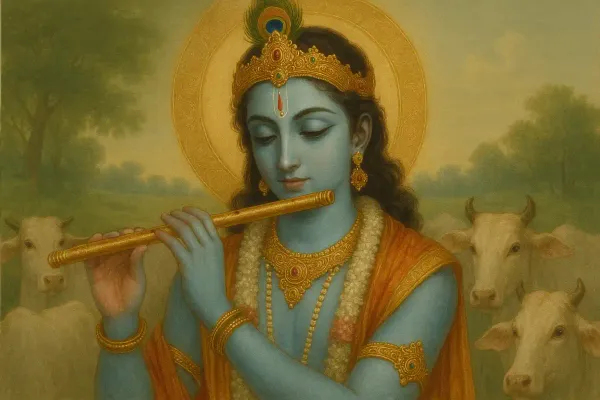

The Srimad Bhagavatam is a living dialogue of divine emotion, devotion, and eternal wisdom. Within its verses lies a river of stories, philosophy, and intimate reflections of the Divine. Among its most tender and beloved portions are the childhood pastimes of Shree Krishna, especially those enacted in Braj.
These stories, though simple on the surface, carry profound spiritual meanings. Shree Krishna, as a toddling child, did not simply steal butter. He stole the hearts of the devotees. He did not merely prank the Gopis. He elevated their love to a divine intensity. The entire region of Braj transformed into a theatre of sacred play, where every emotion, every movement, and every glance became an expression of supreme love.
This blog explores how Shree Krishna’s early childhood pastimes, especially his butter-stealing pastimes, revealed the path of devotion, the way to love God not through fear or formality, but through sweet affection and complete surrender.

Shree Krishna and Mother Yashoda: Where Love Overcomes Divinity
Mother Yashoda often found herself engaged in household chores while keeping Shree Krishna nearby. Yet, every time she turned, Shree Krishna had toddled away. She would bring him back and try again, but he always wandered off. This behavior, seemingly troublesome, was Shree Krishna’s way of capturing her attention, of increasing her affection.
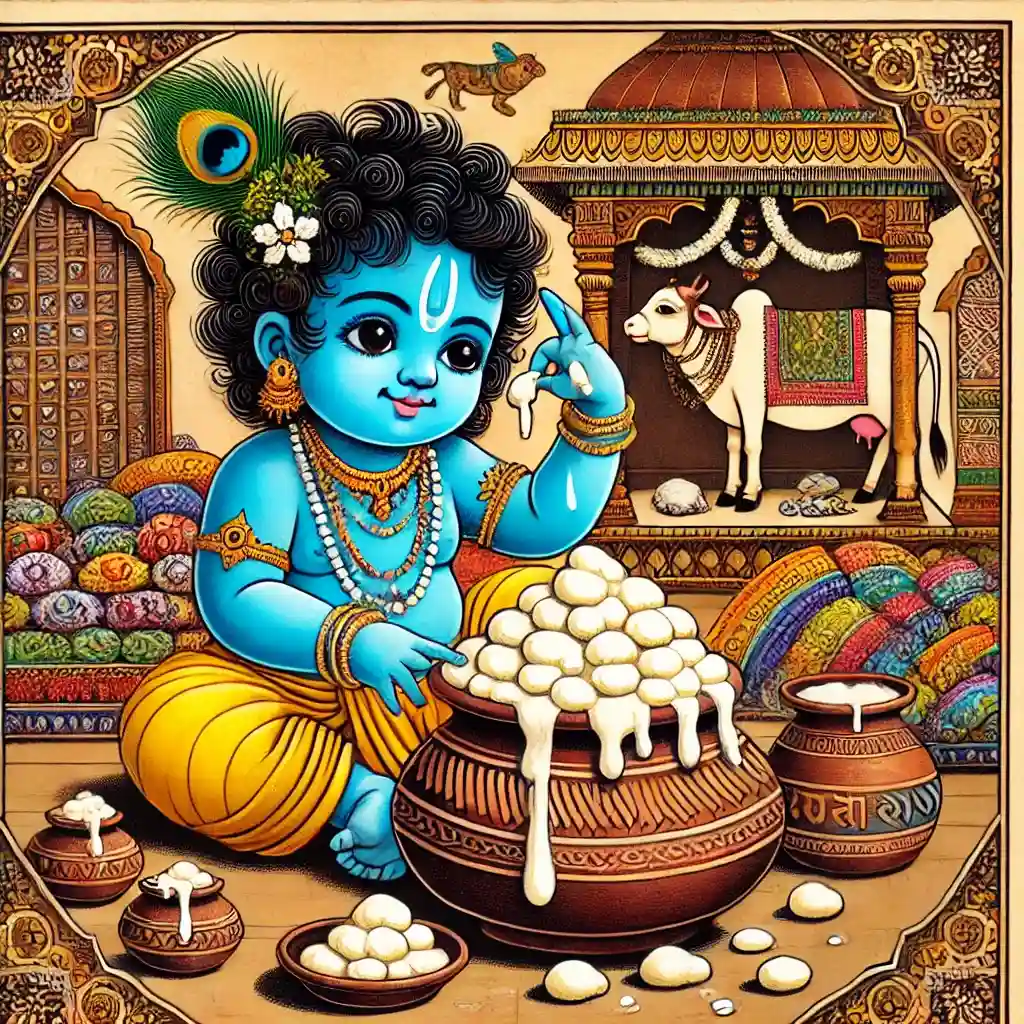
One day, while Mother Yashoda was in her prayer room, Shree Krishna found his way into the butter room. He joyfully began eating butter. As he did so, he noticed his reflection in a polished pillar. Thinking it was another child, possibly a guard placed by Mother Yashoda, he began interacting with it. He whispered and gestured, attempting to persuade his reflected companion not to alert his mother. He even tried to share the butter, convinced that this would keep him from being caught.
Butter dripped from his hands and face as he continued this unusual exchange. The innocent scene was interrupted when Mother Yashoda heard the soft voice and found Krishna deep in conversation with the pillar. Amused and puzzled, she stood watching her little boy try to outwit his reflection.
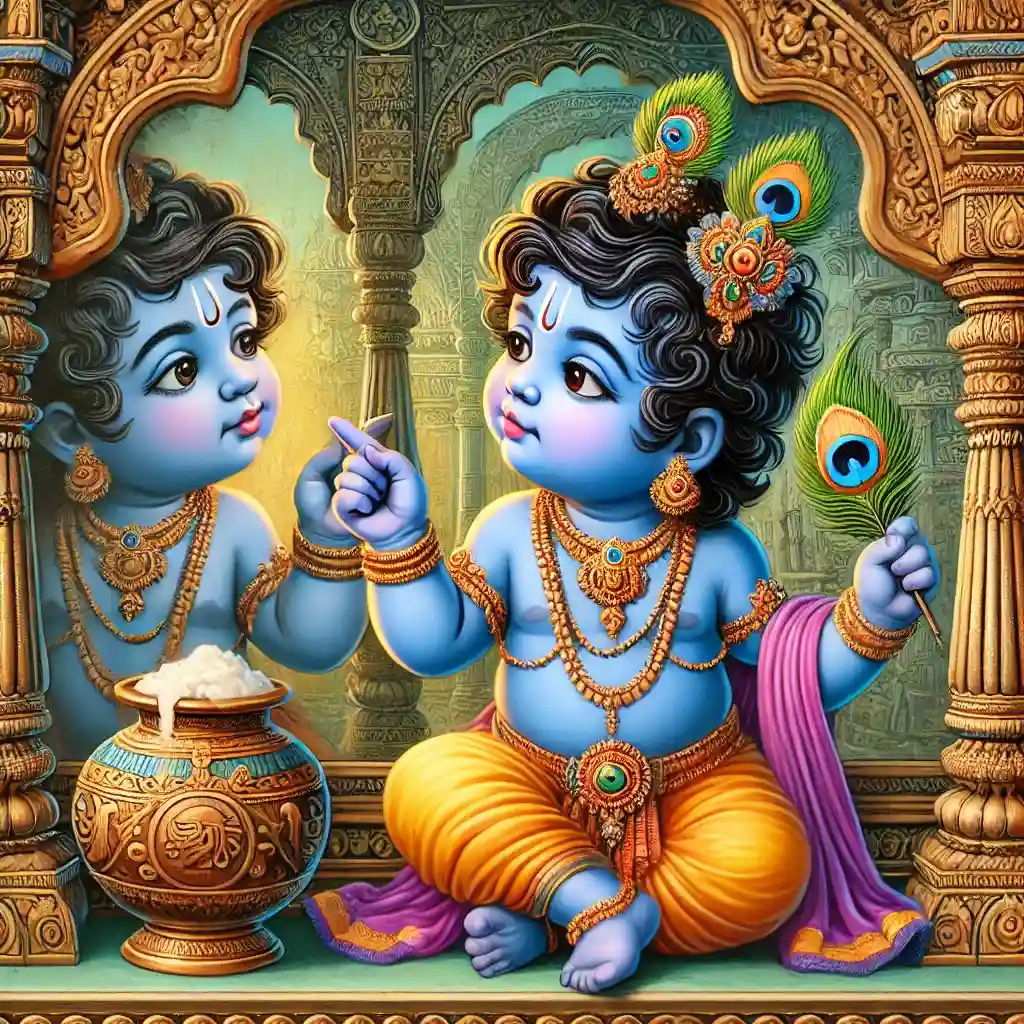
This act, lighthearted on the surface, was full of spiritual symbolism. Shree Krishna was not simply enjoying butter. He was drawing out the fullness of motherly love from Yashoda. These actions were Shree Krishna’s divine strategies to increase the attachment and affection of his devotees. By acting as a helpless, charming toddler, he allowed them to love him without reservation.
Lessons
- God responds to love with creative affection, using playful actions to draw his devotee closer.
- True spiritual connection is not based on rules, but on emotional bonding and surrender.
The Gopis and the Mandali of Butter Thieves
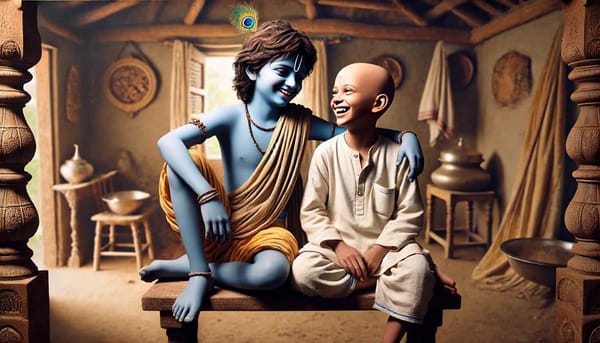
As Shree Krishna grew to about a year and a half, he noticed that many Gopis in Braj desired to love him in the mood of Vatsalya, thinking of him as their child. To fulfill their inner longing, he expanded his pastimes beyond his own home. He began visiting the houses of the Gopis, often leading a group of young boys with Shree Krishna as their leader.
In one memorable incident, a newly married Gopi, curious to see Shree Krishna, challenged her simple mother-in-law. She declared that she would catch the thief red-handed. She hid behind furniture, waiting with butter kept in plain sight.
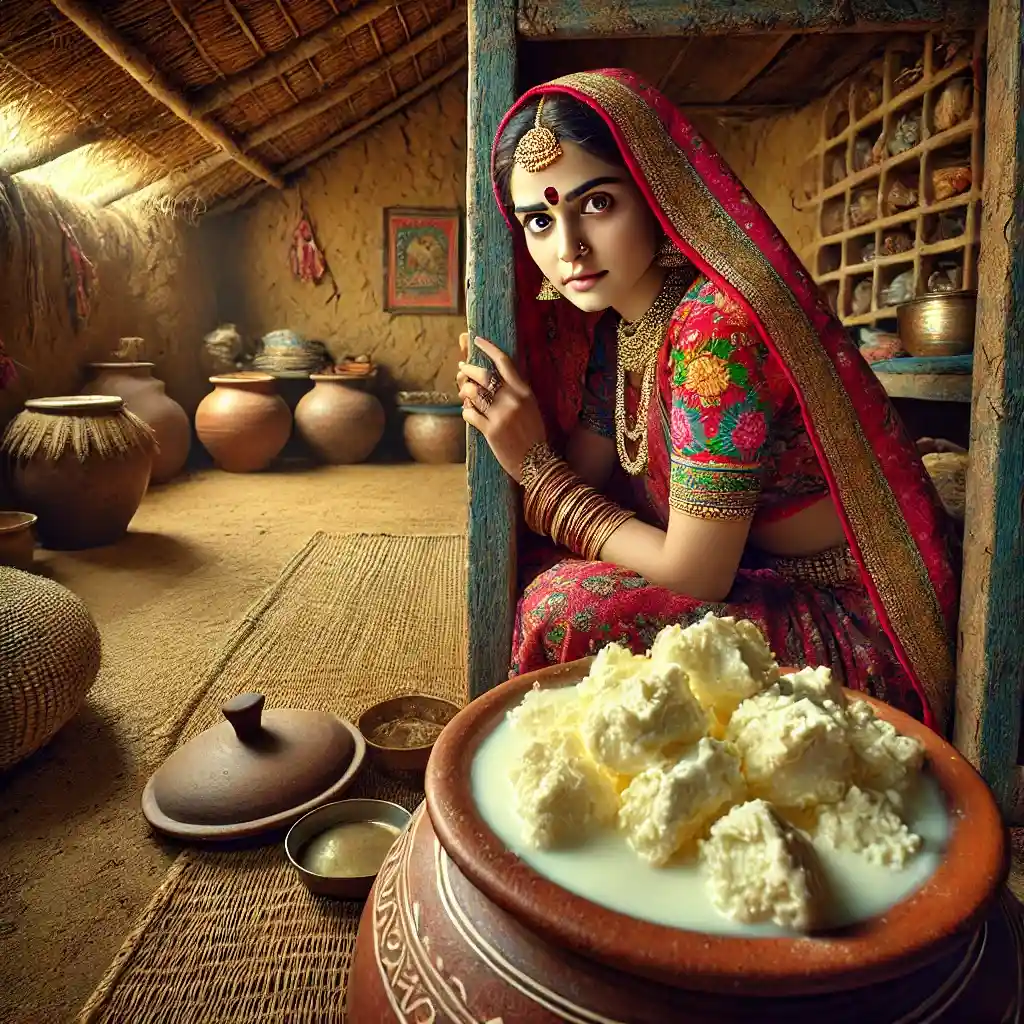
Shree Krishna, responding to her inner call, arrived stealthily and began eating. The Gopi caught his hand and tried to take him to Mother Yashoda. Shree Krishna begged, pleaded, and even promised on the name of her husband and mother-in-law that he would never steal again. As they neared Nanda Baba's house, Shree Krishna cried out that his hand hurt. When the Gopi told Shree Krishna to give the other hand, he cleverly offered the hand of his friend. The Gopi, under her veil, unaware of the switch, confidently marched into Mother Yashoda's courtyard. Meanwhile, Shree Krishna ran ahead and jumped into Yashoda's lap. When the Gopi presented Shree Krishna as the thief, it turned out to be her brother-in-law. Embarrassed and confused, she realized she had been fooled.
In another comical episode, a Gopi attempted to tie Shree Krishna to a pillar as a way of catching him. But as she looked at his tiny blue hand, her heart melted. Shree Krishna, noticing her distraction, offered to teach her how to tie the knot. He gently wrapped the rope and said he was tired and needed water. He then vanished, leaving her tied instead. When her mother-in-law returned, she found her daughter-in-law bound to the post.
Shree Krishna’s mischief, while deceptive on the surface, was his way of drawing the Gopis deeper into divine love. They became helpless before his innocence. He made himself irresistible, not by showing power, but by becoming the most adorable child, impossible to scold and even harder to capture.
Lessons
- Divine interaction comes in forms we least expect. Often, our cleverness is undone by God's greater play.
- Love is tested through playfulness and humility. The desire to see or catch God must come with surrender.
The Gopis' Delegation and the Secret of Their Complaints
Eventually, the mischief of Krishna became a subject of public conversation in Braj. The Gopis, unable to bear both the trouble and the joy, formed a delegation. They marched to Mother Yashoda to formally complain. Mother Yashoda, regal in her demeanor, welcomed them graciously.
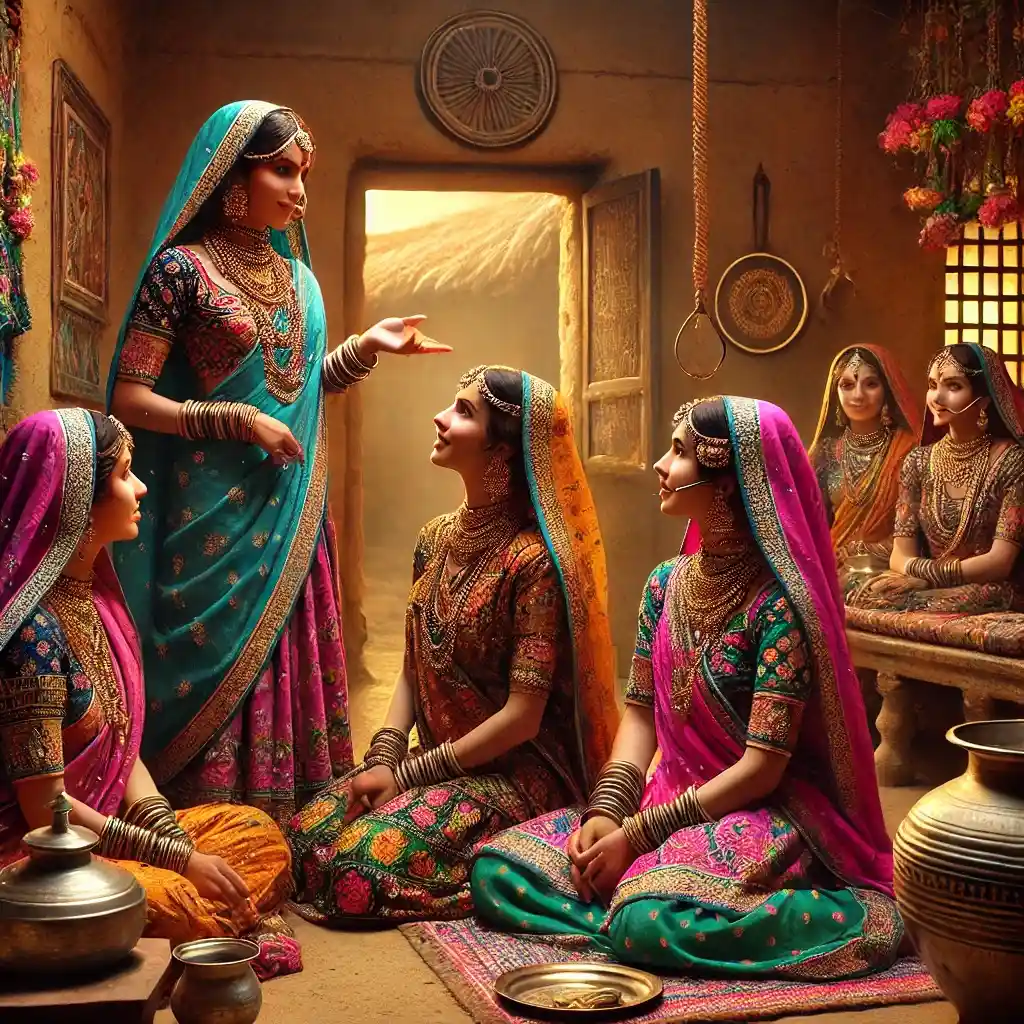
The Gopis poured out their hearts. They explained how Shree Krishna would untie their cows in the evening, making them scatter and causing them trouble. When they tried to scold him, he smiled with such charm that they forgot their anger. They had hung butter from the ceiling, but Shree Krishna and his friends would build human pyramids to reach it. They tried replacing it with sour buttermilk, but Shree Krishna knew instantly and refused it. They darkened their homes, but the jewels on Shree Krishna’s body would shine and reveal everything.
Mother Yashoda suggested removing the ornaments. The Gopis immediately protested. Their complaints were not rooted in irritation but in divine longing. They did not want Shree Krishna to stop. They only wanted a reason to talk about him more.
These pastimes revealed how Shree Krishna was not just stealing butter. He was stealing minds, hearts, and identities, turning simple village women into exalted saints through the strength of their love.
Lessons
- Complaints about God often mask the deepest longing for his company.
- Devotees may try to bind God, but in truth, it is God who binds them with ropes of affection.
Conclusion
Shree Krishna's early pastimes in Gokul and Vrindavan, as described in the Srimad Bhagavatam and expanded by saints over generations, are not just stories for children. They are blueprints of divine love. Shree Krishna showed that the highest purpose of life is to develop an intimate, affectionate relationship with God.
He did not come to command awe. He came to receive love, to be embraced as a child, to be scolded as a mischievous boy, and to be adored by those who knew him not as a god but as their own. In this way, he transformed butter into a symbol: the soft, churned outcome of love and effort. By stealing it, he stole the very essence of the devotee’s heart. In every prank, every lie, every plea, Shree Krishna revealed the eternal truth: God is conquered by love.
In today’s world, where devotion is often buried under ritual and routine, these pastimes remind us to build a personal, heartfelt relationship with God filled with joy, simplicity, and surrender. Just as the Gopis offered butter, we too can offer our time, attention, and affection, knowing that God values the intention behind the gift more than the gift itself.
Call to Action
- Immerse yourself in the divine pastimes of Shree Krishna and transform your spiritual journey by listening to Swami Mukundananda's Srimad Bhagavatam sessions on YouTube.
- Ignite your inner transformation and begin a journey of lifelong growth by joining Swami Mukundananda for the Houston Life Transformation Program from July 19 to August 1, 2025 at Sri Sharadamba Temple and India House. Experience powerful discourses, rejuvenating meditations, and a personal meet and greet with Swami ji.
FAQs
1. Why did Shree Krishna steal butter when he had plenty at home?
Shree Krishna’s theft was not out of need but to deepen the love of his devotees. His actions were designed to respond to the Gopis' heartfelt devotion and create opportunities for divine interaction.
2. What is the spiritual meaning of Shree Krishna’s mischief?
His mischief symbolizes the divine's playful nature and his desire to connect personally with devotees. It teaches that God values love more than rituals or material offerings.
3. Why did the Gopis complain to Yashoda if they loved Shree Krishna?
Their complaints were expressions of love disguised as frustration. They sought excuses to see Shree Krishna and express their affection in playful ways.
4. How are these stories relevant in modern times?
They teach that God can be approached with love and innocence. In a world filled with complexity, Shree Krishna’s pastimes remind us that devotion can be simple, joyful, and intimate.