
Introduction: A Night of Divine Descent
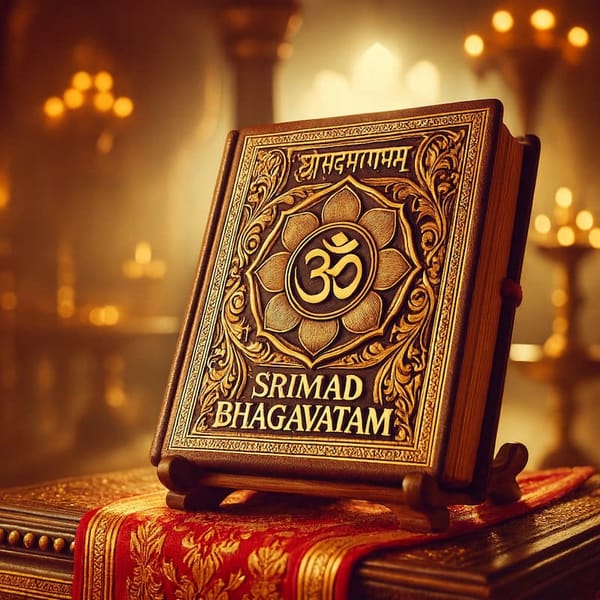
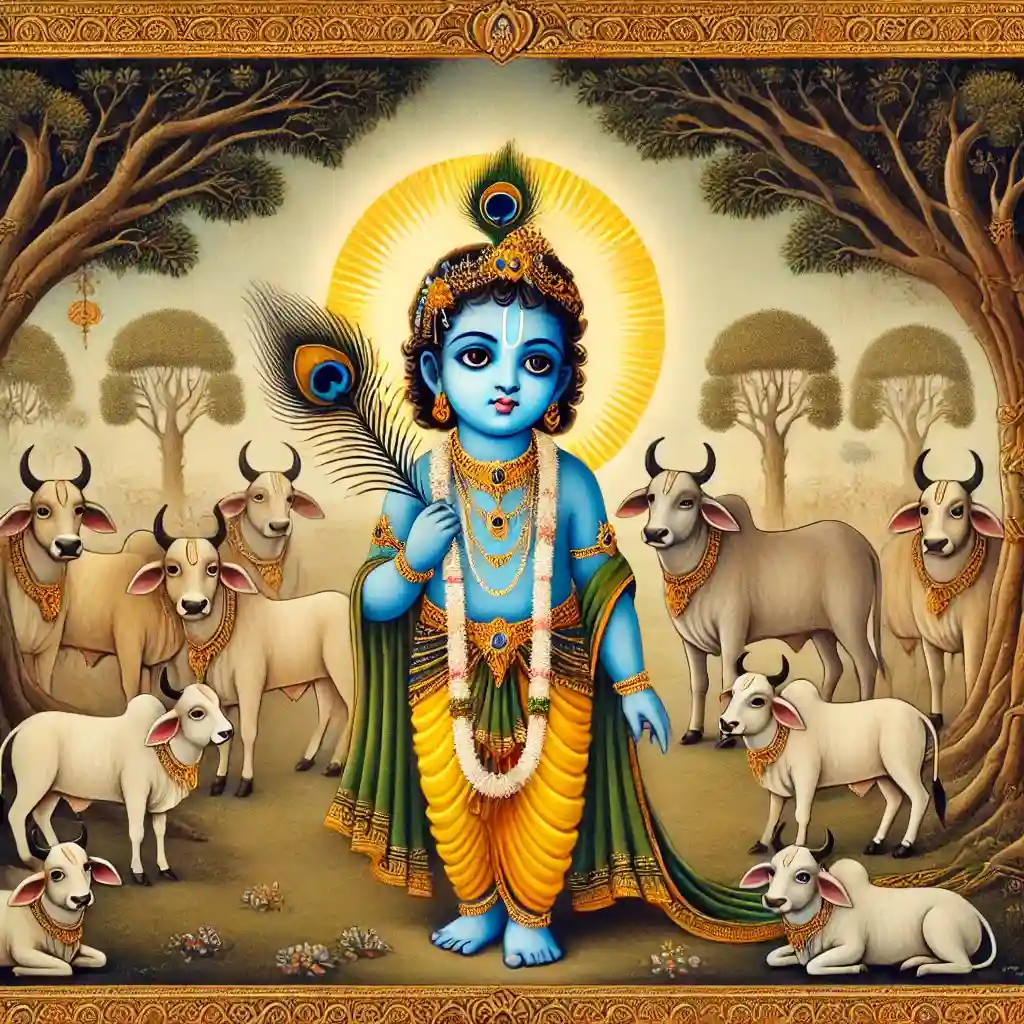
Janmashtami—the divine birthday of Lord Krishna—is one of the most cherished festivals in Sanatana Dharma. It is celebrated with joy, devotion, and a deep sense of spiritual remembrance. More than 5,000 years ago, on the eighth day (ashtami) of the dark fortnight in the month of Bhadrapada, the Supreme Lord descended in a prison cell in Mathura, under the tyrannical reign of King Kansa. The Srimad Bhagavatam narrates this extraordinary moment:
SB 10.3.9-10
“tam adbhutaṁ bālakam ambujekṣaṇaṁ
catur-bhujaṁ śaṅkha-gadādy-udāyudham
śrīvatsa-lakṣmaṁ gala-śobhi-kaustubhaṁ
pītāmbaraṁ sāndra-payoda-saubhagam
mahārha-vaidūrya-kirīṭa-kuṇḍala-
tviṣā pariṣvakta-sahasra-kuntalam
uddāma-kāñcy-aṅgada-kaṅkaṇādibhir
virocamānaṁ vasudeva aikṣata”
“Vasudeva then saw the newborn child, who had very wonderful lotuslike eyes and who bore in His four hands the four weapons śaṅkha, cakra, gadā and padma. On His chest was the mark of Śrīvatsa and on His neck the brilliant Kaustubha gem. Dressed in yellow, His body blackish like a dense cloud, His scattered hair fully grown, and His helmet and earrings sparkling uncommonly with the valuable gem Vaidūrya, the child, decorated with a brilliant belt, armlets, bangles and other ornaments, appeared very wonderful.”
This moment was not just a birth—it was the Supreme’s descent (avatarana) to protect dharma, uplift devotees, and annihilate evil. As Swami Mukundananda beautifully explains:
"God descends out of compassion, not necessity. His appearance on earth is for our upliftment, to grant us a living example of divine love, wisdom, and duty."
Janmashtami traditions are more than cultural celebrations—they are living expressions of devotion (bhakti), designed to help the soul remember Shree Krishna with love. Each custom carries deep symbolic meaning and connects the devotee to Shree Krishna’s eternal pastimes (leelas).
Let us explore 10 beautiful Janmashtami traditions and the spiritual truths behind them.
1. Fasting with Devotion (Upavasa and Nirjala Vrata)
On Janmashtami, devotees observe fasts ranging from simple fruit-and-water fasting (phalahar) to complete abstinence from food and water (nirjala). This is not merely a ritual of bodily austerity—it is an act of mental focus and surrender.
The Srimad Bhagavatam explains that fasting on Shree Krishna’s appearance day purifies the heart and pleases the Lord. By minimizing bodily indulgence, the mind can be centered on Shree Krishna’s name, form, and leelas.
Swami Mukundananda emphasizes:
"Fasting should not be a struggle of willpower alone. It should be paired with intense remembrance of God. True upavasa means ‘to stay near’—to reside in the consciousness of the Lord for the entire day."
Thus, fasting becomes not deprivation, but elevation—a sacred pause from material distractions to immerse in the nectar of Shree Krishna’s presence.
2. Abhishekam: The Sacred Bath of Baby Krishna
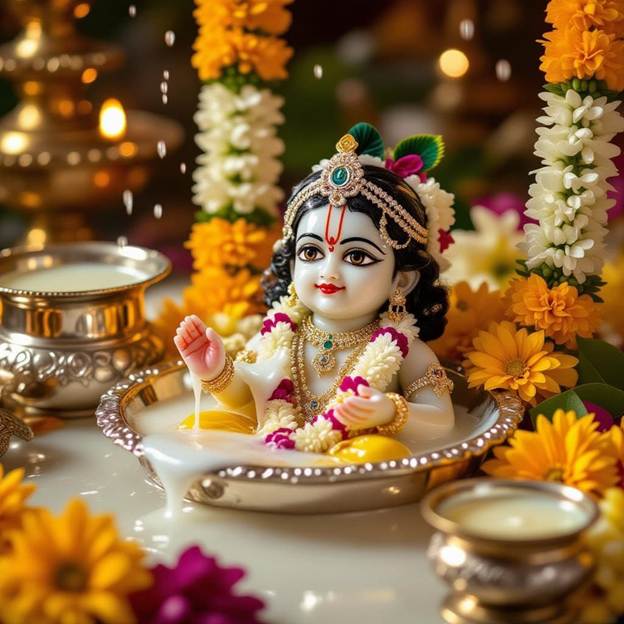
In temples and homes, devotees perform abhishekam—a ceremonial bathing of baby Krishna’s deity or picture—using milk, yogurt, honey, ghee, sugar water, and scented water. Each ingredient has symbolic meaning: milk for purity, yogurt for prosperity, honey for sweetness, ghee for energy, and sugar for bliss.
In Krishna Janma Leela, the Bhagavatam describes how the demigods showered flowers and celestial fragrances upon the newborn Lord. The abhishekam re-enacts this divine welcome, acknowledging baby Krishna as the king of our hearts.
Swami Mukundananda notes:
"When we bathe the deity, we are actually bathing our own consciousness in purity. It is a meditation on offering everything—our possessions, actions, and emotions—at the feet of God."
3. Decorating Baby Krishna’s Swing (Jhoolan Seva)
The tradition of placing Laddu Gopal (baby Krishna) on a beautifully decorated swing (jhula) is one of the most joyous parts of Janmashtami. Devotees adorn the swing with flowers, leaves, and shimmering fabrics, then gently rock baby Krishna while singing kirtans.
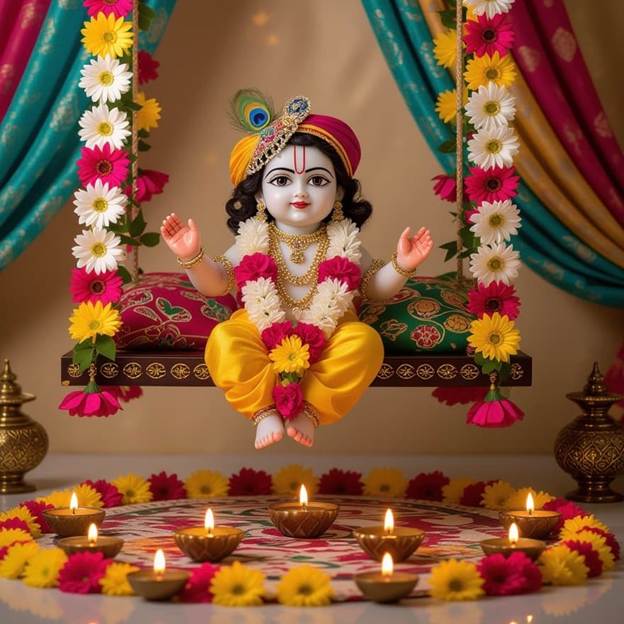
This recalls the tender affection of the Vraj gopis and gopas, who delighted in swinging little Krishna during festive times in Vrindavan. The act of rocking baby Krishna is symbolic—it represents rocking our own hearts with love so that they become a resting place for the Lord.
The Bhagavatam tells of the joy that the Vrajavasis felt whenever little Krishna played, danced, or laughed. In the same way, our participation in jhoolan seva is an offering of joy to the Lord.
4. Midnight Krishna Janma Mahotsav
The most anticipated moment of Janmashtami is the midnight maha aarti—the time Shree Krishna is believed to have appeared. The temple bells, conchshells, and chants fill the air as devotees welcome the Lord with music, flowers, and offerings.
In Mathura’s prison, when Shree Krishna appeared, the Bhagavatam says:
tam adbhutam… (SB 10.3.9)
The moment was otherworldly—the dark cell lit up, the shackles fell, and joy filled the hearts of Vasudeva and Devaki.
Swami Mukundananda beautifully explains:
"This is not just the historical midnight of Shree Krishna’s birth—it is the midnight of our ignorance. When the light of divine knowledge enters the heart, the darkness of material illusion vanishes."
Thus, the midnight celebration is a symbolic awakening, a personal janma of divine consciousness within the devotee.
5. Raas Leela and Cultural Plays
In many parts of India, Janmashtami is marked by dramatic enactments of Shree Krishna’s pastimes—especially the raas leela, makhan chori (butter theft), and Govardhan Leela. Children often dress as Shree Krishna and Radha Rani, re-enacting scenes from the Bhagavatam.
These plays are not merely entertainment—they are a form of leela smaran (remembrance through play). Swami Mukundananda often says:
"When we hear or watch Shree Krishna’s leelas, our mind is drawn to the sweetness of God. This is the power of divine pastimes—they awaken bhakti effortlessly."
The raas leela in particular symbolizes the soul’s eternal dance of love with God, where every step is guided by devotion, not ego.
6. Dahi Handi: The Joy of Makhan Chori
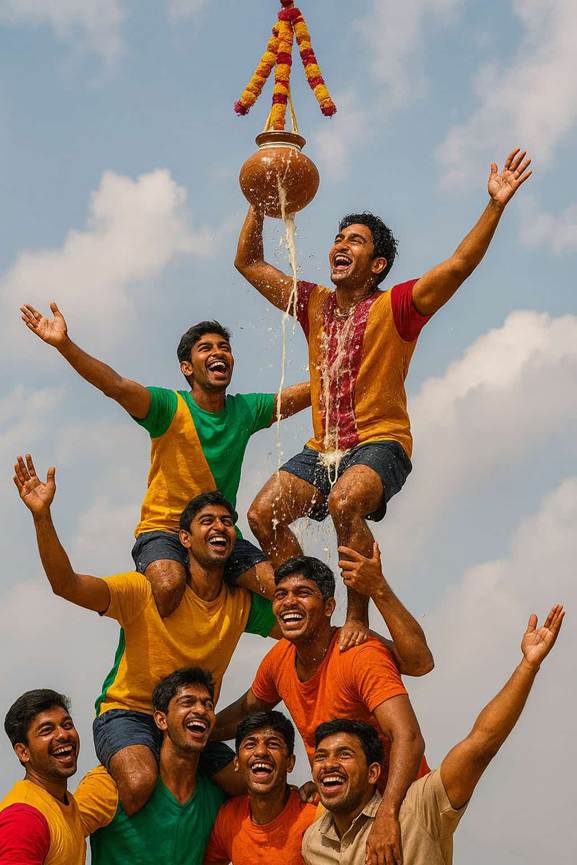
One of the most thrilling Janmashtami traditions is dahi handi—a human pyramid formed to break a pot of curd or butter hanging high above. It re-enacts Shree Krishna’s mischievous butter thefts in Gokul, as described in Bhagavatam 10.9 and 10.10.
These leelas carry deep meaning. The butter represents the pure essence of the heart, churned through sadhana. Just as Shree Krishna sought the sweetest butter, the Lord seeks the love hidden in the devotee’s heart.
Swami Mukundananda explains:
"Shree Krishna’s butter theft is symbolic—He steals only that which is offered with love. The pot is our ego; the butter is our surrendered love. Break the pot, and Shree Krishna will take residence in your heart."
7. Sankirtan and Bhajan Singing
The atmosphere of Janmashtami is filled with the chanting of Shree Krishna’s names—Hare Krishna Hare Krishna, Krishna Krishna Hare Hare. Devotees sing bhajans and perform sankirtan (congregational chanting), often continuing late into the night.
The Bhagavatam glorifies this practice in Kali Yuga:
“kaler doṣa-nidhe rājann
asti hy eko mahān guṇaḥ
kīrtanād eva kṛṣṇasya
mukta-saṅgaḥ paraṁ vrajet “
(SB 12.3.51)
“My dear King, although Kali-yuga is an ocean of faults, there is still one good quality about this age: Simply by chanting the Hare Kṛṣṇa mahā-mantra, one can become free from material bondage and be promoted to the transcendental kingdom.”
Swami Mukundananda emphasizes that kirtan is both the means and the goal—it purifies the mind and immerses the soul in God’s presence.
8. Offering 56 Bhog (Chhappan Bhog)
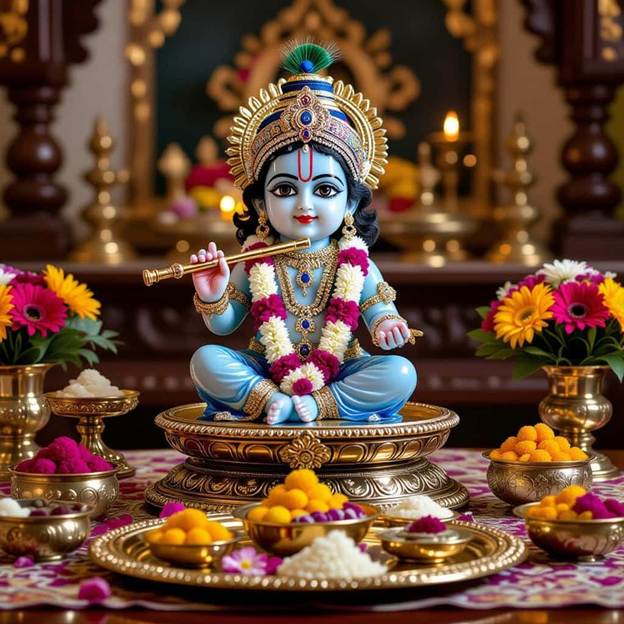
Many temples and households prepare chhappan bhog—a feast of 56 different food items—to offer to Shree Krishna. This tradition recalls the Govardhan Leela when Shree Krishna lifted the mountain for seven days, going without food. The Vrajavasis, in gratitude, offered Him a grand feast afterward.
The number 56 is symbolic: 8 meals a day × 7 days = 56. The offering is a gesture of overwhelming love, where devotees give the best of their culinary skills to the Lord.
Swami Mukundananda teaches:
"It is not the number of dishes that matters—it is the bhav (feeling) behind the offering. Even a single tulsi leaf offered with love is dear to Shree Krishna."
9. Reading and Hearing Krishna Katha
A central Janmashtami tradition is to hear the Janma Leela from the Srimad Bhagavatam, particularly Canto 10. Temples organize Krishna Katha sessions where saints and speakers narrate the birth, childhood, and teachings of the Lord.
Hearing these divine pastimes cleanses the heart (ceto-darpana-marjanam), as Lord Chaitanya Mahaprabhu taught.
Swami Mukundananda reminds:
"The stories of Shree Krishna are not mythology—they are divine history (itihas). When we listen with faith, the Lord enters our heart through the ears."
10. Temple and Home Decoration with Lights and Flowers
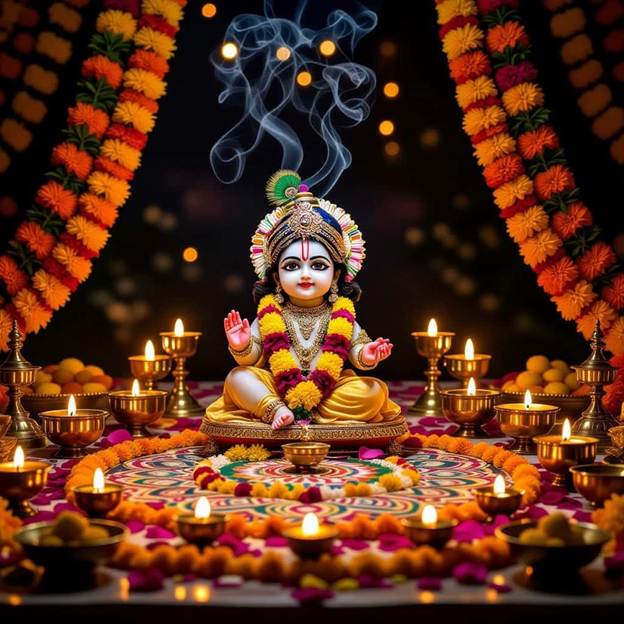
Janmashtami celebrations turn temples and homes into vibrant abodes of devotion. Devotees decorate with flowers, rangolis, lamps, and lights, symbolizing the joy of welcoming Shree Krishna into their lives.
The Bhagavatam describes how the residents of Mathura decorated the streets with banners, garlands, and lamps when Shree Krishna came. This tradition continues as a way of expressing love externally for the One we worship internally.
Swami Mukundananda explains:
"When we decorate Shree Krishna’s altar, we are actually adorning the throne of our heart for Him to sit upon. The beauty we create outside should reflect the purity we cultivate inside."
The Spiritual Essence Behind the Traditions
While these 10 Janmashtami traditions are colorful, joyful, and diverse, their true purpose is singular—to increase our remembrance of Shree Krishna (smaran). Whether we fast, sing, swing, act, cook, or decorate, each act becomes a form of seva (service) when offered with love.
As Swami Mukundananda beautifully concludes:
"The real Janmashtami is when Shree Krishna takes birth in the temple of your heart. Celebrate with external rituals, but let them guide you to the inner celebration of divine love."
✨Conclusion: Make Every Day Janmashtami
Janmashtami is more than a date on the calendar—it is an invitation to live in the presence of Shree Krishna every day. Each tradition is a reminder that devotion is not confined to temples; it can be woven into every action of life.
When we fast, we learn detachment.
When we sing, we learn surrender.
When we decorate, we learn love in action.
When we hear, we learn faith.
And when we live in Shree Krishna consciousness, the joy of Janmashtami never fades.
🎆Call to Action
This Janmashtami, don’t just witness the traditions—live them. Let every fast, song, and decoration become an offering of love to Shree Krishna. Celebrate not just His birth in Mathura, but His birth in your heart.
So this year, immerse yourself in these beautiful customs. Involve your family, friends, and community. Share the joy of Shree Krishna’s presence, and let your heart become the Vrindavan where He plays eternally.
🛕 Celebrate Shree Krishna’s Janmashtami Mahoutsav 2025 at Radha Krishna Temple of Dallas
📿 Join the jubilant celebration of Lord Krishna’s birth – a night of devotion, joy, and divine love!
🗓 Date: Saturday, August 16 – Sunday, August 17, 2025
📍 Location: Radha Krishna Temple of Dallas (Allen)
🌐 Register Here:
Radha Krishna Temple of Dallas, Janmashtami Celebration 2025
References
- Bhaktivedanta Swami Prabhupada, A. C. (1972). Srimad-Bhagavatam (Bhagavata Purana). Canto 10.
- Bhagavad Gita: The Song of God Translations and Commentaries by Swami Mukundananda.
🔗 Read Online - Watch JKYog's YouTube vidoes on Bhagavad Gita Krishna Bhakti by Swami Mukundananda.
🔗 Subscribe Here
❓ Frequently Asked Questions (FAQs)
Q1: When is Janmashtami celebrated?
Janmashtami is observed on the eighth day (ashtami tithi) of the dark fortnight (Krishna Paksha) in the month of Bhadrapada, according to the Hindu lunar calendar. The exact date varies each year.
Q2: When is Janmashtami this year?
In 2025, Krishna Janmashtami falls on Saturday, August 16.
Q3: Why do we fast on Janmashtami?
Fasting (upavasa) helps purify the mind and body, allowing devotees to focus on Shree Krishna without distractions. Spiritually, upavasa means “to stay near” the Lord in thought, word, and deed.
Q4: What is the significance of the midnight celebration?
Shree Krishna appeared at midnight in Mathura. The midnight aarti symbolizes the dispelling of spiritual darkness and the awakening of divine consciousness within us.
Q5: What does Chhappan Bhog mean?
Chhappan Bhog means “56 offerings.” It recalls the feast prepared for Shree Krishna after He lifted Govardhan Hill for seven days without eating. Devotees express gratitude through this offering.
Q6: Why do children dress as Shree Krishna and Radha Rani?
Dressing children as Shree Krishna and Radha Rani helps them connect with the Lord’s pastimes in a joyful, relatable way, fostering love and devotion from a young age.
Q7: What is Dahi Handi’s spiritual meaning?
Dahi Handi represents Shree Krishna’s playful butter thefts. Spiritually, the butter symbolizes the pure love of the heart, and breaking the pot symbolizes breaking the ego so Shree Krishna can reside within.
Q8: Is Janmashtami only celebrated in temples?
No. While temples hold grand celebrations, Janmashtami can be observed at home with simple offerings, chanting, fasting, and reading Shree Krishna’s pastimes from the Srimad Bhagavatam.