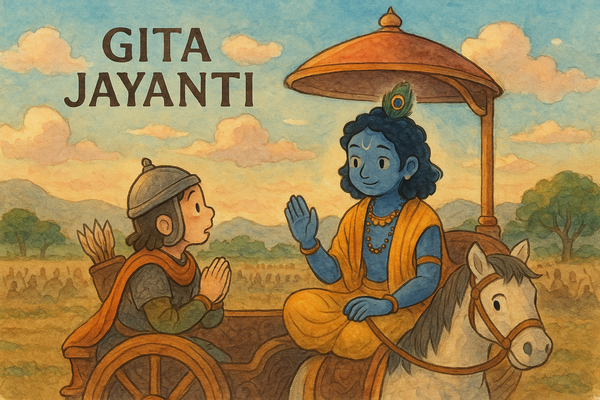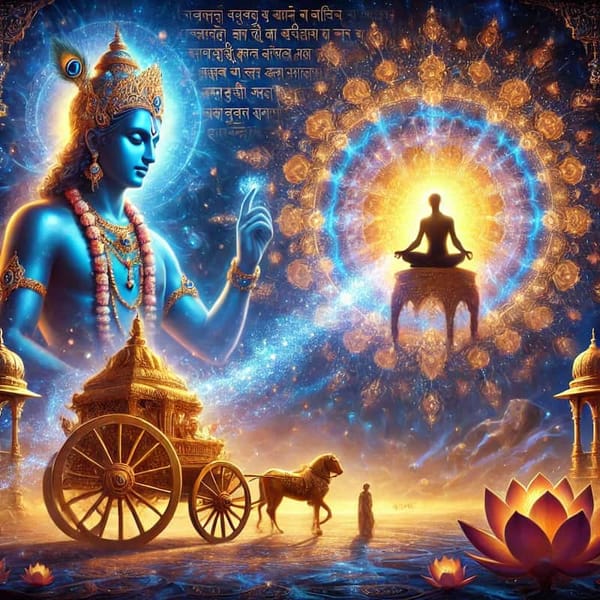
The pursuit of spiritual elevation, as illuminated in the Bhagavad Gita, is not a physical retreat from the world, but a transformation of the inner landscape. Shree Krishna, in his dialogue with Arjun, repeatedly emphasizes that true renunciation (sanyas) is not the mere act of forsaking the external world, but an inner detachment from desires and ego. The person who has neither attachment to sensory pleasures nor to the fruits of actions is considered yogarudh—elevated in the science of yog.
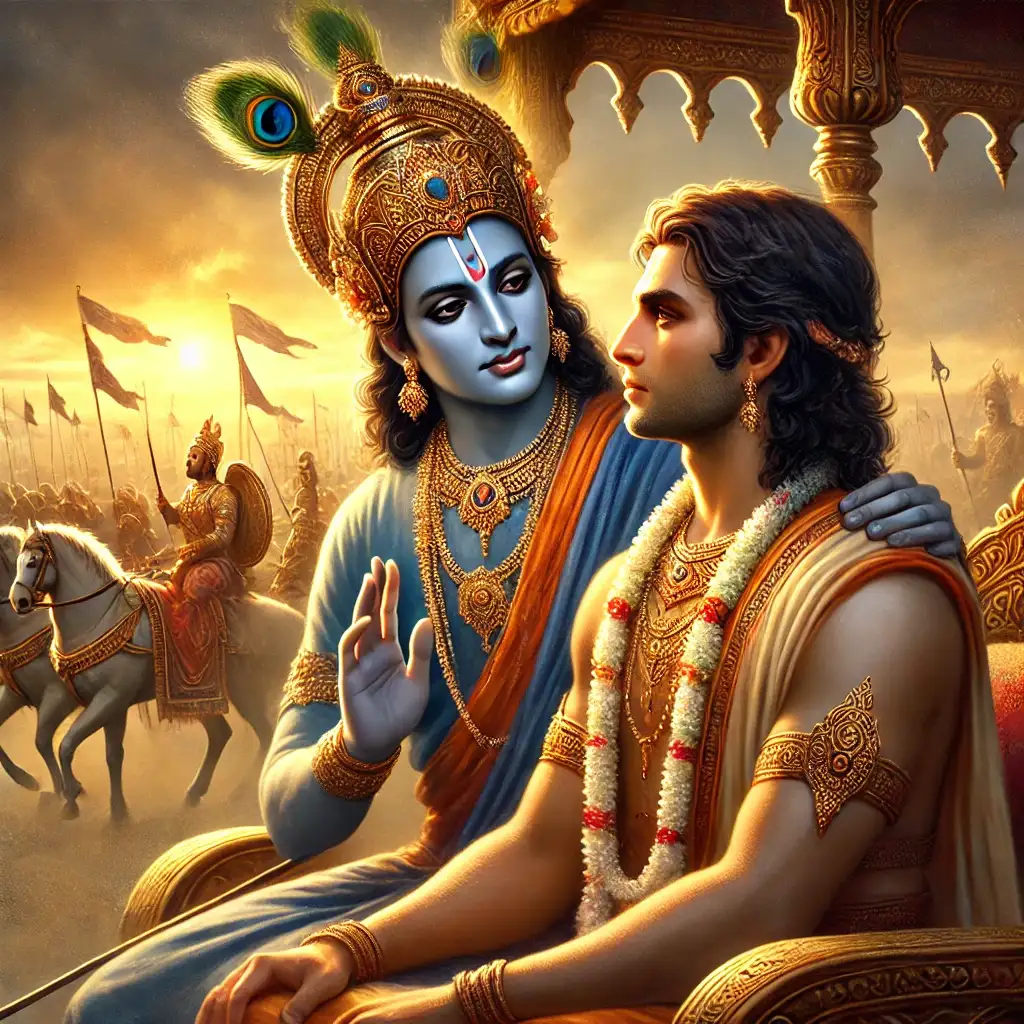
The Misunderstood Notion of Sanyas
Shree Krishna begins by explaining a profound spiritual principle: one should perform their duties in the world while practicing yoga (karma yoga). This concept often confuses spiritual aspirants. Many, when facing the miseries of worldly life, believe that the solution lies in renouncing the world entirely. They proclaim, “I will leave everything and become a sanyasi,” expecting that misery will vanish in the forest or an isolated ashram.
But this motivation is flawed. The desire to run away from worldly miseries is not true detachment. It is, in fact, another form of attachment—to comfort, to peace, to personal ease. Shree Krishna corrects Arjun, explaining that real vairagya does not take place with a change in geography but with a transformation in mentality. A person who cannot find peace in the world will not find peace in a forest either.
Vairagya is an Internal State
Renunciation is often mistaken for an external action—leaving one’s home, donning saffron robes, and meditating in solitude. But this does not equate to inner purity. A humorous example illustrates this: three Taoist meditators resolved to sit in silence. A week passed, and one broke the silence to comment on a horse. Another week, the second disagreed on the horse’s color. The third, annoyed by the chatter, said, “If you’re going to talk so much, I’m leaving!” All of them had renounced the world externally, but mentally, they were still entangled in it.
True renunciation (vairagya) is when the mind no longer craves, clings, or reacts. And to understand this, we must explore the nature of the world and our perception of it.
Is the World Real or an Illusion?
India’s philosophical tradition presents contrasting viewpoints. Adi Shankaracharya, the first Jagadguru, declared:
Brahma satyam jagat mithya jivo brahmaiva nāparaḥ
“Lord Brahman is real, the world is an illusion, and the individual soul is none other than Brahman.”
He described the world as mithya—non-existent, like the horns of a rabbit. Shankaracharya argued that our perception of the world is due to ajnana (ignorance). When true knowledge arises, the world dissolves, much like mist vanishing in sunlight.
However, Vaishnavacharyas such as Madhvacharya, Nimbarkacharya, and Ramanujacharya disagreed. They asked: if the world is only mental projection, why do all of us see the same world? If this microphone is a mind-creation, why isn’t someone else seeing a mango instead? Moreover, if it’s manah kalpit (mental creation), we should be able to destroy it with our mind. But we can’t.
They argued: the world is not mithya, but asat—temporary. It is real, but impermanent. If the world were an illusion, why would realized souls eat, drink, and live in this world?
Even those subsisting on air (vayu bhakshan), breathing through pranayama, are consuming the pancha tattva—the five elements. And if one gives up even breath and enters samadhi, sitting on earth—earth too is part of the world.
Reconciling the Debate: Two Worlds

Jagadguru Shree Kripaluji Maharaj resolved this philosophical divergence by introducing a crucial insight: there are two worlds—not one.
1. The External World: Created by God, composed of the five elements. It is temporary, but real. Being God’s creation, it cannot be an illusion.
2. The Internal World: Composed of our thoughts, emotions, beliefs, and attachments. This world is mithya, for it is a projection of our own mind, ever-changing and unreal in its substance.
You experience this internal world every night in your dreams. Your physical eyes are shut, yet you travel to different places, meet people, and even fly. That dream world arises entirely within your own consciousness. Thus, the real sansar—the one binding us—is internal.
The Root of Misery Lies Within
Shree Krishna says in the Gita:
Uddhared ātmanātmānaṁ nātmānam avasādayet
Ātmaiva hyātmano bandhur ātmāiva ripur ātmanaḥ
“Elevate yourself through the power of your mind and not degrade yourself. The mind can be your best friend or your worst enemy.”
Read Verse

We often blame external circumstances—our job, family, or society—for our unhappiness. But the scriptures assert: the world is divine, as declared in the Purusha Suktam and by Shree Krishna himself, “Vasudeva Sarvam Iti.” If everything is a manifestation of God, then how can the world be the source of our sorrow?
The problem lies not in the external world, but in how we perceive and react to it—our internal world. Until that is purified, true renunciation will not manifest.
Story of the Yogi and the Frogs
A powerful illustration of this truth is the story of a man from Silicon Valley. Tired of modern life, he retreated to the Himalayas to meditate in a quiet ashram. In the monsoon season, frogs and insects began making noise at night. The man, irritated, shouted “Quiet!” and astonishingly, nature obeyed. Silence prevailed.
Pleased, he returned to meditation—but a new disturbance arose: his own conscience. “Did I do the right thing? Was it fair to silence nature?” This internal noise was more disturbing than the frogs.

Internal noise is the root of misery
Eventually, he went back to the window and said, “Begin.” Nature resumed its chorus. Yet now, he meditated in peace. Why? Because he had made peace with the world. The noise had not changed—his mind had.
Shree Ram, Lakshman, and Bharat: Inner Purity
When Bharat came to Chitrakoot to plead with Shree Ram to return to Ayodhya, Lakshman suspected him of foul intent. But Shree Ram said, “Even if Bharat is given the throne of Lord Brahma, Lord Vishnu, and Lord Shiv, he will remain humble.”
Why? Because Bharat had no inner sansar. His internal world was pure. He did not carry ego or attachment.
This teaches us that renunciation is not limited to monks or sages. Even those living in households can be deeply detached.
The Gopis: Exemplars of Inner Renunciation
The Gopis, considered among the highest devotees in Indian spirituality, were householders. They tended cows, raised children, and performed chores. But their minds were completely attached to Krishna. Their inner world was filled with divine love.
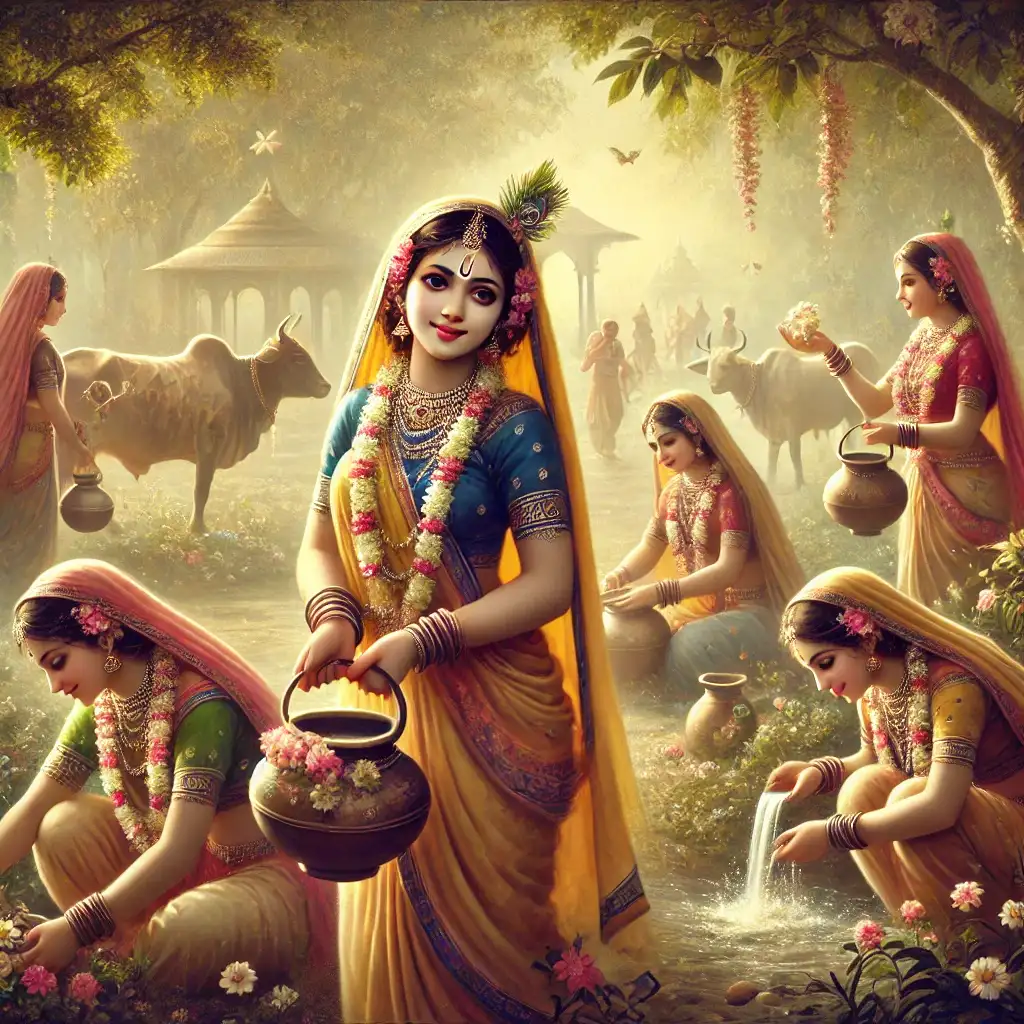
Yā dohane vahanane mathane palepa-preṅkhane...
“Even while engaged in daily tasks, their hearts were merged in Krishna.”
This shows us that one need not renounce duties to attain spiritual heights. What matters is where the mind is placed.
The True Yogarudh
Shree Krishna defines a yogarudh as one who is unaffected by pleasure or pain. Not someone who merely wears the signs of a monk—sacred marks, saffron clothes, or a kanthi mala—but one who has truly conquered attachment. Whether they are a king, a worker, or a monk, the state of their mind determines their spiritual stature.
Thus, being a Karm Yogi, performing one’s duties without attachment, is the proper path. If one seeks to be a sanyasi, it must be after achieving detachment, not before.
Conquering the Mind: The Greatest Victory
Returning to the verses on mind control, Shree Krishna says:
Bandhur ātmātmanas tasya yenātmaivātmanā jitaḥ
Anātmanas tu śatrutve vartetātmaiva śatru-vat
“For the one who has conquered the mind, it is a friend. For one who has not, it behaves like an enemy.”
Read Here
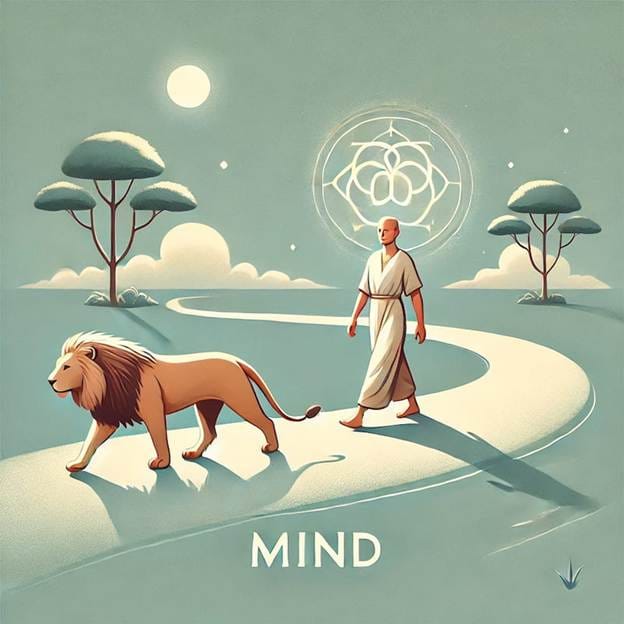
The uncontrolled mind repeats grievances like a broken record. It fixates on past insults, fears, and worries. Just as old vinyl records would skip and repeat the same line, our minds can get stuck.
Real spiritual practice begins with mastering this mind. When it is conquered, it becomes your best companion. When it is not, it leads to ruin.
Conclusion: Transform the Inner World
The journey of yog is not about external renunciation, but internal transformation. To become a yogarudh is to live in the world, fulfill duties, and yet remain untouched by outcomes and sensory desires. The saints and sages of India—whether householders like the Gopis or sages in forests—achieved this state by purifying their inner samsara.
We may not need to go to the Himalayas to find peace. We need only look within and begin cleansing the thoughts, attachments, and negative patterns that bind us.
The world outside is created by God, divine and real. The world within is created by us, often flawed, often painful. To walk the path of yog is to master the inner world, one thought at a time.
Call to Action
Begin today by reflecting: Where does your misery come from? The world—or your reactions to it?
Start small. Observe your thoughts. Sit in stillness for five minutes daily. And slowly, begin the journey not to the forest, but inward—to become a true yogarudh.
📚 Resources
Watch: Bhagavad Gita, Chapter 6, Part 2 | Swami Mukundananda | Divine Discourse
Scriptural References
1. Bhagavad Gita – Chapter 6 (Dhyana Yog)
o Verses 4–6: Shree Krishna’s teachings on renunciation (sanyas), detachment, and the role of the mind in spiritual elevation.
o Verses 5–6 Translation: “Elevate yourself by yourself; do not degrade yourself. For the self alone is the friend of the self, and the self alone is the enemy of the self.”
2. Upanishads
o Vahitri Upanishad: Describes the inner world as the true sansar (world), emphasizing internal purification over external renunciation.
Teachings from Spiritual Masters
1. Jagadguru Shree Kripaluji Maharaj
o Harmonized the seemingly conflicting viewpoints of Mithya and Asat by distinguishing between the internal and external worlds.
o Recommended Book:
“Bhakti Shatak” – 100 verses on the path of devotion and detachment.
2. Swami Mukundananda
o Modern-day spiritual teacher and interpreter of the Bhagavad Gita.
o Recommended Series:
“Bhagavad Gita – The Song of God” (YouTube Playlist)
Practical Tools
1. Daily Meditation Practice
o Begin with 5–10 minutes of silent observation of thoughts.
o Use mantra repetition (e.g., Om Namo Bhagavate Vasudevaya) to train the mind.
2. Journaling Prompts
o What thoughts are recurring in my mind lately?
o How do I typically react to discomfort or conflict?
o What attachments do I mistake for love or duty?
3. Bhajan and Kirtan
o Engage in devotional singing to cleanse the heart and redirect the mind.
o Recommended: Kirtans by Jagadguru Kripaluji Maharaj and Swami Mukundananda.
Online Communities & Learning
1. JKYog (Jagadguru Kripaluji Yog)
o Learn about mind control, meditation, and karma yoga through lectures, online satsangs, and retreats.
2. Bhagavad Gita App by Swami Mukundananda (iOS/Android)
o Verse-by-verse explanations, translations, and guided sadhana tools.
Frequently Asked Questions (FAQs)
1. What is the true meaning of renunciation in the Bhagavad Gita?
Renunciation (sanyas) in the Bhagavad Gita does not mean physically leaving the world but letting go of attachment to desires and outcomes. It is an internal state of detachment and self-mastery while continuing to fulfill one’s responsibilities with equanimity.
2. What is the difference between Karm Yog and Sanyas?
Karm yog is the path of selfless action, where one performs duties without attachment to results. Sanyas is renunciation, traditionally seen as renouncing worldly life. However, Shree Krishna teaches that true sanyas is a mental renunciation, and that karm yog is a superior and more practical spiritual path for most seekers.
3. Is the world an illusion or real?
Different Indian philosophies offer different views. Adi Shankaracharya said the world is mithya (illusory), while Vaishnavacharyas like Ramanujacharya said the world is real but temporary (asat). Jagadguru Kripaluji Maharaj reconciled these views by explaining that the external world is real (created by God), but the inner world of attachments and illusions is mithya.
4. What does it mean to be ‘yogarudh’?
A yogarudh is one who has transcended desires and attachments, achieving steadiness of mind through practice and inner discipline. Such a person is unaffected by pleasure and pain, success and failure, and lives in harmony with the divine will.
5. Can a householder become spiritually elevated?
Absolutely. Spiritual elevation is not limited to monks. Many saints, including the Gopis of Vrindavan, were householders who attained the highest levels of devotion through inner detachment and constant remembrance of God, even while performing daily duties.
6. What does Krishna say about the mind in the Gita?
In Bhagavad Gita 6.5–6.6, Krishna emphasizes that the mind can be either the best friend or the worst enemy of the self. A controlled mind leads to peace and progress, while an uncontrolled mind causes suffering and bondage.
7. How do I start practicing detachment in daily life?
Start by becoming aware of your thoughts and reactions. Perform your duties sincerely but without craving the outcome. Practice daily meditation, reflect on your desires, and gradually shift your focus from material gains to inner peace and spiritual progress.
8. Is external renunciation necessary for spiritual growth?
No. True renunciation is internal. While some may benefit from an austere life, most people can grow spiritually within the world by mastering the mind, developing dispassion (vairagya), and staying devoted to God.
9. How can I know if I’m progressing on the path of yog?
Signs of progress include increased mental peace, reduced attachment, consistent self-discipline, equanimity in success and failure, and a growing love for God and spiritual truth.
10. What if my mind keeps repeating negative thoughts despite spiritual practice?
It’s natural for the mind to resist change. Continue your practice patiently. Introduce positive affirmations, chant divine names, stay in good company (satsang), and remember that mastery of the mind is gradual and requires consistent effort.