
As the autumn sky turns golden and the fragrance of marigolds fills the air, the sacred festival of Diwali — the Deepavali or “row of lights” — arrives once again. It is a festival that transcends boundaries of religion and geography, uniting hearts across the globe in a celebration of hope, devotion, and selfless giving.
For spiritual aspirants, Diwali represents more than rituals — it is a symbol of the triumph of light over ignorance, righteousness over ego, and compassion over selfishness. It invites us to turn inward, cleanse the heart, and illuminate the divine spark within.
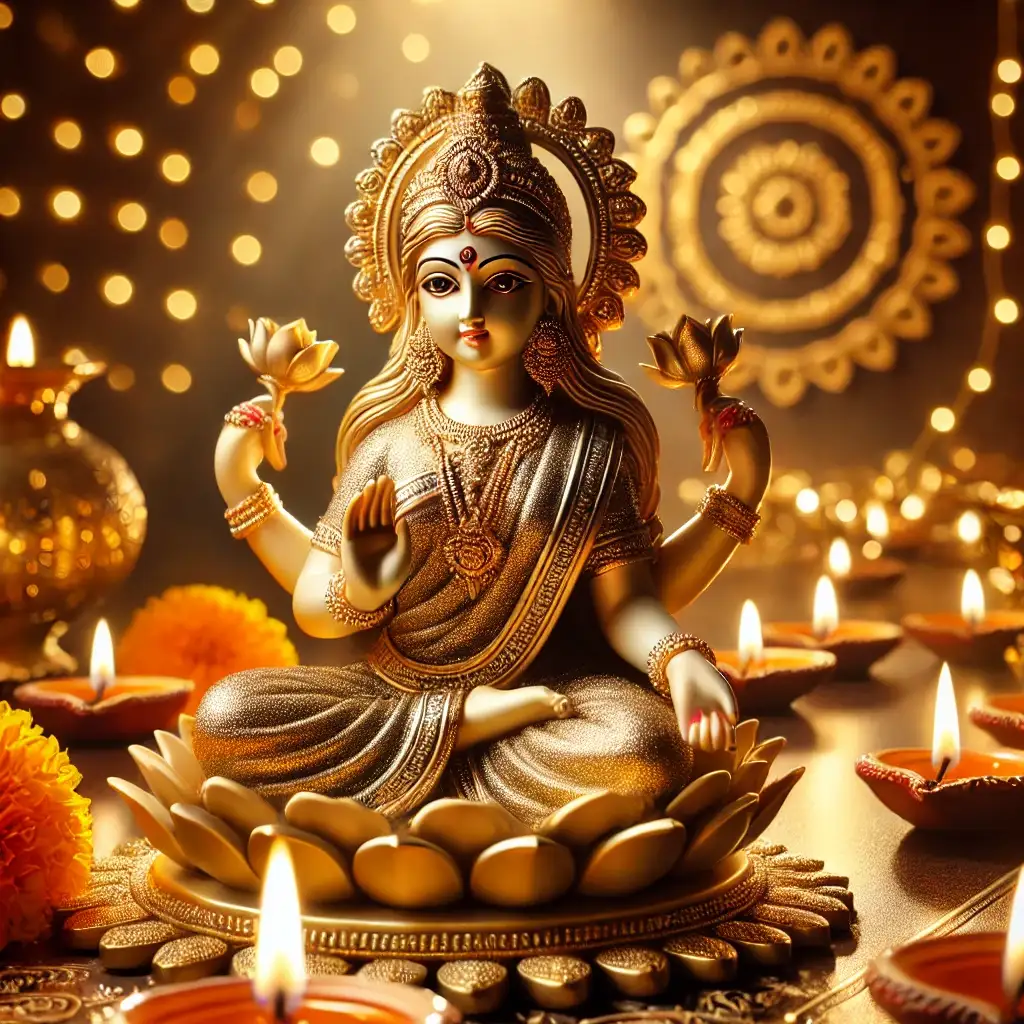
At the heart of this radiant celebration is Goddess Lakshmi, the embodiment of purity, abundance, and divine grace. Her presence brings not only material prosperity but also spiritual wealth — contentment, gratitude, and compassion.

🌼 The Sacred 5 Days of Diwali (2025 Schedule)
| Event | Date | Day | Start (Auspicious Time) | End (Auspicious Time) | Duration |
|---|---|---|---|---|---|
| Dhanteras (Dhantrayodashi) | October 18, 2025 | Saturday | 07:16 PM | 08:20 PM | 1 hr 04 min |
| Choti Diwali (Naraka Chaturdashi) | October 20, 2025 | Monday | 05:13 AM | 06:25 AM | 1 hr 12 min |
| Lakshmi Puja / Diwali | October 20, 2025 | Monday | 07:08 PM | 08:18 PM | 1 hr 10 min |
| Govardhan Puja / Annakut | October 22, 2025 | Wednesday | 06:26 AM | 08:42 AM | 2 hr 16 min |
| Bhai Dooj | October 23, 2025 | Thursday | 01:13 PM | 03:28 PM | 2 hr 15 min |
Note: Timings are provided in Indian Standard Time (IST) based on New Delhi location.
🌏 Lakshmi Puja 2025 Muhurat Timings
The most sacred moment of Diwali is Lakshmi Puja, performed during the Pradosh Kaal — the period shortly after sunset when night and day energies balance harmoniously.
📍 New Delhi, India
- 🕖 Lakshmi Puja Muhurat: 7:08 PM – 8:18 PM (IST)
⏱️ Duration: 1 hour 10 minutes - 🪔 Amavasya Tithi: Begins 5:27 PM (Oct 20) – Ends 4:41 PM (Oct 21)
📍 Dallas, Texas, USA
- 🕖 Lakshmi Puja Muhurat: 6:44 PM – 8:14 PM (CDT)
⏱️ Duration: 1 hour 30 minutes - 🪔 Amavasya Tithi: Begins 6:34 AM (Oct 20) – Ends 6:29 AM (Oct 21)
👉 The best time for the puja is during Pradosh Kaal, especially when Taurus Lagna prevails — as this period is considered fixed and auspicious for invoking wealth and stability.
🪷 The Spiritual Essence of Goddess Lakshmi
Goddess Lakshmi is not merely a symbol of financial wealth. Her name — derived from lakṣa (goal or aim) — reveals her true essence: the guiding light that leads the soul toward its ultimate purpose — divine realization.
Her four hands represent the four goals of human life (Purusharthas):
- Dharma – Righteous living
- Artha – Purposeful prosperity
- Kama – Pure desires leading to harmony
- Moksha – Liberation through devotion
Her lotus seat teaches us to remain pure amidst life’s challenges.
Her flowing coins remind us that prosperity is sacred only when used selflessly.
And her owl vehicle warns us to stay vigilant, not blinded by greed or illusion.
“True Lakshmi resides where the mind is pure, actions are selfless, and service to others is a natural joy.”
— Swami Mukundananda
💫 A Tale of True Prosperity: The Village That Shared Its Light

In the mountain village of Keshavpur, Diwali night was approaching, but the villagers faced a problem — a storm had destroyed their electric lines. There would be no lights that year.
A young teacher, Shyam, decided to change that. He gathered his students, and together they crafted hundreds of clay lamps by hand, using old oil reserves.
That night, as lamps flickered across every home, a soft golden glow embraced the village. Children danced, elders sang hymns, and even the poorest smiled with pride.
The light they shared did more than illuminate walls — it brightened their spirits.
In that act of unity and service, the real Lakshmi descended — not in the form of gold, but as joy, gratitude, and harmony.
🔱 Lakshmi Puja Vidhi (Step-by-Step Ritual Guide)
Performing Lakshmi Puja with devotion, purity, and correct procedure invites the grace of Mahalakshmi into our lives. Here is a detailed, spiritually-aligned puja guide you can follow at home.
🧹 1. Preparation: Cleansing and Decoration
- Thoroughly clean the house, especially the altar area.
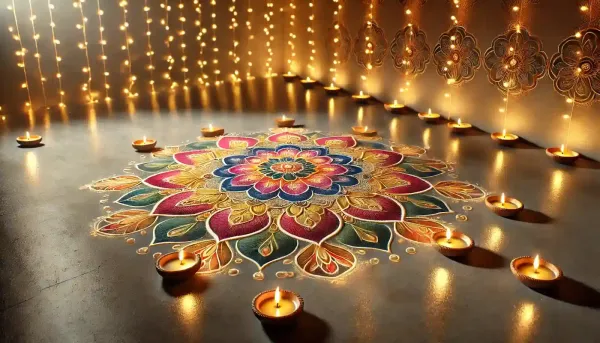
- Decorate with rangoli, torans, and flowers (lotus, marigold, and jasmine are preferred).
- Keep windows open or partially ajar to “invite” the Goddess inside.
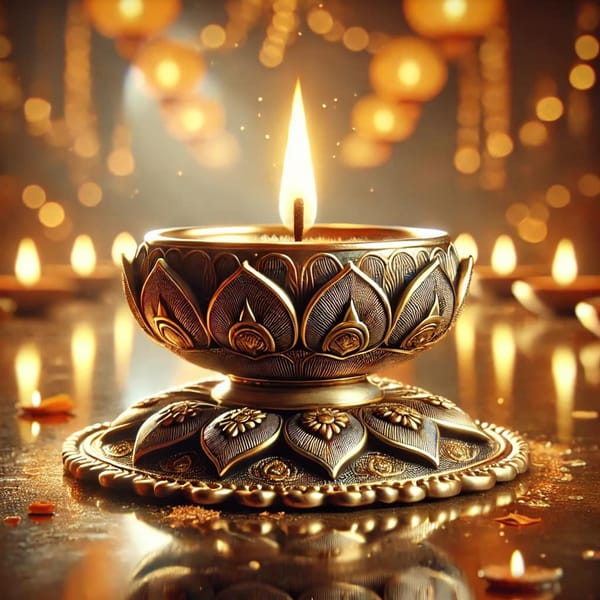
- Arrange 11 or 21 diyas (lamps) — five for the main altar and others for each corner of the house.
- Prepare the Puja Thali:
- Kumkum, haldi, rice
- Flowers, incense sticks
- Fruits, sweets, and dry fruits
- Coins or silver ornaments
- A Kalash (copper pot) filled with water, topped with mango leaves and a coconut
🪔 2. Sankalp (Spiritual Resolve)
Sit facing the east. Close your eyes and recite:
“O Divine Mother Lakshmi, I perform this puja with a humble heart to purify my life, destroy inner darkness, and invite the light of compassion, wisdom, and prosperity into my home and soul.”
Sprinkle water around and on yourself to symbolize purification.
🙏 3. Invocation of Lord Ganesha
Before any auspicious ritual, invoke Lord Ganesha to remove obstacles.
Mantra:
ॐ गणपतये नमः ॥
Om Ganapataye Namah ॥
Offer modak or laddoo and light a ghee diya before his idol.
💧 4. Kalash Sthapana (Establishing the Sacred Pot)
Place the Kalash on rice grains in a plate. Add a coin, betel nut, turmeric, and flower petals inside.
Position mango leaves at the mouth of the Kalash and place the coconut on top, wrapped with a red cloth.
This represents inviting divine energy to reside in your space.
🌸 5. Lakshmi & Kubera Invocation
Place images or idols of Lakshmi and Kubera on a red cloth. Apply kumkum and haldi, offer flowers, and light incense.
Lakshmi Mantra:
ॐ श्रीं महालक्ष्म्यै नमः ॥
Om Shreem Mahalakshmyai Namah ॥
Chant 108 times, focusing on her golden form seated on a lotus, blessing all beings.
Kubera Mantra:
ॐ यक्षराजाय विद्महे धनधान्याय धीमहि तन्नो कुबेरः प्रचोदयात् ॥
Om Yaksha Rajaya Vidmahe Dhana Dhanyaya Dhimahi Tanno Kuberah Prachodayat ॥
Hare Ram Mantra:
हरे राम हरे राम राम राम हरे हरे ।
हरे कृष्ण हरे कृष्ण कृष्ण कृष्ण हरे हरे ॥
Hare Ram Hare Ram, Ram Ram Hare Hare
Hare Krishna Hare Krishna, Krishna Krishna Hare Hare ॥
Pray for divine love, divine knowledge, abundance, and wisdom to grow in the spirit of service to the Lord.
🔥 6. Offerings (Naivedya)
Offer sweets like kheer, modak, and laddoos, along with fruits and betel leaves.
Symbolically offer coins or small gold items to represent gratitude for divine abundance.
🪶 7. Meditation and Aarti
Light the main lamp and meditate for a few moments, visualizing the flame of divine wisdom dispelling ignorance.
Lakshmi Aarti:
Om Jai Lakshmi Mata, Mai Jai Lakshmi Mata,
Tumko Nishdin Sevat, Hari Vishnu Vidhata...
End the puja with the Shubh Labh mantra:
शुभ लाभ करो जय जय ॥
Shubh Labh Karo Jai Jai ॥
Distribute prasad among family members and guests.
🔥 Lakshmi Havan (Optional)
For those who wish to deepen the spiritual energy, performing a Lakshmi Havan after puja is powerful.
Required Items:
- Havan Kund or copper vessel
- Ghee, rice, and Samagri (a blend of sacred herbs)
- Lakshmi and Ganesha idols
Main Havan Mantra:
ॐ श्रीं ह्रीं क्लीं महालक्ष्म्यै नमः स्वाहा ॥
Om Shreem Hreem Kleem Mahalakshmyai Namah Swaha ॥
Offer each spoon of ghee with the mantra, symbolizing the surrender of ego, anger, and greed into the fire of divine consciousness.
📖 Lakshmi Puja in the Scriptures
🕉️ Ramayana
The lighting of lamps across Ayodhya marked the triumph of Lord Rama, representing the illumination of dharma.
🌊 Samudra Manthan
When Lakshmi emerged from the cosmic ocean, she blessed those who worked in harmony — a lesson that collective effort brings divine reward.
👑 Vamana & King Bali
Lord Vishnu’s humility through the Vamana avatar revealed that true wealth lies in surrendering pride and serving with love.
“Where selfless service resides, Lakshmi naturally flows.”
— Jagadguru Shree Kripaluji Maharaj
🌎 How India and the World Celebrate
- North India: Diyas adorn homes; people recite Lakshmi Chalisa and share sweets.
- Western India: In Gujarat and Maharashtra, Chopda Pujan is performed — marking new ledgers and a fresh start in business.
- Eastern India: In Bengal, Kojagari Lakshmi is honored on the full moon. Devotees stay awake, chanting “Ko jagarti?” (“Who is awake?”) — signifying spiritual alertness.
- South India: Diwali celebrates Lord Krishna’s victory over Narakasura. Families perform Kubera Lakshmi Vratham for abundance and right conduct.
- Nepal & Himalayas: Lamps are lit in cow sheds, symbolizing gratitude for nature and animals.
🪔 5 Days, 5 Inner Lessons
| Day | Festival | Inner Reflection | Practice |
|---|---|---|---|
| 1 | Dhanteras | Gratitude for Health | Donate to the sick or underprivileged |
| 2 | Naraka Chaturdashi | Purification | Wake early, bathe in oil and water |
| 3 | Diwali (Lakshmi Puja) | Gratitude & Service | Clean the home and heart, perform puja |
| 4 | Govardhan Puja | Harmony with Nature | Offer food, respect the Earth |
| 5 | Bhai Dooj | Compassionate Bonds | Honor siblings and spiritual family |
🌠 Diwali Through the Lens of the Bhagavad Gita
“Act without attachment; dedicate your works to Me.” — Gita 2.47
When one acts selflessly, Goddess Lakshmi’s blessings become enduring. Wealth without dharma decays; wealth in the service of God multiplies manifold.
🌺 Explore More About Lakshmi Puja & Diwali 2025
Dive deeper into the spiritual and ritualistic aspects of Lakshmi Puja with our extended guides. Learn about detailed muhurat timings, step-by-step puja vidhi, and the divine symbolism behind the 5-day Diwali celebration.
🔱 Read the Original RKT Lakshmi Puja Blog →🕉️ The JKYog Perspective: Transforming Light into Service
Under the divine guidance of Swami Mukundananda, JKYog’s mission turns the joy of festivals into opportunities for seva (service) and sadhana (spiritual practice).
Through JKYog, every lamp lit:
- Illuminates a child’s education
- Heals a patient in rural India
- Uplifts a family through self-reliance
- Inspires a soul toward self-realization
This is the real Diwali — lighting lives, not just lamps.
💛 How You Can Be the Light
✨ Donate – Support education, healthcare, and rural development
✨ Volunteer – Join JKYog’s seva projects and awareness drives
✨ Start a Fundraiser – Mobilize your family and friends
✨ Spread Awareness – Share the mission across your circles
👉 Support JKYog’s Service Projects
“True wealth is not what we keep, but what we share in the spirit of devotion.”
— Swami Mukundananda
🔔 Call to Action
✨ For daily wisdom, guided meditations, and festival discourses, subscribe to Swami Mukundananda’s YouTube Channel and illuminate your journey toward inner prosperity.
✨ Continue Your Spiritual Journey
Prepare for Navratri 2025 with devotion and wisdom. Discover fasting tips, divine stories, and spiritual insights in our complete Navratri celebration guide.
🌼 Read the Navratri 2025 Celebration Guide →As you welcome Goddess Lakshmi into your home with prayers, lamps, and devotion, extend her grace beyond your doorstep.
This Diwali, join Swami Mukundananda and the JKYog mission in supporting the underprivileged through the Jagadguru Kripalu University (JKU) and Jagadguru Kripalu Hospital & Research Center — a transformative initiative bringing education, healthcare, and hope to rural India.
“True wealth is found not in what we have, but in what we give.”
🎓 Support the JKU Project – Here's How You Can Help:
💛 Make a Direct Donation
Light up a life with your generous contribution.
👉 Donate Now
👣 Start Your Own Fundraiser
Create your own fundraising page and rally your family, friends, or community.
👉 Start Fundraising Here
🤝 Join the Walk for Education & Healthcare
Be part of a global movement to raise awareness and funds.
🌼 Your Contribution Supports:
- Free & subsidized education for underprivileged children, youth, and adults
- Modern and alternative healthcare, including child health, dental, physiotherapy, and natural healing
- Vocational training and micro-enterprise development
- Promotion of spiritual, physical, and mental well-being based on Vedic and Yogic sciences
"सौ बातन की बात इक, धर मुरलीधर ध्यान।
बढ़वहु सेवा-वासना, यह सौ ज्ञानन ज्ञान॥"
"The essence of all teachings is to meditate on the divine form of Lord Shree Krishna while increasing the desire to serve Him."
— Jagadguru Shree Kripaluji Maharaj
Let your Lakshmi Puja this year be more than a ritual — let it be a real offering of compassion, purpose, and divine service.
🕯️ This Diwali, Don't Just Light Lamps — Light Lives
Together, we can bring the radiance of education, the healing of healthcare, and the blessings of service to thousands.
🌸 Reflection: The Lamp Within
When we light diyas this Diwali, let each flame remind us:
- To replace anger with compassion
- To exchange greed for generosity
- To substitute ego with humility
- To illuminate others’ paths as we walk ours
“The lamp of the world burns out; the lamp of love burns forever.”
May this Diwali 2025 bring you inner peace, outer harmony, and divine abundance. May Goddess Lakshmi enter not just your home, but your heart — lighting your path toward eternal joy.
More Resources
If you enjoyed exploring the Lakshmi Pooja Vidhi, you may also appreciate other sacred hymns that deepen your spiritual connection and devotion. Discover the divine power and meaning behind these timeless chants:
- Shree Ram Raksha Stotra – Click Here
- Vishnu Sahasranamam – Click Here
- Mahamrityunjay Mantra – Click Here
- Sundarkand Path – Click Here
- Shiv Tandav Stotram – Click Here
📚 Learn about all 9 forms of Goddess Durga and explore Navratri rituals in our Complete Navratri 2025 Guide »
🙋♀️ Frequently Asked Questions (FAQs)
🔹 1. What is the spiritual significance of Lakshmi Puja during Diwali?
Lakshmi Puja is performed to invite Divine Mother Lakshmi, the goddess of purity, abundance, and spiritual prosperity, into our hearts and homes. It is not just about material wealth, but about invoking virtues like gratitude, compassion, and dharmic living. When done with sincere devotion, the puja purifies the mind and aligns our goals with higher consciousness.
🔹 2. What is the correct time (Muhurat) for Lakshmi Puja in 2025?
As per Drik Panchang:
- New Delhi, India:
🕖 7:08 PM – 8:18 PM IST on October 20, 2025 - Dallas, TX, USA:
🕖 6:44 PM – 8:14 PM CDT on October 20, 2025
This period falls during Pradosh Kaal, the most auspicious time for Lakshmi Puja.
🔹 3. What items are required for performing Lakshmi Puja at home?
Common puja items include:
- Idol or image of Goddess Lakshmi and Lord Ganesha
- Kalash (sacred copper pot), mango leaves, coconut
- Diyas (lamps), ghee/oil, incense, camphor
- Flowers (especially lotus or marigold), fruits, sweets
- Haldi, kumkum, rice, betel leaves, coins
- Lakshmi Ashtottara (108 names), aarti book or lyrics
🔹 4. Can I perform Lakshmi Puja without knowing Sanskrit or rituals deeply?
Absolutely. What matters most is devotion, humility, and purity of intent. You can chant simple mantras like:ॐ श्रीं महालक्ष्म्यै नमः (Om Shreem Mahalakshmyai Namah)
Even a heartfelt prayer in your native language is powerful when offered with sincerity.
🔹 5. Why is Lord Ganesha worshipped before Goddess Lakshmi?
Lord Ganesha is the remover of obstacles and symbolizes wisdom. Worshipping Him before any major puja ensures a smooth, blessed process and sets the right spiritual tone. Together, Ganesha and Lakshmi represent balanced prosperity — wisdom with wealth.
🔹 6. Is there a specific direction to face during the Lakshmi Puja?
Yes. Ideally, face east or north while performing the puja, and place the idols facing you.
🔹 7. What if I miss the exact muhurat? Can I still perform the Lakshmi Puja?
Yes. While the Pradosh Kaal muhurat is ideal, it is more important to perform the puja with faith and reverence. If you miss the precise time, you can still offer prayers later in the evening or meditate on Goddess Lakshmi's form.
🔹 8. Why do we light diyas on Diwali night?
Lighting diyas symbolizes dispelling darkness — both external and internal. It’s an offering to Goddess Lakshmi and a reminder to awaken our inner light — of knowledge, love, and compassion.
🔹 9. What mantras can I chant during Lakshmi Puja?
Some commonly used mantras include:
ॐ श्रीं महालक्ष्म्यै नमःॐ लक्ष्म्यै नमःॐ ह्रीं श्रीं लक्ष्मीभ्यो नमः- Recitation of Shree Suktam, Lakshmi Ashtottara Shatanamavali, or Om Jai Lakshmi Mata Aarti
🔹 10. How is Lakshmi Puja connected to the Bhagavad Gita?
The Bhagavad Gita teaches detachment, selfless service, and wisdom in action — all of which align with Lakshmi’s divine qualities. For example:
"One who prudently practices the science of work without attachment can get rid of both good and bad reactions in this life itself. Therefore, strive for Yog, which is the art of working skillfully (in proper consciousness)."
— Bhagavad Gita 2.50
True wealth lies not in accumulation, but in skillful, dharmic action.
🔹 11. How can I attract Goddess Lakshmi's blessings all year round?
To attract and retain divine blessings:
- Keep your home and heart clean
- Practice gratitude, generosity, and humility
- Recite Lakshmi mantras regularly
- Engage in selfless service (seva) and charity
- Use wealth for noble purposes, not just personal indulgence
🔹 12. How can I support JKYog’s mission this Diwali?
You can become a part of the light-spreading mission by:
- Donating to support education, healthcare, and rural empowerment
- Starting a Diwali fundraiser for JKYog
- Volunteering or sharing the message with your community