

Introduction
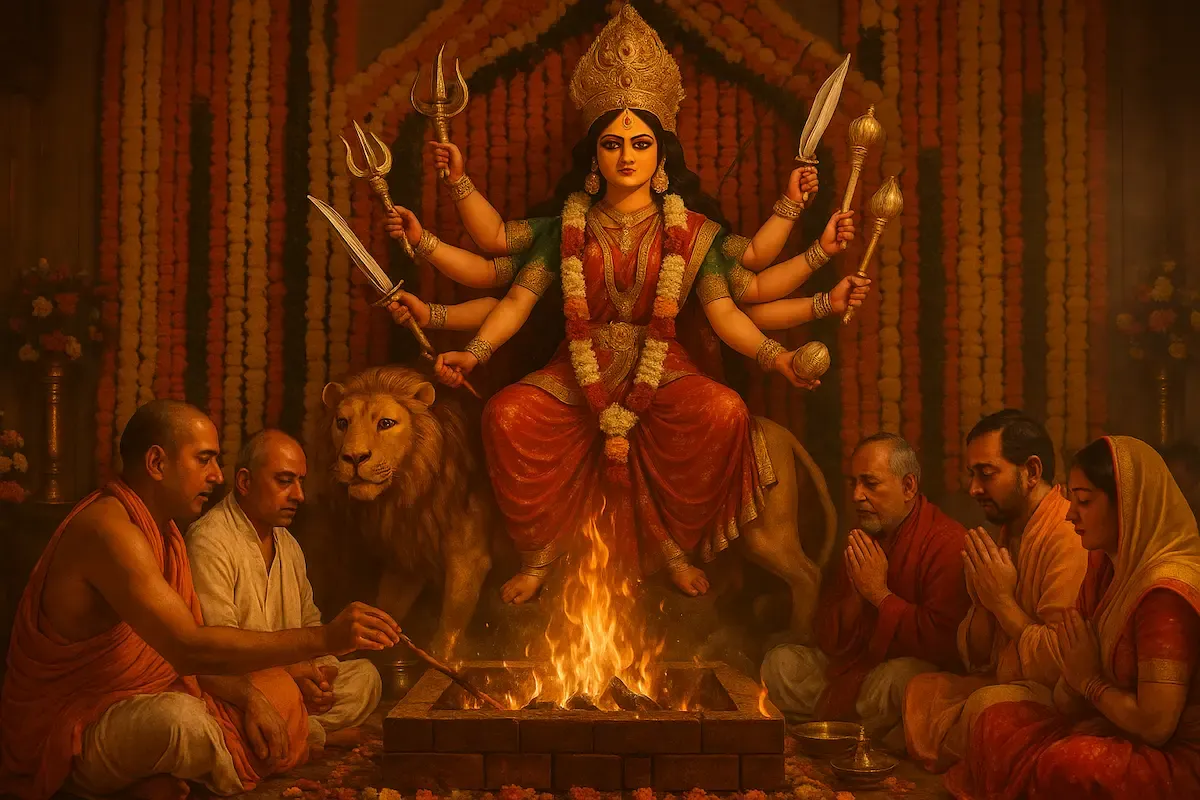
Navratri, one of the most sacred festivals in Hinduism, celebrates the nine forms of Goddess Durga — the divine Mother who embodies strength, compassion, and supreme protection. Among the nine days, Durga Ashtami, the eighth day, holds unparalleled spiritual importance. In 2025, Durga Ashtami will be celebrated with grand devotion on Tuesday, September 30th, a day when temples and households alike will resonate with chants, lamps, and offerings of love to the Divine Mother.
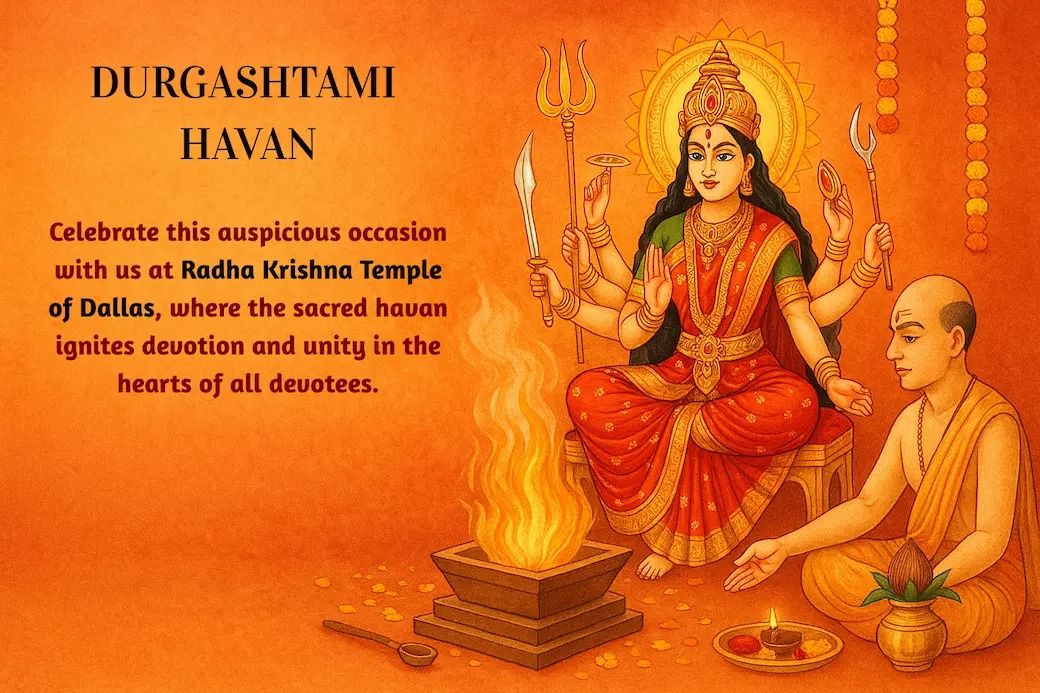
One of the most profound rituals on this day is the Durga Ashtami Havan, a sacred fire ceremony that symbolizes purification, transformation, and the offering of one’s ego into the flames of devotion. For centuries, saints, sages, and devotees have upheld this practice, considering it a direct way of communing with the Goddess.
This blog explores the deep meaning of Durga Ashtami, the ritual of havan, its spiritual symbolism, and how worshiping the Divine Mother awakens inner strength. Finally, we connect this celebration with Swami Mukundananda’s teachings on Raganuga Bhakti, the path of spontaneous, intimate devotion.
Significance of Durga Ashtami
Durga Ashtami is regarded as one of the most auspicious days of Navratri. It is believed that on this day, Goddess Durga manifested her fiercest form — Mahishasura Mardini, the slayer of the buffalo demon. This symbolizes the victory of divine energy over darkness, truth over falsehood, and dharma over adharma.
Across India, Durga Ashtami is marked by:
- Kanya Pujan: Worshiping nine young girls, who represent the nine forms of Durga. Their innocence and purity remind us of the divine feminine present in every being.
- Fasting and Prayers: Devotees observe fasts and perform intense meditation and prayer, surrendering their desires to the Mother.
- Special Poojas: Temples conduct elaborate rituals with flowers, lamps, conches, and offerings to honor the Goddess’s boundless power.
- Havan/Yajna: The havan, or fire ceremony, is the culmination of spiritual worship, where sacred mantras are chanted, and offerings are made into the fire, symbolizing surrender to the Divine.
Durga Ashtami thus becomes not just a ritual but a cosmic opportunity for inner transformation.
The Ritual of Durga Ashtami Havan

The havan is central to the celebration of Durga Ashtami. It is an ancient Vedic practice that invokes divine energies through fire, which is considered the mouth of the gods (Agni devata).
Elements of the Havan
1. The Sacred Fire (Agni): Fire represents purity and divine presence. As offerings are placed into the flames, they are believed to reach the Divine Mother herself.
2. Mantras and Chants: Priests and devotees recite hymns from the Durga Saptashati and other scriptures, invoking the Goddess’s blessings.
3. Offerings (Ahutis): Items like ghee, herbs, wood, and grains are offered into the fire, each symbolizing surrender of desires, ego, and impurities.
4. Devotee Participation: Families and communities join together, chanting and offering, creating a collective spiritual energy that uplifts everyone present.
Symbolism of the Havan
- Purification: Just as fire burns away impurities, the havan burns away negativity and sin.
- Transformation: It symbolizes transforming worldly attachments into divine love.
- Union with the Divine: By offering into the fire, devotees symbolically merge their self into the universal consciousness.
Stories Connected to Durga Ashtami
The significance of Durga Ashtami is reinforced through stories in the Devi Mahatmyam.
1. Slaying of Mahishasura: The buffalo demon represents ignorance and uncontrolled desires. On Ashtami, Durga defeated him, reminding devotees of the need to conquer inner demons.
2. Kali’s Emergence: It is believed that on Ashtami, Goddess Kali emerged from Durga’s forehead to annihilate the army of demons led by Chanda and Munda. This fierce form depicts the unstoppable power of the Divine when dharma is threatened.
3. Kanya Pujan Origins: The worship of young girls as the embodiment of the Goddess originates from ancient traditions, honoring innocence and the latent divinity in all beings.
These stories emphasize that Durga Ashtami is not merely about external celebration but about conquering inner darkness with divine light.
Spiritual Benefits of Participating in the Havan
- Cleansing of Mind and Heart
The chanting of mantras and the sight of fire cleanse the mind, helping devotees release stress, anger, and anxieties.
- Awakening Inner Shakti
Durga is Shakti — the primordial energy. By participating in havan, devotees awaken their inner strength to face life’s challenges.
- Generating Positive Vibrations
The collective energy of chanting and offerings spreads positivity across the environment. It uplifts not only the participants but the entire community.
- Fulfillment of Prayers
Traditionally, devotees believe that prayers made during the havan are directly carried to the Goddess through the flames. Whether for health, protection, or spiritual upliftment, the Divine Mother listens.
- Path to Liberation
The havan symbolizes surrender. Offering ego into the fire is akin to offering oneself to the Divine, leading toward freedom from the cycle of birth and death.
Durga Ashtami Across India
The celebration of Ashtami differs in various regions, reflecting India’s rich cultural diversity.
- West Bengal: Durga Puja reaches its climax with Sandhi Puja between Ashtami and Navami, a ritual where 108 lamps are lit. The havan is accompanied by conch sounds and dhak drums.
- North India: Families perform Kanya Pujan at home, offering food and gifts to young girls, and organize havans in temples.
- South India: Devotees focus on Saraswati Pooja, worshiping knowledge and arts, while the havan is performed to seek blessings for wisdom.
- Gujarat and Maharashtra: The day is marked with fasting, garba, and havans that bring communities together in devotion.
No matter the regional variations, the underlying essence remains — surrendering to the Divine Mother with faith.
The Inner Meaning of Durga Ashtami Havan
While the external ritual involves fire and offerings, the inner meaning is deeply symbolic.
- The Fire: Represents divine consciousness.
- Offerings: Each offering can be seen as surrendering anger, pride, jealousy, greed, and attachments into the fire.
- Chanting: Helps purify thoughts, aligning the mind with devotion.
- Completion of Havan: Represents the devotee’s union with the Divine Mother, purified and renewed.
Thus, the havan is a reminder that true worship lies in transforming the heart into a temple of purity.
Preparing for Durga Ashtami Havan in 2025
Spiritual Preparation
- Begin the day with meditation and chanting of Durga mantras like “Om Dum Durgaye Namah.”
- Maintain a sattvic diet and practice self-discipline in thought, word, and action.
Physical Preparation
- Homes and temples are cleaned and decorated with flowers and rangolis.
- A havan kund (sacred fire pit) is prepared with wood, ghee, and offerings.
Mental Preparation
- Approach the havan with humility, focusing on surrender rather than material gain.
- Reflect on the qualities of the Divine Mother — compassion, fearlessness, and unconditional love.
The Power of the Divine Mother in Modern Times
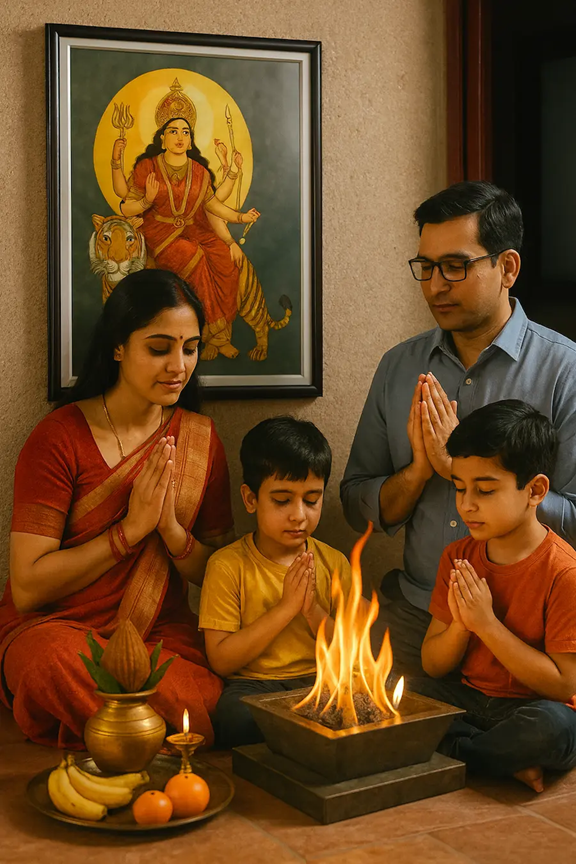
In today’s fast-paced, stress-filled world, the symbolism of Durga Ashtami is more relevant than ever.
- Conquering Inner Demons: Just as Durga destroyed Mahishasura, we must destroy negativity, anxiety, and overthinking.
- Awakening Feminine Energy: The celebration uplifts respect for women and the divine feminine force in society.
- Community Unity: Large-scale havans bring people together, fostering harmony and collective strength.
- Balance of Material and Spiritual: Worship reminds us that while we pursue worldly goals, we must remain rooted in spiritual values.
The Divine Mother is not a distant figure of mythology; she is the eternal Shakti within every individual.
Final Thoughts: Durga Ashtami Havan and Raganuga Bhakti
Swami Mukundananda, in his teachings, emphasizes the path of Raganuga Bhakti — spontaneous devotion born out of love, not obligation. This perspective beautifully ties into the essence of Durga Ashtami Havan.
The ritual of havan may involve fire, chants, and offerings, but its ultimate purpose is to ignite the fire of bhakti (devotion) in the heart. True worship is not mechanical; it is born out of longing for the Divine Mother, just as a child longs for the embrace of the mother.
When devotees sit before the havan fire, they should not only think of offering ghee or grains but also their ego, fears, and attachments. In Raganuga Bhakti, such surrender becomes natural and heartfelt, not forced. The Divine Mother, who is compassion personified, responds to this love by showering grace, protection, and inner transformation.
Durga Ashtami Havan, therefore, becomes more than a ritual — it is a stepping stone to cultivate spontaneous, loving remembrance of God. It reminds us that the highest form of devotion is not driven by fear of sin or desire for reward, but by pure love for the Divine.
As we celebrate Durga Ashtami in 2025, let us carry this lesson forward: to worship the Goddess not just through ritual but through Raganuga Bhakti — loving her as our eternal Mother, protector, and guide.
Call to Action
Join us this Durga Ashtami to celebrate the Divine Mother with devotion and surrender. Participate in the sacred havan, immerse yourself in chanting, and let the fire of worship burn away negativity and ignite divine love. May the blessings of Maa Durga guide your path with strength, purity, and grace.
Durga Pujas
Participate in 9 Sacred Durga Pujas
Durgashtami Havan
Reserve your Spot
Food Festival
Celebrate with Every Bit
Ravan Dahan
Celebrate Dussehra with Devotion
⏳ Countdown to Navratri
Navratri begins on Sunday, Sept 21, 2025. Evening Garba starts at 7:00 PM.
Sacred Offerings for Durga Maa
Offer your devotion through seva.
Garba Workshops
Get ready for Navratri! 💃🕺 Join our Garba Workshop at Radha Krishna Temple, Dallas and learn traditional steps, Dandiya moves, and rhythm with ease.
Dates
Sept 13, 6pm - 7pm
Sept 20, 6pm - 7pm
Price
Garba Workshop: $7
Dandiya Sticks : $5
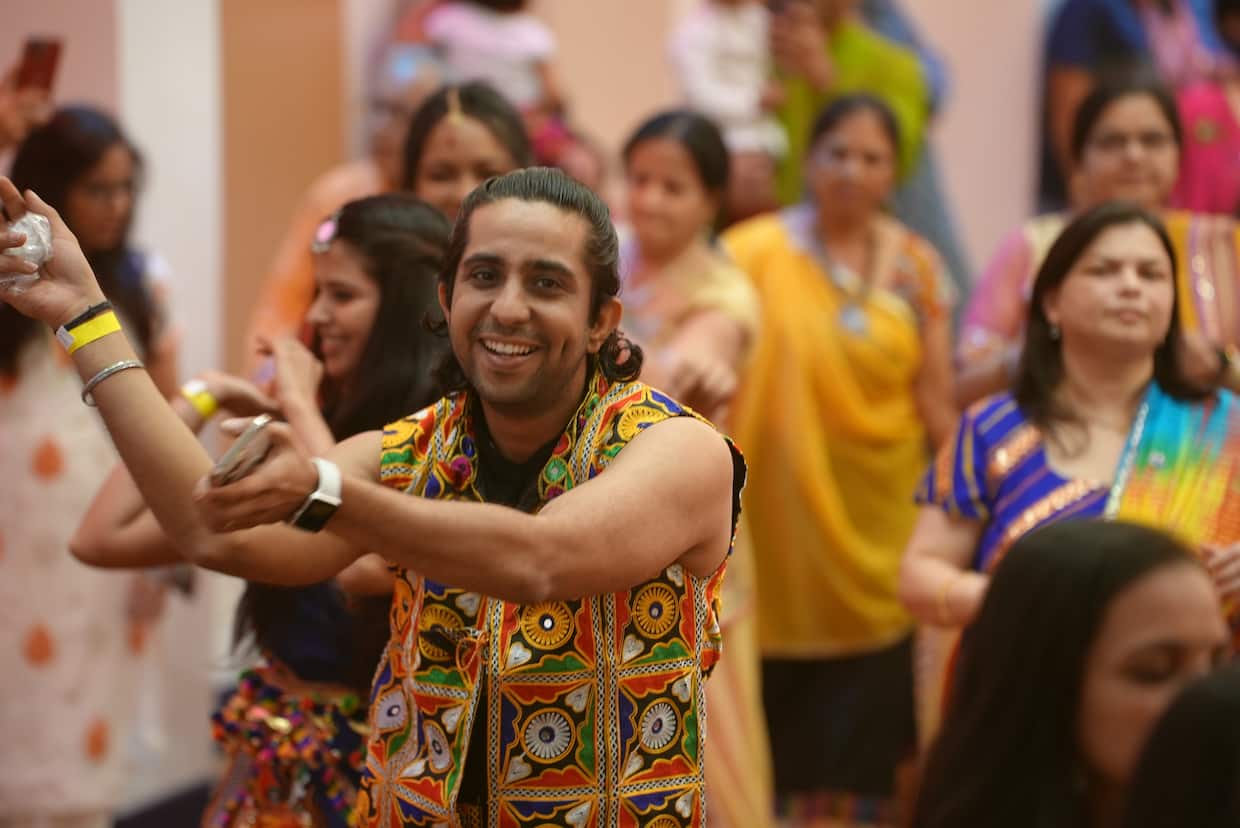
Cherished Moments of Past Navratri Celebrations
Relive the inspiring moments from past Navratri celebrations! Experience the joy, devotion, and vibrant festivities that make this event so special.


Serve, Grow, Inspire! — Volunteer for Navratri Mahotsav
Join us as a volunteer for the Navratri & Dussehra Celebrations! Experience the joy of devotion, build lifelong friendships, and serve the community while being part of these grand festivities. Sign up today to make this celebration truly special
📚 References
- Devi Mahatmyam (Durga Saptashati) – for stories of Goddess Durga’s battles and her manifestations.
- Markandeya Purana – describing the glory of the Divine Mother and rituals of Navratri.
- Skanda Purana – insights on Durga Puja and associated rites.
- Discourses of saints and spiritual teachers, including Swami Mukundananda, on bhakti, surrender, and the path of devotion.
❓ FAQs
Q1. What is the significance of Durga Ashtami?
Durga Ashtami marks the triumph of Goddess Durga over evil forces, symbolizing victory of righteousness and divine energy over negativity.
Q2. What is a havan and why is it performed on Ashtami?
Havan is a sacred fire ritual where offerings are made into the fire with chants. On Ashtami, it represents surrendering ego and impurities to the Divine Mother for purification.
Q3. When is Durga Ashtami in 2025?
Durga Ashtami will be celebrated on Tuesday, September 30th.
Q4. What is offered during Durga Ashtami Havan?
Offerings include ghee, wood, grains, and herbs, symbolizing surrender of desires, fears, and attachments into the sacred fire.
Q5. What is the spiritual benefit of participating in a havan?
Havan purifies the mind, awakens inner strength, removes negativity, and brings devotees closer to the Divine Mother.
Q6. Is fasting necessary on Durga Ashtami?
While many devotees fast, it is not compulsory. The essence lies in devotion, purity of mind, and sincerity in worship.
Q7. What is Kanya Pujan and why is it observed on Ashtami?
Kanya Pujan honors nine young girls as embodiments of Goddess Durga, symbolizing purity and the divine feminine present in all.
Q8. Can havan be performed at home?
Yes. Families can perform a simplified havan at home with devotion, following guidance from scriptures or priests.
Q9. How is Durga Ashtami celebrated in different regions of India?
It varies: Bengal observes Sandhi Puja, North India emphasizes Kanya Pujan, South India focuses on Saraswati Pooja, while Gujarat and Maharashtra celebrate with garba, fasting, and havans.
Q10. How does Durga Ashtami connect to Raganuga Bhakti?
The havan teaches surrender of ego and desires. In Raganuga Bhakti, this surrender becomes spontaneous and loving, as devotion flows naturally toward the Divine Mother.