

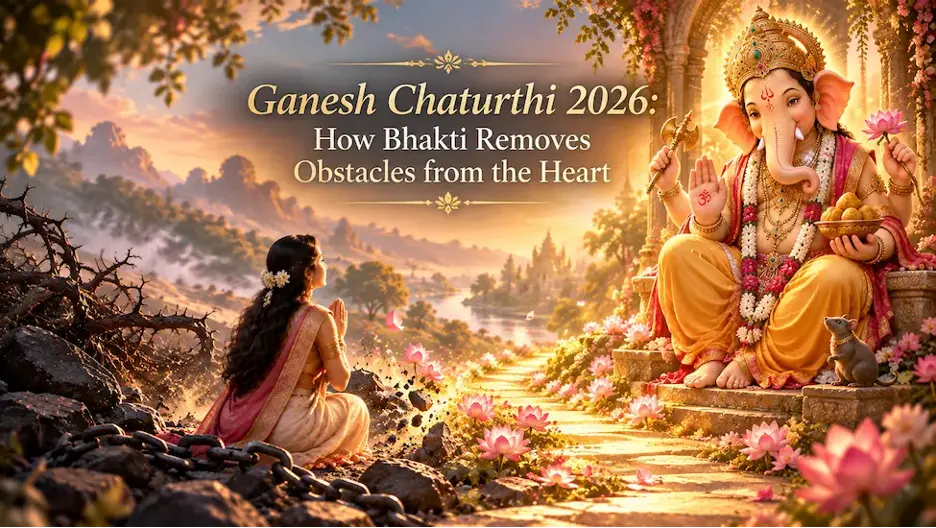
Every Ganesh Chaturthi, devotees lovingly worship Lord Ganesh as Vighnaharta, the remover of obstacles. Before a new beginning, an important decision, or a difficult undertaking, we seek His blessings and pray that difficulties may be removed and our sincere efforts may succeed.
Bhakti gives this prayer a deeper spiritual meaning by directing our attention not only toward the obstacles before us, but also toward the obstacles within us. A difficulty appears and resentment arises. A plan fails and disappointment overwhelms us. Someone opposes us and anger takes hold. A desire remains unfulfilled and our peace disappears with it.
The circumstance may appear to be the obstacle, yet it can also reveal an intolerance of discomfort, dependence on appreciation, attachment to outcomes, possessiveness, pride, resentment, or an insistence that life unfold according to our expectations. These inner tendencies become spiritual obstacles when they disturb our remembrance of God, weaken our devotional consciousness, or make our faith dependent upon favorable circumstances.
The Bhagavad Gita, as explained by Swami Mukundananda, presents a beautiful progression for transforming such obstacles. Spiritual wisdom teaches us to tolerate life's passing dualities, cultivate the qualities of a devotee, perform our duties without attachment, transform our actions into offerings to God, depend upon divine grace, and ultimately surrender our will to Him.
In this deeper understanding of Vighnaharta, we continue to pray for Lord Ganesh to remove difficulties from our path, but we also seek His blessings for the purification of the heart, so that no circumstance becomes powerful enough to separate our consciousness from God.
1. The Obstacle of Needing Life to Change
We naturally divide circumstances into pleasant and unpleasant experiences, and discomfort can quickly begin to appear as an obstacle to our happiness. Shree Krishna offers a deeper perspective in the Bhagavad Gita:

मात्रास्पर्शास्तु कौन्तेय शीतोष्णसुखदु:खदा: ।
आगमापायिनोऽनित्यास्तांस्तितिक्षस्व भारत ॥ 14॥
mātrā-sparśhās tu kaunteya śhītoṣhṇa-sukha-duḥkha-dāḥ
āgamāpāyino ’nityās tāns-titikṣhasva bhārata
BG 2.14: O son of Kunti, the contact between the senses and the sense objects gives rise to fleeting perceptions of happiness and distress. These are non-permanent, and come and go like the winter and summer seasons. O descendent of Bharat, one must learn to tolerate them without being disturbed.
Swami Mukundananda explains that experiences of pleasure and pain generated through the senses are temporary, just as the same cool water that gives pleasure in summer may cause discomfort in winter. Like the seasons, pleasure and pain come and go, and neither condition remains permanently.
When we believe that peace will come only after a problem disappears, life becomes spiritually exhausting. We begin to postpone our inner peace and even our devotional focus until circumstances become favorable. In this way, intolerance becomes an obstacle to bhakti because our remembrance of God becomes dependent upon the world cooperating with our preferences.
Shree Krishna therefore teaches titiksha, or tolerance. Swami Mukundananda explains this principle with the observation, "The sign of progress is an enhanced tolerance." This does not require passivity or prevent us from improving a difficult situation. Appropriate external effort should still be made, but spiritual wisdom prevents temporary pleasure and pain from controlling the state of our heart.
Bhakti gradually transforms our relationship with discomfort. A delay may remain, but patience can grow. Uncertainty may continue, but faith can deepen. The situation may not immediately change, but the devotee learns to remain connected with God while passing through it. The deeper obstacle is therefore not always the unpleasant circumstance itself, but the conviction that peace and devotion are possible only after the circumstance changes.
The prayer to Vighnaharta then becomes deeper: O Lord Ganesh, remove what needs to be removed from my path, and bless me with the tolerance and wisdom to remain spiritually steady when life becomes uncomfortable.
2. Resentment, Pride, and the Obstacles Revealed Through Relationships

Relationships often reveal tendencies that remain hidden when everything unfolds according to our wishes. Criticism can expose pride, disagreement can uncover intolerance, hurt can become resentment, and the desire for appreciation can reveal how strongly our happiness depends upon the responses of others.
Shree Krishna describes the qualities of the devotee He loves:

अद्वेष्टा सर्वभूतानां मैत्र: करुण एव च ।
निर्ममो निरहङ्कार: समदु:खसुख: क्षमी ॥ 13॥
सन्तुष्ट: सततं योगी यतात्मा दृढनिश्चय: ।
मय्यर्पितमनोबुद्धिर्यो मद्भक्त: स मे प्रिय: ॥ 14॥
adveṣhṭā sarva-bhūtānāṁ maitraḥ karuṇa eva cha
nirmamo nirahankāraḥ sama-duḥkha-sukhaḥ kṣhamī
santuṣhṭaḥ satataṁ yogī yatātmā dṛiḍha-niśhchayaḥ
mayy arpita-mano-buddhir yo mad-bhaktaḥ sa me priyaḥ
BG 12.13-14: Those devotees are very dear to Me who are free from malice toward all living beings, who are friendly, and compassionate. They are free from attachment to possessions and egotism, equipoised in happiness and distress, and ever-forgiving. They are ever-content, steadily united with Me in devotion, self-controlled, of firm resolve, and dedicated to Me in mind and intellect.
These verses show that bhakti is not confined to acts of worship. Genuine devotion gradually transforms character. Malice gives way to friendliness, indifference to compassion, pride to humility, resentment to forgiveness, and endless wanting to contentment.
Swami Mukundananda explains that devotees recognize all living beings as parts of God, and this understanding naturally fosters friendliness and compassion. His explanation of forgiveness is particularly relevant because negative thoughts toward another person ultimately damage our own devotion. Resentment keeps the consciousness repeatedly tied to the hurt and the person who caused it, occupying the very inner space that bhakti seeks to fill with remembrance of God.
This teaching does not require tolerating abuse or ignoring wrongdoing. Necessary external action can be taken with wisdom and firmness while we refuse to allow another person's behavior to become the permanent ruler of our inner world. Bhakti works at this deeper level by changing the heart that responds to the situation.
Swami Mukundananda also explains, "Contentment comes not from increasing our possessions, but by decreasing our wants." The principle extends beyond material possessions. When our peace depends upon others appreciating us, agreeing with us, or behaving according to our expectations, we give external circumstances enormous power over our consciousness. As these demands decrease, devotion becomes steadier and the heart becomes freer.
The prayer to Lord Ganesh therefore expands beyond the removal of difficult people or circumstances: O Vighnaharta, remove malice, pride, possessiveness, and resentment from my heart, and help me grow in compassion, forgiveness, humility, and contentment, the qualities that make a devotee dear to God.
3. Attachment to Results and the Pride of Doership
Few experiences expose attachment as clearly as an unwanted result. We may work hard, plan carefully, pray sincerely, and give our best, yet the outcome may still differ from what we hoped to receive.
Shree Krishna teaches:
कर्मण्येवाधिकारस्ते मा फलेषु कदाचन ।
मा कर्मफलहेतुर्भूर्मा ते सङ्गोऽस्त्वकर्मणि ॥ 47 ॥
karmaṇy-evādhikāras te mā phaleṣhu kadāchana
mā karma-phala-hetur bhūr mā te saṅgo ’stvakarmaṇi
BG 2.47: You have a right to perform your prescribed duties, but you are not entitled to the fruits of your actions. Never consider yourself to be the cause of the results of your activities, nor be attached to inaction.
Swami Mukundananda highlights four instructions contained within this verse: we should perform our duty, release attachment to the result, give up pride of doership, and avoid becoming attached to inaction.
This teaching does not encourage reduced effort. It transforms the consciousness with which effort is made. Arjun's outer responsibility did not disappear when Shree Krishna taught him the principles of Karma Yog. The transformation occurred within his consciousness.
Attachment to results becomes an obstacle to bhakti when the desired outcome becomes more important than pleasing God. Success can then strengthen pride, while failure can produce resentment, discouragement, or even doubt in divine grace. The heart becomes absorbed in whether personal expectations have been fulfilled instead of whether one's actions have been performed sincerely and offered to God.

Swami Mukundananda explains that results depend upon many factors beyond individual effort, including past karmas, the efforts of others, prevailing circumstances, and the will of God. We should therefore work wholeheartedly and use our abilities fully, while recognizing that sincere effort does not give us absolute control over the outcome.
Bhakti gradually transforms attachment into offering. The devotee still works with dedication, but success no longer becomes the source of pride and failure no longer becomes proof that grace is absent. The deeper obstacle is not merely failure, but attachment to success, pride of doership, and the expectation that divine grace must always resemble our preferred outcome.
The prayer becomes: O Vighnaharta, give me the strength to make my best effort without allowing the result to become the owner of my peace. Remove the pride that claims independent doership, and teach me to place the fruits of my efforts at the feet of God.
4. Bhakti Transforms Self-Centered Action into Offering
Detachment from results is not the fullness of bhakti. Bhakti goes further by transforming the purpose for which our actions are performed.
Shree Krishna teaches:
यत्करोषि यदश्नासि यज्जुहोषि ददासि यत् ।
यत्तपस्यसि कौन्तेय तत्कुरुष्व मदर्पणम् ॥ 27॥
yat karoṣhi yad aśhnāsi yaj juhoṣhi dadāsi yat
yat tapasyasi kaunteya tat kuruṣhva mad-arpaṇam
BG 9.27: Whatever you do, whatever you eat, whatever you offer as oblation to the sacred fire, whatever you bestow as a gift, and whatever austerities you perform, O son of Kunti, do them as an offering to Me.
Swami Mukundananda explains that devotion is not meant to remain confined to a temple or a designated period of spiritual practice. Work, family responsibilities, cooking, studying, serving, and the use of our abilities can all be mentally offered to God.
The spirit of arpanam, or offering, is deeper than completing an action for ourselves and dedicating it to God afterward. Devotional consciousness should be cultivated while the action is being performed through the inner sentiment, "I am doing this for the pleasure of God."
This transformation directly addresses selfishness and possessiveness within the heart. When our actions revolve around personal enjoyment, recognition, or reward, the ego remains at the center. Bhakti gradually replaces this self-centered consciousness with God-centered consciousness. Work becomes seva, talent becomes something entrusted to us for service, and relationships become opportunities to practice selfless love.
The distinction between "my spiritual life" and "the rest of my life" also begins to dissolve. The very activities in which attachments once developed become opportunities for devotion. Instead of constantly measuring what we are receiving, the consciousness gradually becomes concerned with whom the action is being performed for and whether it is pleasing to God.
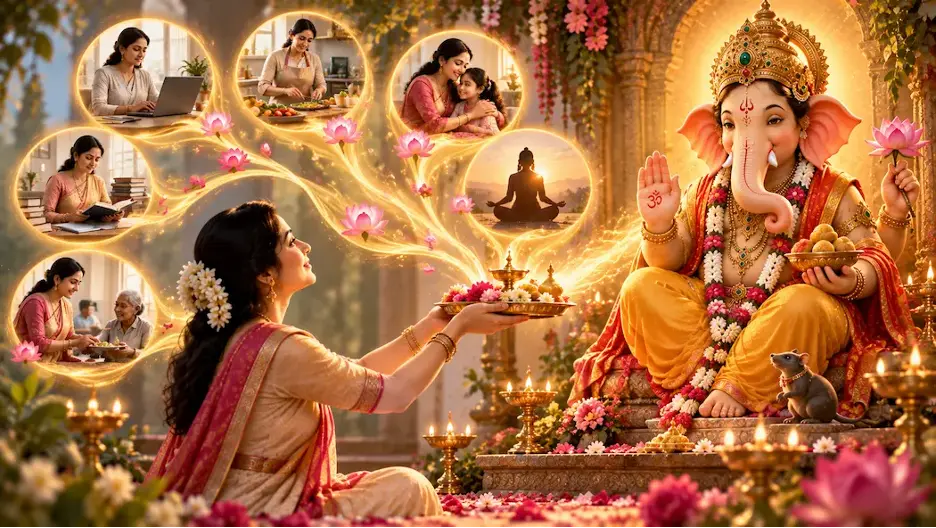
The prayer to Lord Ganesh therefore becomes: O Vighnaharta, remove the selfish consciousness that makes my actions revolve around personal enjoyment and reward. Bless me so that my work, abilities, relationships, responsibilities, and ordinary day may become offerings to God.
5. Bhakti Removes the Power of an Obstacle to Separate Us from God
External obstacles do not always disappear. A difficult person may remain difficult, uncertainty may remain unresolved, and the desired result may still not come. Bhakti does not promise a life in which every external circumstance conforms to our preferences, but it can transform the heart encountering those circumstances.
Intolerance can gradually become tolerance, resentment can become forgiveness, pride can become humility, discontent can become contentment, and attachment to outcomes can become offering. These transformations are not merely improvements in personality. They protect and deepen bhakti because the circumstances that once consumed our consciousness gradually lose their power to pull the mind away from God.
Bhakti changes the center of consciousness. Comfort is no longer the primary measure of a successful day because spiritual growth becomes more important. The hunger for recognition softens into humility, while attachment to outcomes gives way to the desire to please God. The sense of personal strength and independence gradually yields to reliance upon divine grace.
Shree Krishna gives an extraordinary assurance in the Bhagavad Gita:

मच्चित्त: सर्वदुर्गाणि मत्प्रसादात्तरिष्यसि ।
अथ चेत्वमहङ्कारान्न श्रोष्यसि विनङ्क्ष्यसि ॥ 58॥
mach-chittaḥ sarva-durgāṇi mat-prasādāt tariṣhyasi
atha chet tvam ahankārān na śhroṣhyasi vinaṅkṣhyasi
BG 18.58: If you always remember Me, by My grace you shall overcome all obstacles and difficulties. But if, due to pride, you do not listen to My advice, you will perish.
This verse does not promise that devotees will never encounter obstacles. Instead, Shree Krishna teaches that through His grace they will overcome them. Swamiji explains that the soul should not imagine itself to be independent of God. When the mind takes shelter in Him and remains fixed upon Him, divine grace enables the soul to cross difficulties.
The opposing force is ahankar, or pride, which creates the illusion that we are independent and must control everything through our own strength. Bhakti transforms this consciousness into humble dependence upon God. The devotee continues to make every sincere effort while recognizing that God's wisdom is greater than individual understanding and that ultimate success in the spiritual journey depends upon His grace.
One of the deepest obstacles Vighnaharta can therefore remove from the heart is the illusion of independence from God.
6. The Transformation of the Heart Through Bhakti
The progress of bhakti is reflected not merely in easier circumstances or fulfilled prayers, but in the qualities developing within the heart. Bhagavad Gita 12.13–14 gives us a spiritual measure of this transformation through compassion, humility, forgiveness, contentment, steadiness, self-control, firm resolve, and dedication to God.
A heart transformed by bhakti becomes less resentful and more compassionate, less possessive and more content, less disturbed by pleasure and pain, and increasingly dedicated to God. Difficulty begins to deepen dependence upon Him rather than bitterness, success produces gratitude rather than pride, criticism becomes an opportunity for humility rather than resentment, and uncertainty encourages remembrance rather than complete dependence upon personal control.
This transformation also changes the nature of prayer. In the beginning, prayer may primarily seek favorable circumstances, success, relief, and the removal of whatever stands between us and our desired goal. As spiritual knowledge deepens, prayer begins to seek wisdom, right understanding, and the strength to respond in a manner that brings us closer to God.
Bhakti then takes prayer deeper into purification. The devotee seeks freedom from pride, resentment, possessiveness, attachment to results, and the insistence that divine grace must appear according to personal expectations. Eventually, surrender transforms the prayer completely as abilities, work, successes, failures, future, and heart are increasingly offered to God.
The progression moves from "Give me" to "Teach me," then to "Purify me," and ultimately to "Take me." The external world may not have changed greatly, but the center of the devotee's existence has changed.
7. Surrender Removes the Deepest Obstacle of Self-Will
At the conclusion of the Bhagavad Gita, Shree Krishna gives Arjun His culminating instruction:
सर्वधर्मान्परित्यज्य मामेकं शरणं व्रज ।
अहं त्वां सर्वपापेभ्यो मोक्षयिष्यामि मा शुच: ॥ 66॥
sarva-dharmān parityajya mām ekaṁ śharaṇaṁ vraja
ahaṁ tvāṁ sarva-pāpebhyo mokṣhayiṣhyāmi mā śhuchaḥ
BG 18.66: Abandon all varieties of dharmas and simply surrender unto Me alone. I shall liberate you from all sinful reactions; do not fear.
Swami Mukundananda explains that the Bhagavad Gita presents progressively higher teachings. First comes karm, in which we perform our material duties. Then comes Karma Yog, in which duties are performed while the consciousness remains united with God. Finally comes the highest spiritual orientation, in which the soul recognizes its eternal relationship with God and lives in loving devotional service to Him.
Surrender is therefore neither passivity nor an excuse to abandon responsibility. It changes the center from which we live. The one who primarily sought enjoyment gradually becomes the one who seeks to serve. The sense of independent doership gives way to the recognition that God provides the very power by which we act, while attachment to the result softens into a willingness to offer the outcome to Him.
The deepest transformation occurs within self-will. As long as our happiness and devotion depend upon life conforming to our expectations, whatever opposes those expectations appears to be an obstacle. Through bhakti, the insistence that personal will must prevail gradually becomes the desire that our will be aligned with God's will.
At this stage, an external difficulty may still exist, but its spiritual power has changed. If the circumstance cannot prevent the devotee from remembering, loving, serving, and surrendering to God, it can no longer stand between the soul and its ultimate goal.
This Ganesh Chaturthi, Ask Vighnaharta for Something Greater
There is nothing wrong with asking Lord Ganesh to bless a new beginning, remove a difficulty, guide an important decision, or help our sincere efforts succeed. Ganesh Chaturthi, however, can also become an occasion for a deeper prayer in which we seek the purification of the heart along with the clearing of the path.
At first, our prayer seeks the removal of whatever stands between us and what we desire. Spiritual wisdom gradually teaches us to seek the removal of whatever stands between us and what is right. Bhakti carries the prayer deeper still by seeking the removal of whatever stands between our heart and God. Surrender finally allows us to pray that even when an external obstacle must remain, the inner obstacle preventing us from loving and serving God through that circumstance may be removed.
This Ganesh Chaturthi, we can therefore pray:
O Lord Ganesh, remover of obstacles, bless me with the wisdom to seek not only a clearer path, but also a purer heart.
When hardship comes, remove my intolerance. When success comes, remove my pride. When I am hurt, remove resentment. When results differ from my expectations, remove attachment and teach me to offer my efforts to God.
Remove possessiveness, the illusion of independence, and the self-will that resists divine grace. Replace them with humility, contentment, devotion, and surrender.
If an obstacle must remain, bless me with the wisdom to grow through it. Above all, remove whatever prevents me from loving, remembering, serving, and surrendering to God.
O Vighnaharta, do not merely clear my path. Purify the one who walks upon it.
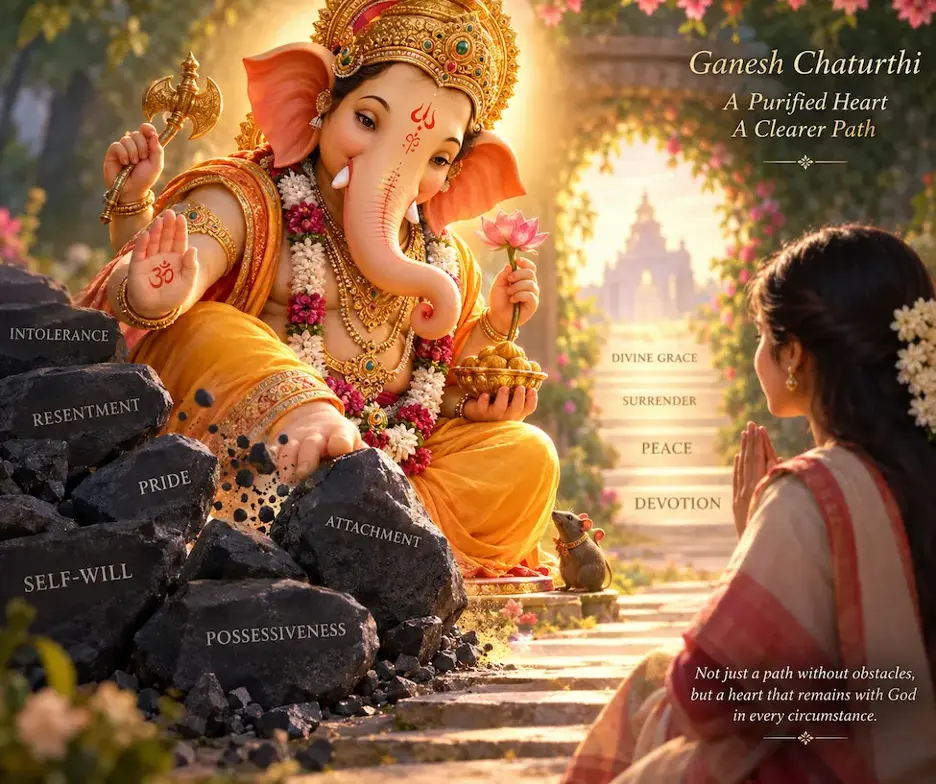
Perhaps one of the greatest blessings we can seek from the remover of obstacles is not a life in which every difficulty disappears, but a heart so transformed by spiritual wisdom, bhakti, and divine grace that nothing on the path can stand between the soul and God.
Key Takeaways
- The deepest obstacles are often within the heart. Pride, resentment, attachment, possessiveness, and self-will obstruct bhakti when they disturb our remembrance of God.
- Bhakti transforms these obstacles by cultivating tolerance, forgiveness, humility, contentment, and a desire to please God.
- Karma Yog teaches us to perform our duties sincerely while releasing attachment to results and pride of doership.
- Offering our actions to God transforms ordinary work and responsibilities into opportunities for devotion and seva.
- Spiritual progress is reflected in a heart that remains increasingly connected with God through both favorable and difficult circumstances.
- The deepest transformation occurs through surrender, when dependence on personal control gradually gives way to reliance upon divine grace and alignment with God's will.
- Vighnaharta's grace can be sought not only to clear the path before us, but also to purify the heart so that nothing separates us from God.
Frequently Asked Questions
1. Why is Lord Ganesh called Vighnaharta?
Lord Ganesh is worshipped as Vighnaharta, the remover of obstacles. Devotees seek His blessings for external difficulties as well as for the purification of inner obstacles that hinder spiritual progress.
2. What are the main inner obstacles to bhakti?
Pride, resentment, possessiveness, attachment to results, intolerance, selfishness, and self-will become obstacles when they disturb remembrance of God and weaken devotional consciousness.
3. How does bhakti remove obstacles from the heart?
Bhakti gradually transforms resentment into forgiveness, pride into humility, discontent into contentment, attachment into offering, and self-will into surrender.
4. Does bhakti remove every difficulty from life?
Bhakti does not guarantee the disappearance of every external difficulty. It transforms the heart so that circumstances gradually lose their power to disturb our devotion and separate our consciousness from God.
5. What can devotees pray for on Ganesh Chaturthi 2026?
Devotees can pray for Lord Ganesh to remove external difficulties while also seeking His grace to purify pride, resentment, attachment, and self-will and deepen remembrance, devotion, and surrender to God.