


"सब धरती कागज करूँ, लेखनी सब बनराय।
सात समुद्र की मसि करूँ, गुरु गुण लिखा न जाय॥"
If the whole earth became paper, every tree became a pen, and the seven oceans became ink, even then the glory of the Divine Guru could not be fully written.
With this unforgettable image, Sant Kabir reminds us that the Divine cannot be contained by language, intellect, or human imagination. As we celebrate Kabir Das Jayanti 2026, this doha becomes the perfect doorway into his wisdom.
In 2026, we are more connected than ever, yet why do we feel so deeply disconnected from ourselves?
Every day begins with notifications. Our minds race before our feet even touch the floor. We curate identities online, chase productivity like a religion, and mistake digital attention for emotional fulfillment. The modern world teaches us how to perform happiness, but very rarely how to experience inner stillness.
Five centuries ago, a mystic poet from Kashi understood this human condition with frightening clarity.
As we celebrate Kabir Das Jayanti on June 29, 2026, the words of Sant Kabir do not feel ancient at all. They feel urgent, relevant and personal.
Kabir did not speak in complicated philosophies reserved for scholars. He spoke directly to restless hearts. He questioned hollow rituals, challenged social divisions, and exposed the ego that keeps human beings trapped in illusion. His poetry was not meant to impress people. It was meant to awaken them.
For anyone walking a devotional path, Kabir offers something rare: spiritual honesty.
Not escapism.
Not performance.
Not borrowed wisdom.
But a fierce invitation to meet the Divine within yourself.
His teachings are especially meaningful today because modern spirituality itself often becomes another form of consumption. We buy books, attend retreats, post quotes online, and collect spiritual identities while remaining emotionally exhausted inside. Kabir tears apart this superficiality. He reminds us that devotion is not decoration. It is transformation.
This Kabir Das Jayanti, perhaps the greatest tribute we can offer the saint poet is not simply singing bhajans or sharing social media posts. Perhaps it is pausing long enough to ask ourselves:
Have we truly listened to what Kabir was trying to teach ?
Humility: The First Step in Kabir’s Devotional Path
As we celebrate Kabir Das Jayanti, Sant Kabir’s life offers profound inspiration for deepening our devotional journey. His central message is clear: the virtue most cherished by the Divine is absolute humility.
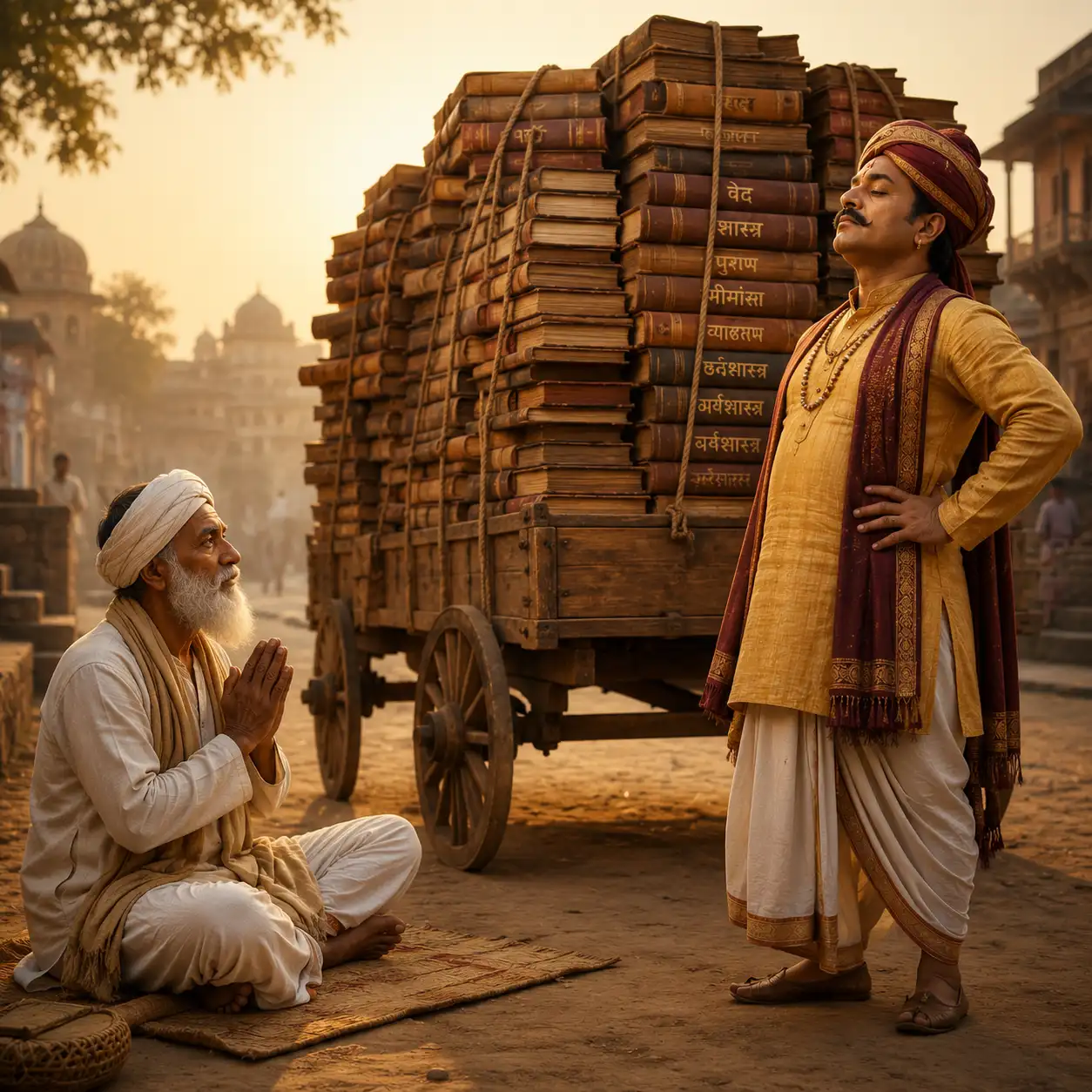
A powerful story from Kabir Ji’s life shared by Swami Mukundananda beautifully illustrates this truth. Once, a proud scholar named Sarvajit challenged Kabir Ji to a debate, arriving with a cart overflowing with books. Seeing the scholar’s vast collection, Kabir Ji did not argue or try to prove his own greatness. Instead, with complete humility, he accepted defeat.
Sarvajit then demanded that Kabir Ji sign a written confession of his defeat. But when Sarvajit handed the note to his mother, the words had mysteriously changed to declare that Kabir had won. This happened repeatedly, until his wise mother revealed the deeper truth: arrogance can never conquer true humbleness.
For the modern seeker, this story is more than a miracle tale. It is a mirror. We may collect knowledge, quotes, scriptures, and spiritual ideas, but if they make us proud, they take us farther from devotion. True wisdom does not inflate the ego. It softens the heart.
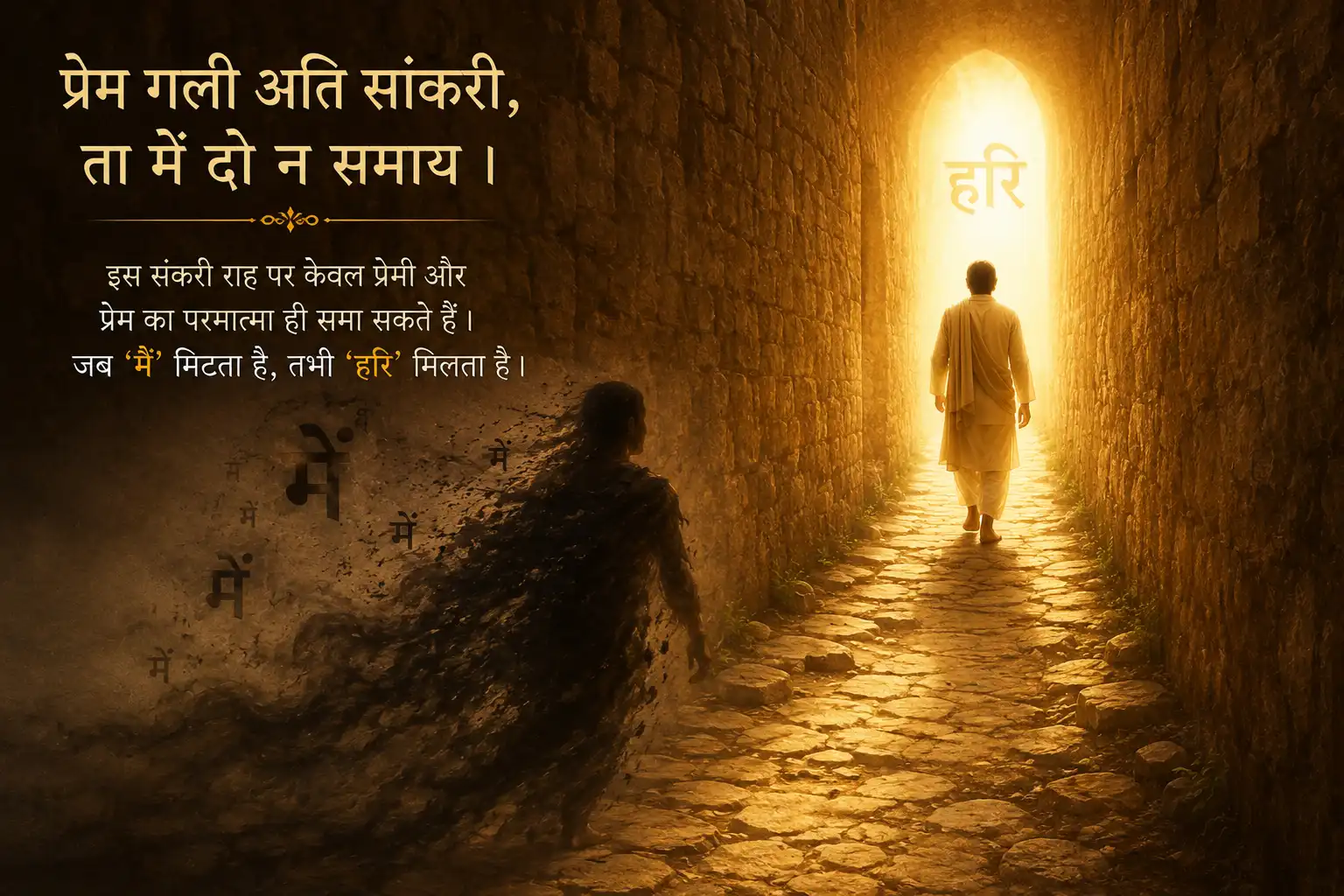
Kabir Ji also teaches that the path of selfless love is narrow. It cannot hold both God and ego at the same time. When the ego fills the heart, Divine grace has no space to enter. But when the Divine enters, the ego naturally slips away.
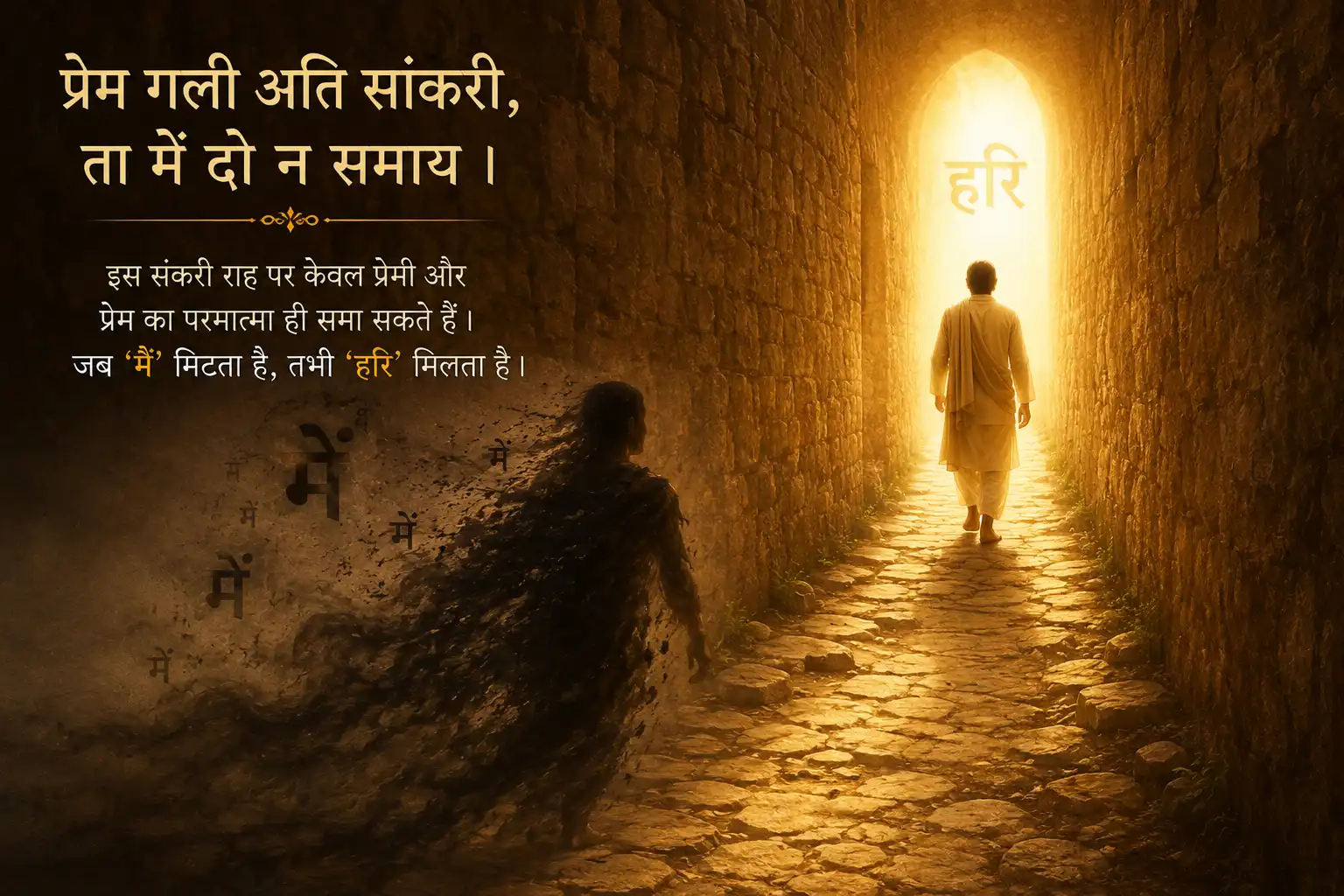
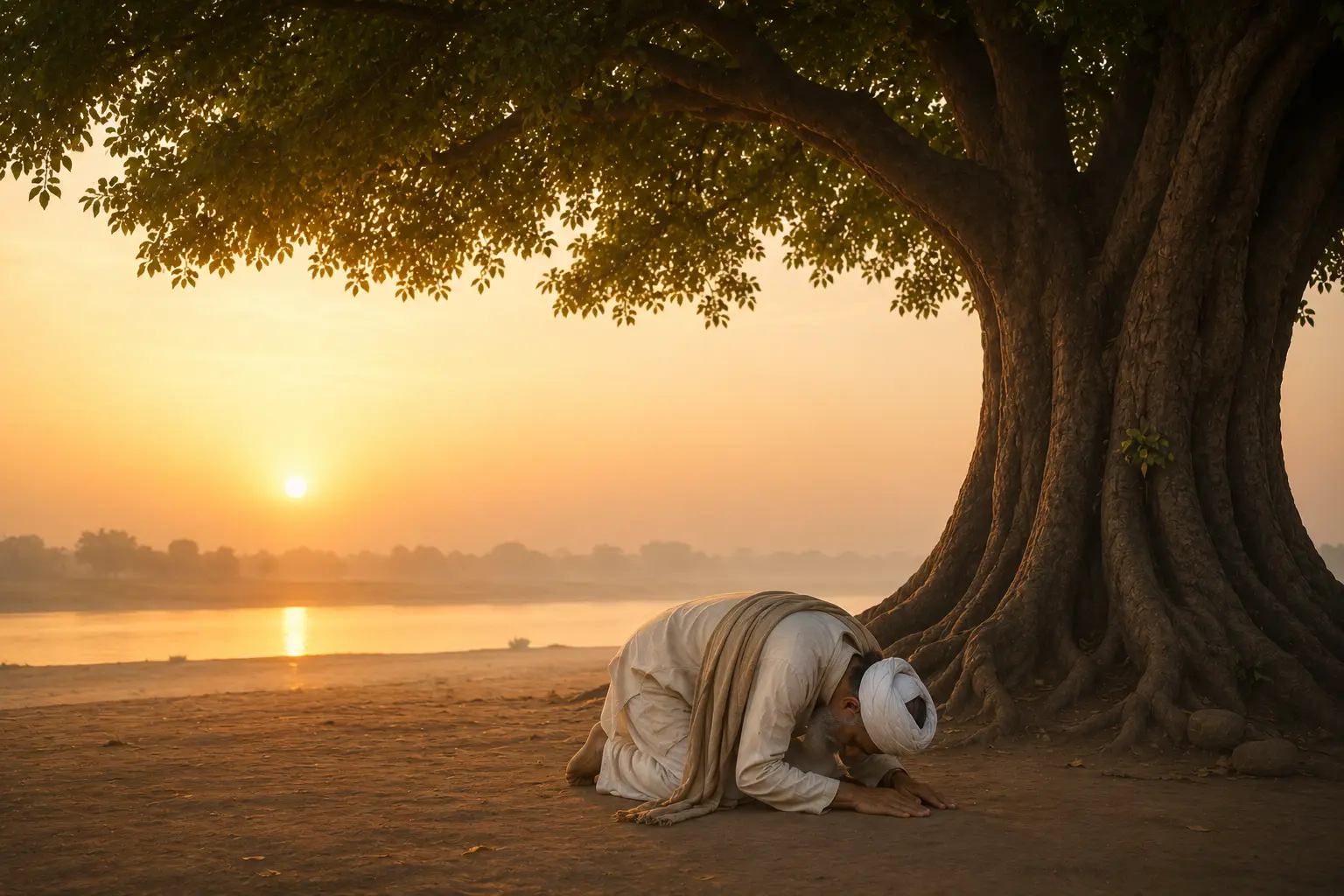
This Kabir Das Jayanti, let humility become the foundation of your devotional journey. Bowing down does not make the seeker weak. It makes the heart open enough to receive God.
The Timeless Mystic of Kashi: The Saint Who Refused Labels
To understand why Kabir’s message still shakes modern consciousness, we must first understand the extraordinary world he emerged from.
Kabir Das was born in 15th-century Varanasi, a city overflowing with religious activity, spiritual traditions, caste divisions, and ritualistic practices. Historians continue to debate the details of his birth, but what remains universally accepted is his revolutionary influence.
Raised in a humble Muslim weaver family, Kabir became associated with the Hindu Bhakti saint Ramananda. Yet he refused to belong completely to either religious structure. He challenged both Hindu and Muslim orthodoxy with equal fearlessness.
That alone makes Kabir extraordinary.
In an era where identity politics dominates conversations across the world, Kabir’s life becomes a profound lesson in spiritual universality. He refused to reduce human beings into categories. For him, devotion mattered more than labels. Inner purity mattered more than external affiliation.
Kabir did not isolate himself in forests or caves. He lived among ordinary people, worked at his loom, and earned his livelihood while singing truths that would outlive empires. Yet his spiritual greatness was also rooted in his deep longing for a Guru.
Swami Mukundananda shares a beautiful story about how Sant Kabir found his Guru, Ramananda. Kabir deeply wished to become Ramananda’s disciple, but because of social and religious barriers, he feared he would not be accepted openly. Determined to receive his Guru’s grace, Kabir lay down silently on the steps of the Ganges before dawn, knowing Ramananda would pass that way for his morning bath. In the darkness, Ramananda accidentally stepped on Kabir and spontaneously exclaimed, “Ram! Ram!” Kabir accepted these words as his divine initiation mantra and joyfully embraced Ramananda as his Guru.

This story beautifully reflects Kabir’s humility, determination, and intense longing for spiritual guidance. It teaches modern seekers that true devotion requires sincerity and surrender rather than social recognition or external approval. In 2026, when many people seek quick spiritual results, Kabir’s journey reminds us that genuine transformation begins with patience, humility, and an earnest desire to receive divine wisdom.
This aspect of Kabir’s life is deeply important for the modern seeker. Many people today believe spirituality requires escaping worldly life. We imagine peace exists only in mountains, retreats, or distant temples. Kabir completely dismantles this idea. His life proves that devotion can exist inside ordinary routines. The Divine can be remembered while cooking food, traveling to work, raising children, or fulfilling responsibilities.
Spirituality is not separate from life. Spirituality is the quality we bring into life.
As Kabir Das Jayanti 2026 approaches, his life reminds us that true devotion is not about appearing spiritual. It is about becoming truthful.
Finding the Divine Within: Kabir’s Greatest Spiritual Revolution
One of Kabir’s most radical teachings was astonishingly simple:
God is not far away.
The Divine is not hiding in complicated rituals, external appearances, or endless religious performances. It already exists within every human being.
Kabir repeatedly warned people against becoming trapped in mechanical spirituality. He saw individuals performing rituals with great dedication while their minds remained distracted, restless, jealous, and ego-driven.
His criticism feels uncannily relevant
Today, spirituality itself has become aestheticized. Meditation is often reduced to productivity optimization. Sacred practices become social media content. People showcase spirituality outwardly while inwardly remaining anxious and disconnected
Kabir addressed this exact contradiction centuries ago through one of his most powerful dohas:
"माला तो कर में फिरै, जीभि फिरै मुख माँहि।
मनुआँ तो दहुँ दिसि फिरै, यह तो सुमिरन नाहिं॥"
(Mala to kar mein phirai, jeebh phirai mukh maahi,
Manua to dahu disi phirai, yeh to sumiran naahi.)
The rosary rotates in the hand, and the tongue moves in the mouth. But if the mind wanders in all directions, this is not true devotion.
This doha is not merely criticism of rituals. It is a diagnosis of divided attention.
In modern life, our minds rarely remain present. Even while praying, we think about work emails. During meditation, we mentally replay conversations. While spending time with loved ones, we scroll through phones.
Kabir’s teaching is clear: devotion without presence becomes performance.
The Illusion of Searching Outside
Kabir repeatedly challenged the idea that the Divine must be searched for in distant places. He believed that people wander endlessly through rituals, pilgrimages, and external identities while ignoring the sacred presence already within them.
He expresses this beautifully in his famous doha:
"मोको कहाँ ढूँढे रे बन्दे, मैं तो तेरे पास में।
ना मैं देवल ना मैं मस्जिद, ना काबे कैलास में॥"
(Moko kahan dhoondhe re bande, main to tere paas mein.
Na main deval na main masjid, na Kaabe Kailas mein.)
The Translation: O seeker, where do you search for Me? I am already close to you. I am not limited to temples, mosques, Kaaba, or Kailash.
Through this teaching, Kabir reminds us that the Divine is not confined to external structures or distant destinations. True devotion begins when the seeker turns inward. For the modern world , this message feels especially powerful. We constantly search outside ourselves for fulfillment, validation, and peace, while ignoring the stillness already present within our own hearts. Kabir invites us to stop chasing endlessly and begin listening inwardly.
The Divine Beyond Description
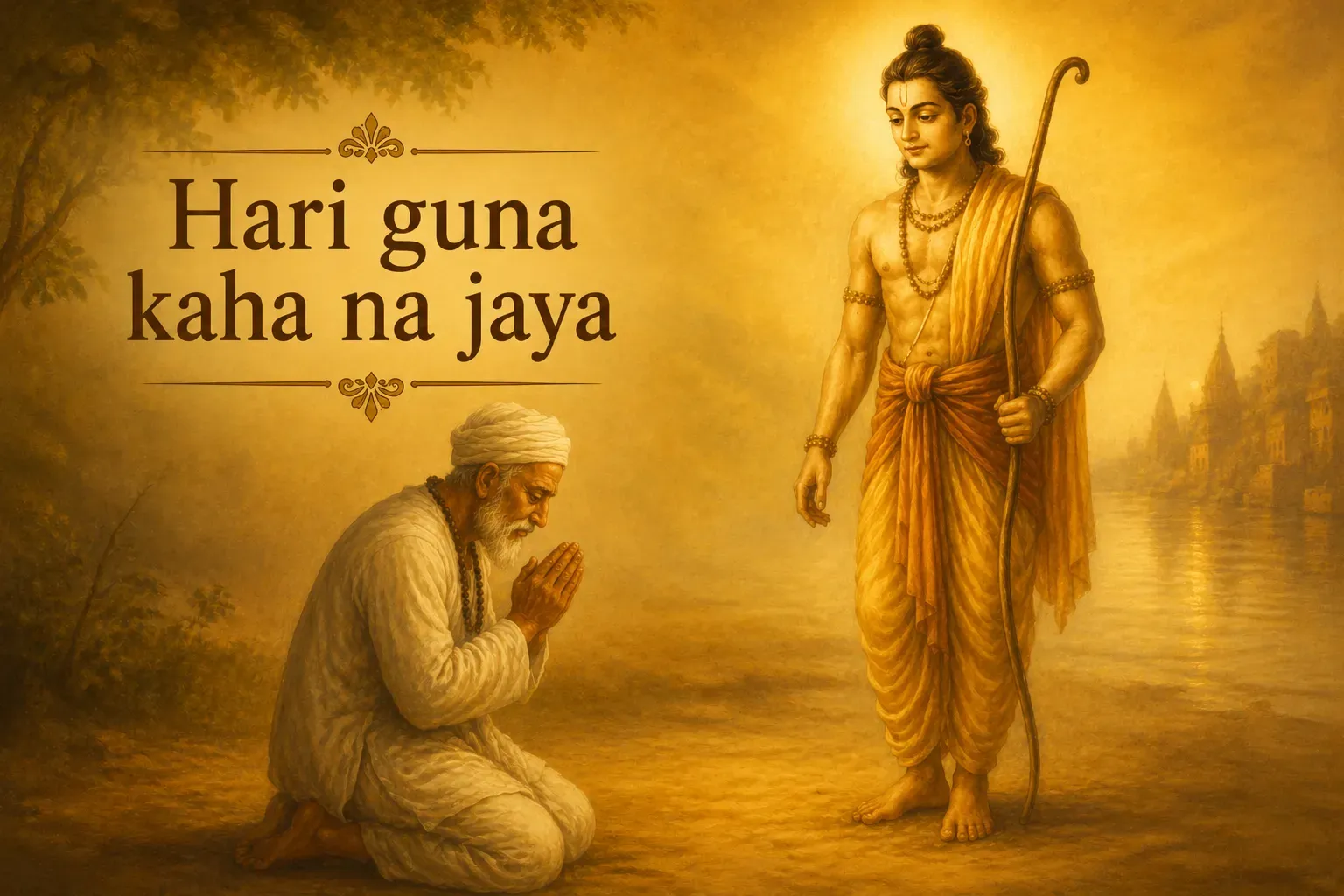
In a discourse on Sant Kabir, Swami Mukundananda beautifully explains one of Kabir’s renowned poems on the limitless nature of the Divine. Kabir uses dramatic imagery to show that even if the entire earth were turned into paper, every tree became a writing instrument, and the seven oceans were used as ink, it would still not be enough to describe the infinite qualities of God.
Through this metaphor, Kabir reminds us that the magnificence of the Creator is far beyond human language, intellect, or physical resources. The Divine can be experienced through devotion, humility, and love, but can never be fully captured in words. We often try to explain, label, and analyze everything. Kabir invites us to accept that the highest truth is not always something to define. Sometimes, it is something to surrender to.
The Path of Love Over Dogma
Kabir’s spirituality was rooted in love, not fear.
He believed devotion was not about proving religious superiority or blindly following customs. It was about dissolving separation between oneself and the Divine through pure love.
This perspective becomes especially healing in today’s climate of ideological division and constant outrage.
Modern culture rewards argument more than understanding. Social media platforms encourage emotional reactions instead of reflection. People are constantly pressured to choose sides, defend identities, and participate in conflict.
Kabir rejected this entire mentality.
For him, truth could never be captured by rigid dogma alone. The Divine was too vast to belong exclusively to any institution or doctrine.
This is why his poetry feels deeply liberating even today. Kabir invites the seeker to move beyond borrowed beliefs and experience spirituality directly.
He says devotion is not intellectual gymnastics. It is inner surrender.
One of his lesser-known yet profound verses beautifully expresses this idea:
"साईं सो हिलमिल रहै, जैसी लूण बिलाय।
परचा पाया प्रेम का, तब कछु कह्या न जाय॥"
(Sayeen so hilmil rahai, jaisi loon bilaay,
Parcha paaya prem ka, tab kachu kahya na jaay.)
Merge with the Divine just as salt dissolves into water. Once touched by ultimate love, words become unnecessary.
This doha speaks about ego dissolution.
Salt loses its separate identity when it dissolves into water. In the same way, true devotion slowly melts the rigid boundaries of the ego.
Modern life constantly strengthens the ego:
- personal branding
- comparison culture
- competition
- validation seeking
- image management
Kabir invites us in the opposite direction.
Not toward self-erasure, but toward inner spaciousness where the obsession with “me” begins to soften.
The Courage of Ego Death
Modern self-help culture often focuses on becoming stronger, more successful, and more influential. While confidence has value, Kabir believed genuine spiritual growth requires something far more difficult:
The courage to let the false self die.
This does not mean losing individuality. It means releasing attachment to ego-driven identities.
Kabir understood that the ego constantly seeks control, superiority, validation, and recognition. It resists humility because humility threatens its illusion of importance.
That is why Kabir described the devotional path as intense and demanding.
"कबीर यहु घर प्रेम का, खाला का घर नाहिं।
सीस उतारे हाथि करि, सो पैठे घर माहिं॥"
(Kabir yahu ghar prem ka, khaala ka ghar naahi,
Sees utaare haathi kari, so paithe ghar maahi.)
This path of love is not an easy place where anyone casually enters. Only the one willing to surrender their head can step inside.
The “head” here symbolizes ego.
Our identities are heavily tied to external perception:
- follower counts
- achievements
- opinions
- professional titles
- curated lifestyles
Kabir’s wisdom asks a terrifying yet transformative question:
Who are you without all these labels?
This is why his teachings remain spiritually explosive even today. He challenges the very foundation of modern identity culture.
True devotion, according to Kabir, is not adding another identity called “spiritual person.” It is removing the layers that prevent authenticity.
Observe your emotional reactions carefully.
When criticism hurts deeply or praise feels addictive, ask yourself:
“What part of my ego is demanding protection?”
Kabir encourages self-awareness, not self-condemnation.
The goal is not perfection. The goal is honesty.
. On the Paradox of Grace: why the restless mind misses the divine
"साईं सो हिलमिल रहै, जैसी लूण बिलाय।
परचा पाया प्रेम का, तब कछु कह्या न जाय॥"
(Sayeen so hilmil rahai, jaisi loon bilaay,
Parcha paaya prem ka, tab kachu kahya na jaay.)
- Meaning: Merge with the Divine just as salt dissolves completely into water. Once you experience the touch of ultimate love, all words fail, and absolute silence takes over.
Guarding Your Spiritual Peace in the Age of Oversharing
One of the most overlooked dangers of modern life is spiritual exhibitionism.
People increasingly feel pressure to display every experience publicly:
- meditation routines
- healing journeys
- charitable acts
- personal growth
- emotional struggles
Kabir warned against this tendency centuries ago.
He believed spiritual depth loses purity when constantly performed for external validation.
His powerful doha on spiritual privacy feels remarkably relevant today:
"कबीर हीरा बनजिया, मान सरोवर तीर।
गाँठी बाँध्या पारखू, प्रगट किया न वीर॥"
(Kabir heera banajiya, maan sarovar teer,
Ganthi baandhya paarkhoo, pragat kiya na veer.)
Kabir has traded in diamonds on the sacred shore. He ties them securely and reveals them only to those who truly understand their value.
The “diamonds” symbolize inner realization.
Kabir advises seekers to protect their spiritual growth instead of constantly displaying it. Sacred experiences become diluted when turned into performance.
This teaching is especially powerful because many people now seek emotional validation through public vulnerability. While openness has value, Kabir reminds us that not every sacred experience needs an audience.
Some transformations become stronger in silence.
Radical Equality: Seeing the Same Divine Light Everywhere
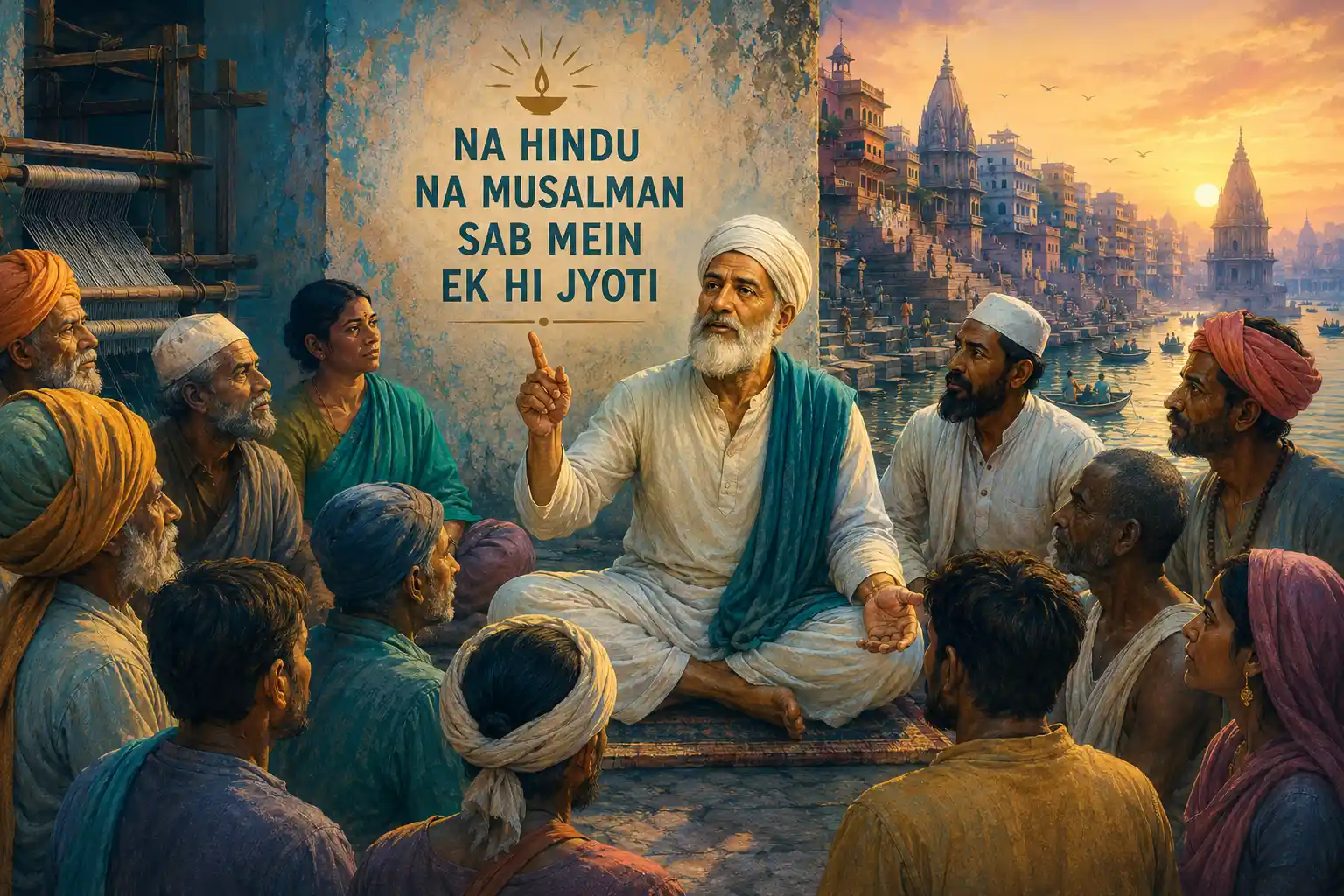
Kabir was not only a spiritual mystic. He was also a fearless social reformer.
He challenged caste systems, religious arrogance, and social hierarchies with extraordinary courage. At a time when society was deeply divided, Kabir insisted that all human beings carried the same Divine essence.
His message remains painfully relevant today.
Modern society still struggles with division:
- class differences
- political polarization
- religious hostility
- online dehumanization
- prejudice and exclusion
Kabir’s wisdom cuts through all these illusions with breathtaking simplicity:
"एकै माटी के सभ भांडे, एकै सरजनहारा।
सभ महि एकै जोति समाणी, को मूरख को सिआणा॥"
(Ekai maati ke sabh bhaande, ekai sarjanhara,
Sabh mahi ekai joti samaani, ko moorakh ko siana.)
All vessels are made from the same clay by the same Creator. The same divine light lives within everyone.
This doha destroys spiritual superiority.
Kabir reminds us that human beings may appear different externally, but internally they share the same life force.
Where digital spaces often reward cruelty and outrage, this teaching becomes revolutionary.
Devotion is not merely about praying beautifully. It is about seeing humanity compassionately.
The Spiritual Warrior
Kabir never portrayed devotion as passive weakness.
He believed true seekers were spiritual warriors.
Not warriors fighting external enemies, but warriors confronting internal chaos:
- greed
- anger
- jealousy
- ego
- attachment
One of his strongest dohas reflects this uncompromising truth:
"कामी क्रोधी लालची, इनसे भक्ति न होय।
भक्ति करै कोई सूरमा, जाति वरन कुल खोय॥"
(Kaami krodhi laalchi, inse bhakti na hoy,
Bhakti karai koi soorma, jaati varan kul khoy.)
The lustful, angry, and greedy cannot practice true devotion. Devotion belongs to the brave who abandon pride and social identity.
Kabir describes devotion as bravery because self-confrontation is difficult.
It is easier to criticize others than examine oneself. Easier to blame society than challenge inner habits.
Distractions are endless. Algorithms constantly pull attention outward. Consumer culture thrives on emotional restlessness.
Remaining spiritually centered today requires discipline.
Kabir’s “spiritual warrior” is someone who protects inner clarity amidst external chaos.
Kabir’s Daily Reminders for Inner Peace
The ultimate beauty of Kabir’s poetry lies in its utility. His verses are not abstract philosophical theories meant to be locked away in academic textbooks. Instead, they function as practical, daily tools designed to realign our focus when the chaos of daily life pulls us off center. By keeping these reminders close, we can protect our mental clarity and find stillness amid a noisy world.
To anchor your daily practice of inner peace, integrate these two vital reminders into your routine.
Reminder 1: Guard Your Spiritual Privacy
"कबीर हीरा बनजिया, मान सरोवर तीर।
गाँठी बाँध्या पारखू, प्रगट किया न वीर॥"
(Kabir heera banajiya, maan sarovar teer,
Ganthi baandhya paarkhoo, pragat kiya na veer.)
The Translation: Kabir has traded in diamonds on the banks of the sacred lake. He binds them securely in his cloth, sharing his spiritual wealth only with those who truly understand its value, rather than showing it off to the world.
The Modern Practice: In a culture dominated by oversharing and chasing likes, Kabir advises us to keep our deepest spiritual realizations private. True inner transformation does not need online validation. Tie your inner peace securely within your heart, away from public consumption.
Reminder 2: Recognize the Same Light in Everyone
"एकै माटी के सभ भांडे, एकै सरजनहारा।
सभ महि एकै जोति समाणी, को मूरख को सिआणा॥"
(Ekai maati ke sabh bhaande, ekai sarjanhara,
Sabh mahi ekai joti samaani, ko moorakh ko siana.)
The Translation: All vessels are crafted from the exact same clay by the same Creator. The same divine light dwells within everyone, making distinctions like “foolish” or “wise” meaningless.
The Modern Practice: Use this verse to break down the barrier of judgmental thinking. When you interact with a difficult person or encounter polarizing opinions online, remind yourself that beneath the external exterior, everyone carries the exact same spark of life.
Embracing a Kabir-Inspired Life
Living a Kabir-inspired life, does not mean abandoning technology or moving away from modern society. It means changing how we relate to the world around us. Kabir challenges us to shift from a lifestyle of passive consumption to one of active, awakened presence. When we live with a clear heart, our daily anxieties naturally lose their power over us.
To anchor this transformation, Kabir speaks of the ultimate shift that occurs when we ignite our true inner spark:
"लागी लागी सब कहैं, अनलागी कूं धिक।
जा दिन लागी जानिहौ, मिटि जाइहै सब थिक॥"
(Jaa din laagi jaanihau, mit jaaihai sab thik.)
The Translation: Everyone talks about being attached to the Divine, but pity the one who has not felt the true spark. The day that divine connection is genuinely ignited, all your worldly restlessness and anxiety instantly vanish.
We spend our days trying to cure our restlessness with external fixes, such as new gadgets, endless entertainment, or constant lifestyle upgrades. Kabir calls these temporary patches. He reminds us that the only true cure for modern burnout is a deep, internal connection to our higher self. When that spark is lit, the constant need to chase external validation disappears, leaving an unshakeable sense of peace in its place.
How to Celebrate Kabir Das Jayanti 2026 Meaningfully
Kabir Das Jayanti can become far more than a ceremonial observance. Instead of limiting the day to external celebration alone, use it as an opportunity for inner reflection. One meaningful way to honor Kabir’s teachings in 2026 is to read his dohas slowly, choosing a few verses and reflecting deeply on them instead of rushing through many at once.
You can also practice digital silence by spending a few hours offline and allowing your mind to breathe without constant stimulation. Attending satsang or bhajan gatherings can further deepen the day, especially when the focus remains on inner transformation rather than ritual performance.
Another beautiful way to celebrate is through quiet service. Help someone without expecting appreciation or recognition. You can also reflect on your ego patterns by journaling honestly about fears, insecurities, or emotional triggers that dominate your mind.
Finally, simplify your day. Eat simple food, speak gently, and avoid unnecessary arguments. Kabir’s spirituality was rooted in simplicity. The quieter the ego becomes, the clearer the heart becomes.
Why Kabir Matters More Than Ever
Kabir’s enduring power lies in his brutal honesty. He does not flatter human beings. He awakens them. At a time when people are drowning in information but starving for wisdom, Kabir offers spiritual clarity. He reminds us that devotion is not about escaping life, but seeing through illusion while fully living it.
His poetry remains timeless because human struggles remain timeless. Distraction, ego, fear, loneliness, pride, and attachment continue to trouble the human heart, even in a technologically advanced world. Technology has changed dramatically since Kabir’s era, but the restless human mind has not. That is why his words still penetrate so deeply.
Kabir Das Jayanti 2026 is not merely a celebration of a historical saint. It is an invitation to begin an inner journey, a journey away from noise, performance, and ego, and toward something infinitely quieter: truth.
Perhaps the greatest lesson Kabir leaves behind is this: the Divine was never absent. We were simply too distracted to notice.
Takeaways for Kabir Das Jayanti 2026
Kabir Das Jayanti 2026 is a reminder to live with simplicity, truth, and compassion. Sant Kabir Das taught that devotion is not about rituals alone, but about purity of heart, honest actions, and love for all.
His teachings encourage us to rise above caste, religion, ego, and social divisions. Kabir’s dohas guide people toward self-reflection, humility, equality, and inner peace.
On this day, we should remember that true spirituality begins with kindness, sincerity, and service to humanity. Kabir Das Jayanti inspires us to speak the truth, reject discrimination, and follow the path of wisdom and unity.
Conclusion:
The Eternal Resonance of the Weaver
As June 29, 2026, approaches, let this Kabir Das Jayanti become more than just a date on your calendar. Let it become the moment you choose to step away from the illusions of the modern world and move closer to the truth within your own heart.
Kabir’s verses continue to resonate across centuries because they are not merely poetry. They are mirrors. They reveal our ego, our distractions, our fears, and our restless search for fulfillment. But at the same time, they also remind us of our immense divine potential. Through humility, devotion, selfless love, and inner surrender, Kabir shows us that the Divine is not distant. It has always existed within us.
In a world overflowing with noise, comparison, and spiritual performance, Kabir’s wisdom feels more relevant than ever. He does not ask us to abandon life. He asks us to live truthfully within it. He reminds us that devotion is not about outward appearances or rituals alone, but about softening the ego and awakening the heart.
You do not need to transform your entire life overnight. Begin simply. Take one Doha, sit with it in silence for five minutes, and allow its truth to slowly work within you. Let it quiet the noise of the mind and bring you closer to the stillness Kabir spoke about.
The divine light Kabir sang about is not lost in history. It is alive even now, quietly beating within your own heart.
Call To Action
Continue Your Devotional Journey
Are you ready to step onto the narrow path of selfless love? Let Kabir’s wisdom inspire you to walk forward with humility, leave ego behind, and make space for the Divine to fully enter your heart.
If this reflection touched you, subscribe to our blog for more inspiring spiritual wisdom, devotional insights, and timeless lessons from the saints.
FAQs
1. When is Kabir Das Jayanti 2026?
Kabir Das Jayanti 2026 will be celebrated on June 29, 2026, on the Purnima Tithi of Jyeshtha month.
2. Why is Kabir Das Jayanti celebrated?
Kabir Das Jayanti celebrates the birth anniversary of Sant Kabir Das, the mystic poet and saint whose teachings focused on devotion, humility, equality, and finding God within.
3. What is the main message of Kabir Das for devotees?
Kabir’s main message is that true devotion is not about outer rituals or appearances. It is about love, humility, self-reflection, and surrendering the ego.
4. How can we celebrate Kabir Das Jayanti meaningfully?
You can celebrate by reading Kabir’s dohas, attending satsang or bhajan gatherings, practicing digital silence, serving others quietly, and reflecting on your inner spiritual journey.
5. Why are Kabir’s teachings relevant in 2026?
Kabir’s teachings are relevant because modern life is filled with distraction, ego, comparison, and anxiety. His wisdom helps seekers move from outer performance to inner peace and devotion.