


The Ultimate Guide to Divine Connection: Unlocking the Power of Faith, Mind, and Inner Devotion
“You may perform thousands of rituals, but if your mind is not connected to God, you have not truly begun your spiritual journey.” — Swami Mukundananda Ji
In our modern pursuit of spiritual fulfillment, many of us find ourselves mechanically going through the motions without experiencing true inner transformation. We visit sacred places, chant mantras, and listen to spiritual discourses, yet our core remains entirely untouched. The ultimate trajectory of our life is fundamentally determined by our faith and where we choose to place it. Whether we are endlessly chasing money under the belief that wealth is the absolute basis of happiness, or pursuing power with the conviction that it will fulfill our self-interests, it is our underlying faith that drives every action. However, for those fortunate enough to develop faith toward the Supreme, that spiritual faith transforms into a monumental asset. The fundamental essence of spiritual practice is establishing a genuine, unbreakable connection with God, an endeavor where 99.9% of practitioners currently fall short. The real symptom of advanced, firm devotion—known as bhakti—is not found in mere external rituals, but in the profound engagement of the mind.
Prologue — The Forgotten Connection
Imagine a world where every human being carries within them a divine connection—but has forgotten how to access it.
We live in that world today.
We perform rituals.
We attend spiritual discourses.
We visit sacred places.
Yet, as highlighted in the provided content , most people fail to experience true transformation because:
Their body participates—but their mind remains absent.
This is the central problem Swami Mukundananda addresses.
And that is the silent reason why so many devotees feel:
“Why am I still not feeling Shree Krishna?”
The Foundation: What Bhakti Truly Is
At the heart of devotion lies a timeless definition from the Narada Bhakti Sutras
But why does this teaching matter so much in today’s world?

In today’s age of distraction:
- Attention spans are shrinking
- Minds are constantly restless
- Spirituality is often mechanical
Swami Mukundananda ji explains that the issue is not lack of effort—but lack of inner engagement.
Even when people practice devotion, they often:
- Chant without focus
- Pray without feeling
- Listen without transformation
And therefore, they remain unchanged.
The Core Truth: Bhakti Is Supreme Love
The foundation of Swami Mukundananda’s message aligns with the ancient wisdom of devotion:
Bhakti is not ritual—it is love.
Not ordinary love, but:
- Pure
- Selfless
- Continuous
This love is the only bridge between the soul and God.
As emphasized in spiritual teachings, devotion alone reveals the true nature of God—not intellect alone
Sutra 2
भक्तिः परमप्रेमरूपा
Bhakti is of the nature of supreme love.
Bhakti is not ritual—it is love.
Not ordinary love, but:
Pure
Selfless
Continuous
This love is the only bridge between the soul and God.
As emphasized in spiritual teachings, devotion alone reveals the true nature of God—not intellect alone.
How Do You Recognize True Bhakti?
The Narad Bhakti Sutras go further and explain that bhakti is not merely defined—it is recognized through its inner signs:
Sutra 27 i
ईश्वरस्याप्यभिमानद्वेषित्वाद्दैन्यप्रियत्वाच्च ॥ २७ ॥
Transliteration:
īśvarasyāpy abhimāna-dveṣitvād dainya-priyatvāchca
Meaning:
“Even God dislikes pride and loves humility.
The signs of bhakti are described in various ways.
This shifts the entire focus.
Bhakti is not measured by:
How many rituals you perform
How long you sit in prayer
How much knowledge you accumulate
It is revealed through what you experience within.
The True Symptoms of Bhakti
The sutras further describe these inner signs:
👉 Sutras 28–30 — The Inner Signs (Lakṣaṇas)
२८ ॥ तस्याः ज्ञानमेव साधनमित्येके ॥
tasyāḥ jñānam eva sādhanam ity eke
Meaning:
Some say that knowledge alone is the means to attain that (bhakti).
२९ ॥ अन्योन्याश्रयत्वमित्यन्ये ॥
anyonya-āśrayatvam ity anye
Meaning:
Others say that bhakti and knowledge are interdependent.
३० ॥ स्वयṁ फलरूपतेति ब्रह्मकुमाराः ॥
svayaṁ phalarūpateti brahmakumārāḥ
Meaning:
(Bhakti is supreme) because it is itself of the nature of divine bliss.
These sutras describe what real devotion feels like inside.
Swamiji explains them through the concept of rasa—inner spiritual sweetness.
1. Rasa — Inner Sweetness
When the mind truly connects with God:
A subtle joy arises
A sweetness fills the heart
A quiet fulfillment is experienced
This is not imagination.
It is direct inner experience
2. Natural Joy in Remembrance
As devotion deepens:
Remembrance becomes effortless
Attraction toward God becomes natural
The mind begins to rest in Him
You no longer force yourself to remember God.
The heart moves toward Him on its own.
3. Inner Certainty
One of the most profound truths:
You don’t need anyone to tell you that you are connected.
Your own heart reveals it.
When the mind is absorbed → you feel the rasa
When it wanders → you feel the absence
Your experience becomes your proof.
The Illusion of Physical Devotion: The Tale of the Grocer’s Son
This humorous yet tragic story highlights a profound truth: it is entirely useless to merely listen to scriptures or perform religious activities if we do not establish an internal connection that leads to genuine transformation.
A pervasive issue in spiritual practice is that devotion is often reduced to an external, mechanical routine while the mind remains disengaged. Without the active participation of the mind, even sitting in a katha becomes a hollow exercise.
The story of the grocer’s son illustrates this perfectly. A young boy attended a discourse on Harishchandra and immediately resolved to live truthfully. When he applied this in real life, it disrupted his father’s business. The father then revealed his own approach—to attend the discourse, but leave all its teachings behind.
The irony is striking: the son transformed in a single day, while the father remained unchanged even after 25 years.
The lesson is clear—spiritual progress does not depend on how much we hear, but on how deeply we internalize and live those teachings.
The Lesson
This story reveals a painful truth:
Listening without internalizing is spiritual hypocrisy.
Swami Mukundananda emphasizes:
- True spirituality changes behavior
- True devotion transforms character
Bhagavad Gita connection
Gita Verse — Knowledge Must Transform
श्रद्धावान् लभते ज्ञानम्…
(Bhagavad Gita 4.39)
“A person with faith gains knowledge, and that knowledge brings peace.”
Connection:
- The father had knowledge but no faith → no transformation
- The son had faith → immediate transformation
Lesson: Knowledge without faith is useless
Seeking the Inner Connection: Atma Rati
The great saint Maharishi Shandeliya expressed this vital concept with remarkable finesse, stating that Atma rati—the true spiritual bliss or Rasa—must emerge from deep within. Internal Rasa can only be genuinely experienced when the mind is fully and continuously connected with God. Without this essential mental connection, it is incredibly easy to become distracted by superficial external elements.

Millions undertake pilgrimages to sacred temples, yet often return speaking more about architectural grandeur—the gold domes, silver doors, and elaborate décor—than about any real connection with the Divine. When asked if they truly experienced God, many admit they barely had a moment before being rushed along.
Because the inner connection was never genuinely established, the entire pilgrimage merely became a spiritual tourism exercise. While a beautifully decorated temple room is undeniably beneficial, serving as a magnificent jewel designed to remind us of the beauty of God, it becomes a hindrance if we remain stuck admiring the external aesthetics without forging an inner mental bond. If we fail to cultivate that internal link, the mind will never firmly rest in God.
This principle applies equally to all forms of spiritual practice, including devotional music. Legendary bhajan singers in India perform brilliantly in complex classical raagas, drawing massive crowds where everybody is clapping to the rhythm. However, the crucial question remains: Are the listeners merely deriving worldly pleasure (Rasa) from the external musicality, or is their mind actually connected with God?. In the realm of spirituality, physical effort (sadhana) alone will never suffice; you absolutely must engage your mind.
Without mental engagement, even sacred experiences become superficial.
Maharishi Shandilya expressed that true spiritual bliss—Atma Rati—must arise from within.
This inner rasa manifests only when the mind is deeply connected with God.
Without this connection, the mind gets distracted by external elements.
The Restless Mind: Why Remembering God is so Difficult
The Bhagavatam and other sacred texts meticulously describe various styles of devotion, enumerating them into 3, 4, 5, 6, 8, 9, 12, 13, and even up to 35 different categories of bhakti. Among these, the nine-fold devotion (Navadha Bhakti) is the most famous, famously highlighted by figures like Chaitanya Mahaprabhu and in the teachings of the 7th Canto of the Bhagavatam. Yet, practitioners frequently complain about the incredible difficulty of this path. Many tell spiritual teachers, "Out of the nine processes, eight are quite easy because they just involve physical drills, but the one requiring us to actively remember God is incredibly difficult".
A common, frustrating paradox many face is the phenomenon of "reverse medicine". People often notice that when they are intensely engaged in complex worldly tasks, their mind remains perfectly focused and under control. However, the very moment they sit down to perform their daily puja (prayers), their mind suddenly goes entirely out of control, flooded with random, chaotic thoughts that hadn't bothered them all day long.
🌿 Why the Mind Wanders in Bhakti
A common frustration:
During worldly work → the mind is focused
During puja → the mind becomes restless
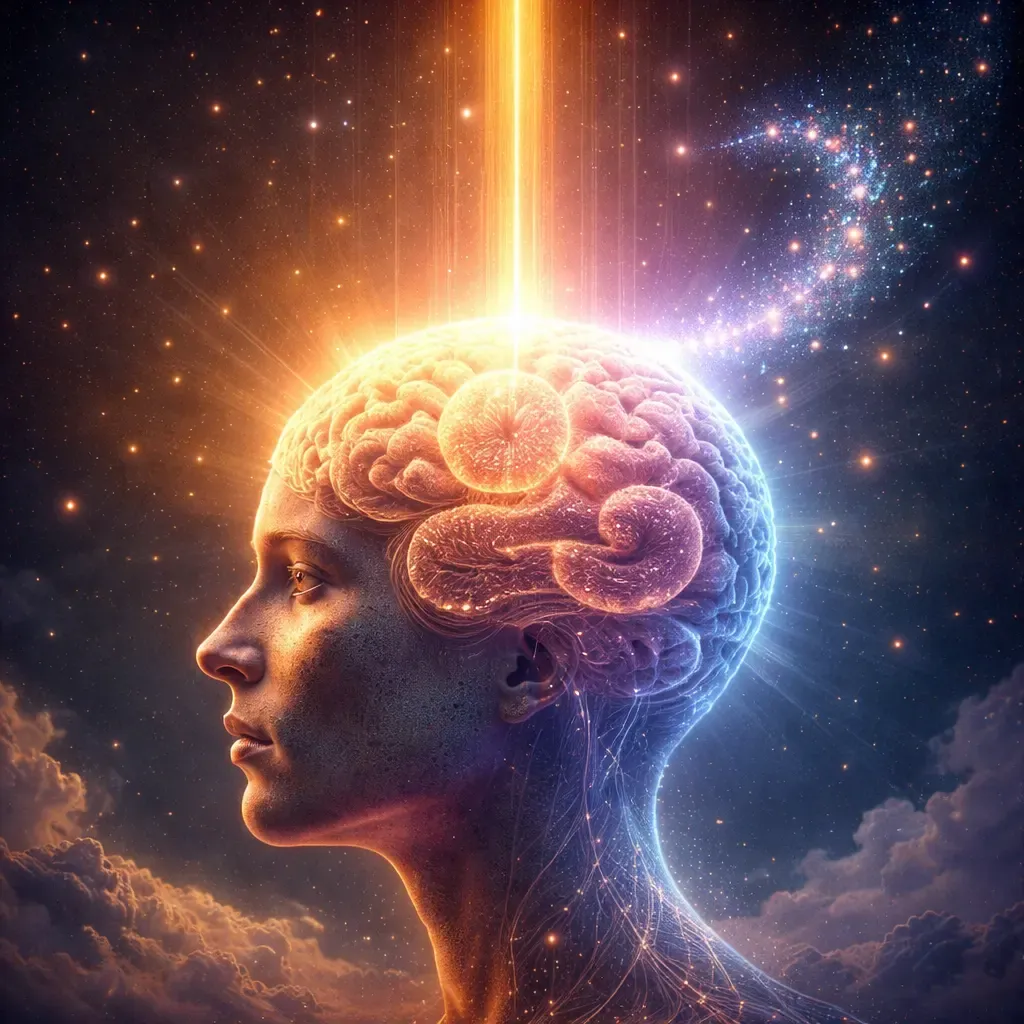
The reason for this phenomenon is profoundly simple: during your worldly work, you were actively giving your mind a specific task to focus on. But when you sat down for prayer, you engaged only your physical and knowledge senses (karmendriyas and jnanendriyas) while leaving your mind completely idle and empty. The mind inherently demands engagement; if you do not give it a constructive task, it will forcefully find a destructive one, perfectly embodying the old proverb that "an idle mind is a devil's workshop
Cultivating Mindful Devotion: The Practice of Roop Dhyan
To combat this, it is absolutely essential to actively engage the mind during your spiritual practice Jagadguru Kripalu Ji Maharaj emphasized that the mind alone is the cause of both bondage and liberation. Therefore, whatever form of bhakti you follow, it must be accompanied by dhyan (meditation).
Among all methods, Roop Dhyan—meditating on the form of the Lord—is especially powerful. Most people are naturally visual; the mind responds strongly to images and stores experiences in visual form. While chanting God’s name is beneficial, combining it with vivid mental visualization gives the mind a concrete anchor, helping it remain steady and focused.
For this reason, whenever you begin prayer or meditation, you should first deliberately visualize the form of God or your Guru. This simple practice stabilizes the restless mind and directs it toward the Divine.
God is described as the infinite ocean of Rasa (divine bliss), and the soul naturally longs for this experience. When the mind becomes absorbed in God through focused meditation, this bliss arises naturally. You don’t need external validation—your own heart will confirm the connection. Conversely, when the mind drifts to worldly thoughts, that inner joy fades. Thus, your direct experience of this Rasa becomes the true measure of how deeply your mind is connected to the Divine.
Why this works:
The mind naturally thinks in images
It needs a focus to remain steady
Visualization gives it a stable anchor
When the mind is anchored in the divine form:
It begins to settle
It begins to absorb
It begins to connect
From Practice to Experience
As the mind becomes absorbed in God:
Rasa begins to arise
Devotion becomes sweet
The heart feels connected
Then something profound happens:
You are no longer “doing bhakti”
You are experiencing bhakti
No external validation is needed.
The heart itself confirms the connection.
The Ultimate Goal: Faith and the Point of No Return
As we move from the restless mind to the deeper intellect, the true purpose of spiritual knowledge becomes clear: it is not merely to inform, but to awaken unshakeable faith in God. Without this foundation, even sincere study and reflection remain incomplete, unable to bring about real inner transformation.
In the Bhagavad Gita (5.17), Krishna explains that those whose intellect is firmly established in Him, whose awareness is absorbed in Him, and whose faith is unwavering, quickly rise to divine realization. For such individuals, ignorance is dispelled by knowledge, and they transcend the cycle of birth and death.
Yet in the modern world, the idea of “God” often feels distant or difficult to accept. This resistance is not always rejection, but a disconnect—where intellect questions, but the heart has not yet experienced. As a result, knowledge stays theoretical rather than transformative.
For Lord Krishna makes it unmistakably clear: the ultimate purpose of all the Vedas is to know Him alone.Krishna makes it clear that the ultimate purpose of all knowledge is to know Him—not just conceptually, but through inner realization. True spirituality, therefore, is not about accumulating information, but allowing that knowledge to mature into faith that steadies the intellect and guides life.
Kripalu ji Maharaj perfectly encapsulated this necessary spiritual alignment with three crucial terms: Gati (the ultimate destination or goal), Mati (the intellect), and Rati (deep emotional attachment). For spiritual success, an individual must recognize God as their absolute Gati, tie their Mati firmly to the Divine, and ensure their Rati is solely with the Supreme. If you lose this fundamental clarity and alignment, there is absolutely no yog (connection) left whatsoever.
The Ultimate Goal: Faith and Transformation
Spiritual knowledge is meant to awaken faith—not just inform the intellect.
When faith deepens:
The intellect stabilizes
The mind aligns with God
The heart transforms
Without connection, knowledge remains incomplete.
The Danger of Disconnection: The Oxygen of the Soul
To understand the absolute, life-or-death necessity of this spiritual connection (yog) between the individual soul (Jivatma) and the Supreme Soul (Paramatma), we can look at two striking analogies concerning hospital oxygen supplies.
In one hospital, patients admitted to Ward 13 were mysteriously dying one after another. The staff was deeply puzzled, and many began attributing it to superstition. A wise saint was called to investigate. After careful observation, he uncovered a simple yet shocking truth: the sweeper, needing a power outlet for his vacuum cleaner, would unplug the patients’ oxygen supply. The moment that vital connection was severed, life could not continue.
A similar tragedy occurred in another case. A critically ill patient, struggling to breathe, tried desperately to communicate something to a priest standing beside him. Misunderstood and reassured instead, the man passed away moments later. Only afterward did the priest read the note the patient had written:
“You are standing on my oxygen tube.”
The Lesson
Just as oxygen is essential for the body,
our connection with God is essential for the soul.
The moment that connection is severed, nothing else can sustain us—not knowledge, not rituals, not worldly achievements.
Swami Mukundananda repeatedly emphasizes that the root of all spiritual progress lies in this inner connection. External practices may support us, but they cannot replace the living link between the soul and the Divine. When that link is missing, even the most elaborate spiritual efforts become hollow.
In his teachings, he explains:
“The problem is not that we are not doing enough spiritual practices—the problem is that our mind is not connected to God while doing them.”
This is the essence of the analogy.
The patients did not die due to lack of effort around them—everything else was in place. They died because the essential connection was cut.
Similarly, in our spiritual life:
- We may perform rituals
- We may read scriptures
- We may attend discourses
But if the mind is not connected to God, the soul remains spiritually suffocated.
True devotion begins when we recognize this:
God is not one of many supports—He is the only real support.
And just as a patient instinctively protects their oxygen supply, a true seeker learns to guard their connection with God with the same urgency and awareness.
Because ultimately:
Connection is life. Disconnection is spiritual death.
As the great mystic poet Kabir articulated perfectly, all spiritual hearing must ultimately end in genuine understanding; all understanding must evolve into true wisdom; all wisdom must culminate in unshakable faith in the name of God; and all chanting of God's name must ultimately blossom into pure, unadulterated love for God. If we miss this final step of love and connection, everything else we have accomplished amounts to zero.
Ritual vs. Devotion: The Brahmans and Their Wives
To highlight the difference between ritual and true devotion, consider a beautiful story from Lord Krishna’s pastimes.
One day, young Krishna, feeling hungry in the forest, sent His friends to ask nearby Brahman priests for food. The priests, absorbed in their elaborate yajna rituals, ignored the request, telling the boys to return later.
When the boys reported back, Krishna asked them to approach the priests’ wives instead. Unlike their husbands, these women had deep love and devotion for Krishna. The moment they heard He was hungry, they dropped everything and rushed to serve Him with joy.s. Yet, through pure, unadulterated love, these women effortlessly reached a supreme spiritual destination that even heavenly angels had failed to attain. Their sole, defining qualification was that they had successfully developed deep, genuine attachment for Shri Krishna. This profound story proves definitively that establishing a loving connection with God is the ultimate summum bonum (highest good) of all human efforts.
Later, Krishna enlightened the priests, making them realize their mistake. Despite their vast knowledge and rituals, they had failed to develop true devotion. In contrast, their wives—without formal learning or austerities—attained the highest spiritual state through pure love.
Humbled, the priests admitted:
“All our knowledge and rituals were useless because we lacked loving attachment to God.”
This story reveals a profound truth:
It is not rituals, but sincere love and devotion, that truly connect us to God.
This profound lesson is not just a story—it is deeply rooted in the timeless teachings of the Narad Bhakti Sutras.
Narad Bhakti Sutra Connection: The Supremacy of Pure Devotion
The story of the Brahman priests and their wives finds a perfect reflection in the teachings of the Narad Bhakti Sutras.
Bhakti Defined as Supreme Love
“भक्तिः परमप्रेमरूपा”
(Narad Bhakti Sutra 2)
“Bhakti is of the nature of supreme love for God.”
This sutra clearly establishes that devotion is not about rituals, knowledge, or external practices—it is about pure, selfless love.
In the story:
- The priests had knowledge and rituals
- But lacked प्रेम (divine love)
The wives, however:
- Had no scholarly learning
- Yet possessed intense प्रेम for Krishna
And that alone made them spiritually श्रेष्ठ (superior).
Bhakti Is Independent of Rituals
“नास्त्येव तस्मिन् तत्सुखसुखित्वम्”
(Narad Bhakti Sutra)
This teaching implies that true devotion is not dependent on external acts, but on inner attachment to God.
The priests were absorbed in yajna (ritual), but their minds were not connected to Krishna.
The wives, on the other hand, were internally absorbed in Him—and that made all the difference.
The Power of Exclusive Attachment (Rati)
Narad emphasizes that the essence of Bhakti is:
- Single-pointed attachment (अनन्य भाव)
- Total surrender of the heart
This is exactly what the Brahman wives demonstrated.
Their immediate response to Krishna’s need showed:
No hesitation
No calculation
Only love
The Illusion of Proof: Taking the Inevitable Leap of Faith
Despite these beautiful truths, Lord Krishna acknowledges that cultivating this staunch faith is challenging for many. A common modern objection goes something like this: "This concept of faith is entirely unacceptable to me. I am a strict man of science, and I absolutely refuse to believe in anything I cannot physically see or prove. Therefore, I choose atheism over faith".

Swami Mukundananda Ji explains that there is a fundamental logical gap in this argument. A person who strongly denies the existence of God is, in fact, taking a leap of faith himself. When someone claims with certainty that there is no God, they are making a statement that requires complete and infinite proof.
Think about it logically. To conclusively prove that God does not exist, one would need to have complete knowledge of all existence. Such a person would have to see every corner of the universe, every place, every possibility—without exception. In other words, they would need to be omniscient.
But without possessing such total knowledge, how can anyone definitively declare that God does not exist? Therefore, this denial is not a scientific conclusion—it is simply another form of belief, another leap of faith.
Since both belief and disbelief fundamentally require a leap of faith, the real question becomes: What do you actively choose to believe?.
A Story of Divine Grace
To illustrate the power of faith, consider a moving story of an Indian Army platoon stationed in the freezing mountains of Kashmir. One bitter October day, exhausted and shivering, the soldiers longed for a hot cup of tea. By chance, they found a locked roadside tea shop. Despite initial hesitation, they broke in, made tea, and before leaving, their captain left a generous payment of three thousand dollars to compensate.
Six months later, passing by the same shop, they met the owner—a humble man full of unwavering faith in God. When asked how God had helped him, he shared an emotional story: his son had been brutally injured, and in desperation, he had come to his shop—only to find exactly three thousand dollars waiting for him, which saved his son’s life. With tears in his eyes, he declared it as God’s grace.
The soldiers were stunned. The captain silently signaled his men to say nothing and simply agreed, “Yes, God took care of you.”
A skeptic may dismiss this as coincidence, crediting the captain instead. But who can deny that perhaps the Divine orchestrated every event—the cold, the need for tea, and the captain’s decision to leave the money?
The story reminds us of a powerful truth:
Faith shapes our perception. And if we must believe in something, why not choose a faith that connects us to a higher, loving power?
The Insight
Faith transforms perception:
- One sees coincidence
- Another sees divine intervention
Swami Mukundananda encourages us to choose the perspective that connects us to God.
arched away to spend the brutal six-month winter high up in the mountains.
Bhagavad Gita Connection: Devotion Over Ritual
This powerful story beautifully echoes the teachings of the Bhagavad Gita.
🌿 Gita Verse — God Looks at Devotion, Not Offering
पत्रं पुष्पं फलं तोयं यो मे भक्त्या प्रयच्छति…
(Bhagavad Gita 9.26)
“Whoever offers Me with love a leaf, a flower, a fruit, or water—I accept it.”
This verse reveals a profound truth:
God does not value the grandeur of the offering, but the love behind it.
Just like the Brahman priests performed grand yajnas without devotion, their efforts remained incomplete. Meanwhile, their wives, with simple offerings but deep love, pleased Krishna instantly.
🌿 Gita Verse — True Knowledge Leads to Devotion
बहूनां जन्मनामन्ते ज्ञानवान्मां प्रपद्यते…
(Bhagavad Gita 7.19)
“After many births of knowledge, one who is truly wise surrenders unto Me.”
Despite their vast knowledge, the priests had not reached surrender. But the wives, through pure devotion, had already attained that highest state.
Igniting Devotion Through Satsang
As the Bible beautifully states, "We walk by faith, not by sight". We arrogant humans constantly trick ourselves into thinking we are completely rational creatures making decisions based entirely on hard facts and sight, but in reality, every major trajectory of our lives is completely guided by our underlying faith. If you choose to spend your valuable weekend attending a spiritual retreat rather than going to a movie, it is simply because your faith told you it was a worthwhile, meaningful way to spend your time.
Lord Krishna promises that those who successfully develop this firm faith in the Divine are immensely blessed. But how does one initially acquire this elusive faith? It naturally begins to blossom through the diligent purification of the heart, a gradual process requiring steady practice. However, there is a much faster, more powerful method: associating closely with people who already possess this burning faith—a practice known as satsang.
Faith is highly contagious. Just as a virus like the Coronavirus can spread rapidly from one person to the next, true spiritual faith is like an incredibly positive pandemic that spreads even faster and deeper!. If you simply choose to associate with a person overflowing with divine faith, their conviction will inevitably infect your own heart. This is exactly why all the ancient scriptures unanimously declare that even a single, fleeting moment of true satsang (association with the holy) holds the incredible power to instantly ignite the dormant fire of faith within your soul.
Once this profound faith finally comes alive, your true spiritual journey has officially begun. As Shri Krishna promised, those blessed souls who learn to actively align their intellect with God, who refuse to leave their minds idle but instead absorb them deeply in the Divine form (Roop Dhyan), make their entire human lives profoundly auspicious. By moving past empty physical rituals, embracing inner Atma rati, and guarding their spiritual connection as carefully as a patient guards their oxygen supply, they eventually reach that glorious, ultimate point of absolute no return, forever residing in divine bliss.
Faith grows through association.
Satsang ignites the dormant connection within.
Even a moment of true association can awaken devotion.
Why This Teaching Is Life-Changing
Swami Mukundananda’s message stands out because it is:
- Simple yet profound
- Practical yet deep
- Emotional yet logical
He does not ask us to abandon life—he teaches us to transform it through devotion.
Final Reflection: The Only Way
At the heart of this teaching lies one eternal truth:
The only way to connect with God is through loving devotion, guided by faith and sustained by a focused mind.
Not rituals alone.
Not knowledge alone.
But love with awareness.

The Final Transformation
Swami Mukundananda Ji explains that the ultimate goal of life is not merely to practice devotion, but to become devotion itself.
In the beginning, we remember God with effort. The mind resists, wanders, and returns reluctantly. But with sincere practice and grace, something subtle begins to change within.
The heart softens.
The mind quiets.
The soul awakens.
And then, a divine transformation unfolds.
God is no longer remembered occasionally—He is felt constantly.
The seeker no longer searches outside, because the presence of the Divine begins to shine from within. What was once a discipline becomes a natural state. What was once an effort becomes love.
This is the state the saints describe:
- Where remembrance becomes effortless
- Where separation becomes unbearable
- Where the soul rests in divine bliss
As the Narad Bhakti Sutras declare:
— True devotion is offering all actions to God and feeling deep restlessness in His forgetfulness.
In that moment, the journey ends—not in distance traveled, but in union realized.
For when pure love awakens,
the soul rediscovers its eternal connection with God.
At the heart of this teaching lies one eternal truth:
The only way to connect with God is through loving devotion, guided by faith and sustained by a focused mind.
Not rituals alone.
Not knowledge alone.
But love with awareness.
🌟 The Final Transformation
In the beginning, devotion requires effort.
But gradually:
The mind settles
The heart softens
The soul awakens
Then:
God is no longer remembered occasionally—He is felt constantly.
What began as practice becomes presence.
What began as effort becomes love.
Final Insight
This teaching reflects the progression of the Narada Bhakti Sutra:
Sutra 2 — Bhakti is supreme love
Sutra 27 — Bhakti is recognized by its signs
Sutras 28–30 — Those signs are inner: rasa, joy, and certainty
Because ultimately:
Bhakti is not what you do externally
It is what you experience internally
And when the mind truly connects,
the soul rediscovers its eternal relationship with God.
Watch: How to Connect with God (Swami Mukundananda)”
🌟 FinalCall to Action
👉 For more life-changing teachings, subscribe to the official YouTube channels:
👉 Watch the complete Narad Bhakti Sutra series on the Bhagavad Gita Krishna Bhakti Channel:
Buy the "Narad Bhakti Sutras" by Swami Mukundananda
Now that we’ve explored the divine wisdom of the Narad Bhakti Sutras, it’s time to take the next step on your spiritual journey. To deepen your understanding of the Narad Bhakti Sutras, we highly recommend Swami Mukundananda’s commentary, which beautifully unpacks each mantra providing a clear and practical guide for modern seekers.
Order the Book: Swami Mukundananda’s Commentary
Unlock the deeper wisdom of the Narad Bhakti Sutras with this insightful commentary by Swami Mukundananda. Perfect for modern seekers who wish to explore the divine teachings in greater depth.
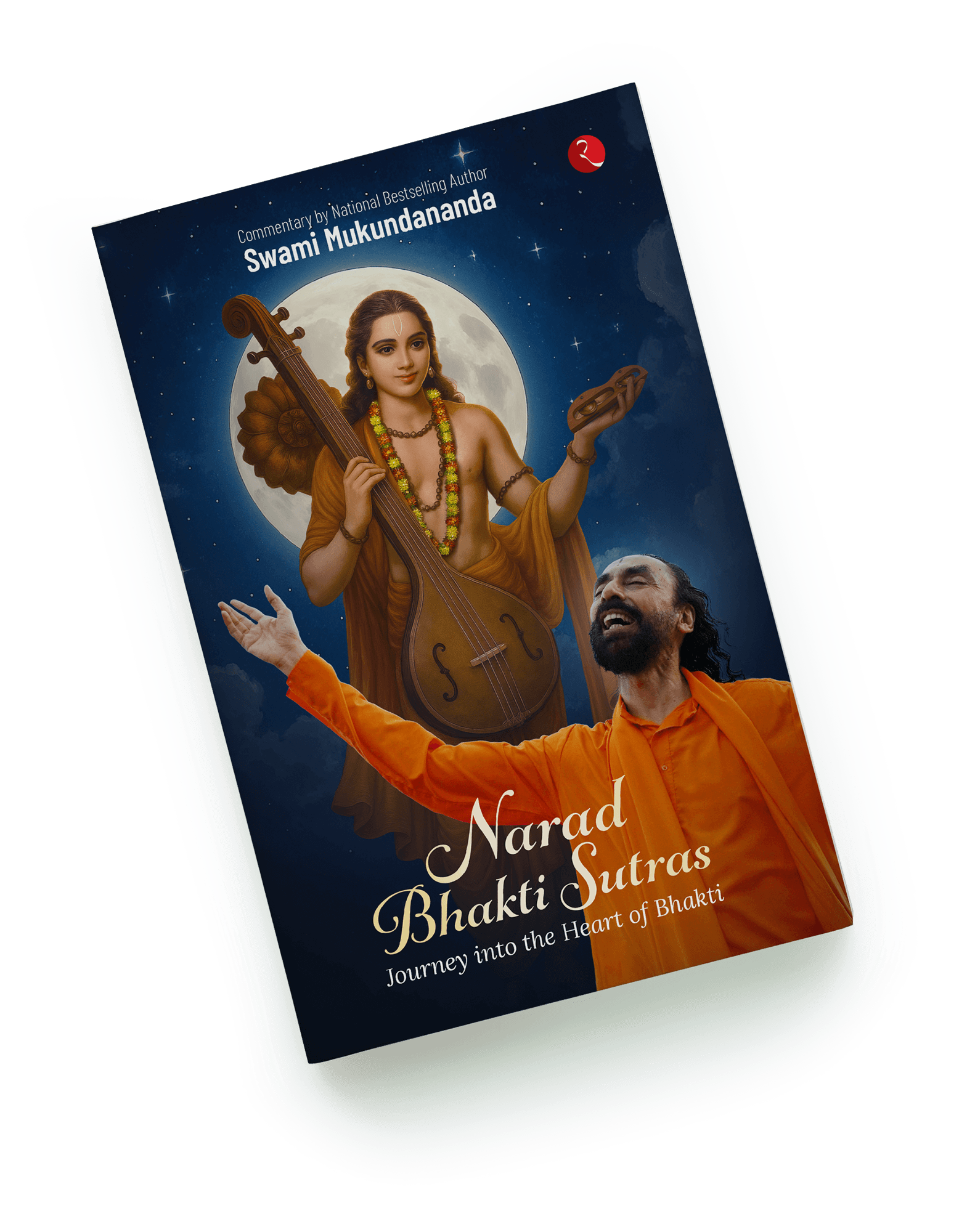
Order the Book Now (India)Order the Book Now (USA)
FAQs
1. What is the only way to connect with God according to this teaching?
The only way is through pure devotion (Bhakti)—a deep, loving connection with God supported by faith and an engaged mind.
2. Why are rituals alone not enough?
Rituals without inner involvement remain mechanical. True connection happens only when the mind and heart are fully engaged.
3. What role does the mind play in devotion?
The mind is central. If it is focused on God, it leads to liberation; if distracted, it prevents true spiritual progress.
4. How can we develop stronger faith in God?
Faith grows through satsang (holy association), reflection, and sincere practice, gradually deepening into unwavering belief.
5. What do the Bhagavad Gita and Narad Bhakti Sutras teach about devotion?
Both emphasize that love for God is supreme—greater than rituals or knowledge—and is the true path to divine connection.