

Why Does Life Feel Empty Even When You Are Doing Everything Right?
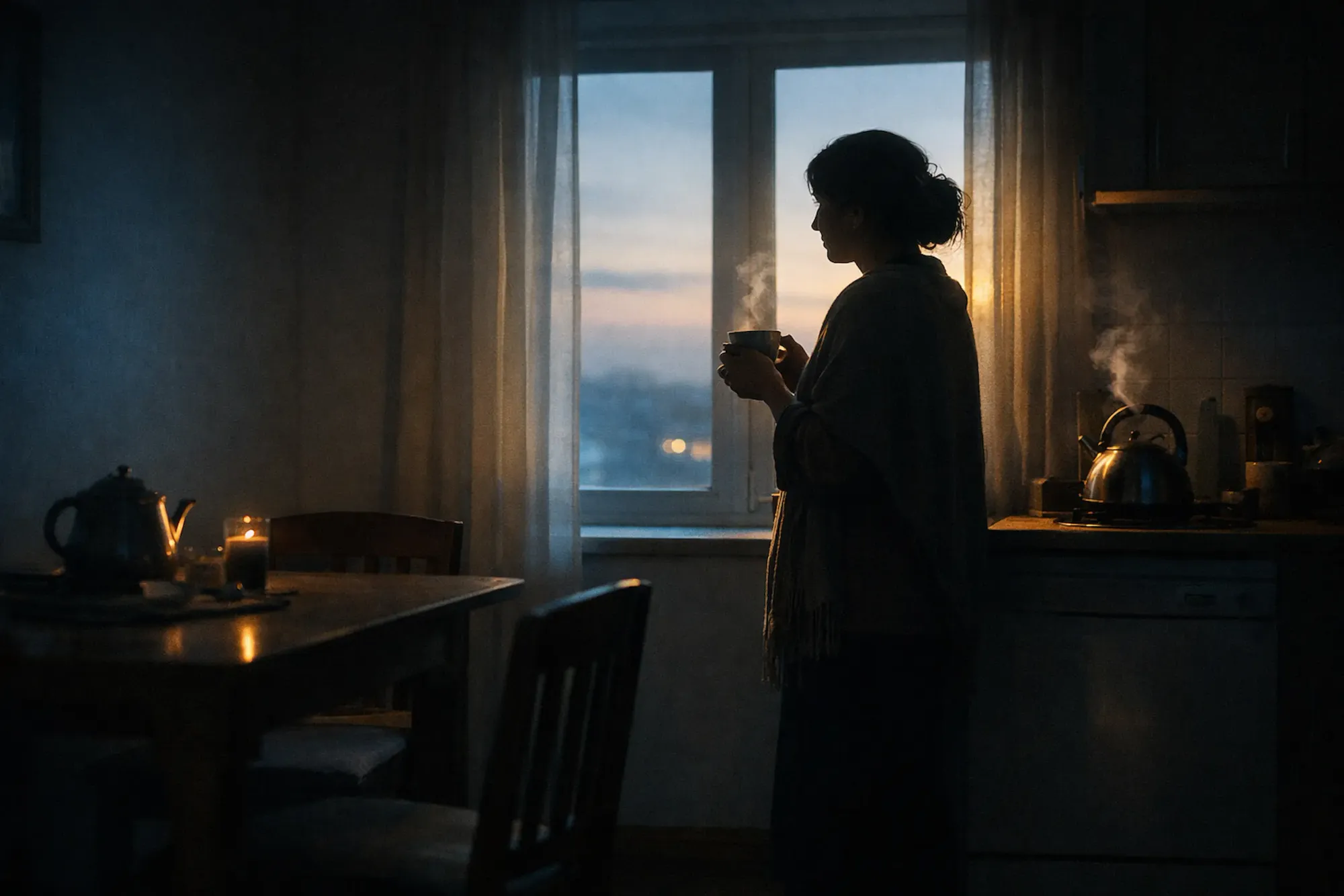
I woke up this morning before the alarm.
The room was dark. That particular shade of dark that exists only in the few minutes before dawn, when the night has not yet released its hold and the day has not yet announced itself. I lay still for a moment, listening. Somewhere outside, a bird had already begun. The sound was small and clean in all that quiet.
I got up. I made the bed, pulling the sheets smooth with the automatic ease of someone who has done this ten thousand times. I went to the kitchen. The kettle clicked on. The smell of tea rose slowly into the cool morning air, warm and familiar, and I stood at the window while it brewed and watched the sky change color over the rooftops.
Then the day began.
The emails. The responsibilities. The phone calls and the meetings and the small decisions that fill every ordinary hour. I moved through all of it. I showed up for my family. I did my work. I may have even paused in the morning to light a lamp, to fold my hands, to whisper a name before the world pulled me back into its current.
By evening, I sat down.
The house was quiet. The work was done. My hands rested in my lap. And somewhere in that stillness, a feeling surfaced that I could not quite name.
Not sadness. Not exhaustion in the ordinary sense. Not even loneliness.
Something more subtle than all of those. Something that sat in the center of my chest like a stone that had been there so long I had stopped noticing its weight.
A hollowness.
Like a glass that had been poured from all day and never once refilled. Like a traveler who had walked a great distance and still had not arrived anywhere that felt like home. Like a lamp that was lit and burning and casting its light faithfully in every direction, and yet somehow, in the room of my own inner life, it was dark.
I had done everything right. And still.
Still something was missing.
Most of us carry this feeling quietly for years. We work harder, pray more, attend more Satsang’s, take better care of our health. And still that faint hollow feeling remains. As if something essential is absent from the center of life, and we cannot locate what it is.
Swami Mukundananda Ji, in his teaching on the Narad Bhakti Sutras, points to the source of this hollowness with a clarity so precise, so gentle, so exact that when you hear it you feel not shock but recognition.
The problem is not the work. The problem is the invisible gap between the work and God.
What if nothing in your life needs to change, except the One for whom you are living it?

The Narad Bhakti Sutra 19 Teaching That Changes How You See Every Single Day
Imagine walking into a hall.
The fragrance of incense drifts through the air, soft and ancient, the kind of smell that seems to carry prayers that were offered here before you arrived. Hundreds of people sit in rows, their shoes left at the door, their phones set aside, their faces turned toward the front with an attention that is different from ordinary attention. Quieter. More inward. As if they came here carrying something heavy and are waiting to be shown where to set it down.
Swami Mukundananda Ji sits at the front of the hall.
He is not speaking yet. He is simply present. And in that presence, there is a quality that is difficult to describe except to say that the room feels different when he is in it. More still. More alive. The air itself seems to listen.
He begins to speak. His voice is unhurried. It does not reach for effect. It simply arrives, the way morning light arrives, finding every corner without force.
He tells us that before this moment in the Narad Bhakti Sutra series, the great sages have each described bhakti through a different lens. Through worship. Through knowledge. Through the working senses. Through the mind. Each offered a partial truth. Each glimpsed the mountain from a different angle.
And then he pauses.
The hall waits.
And then... Narad speaks.
Narad Bhakti Sutra 19
"nāradas tu tadarpitākhilācāratā tadvismaraṇe paramavyākulateti ।। 19 ।।
"In Narad's opinion, to offer all of one's works to the Supreme and to feel extreme pangs of separation on the slightest forgetfulness of Him [are the symptoms of firmness in bhakti]"
He lets it settle.
Nobody moves. The incense continues its slow upward curl. Somewhere outside the hall, the world goes on, but in here it has paused.
Then Swami Mukundananda Ji speaks again, and his words open the sutra like a door opening onto morning light:
"Narad has not contradicted any of the previous sages. He has engulfed all of them. This sutra is not a teaching about renunciation. It is not asking you to leave your life. It is asking you to bring God into everything you already have."
— Swami Mukundananda Ji
Two parts. One complete life.
Part One. Offer everything to God.
Part Two. Feel deep longing when you forget Him.
Hold this sutra close. It is the spine of everything that follows. Every story, every turning point, every moment of recognition in this blog is simply an unfolding of these two luminous lines.
Why Work Feels Meaningless Without God at the Center
Swami Mukundananda Ji does not rush to give solutions.
He first sits with the problem. Honestly. Precisely. With the patience of a doctor who knows that the diagnosis must be complete before the medicine is offered.
"We have been conditioned across lifetimes by one deeply embedded habit. Do everything for yourself. Not in the crude sense of selfishness, but in the subtle, unconscious, automatic sense. Every action carries an invisible inner question: What will this give me? What happiness will come to me from this? This is not a character flaw. It is simply a very old habit. One that has been running so long, we no longer even notice it is running."
— Swami Mukundananda Ji
And here is the consequence that matters.
When everything is done for me, the results will always feel incomplete. Because the self that is seeking fulfillment through work is the very self that is separated from God. And a self separated from its source will always feel, at some level, hollow.
The work does not feel heavy because there is too much of it. The work feels heavy because it is carrying the full weight of your happiness on its shoulders. And no amount of work was ever designed to carry that weight.
This is the hidden source of the exhaustion that no vacation has ever been able to fix. The tiredness that sleep does not reach.
Not, what will this give me? But, what will this give Him?
That single inversion is the pivot point upon which an entire life can quietly, completely turn.
How to Offer Your Daily Actions to Shree Krishna — Three Practical Doorways
Then Swami Mukundananda Ji leans forward slightly.
His voice becomes more intimate. He is no longer giving a lecture. He is having a conversation. And the conversation is with each person in the hall individually, somehow, at the same time.
"Let me ask you something very simple. You cleaned your room this morning. Were you cleaning it for yourself, or were you cleaning it for Shree Krishna?"
— Swami Mukundananda Ji
The question hangs in the air like the smoke from the incense. Nobody answers out loud. But something stirs.
Because it is such a simple question. And almost nobody has ever been asked it before.
He explains. The action is identical either way. The hands do the same work. The room gets equally clean. The time spent is the same. What changes is something invisible to the eye, something that leaves no fingerprint on the surface of the world but changes everything beneath it.
The intention.
And that invisible shift is precisely what transforms ordinary work into worship. He offers three doorways through which any action, however routine, however unglamorous, can become an offering:
Doorway 1. The Ownership Shift: Everything Belongs to God
"This house is not mine. This body is not mine. This life is not mine. It all belongs to Him. I am only the caretaker. And a caretaker does not clean carelessly."
— Swami Mukundananda Ji
When I clean a house that belongs to Shree Krishna, the broom in my hand is no longer just a broom. The floor beneath my feet is not just a floor. I am tending what belongs to the Lord. There is a quiet dignity in that. A quiet joy that no salary could buy.
Doorway 2. The Pleasing Intention: Do It to Bring God Joy
"God is pleased by cleanliness. By sincerity. By beauty offered with love. So, I do this not to check it off a list. I do this to make Him happy."
— Swami Mukundananda Ji
The moment the end result shifts from my happiness to His happiness, I am no longer laboring toward an outcome. I am giving a gift. And the giving of a gift, even in the form of a swept floor or a carefully cooked meal, whose warm fragrance rises through a quiet kitchen, carries a completely different quality. The hands do the same work. The heart behind them is different.
Doorway 3. The Readiness: What If He Comes Today?
"What if Shree Krishna were to walk through your door today? Right now. What if He arrived and the fragrance of fresh flowers greeted Him at the entrance? What if the floor was clean, the space was beautiful, and everything said, without words, that someone here was waiting for Him?"
— Swami Mukundananda Ji
This third doorway is the most intimate of all. It is not an abstract philosophical exercise. It is a living, breathing, daily readiness. A state of loving preparation that does not know when the beloved will arrive but refuses to be caught unprepared.
The flowers on the path. The clean floor. The tasted berry. The lamp burning in the window.
This is where theory ends and love begins.
And it is exactly how one extraordinary woman lived. For forty years.
The Story of Shabari — How Ordinary Daily Work Becomes Extraordinary Devotion
The hall has gone completely still.
Swami Mukundananda ji's voice slows. It softens. When he begins to tell this story, the air in the room changes in the way that air changes when something true is about to be spoken. You find yourself sitting slightly straighter. You find yourself, without realizing it, holding your breath.
"There was once someone who understood this teaching, not through scripture, not through years of formal study, but through the sheer, uncompromising, beautiful force of love. Her name was Shabari."
— Swami Mukundananda Ji
She was not born into a learned family. She held no scholarly credentials. She was a simple tribal woman, and on the night before her wedding, she fled into the darkness of the forest.
The wedding feast involved the slaughter of animals. The sound of it, the smell of it, went against something deep and unnameable within her. Something that she could not explain but could not betray. And so, without a plan, without a destination, she ran.
She ran until the forest closed around her and the sounds of the feast faded and there was only the smell of earth and leaves and the small sounds of the night. She wandered until she found the hermitages of sages, their fires visible through the trees like warm yellow eyes in the dark. But one by one, they turned her away. She was of low birth. She was considered unworthy of spiritual instruction.
Until she reached the hermitage of the great sage Matang.
He looked at her. Truly looked at her, the way very few people ever look at anyone. And what he saw was not her birth or her caste or her rough hands or her tear-stained face.
"Come, child. Stay. It is all right."
For years, Shabari served him with total, wholehearted dedication. She rose before dawn to sweep the earthen pathways of the hermitage while the air still carried the cool, damp smell of the night just past. She gathered fruits and berries from the forest, her bare feet knowing every root and stone of those familiar paths. She listened to every word of wisdom her Guru offered, holding each teaching the way you hold a small flame in cupped hands against the wind.
And slowly, quietly, like a flame being fed drop by drop with ghee, a deep and burning longing for the Lord began to grow inside her.
Then came the day when Matang knew his time on earth was drawing to its close.
Shabari came to him and the tears fell from her face onto the ground at his feet. She could not speak for a moment. When she found her voice, it was barely above a whisper.
"Guruji. You are leaving. What will become of me?"
And Matang smiled. Not the smile of consolation. The smile of a man who can see something the person in front of him cannot yet see, and who knows that what they cannot see is the most beautiful thing of all.
"Shabari. You will be even more fortunate than I. Bhagavan Himself will come to you. He will give you darshan with His own lotus feet."
He departed.
The hermitage was silent. The fire burned low. The forest sounds continued as they always had. And Shabari, alone now, elderly, of no worldly consequence to anyone in the world, did something that would define the rest of her life.
She believed her Guru's words. Completely. Without reservation. Without asking for proof.
From that day forward, every single morning, she woke before dawn and the first thing that entered her mind, before the sounds of the birds, before the smell of the morning dew on the leaves outside, was one quiet question, burning like a lamp in the center of her chest.
Will today be the day Ram comes to my home?
And with that question alive within her, she began her day.
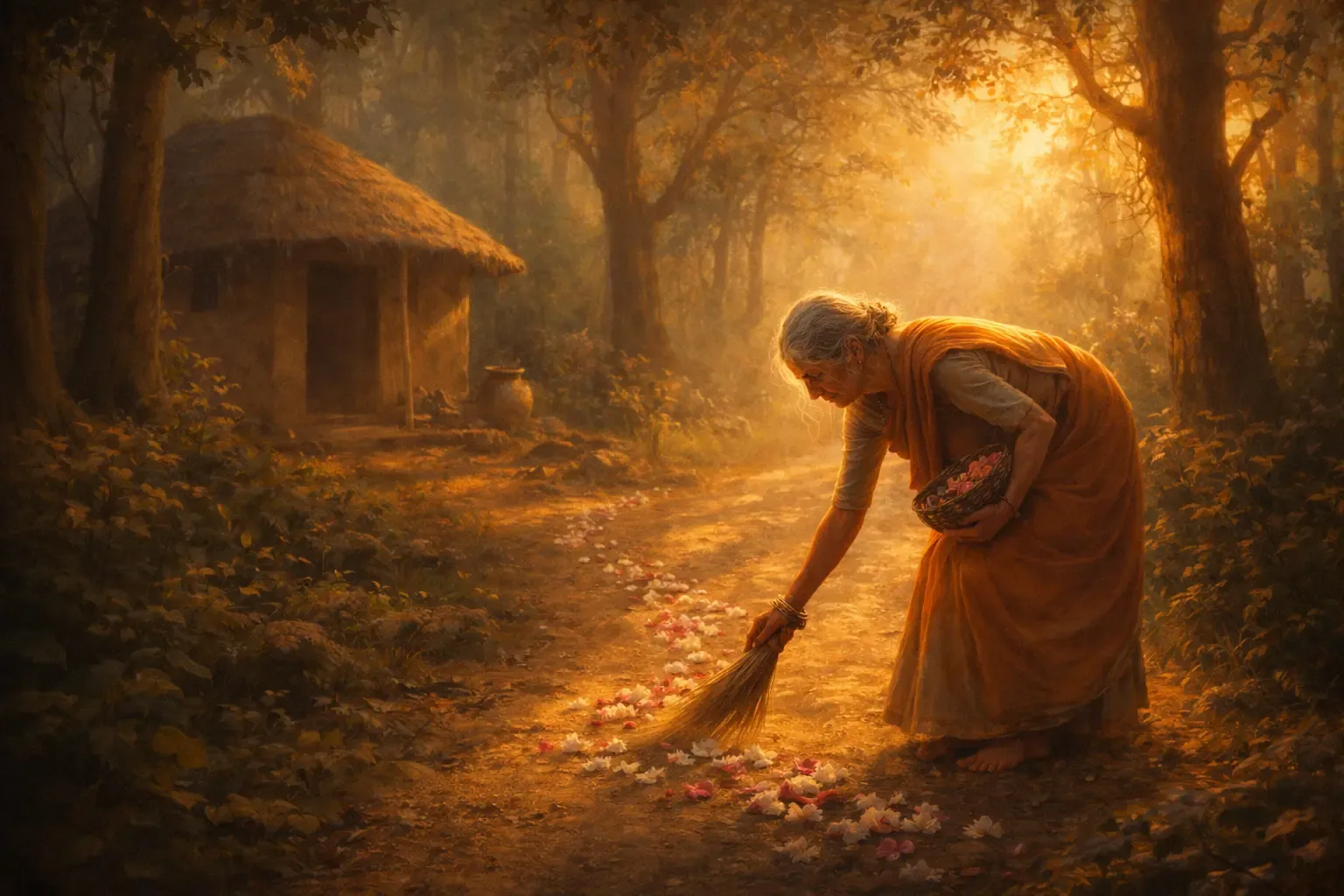
She took her broom and swept the pathway from the forest to her hut door. The rough wood of the handle was smooth in the places where her hands always gripped it. She swept slowly, carefully, the way you prepare something for someone you love. Not because the path was dirty. Because He might walk upon it today.
She gathered flowers from the edges of the forest and placed them along the pathway, the petals still wet with morning dew, their fragrance rising gently into the cool air. Not for decoration. Because He might see them today.
She went deeper into the forest to find berries. She tasted each one, one by one, her lips pursuing at the sour ones, setting those aside, keeping only the sweetest, the most perfect, the ones that tasted like something worth offering. Because He would eat from her hands. Perhaps today.
She had no proof it would happen. She had no timeline. No sign. No guarantee. No letter from heaven. Nothing but the words of a departed Guru and the fire of a love that refused to go out.
She had only faith. And she treated that faith as the most solid ground she had ever stood on.
Days passed. Seasons turned. The forest changed color and changed back. Years folded quietly into decades.
Forty years.
Forty years of sweeping the same path before dawn.
Forty years of tasting the berries.
Forty years of placing flowers along a pathway that no one had walked in all that time.
Forty years of waking with the same question alive in her chest.
Today?
She did not grow bitter. She did not collapse into despair. She did not let doubt extinguish the lamp.
"Bhakti is always optimistic. It is rooted in hope. The moment hope is extinguished; bhakti cannot survive. But as long as the heart holds even a thread of faith, God will come for me, perhaps not today, but one day, by His grace, the flame does not go out."
— Swami Mukundananda Ji
And then, on an ordinary morning that smelled like every other morning, that sounded like every other morning, they came.
Lord Ram and Lakshman, moving through the trees. There were other hermitages nearby. Other sages of great reputation and enormous austerity. Many places they could have gone.
"Ram is seated in everyone's heart. And He knew. He always knows. Who is waiting. Who has been preparing. Who has been, every single morning for forty years, asking the same quiet question. He went straight to Shabari."
— Swami Mukundananda Ji
He walked up the pathway she had swept that very morning.
His feet touched the earth she had tended with such love for so long. The flowers she had placed were still fresh. The fragrance of them rose around His arrival like a greeting that had been waiting forty years to be given.
He sat in the hut she had prepared. Not knowing when He would come. Only knowing she must always be ready.
He reached out His hand and she placed a berry in it, trembling, her eyes full, forty years of waiting arriving all at once in one moment so complete it seemed impossible that a human body could contain it.
He ate.
And He gave her the darshan her Guru had promised forty years before.
Not because she was learned.
Not because she had performed great rituals or austerities.
Not because she was impressive by any measure the world recognizes.
Because for forty years, every single ordinary action of her life had been an offering.
Her broom was a prayer. Her berries were a poem. Her patience was a form of worship that no scripture could fully contain. The fragrance of those flowers on the pathway was the fragrance of a devotion so pure and so consistent that even the Lord of the universe rose and walked through the forest to receive it.
Shabari did not separate her work from her devotion. Her work was her devotion.
The Gopis of Vrindavan — What the Highest State of Devotion Looks Like
Swami Mukundananda Ji lets the silence after Shabari's story breathe for a moment.
Then his voice lifts. Gently. Luminously. Toward something even higher.
"Shabari shows us what it looks like at the beginning of this path. The conscious, deliberate, daily offering. But the gopis of Vrindavan show us where this path ultimately leads. They show us the destination."
— Swami Mukundananda Ji
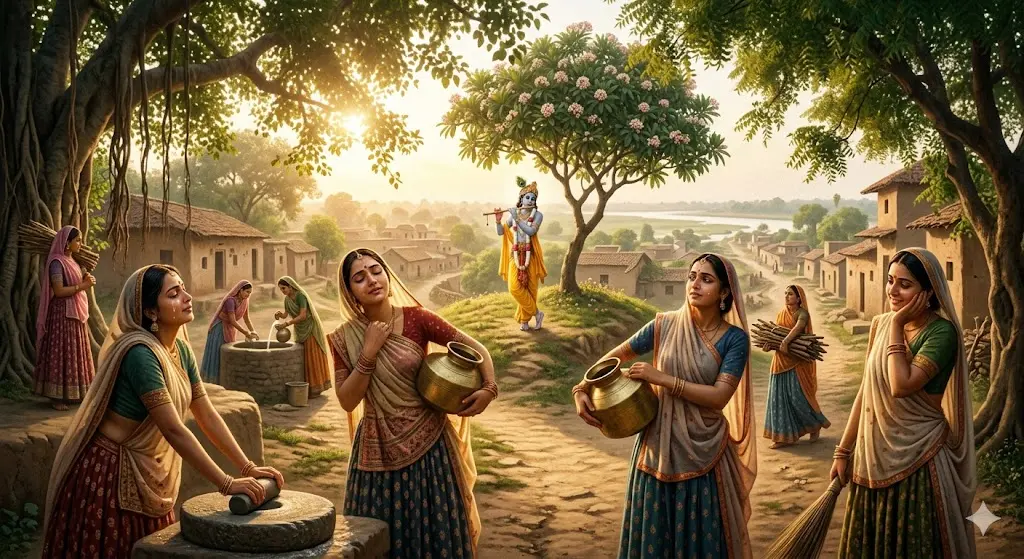
The gopis had households to run and children to raise and chores that filled the hours from first light to last. The full weight of ordinary life pressed on them from every side.
And yet Shukadev Goswami describes them in the Bhagavatam in language that feels less like scripture and more like someone trying to describe the color of light:
Blessed are these gopis, the name of Shree Krishna ever on their lips, tears of loving devotion falling from their eyes, their minds completely immersed in the limitless ocean of love for Shree Krishna.
The chores did not stop. The children still needed feeding. The fire still needed tending.
But something had dissolved inside them that most of us spend our entire lives trying to dissolve.
Their hands moved in the world. But their hearts had already crossed into Vrindavan.
Swami Mukundananda Ji shares that in the Yadi Purana, Shree Krishna Himself reveals something that stops the breath: the gopis would even decorate their own bodies, thinking them to be the property of Shree Krishna.
Not just their actions. Not just their work. Their very existence, offered to Him. Completely. Effortlessly. Naturally.
No division remained. No boundary between the life they were living and the love they were feeling. No line between the world and God.
It was simply how they lived.
How to Balance Spiritual Life and Work Responsibilities as a Householder
And then Swami Mukundananda Ji does something that makes the entire hall exhale.
He looks out at the people sitting in front of him. The parents. The professionals. The students. The people who came today carrying the full, complicated, beautiful weight of ordinary lives. And he speaks directly to them.
"You are not Shabari waiting alone in a forest. You are not the gopis of Vrindavan. You have a family. A career. Responsibilities that cannot be set aside. And Narad Sutra 19 was not written for sages alone. It was written for you. The path of bhakti does not require you to change your life. It requires you to change the orientation of your life."
— Swami Mukundananda Ji
The duties remain. The work remains. The emails and the school runs and the difficult conversations at work, all of it remains.
What changes is the invisible inner question running beneath all of it.
Who is this for?
A parent raising children with that question in their heart, offering it to Him. A professional doing their work with integrity and that intention, offering it to Him. Someone cooking a meal, the smell of spices rising in the warm kitchen air, offering it to Him.
The action does not change. The heart behind it changes everything. And when that heart is in place, even the most demanding, exhausting, ordinary day begins to carry something that is difficult to name but impossible to miss.
It begins to feel, quietly and unmistakably, like it means something.
What to Do When Spiritual Practice Feels Dry and Mechanical
Then a woman near the front of the hall raises her hand.
She asks a question that every sincere devotee has felt but few have voiced out loud: What do I do on the days when none of this feels real? When the prayer feels mechanical. When the thought of offering my work to Shree Krishna feels distant and abstract. When I sit in the morning with folded hands and the heart just does not respond. When the silence feels empty rather than full.
The hall recognizes itself in her question.
Swami Mukundananda Ji nods slowly. He has heard this before. He has held this before.
"Bhakti is not a mood. It is a relationship. And we do not abandon our most important relationships when the feeling temporarily goes absent. A mother does not stop caring for her child because she woke up depleted. A devoted student does not stop honoring their Guru because one morning the inspiration did not arrive. You continue. Not because you feel it. But because you are committed to something deeper than feeling."
— Swami Mukundananda Ji
He pauses. The hall is quiet. Then:
"Look again at Shabari. She did not sweep the path every morning because it felt spiritually ecstatic. There must have been mornings when her aging body ached and the wood of the broom handle was rough against her palms and the forest felt dark rather than full of promise. But she swept anyway. She gathered the berries anyway. She prepared the hut, anyway. Not because of feeling. Because of faith."
— Swami Mukundananda Ji
Show up anyway. Offer anyway. Return anyway.
That perseverance, through dryness, through silence, through the complete absence of feeling, that is itself a form of the deepest love.
What the Bhagavad Gita Says About Offering All Actions to God
Swami Mukundananda Ji then turns to the Bhagavad Gita.
And when he does, it does not feel like a reference being cited. It feels like a door being opened onto something that was always there, waiting, and you simply had not looked at it directly until now.
"This teaching of Narad is not new. This is what Shree Krishna Himself said to Arjun. Not in a peaceful forest. Not in a temple. On a battlefield, in the middle of the most crushing weight of worldly responsibility a human being can face. And He said:"
— Swami Mukundananda Ji
Bhagavad Gita 9.27
"Yat karoṣi yad aśnāsi yaj juhoṣi dadāsi yat
Yat tapasyasi kaunteya tat kuruṣva mad-arpaṇam"
"Whatever you do, whatever you eat, whatever you offer as oblation to the sacred fire, whatever you bestow as a gift, and whatever austerities you perform, O son of Kunti, do them as an offering to Me."
Swami Mukundananda Ji lets the verse rest in the silence for a moment. Then:
"Not some things. Not only the sacred things. Not only the morning prayer or the visit to the temple. Whatever you do. The email. The cooking. The commute. The difficult conversation. All of it, offered to Him. This is not poetry. This is the direct instruction of the Supreme."
— Swami Mukundananda Ji
Narad Sutra 19 and the Bhagavad Gita speak with one voice. The ancient sage and the Lord of the universe point in the same direction. The teaching is complete. The invitation is open.
Do not divide your life. Offer it whole.
The Pain of Forgetting God — What the Greatest Saints Reveal About True Bhakti
And now something shifts in the hall.
The teaching has moved like a river, from the sutra, through Shabari, through the gopis, through the Bhagavad Gita. And now it arrives at something that everyone in the room has lived but perhaps never fully understood.
Swami Mukundananda Ji's voice becomes very quiet. Very direct. As if he is no longer speaking to a hall full of people but to each person individually, in the private room of their own heart.
"We have spoken about offering. About intention. About Shabari's forty years. About the gopis. Now I want to speak about what Narad understood about us, about the actual reality of our inner life. About what happens when we forget."
— Swami Mukundananda Ji
He returns to the second half of Narad Sutra 19.
"Tad vismarane param vyākulatā."
"And feel extreme pangs of separation upon the slightest forgetfulness of Him."
He says: we will forget. Not dramatically. Not in one great conscious act of turning away. Just quietly. Gradually. The way a candle dims when a window is left open on a still night, so slowly that you do not notice the room has grown darker until you look up and realize the flame is barely there.
I wake up with God in my heart. The intention is genuine and warm, like the first light through a window. And then, by degrees so subtle I do not notice them happening, the mind slips into the schedule, the pressure, the noise, the ten thousand small demands that fill an ordinary day.
Hours pass.
The intention dissolves.
The offering is forgotten.
And then, in some quiet moment between one task and the next, I notice.
I forgot Him.

What happens in that moment, what arises in the heart when I notice the forgetting, is, according to Narad Muni, the truest and most revealing measure of where I stand in my bhakti.
"When the mind comes away from its absorption in God, there should be a restlessness. A deep, genuine ache. Not the heavy weight of guilt. Not self-condemnation. Something more tender and more true than that. Longing. The ache of a heart that has briefly lost its center and knows it."
— Swami Mukundananda Ji
The distinction matters more than words can fully capture.
Guilt says: I am bad. I have failed. I am unworthy.
Longing says: I miss Him. I was away from Him. Let me return.
Guilt drives you further from God. Longing drives you straight back to Him.
And it is in this very longing, in this ache of separation, in this restlessness of a heart that has briefly lost its beloved and knows what it has lost, that some of the greatest saints in all of history have found the deepest and most beautiful expression of their love.
Chaitanya Mahaprabhu — Shikshashtakam Verse 7
Five hundred years ago, in the golden light of the bhakti movement, Chaitanya Mahaprabhu poured the fullness of a devotee's longing into eight verses known as the Shikshashtakam.
When he recited these verses, it is said that his body shook. That tears fell from his face onto the ground. That those who stood near him could feel something in the air that made them weep without knowing why.
The seventh verse is this.
'O Shree Krishna! Every moment without You feels like an age. My eyes are shedding tears like torrents of rain, and in Your absence, the entire world seems empty.'
Read it as slowly as it deserves.
A single moment without Shree Krishna felt like an age. Eyes pouring like torrents of rain, not the gentle tears of sentiment but the full, unstoppable release of a soul that has tasted the presence of God and cannot bear even a breath of His absence.
The entire world, that vast, full, beautiful, noisy world, reduced to emptiness in His absence. All of it hollow. All of it signifying nothing without the One who gives it meaning.
This is what tad vismarane param vyakulata looks like when it is fully alive in a human heart.
Jagadguru Shri Kripalu Ji Maharaj — The Same Longing in the Language of the Heart
Centuries later, in the warm, living language of the bhajan, Jagadguru Shri Kripalu Ji Maharaj sang the same ocean of longing in words that reach directly into the chest, bypassing the mind entirely:
"Hari se mile binu, Govind Radhe,
eka pala yuga lage, Hari se mila de." [Radha Govind Geet]
"When every moment in separation from Shree Krishna seems an age long, such yearning will enable us to meet Him."
The same truth. The same ache. The same measure of love: one moment of separation felt like a lifetime.
What Chaitanya Mahaprabhu wept in the exalted language of Sanskrit, Jagadguru Shri Kripalu Ji Maharaj sang in the tender, simple, piercing language of the heart.
Two masters.
Two centuries apart.
One unbroken river of longing flowing through the ages.
The Drowning Man: What Real Longing Feels Like
Swami Mukundananda Ji pauses, wanting his audience to feel this vyakulata – a desperate, restless longing not just in their hearts, but in their very bodies. He tells the story:
"A young man went to a great saint and said, ‘I aspire deeply for God. I long for Him with all my heart. But I see no result. I feel nothing. What am I doing wrong?’ The saint did not answer with words. He simply said, ‘Come with me. Let us go to the river for a bath.’"
— Swami Mukundananda Ji
They waded into the river together, the cold water rising around their knees, then their waists. The young man was thinking about God, about his question, about what wisdom the saint might offer him.
And then suddenly, the saint reached out and pushed the young man’s head deep under the water.
The young man struggled. He pushed back against those firm hands. The water was cold and dark; his lungs began to burn. He clawed upward, but the saint held fast. The young man's vision blurred. His chest screamed for air. He fought with everything he had until, finally, the saint released him.
The young man burst upward, gasping, the morning air flooding into his lungs with a sweetness that was almost painful. He stood there, chest heaving, water streaming down his face.

"The saint looked at him calmly and asked: “How were you feeling under the water?” The young man said,” I was gasping. I was going to die. I needed air more than I have ever needed anything.”
The saint said, quietly: “That is how you must long for God. Not as a preference. Not as a wish. As air. When you cannot live without Him for a single moment, the way you could not live without that breath, that is param vyakulata. That is what Narad is speaking of in the Bhakti Sutras."
— Swami Mukundananda Ji
The hall is completely still.
Every person in the room now understands the difference between wanting God like a pleasant luxury and needing God the way that young man needed air in those final desperate seconds beneath the water.
The first is preference. The second is love.
Hanuman — The Thunder of Truth
Swami Mukundananda Ji straightens.
His voice, which had been tender and soft through the stories of Mahaprabhu and Kripalu Ji Maharaj and the drowning man, now carries something else entirely. Something that comes up through the floor and enters the chest directly.
"And then there is Hanuman. That great devotee, whose love for Ram was as vast as the ocean and as unshakeable as the mountains. Listen to what he says."
— Swami Mukundananda Ji
"Hey Ram, there is only one calamity: the moment we forget You. One good fortune: remembrance of the Lord. One disaster: forgetfulness of Him."
Only one.
Not poverty. Not illness. Not failure. Not the collapse of every plan. Not loss of every kind.
Forgetting God. That alone is the true calamity.
Remembering Him. Even imperfectly. Even briefly. Even in the middle of an ordinary afternoon when the mind surfaces from its busyness like a swimmer coming up for air and remembers, just for a moment, the One who is always there. That alone is the true blessing.
When Hanuman speaks, it does not arrive as philosophy. It arrives as something felt in the sternum. Because somewhere beneath all the noise and the busyness and the forgetting, I already know this is true.
I have felt the difference between a day lived with God somewhere at the center, however imperfectly, and a day lived entirely in the noise of the world. I know, in the deepest and quietest part of myself, which one leaves me empty and which one leaves me, somehow, quietly and inexplicably full.
The pain of forgetting Him is not a sign of failure. It is proof, living, breathing, undeniable proof, that you have known His presence.
You cannot ache for someone you have never known. You cannot feel the emptiness of a room that has never been filled. You cannot miss a fragrance that has never touched you.
The longing itself is the evidence of the love.
So, when I forget, I will not sink into guilt. I will not add the cold weight of self-judgment to the already-felt weight of separation. I will feel the ache. I will let it be real. And I will let it bring me back.
The Two Wings of Bhakti — The Complete Teaching of Narad Sutra 19
The Satsang is drawing toward its close.
The incense has burned down to a thin thread of smoke. The hall is warm with the presence of everyone who has sat here and listened and felt something shift inside them. Swami Mukundananda Ji returns, one final time, to the sutra where everything began.
And now, having traveled through Shabari's forty years, through the gopis' effortless absorption, through Chaitanya Mahaprabhu's tears, through Jagadguru Shri Kripalu Ji Maharaj's longing, through the drowning man, through Hanuman's thunder, the sutra opens differently than it did the first time we heard it. It is the same words. But we are not the same people who heard them.
"Narad Sutra 19 has two wings. And like a bird, it cannot fly with only one."
— Swami Mukundananda Ji
Wing One. The Offering.
Before every action, however small, however unglamorous, however invisible to the world:
This is for You.
It does not require elaborate ritual. It does not require ceremony or a particular hour of the day. It is a quiet, interior movement of the heart. A breath of intention, sometimes no more than a whisper in the mind, that transforms the ordinary into the sacred. The email, for You. The meal, for You. The difficult conversation, for You. The work done with care and integrity, for You.
Wing Two. The Return.
And when I drift, and I will drift, and there is no shame in it, the second wing lifts me:
I wandered. Let me come back.
Not with the heavy drama of failure. Not with the cold weight of yet another disappointment in myself. With the simple, natural, warm movement of return. Like a child who ran off to play in the fields and then looks up at the fading light and remembers: Oh. I must go home. The smell of the evening air. The sound of a voice calling. The pull of belonging.
There is no drama in it. There is only the turning back.
The Monkey and the Kitten — Two Ways to Surrender
And here, at the very end of this teaching, Swami Mukundananda Ji offers an image so simple and so perfect that once you have heard it, you will never forget it.
"In our scriptures there is a teaching about two kinds of surrender. Markata nyaya, the way of the monkey. And marjara nyaya, the way of the kitten. Watch the young monkey when the mother leaps from branch to branch. The young one clings to the mother. It holds on with all its strength. And if for even one moment it loses its grip, it falls. Now I watch the kitten. When the kitten is in danger, what does it do? It cries out. Just a small sound. Mew. And the mother cat comes. She takes the kitten gently by the scruff of its neck and carries it wherever it is safe. The kitten does nothing except call and surrender. The mother does everything."
— Swami Mukundananda Ji
The hall sits with this image for a moment.
The monkey child, small fingers gripping the branch, holding on through every leap, knowing that its safety depends entirely on the strength of its own hold.
The kitten, eyes closed, entirely surrendered, carried through the air in its mother's mouth, going exactly where it needs to go without knowing where that is.
"Most of us in our spiritual lives are like the monkey. We are holding. Holding to our practices, our efforts, our expectations, our idea of how the divine should respond to us. We have replaced the branch of the world with the branch of God. But we are still holding. Still clinging. And the grace of God is like gravity. It is always flowing. It is always present. But it cannot carry us as long as we are gripping. The moment we release, the moment we truly surrender and let Him take us where He will, the grace takes over. We are the kitten. He is the mother. Our only work is to call His name and let go."
— Swami Mukundananda Ji
These two wings together, offering and returning, remembering and coming back from forgetting, are what Narad calls the sign of firmness in bhakti.
Not perfection. Not constant, unbroken God-consciousness from the first light of morning to the last breath before sleep.
Offering when I remember. Returning when I forget.
Surrendering like the kitten, again and again.
That is enough. That is, in the deepest sense, everything.
Key Takeaways — Narad Bhakti Sutra 19 on Work, Devotion, and Remembrance
• The hollowness that work leaves behind is not failure. It is a signal pointing to the absence of God within the work.
• Narad Bhakti Sutra 19 gives a complete definition of mature devotion: offer all actions to God, and feel deep longing upon the slightest forgetfulness of Him.
• The problem is not the work itself. It is the invisible orientation behind it. Doing for self creates emptiness. Doing for God creates meaning.
• Any action can be offered through three doorways: ownership (it belongs to Him), pleasing intention (it brings Him joy), and readiness (He may come today).
• Shabari's forty years of daily preparation was not passive waiting. It was continuous, active, loving offering. Her ordinary work became extraordinary devotion.
• The gopis show us the destination: their hands moved in the world, but their hearts had already crossed into Vrindavan.
• Bhagavad Gita 9.27 confirms the teaching directly: whatever you do, all of it, can and should be offered to God.
• Chaitanya Mahaprabhu's Shikshashtakam Verse 7 and Jagadguru Shri Kripalu Ji Maharaj's bhajan reveal: even one moment of forgetting God is felt as an age of separation by the sincere devotee.
• Swami Vivekananda's drowning story reveals the depth of longing Narad speaks of: not preference, not wish, but the desperate need for air itself.
• Hanuman's teaching: only one real misfortune exists in this world. Forgetting God. Only one real blessing. Remembering Him.
• Bhakti has two wings: offering when you remember, and returning with longing when you forget. And like the kitten in its mother's mouth, the moment we surrender, the grace carries us home.
Closing: The Same Morning — One Life Quietly Transformed
The Satsang has ended.
People sit for a moment before they rise. Not because the session ran long. Because something needs a moment to settle. The way fragrance needs a moment to settle into fabric. Quiet and complete and impossible to remove.
I step outside.
The same world is there. The same roads, the same noise, the same sky above the same rooftops. The smell of the evening air, the sound of the city returning. Nothing has changed outside.
But something inside me is different.
There is a question living in me now. Quiet. Persistent. Gentle as a lamp that has just been lit in a room that has been dark a long time.
Who am I doing this for?
I will forget to ask it. Many times. Across many days.
I will lose it in the noise of the morning and find it again in the quiet of the evening. I will offer a hundred things and forget a hundred more. I will feel the ache of forgetting and let that ache bring me back.
And like the kitten that simply cries out and surrenders, I will not grip. I will not hold. I will call His name, and let the grace carry me where it will.
And every time I come back, I will find that nothing has been lost. That the door was never locked. That He was seated there all along, in the silence behind the noise, waiting with the infinite patience of One who has been waiting since before I knew I was looking for Him.
I am preparing the hut. I am sweeping the path. I am gathering the berries, tasting each one carefully, keeping only the sweetest, because He may come today.
The flowers are placed. The lamp is burning. The door is open.
And whether He comes today, or tomorrow, or across the long and patient horizon of a lifetime, I will be ready.
Because every day, I offered what I had. And every time I forgot, I felt the ache. And every time I felt the ache, I found my way back.
The day did not change. Only the One at its center did.
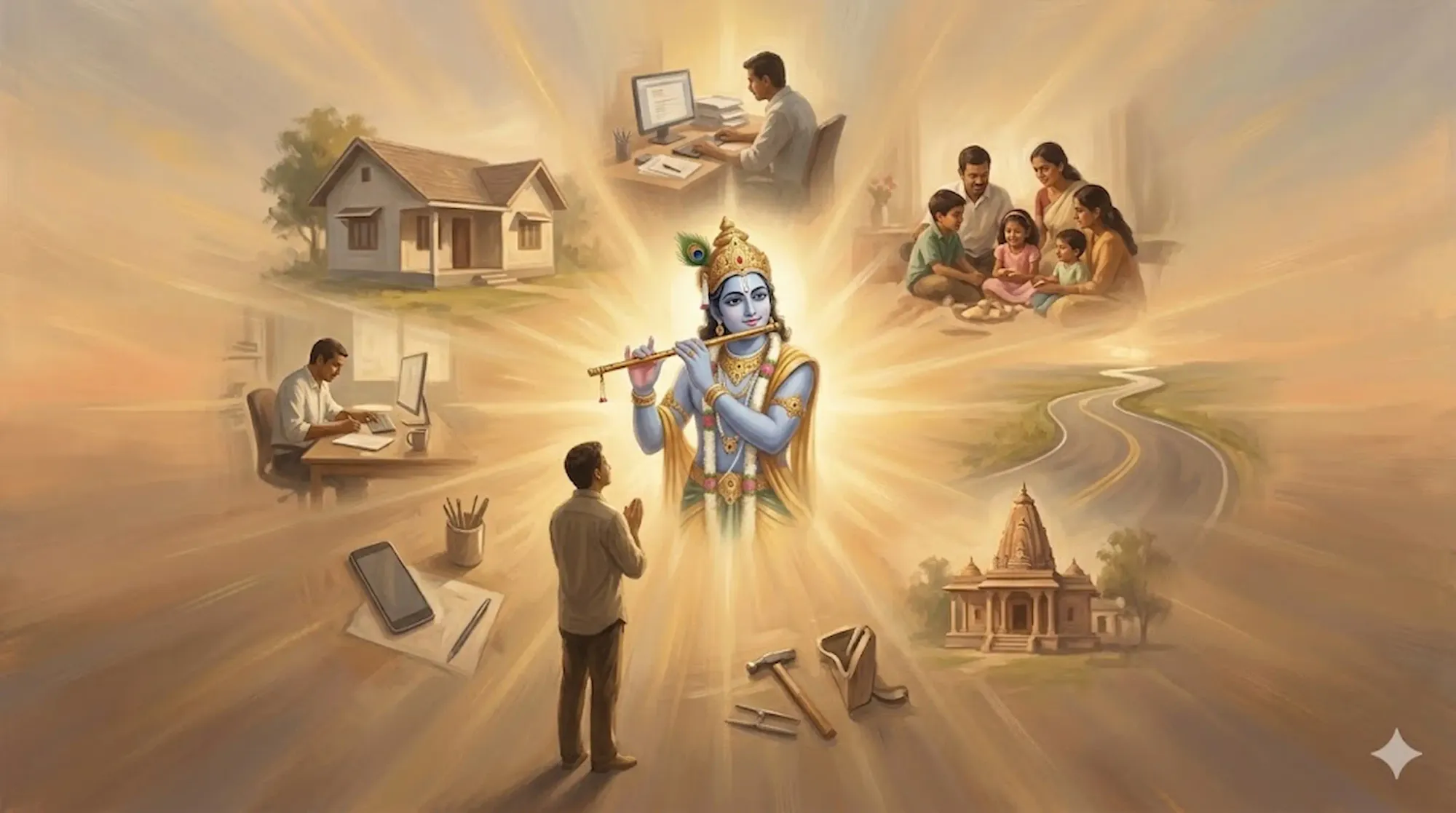
"Firm bhakti is not never forgetting God. It is never stopping the return to Him. The goal is not to add God to your life. The goal is to make God the very life itself."
— Swami Mukundananda Ji
Call To Action
🌟 Final Call to Action
👉 For more life-changing teachings, subscribe to the official YouTube channels:
👉 Watch the complete Narad Bhakti Sutra series on the Bhagavad Gita Krishna Bhakti Channel:
Buy the "Narad Bhakti Sutras" by Swami Mukundananda
Now that we’ve explored the divine wisdom of the Narad Bhakti Sutras, it’s time to take the next step on your spiritual journey. To deepen your understanding of the Narad Bhakti Sutras, we highly recommend Swami Mukundananda’s commentary, which beautifully unpacks each mantra providing a clear and practical guide for modern seekers.
Order the Book: Swami Mukundananda’s Commentary
Unlock the deeper wisdom of the Narad Bhakti Sutras with this insightful commentary by Swami Mukundananda. Perfect for modern seekers who wish to explore the divine teachings in greater depth.

Order the Book Now (India)Order the Book Now (USA)
Frequently Asked Questions
1. How can I offer my work to God if my job isn’t spiritual?
It’s not the work—it’s the intention.
Any work done with sincerity can be offered.
“Lord, this is for You.”
That simple shift turns work into worship.
2. What’s the difference between Karma Yoga and Bhakti?
Karma Yoga: act without attachment to results.
Bhakti: act for God and offer everything to Him.
Bhakti doesn’t replace karma yoga—it completes it.
3. I forget God often. Is my bhakti weak?
No. Forgetting is human.
What matters is what follows:
Do you feel the longing to return?
That longing is proof your bhakti is alive.
4. How did Shabari wait 40 years without losing faith?
Two things sustained her:
- Faith in her Guru’s word
- Daily loving action
She didn’t just wait—she prepared every day.
5. What does “tad vismarane param vyākulatā” mean?
It means:
Feeling deep longing when you forget God.
Not guilt—love in separation.
Like needing air, not just wanting it.