


Parashurama Jayanti is one of the most spiritually significant Hindu festivals dedicated to Bhagwan Parashurama, the sixth incarnation of Lord Vishnu. Celebrated on Akshaya Tritiya, this sacred day commemorates the birth of the warrior-sage who restored righteousness and upheld dharma in times of moral decline. In 2026, Parashurama Jayanti carries even greater significance as it aligns with powerful planetary and lunar energies believed to multiply spiritual merit.
This comprehensive blog explores Parashurama Jayanti 2026 date, timing, mythology, rituals, significance, and spiritual relevance, along with insights aligned with Swami Mukundananda’s teachings.
Parashurama Jayanti 2026: Date and Time
Parashurama Jayanti is observed annually on Vaishakha Shukla Tritiya, which coincides with Akshaya Tritiya. In 2026, this sacred festival will be celebrated on:
- Date: Sunday, 19 April 2026
- Tithi: Vaishakha Shukla Tritiya
- Associated festival: Akshaya Tritiya
- Tritiya Tithi begins: April 19, 2026, 10:49 AM IST (New Delhi, India) / April 19, 2026, 12:19 AM CST (Dallas, TX, USA)
- Tritiya Tithi ends: April 20, 2026, 7:27 AM IST (New Delhi, India) / April 19, 2026, 8:57 PM CDT (Dallas, TX, USA)
- Preferred worship time: Pradosh period (evening)
This day is considered extremely auspicious, as Akshaya Tritiya is believed to grant eternal spiritual benefits for any good deed performed. Parashurama Jayanti occurring on this day magnifies the spiritual power of prayers, charity, and devotional practices.
Who is Bhagwan Parashurama?
Bhagwan Parashurama is the sixth avatar of Lord Vishnu, known for his unique identity as both a Brahmin and a warrior. He was born to Sage Jamadagni and Mata Renuka and is depicted carrying a divine axe gifted by Lord Shiva.
Unlike other avatars, Bhagwan Parashurama is considered a Chiranjivi (immortal), believed to still exist and guide the world. He appears in both the Ramayana and Mahabharata and is known as the guru of legendary warriors like Bhishma, Drona, and Karna.
His life represents a unique combination of knowledge, discipline, and strength — symbolizing that spiritual wisdom must guide power.
The Story of Bhagwan Parashurama
According to Hindu scriptures, when the Earth became burdened by unrighteous rulers, Lord Vishnu incarnated as Bhagwan Parashurama to restore balance. Trained in warfare by Lord Shiva, he received the divine axe that gave him the name “Parashu-Rama.”
King Kartavirya Arjuna, a powerful but arrogant ruler, once wronged Sage Jamadagni (Bhagwan Parashurama's Father) by forcefully taking the divine cow, Kamadhenu. In response, Bhagwan Parashurama defeated and killed the king for his injustice. Later, in an act of revenge, Kartavirya Arjuna’s sons killed Sage Jamadagni. Deeply grieved, Bhagwan Parashurama took a vow to uphold dharma and eliminate oppression. He defeated unrighteous rulers and is said to have cleansed the Earth of injustice multiple times.
In time, he renounced violence and turned to penance, embodying both the fierce warrior and the enlightened sage. His story reflects that divine power is guided by righteousness, never by ego or personal gain.

Why Parashurama Jayanti is Celebrated
Parashurama Jayanti celebrates the birth of Bhagwan Parashurama and symbolizes:
- Victory of righteousness over tyranny
- Discipline and duty
- Protection of dharma
- Spiritual strength combined with knowledge
- Humility after victory
Devotees observe fasting, prayers, recitations, and charity on this day. These practices help cultivate courage, moral clarity, and inner discipline.
The festival also reminds devotees to balance strength with compassion.
Spiritual Significance of Parashurama Jayanti
The deeper meaning of Parashurama Jayanti lies in self-transformation. Bhagwan Parashurama represents:
1. Destruction of Ego
Bhagwan Parashurama fought against arrogance and injustice. Spiritually, this represents destroying ego and negative tendencies.
2. Discipline and Tapasya
He performed intense penance after fulfilling his mission, emphasizing that true strength comes from self-control.
3. Dharma Above Emotions
Despite being a warrior, he upheld dharma above personal feelings.
4. Balance of Knowledge and Power
Parashurama symbolizes that knowledge must guide strength.
5. Protection of Spiritual Values
His mission was to protect sages, scriptures, and righteousness.
Thus, Parashurama Jayanti is not just a festival, it is a reminder to conquer inner enemies like anger, pride, greed, and attachment.
Parashurama Jayanti and Akshaya Tritiya Connection
Parashurama Jayanti coincides with Akshaya Tritiya, a day considered eternally auspicious. It is believed that any good act performed on this day yields everlasting results.
This includes:
- Charity
- Spiritual practices
- Meditation
- Chanting of Bhagwan's names
- Study of scriptures
- Acts of kindness
Because Bhagwan Parashurama represents dharma and Akshaya Tritiya represents eternal merit, the combination makes this day spiritually powerful.
Rituals Observed on Parashurama Jayanti
Devotees celebrate Parashurama Jayanti with traditional rituals:
Morning Rituals
- Wake up during Brahma Muhurta
- Take a holy bath
- Clean home and altar
- Light a diya
- Offer prayers to Lord Vishnu and Bhagwan Parashurama
Puja Items
- Yellow flowers
- Tulsi leaves
- Fruits
- Incense
- Ghee lamp
Common Practices
- Fasting (Vrat)
- Chanting Vishnu mantras
- Reading Bhagavad Gita
- Donation to poor
- Temple visits
These rituals aim to purify the mind and invoke divine blessings.
Lessons from Bhagwan Parashurama
Parashurama’s life offers timeless lessons that remain deeply relevant even today:
Stand for righteousness
Uphold dharma in all situations, even when it is difficult or requires courage.
Do not tolerate injustice
While personal insults can be endured with patience, true injustice (harm, oppression, being taken advantage of or other wrongdoing) must be confronted with wisdom and firmness. Silence in the face of adharma only allows it to grow.
Control anger
Anger, if uncontrolled, can be destructive. Bhagwan Parashurama teaches that even powerful emotions must be guided and transformed into purposeful action.
Renounce pride
Despite his strength and victories, he chose the path of penance, reminding us that true greatness lies in humility, not ego.
Use power responsibly
Strength, whether physical, mental, or social, should always serve dharma, never personal gain.
Practice humility
After his warrior phase, Parashurama became a revered guru, showing that wisdom and humility are higher than power.
These teachings remind us to live with inner calm, moral courage, and a deep sense of responsibility toward righteousness.
Relevance of Parashurama Jayanti in Modern Times
In today’s world filled with stress, competition, and conflict, Parashurama Jayanti teaches:
- Fight injustice with wisdom
- Control anger and emotions
- Focus on self-discipline
- Use knowledge responsibly
- Balance action with spirituality
Thus, the festival promotes inner transformation rather than outer celebration.
Parashurama Jayanti as a Guide for Inner Leadership and Ethical Power
In today’s world, leadership is often associated with authority, influence, and success. However, the life of Bhagwan Parashurama offers a radically different perspective, one that emphasizes inner mastery over external dominance.
Parashurama Jayanti is not just a spiritual festival; it is also a powerful reminder of what true leadership looks like when guided by dharma.
Redefining Leadership Through Dharma
Modern leadership often focuses on:
- Achieving results
- Gaining recognition
- Exercising control
But Bhagwan Parashurama’s life teaches that leadership must be rooted in:
- Responsibility over power
- Integrity over success
- Duty over personal gain
He did not act out of ambition but out of necessity, to restore balance when injustice prevailed.
This teaches us that true leadership is not about rising above others, but about uplifting what is right.
The Responsibility That Comes with Power
One of the most important lessons from Bhagwan Parashurama is that power is never neutral, it must be guided by wisdom.
In modern life, power can take many forms:
- Professional authority
- Financial influence
- Knowledge and expertise
- Social reach
Without ethical grounding, these can easily lead to:
- Misuse of authority
- Arrogance
- Exploitation
Bhagwan Parashurama’s life reminds us that power must always serve a higher purpose.
He used strength only when necessary and renounced it when its purpose was fulfilled.
The Danger of Unchecked Ambition
Today’s culture often glorifies ambition without questioning its direction.
We are encouraged to:
- Compete constantly
- Achieve more at any cost
- Measure worth through success
However, unchecked ambition leads to:
- Burnout
- Ethical compromise
- Loss of inner peace
Bhagwan Parashurama’s story offers a corrective lens. His actions were never driven by personal ambition but by dharma.
This teaches us to ask an important question:
“Is my pursuit aligned with values, or just driven by desire?”
Decision-Making Under Pressure
One of the biggest challenges in modern life is making decisions under stress.
Whether in careers, relationships, or personal growth, we often face:
- Moral dilemmas
- Conflicting priorities
- Emotional pressure
Bhagwan Parashurama represents the ability to make clear, dharmic decisions even in intense situations.
Key principles we can apply:
1. Pause Before Acting
Avoid impulsive reactions. Clarity comes from stillness.
2. Evaluate Based on Values
Choose what is right, not what is easy.
3. Detach from Personal Bias
Ego clouds judgment; neutrality enhances it.
4. Accept Responsibility
Stand by your decisions with integrity.
This approach reduces regret and builds inner confidence.
Balancing Strength and Compassion
A unique aspect of Bhagwan Parashurama is the balance between strength and compassion.
While he is known for his warrior aspect, his later life reflects:
- Renunciation
- Teaching
- Spiritual discipline
This balance is essential in modern leadership.
Too much strength without compassion leads to harshness.
Too much compassion without strength leads to weakness.
The ideal lies in combining both:
- Be firm in principles
- Be kind in interactions
This creates both respect and trust.
Handling Conflict Without Losing Balance
Conflict is unavoidable in life. Whether at work or in relationships, disagreements are natural.
However, the way we handle conflict determines our inner peace.
Bhagwan Parashurama’s life teaches that conflict should be:
- Purpose-driven, not emotion-driven
- Controlled, not reactive
- Resolved, not prolonged
In practical terms:
- Avoid unnecessary arguments
- Address issues calmly
- Focus on solutions, not blame
This reduces stress and preserves mental clarity.
From Reaction to Conscious Action
Most people live reactively:
- Reacting to criticism
- Reacting to stress
- Reacting to circumstances
This creates instability.
Bhagwan Parashurama represents conscious action—acting with awareness and purpose.
To shift from reaction to action:
- Observe before responding
- Question your impulses
- Align actions with long-term values
This shift is subtle but transformative.
Leadership Begins Within
We often think leadership is about influencing others. But true leadership begins with self-mastery.
Before guiding others, one must learn to:
- Control thoughts
- Manage emotions
- Discipline actions
Bhagwan Parashurama mastered himself before becoming a guide to others.
This reinforces a powerful truth:
You cannot lead the world if you cannot lead your own mind.

The Role of Accountability
Another key lesson is accountability.
In today’s world, it is easy to:
- Blame circumstances
- Shift responsibility
- Avoid consequences
But Bhagwan Parashurama took full responsibility for his actions and later engaged in penance.
This teaches us that:
- Growth comes from ownership
- Mistakes are opportunities for learning
- Accountability strengthens character
Accepting responsibility reduces internal conflict and builds integrity.
Transforming Anger into Purpose
Anger is often seen as negative, but it can also be a source of energy.
The key is transformation.
Bhagwan Parashurama’s anger was not uncontrolled, it was directed toward restoring justice.
In modern life:
- Uncontrolled anger → stress and damage
- Transformed anger → motivation for positive change
To transform anger:
- Identify its root cause
- Channel it into constructive action
- Avoid impulsive expression
This creates strength without destruction.
Ethical Living in a Competitive World
In highly competitive environments, ethical compromises can seem tempting.
However, Parashurama Jayanti reminds us that:
- Shortcuts lead to long-term consequences
- Integrity builds lasting success
- Dharma always prevails in the long run
Living ethically may seem difficult, but it brings:
- Inner peace
- Self-respect
- Trust from others
These are far more valuable than temporary gains.
Creating Impact Without Attachment
One of the most profound lessons is acting without attachment to results.
Bhagwan Parashurama fulfilled his mission and then stepped back.
In modern life, we often:
- Over-identify with outcomes
- Seek constant validation
- Fear failure
Detachment allows us to:
- Work sincerely
- Accept results gracefully
- Maintain peace regardless of success or failure
This is the essence of stress-free action.
Applying These Lessons Daily
You don’t need to be in a position of power to apply these teachings.
Simple daily applications include:
- Making value-based decisions
- Practicing emotional control
- Acting with integrity
- Taking responsibility
- Serving others selflessly
Over time, these habits shape character and bring inner peace.
A New Perspective on Success
Ultimately, Parashurama Jayanti invites us to redefine success.
Instead of measuring success by:
- Wealth
- Recognition
- Status
We begin to value:
- Inner strength
- Moral clarity
- Emotional balance
- Spiritual growth
This shift transforms life from a stressful race into a meaningful journey.
Final Reflection
Parashurama Jayanti is not just about remembering a divine incarnation, it is about awakening the qualities he represents within ourselves.
In a world that often confuses power with dominance, his life teaches that true power lies in:
- Self-control
- Wisdom
- Humility
- Alignment with dharma
By applying these principles, we not only reduce stress but also become more grounded, purposeful, and peaceful individuals.
In a rapidly changing world, these timeless principles offer stability and clarity. By embodying ethical strength and inner discipline, individuals can navigate uncertainty with confidence. Parashurama Jayanti thus becomes not only a spiritual observance but a practical guide for living with courage, purpose, and unwavering alignment to higher values.
Connection with Swami Mukundananda’s Teachings
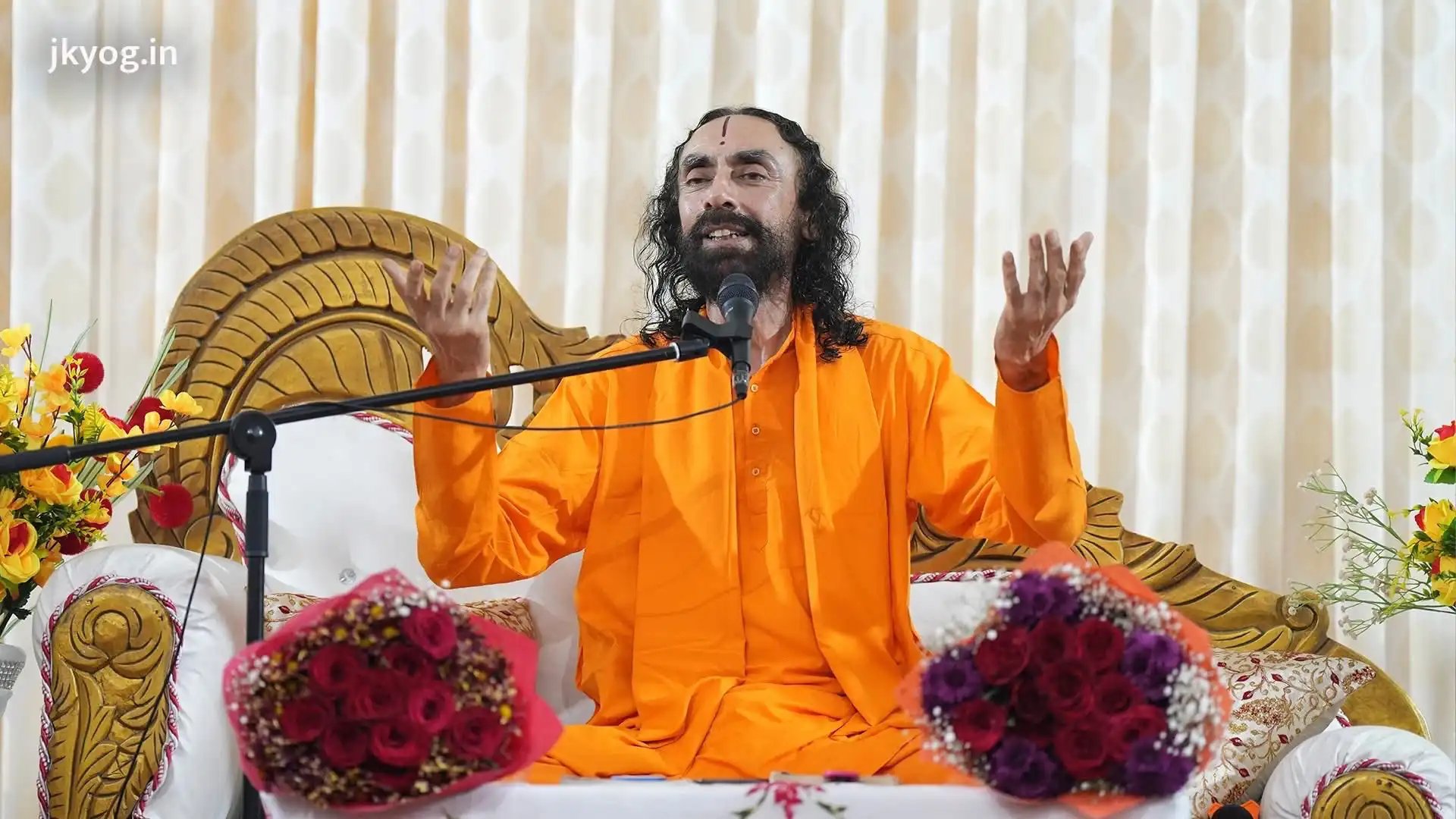
Swami Mukundananda emphasizes that true spirituality involves conquering inner negativity. The life of Bhagwan Parashurama perfectly reflects this principle. He used divine strength to eliminate injustice externally and then performed deep penance to purify himself internally.
Swami Mukundananda teaches that anger, ego, and pride are inner enemies that must be transformed through devotion and knowledge. Bhagwan Parashurama’s journey from warrior to sage reflects this transformation. His life shows that real victory is not defeating others but mastering oneself.
Another key teaching of Swami Mukundananda is that power without devotion leads to downfall. Bhagwan Parashurama remained rooted in devotion to Lord Vishnu and followed dharma, which kept his strength aligned with righteousness. This demonstrates that spiritual wisdom must guide worldly action.
Swami Mukundananda also stresses discipline, self-control, and service. Bhagwan Parashurama’s penance, humility, and dedication to protecting sages embody these values. Observing Parashurama Jayanti becomes an opportunity to apply these teachings by practicing meditation, chanting, and self-reflection.
Furthermore, Swami Mukundananda teaches that divine incarnations appear to restore dharma within society and within individuals. Bhagwan Parashurama symbolizes the destruction of inner negativity, encouraging devotees to replace anger with devotion, pride with humility, and violence with compassion.
Thus, celebrating Parashurama Jayanti through Swami Mukundananda’s teachings means:
- Practicing devotion
- Controlling the mind
- Serving society
- Living with discipline
- Walking the path of dharma
How to Celebrate Parashurama Jayanti 2026
Here are simple ways to observe:
- Perform Lord Vishnu or Bhagwan Parashurama puja
- Chant Vishnu Sahasranama
- Read Bhagavad Gita
- Donate food or clothes
- Practice meditation
- Listen to spiritual discourses
- Observe fasting
- Help those in need
These practices deepen spiritual awareness.
Importance of Fasting on Parashurama Jayanti
Fasting helps:
- Purify mind and body
- Improve discipline
- Increase devotion
- Control desires
- Focus on spiritual growth
Devotees may observe:
- Nirjala fast
- Fruit fast
- Satvik food fast
The goal is spiritual purification. Do what supports your inner growth, what matters most is sincerity of intention.
Symbolism of Parashurama’s Axe
Parashurama’s axe symbolizes:
- Cutting ego
- Destroying ignorance
- Removing negativity
- Establishing righteousness
Spiritually, it represents self-discipline.
Key Takeaways
- Parashurama Jayanti 2026 falls on April 19, 2026
- Celebrated on Akshaya Tritiya
- Honors sixth avatar of Lord Vishnu
- Symbolizes victory of dharma over injustice
- Observed with fasting, prayers, charity
- Encourages discipline and humility
- Represents balance of power and wisdom
- Aligns with Swami Mukundananda’s teachings of self-mastery
FAQ Section
When is Parashurama Jayanti 2026?
Parashurama Jayanti 2026 will be celebrated on Sunday, April 19, 2026.
Why is Parashurama Jayanti celebrated?
It commemorates the birth of Bhagwan Parashurama, the sixth incarnation of Lord Vishnu.
Is Parashurama Jayanti same as Akshaya Tritiya?
Yes, it is celebrated on the same day as Akshaya Tritiya.
What should we do on Parashurama Jayanti?
Pray, fast, chant mantras, donate, and read scriptures.
What is the spiritual meaning of Parashurama Jayanti?
It symbolizes destroying ego and establishing righteousness.
Who celebrates Parashurama Jayanti?
Devotees of Lord Vishnu, Hindu communities, and spiritual seekers worldwide.
Call to Action
Celebrate Parashurama Jayanti 2026 by deepening your spiritual journey. Learn how to conquer anger, develop discipline, and live according to dharma through the teachings of Swami Mukundananda.
Subscribe to Swami Mukundananda’s YouTube channel for:
- Spiritual discourses
- Bhagavad Gita teachings
- Meditation guidance
- Festival insights
- Practical spirituality
For event details on Akshaya Tritiya 2026 at Radha Krishna Temple, please kindly register through this link:
Let this Parashurama Jayanti inspire inner transformation and divine devotion.