Introduction
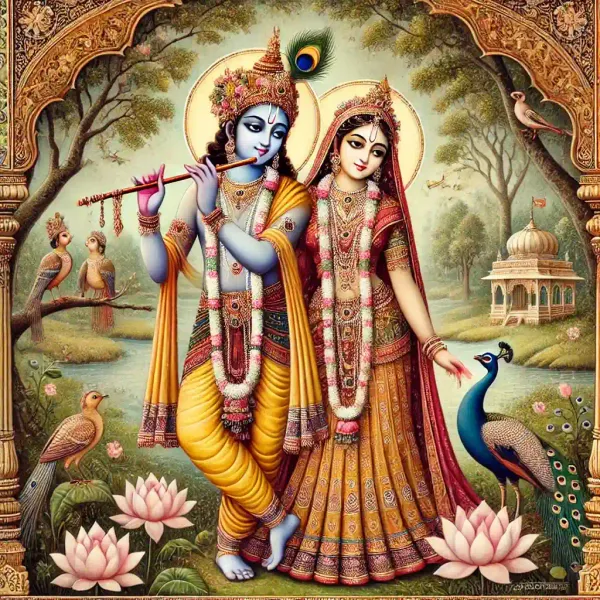
The divine love of Radha and Krishna has been cherished for centuries as the highest expression of devotion and bliss. Their leelas (divine pastimes) are not ordinary stories but windows into the eternal dance of love between the Supreme Lord and His eternal consort. In a divine discourse, Swami Mukundananda narrated a beautiful leela originally described by Jagadguru Shri Kripaluji Maharaj, capturing the sweetness, playfulness, and depth of Radha Krishna’s divine interactions.
This article expands upon that narration, weaving the timeless philosophy behind their love and presenting it as a story full of sweetness, meaning, and spiritual insight.
The Concept of Mana: Radha’s Sweet Mood of Loving Sulk
In the spiritual world of Golok, even the disagreements between Radha and Krishna are filled with divine sweetness. Sometimes, Radharani goes into mana—a state where she appears upset with Krishna. But unlike worldly anger, Radha’s mana is never tainted by selfishness or ego. Instead, it is a divine device to enhance Krishna’s bliss.
Swami Mukundananda beautifully illustrated this with an analogy from Gujarat. There, people are known for making enormous laddus (sweet balls). One such laddu is often enough to satisfy anyone’s hunger. But if you want a person to eat another, you serve some tangy chutney after the first one, making the second laddu even more enjoyable. Similarly, divine love expresses itself in varied flavors, or rasas. If Krishna and Radha always interacted in only one rasa, it would become monotonous. The playful quarrels, separations, and reconciliations add new dimensions to their bliss.
Thus, Radha’s mana is never a defect; it is her unique way of increasing Krishna’s joy. By creating temporary separation, she ensures that the reunion becomes unimaginably sweeter.
Krishna’s Visit to Chandravali – A Leela of Love’s Subtle Politics
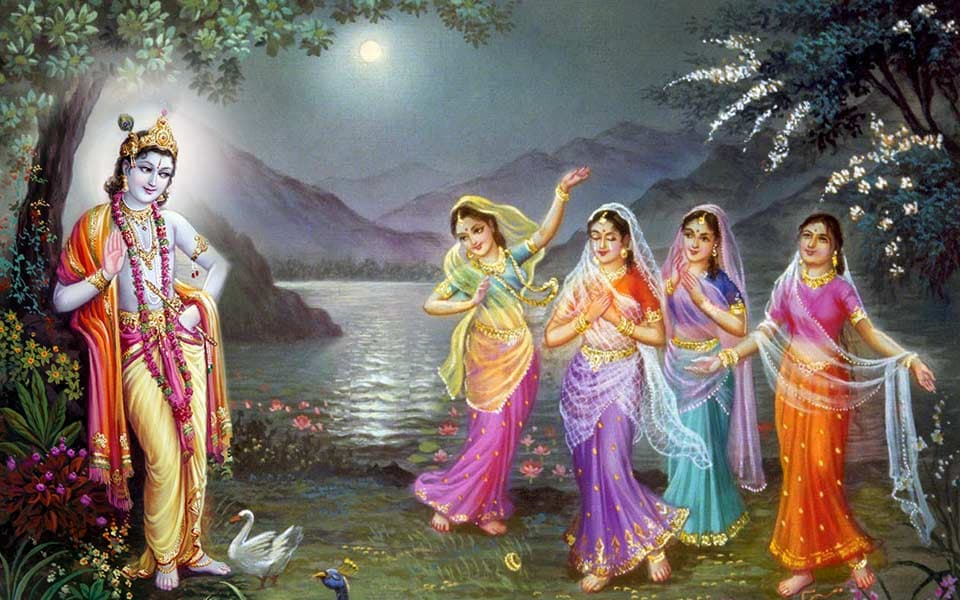
On this particular occasion, Radha’s mana was very severe. Krishna had promised to meet her, but instead, He went to visit Chandravali, another gopi. This stirred Radha’s emotions deeply. How could Krishna, who finds the highest bliss with her, choose to go elsewhere?
Even in Golok, there are different “political” camps among the gopis, though unlike the politics of this world, their intentions are pure. Every gopi has only one goal: to maximize Krishna’s happiness. Yet, their methods differ. Some believe Krishna will enjoy best in one way; others believe in another. Their passionate disagreements sometimes resemble quarrels, but they are all rooted in pure love.
Radha, feeling Krishna had deprived himself of the highest bliss by not coming to her, turned away from Him. Whenever Krishna approached her, she deliberately turned her face away. Even Lalita, Vishakha, and her closest sakhis refused to intervene on Krishna’s behalf. They told Him, “You have misbehaved, and we will not help you now.”
Krishna realized the situation was grave. He needed to come up with something extraordinary to win Radha’s heart back.
Krishna’s Disguise as a Veena Player
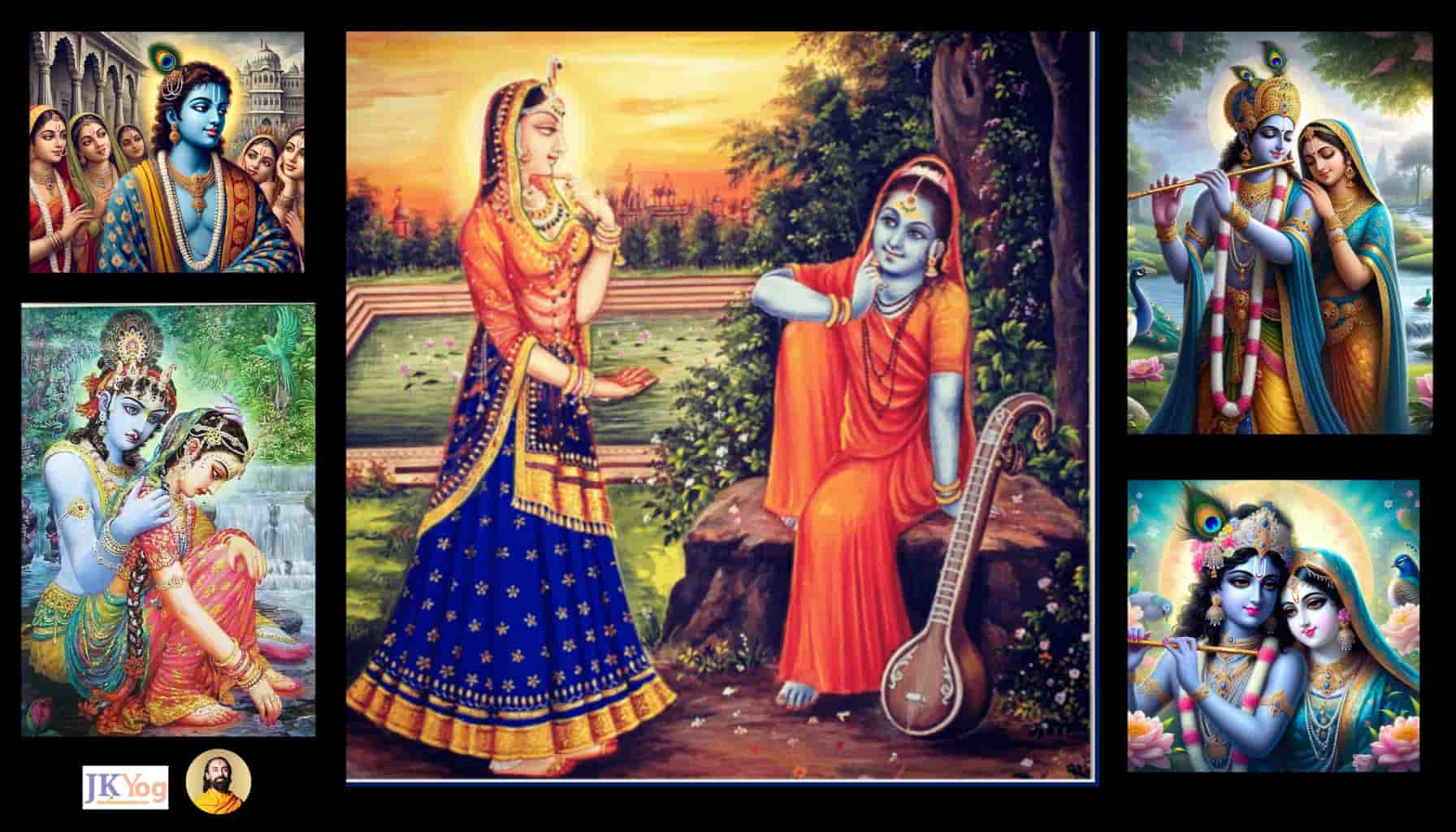
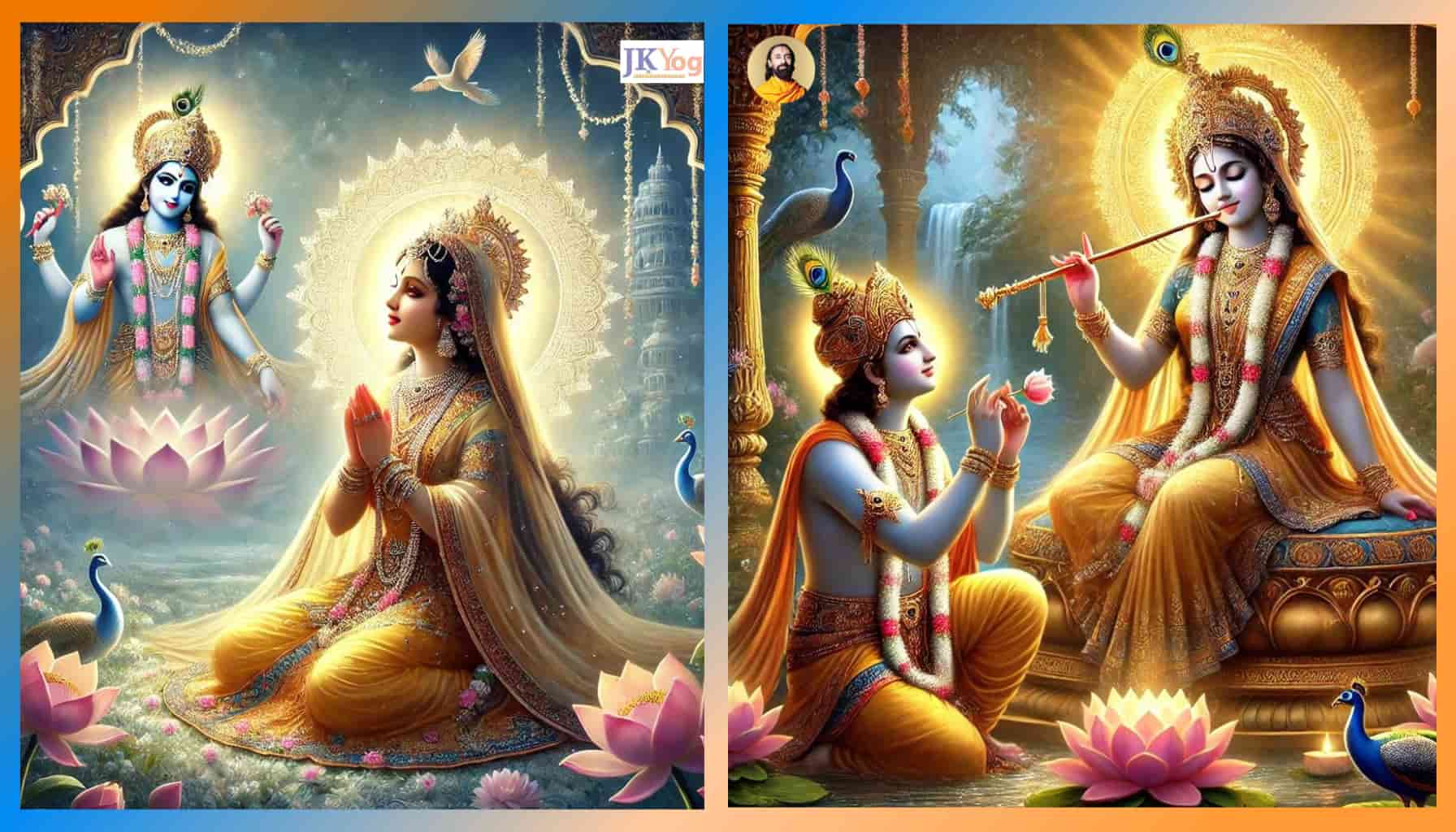
Krishna decided to employ what He humorously called His “Brahmastra.” He devised a brilliant plan: to disguise Himself as a wandering female ascetic.
He dressed in saffron attire, tied His hair like a woman’s, adorned it with flowers, and carried a veena, resembling the saintly images of Mira Bai often seen in devotional paintings. Thus, the Supreme Lord, the most enchanting of all beings, transformed Himself into an even more enchanting female figure—a veena-playing ascetic.
Choosing His spot carefully, Krishna sat at Kusum Sarovar, a serene lake on the parikrama path of Govardhan. This was one of Radha’s favorite places to pluck flowers. Krishna knew well that she would come there, especially in her state of mana, seeking solitude.
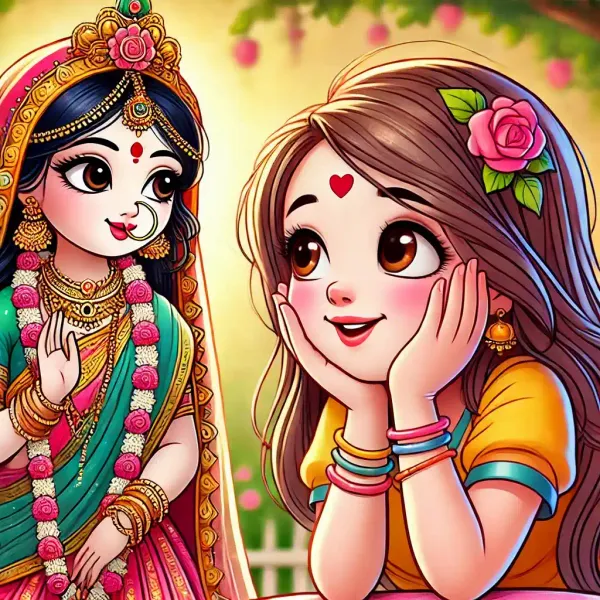
There He sat, eyes lowered, chin resting gently on His hand, looking every bit the embodiment of grace and detachment.
Radha Encounters the Enchanting Veena Player
Soon, Radha arrived at Kusum Sarovar with her closest sakhis. Lost in her thoughts of Krishna’s neglect, she almost immediately noticed the astonishingly beautiful lady seated there with her veena.
Radha was captivated. “Who is this woman? I have never seen such beauty before!” she thought. Her natural devotion to Krishna meant that she was irresistibly drawn to Him in any form, though she did not realize it was Krishna Himself in disguise.
Approaching the veena player, Radha politely asked: “Oh Sakhi, who are you? From which village have you come? And who is your husband?”
Krishna, with His head still lowered, now faced a dilemma. How should He respond? After all, in truth, He is the husband of all husbands—the pati of the pattis, as described in the scriptures. Every soul is prakriti (feminine in relation to God), and He alone is the Purush, the Supreme enjoyer.
Yet, to maintain His disguise, Krishna replied, “I am unmarried. I belong not to this world but to the celestial realms. I am a simple ascetic, detached from worldly entanglements.”
The reply was plausible. The beauty of this lady could indeed belong to the celestial goddesses, and her renunciation explained why she remained unmarried.
Radha’s Awe and Reverence
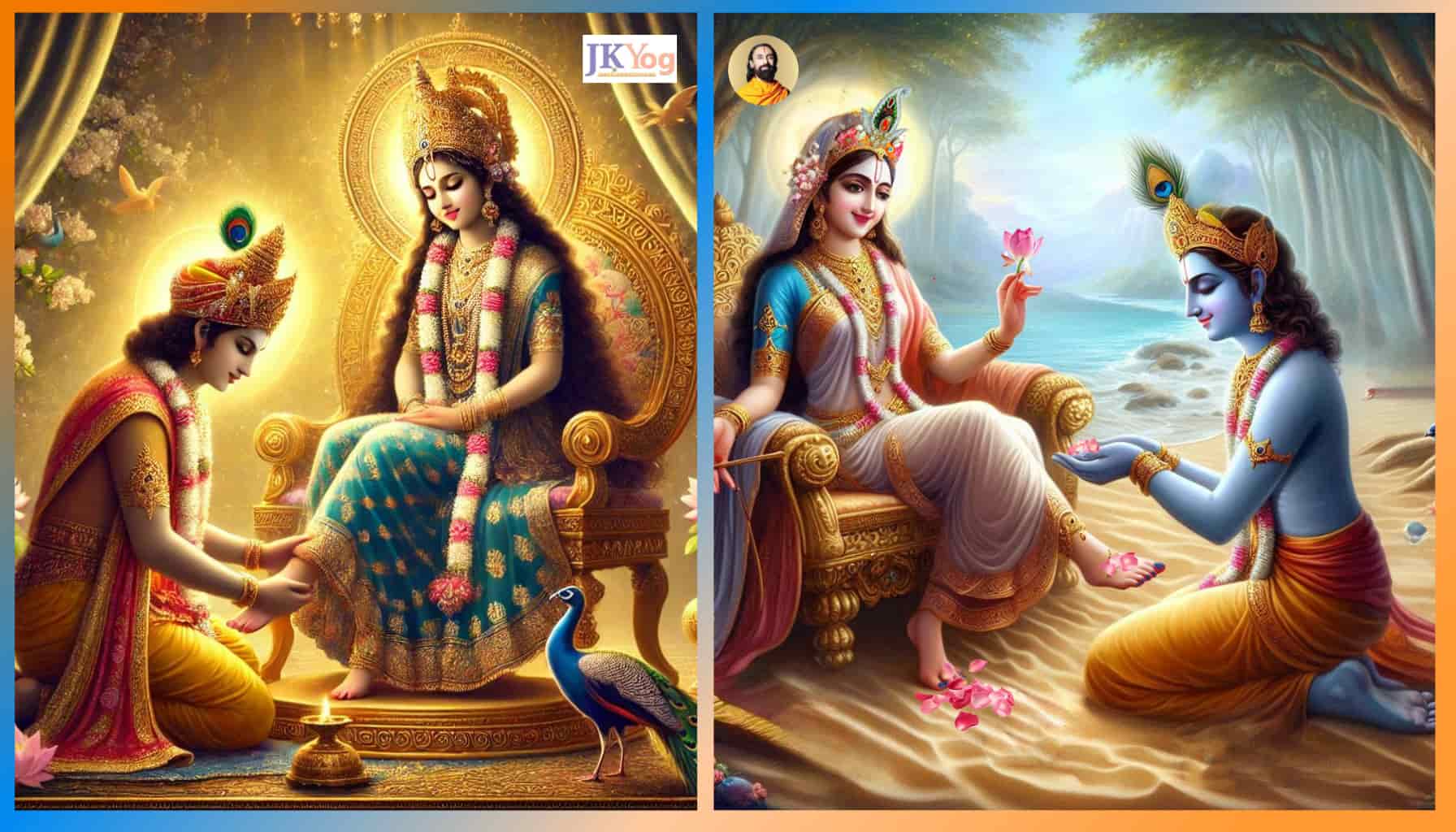
Radha was deeply impressed. Here was a saintly woman, astonishingly beautiful, who had renounced all worldly attachments. To Radha, she seemed like a Siddha Devi, an enlightened soul. In Indian culture, there is a natural reverence toward realized saints and sages, and Radha felt that she had encountered a rare divine personality.
A thought struck Radha: “I was searching for a Guru to guide me. And today, by the grace of destiny, I have found one right here.”
Overwhelmed with devotion, she requested: “O holy one, please grace my home with your presence. The dust of your lotus feet will sanctify my house.”
Krishna, still playing His part, resisted: “Child, I do not enter the homes of householders.”
Radha pleaded: “Not for your sake, but for mine. Please bless me by coming. I wish to accept you as my Guru.”
Krishna as Radha’s Guru
Finally, Krishna agreed. But He reminded Radha of the seriousness of her request. “If I am to be your Guru, you must follow all my instructions without question. Are you prepared for that?”
Radha, with utmost sincerity, replied: “Yes, Gurudev. Your command will be my life’s guiding principle.”
And thus, Krishna, still in disguise, accompanied Radha back to her palace. There, in her devotion and reverence, Radha performed the traditional Guru puja. She offered arati, washed His lotus feet, and bowed before Him, saying: “Please, Gurudev, instruct me.”
At that moment, Krishna gave her His first instruction. “After some time, you will find a blue-complexioned boy sitting beneath a tree. You must go to Him, fall at His feet, and apologize for your anger. Tell Him you will never again fight with Him.”
Radha, bound by her vow of discipleship, accepted this instruction with folded hands. “Your command is my head-ornament. I will follow it without fail.”
Thus, the Lord, through divine play, turned Radha’s mana into an opportunity to deepen her devotion and sweetness of love.
The Philosophical Depth of the Leela
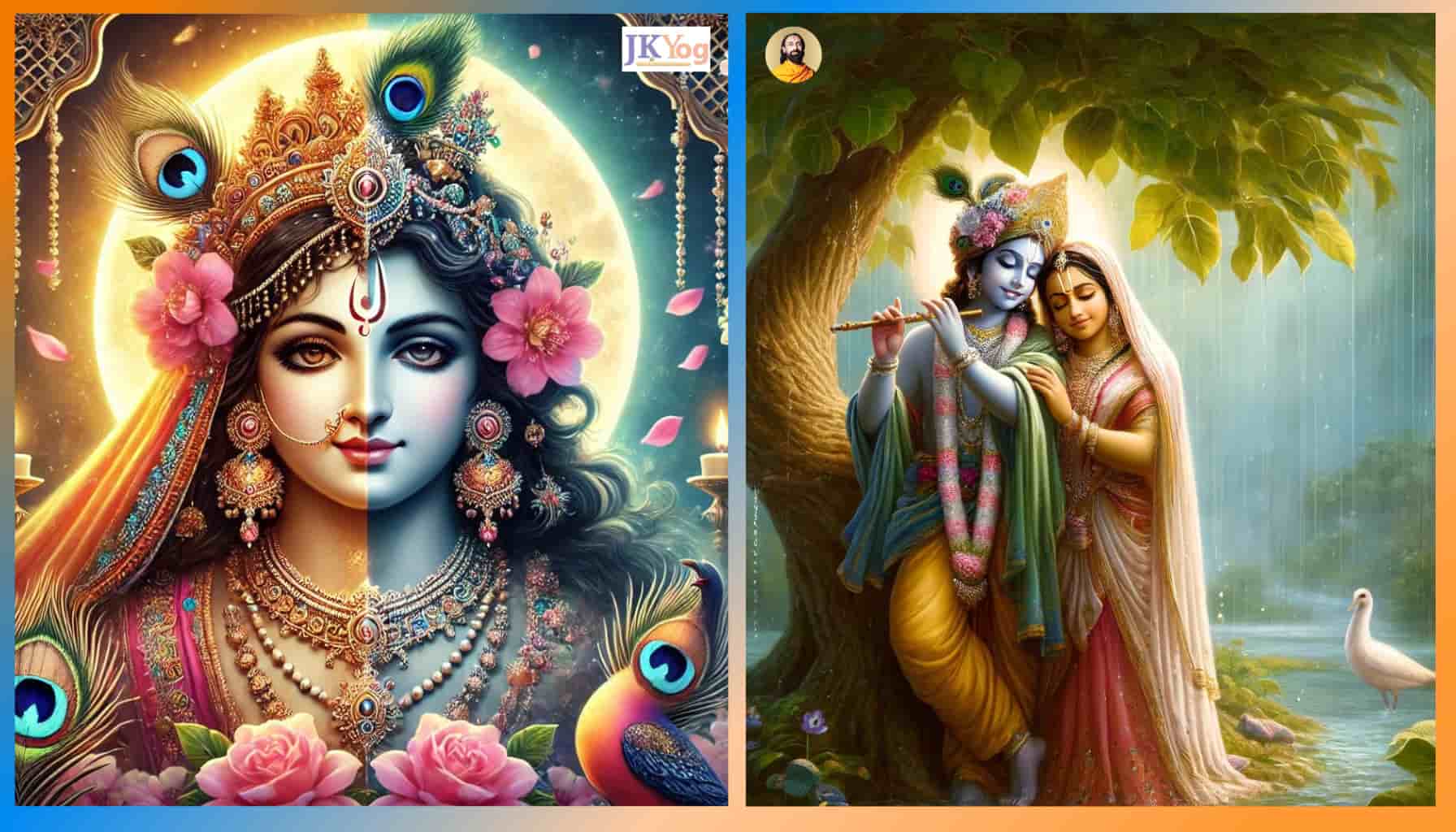
On the surface, this story may appear like a playful drama between lovers. But hidden within it are profound truths about divine love and the nature of God:
- Variety in Devotion: Just as chutney enhances the sweetness of a laddu, separation and mana enhance the joy of reunion. God relishes the different flavors of love offered by His devotees.
- Selflessness of Divine Anger: Unlike worldly quarrels, Radha’s mana is free of selfishness. Her upsetness arises only from her desire to maximize Krishna’s bliss.
- God’s Humility: The Supreme Lord, worshiped by yogis and sages, willingly disguises Himself, lowers His head, and accepts the role of a disciple or ascetic—all to please His devotee.
- Guru Principle: The leela also highlights the sacred bond between Guru and disciple. Even Radha, who is herself the embodiment of devotion, exemplifies the humility of accepting guidance when she mistakes Krishna for a saintly Guru.
- Playfulness of Divine Love: Radha and Krishna’s relationship transcends ordinary logic. Their interactions demonstrate that divine love is not stiff or monotonous; it is filled with humor, creativity, and play.
Lessons for Devotees
For spiritual aspirants, this sweet leela carries many lessons:
- Variety in Worship: Just as Krishna enjoys different rasas, devotees too should find variety in their devotion—singing, meditating, chanting, serving, and listening to stories of the Lord.
- Pure Intentions: Even when disagreements arise in service, one must purify intentions. Unlike worldly quarrels driven by ego, true devotees quarrel only in their zeal to please God.
- Humility in Devotion: The story shows how even Radha embraces humility before her “Guru.” Devotion thrives when one sets aside ego.
- Seeing God in All Forms: Just as Radha was drawn to Krishna even when He appeared disguised, devotees should train themselves to recognize God’s presence in all situations and beings.
- The Sweetness of Surrender: Radha’s eventual surrender to Krishna’s instruction shows the bliss that comes from aligning one’s will with the will of God.
Conclusion
The leela of Krishna disguising Himself as a veena-playing ascetic to win back Radha’s heart is not just a charming story but a profound teaching. It shows how the Supreme Lord goes to incredible lengths to deepen the love of His devotees, and how even apparent quarrels in the divine realm are expressions of the highest devotion.
Radha Krishna’s love is the ideal of divine selflessness, sweetness, and playfulness. To meditate upon their leelas is to taste a drop of the bliss that fills the eternal world of Golok.
As Jagadguru Shri Kripaluji Maharaj said, Radha Krishna leelas are not ordinary tales. They are revelations of the divine. And as Swami Mukundananda reminded us, they are invitations—for us to bring sweetness, humility, and variety into our own journey of devotion.
✨Call to Action
Immerse yourself in the sweetness of Radha Krishna’s divine leelas. Read more, chant their names, and bring the joy of devotion into your daily life. Let this story inspire your spiritual journey toward love and surrender.

Radhashtami Mahotsav 2025
Radha Krishna Temple of Dallas
Celebrate the divine appearance of Srimati Radharani with Charan Darshan, Abhishek, Jhoolan Seva, Birthday Celebration, and Cake Cutting with Swamiji. Offer flowers, chocolates, or gifts for Baby Radha.
✨ Mahaprasad will be served after the celebration.
💝 Seva Opportunities
Select from special seva offerings below and contribute with devotion.
🌸 Celebrate Radhashtami at the Radha Krishna Temple in Dallas with love and devotion! 🌸
References
- Bhagavad Gita: The Song of God. (Chapters 9, 10, 12, 18). Translation and commentary by Swami Mukundananda. Jagadguru Kripaluji Yog.
- Jagadguru Shri Kripaluji Maharaj. Radha Govind Geet and discourses on Radha Krishna tattva.
- Srimad Bhagavatam (Bhagavata Purana). (10th Canto).
- Brahma Samhita (Chapter 5). Verses glorifying Krishna’s supreme nature and divine pastimes.
❓FAQs
- When is Radhashtami in 2025?
Radhashtami will be celebrated on Sunday, August 31, 2025. - What is Radha’s mana in this leela?
Radha’s mana is her loving upsetness with Krishna, not due to ego but as a way to intensify His bliss and deepen their divine love. - Why did Krishna go to Chandravali instead of Radha?
Krishna’s choice was part of the divine play to create variety in love, adding sweetness to the eventual reunion with Radha. - Why did Krishna disguise Himself as a veena player?
Krishna took this disguise to win back Radha’s affection during her mana, showing His humility and playful nature in divine love. - What is the spiritual significance of this story?
It highlights humility, selflessness, and variety in devotion, teaching that divine love is pure, playful, and filled with surrender. - What lesson can devotees learn from this leela?
Devotees learn to embrace humility, accept variety in worship, and align their will with God’s for deeper spiritual fulfillment.