

1. Introduction: The Birth of Maryada Purushottam
The Dawn of Righteousness: Celebrating the Appearance of Lord Rama
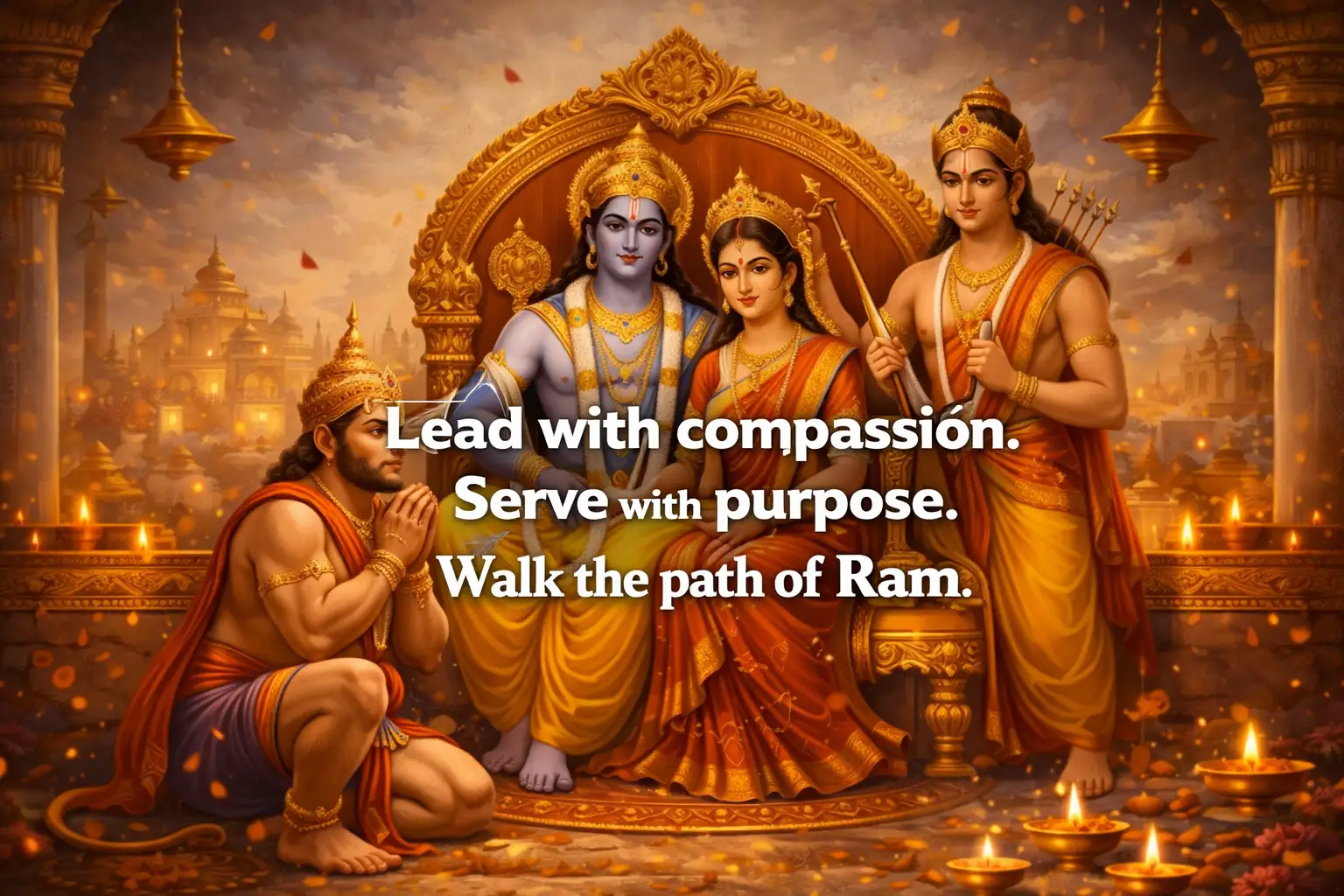
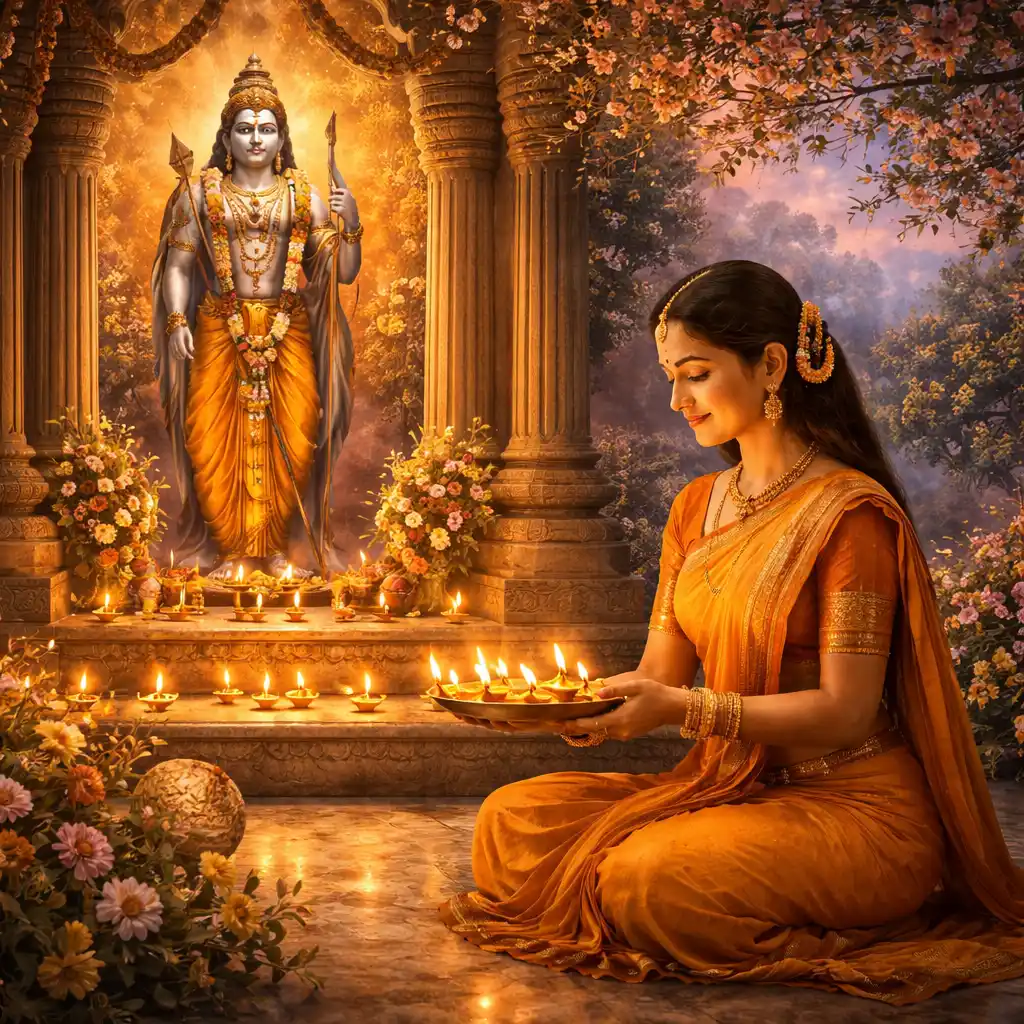
Ram Navami marks the sacred birth of Lord Rama, one of the most revered deities in Hindu tradition. Celebrated on the ninth day of the Chaitra month, this festival signifies the arrival of righteousness on Earth. Lord Rama is not only worshipped as a divine incarnation but also admired as the embodiment of virtue, truth, and moral discipline. His life, as narrated in the Ramayana, continues to inspire millions across generations.
The term Maryada Purushottam refers to the ideal man who upholds dharma in every aspect of life. Lord Rama’s birth is seen as a turning point when divine forces intervened to restore balance and justice. His story is not just about a king or a warrior but about a human being who lived a life guided by principles, even in the face of great challenges.
More Than a Festival: A Journey into Divine Love and Duty

Ram Navami is not just a ritualistic celebration. It is a reminder of the deeper values that shape a meaningful life. The festival invites devotees to reflect on the balance between love and duty. It encourages individuals to cultivate compassion, integrity, and selflessness.
The teachings associated with Lord Rama go beyond religious boundaries. They speak to universal human values. His life demonstrates that love does not weaken duty, and duty does not diminish love. Instead, the two complement each other and create a harmonious path.
Why We Celebrate: The Significance of Chaitra Navami
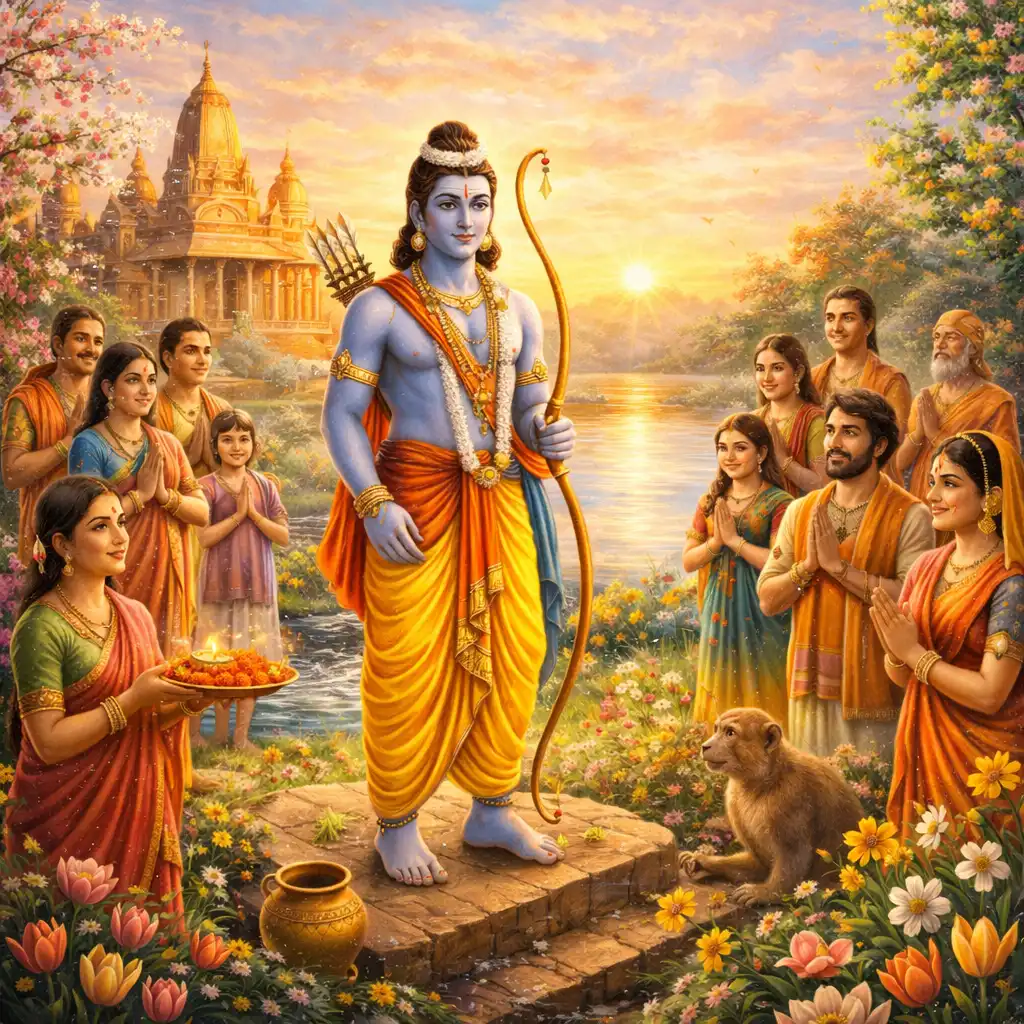
The timing of Ram Navami during the spring season symbolizes renewal and hope. Nature itself reflects the themes of rebirth and growth. Devotees believe that just as Lord Rama was born to restore righteousness, individuals can also renew their commitment to living ethically and compassionately.
The festival serves as a spiritual checkpoint. It allows people to pause and evaluate their actions, relationships, and responsibilities. It is a time to reconnect with the ideals of truth, humility, and service.
2. Ram Navami as a Celebration of Divine Love
Unconditional Devotion: The Love Story of Rama and Sita
The relationship between Lord Rama and Sita is one of the most profound examples of divine love. Their bond is rooted in respect, trust, and unwavering commitment. It is not merely a romantic connection but a spiritual partnership.
Sita’s devotion to Rama is evident when she chooses to accompany him into exile, leaving behind the comforts of palace life. Similarly, Rama’s respect for Sita is reflected in his constant concern for her well being. Their love is characterized by mutual sacrifice and understanding.
This love story teaches that true love is not possessive. It is supportive and resilient. It stands strong even in adversity and remains grounded in values.
Lakshmana’s Love: Devotion in Brotherhood
Lakshmana’s love for Lord Rama is one of the purest examples of selfless devotion. As Rama’s younger brother, Lakshmana chooses to accompany him into exile without hesitation. He leaves behind his own comforts, family, and personal life, dedicating himself entirely to Rama’s service.
Throughout the years in the forest, Lakshmana remains ever vigilant. He protects Rama and Sita, builds shelters, and stands guard through sleepless nights. His love is not expressed through words but through constant action and sacrifice.
Lakshmana teaches that love in relationships is not merely emotional attachment. It is commitment, loyalty, and readiness to serve without expectation. His devotion reflects the strength of brotherhood rooted in dharma.
Divine Love Beyond Desire: Sacrificing Personal Happiness for Dharma
One of the most striking aspects of Lord Rama’s life is his willingness to sacrifice personal happiness for the sake of duty. When faced with the choice between ruling the kingdom and honoring his father’s promise, he chooses exile without hesitation.
This decision reflects a higher form of love. It is love for truth, for family, and for the greater good. It shows that divine love is not driven by personal desire but by a sense of responsibility and integrity.
In today’s world, where individual desires often take precedence, this lesson holds immense relevance. It reminds us that true fulfillment comes from aligning our actions with our values.
Rama’s Compassion: Kind heartedness Toward All Beings
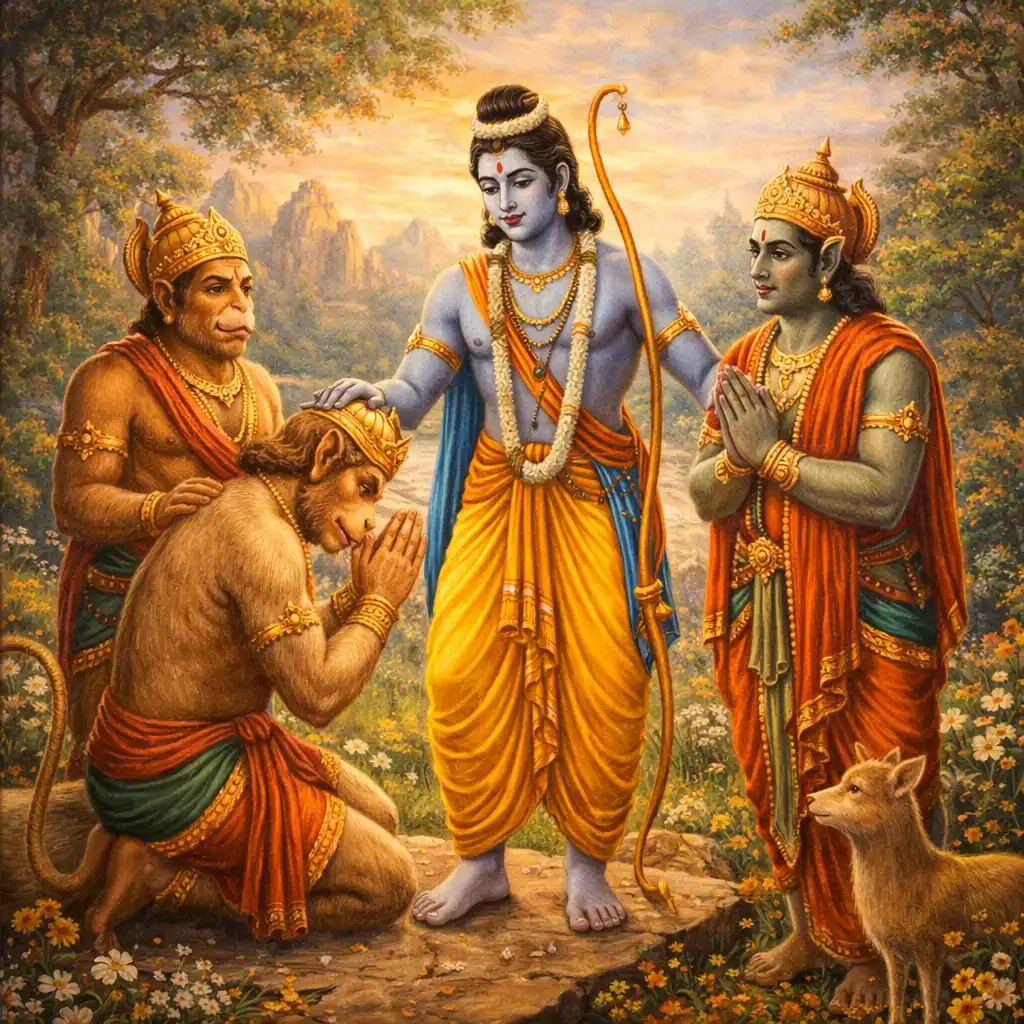
Lord Rama’s compassion extends beyond humans to all living beings. He forms deep bonds with individuals from diverse backgrounds,including Hanuman, Sugriva, and even Vibhishana, who chose to stand on the side of righteousness despite coming from the opposing side.
Rama’s kindness is not selective. It is inclusive and unconditional. He recognizes the inherent goodness in others and offers them respect and dignity. This aspect of his character highlights the importance of empathy and acceptance.
Compassion, as demonstrated by Rama, is not a sign of weakness. It is a strength that fosters unity and harmony.
3. Selfless Duty in Action
Maryada Purushottam: Adhering to Duty Amidst Adversity
Lord Rama’s life is a testament to the power of discipline and adherence to duty. Despite facing numerous hardships, he never deviates from his principles. Whether it is accepting exile, confronting powerful adversaries, or fulfilling his responsibilities as a ruler, he remains steadfast.
Being Maryada Purushottam means setting boundaries and living within them. It involves making difficult choices and standing by them. Rama’s actions demonstrate that true strength lies in consistency and integrity.
Hanuman: The Ultimate Symbol of Selfless Service
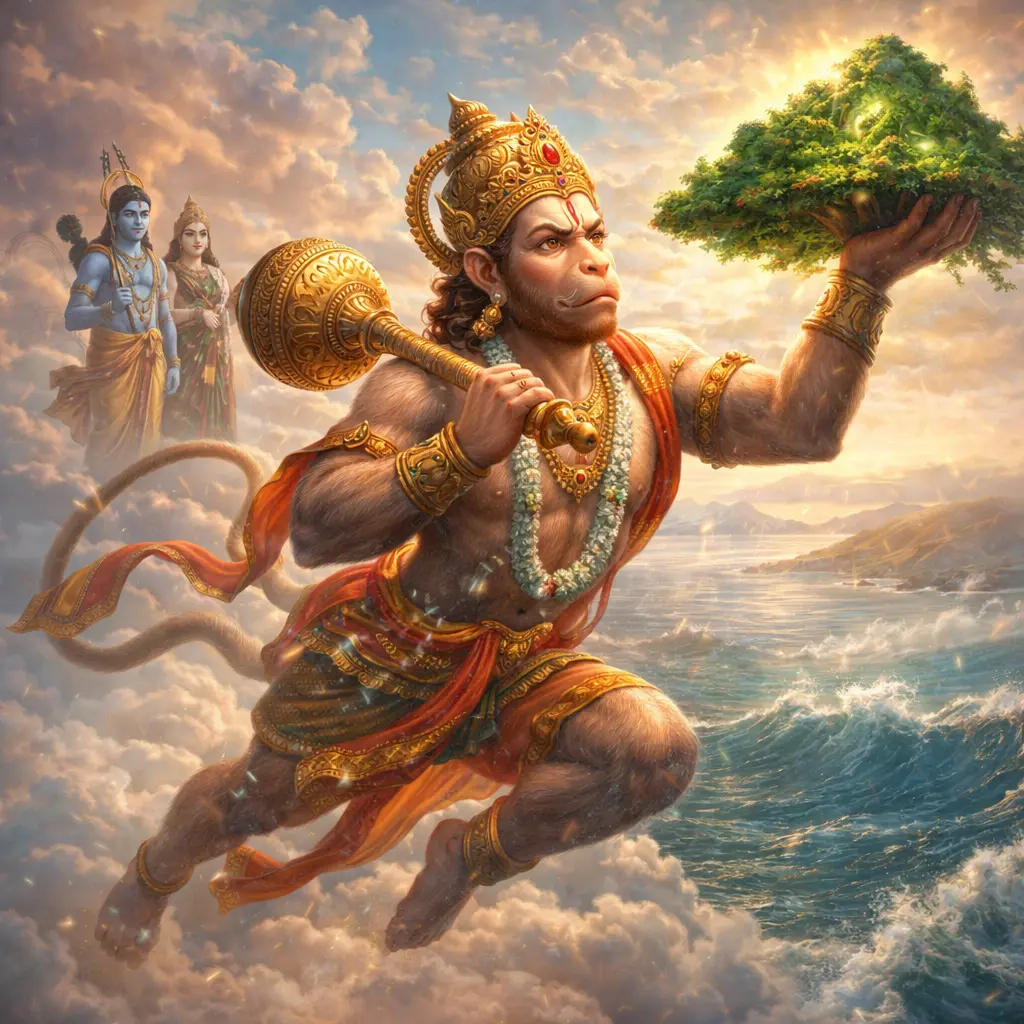
No discussion of selfless duty is complete without reflecting on Hanuman, the devoted servant of Lord Rama. Hanuman represents pure devotion expressed through action. His strength, intelligence, and courage are all dedicated to serving Rama without any expectation of reward.
From leaping across the ocean to find Sita to carrying the Sanjeevani mountain to save Lakshmana, Hanuman’s actions are driven solely by love and duty. He never seeks recognition. Instead, he finds joy in service itself.
Hanuman teaches that true devotion is not limited to prayer or words. It is demonstrated through selfless action. His life reminds us that when actions are performed with sincerity and humility, they become a form of worship.
Jatayu’s Sacrifice: Courage Rooted in Love
The story of Jatayu, the noble vulture, is one of the most touching examples of selfless duty and bravery. When Ravana abducted Sita, Jatayu witnessed the घटना and could not remain silent. Despite being old and aware of Ravana’s immense power, he chose to confront him.
Jatayu fought valiantly to protect Sita, risking his life for the sake of righteousness. Though he was ultimately defeated, his courage delayed Ravana and gave hope to the cause of dharma.
When Lord Rama later found Jatayu injured and near death, he embraced him with deep compassion and gratitude. Rama performed his last rites as a son would for his father, honoring his sacrifice.
Jatayu teaches that true duty does not depend on strength or success. It depends on the willingness to stand for what is right, even in the face of certain loss. His story reminds us that courage guided by love becomes sacred.
Shabari’s Devotion: Love in Its Purest Form
Shabari, a humble devotee, represents unconditional love and unwavering faith. She spent years waiting for Lord Rama, following the words of her guru who had promised that Rama would one day visit her.
Every day, she prepared for his arrival with hope and devotion. When Rama finally came, her joy knew no bounds. She offered him berries, tasting each one beforehand to ensure it was sweet.
Though this act might seem simple, it reflected the depth of her love. She wanted to offer only the best to her beloved Lord. Instead of rejecting the tasted berries, Rama accepted them with great affection, valuing the devotion behind the offering.
Shabari’s story teaches that devotion is not about rituals or status. It is about the purity of the heart. Even the smallest offering, when made with genuine love, becomes priceless.
Kevat’s Love: Devotion Beyond Status
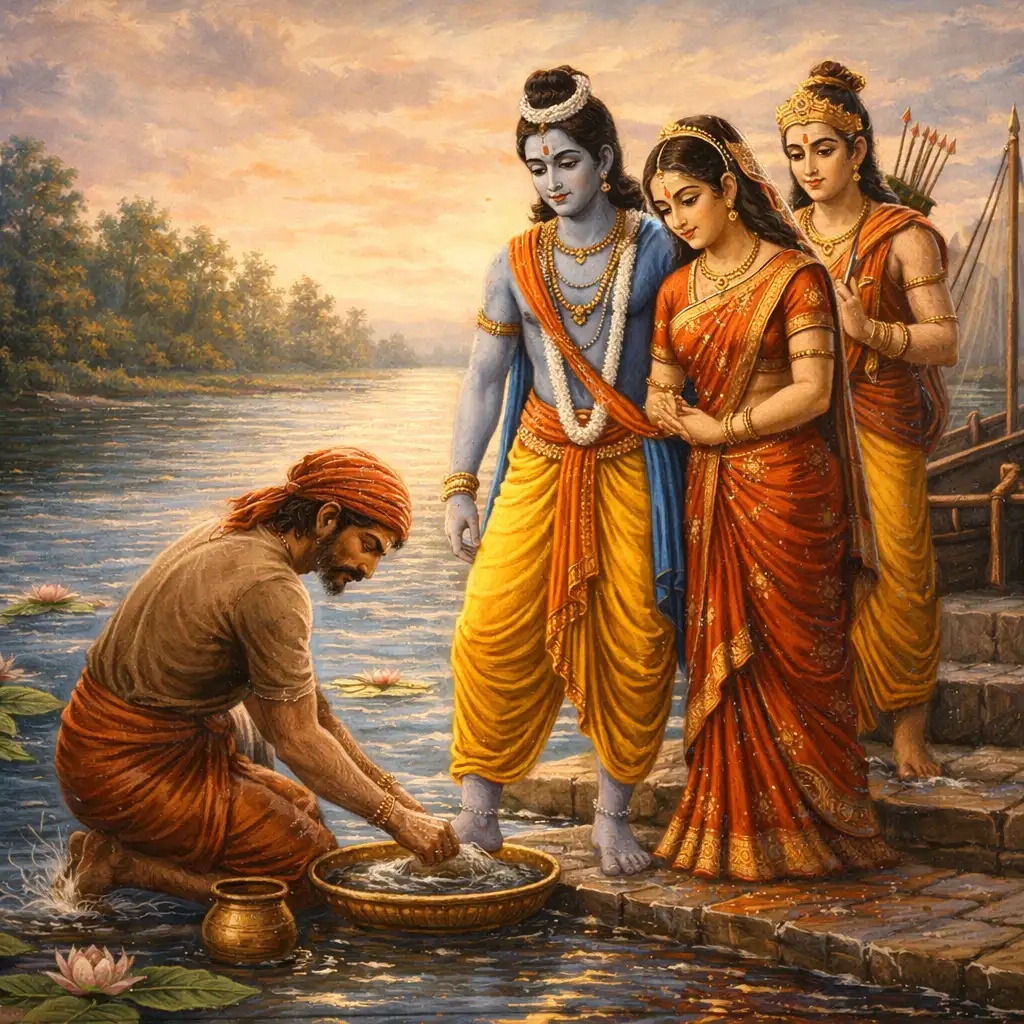
The story of Kevat, the humble boatman, beautifully illustrates pure and selfless love. When Lord Rama, Sita, and Lakshmana needed to cross the river, Kevat insisted on washing Rama’s feet before allowing him onto the boat.
His reasoning was simple yet profound. He believed that the dust of Rama’s feet had the power to transform, just as it had turned a stone into Ahalya. He feared that his boat might turn divine and leave him without a livelihood.
But beyond this playful reasoning lay deep devotion. Kevat did not see Rama as a king but as the divine. His service was not transactional. He refused any reward and instead asked for spiritual grace.
Kevat’s story teaches that love does not depend on social status or wealth. It arises from sincerity and faith. Even the simplest act, when performed with devotion, becomes sacred.
Vibhishana’s Story: Choosing Dharma Over Blood
Vibhishana, the brother of Ravana, represents the courage to stand for righteousness even when it means going against one’s own family. Despite being born into a clan that opposed Lord Rama, Vibhishana remained devoted to truth and justice.
He repeatedly advised Ravana to return Sita and avoid destruction. However, when his counsel was ignored and righteousness was abandoned, Vibhishana made the difficult decision to leave Lanka and seek refuge in Rama.
Lord Rama accepted him without hesitation, demonstrating his openness and faith in genuine intentions. Vibhishana later played a crucial role in the battle, guiding Rama’s army and contributing to the victory of dharma.
This story teaches that true loyalty lies not in blind allegiance but in adherence to truth. It encourages individuals to make ethical choices, even when they are difficult and isolating.
The Ideal Son and Ruler: Putting Duty Over Personal Desire
As a son, Rama exemplifies obedience and respect. He honors his father’s word even when it leads to personal loss. As a ruler, he prioritizes the welfare of his people above his own happiness.
His reign, often referred to as Ram Rajya, is considered an ideal state where justice, peace, and prosperity prevail. This vision of governance is rooted in fairness and accountability.
Rama’s life teaches that leadership is not about power but about service. It is about making decisions that benefit the collective, even at a personal cost.
Lessons from the Ramayana: Standing Up for Truth and Righteousness

The Ramayana is more than a story. It is a guide to ethical living. It presents various situations where characters are faced with moral dilemmas. Through these narratives, it emphasizes the importance of truth and righteousness.
Rama’s unwavering commitment to dharma serves as a guiding light. It encourages individuals to act with honesty and courage, even when faced with challenges.
Standing up for what is right may not always be easy, but it is essential for maintaining integrity and self respect.
4. Key Lessons and Teachings
Balancing Love and Duty: The Intertwined Path
One of the central themes of Ram Navami is the balance between love and duty. Lord Rama’s life illustrates that these two aspects are not mutually exclusive. Instead, they are interconnected.
Love provides the emotional strength to fulfill duties, while duty ensures that love remains grounded and purposeful. This balance is crucial for leading a harmonious life.
In personal relationships, this means being caring while also being responsible. In professional settings, it involves being dedicated without compromising on ethics.
Courage and Resilience: Standing Firm in Difficult Times
Rama’s journey is filled with challenges, from exile to the battle against Ravana. Despite these obstacles, he remains composed and determined.
His resilience teaches that difficulties are a part of life. What matters is how we respond to them. Courage is not the absence of fear but the ability to act despite it.
This lesson is particularly relevant in today’s fast paced world, where uncertainty and pressure are common. It encourages individuals to stay strong and focused.
The Power of Sacrifice: Renunciation for the Greater Good
Sacrifice, or thyaga, is a recurring theme in Rama’s life. Whether it is giving up the throne or enduring personal hardships, his actions reflect a commitment to the greater good.
Sacrifice does not mean losing everything. It means choosing what is more important. It involves prioritizing values over temporary gains.
This principle can be applied in everyday life. It may involve making small compromises for the benefit of others or taking decisions that align with long term goals.
Insights from Swami Mukundananda: Love Through Devotion and Duty

Modern spiritual teacher Swami Mukundananda emphasizes that true devotion is expressed through both love and disciplined action. He explains that loving God is not merely an emotional experience but a commitment reflected in daily responsibilities.
According to his teachings, Lord Rama’s life demonstrates how devotion and duty must go hand in hand. One cannot claim to love the divine while neglecting one’s responsibilities. Similarly, performing duties without love becomes mechanical and empty.
Swami Mukundananda also highlights the importance of offering every action as a service to God. This transforms ordinary tasks into spiritual practices. Whether one is working, studying, or caring for family, each action becomes meaningful when done with devotion.
His teachings bridge ancient wisdom with modern life. They remind us that spirituality is not separate from daily living but deeply integrated within it.
5. Celebrating the Festival Today
Rituals and Traditions: Fasting, Chanting, and Prayer
Ram Navami is celebrated with devotion and enthusiasm across India and beyond. Devotees observe fasts, visit temples, and participate in prayers. Recitations of the Ramayana and chanting of hymns create a spiritual atmosphere.
Many households decorate their homes and prepare special offerings. The rituals are not just symbolic. They serve as a means of connecting with the divine and reflecting on one’s actions.
Fasting, in particular, is seen as a way of purifying the body and mind. It encourages discipline and mindfulness.
Community and Charity: Spreading Love and Kindness
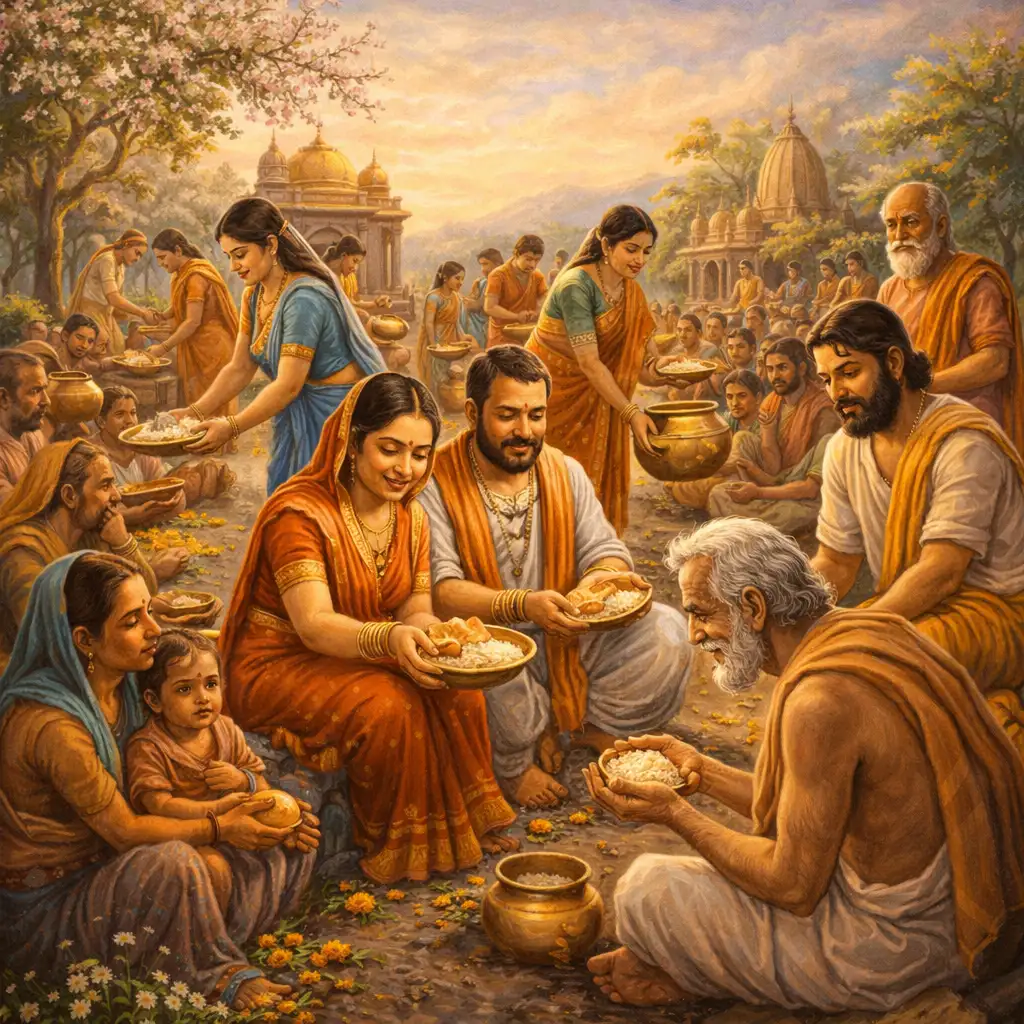
The festival also emphasizes the importance of community and service. People come together to organize events, share meals, and engage in charitable activities.
Acts of kindness, such as feeding the needy or helping those in distress, are considered integral to the celebration. These actions reflect the values of compassion and generosity that Lord Rama embodies.
Celebrating Ram Navami is not limited to personal rituals. It extends to making a positive impact on society.
Digital Devotion: Celebrating Ram Navami in the Modern Age
In recent years, technology has transformed the way festivals are celebrated. Online platforms allow devotees to participate in virtual prayers, listen to spiritual discourses, and watch devotional content.
The videos referenced in this blog highlight how digital media can bring people closer to spiritual teachings. They present the story of Lord Rama, Lakshmana’s devotion, Hanuman’s service, Jatayu’s sacrifice, Shabari’s love, Kevat’s devotion, Vibhishana’s righteousness, and practical insights from modern teachers in engaging formats.
Digital devotion ensures that the essence of Ram Navami reaches a global audience. It bridges geographical distances and fosters a sense of unity.
Bringing Ram Rajya Within: Imbibing Rama’s Qualities Daily
The true essence of Ram Navami lies in internalizing the values that Lord Rama represents. It is not just about celebrating a historical event but about adopting a way of life.
Creating Ram Rajya within ourselves means cultivating honesty, compassion, and discipline. It involves making conscious choices that reflect integrity and kindness.
By learning from Rama’s righteousness, Lakshmana’s unwavering love, Hanuman’s selfless service, Jatayu’s courage, Shabari’s pure devotion, Kevat’s humility, Vibhishana’s commitment to truth, and the teachings of Swami Mukundananda, we gain a complete framework for living a meaningful life.
Final Thoughts: A Festival of Hope and Renewal
Ram Navami is a celebration of hope, renewal, and transformation. It reminds us that even in the face of adversity, righteousness will prevail. It encourages us to strive for a balance between love and duty.
As we celebrate this festival, let us take inspiration from every character and teaching associated with Lord Rama’s life. Let us commit to living with purpose and compassion. Let us embrace the values that bring us closer to our true selves.
In doing so, we not only honor the legacy of Maryada Purushottam but also create a path toward a more meaningful and fulfilling life.
CTA
Before you scroll away, pause for a moment.
Not to like, not to share, not even to comment.
But to reflect.
✨ Ask yourself quietly:
What would Rama do in my place today?
Where can I choose love over ego?
Where can I choose duty over comfort?
🌼 Instead of just celebrating Ram Navami, try living one value from it today.
Speak truth when it is difficult.
Help someone without expecting anything back.
Let go of something that no longer serves your higher self.
💛 This is your invitation, not to follow a festival, but to walk a path.
No grand gestures needed. Just one small step toward dharma.
🌸 Because Ram Rajya does not begin in the world.
It begins within you.
If this message stayed with you even for a moment, carry it into your actions today. That is the real celebration.
Explore more teachings on Lord Ram and the Ramayana:
https://www.jkyog.org/blog/tag/ramayana/
✨ Frequently Asked Questions (FAQs) about Ram Navami ✨
🌼 1. What is Ram Navami?
Ram Navami celebrates the birth of Lord Rama, symbolizing righteousness, divine love, and moral values.
🙏 2. Why is Lord Rama called Maryada Purushottam?
Because he represents the ideal human who always follows dharma, truth, and duty in every situation.
💛 3. What is the main message of Ram Navami?
To balance love and duty, live with integrity, and practice compassion in daily life.
🐒 4. Why is Hanuman important in Ramayana?
Hanuman symbolizes selfless devotion and service, showing how true love is expressed through action.
🍃 5. How do people celebrate Ram Navami?
Through fasting, prayers, chanting, reading the Ramayana, and spreading kindness through charity.
🌺 May this festival bring peace, devotion, and righteousness into your life. 🌺