Introduction: The Eternal Soul’s Journey
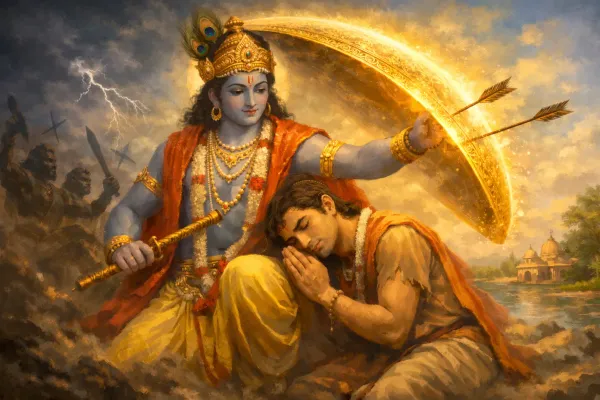
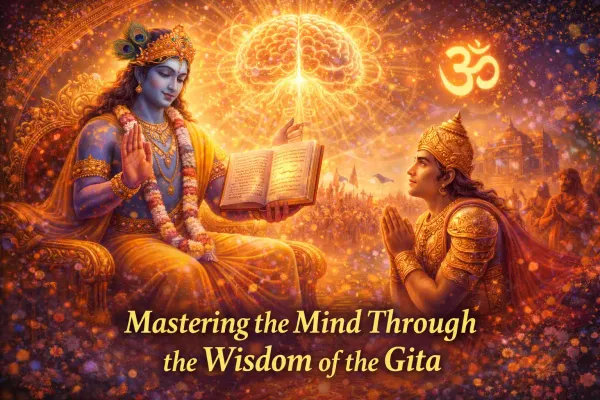
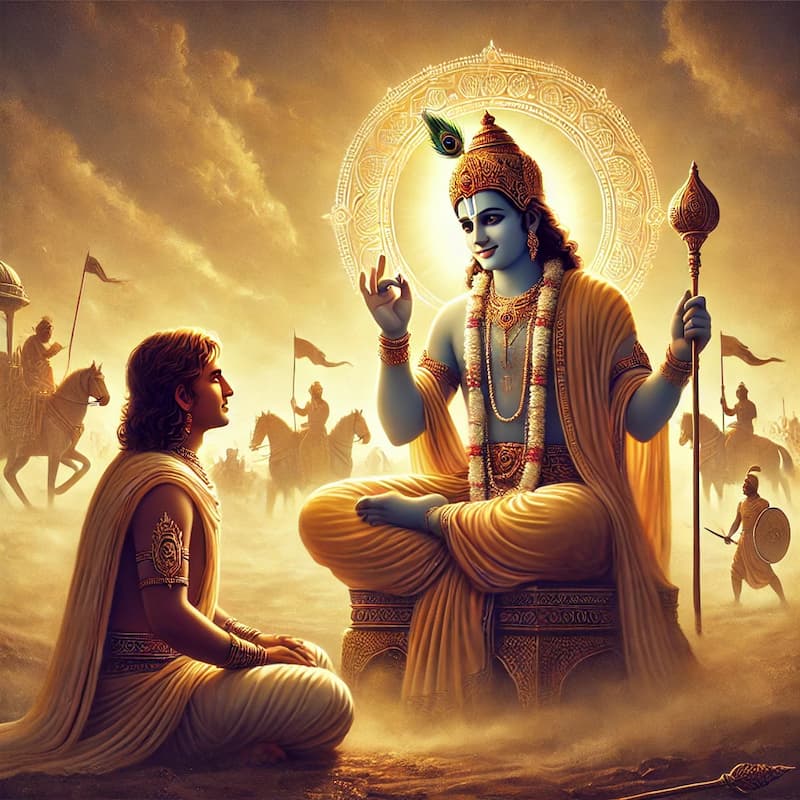
In Chapter 2 of the Bhagavad Gita, Shree Krishna unveils profound truths about the ātman—the eternal soul—and the journey it undertakes beyond the confines of this physical body. This chapter, known as Sankhya Yoga, or The Yoga of Analytical Knowledge, introduces us to the nature of the self and its immortality. Verse 2.13 stands as a cornerstone in understanding the Hindu philosophy of rebirth. Swami Mukundananda’s commentary on this verse builds a compelling and logical case for reincarnation—a truth not confined to Hindu scriptures but echoed across multiple philosophical and spiritual traditions worldwide.
Bhagavad Gita 2.13 – Sanskrit and Translation
देहिनोऽस्मिन्यथा देहे कौमारं यौवनं जरा।तथा देहान्तरप्राप्तिर्धीरस्तत्र न मुह्यति॥
Translation:
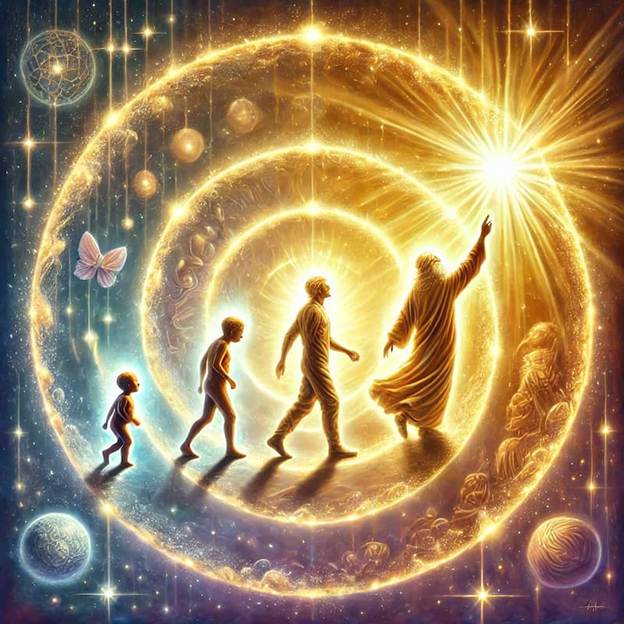
Just as the embodied soul continuously passes in this body from boyhood to youth to old age, similarly, at the time of death, the soul passes into another body. The wise are not deluded by this.
This verse affirms that just as bodily transformation occurs naturally in a single lifetime, so too does the soul transition to a new body at death. Shree Krishna teaches Arjuna—and through him, all of humanity—that the soul is not born, nor does it die.
The Logic of Eternity: We Came from Somewhere and Are Going Somewhere
Swami Mukundananda emphasizes: If we accept that the soul is eternal—unchanging and unaffected by the death of the physical body—then it follows logically that we existed before this life and will continue after it. This simple yet powerful reasoning supports the doctrine of rebirth.
The body undergoes a continuum of stages—infancy, childhood, youth, adulthood, old age—none of which define the essence of the self. That unchanging witness behind all transformations is the soul, the ātman. It is not bound by the body but merely uses the body as an instrument.
This perspective not only provides clarity about life and death but also inspires us to elevate our actions, knowing that we are eternal beings on an ongoing journey of spiritual evolution.
Historical Perspectives: East and West Agree
The concept of rebirth has been central to Indian philosophy for millennia. But it is not an exclusively Eastern idea. The German philosopher Arthur Schopenhauer, deeply influenced by the Upanishads and the Bhagavad Gita, remarked:
"If an Asiatic were to ask me the definition of Europe, I would say it is that part of the globe which is suffering from the delusion that this life is our first entry into existence and there is no life after death."

Schopenhauer viewed reincarnation not as an exotic idea but as a rational and necessary explanation of human existence. In contrast, many modern Western ideologies still regard life as a one-time occurrence, leaving no satisfactory explanation for human suffering, inequality, or innate tendencies.
A Philosophical Dilemma Without Rebirth
What explanation can we offer a child born blind, or someone suffering from terminal illness despite leading a virtuous life? If there is no existence before birth, how do we explain these inequalities?
Swami Dayananda Saraswati of Arya Samaj addressed this with clarity. He posed a hypothetical situation: If a child is born blind, what could he possibly have done to deserve such suffering in this life? If we blame God, it contradicts His nature as all-loving and just. The only plausible answer lies in past life karma.
Karma, the law of cause and effect, only becomes morally acceptable and logically coherent when viewed through the lens of reincarnation. Otherwise, we are left with a random, unjust universe, or a cruel and arbitrary Creator.
Rebirth vs. Materialism: The Trap of Sense Indulgence
Ancient materialist philosophies, like that of Charvak in India, outright rejected the soul, karma, and rebirth. His popular dictum—“Rinam kritva ghritam pibet” (Take a loan and drink ghee)—encouraged living only for pleasure, with no regard for consequences. This echoes the Western Epicurean ideal: “Eat, drink, and be merry, for tomorrow we die.”
But this mindset binds the soul further. When we chase sensual gratification, ignoring moral or spiritual principles, we accumulate karmas that lead to continued rebirth. The soul remains caught in the cycle of life and death (samsara), constantly moving from one body to another.
In contrast, the Bhagavad Gita teaches that freedom comes through self-restraint and detachment. When we rise above material cravings and stop identifying with the temporary pleasures of the body, we purify our consciousness. This inner renunciation leads to liberation (moksha), where the soul is no longer forced to take birth again.
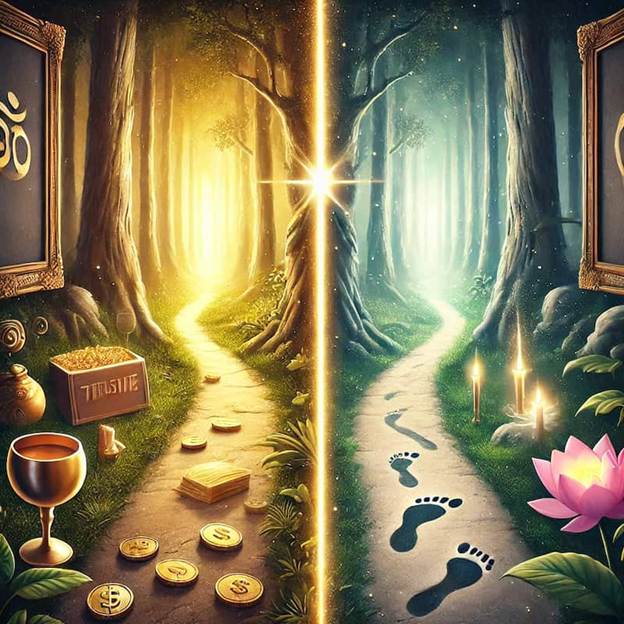
Thus, materialism leads to bondage; mastery over the senses leads to eternal freedom.
Rebirth in Religious and Cultural Traditions Worldwide
Swami Mukundananda reminds us that the concept of reincarnation has been widespread across cultures and religions:
- In early Christianity, many sects believed in past lives. Jesus is said to have referred to John the Baptist as the return of Elijah (Matthew 11:14).
- Josephus, the Jewish historian, recorded that belief in rebirth was prevalent among Jews.
- Jalaluddin Rumi, the 13th-century Persian Sufi poet, writes:
“I died as a stone and became a plant,
I died as a plant and became an animal,
I died as an animal and became a man.
Why should I fear death?”
Rumi’s metaphor eloquently describes spiritual evolution through successive lives.
- Greek philosophers like Pythagoras and Plato taught about transmigration of the soul.
- Tennyson, Wordsworth, and Benjamin Franklin—all Western intellectuals—believed in rebirth.
This cross-cultural alignment points to a timeless, intuitive recognition of the soul’s journey beyond one lifetime.
Scientific Insight: The Ever-Changing Body and the Constant 'I'
Swamiji reinforces that modern science supports the Gita’s claim indirectly. Scientists have confirmed that the human body is in a constant state of renewal:
- Skin cells replace themselves every few weeks.
- The stomach lining regenerates every few days.
- Red blood cells are replaced every 4 months.
- The entire body’s cellular structure changes within 7 years.
Despite this constant cellular turnover, our identity remains the same. A 40-year-old can still say, “I was that child in the family photo,” even though none of the original cells exist.
A striking example is given: Suppose a criminal stands in court 10 years after committing a crime and says, “Your honor, I am not the same person—I have an entirely new body now.” The court would rightly reject such a claim. Why? Because we intuitively know that the unchanging “I” is not the body—it is the soul.
Thus, the scientific observation of physical impermanence strengthens the Gita’s metaphysical message: The body changes, but the soul endures.
Shree Krishna’s Analogy: Transformation Within and Beyond Life
In this verse, Shree Krishna gives a powerful analogy:
“Just as the soul passes from childhood to youth to old age within one lifetime, it similarly passes into another body at the time of death.”
We do not mourn the passing of our childhood self into youth or adulthood. In the same way, a wise person does not grieve when the soul leaves one body to take on another.
This analogy makes reincarnation not only a spiritual truth but a relatable, observable phenomenon—something we witness in everyday life through growth and aging.
Nyaya and Vedanta Darshan: Scriptural Proofs of Rebirth
Indian philosophies provide further support:
1. Vedanta Darshan
It asks: How does a newborn baby instinctively know how to drink milk? No one teaches it, yet the baby latches and suckles. This is explained by samskaras—impressions from past lives.
2. Nyaya Darshan
This system argues that newborns often express joy, fear, or sadness without any external stimuli. These reactions are remnants of emotional experiences from prior births.
Such subtle observations offer practical evidence for the soul’s continuity beyond the present life.
Why We Forget Past Lives: A Divine Safeguard
A common objection is: If we lived before, why don’t we remember?
Swami Mukundananda clarifies: This is part of God’s compassionate design. If we remembered every detail of past lives, life would be emotionally chaotic.
Imagine remembering:
- A spouse from a past life marrying someone else.
- Property we owned now belonging to others.
- Enemies or unresolved betrayals.
This would create confusion, attachment, and suffering. God erases these memories so we can focus on our current spiritual progress without mental baggage. Yet, the effects of past actions—karma—remain and influence our life circumstances.
Thus, memory is erased, but the moral balance sheet is preserved.
Rebirth and Moral Responsibility
Understanding rebirth reshapes how we live. Our talents, struggles, relationships, and environment are not arbitrary—they are karmic consequences and divine opportunities for growth.
- A person born with artistic genius likely cultivated that skill over many lives.
- A child with physical disabilities may be working through difficult karmas, offering the soul a chance to develop patience, strength, and surrender.
This perspective cultivates compassion toward others and accountability within ourselves.
Conclusion: Rebirth is Rational, Scriptural, and Transformative
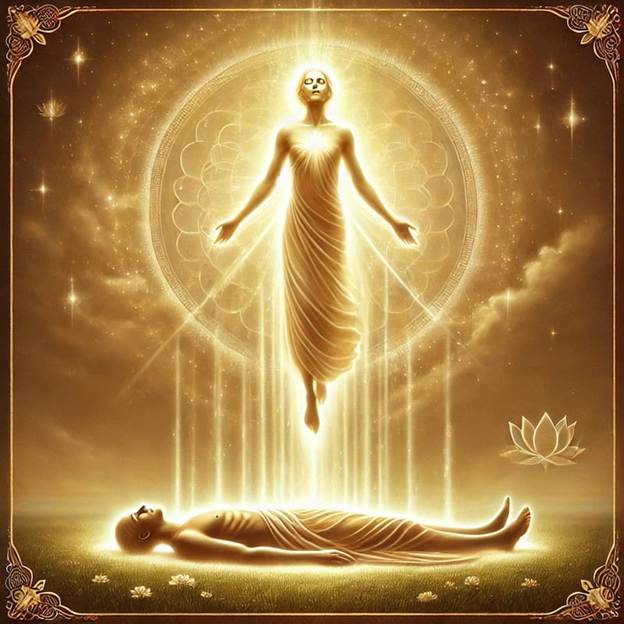
From the teachings of Shree Krishna in the Bhagavad Gita to scientific observations and scriptural logic, the evidence for rebirth is multi-faceted and convincing. Swami Mukundananda’s commentary on Shloka 2.13 presents reincarnation not as blind faith, but as reasoned truth rooted in experiential reality.
- The soul is real.
- The body is temporary.
- Karma travels with us across lives.
Accepting this transforms how we live, love, serve, and surrender.
Call to Action: Reflect, Reform, and Realign
Take a moment to reflect deeply on your own journey.
· Are you living as if this is your only life—or with awareness of your soul’s eternal purpose?
· Are your daily actions aligned with your spiritual goals?
· Can you rise above temporary suffering, knowing it’s part of a much bigger story?
Let this verse from the Bhagavad Gita inspire you to:
- Cultivate detachment from the body
- Practice devotion and selfless service
- Live with awareness of the eternal self
📿 Join daily online Bhagavad Gita classes by JKYog: jkyog.org/online-classes
📲 Download the Free “Bhagavad Gita Krishna Bhakti” App:
Access daily verses, audio explanations, guided meditations, and more spiritual resources for your journey.
📺 Subscribe to Swami Mukundananda’s YouTube Channel:
Watch powerful spiritual discourses and find inspiration for your soul’s journey.
Because when we realize we are more than this life, we begin to live rightly in this life.
Recommended Readings & Resources
Watch: Concept of Rebirth in Hinduism by Shree Krishna | Swami Mukundananda | Bhagavad Gita English
- Swami Mukundananda. Bhagavad Gita: The Song of God – Commentary by Swami Mukundananda
- Arthur Schopenhauer – The World as Will and Representation (Vol. II), especially where he discusses Indian philosophy and rebirth.
- Jalaluddin Rumi – Masnavi-i Ma’navi; look for the poem beginning “I died as a stone…”
Recommended edition: The Essential Rumi by Coleman Barks. - Brahma Sutras (Vedanta): Section 3.1 discusses soul transmigration. English translation and commentary by Swami Sivananda is available via the Divine Life Society.
- Nyaya Sutras of Gautama: Presents philosophical proofs of rebirth—available in English translation by Ganganath Jha in public libraries and archives.
FAQs
1. If we don’t remember past lives, how can we be sure they exist?
Philosophical reasoning, scriptural teachings, and scientific parallels all point to the continuity of the soul beyond memory.
2. What happens to karma across lifetimes?
Karma follows the soul. It manifests as circumstances in future lives, offering opportunities for growth, atonement, or reward.
3. Can we escape the cycle of rebirth?
Yes. Liberation (moksha) is possible through self-realization, detachment, devotion, and surrender to God—as taught in the Bhagavad Gita.