
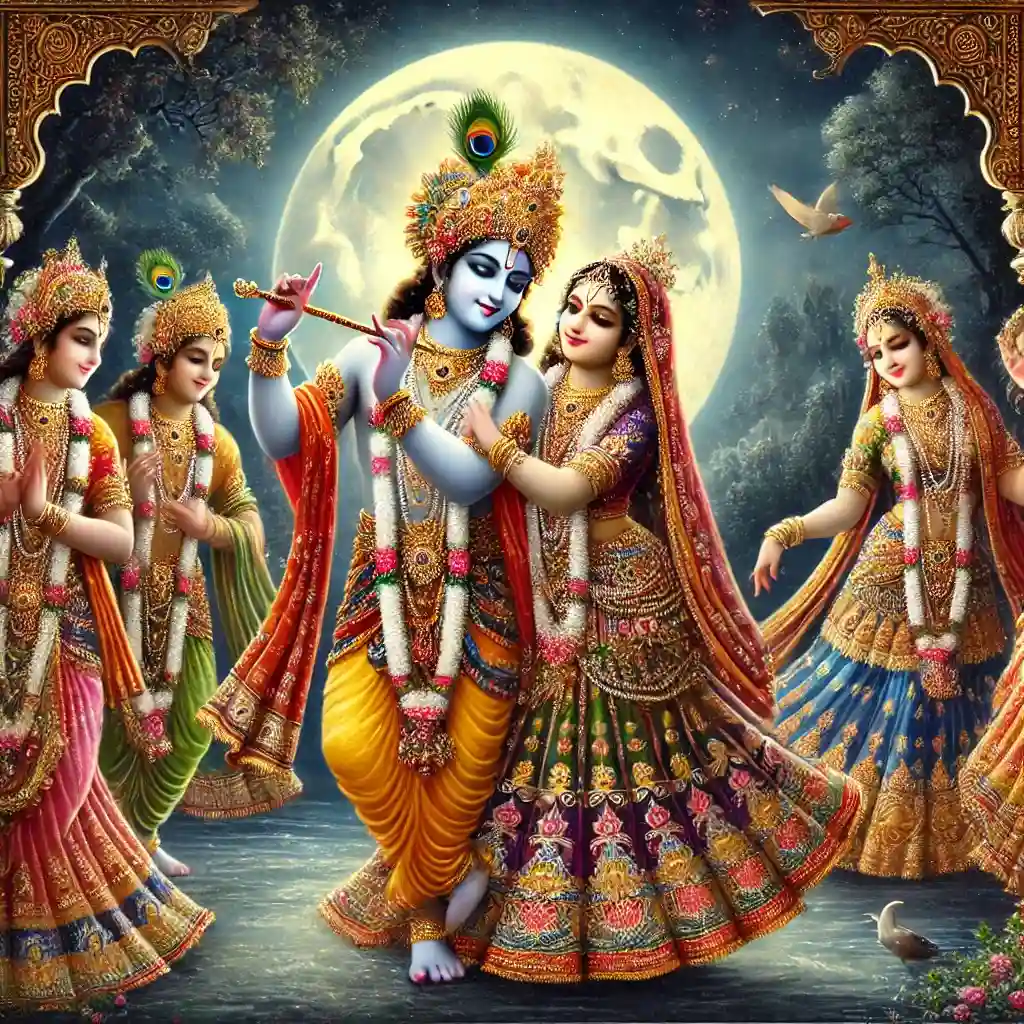
Sharad Poornima, the night when the full moon graced the sky with its most luminous presence, had always been a time of spiritual significance in Hindu tradition. This sacred occasion echoed profoundly in the divine stories, especially in the enchanting pastimes of Shree Krishna, as recounted in the Srimad Bhagavatam. On this night, the divine love between Shree Krishna and the gopis reached its zenith, serving as an embodiment of pure devotion and unrestrained longing. The Srimad Bhagavatam, a revered scripture that beautifully chronicles the life and leelas (pastimes) of Shree Krishna, provides a profound exploration of the heart's yearning for the divine.
In this context, Sharad Poornima was not just a celebration of the harvest moon, but a reminder of the eternal dance between the soul and God. The Srimad Bhagavatam presented the Maharaas on this night as the ultimate expression of divine play, where God's intimate interactions with the gopis revealed lessons of love, devotion, humility, and the subtle traps of pride. The narratives within this sacred scripture, especially those highlighting Shree Krishna's divine exchanges with Radha and the gopis, imparted eternal wisdom to all who sought the path of true devotion. This blog delved into these teachings, exploring how even a slight shift in one's perception or ego could disrupt the flow of divine love, while also offering practical tips for applying these profound lessons in modern life.
The Entrance of Pride
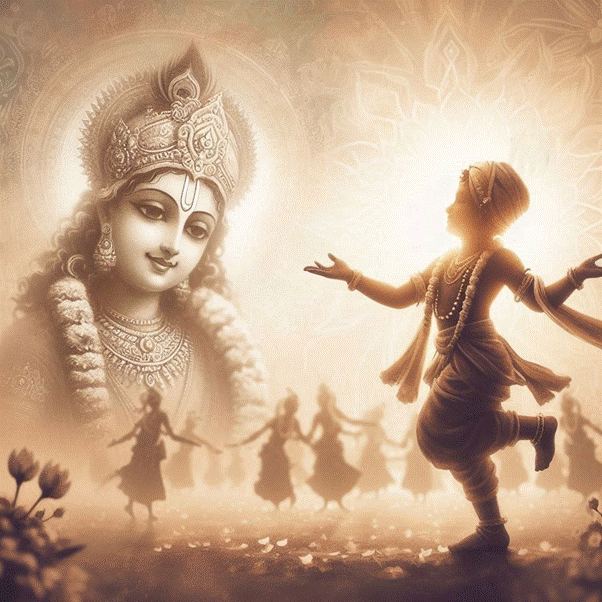
On Sharad Poornima, the Maharaas unfolded, with the gopis lost in pure, selfless devotion, enveloped in the divine dance with Shree Krishna. The Srimad Bhagavatam narration emphasized that these were not ordinary dances. They were leelas in which the divine engaged each heart and elevated longing into union. A subtle enemy of devotion quietly entered at an unexpected moment. For the gopis, pride manifested as the belief that they were uniquely blessed, that Shree Krishna was dancing with them personally, and that their devotion and beauty set them apart, deserving of his special attention.
Shree Krishna, sensing the fragile nature of their devotion, decided to test the gopis' hearts. When a subtle feeling of "I" and "mine" arose, their focus shifted from the divine to themselves. The moment egotism took root, the direct communion with Shree Krishna faded, as if the very essence of the divine had slipped away.
The result of this shift was immediate and painful. Shree Krishna withdrew. The divine presence that had once filled the space disappeared, and grace receded like a distant memory. The gopis, left in a sudden and profound emptiness, felt the sting of loss. They realized, with a heavy heart, that their attention had turned inward, away from Shree Krishna and toward their own sense of self.
In that moment of separation, Radha, too, became aware of her own pride. She acted out the very same arrogance that had taken them away from Shree Krishna. Her playful dramatization of pride became a lesson in itself—a necessary teaching to clarify the deeper truth that love for the divine could not coexist with self-aggrandizement.
Through their shared experience of longing and repentance, Radha and the gopis came to understand their mistake. In the depths of their sorrow, they began to recognize the true nature of devotion, learning that only through humility and selflessness could they hope to reunite with the divine.
Lessons
- Even an apparently small movement of pride could disrupt the flow of devotion and displace the divine within the heart.
- Spiritual experience required continual vigilance against the tendency to personalize grace as a mark of superiority.
The Gopi Geet
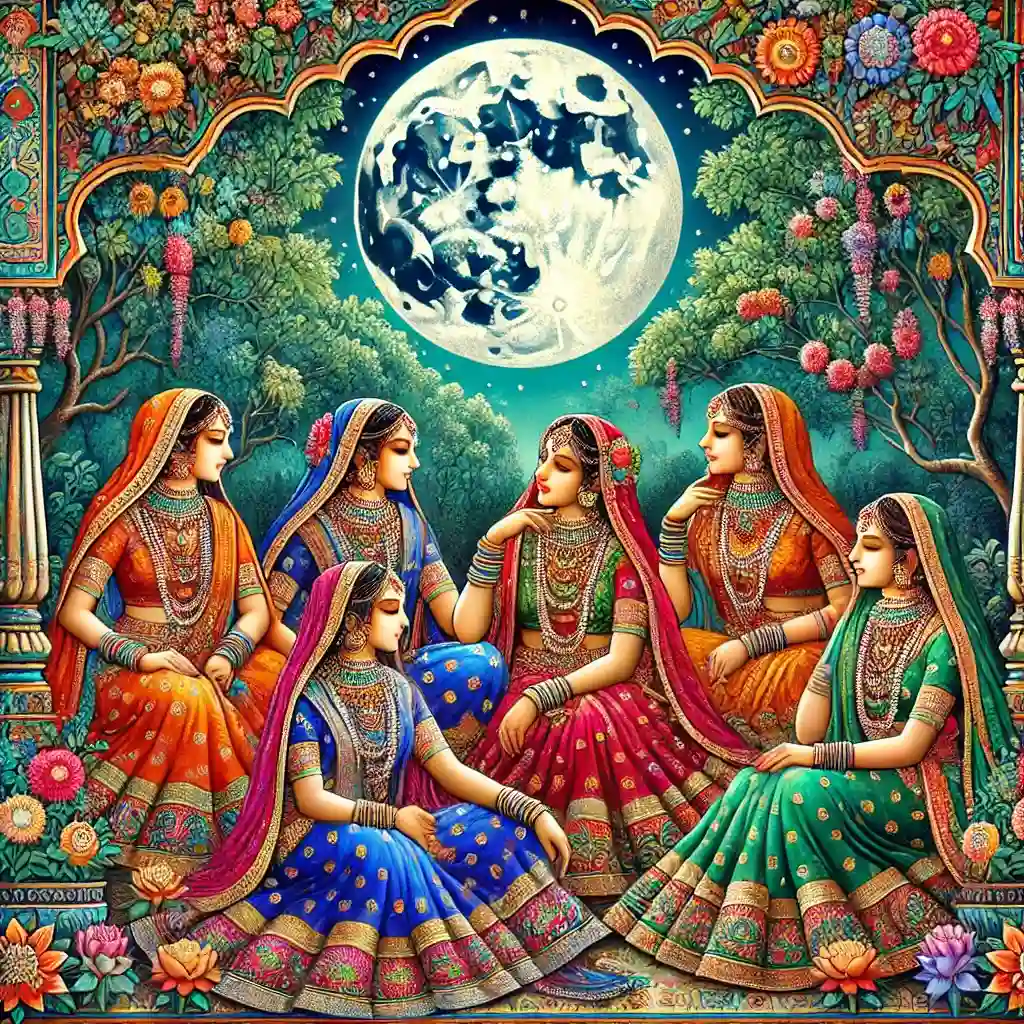
In their sorrow, the gopis poured their hearts into song, and thus the Gopi Geet was born—a melody filled with longing and devotion. Their voices, heavy with yearning, cursed Lord Brahma for creating the human eye with only two eyelids, for even the briefest blink felt like an eternity without Shree Krishna. They longed to see him without any barrier.
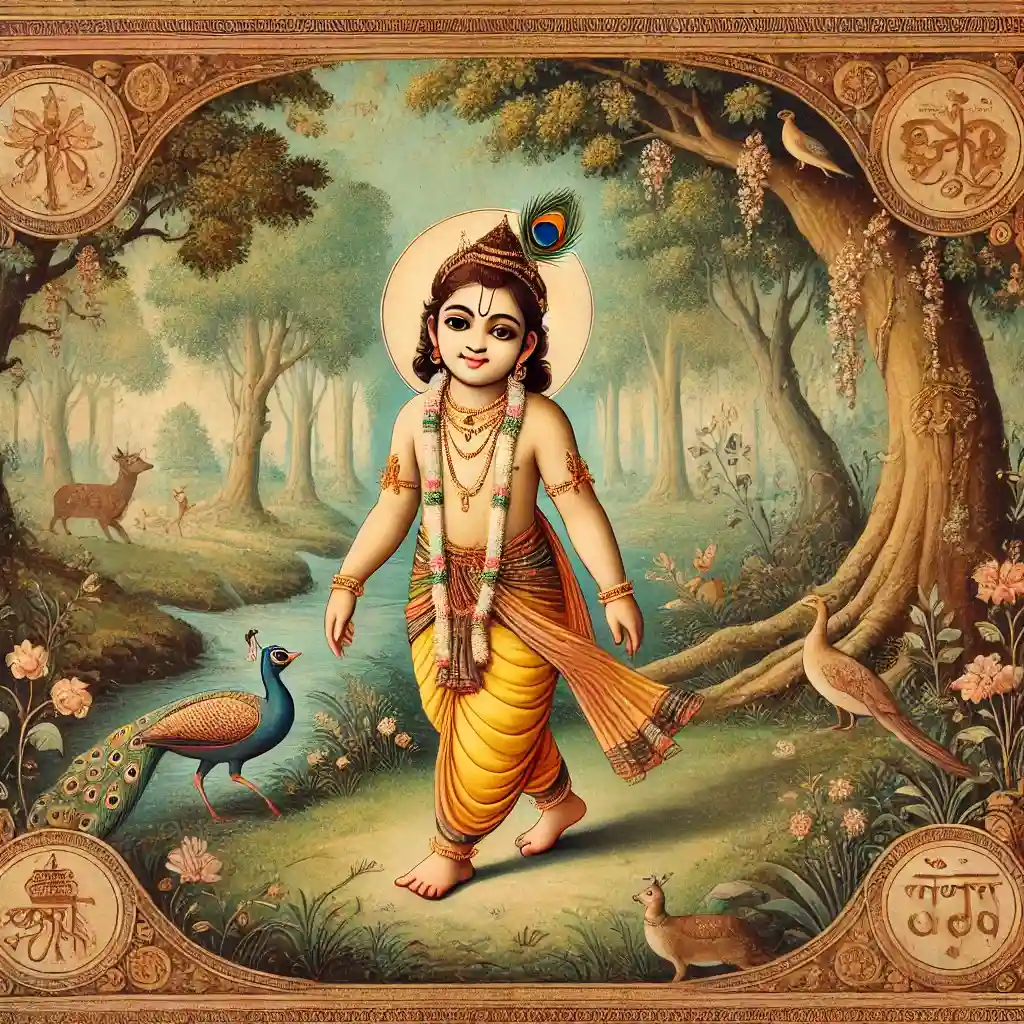
The gopis also mourned the bare feet of Shree Krishna, who walked barefoot through the thorny forest. Mother Yashoda once suggested he wear shoes, but Shree Krishna, in his wisdom, refused. He explained that the worshiped walks barefoot, while the devotee wears shoes. His refusal was not pride, but a demonstration of humility—his love for the cows, his constant devotion, and his willingness to endure for the sake of love.
The gopis’ devotion was not merely romantic longing. It was a selfless, intense love that transcended the physical. Their longing for Shree Krishna was so pure that they would have given anything, even their own lives, to be close to him. Their devotion became a mirror for all who sought true love—a love that asks nothing in return and demands the complete surrender of the self.
Lessons
- The gopis’ longing, expressed without self-assertion, showed how true devotion requires selflessness and humility.
- The gopis' love for Shree Krishna was pure, not born of desire or possession, but of an unshakeable, selfless longing.
Repentance and Reunion
Shree Krishna finally melted into visibility and stepped out from a bush. The gopis, who had been running from forest to forest, saw him and rushed forward as one, seizing him with relief and reproach. They poured out their love and demanded to know why he had reciprocated in reverse — why he had hidden and then gone.
Shree Krishna listened and then spoke of hearts. He explained that lovers fell into different kinds of attachment: some loved only those who loved them in return — a transactional love; some loved indiscriminately; some loved no one; and a few had gone beyond desire, content in themselves or free of longing. He declared his own rule plainly: as they loved him, so he would love them. He had hidden not from indifference but to witness and intensify their yearning. By withdrawing, he had given their longing room to grow.
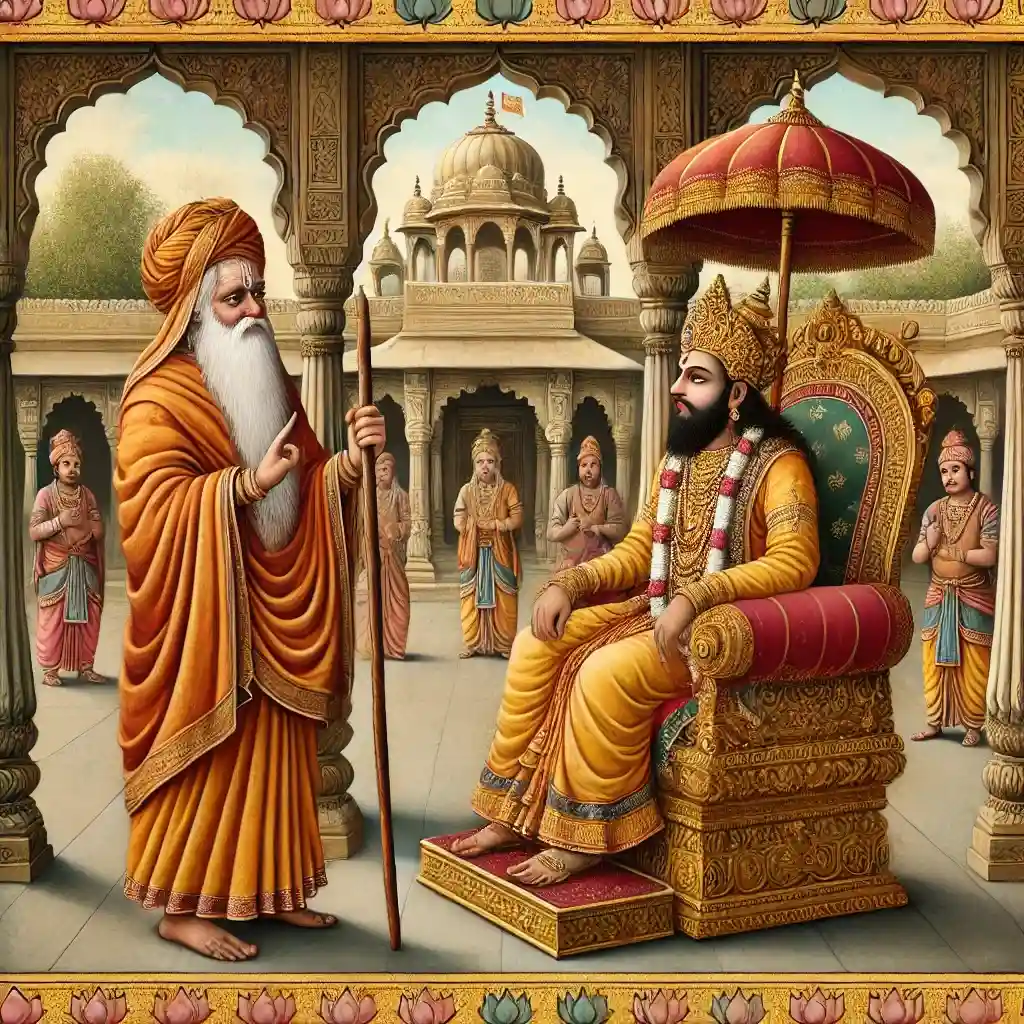
Once longing had ripened, Shree Krishna resumed the Maharaas, and they danced through a full Brahma-ratri, surrender and reunion folding into one another. Yet beyond the grove, the world kept turning. Sage Narad noticed Shree Krishna’s immersion in Maharaas. He went to Kansa and hinted that the eighth child — the one the court had been seeking — lived in Braj as the son of Nanda and Yashoda. Kansa arranged a yagya, instructing Akroor to invite the Brajwasis and to fetch the family. Akroor prepared to carry the king’s invitation, and Sage Narad went to inform Shree Krishna that arrangements were set to take him to Mathura, where destiny and duty awaited.
Lessons
- Repentance and reunion restored sincerity of heart and deepened devotion.
- Divine withdrawal functioned pedagogically: absence stoked longing and intensified subsequent joy.
Conclusion
The Maharaas stood as both a joyful celebration and a cautionary event, with its powerful images remaining relevant for anyone pursuing devotion in an age of distractions. The events bring timeless lessons a modern seeker could apply. It is essential to practice brief moments of honest self-inventory each day to identify any rising pride, noting which experiences provoke the desire to claim specialness, and gently recalibrating attention away from the self. Cultivating practices of restraint and humility in devotional expression is crucial—when emotions run high, the seeker can choose silence or minimal speech to ensure reverence doesn't slip into display. During periods of longing, the seeker should view these moments not as despair but as spiritual fuel, recording the feeling to deepen the yearning rather than panic. Integrating private devotion with public responsibility is equally important; contemplative practices can be balanced with acts of service, recognizing that intimate devotion and worldly duty complement each other. Finally, reflecting on symbolic teachings encourages the seeker to approach every relationship with deep care, focus, and humility.
Call to Action
- Immerse yourself in the divine pastimes of Shree Krishna and transform your spiritual journey by listening to Swami Mukundananda's Srimad Bhagavatam sessions on YouTube.
- Join us at the Radha Krishna Temple from October 6th to 8th for the divine celebration of the 103rd Birth Anniversary of Jagadguru Shree Kripalu ji Maharaj, accompanied by uplifting Kirtans, sacred Abhishek, and enlightening discourses.
FAQs
- What is the significance of the Maharaas in devotional practice?
The Maharaas symbolizes both the joy of divine communion and a profound lesson in humility. It teaches that devotion must be free of ego and pride, as the pursuit of self-centeredness distances one from the divine. - How can modern seekers apply the lessons from the Gopi Geet?
Modern seekers can integrate the Gopi Geet’s essence by practicing selflessness in their devotional acts, using periods of longing to deepen their yearning rather than succumb to despair, and balancing their spiritual life with worldly duties. - What role does pride play in the context of devotion in the Maharaas?
Pride, represented by the thought of being "special" or "favored," obstructs true devotion. As seen in the Maharaas, even the smallest ego can cause a disconnect from God. The lesson here is that true devotion requires humility and a selfless heart. - Why does Shree Krishna hide from the gopis, and what does this teach us?
Shree Krishna hides from the gopis to intensify their longing and deepen their love for him. This teaches seekers that periods of divine concealment serve to increase spiritual longing and enhance the sweetness of reunion, making the devotion stronger. - How can one maintain humility while practicing devotion?
Humility can be cultivated through self-awareness, choosing restraint in expression, and avoiding any display of superiority. Regular self-inventory and mindful practice of devotion, like the gopis' example, ensure that ego doesn't interfere with sincere spiritual pursuit.
Resources
Specific Blog
Sharad Purnima 2025: A Divine Dance of Devotion