

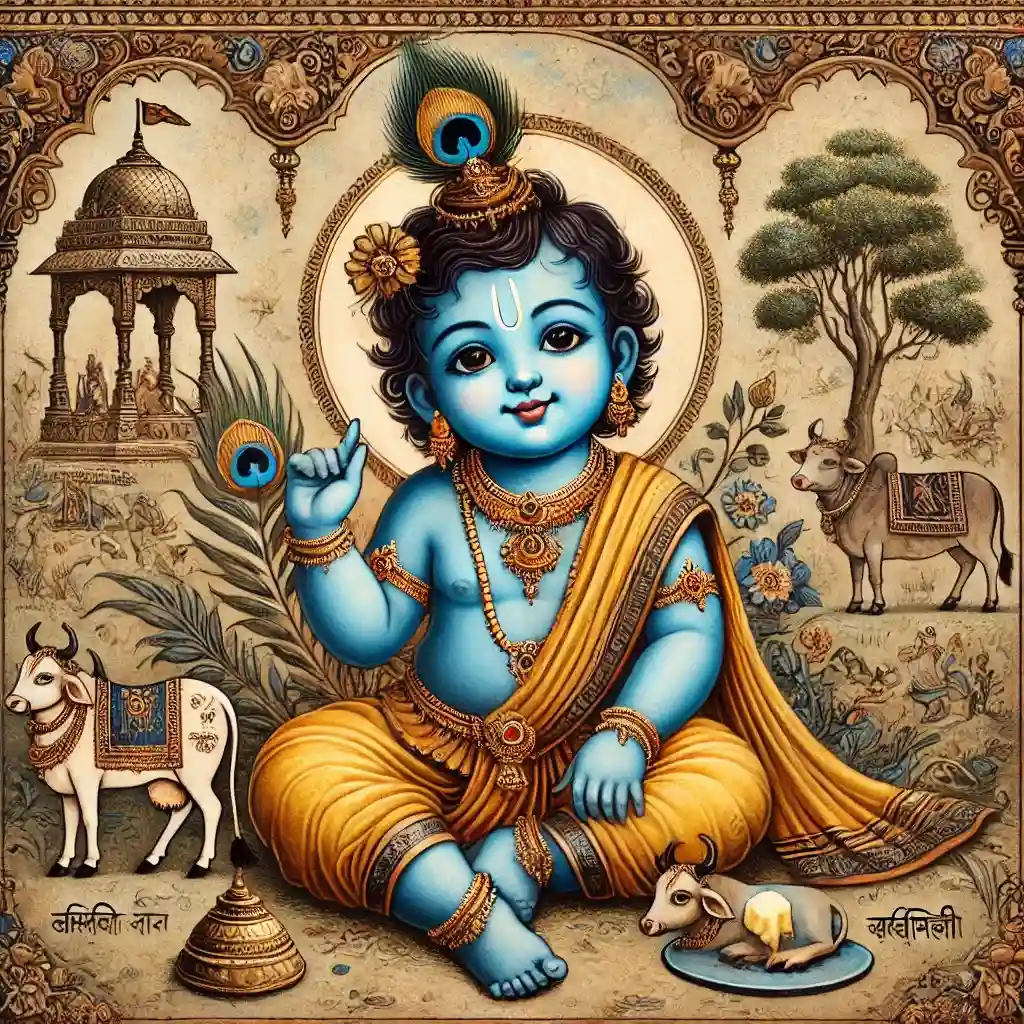
The Srimad Bhagavatam, one of the most revered Hindu scriptures, narrates the divine pastimes of Shree Krishna. It serves not only as a spiritual guide but also as a devotional treasure, offering glimpses into the Divine’s descent onto Earth. Among its most cherished narratives is the account of Shree Krishna’s birth and early life, a series of pastimes that continue to captivate and uplift spiritual seekers across centuries.
This blog explores one such divine episode from the Srimad Bhagavatam: the sacred appearance of Shree Krishna in the village of Gokul. Far removed from the noise and complexities of royal courts or urban life, Gokul was a peaceful agrarian settlement. It was home to Nand Baba and Yashoda, a couple who had crossed the threshold of youth yet lived with the grace of wisdom and devotion. They were simple villagers, living off the land and cattle, surrounded by the honest and loving community of Gokul.
This blog details the extraordinary sequence of events surrounding Shree Krishna’s divine appearance—from the quiet nobility of Nand Baba and Yashoda to the miraculous midnight moment when Shree Krishna entered their lives in the form of a child. This moment in Gokul laid the foundation for the many divine pastimes that would follow—each one imbued with spiritual lessons on love, surrender, and the eternal joy of devotion.
Nand Baba and Yashoda’s Devoted Lives
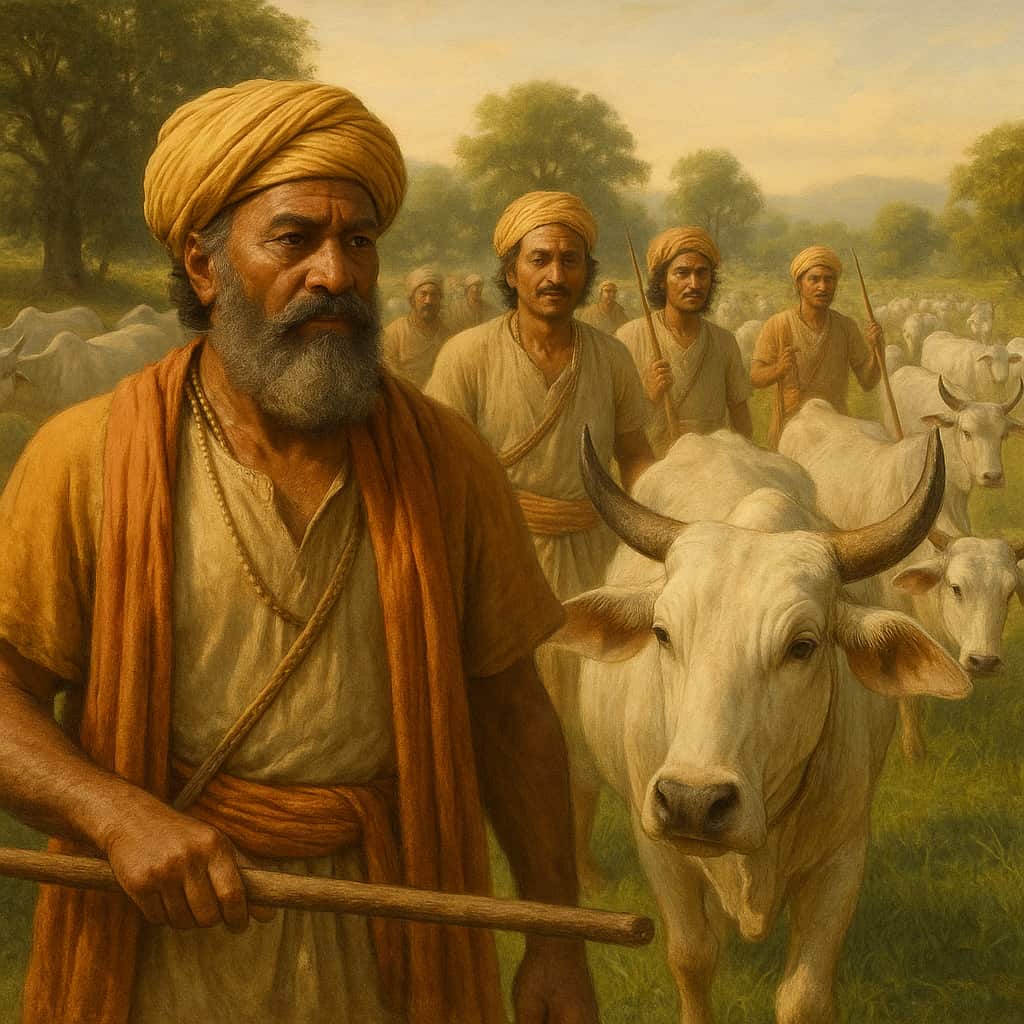
Among the many chieftains of Braj, Nand Baba held a unique position. As the village leader, his wisdom and humility made him beloved by all. His wife, Yashoda, mirrored his grace with a heart so pure that her very presence was said to bring peace. The simplicity and sincerity of their lives became the very foundation upon which the divine plan would unfold.
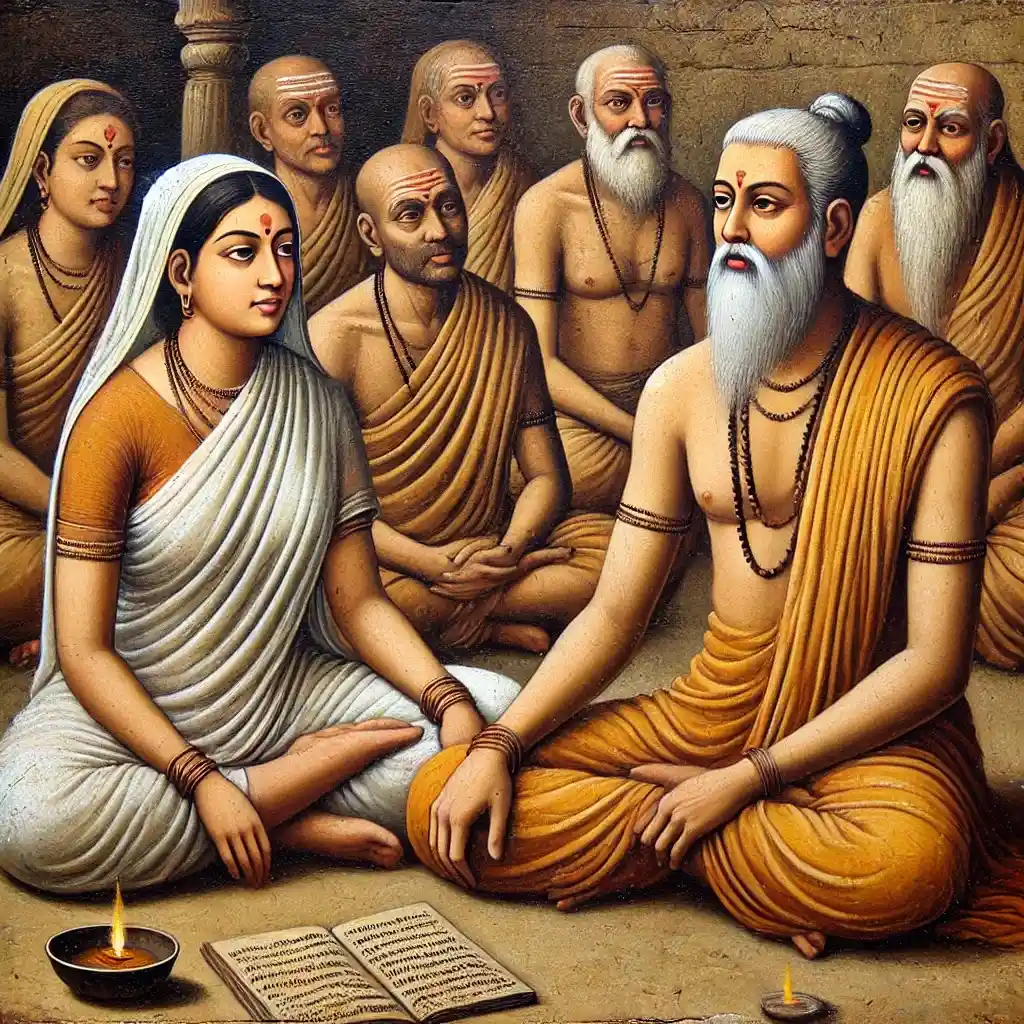
One day, a group of revered Brahmins visited their home. True to their nature, Nand Baba and Yashoda extended warm hospitality, serving them with utmost care and attention. Pleased by their kindness, the Brahmins offered a profound blessing. They assured the couple that they would soon be blessed with a boy.
Nand Baba, always practical, raised a concern. What if the child turned out to be a girl instead of a boy? The Brahmins responded with divine certainty. Their words were not ordinary, and if a girl were to be born, they assured her transformation into a boy. Such was the power of their blessing and conviction.
In time, the village buzzed with joy as it became known that Yashoda had conceived. The entire village rejoiced, seeing this as a blessing for their whole community. Yashoda, the queen of Braj, was carrying a divine spark, though few could grasp the scale of what was to come.
Lessons
- The humble and sincere lives of Nand Baba and Yashoda created an environment for divine blessings. Their simplicity and honesty set the foundation for Shree Krishna’s appearance.
- Their warm and selfless service to the visiting Brahmins opened the door to blessings, demonstrating how genuine kindness to others invites grace into one’s life.
- Even when questions and doubts arose, their unwavering faith in the Brahmins’ prophecy guided them through uncertainty and led to the miraculous arrival of Shree Krishna, showing that faith can triumph over doubt.
Shree Krishna’s Appearance in Gokul
Months rolled by and the time of delivery drew near. As the Krishna Paksha in the month of Bhadra approached, all eyes in Gokul turned toward Nand Baba’s home. Astrological charts marked the Ashtami Tithi as the moment of birth, and everyone waited with bated breath.
By eight in the evening on that fateful night, the villagers had gathered in anticipation. However, as time passed and no sign of the child appeared, their energy waned. They expressed their fatigue, playfully remarking that the child seemed to be taking his time. Nand Baba gently encouraged them to go home and rest, promising that they would all have darshan the following day.
By nine o'clock, even Nand Baba retired for the night, leaving Yashoda in the care of his two sisters, Nanda and Sunanda. However, as the hours dragged on, they too grew weary. By ten, Nanda left to rest, assuring her presence nearby. An hour later, Sunanda also retreated, leaving Yashoda entirely alone in the quiet house.
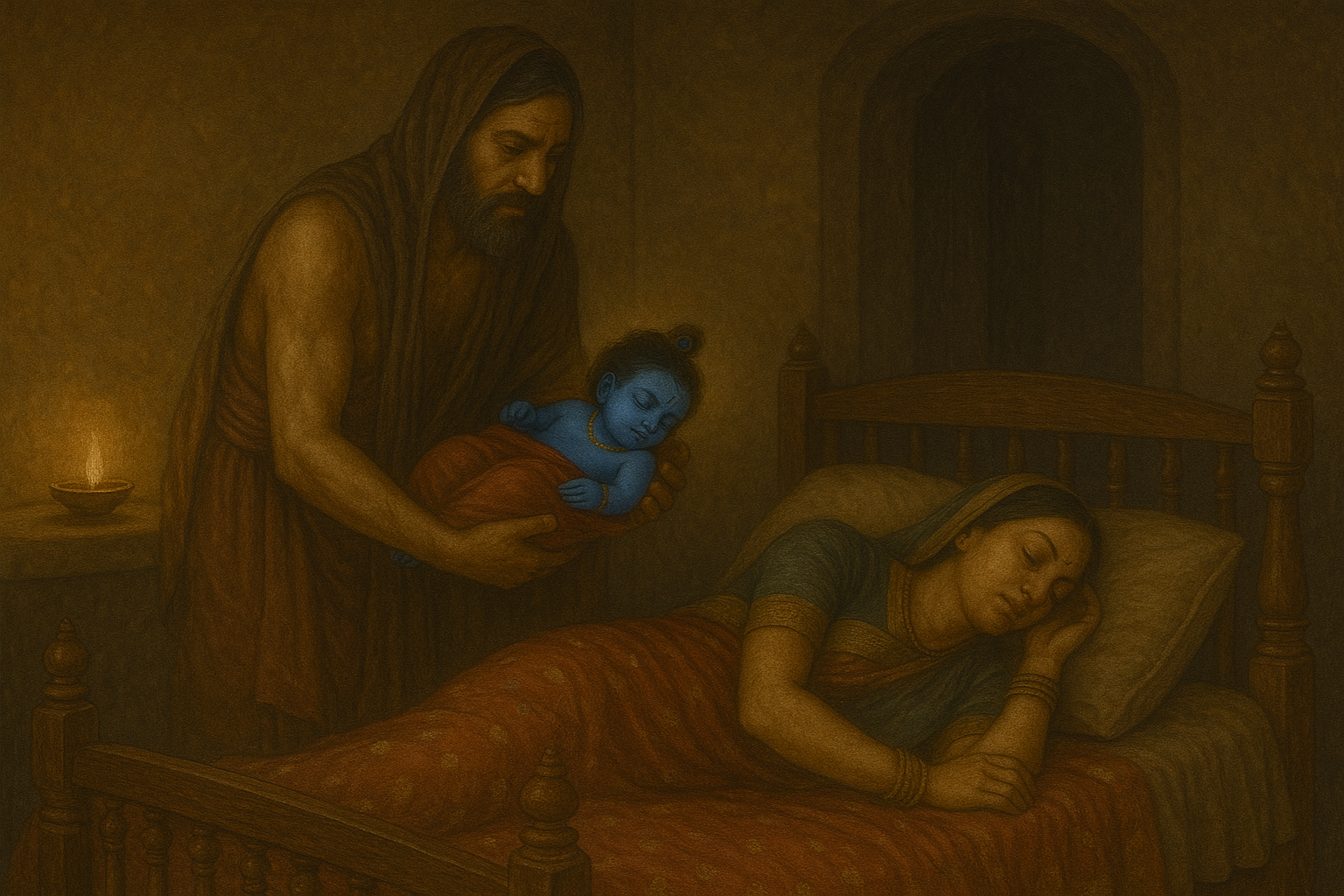
At the stroke of midnight, the divine curtain lifted. While Yashoda lay in solitude, Vasudev, the imprisoned father of Krishna in Mathura, carried his newborn son through the dark, rain-swept night. At that very moment, a baby girl was born to Yashoda, and the strain of childbirth caused her to faint. In her unconscious state, the divine exchange took place. Vasudev arrived, placed the bluish-complexioned boy next to her, and gently took the baby girl back to Mathura.
All around, the world slept. Even those meant to witness the miracle were deep in slumber. The newborn Lord, amused by the stillness, contemplated how no one had noticed his arrival. He knew that soon, his presence would change the very course of time and dharma.
Lessons
- Shree Krishna’s appearance occurred in the stillness of midnight, unnoticed by most, showing that profound divine moments don’t always come with noise or attention.
- Despite the long wait, Nand Baba, Yashoda, and their family remained patient and trusting, demonstrating that true faith accepts and honors the perfect timing of the divine.
A Mother's First Glance and a Father's Eternal Devotion
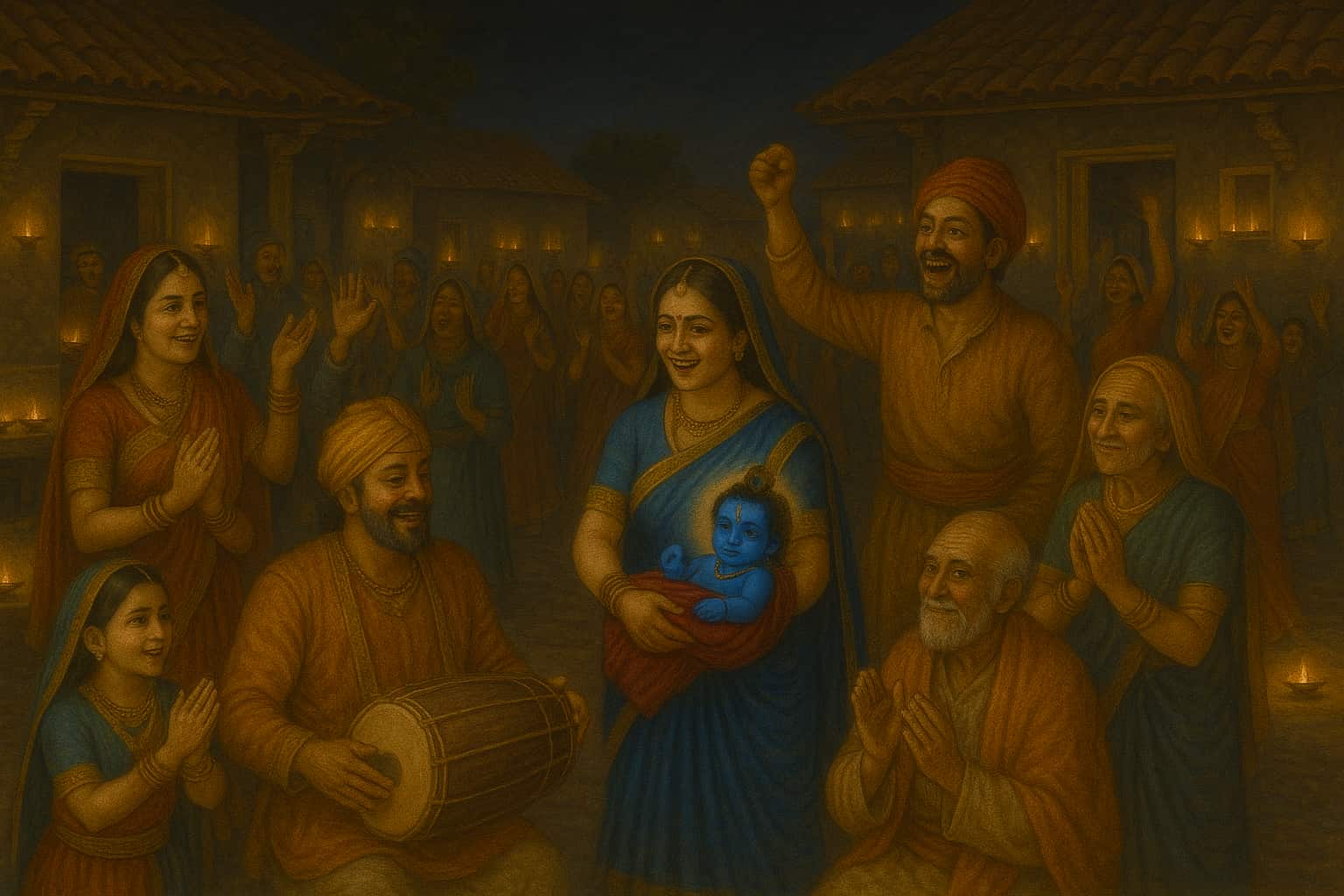
Shree Krishna had just reached Gokul, but everyone in the village was still asleep. Seeing this, Shree Krishna decided to make amends and started crying loudly. His cry awakened Yashoda, who came back to consciousness. When she opened her eyes, she saw a beautiful little child in her arms. Naturally, Yashoda did not know the divine pastime that had taken place; she simply believed this was her child.
Yashoda called out, and Nanda and Sunanda came running to her side. They quickly conveyed the news to Nanda Baba, who hurried over. Yashoda had Shree Krishna wrapped up when Nanda Baba asked to have darshan of the child. Yashoda responded playfully, asking what he would offer in return for the “mukh dikhai,” a traditional ritual in Uttar Pradesh where one is given something in exchange for seeing the newborn's face.
Nanda Baba replied that his offering would depend on the child’s face. When Yashoda uncovered Shree Krishna’s face, Nanda Baba was overwhelmed. He said,
"I offer my body, mind, and life.”
The joyous news spread throughout Braj, and the people began dancing in celebration. The birth of Shree Krishna was welcomed as a divine blessing, and the deep love and devotion between Shree Krishna and his earthly parents had just begun.
Lesson
- A mother’s love is natural, pure, and unconditional, as shown by Yashoda’s immediate acceptance of Shree Krishna without needing to know the full divine story.
- True devotion means complete surrender—not just in words but in body, mind, and spirit—exemplified by Nand Baba’s heartfelt offering to Shree Krishna.
Conclusion
Shree Krishna’s birth in Gokul is more than an ancient legend. It is a spiritual lesson wrapped in the cloth of simplicity and grace. In a world increasingly defined by complexity, materialism, and superficial pursuits, the residents of Braj offer a timeless reminder that divinity seeks not extravagance, but purity of heart.
Nand Baba and Yashoda did not ask for miracles. They lived with humility and served with love. Yet, they were chosen to be the earthly caretakers of the divine. Their home became the cradle of God, and their lives, an eternal part of cosmic history.
To this day, their story continues to inspire and uplift. It teaches us that miracles do not require noise—they require faith. It is not where you live, but how you live, that prepares you to receive grace.
Call to Action
To deepen your understanding of Shree Krishna’s divine pastimes and their profound spiritual significance, explore the insightful discourses on the Srimad Bhagavatam by Swami Mukundananda available on YouTube.
Stay connected and enrich your spiritual journey by participating in the upcoming Life Transformation Program with Swami Mukundananda in Philadelphia, taking place from June 15 to June 19, 2025. Don’t miss this opportunity—register for the event here.
FAQs
- Who were Nand Baba and Yashoda?
They were the foster parents of Shree Krishna, living in the village of Gokul. Nand Baba was the village chieftain, and Yashoda was known for her loving nature and deep devotion. - What is the spiritual significance of Ashtami Tithi?
Ashtami Tithi during Krishna Paksha is considered auspicious as it marks the appearance of Shree Krishna, symbolizing the triumph of dharma over adharma and light over darkness. - Why did Vasudev switch the babies?
To protect Shree Krishna from the evil king Kansa, Vasudev switched Shree Krishna with Yashoda’s newborn daughter so Krishna could grow up safely in Gokul. - Did Yashoda know Shree Krishna was not her biological child?
No, Yashoda believed the baby she found beside her was her own. Her love was unconditional and complete, making her devotion all the more extraordinary. - What is the mukh dikhai tradition?
Mukh dikhai is a cultural ritual in which a newborn’s face is revealed to loved ones, often accompanied by gifts or offerings as a gesture of joy and blessing.
Resources
Specific Video
Specific Blog
How Did Shree Krishna Appear in All His Divine Glory at Birth?