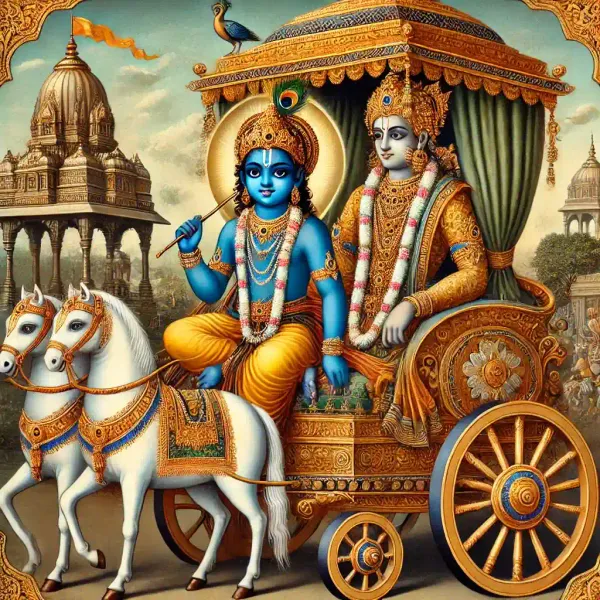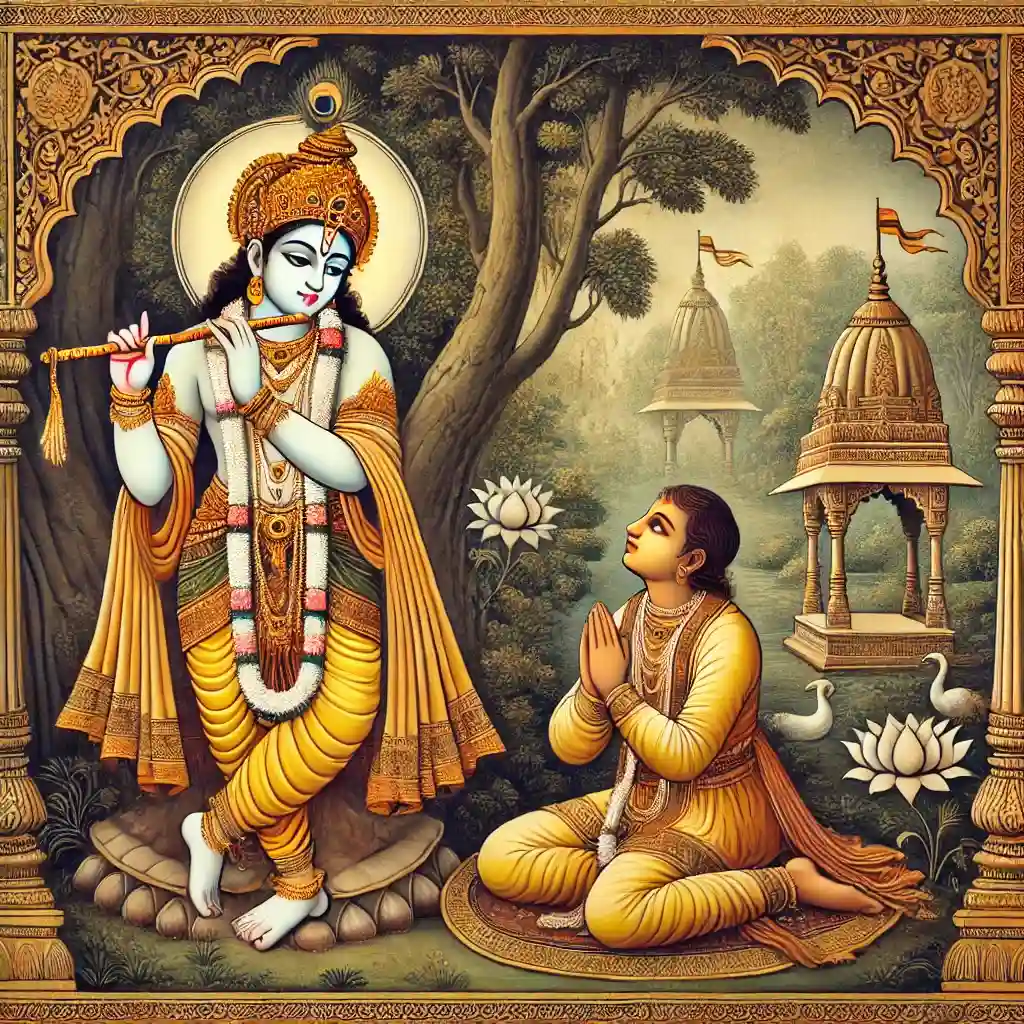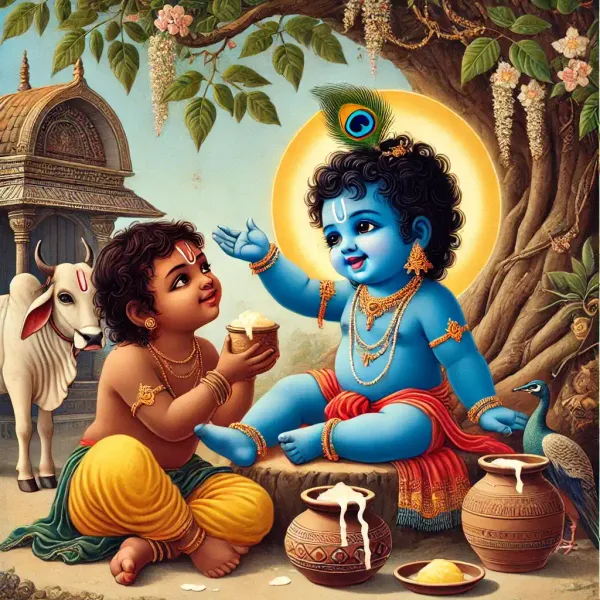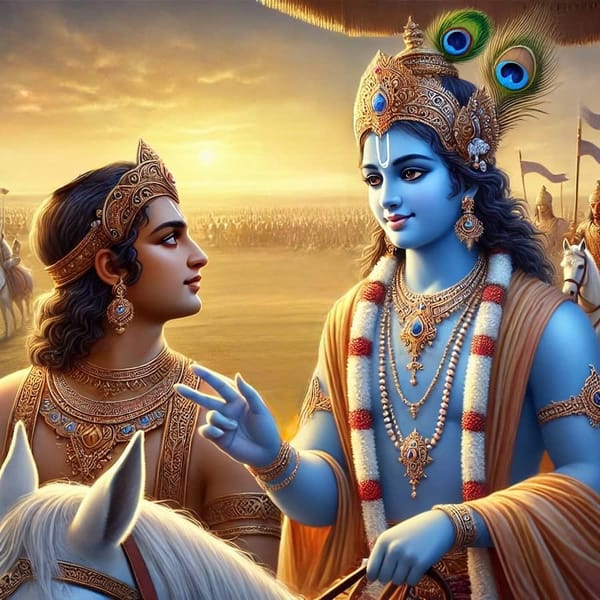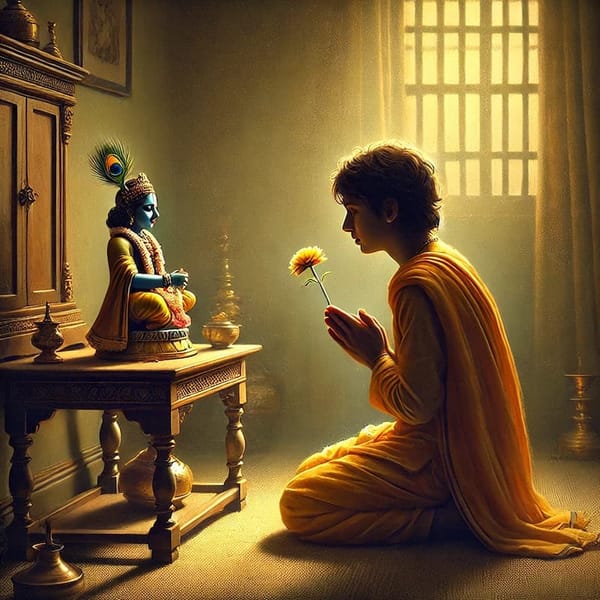
In the sacred lands of Braj, where devotion flowed like the Yamuna River and every moment was a divine celebration, Shree Krishna’s childhood Leelas (pastimes) were the highest expressions of spiritual truth wrapped in innocent playfulness. These sacred events are described in the Srimad Bhagavatam, one of the most revered Hindu scriptures, which reveals the glories of God through narratives that both delight the heart and uplift the soul. Among these charming pastimes, two stand out for their sweetness and depth: his famous Makhan Chori Leela (butter-stealing pastime), where he delighted in stealing butter from the homes of Gopis, and the equally endearing Mud-Eating Leela, where he sparked both concern and awe in the heart of his mother, Yashoda.
This blog details the events of Shree Krishna’s Mud-Eating Leela, explores the deeper significance behind His childhood mischief, and explains the various Bhakti (devotion) Bhaavs through which devotees can connect with God.
The Divine Leela Unfolds
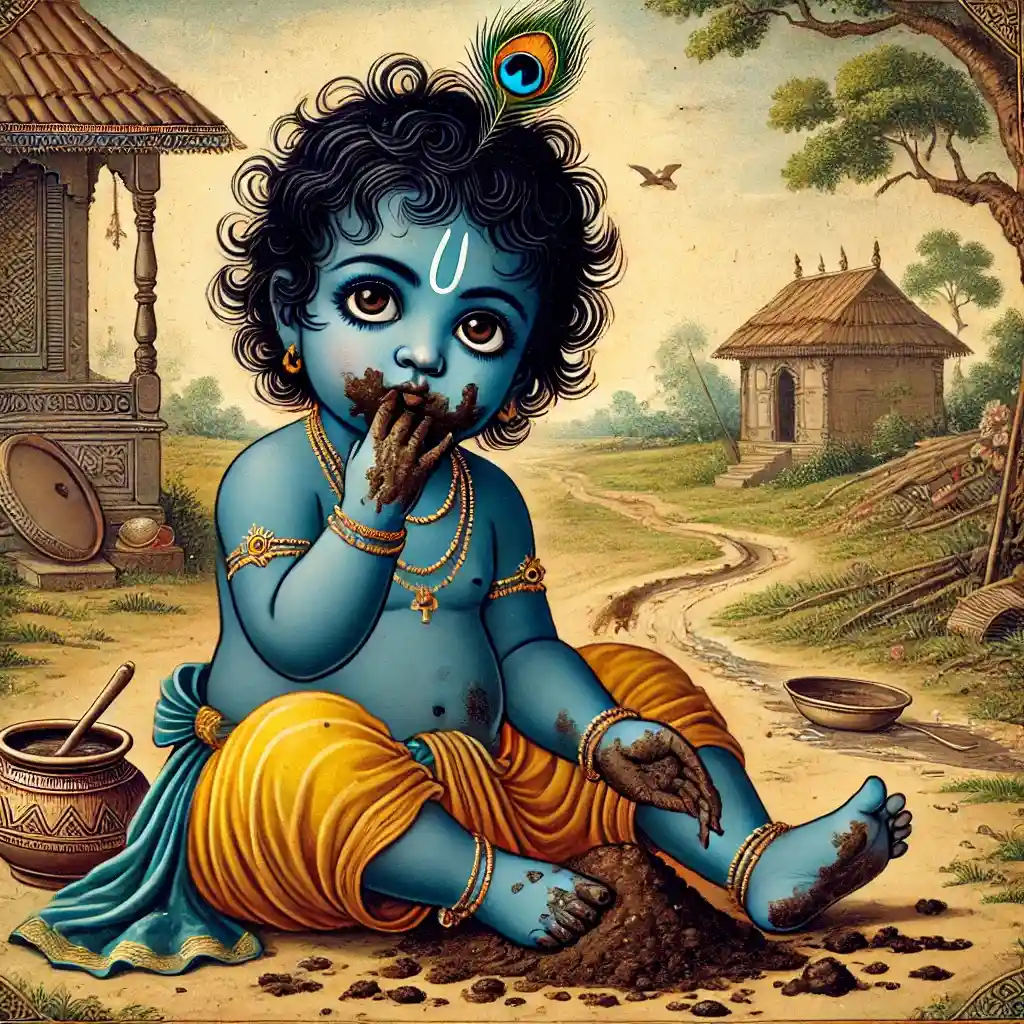
Shree Krishna was still a tiny child when his Makhan Chori Leela had concluded, but the ever-blissful nature of God meant new pastimes were always beginning. One such pastime emerged when Shree Krishna developed the curious habit of eating mud. The village children, Shree Krishna's friends, often ran to Mother Yashoda complaining that Shree Krishna had eaten mud again.
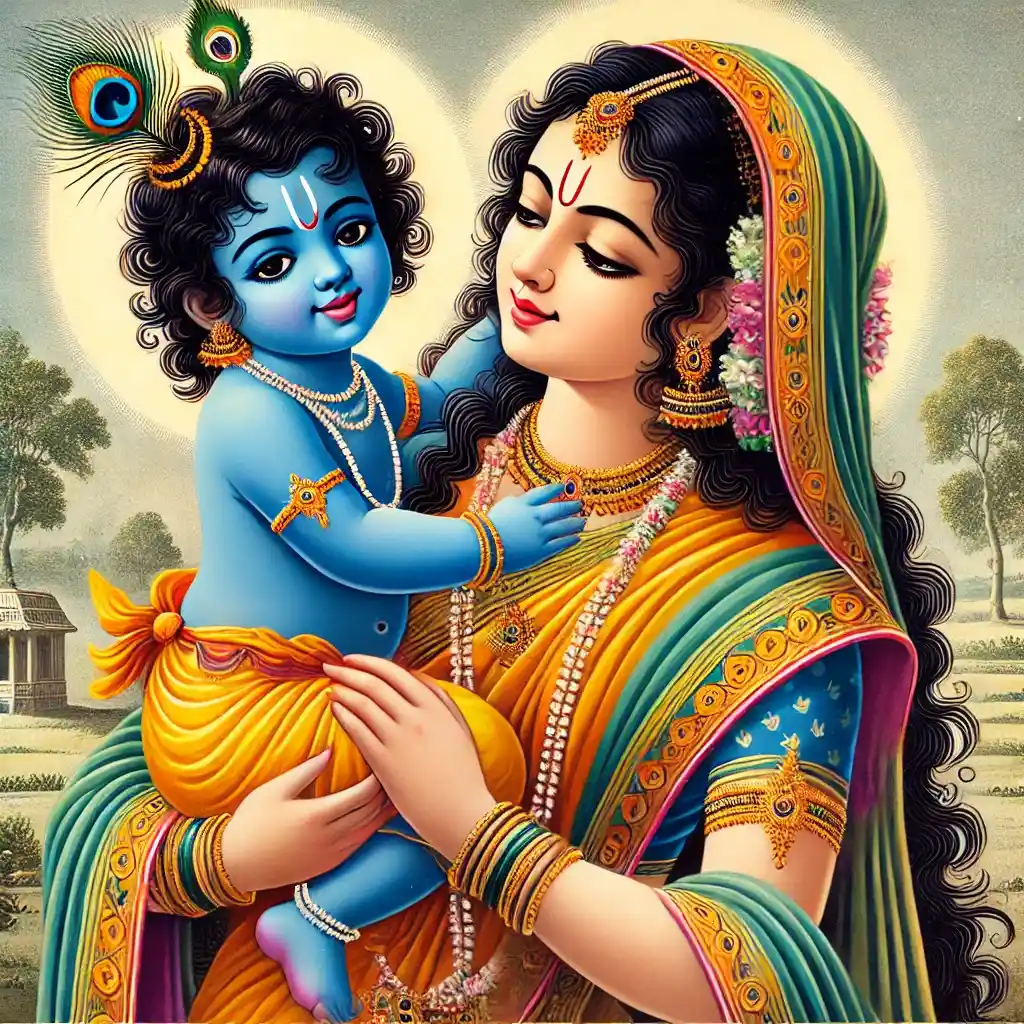
Mother Yashoda, perplexed by the repeated complaints, decided to confront her beloved Lala. Looking into his eyes, she sternly asked if he had eaten mud. Shree Krishna, full of confidence and carrying the innocent demeanor of a child, denied the act. With all sincerity, he insisted that he had not eaten any mud, hoping to convince her of his innocence.
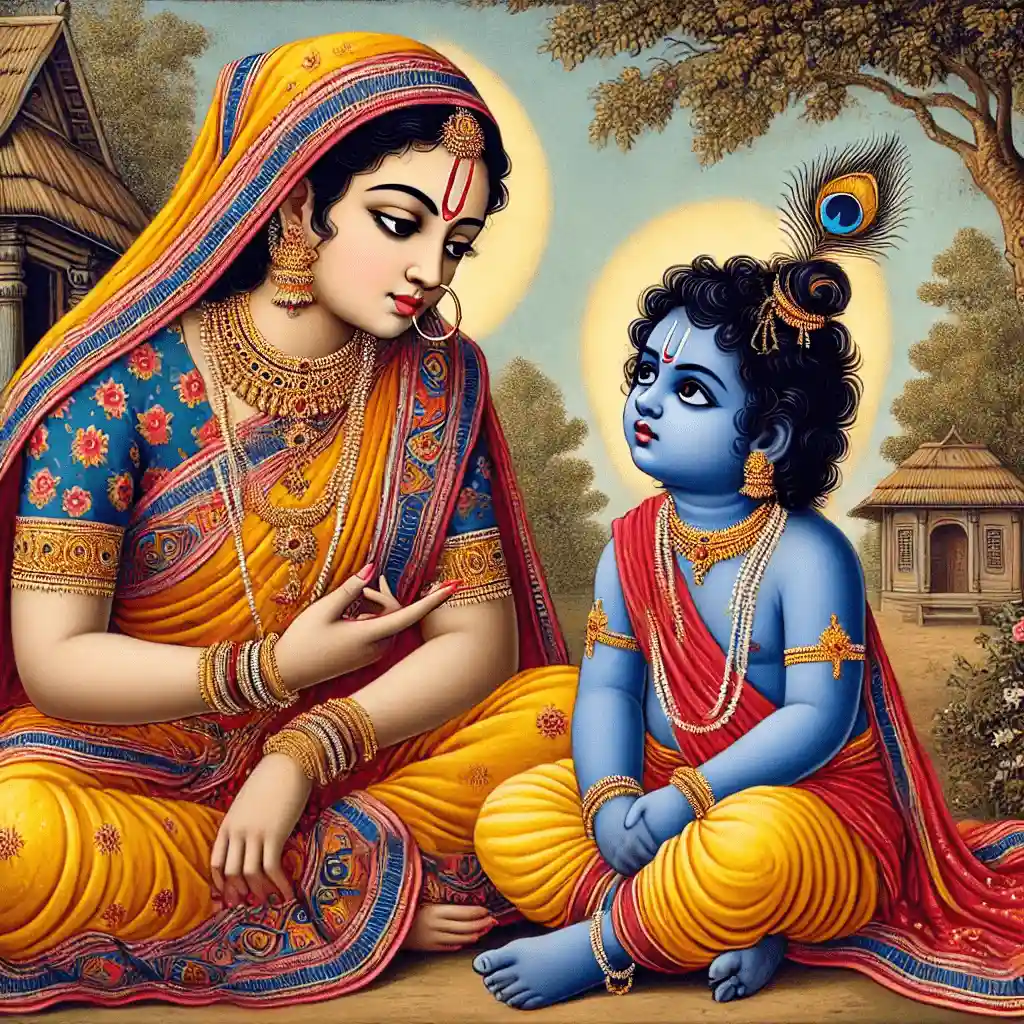
When Mother Yashoda insisted, citing the testimonies of Balram and other friends, Shree Krishna protested, accusing them all of lying. Still unconvinced, Mother Yashoda demanded proof. Shree Krishna, trying to seem truthful, challenged her to open his mouth and check. He believed this display of confidence would win her trust, but Mother Yashoda was no ordinary mother. Her maternal wisdom had grown deep through experience.
When she asked Shree Krishna to open his mouth, he hesitated. His mind raced. Should he open it or not? He feared that the mud stuck inside would be visible, and he would be punished. But at the same time, refusal would confirm his guilt.
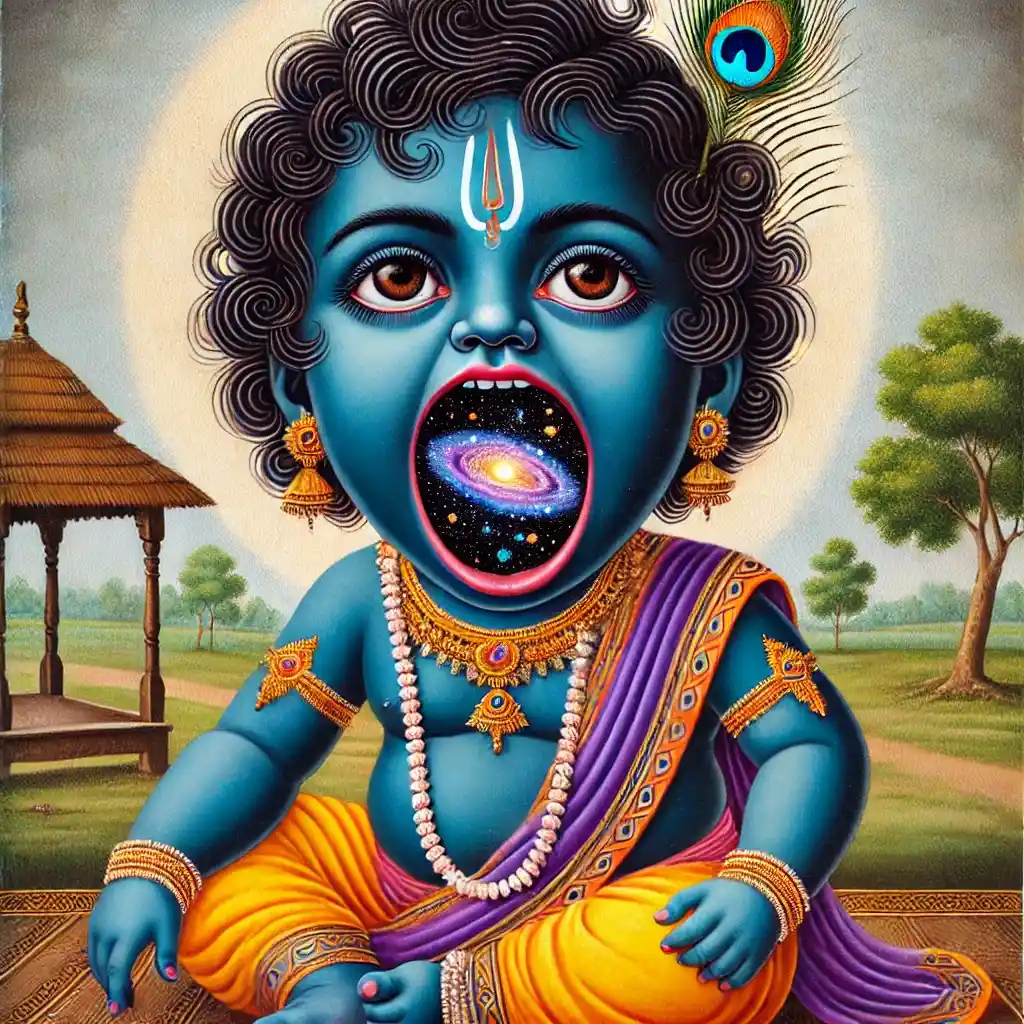
Eventually, Shree Krishna’s mouth fell open. But what Yashoda saw was not mud—it was the entire cosmos. The infinite universes, planets, stars, Earth itself, and within it, Mathura, Braj, Shree Krishna, and even herself. She was stunned, swaying on her feet in disbelief.
Lessons
• Shree Krishna’s pastimes are expressions of divine love and surrender
• God allows himself to be controlled by his devotee’s love
The Intervention of Aishwarya Shakti
Though Shree Krishna had decided to live solely through loving exchanges, his Aishwarya Shakti (divine opulence) remained loyal. She had been dismissed from the land of Braj because her presence would obstruct the sweet, intimate mood of devotion there. Yet, she lingered nearby, ever-ready to serve Shree Krishna when needed.
At the moment when Shree Krishna was about to be beaten by Mother Yashoda’s stick, Aishwarya Shakti intervened. Though Shree Krishna had banished her to preserve the sweetness of Vatsalya Bhav (parental devotion), her love and loyalty could not permit harm to God. She appeared within Shree Krishna’s mouth and displayed the cosmic form to stop Mother Yashoda from raising her hand.
Mother Yashoda saw more than her mind could fathom—worlds within worlds, herself within her son’s mouth, and the overwhelming presence of divinity. She became disoriented, confused, and overwhelmed.
Realizing what had happened, Shree Krishna quickly signaled Aishwarya Shakti to retreat. He wanted his pastime to be restored to normal, so that she could continue to love him as her own Lala, and not as God. Through his Yog Maya (material energy), he normalized her consciousness. Mother Yashoda dismissed the vision as a hallucination, thinking perhaps her blood pressure had gone up and she had imagined it all. She returned to her normal maternal mood, embracing her child with unconditional love.
Lessons
• God’s divine opulence never abandons him, even when dismissed
• Aishwarya Shakti serves silently, without ego or recognition
The Primary Bhakti Bhaavs
One of the deepest teachings embedded in this Leela is the understanding of Bhaavs—spiritual moods or feelings through which a devotee can relate to God. In Vedic scriptures, five primary Bhaavs guide the framework of Bhakti Yoga. They define the nature of a devotee’s relationship with God:
- Shaant Bhaav – In this relationship, the devotee sees God as the majestic king who is worthy of respect, but observed from a distance. Just as one might quietly admire a royal procession from afar without personal involvement, this Bhaav acknowledges God’s greatness without intimacy.
- Dasya Bhaav – The mood of servitude. The devotee sees himself as God’s eternal servant, much like Hanuman. This allows closeness, but with formality and respect. The devotee offers services and follows commands.
- Sakhya Bhaav – The mood of friendship. In this Bhaav, the devotee sees God as a close friend and equal. This was the mood of Shree Krishna’s cowherd friends. It allows relaxed intimacy and playful interactions.
- Vatsalya Bhaav – The mood of parental affection. This is the mood of Mother Yashoda and Nanda Baba. The devotee sees God as their child and assumes the role of caretaker, protecting and correcting Him with unconditional love.
- Madhurya Bhaav – In this relationship, the devotee sees God as their beloved. This was the mood of the Gopis, especially Radha Rani. It involves complete surrender, longing, and union.
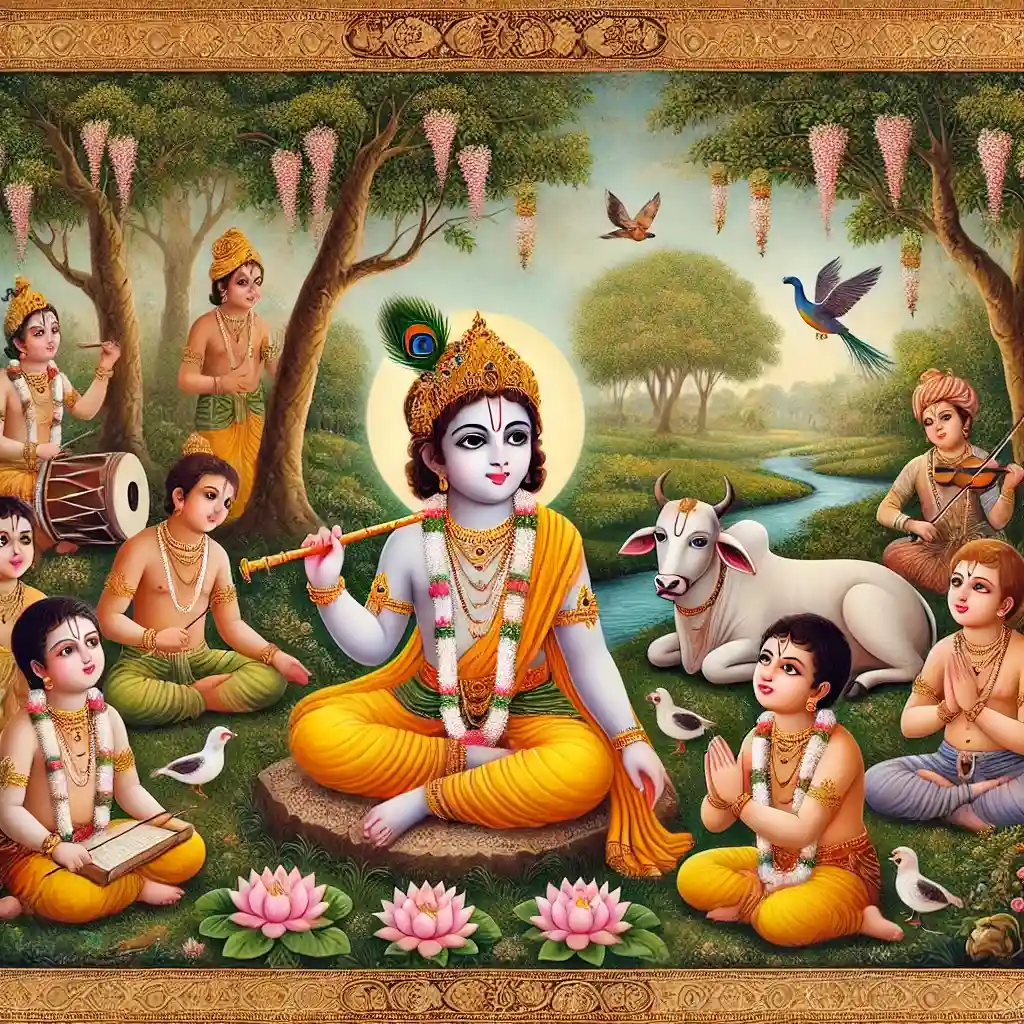
One of the greatest qualities of God is that He is Bhaktavatsal—deeply loving and compassionate toward His devotees. Jagadguru Shri Kripalu ji Maharaj explains that there is an even higher quality: God is Bhaktavasya. This means He becomes completely controlled by the love of His devotees. It is out of this boundless devotion that God assumes the form of a small child, allowing Himself to be guided, scolded, and cared for. In this divine humility, He even carries the wooden sandals of Nanda Baba and Yashoda, joyfully walking around as if truly their little son.
Mother Yashoda’s love for Shree Krishna was so pure and overwhelming that even visions of the cosmic universe could not shake her conviction. Her Vatsalya Bhaav dominated all perceptions. She thought to herself that she must have imagined the whole thing due to dizziness. To her, Shree Krishna was her child—nothing more, nothing less.
This illustrates how powerful Bhakti Bhaavs can be. When a devotee develops even one of these Bhaavs sincerely, God reciprocates. He becomes whatever the devotee desires. In Braj, Shree Krishna did not appear as God. He becomes a friend, a son, or a beloved. That is the glory of love that enslaves God.
Conclusion
Shree Krishna’s Mud-Eating Leela, though wrapped in childlike play, holds deep spiritual wisdom. It shows how God becomes lovingly bound by the devotion of his devotees, seeking real connection rather than ritual formality.
In today’s busy world, these teachings remind us to develop a personal bond with God and seeing Him not as distant, but as someone intimately ours. By adopting devotional moods like friendship, service, or parental love, we bring spirituality into daily life with joy and meaning. Simple acts like prayer, remembrance, or heartfelt surrender can help us move beyond routine and awaken true love for the divine—just as Mother Yashoda did, seeing not God, but her beloved child.
Call to Action
- Immerse yourself in the divine pastimes of Shree Krishna and transform your spiritual journey by listening to Swami Mukundananda's Srimad Bhagavatam sessions on YouTube.
- Embark on a soul-stirring week at the Dallas Life Transformation Program with Swami Mukundananda from August 2nd to 9th, 2025 at the Radha Krishna Temple in Allen, TX. Participate in inspiring evening discourses, rejuvenating yoga and meditation, uplifting kirtans, and intimate morning walks that will ignite inner peace, clarity, and devotion
FAQs
1. What are the five primary Bhaavs in Bhakti Yoga?
They are Shaant (peaceful admiration), Dasya (servitude), Sakhya (friendship), Vatysalya (parental affection), and Madhurya (divine love). Each Bhaav offers a unique path of relating to God.
2. Why is Vatsalya Bhaav considered special in Shree Krishna's Leelas?
Vatsalya Bhaav shows the devotee’s love is so strong that they see God as their child, even scolding or protecting him. This Bhaav fosters deep intimacy and love beyond divine reverence.
3. Why did Shree Krishna show the universe in his mouth?
To stop Mother Yashoda from punishing him, Aishwarya Shakti briefly revealed Shree Krishna’s true nature. It was not Shree Krishna’s desire, but an intervention by divine opulence to protect him.
4. How can one develop love for God like Mother Yashoda or Hanuman?
By constantly thinking of God as one’s own—through service, friendship, or affection—Bhaav develops naturally. It requires daily practice of remembrance, prayer, and surrender.
5. How does Yog Maya assist in these Leelas?
Yog Maya enables both the devotee and God to forget divine knowledge, making their love authentic and intimate. She veils God’s majesty to allow natural relationships to flourish.
Resources
Specific Video
Specific Blog
Why Did Shree Krishna Steal Butter in Vrindavan?