

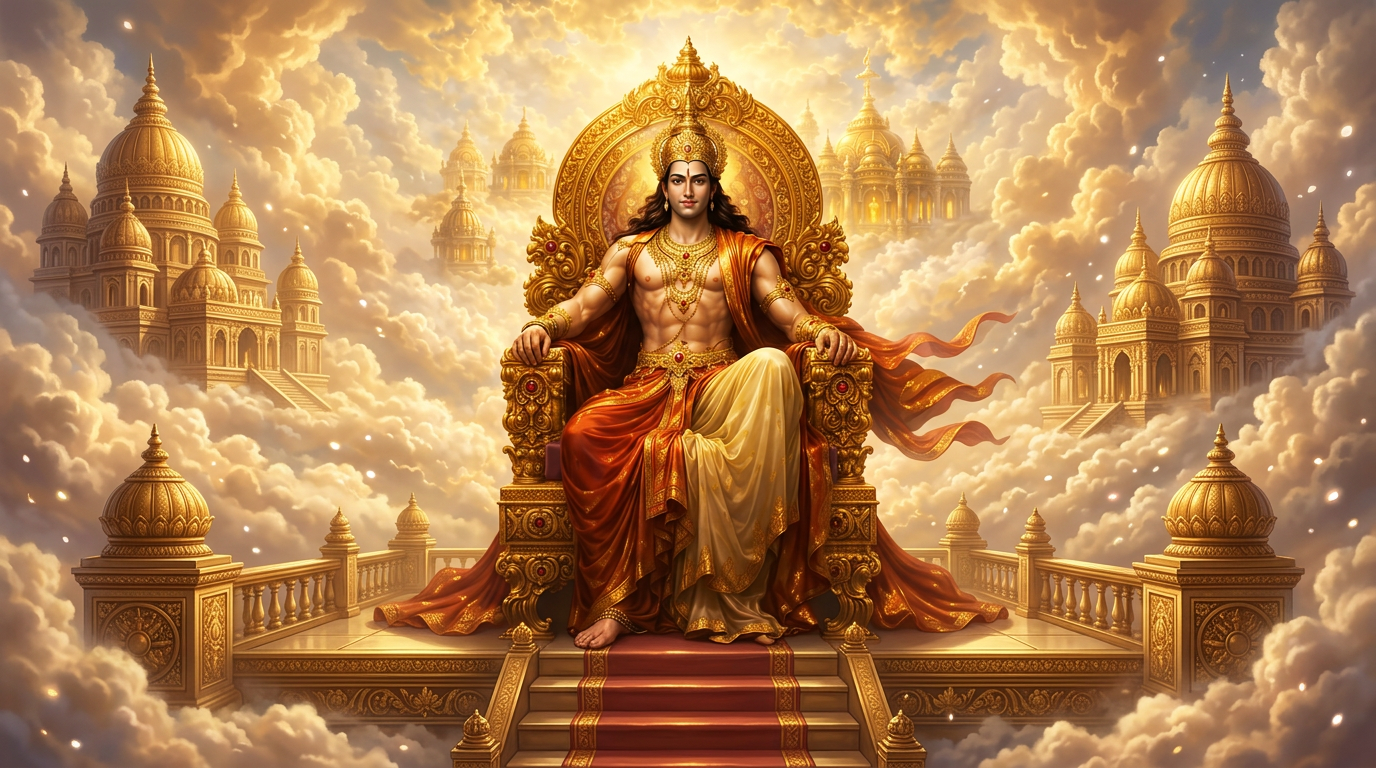
After narrating the tale of Ajamil, Shukadev turned to another episode— the story of Indra. He said: once Indra, the king of the celestial realms, committed a grievous mistake. He insulted his own guru, Brihaspati. Parikshit, astonished, exclaimed, “Maharaj, how did such a thing come to pass?”
Shukadev replied: Brihaspati had come to meet Indra. Yet Indra, intoxicated by the pride of his throne and dominion, failed to honor his teacher. Though he saw his guru arrive, he did not rise in respect. Brihaspati at once discerned that his disciple had succumbed to pride.
The scriptures caution:
यौवनं धनसम्पत्तिः प्रभुत्वमविवेकिता ।
एकैकमप्यनर्थाय किमु यत्र चतुष्टयं ॥
Youth, beauty, wealth, and high position—each alone can breed pride. When all four come together, downfall is almost certain.
Without a word, Brihaspati turned and left. In time, Indra realized the gravity of his error. Remorse flooded his heart. He went in search of his guru, seeking forgiveness. But Brihaspati, deeming it fit, withdrew from Indra’s sight. And so, Indra returned—bereft of his guru’s darshan and blessings.
Heavens Overcast
The silence left behind soon began to speak.
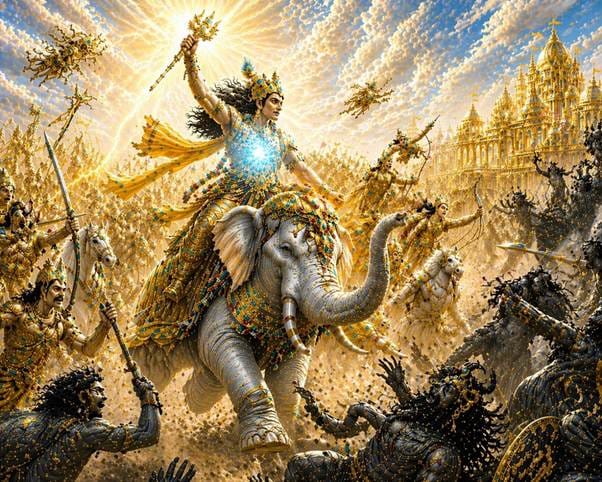
Deprived of their Guru’s benedictions, the devatas (celestial gods) felt their strength ebb away like a lamp sputtering in the wind. Sensing this decline, the daityas (demons) seized the moment. Swiftly they rose in arms, assailed the devatas, and hurled them from the celestial realm. Indra’s throne was usurped, his sovereignty torn asunder, and the dominion of the realm now lay in the grip of the demons.
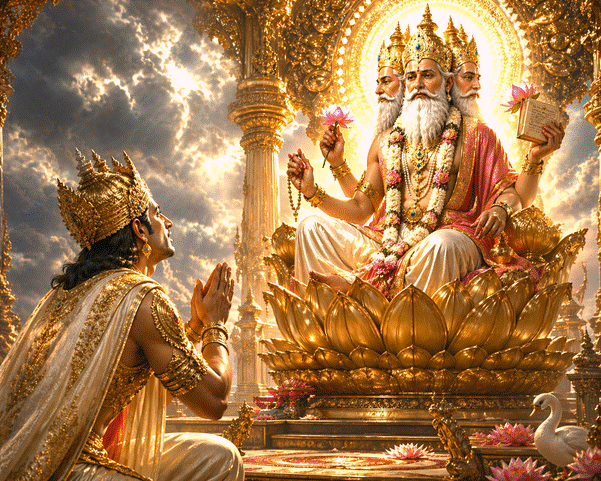
Stripped of his glory, Indra—once intoxicated by pride—now stood humbled. In desperation he approached Srishtikarta Brahma, his voice trembling with desperation: “Brahmaji, how can I reclaim my throne?” Brahma replied, “Seek out Vishwaroop, the pious son of the brahman Tvashta. Entreat him to perform a yajna (fire sacrifice) for you, and he shall bestow upon you the Narayan Kavach.”
The Narayan Kavach was no ordinary armor wrought of iron or steel. It was no clinking mail of knights nor plated bulwark of ancient kings. It was made of mantras—sacred invocations summoning Lord Narayan’s protection. Invisible yet invincible; it was a subtle shield. Indra followed Brahma’s counsel and approached Vishwaroop. Out of compassion, Vishwaroop granted him the kavach. Clad in this divine armor, Indra rallied the devatas. They surged forth vigorously and smote the daityas. The demons, vanquished, fled from there, and the celestial abodes once more rang with peans of victory.
Yet fate had not spoken its final word.
A Rising Storm
In the days that followed, Vishwaroop undertook a yajna, pouring oblations into the holy fire. As the flames leapt towards the sky, a thought stirred within him: “Should I not be just to all? What harm have the daityas done to me? Let me also offer them their share of oblations for their welfare.” True to his magnanimous nature, Vishwaroop began including the demons in the offerings, seeking their well-being alongside that of the devatas.
However, Indra was not of such a selfless disposition. Where one clings to self-interest, suspicion and insecurity are never far behind. Learning that offerings were being extended to his enemies, Indra’s mind clouded with fear and pettiness. And in a moment of rash impulse—without pause, without thinking twice—he struck Vishwaroop down.
That single act unleashed a tempest.
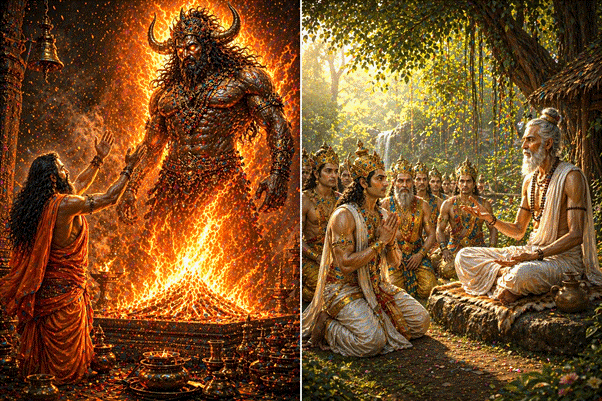
On hearing of his son’s cruel end, Tvashta was consumed by grief and fury. His cry tore through the skies: “My son has been killed! I shall avenge his death!” Driven by anguish, Tvashta performed a powerful yajna. From its blazing fire arose a formidable being—Vritrasur. He was endowed with immense strength and terrifying prowess. Charging upon the devatas, he routed them and cast them out from their celestial abodes.
The devatas, helpless and defeated, turned once more to Brahmaji, seeking a way to overcome this seemingly invincible foe. Brahma’s reply was grave: “Vritrasur cannot be slain by ordinary means. Only a weapon forged from the bones of the great sage Dadhichi can vanquish him.” The devatas hesitated. “But how can we ask for his very bones?” Brahma reassured them, his voice steady with conviction: “Dadhichi is the embodiment of renunciation. Go to him—he will not refuse.” For such was Dadhichi’s greatness that, in our tradition, his sacrifice is remembered alongside Harishchandra’s truthfulness and Bhishma’s vow of celibacy.
With hope and hesitation, the devatas approached Rishi Dadhichi and explained their plight: “Maharaj, we are in great distress and seek your help.” Dadhichi responded, “Ask, and I shall give.” When they revealed their need for his bones, he did not flinch. Entering deep samadhi, he voluntarily relinquished his mortal body. From his bones, the devatas then forged a divine weapon—the vajra, a thunderbolt of unparalleled might.
Unforeseen Rays of Love
Armed with this sacred weapon, Indra strode forth to confront Vritrasur. What followed was but a fierce and unrelenting clash between the king of the celestial gods and the indomitable leader of the demons. Despite Vritrasur’s immense strength, the power of the vajra ultimately prevailed.
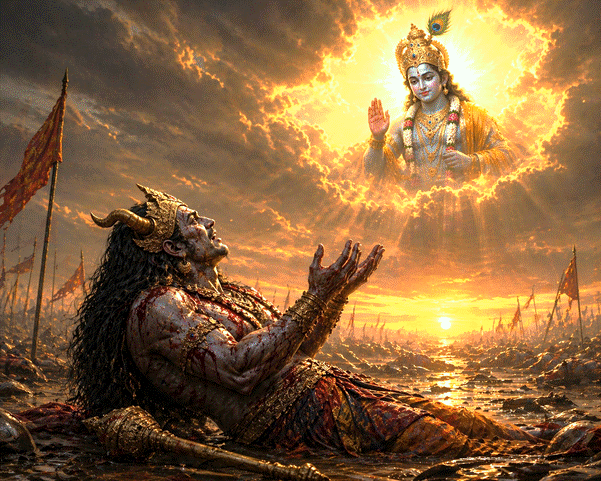
As Indra struck a fatal blow, Vritrasur staggered and his colossal frame collapsed. Yet, in that final moment, something extraordinary unfolded. As life ebbed from him, Vritrasur did not curse, nor did his eyes blaze with hatred. Instead, from his heart arose prayers revealing such depth of devotion one would never expect from a demon.
न नाकपृष्ठं न च पारमेष्ठ्यं न सार्वभौमं न रसाधिपत्यम् ।
न योगसिद्धीरपुनर्भवं वा समञ्जस त्वा विरहय्य काङ्क्षे ॥ 6.11.25 ॥
One who has surrendered to the lotus feet of the Lord has no yearning for the throne of Indra or Brahma or Shankar. He doesn't want to be the chakravarti emperor of the whole planet. He doesn't want yogic siddhis or mystic powers. He is thoroughly contented in the dust of the lotus feet of the Lord.
अजातपक्षा इव मातरं खगा: स्तन्यं यथा वत्सतरा: क्षुधार्ता: ।
प्रियं प्रियेव व्युषितं विषण्णा मनोऽरविन्दाक्ष दिदृक्षते त्वाम् ॥ 6.11.26 ॥
O lotus-eyed Lord, just as baby birds, still wingless, eagerly await their mother’s return to be nourished, as young calves tied with ropes anxiously long for the moment they can drink their mother’s milk, and as a sorrowful wife yearns for her husband to return home and to fulfill her in every way, similarly, I constantly yearn for the chance to serve You.
With these words, Vritrasur surrendered his breath. His final prayer was not of conquest, but of love. King Parikshit, hearing this tale, was struck with wonder. “How could a demon utter such profound devotional prayers?” A faint smile crossed Shukadev’s lips. “The mystery runs deeper than it appears. Vritrasur was once the great King Chitraketu…”
But that is a tale for another moment—one we shall return to in the next episode.
Frequently Asked Questions
1. What does this episode reveal about the dangers of pride?
This episode reveals how pride quietly blinds the intellect. It creates the illusion of self-sufficiency— “I am powerful enough; I no longer need guidance.” In that moment, humility fades, and with it, divine grace. Just as rainwater flows naturally to the lowest ground, the blessings of God and Guru settle in the hearts of the humble, while they slip away from the proud.
Material elevation without inner refinement can be perilous. The higher one rises, the more essential humility becomes. Otherwise, the very gifts that elevate us—position, power, prosperity—become the seeds of downfall. Indra’s defeat did not come from external enemies, but from an inner disconnection: pride severed him from his Guru’s grace.
2. What do Vritrasur’s prayers reveal about the nature of true bhakti?
True bhakti is selfless, unconditional love for God. Most people approach God with desires. But a genuine devotee seeks not God’s gifts, but God Himself. Vritrasur’s prayers embodied this highest state of devotion. As he lay upon the threshold of death, he did not ask for life, victory, or even liberation. His only longing was to serve and be united with the Lord. The spirit of bhakti blossoms when we move from “What can I get from God?” to “How can I offer myself to God?” Such devotion is independent of circumstances—it shines even in adversity, even in a so-called ‘demonic’ birth. Vritrasur’s story reveals that bhakti is not defined by outer identity, but by the inner state of surrender and love.
Video Resource
The Mindset to Reach the Ultimate God Consciousness | Bhagavatham Ep 15 Swami Mukundananda