

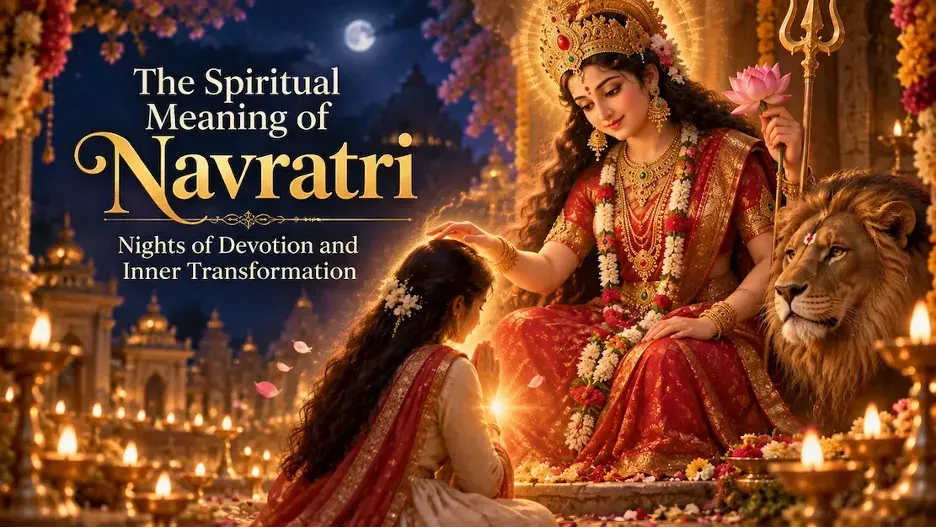
Navratri, which means “nine nights,” is the festival in which devotees worship the Divine Mother, Maa Durga, in nine different forms, one form on each night. Its sacred stories tell how Maa Durga defeated powerful demons whom even the devatas could not overcome. During these nights, aarti is performed in temples and homes, fast are observed, and courtyards are filled with the circling steps of Garba. When the celebrations are over and the house has grown quiet, a devotee sitting before the Divine Mother begins to notice that these stories also describe a battle taking place inside us. Desire keeps growing even after it is satisfied, anger rises when things do not go our way, and pride follows every small success. Navratri gives us nine nights to bring these inner struggles to Maa and ask Her to help us overcome them, the way a child runs to its mother for help.
Swami Mukundananda explains why the demons of Navratri are so relevant to us today. Just as Maa Durga fought enemies in the outer world, each of us carries enemies within, and the Vedic scriptures call anger, greed, desire/lust, ego, attachment, and jealousy, mānas rog, diseases of the mind. He teaches us that the inner world of our attachments, cravings, resentments and affections is created by our own mind, and we alone are responsible for it. This inner world is where the real battle of Navratri is fought, with the Divine Mother as our strength.
Who Is the Divine Mother We Worship?
Adi Shankaracharya was once walking with his disciples toward Manikarnika Ghat in Kashi when he found the path blocked by a woman weeping over the body of her dead husband. When he told her that crying would not bring her husband back, she answered that he should speak to her husband and ask him to move. Shankaracharya replied that a dead body has no energy in it and therefore cannot get up. At that time Shankaracharya taught that Brahman, the Absolute, is the only reality, and he did not accept that Brahman acts through any power or Shakti of its own. The woman pointed to exactly this. If Brahman can create the whole world without Shakti, she said, then this lifeless body should also be able to rise without any energy, so he should prove his point by making it stand.
The scholar, whom even Ved Vyas could not defeat in debate, stood astonished. When he looked again, the woman and the body were gone, and Maa Durga sat before him upon Her lion with Her ten arms. Shankaracharya fell at Her feet and poured out Her praises, acknowledging that God does create, and creates through His Yogmaya power, from which He is never separate.
Swami Mukundananda draws two lessons from this episode. The first is that the Divine Mother seated beside God is His own embodied Yogmaya power, and Shakti and Shaktiman are one, just as fire is one with its heat and light, so when we bow before Maa Durga, we bow before the power of God Himself. The second lesson concerns the world itself. Since the material world is governed by this divine power, it is not an illusion, as some philosophies claim, but real, though temporary. Our body belongs to this real world, so it must be cared for properly, because it is the vehicle through which we practice dharma and move toward God, and even the fasts of Navratri should never harm it.
Raktabija and the Desires That Keep Multiplying
Among the demons Maa Durga faced, Raktabija carried a boon that made him almost impossible to defeat. Whenever a drop of his blood fell to the earth, a new Raktabija rose from it with the same strength, so every wound inflicted on him multiplied the enemy. The devatas could not subdue him, and Maa Durga met the same difficulty in battle. Then Maa Kali appeared from Her forehead, who caught every drop of his blood before it could touch the ground, and at last Raktabija fell.
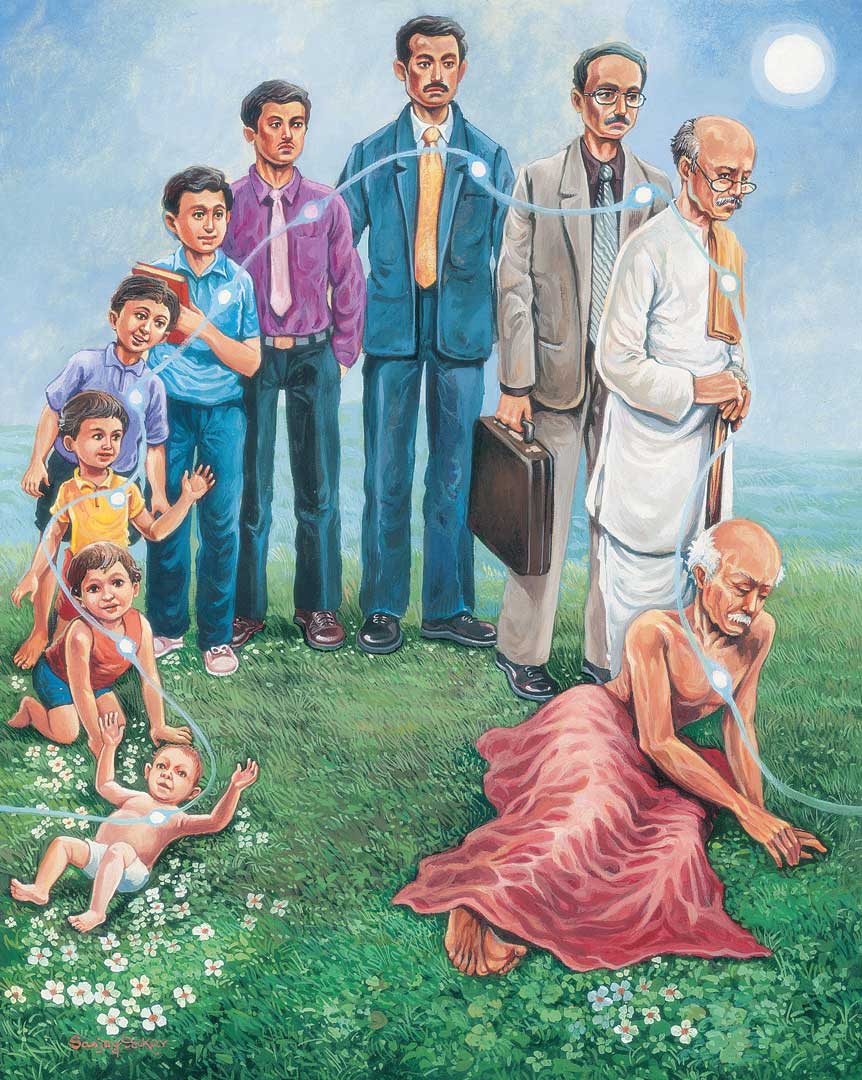
Our desires behave exactly like Raktabija, Swamiji teaches, because when one is fulfilled, two more arise in its place. Shree Krishna reveals in the Bhagavad Gita where the chain begins:
यतो विषयान्पुंस: सङ्गस्तेषूपजायते ।
सङ्गात्सञ्जायते काम: कामात्क्रोधोऽभिजायते ॥ 62॥
dhyāyato viṣhayān puṁsaḥ saṅgas teṣhūpajāyate
saṅgāt sañjāyate kāmaḥ kāmāt krodho ’bhijāyate
BG 2.62: While contemplating on the objects of the senses, one develops attachment to them. Attachment leads to desire, and from desire arises anger.
Anger never arises on its own, since it is born when a desire is obstructed, and when the same desire is fulfilled it breeds greed, because feeding a desire only makes it grow. Desire comes from attachment, the clinging of the mind, and attachment has little to do with the real qualities of an object. It forms through chintan, the repeated contemplation that happiness lies in a particular person, object, position or pleasure. Sitting before Maa at night, the devotee can trace this chain in the day just lived, the irritation with a family member or the wish that could not wait, and see how each began with a thought about where happiness lies.
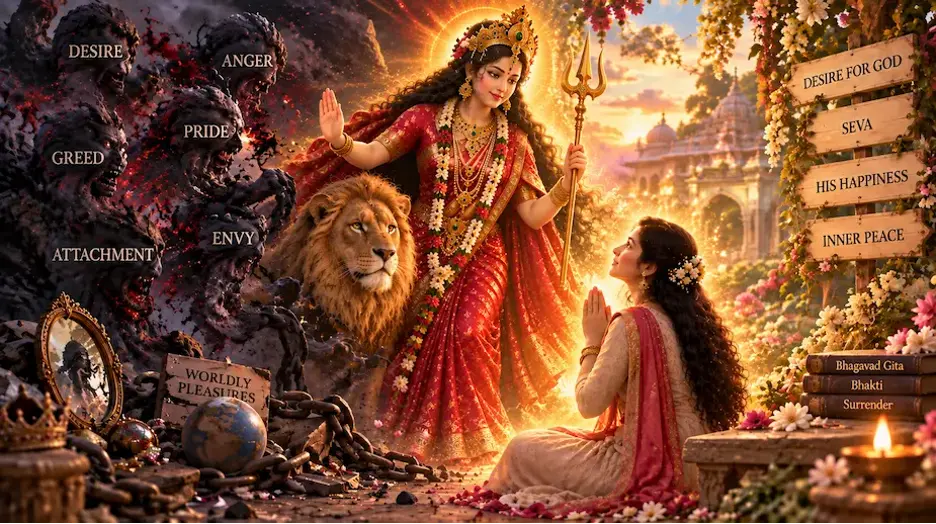
The longing for happiness itself can never be cut away, because the soul is a tiny part of God, the ocean of bliss, and seeking bliss is its very nature. The remedy Swamiji gives is to change where we contemplate happiness. Repeated thinking that happiness lies in the world attached the mind to the world, and repeated thinking that happiness lies in God will attach it to God. From that attachment comes desire for God, the longing to see Him, hear His flute and serve Him, and because He is all-pure, this longing purifies the very mind that worldly desire had soiled. The Raktabija story gives a helpful picture of this. Raktabija multiplied only when his blood touched the earth, and he fell when Maa Kali stopped the drops from reaching the ground. Our desires multiply whenever we look for happiness in the world, and when we turn the mind toward God, they no longer find ground in which to grow, so during Navratri the devotee prays to Maa to do within us what Maa Kali did on the battlefield.
Nine Nights Before the Divine Mother
Swami Mukundananda teaches that each day of Navratri is dedicated to one of the nine forms of the Divine Mother, and that each form blesses the devotee with one stage of spiritual growth. Taken one after another, the nine nights lead the devotee from the first step of faith to the final gift of grace. Along the way, what the devotee asks of God also slowly changes. At first, we ask God for the things we want, then we begin to want God Himself, then we long to serve Him, and finally we care only about what will make Him happy.
Shailaputri: Faith That Stays
On the first night we worship Shailaputri, which means “daughter of the mountain,” who embodies firm faith in God. She is Sati reborn as the daughter of King Himalaya, and Swamiji recounts how, after Sati gave up her body in the sacrificial fire of her father Daksh, she returned in her next birth and devoted herself once again to the same Lord Shiv. Her faith did not break even through the loss of an entire lifetime, and in that sense, it was as steady as the mountain she was born from. The devotee needs this kind of faith at the very start of Navratri, because the inner work of the coming nights will be difficult, and the mind will doubt, bargain and grow discouraged many times along the way. Faith means staying in God’s shelter even when prayers go unanswered and we cannot understand why things happened as they did. The first prayer of Navratri asks for exactly this: “Maa, I do not understand everything You have allowed in my life, yet I will not leave Your shelter. Make my faith as steady as the mountain You were born from.”
Brahmacharini: Faith Becomes Sadhana
On the second night Brahmacharini, who embodies self-control and austerity in sadhana, turns faith into daily practice. She is Parvati in her tapasya, and Swamiji tells how, as she performed austerities in the cold solitude of the Himalayas to attain Lord Shiv, the nine Yogeshwars came at Shiv's instruction to test her. They reminded her that Shiv was an ascetic who smeared ash on his body, owned no wealth and kept ghosts and spirits as his companions, and they urged her to seek Vishnu, the abode of every good quality. Parvati replied that Shiv might be the abode of all defects and Vishnu the treasury of all virtues, and that if she loved on the basis of qualities, her love would still be selfish. Her love was selfless, and she would marry Shiv or remain unmarried. In time her perseverance bore fruit.
Compared with Parvati’s resolve, our own determination often gives way at the first difficulty, usually because some craving pulls at us and we give in. Swamiji compares desire to an itch, which returns more strongly each time we scratch it but slowly fades when we patiently leave it alone, and austerity is simply this patience of not giving in. Each time we decline to feed a craving of the tongue, the eyes or the ego, and give that time instead to kirtan, roop dhyan or seva, the craving loosens a little. On this night the devotee asks Maa for a little of Parvati’s steadiness: “Maa, let me keep turning to God on the days my heart feels full and on the days it feels dry, until turning to Him becomes my nature.”
Chandraghanta: Courage for the Inner Battle
When we practice sadhana sincerely, we soon begin to see our own faults more clearly, and on the third night Chandraghanta, whose bell is said to drive away fear, gives us the courage to face them honestly. One of the first faults we notice is anger, and the desires behind our anger are often subtle, such as “I need him to change” or “I need her to be different,” and it takes courage to admit that a resentment we have justified for years grows from an expectation we have refused to release. Whatever we hate settles in the mind as firmly as whatever we love, so when we hold a grudge, the person who hurt us keeps occupying our mind long after the incident is over. As Swamiji counsels, instead of dwelling on what the other person did, we can use even their harsh words as an occasion to examine and refine our own mind. Tonight the devotee honestly admits one such grudge before Maa and places it at Her feet with this prayer: “Maa, I have carried this long enough. Take it and let the space it filled be filled with remembrance of God.”
Kushmanda: The Light of Wisdom
On the fourth night Kushmanda kindles the light of wisdom, and the devotee begins to apply the teaching of Bhagavad Gita 2.62 in daily life. Swamiji explains that the cure for the diseases of the mind is to decide firmly where true happiness lies and then repeat that decision until it takes root. Instead of fighting anger and greed only after they appear, the devotee works on their root, the habit of thinking that happiness lies in the world and brings back the thought “my happiness is in God” again and again, in the car, at the stove and before sleep. The prayer of this night is: “Maa, whenever my mind runs after false happiness, turn it back gently and show me where my happiness has always been.”
Skandamata: Awakening Selfless Love
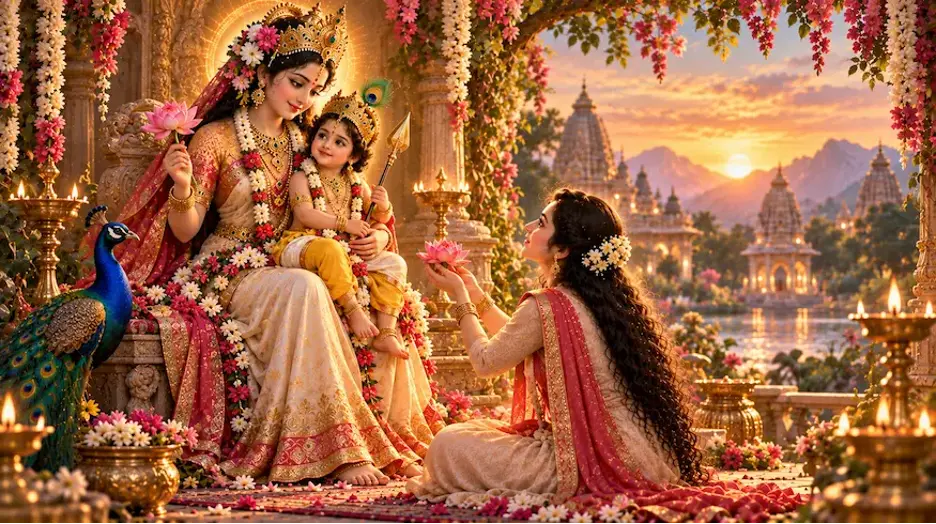
On the fifth night Skandamata, holding the child Kartikeya in Her lap, awakens selfless love, and we notice that our prayers of the earlier nights were still mostly about ourselves. The Narad Bhakti Sutras describe a love that asks for nothing for itself:
सा न कामयमाना निरोधरूपत्वात् ॥ 7॥
sā na kāmayamānā nirodharūpatvāt
"This prema bhakti is without any desires since it is restricting in nature."
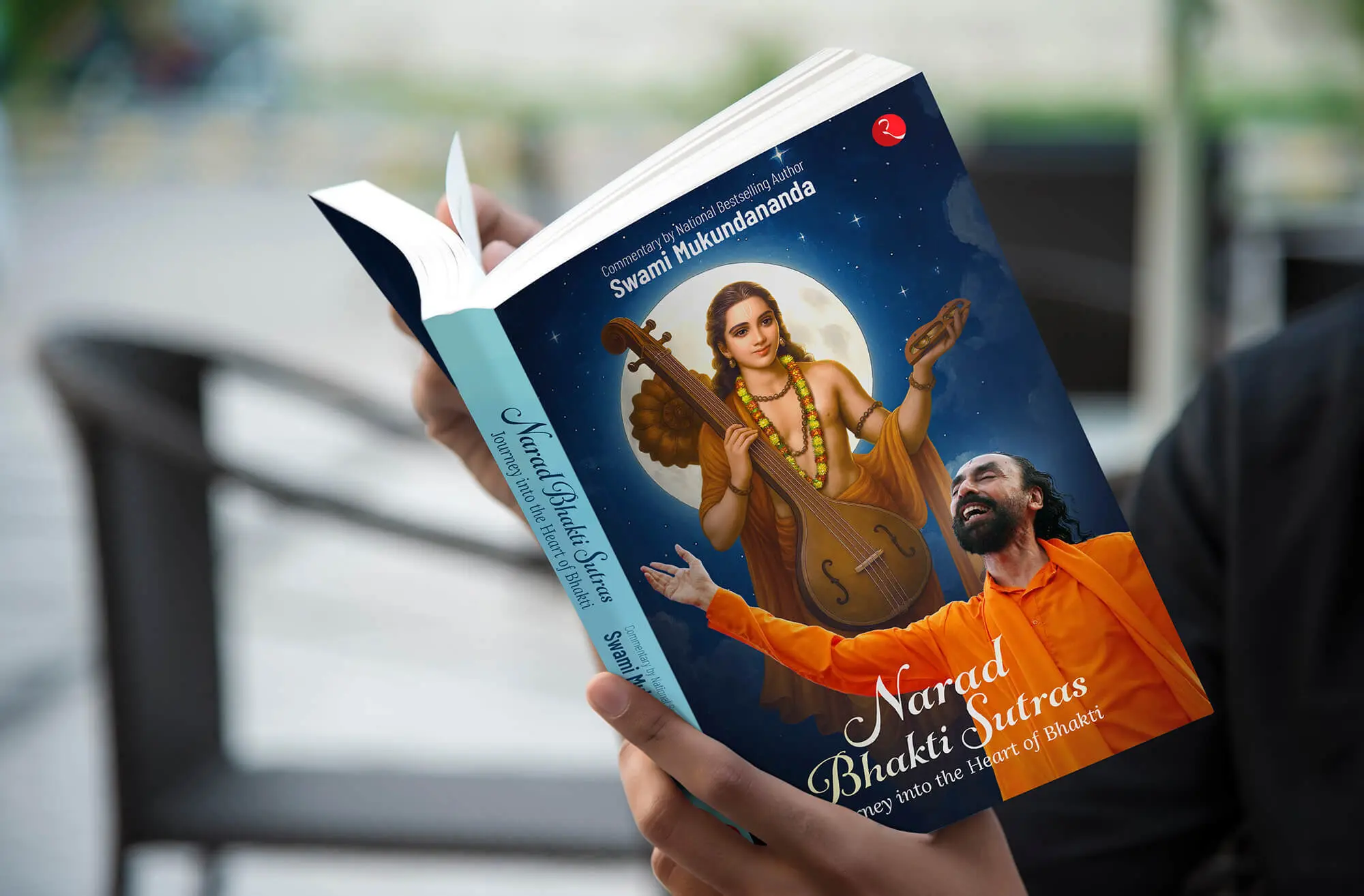
Swami Mukundananda explains that Narad uses the word nirodha, meaning “to restrict,” because in true bhakti all selfish desires are curtailed. He describes three kinds of love. Where its nature is to take, take and take, it is kām, worldly love; where it is to give and take, it is business; and where it is to give, give and give, it is prem, divine love, which seeks only the happiness of the Beloved. Parvati declared this love before the Yogeshwars, and the Gopis of Braj lived it so completely that Narad ji names them its highest example. They knew that Shree Krishna is the Supreme Lord, yet in the intensity of their love they would forget it, so that they could feed Him butter and wait at dusk for His flute, wanting nothing for themselves except His happiness. Skandamata, holding her child with a mother’s tenderness, is the picture of this kind of love, and on this night the devotee’s prayer changes: “Maa, I have asked You for so many things. Tonight I ask only that my love for Shree Krishna become like Yours for You child, wanting nothing except His happiness.”
Katyayani: The Fall of Pride
On the sixth night Katyayani, the warrior Mother, destroys the inner demon of pride. Pride comes from believing that what we have belongs to us, and the first mantra of the Ishavasya Upanishad corrects this belief at its source:
īśhā vāsyam idaṁ sarvaṁ yat kiñcha jagatyāṁ jagat
tena tyaktena bhuñjīthā mā gṛidhaḥ kasya svid dhanam ॥ 1॥
"All of creation, whether sentient or insentient, is pervaded and controlled by God. Therefore, renouncing the desire for pleasure, use things judiciously. Do not get attached anywhere, for this world and its treasures have never belonged to anyone."
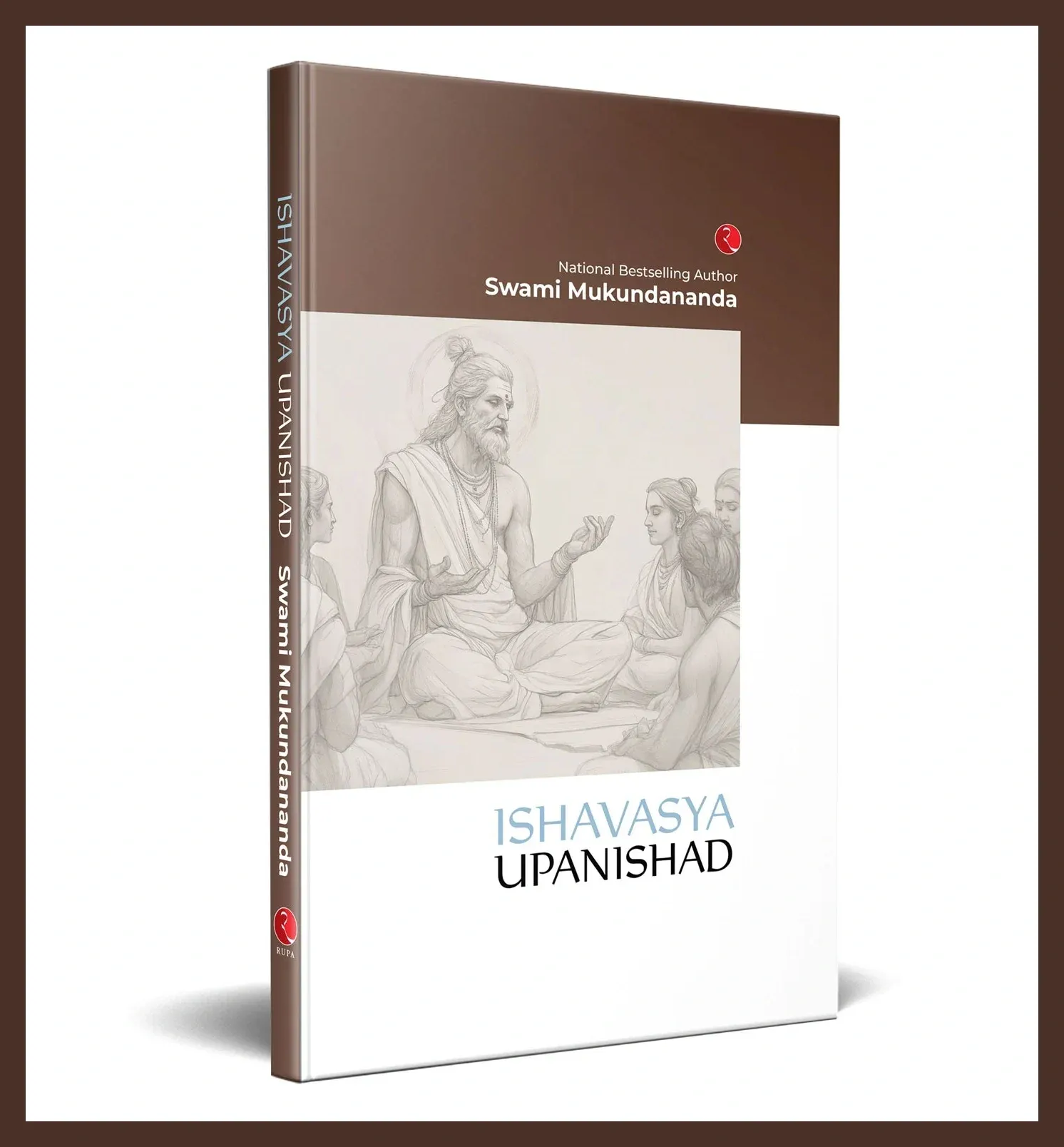
Swami Mukundananda explains that the worldly mind thinks, “I am the owner of all I have, and I am the one who enjoys it.” Pride grows naturally from this sense of ownership, and it follows us even into spiritual life, attaching itself to our discipline, our learning, our seva, and our devotion. Narad ji states in the 27th sutra, “Even God hates pride and loves humility.” When we see everything as belonging to God, pride gives way to reverence, and we begin to use what we have in His service as His humble servants. When our Guru shows us how God wishes these gifts to be used, following that guidance becomes seva too, and the question slowly changes from what we want to do for God to what would please Him. On this night the devotee places even spiritual progress at Maa’s feet, remembering that even the great Shankaracharya bowed before Her: “Maa, whatever good I have done, You made possible. Keep me small in my own eyes, so that there is room in my heart for God.”
Kalaratri: When Illusion Falls Away
On the seventh night Kalaratri, the dark and fierce form of Maa, dispels illusion and transforms the seeker. The deepest illusion is the one the scriptures compare to a mirage, the belief that one more achievement, relationship or possession will finally satisfy the heart. Giving up something we have long believed would make us happy can be painful, and this form of Maa looks fierce, yet to Her devotee even this fierceness is compassion, because She is removing what keeps the heart chasing the mirage. The devotee bows before Her dark form without fear: “Maa, take away whatever I keep mistaking for happiness, even if it hurts to let it go, and leave me with the longing that leads to You.”
Mahagauri: A Heart at Rest in God
On the eighth night Mahagauri, radiant and gentle after the fierceness of Kalaratri, bestows divine purity. Narad Bhakti Sutra 5 describes such a heart: "On attaining it, material desires do not remain, nor does lamentation. One does not hate, nor rejoices in worldly pleasures; and one has no enthusiasm for worldly gain." Narad includes “does not hate” because, as Swamiji explains, the mind becomes absorbed in whatever it hates just as much as in whatever it loves. Kans out of fear and Shishupal out of enmity thought of Shree Krishna so constantly that they too attained Him, and in the same way both our likes and our dislikes of worldly things tie the mind to the world. The devotee also sees that selfishness can hide inside devotion itself, in the wish to be praised for our seva, and purity comes to mean serving God for His sake alone. The prayer of this night is soft: “Maa, wash my heart so that even my devotion stops asking what it will receive.”
Siddhidatri: Sadhana Bows to Grace
On the ninth night Siddhidatri bestows divine grace and spiritual perfection, and after eight nights of honest effort the devotee comes before Her knowing how much inner work remains. Shree Krishna says, "My divine energy Maya, consisting of the three modes of nature, is very difficult to overcome. But those who surrender unto Me cross over it easily" (Bhagavad Gita 7.14). We keep making effort, while the ninth night teaches us to rest that effort in Maa’s hands, because even the selfless love we have longed for over these nights is Her gift and not our achievement: “Maa, I have tried, and You can see how far I still have to go. Even this love I cannot create by myself. Please complete what my effort cannot.”
The Mother Who Shows Us the Father
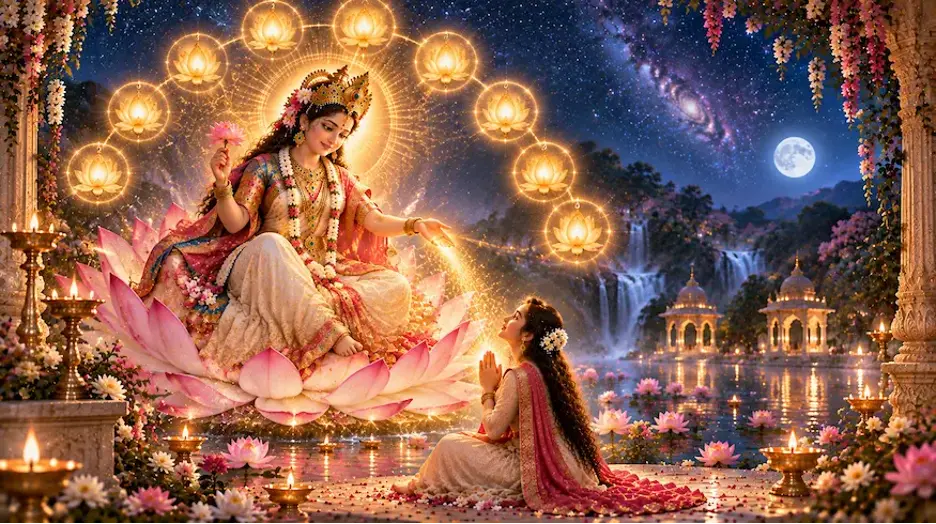
Swami Mukundananda often explains why devotees in his tradition say "Radhe Radhe," calling first on the Divine Mother. He tells of a young man whose father had gone abroad to earn a living when the boy was four and returned only fifteen years later. As the train pulled into the station, the son ran eagerly along the platform, and his mother smiled, knowing he would never recognize his father unless she pointed him out. It is the mother who says, "Look, this is your father." In the same way, the Divine Mother is the one who introduces the soul to its eternal Father, God.
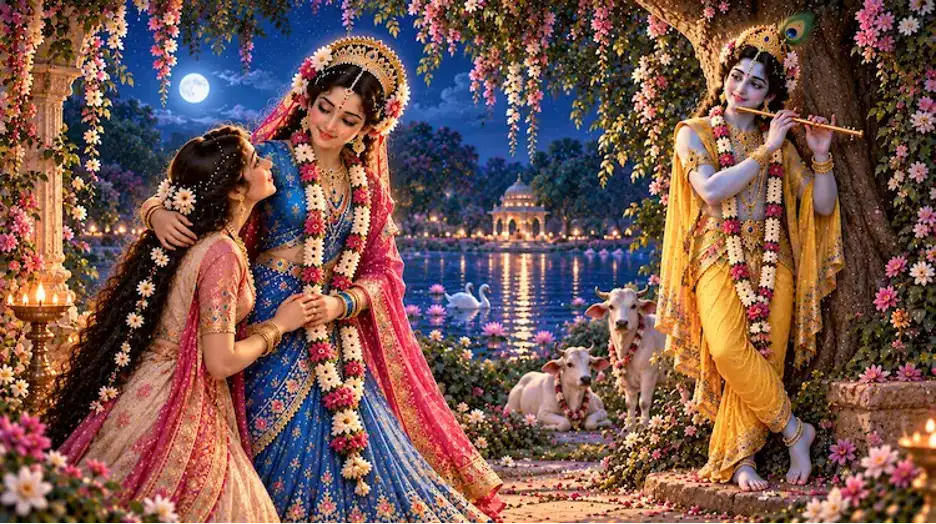
Swami Mukundananda explains that Durga and Radha are both the Divine Mother. In Maa Durga we meet Her opulent, majestic power, and in Radha Rani Her intimate, loving sweetness. For nine nights we have approached Maa in Her majestic forms and asked Her to fight our inner enemies. As Navratri closes, the heart turns to the same Mother in Her sweetest form, Shree Radha, and its prayer becomes the simplest of all: "Radhe, lead me to Shyam." When our strength gives out, She remains our Mother, ready to point across the crowded platform of this world and say, "Look, there He is."
Carrying Navratri Into Everyday Life
Each outer ritual of Navratri can become part of this inner sadhana. The lamp lit before Maa can carry a prayer for the light of wisdom, the fast can include a fast from one habitual craving, and the flowers offered at Her feet can carry one resentment, expectation or claim of ownership that we are ready to release. Garba itself, danced in circles around the Mother at the center, can remind the devotee to keep God at the center of life. In Swamiji's words, this Navratri we can light the flame of bhakti within and let love dance in the heart.
When the ninth night ends and the lamps are put away, the mind will not suddenly fall silent, and not every attachment will leave with the final aarti. Yet the devotee who has truly lived these nights no longer faces the mind alone, having learned where to bring its desires, its anger, its pride and even its imperfect devotion. The last prayer of Navratri is offered at Maa's feet: "Maa, for so long I have asked You to fulfill what I desire. Now purify the one who desires. Teach me to want only what gives Shyamsundar happiness, to serve without keeping account and to love without asking what I will receive, and when I still cannot find my way to Him, take my hand and lead me there Yourself."
Key Takeaways
•Navratri is an opportunity to bring our inner world of desire, anger, greed and pride before the Divine Mother, since Swami Mukundananda teaches that these are mānas rog, diseases of the mind that we are responsible for curing.
•Maa Durga is the Yogmaya power of God, inseparable from Him as heat and light are inseparable from fire.
•Like Raktabija, desire multiplies when it is fed. According to Bhagavad Gita 2.62, it grows from attachment, and attachment grows from repeatedly contemplating happiness in the world.

•The remedy is to contemplate repeatedly that happiness lies in God, which attaches the mind to God and purifies it through desire for the all-pure.
•The nine forms of the Divine Mother mark nine stages of spiritual growth, from firm faith with Shailaputri to divine grace with Siddhidatri.
•Seeing everything as belonging to God, as the Ishavasya Upanishad teaches, dissolves pride and transforms enjoyment into service.
•The Divine Mother, whether in Her majestic form as Durga or Her loving form as Radha, leads the soul to God.
Frequently Asked Questions
- What is the spiritual meaning of Navratri according to Swami Mukundananda?
Swami Mukundananda presents Navratri as nine nights of inner purification through the Divine Mother’s grace, in which Maa Durga’s battles with the demons mirror our own struggle with anger, greed, desire and pride. Each night brings a stage of spiritual growth, from firm faith to divine grace, as the devotee learns to turn the mind’s longing for happiness toward God.
- Who is Maa Durga in relation to God?
Maa Durga is the embodied Yogmaya power of God. Swami Mukundananda explains that Shakti and Shaktiman, the power and its possessor, are one, just as fire is one with its heat and light. Durga and Radha are both the Divine Mother, Durga in Her majestic power and Radha in Her loving sweetness.
- Why is the story of Raktabija connected to our desires?
Just as every drop of Raktabija's blood produced another demon, every fulfilled desire gives rise to more desires, leading to greed when it is fulfilled and anger when it is blocked. Swamiji’s remedy is to contemplate repeatedly that happiness lies in God, so that desire no longer takes root in the world.
- What do the nine forms of the Divine Mother represent?
According to Swami Mukundananda, the nine forms bless the devotee with nine stages of growth: firm faith, self-control, courage, wisdom, selfless love, freedom from pride, freedom from illusion, purity and finally divine grace.
- How can I observe Navratri as an inner sadhana?
Join each outer ritual with an inner practice, praying for wisdom as you light the lamp, fasting from one habitual craving along with food, and offering one resentment at Maa's feet along with the flowers. Spend time daily in kirtan, japa or roop dhyan, keep reminding the mind that true happiness lies in God, and care for the body as the vehicle for serving Him.